Part II. Bhaktapur.
After thoroughly exploring Kathmandu and its main temples, we set off early in the morning for a sightseeing flight around Everest. Everest is not only the highest mountain peak in Nepal but also in the entire world. It would be foolish to come to Nepal and not see Everest, even if just from an airplane window.
Flights around Everest are currently operated by two airlines—Nepal’s Yeti Airlines and China’s Buddha Air. We chose Yeti Airlines. The cost of the flight is about $175, and the duration is 1 hour. Several flights depart from Kathmandu to Everest each day, with the number depending on the tickets sold.
The flight was scheduled for 6:30 a.m. from Tribhuvan Airport in Kathmandu for domestic flights. We arrived at the airport by taxi at 4:30 a.m. (two hours before the flight, as per check-in requirements). It turned out the airport was still closed at that time. As a result, we had to wait about 30–40 minutes at the entrance before being allowed inside.
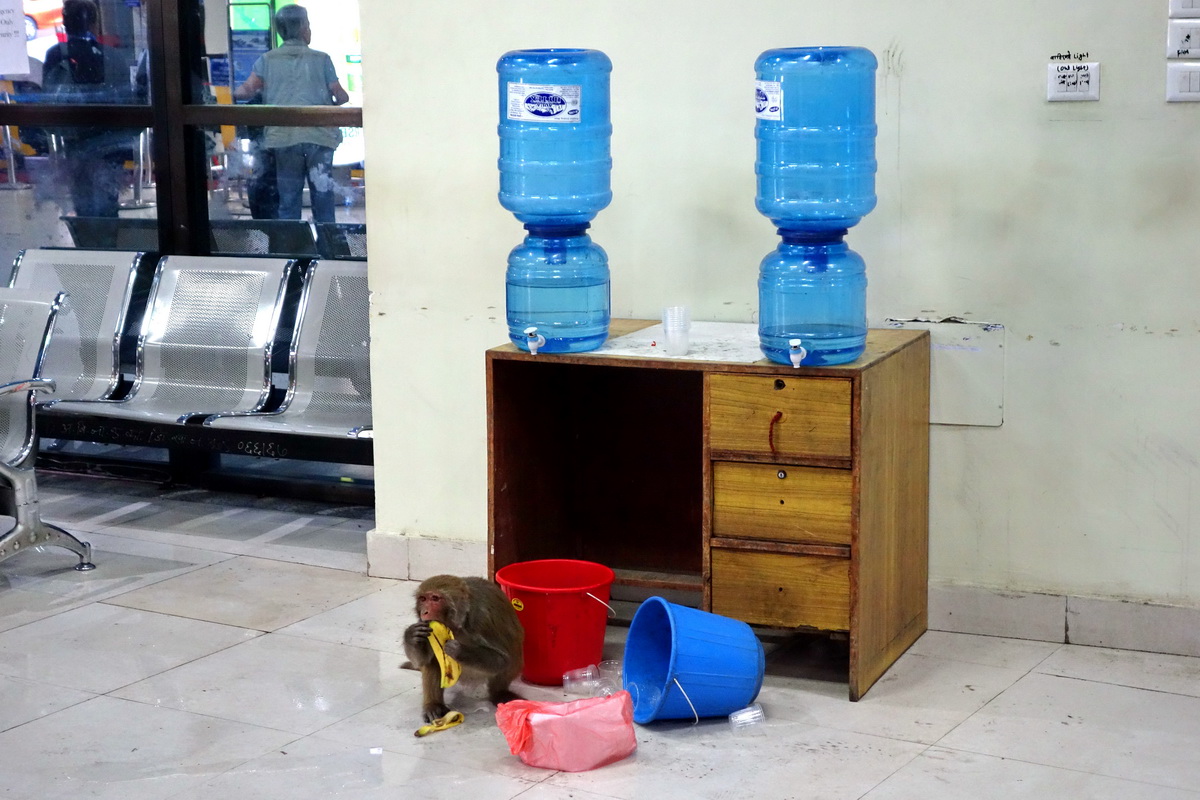
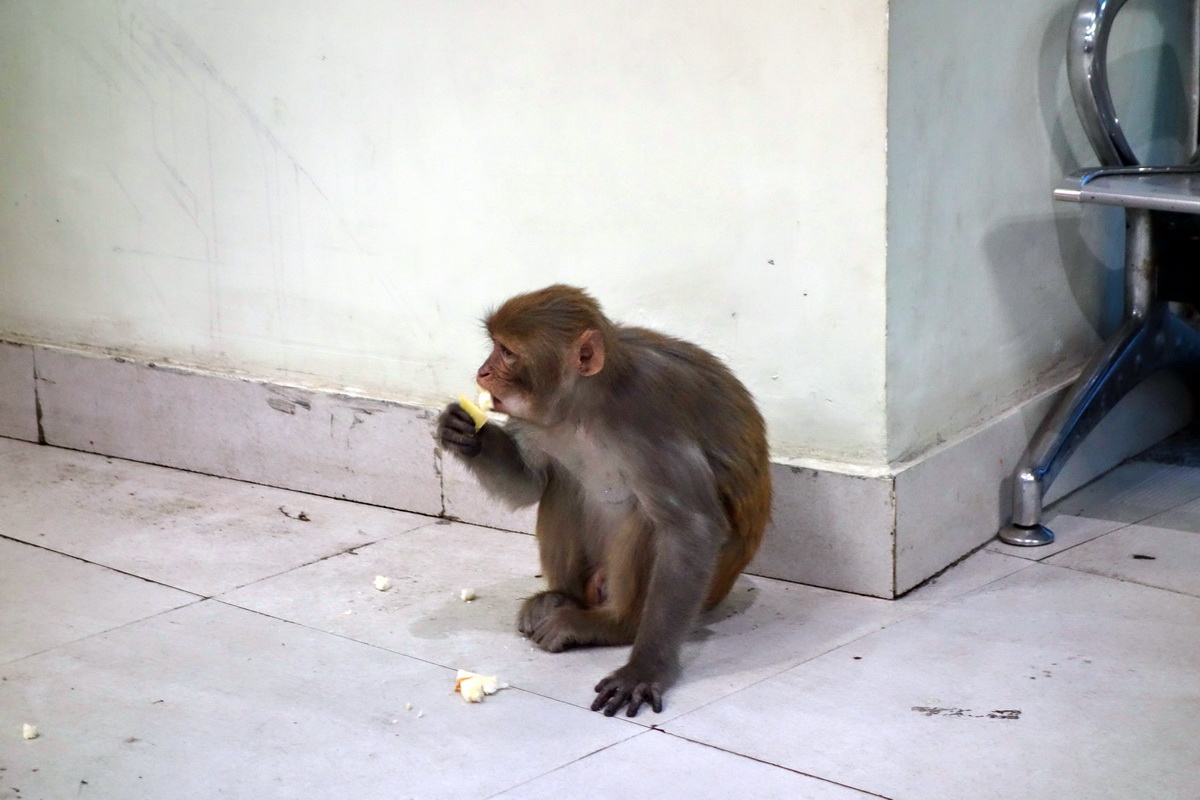
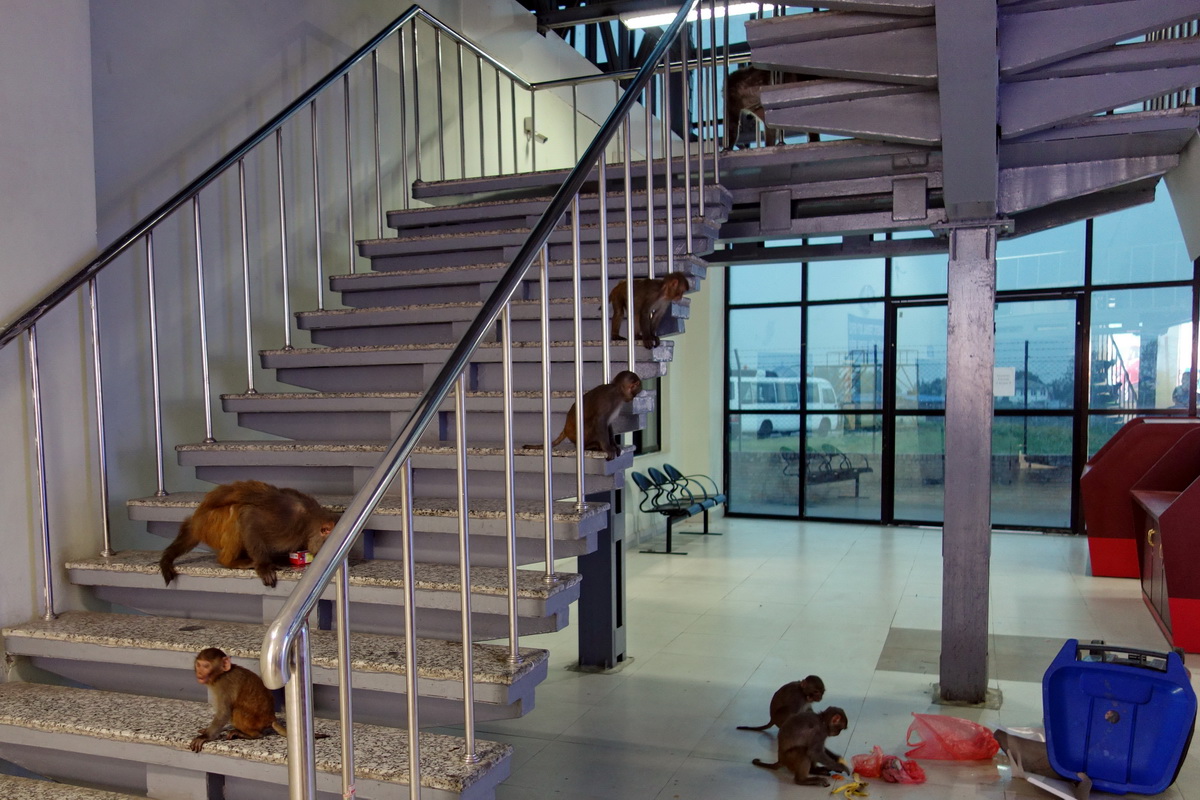
At the airport, we were greeted by our favorite Nepalese friends from the temples—monkeys. They are completely uninhibited here and act like they own the airport. They can easily rummage through trash bins, and if they don’t find anything edible, they’re ready to pilfer from unprepared tourists. Right in front of us, one monkey stole a juice carton from a girl’s backpack. Another monkey attacked a girl who had bananas. There are plenty of them here—we counted about ten. It’s surprising to see such a scene at an airport :)
Flights to Everest depend on good, clear weather. Due to light rain and cloudy skies, our flight was delayed by about an hour.
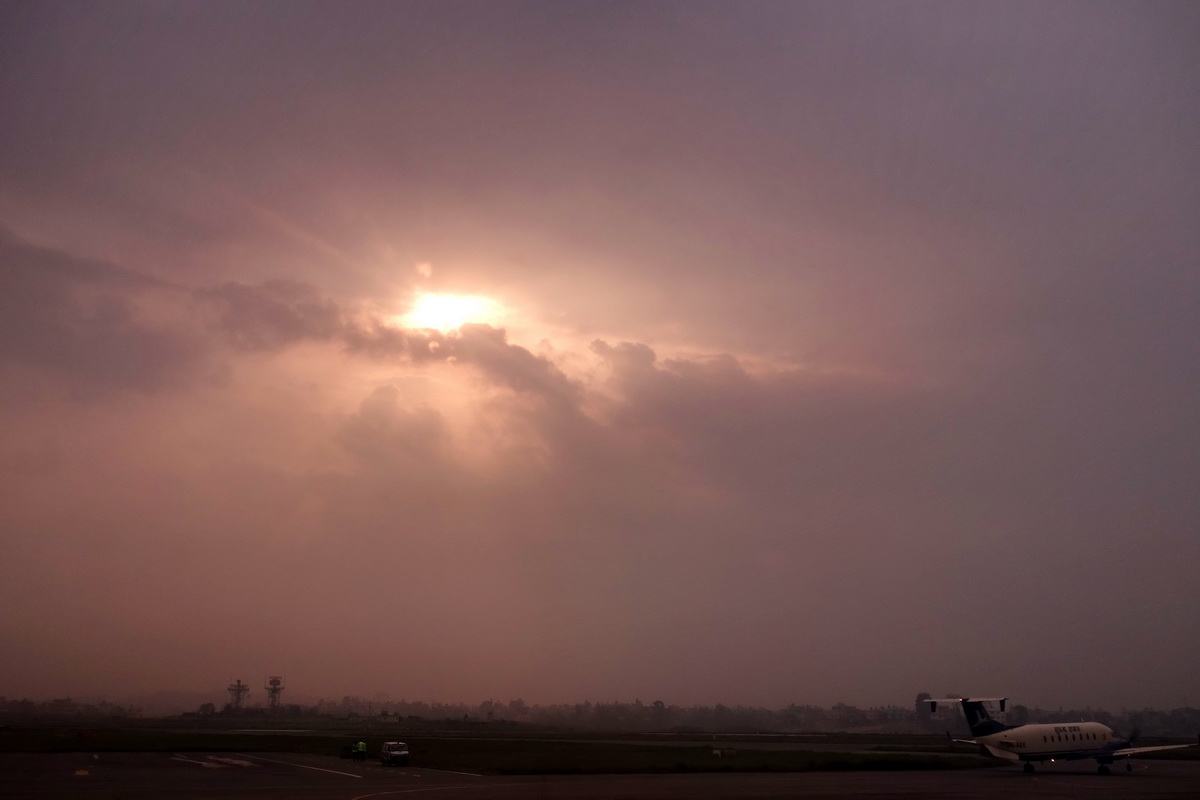
The weather improved, and we boarded a bus at the airport that took us directly to the plane. Flights are operated on small aircraft. The plane is designed for 41 passengers, but for flights along the Himalayas, passengers are seated only by the windows, in a single row. So, there were 20 of us on this flight.
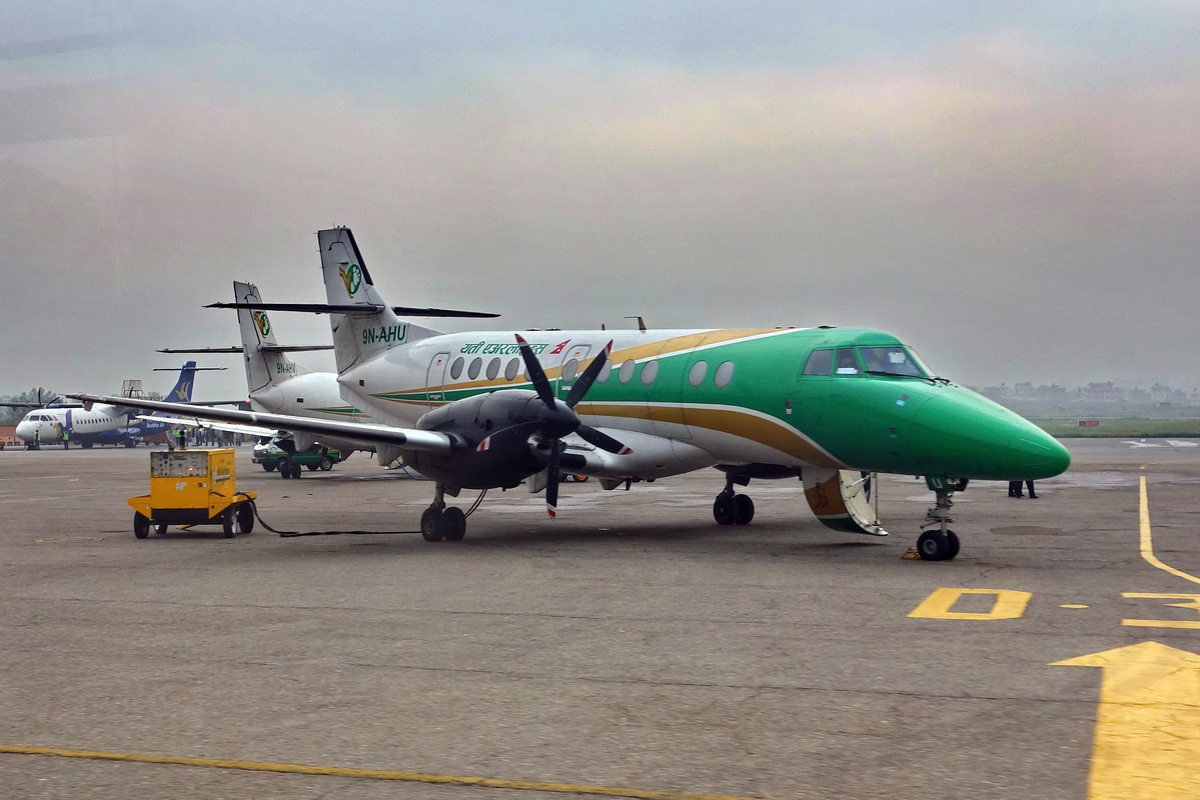
And then came the long-awaited moment of takeoff. We’re off!
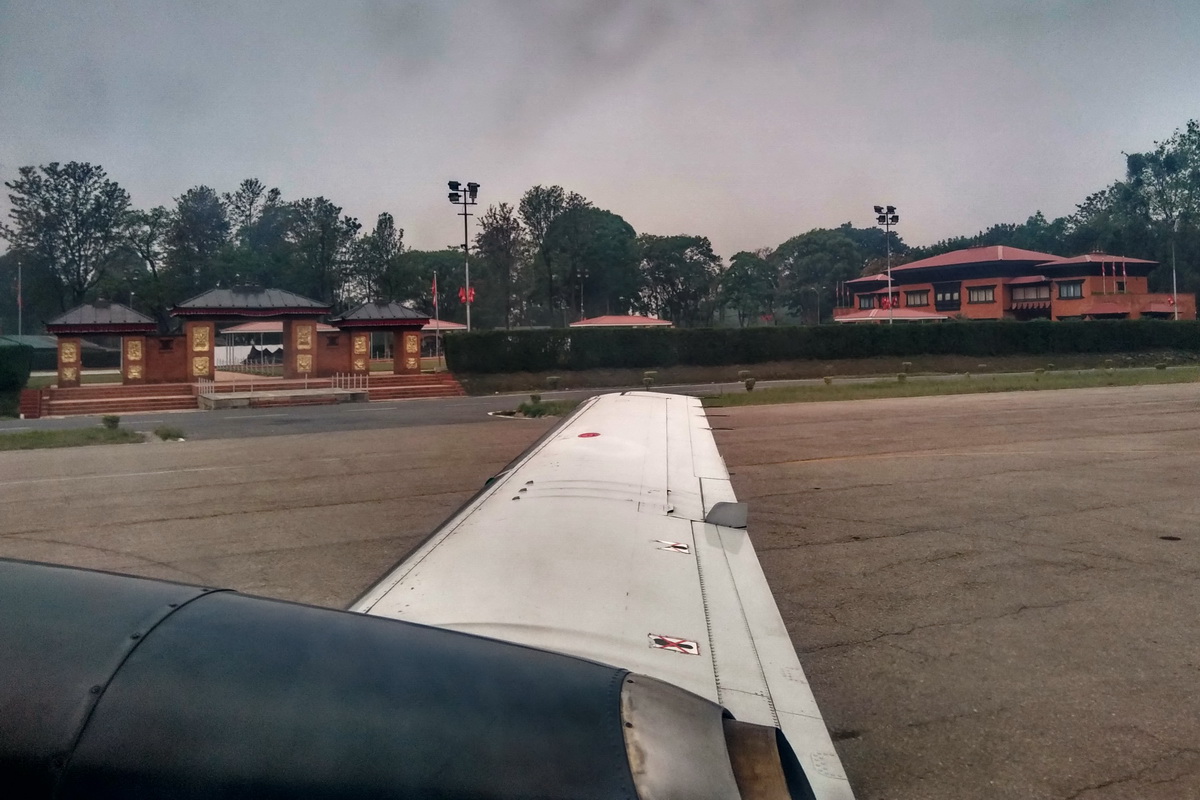
The plane quickly reached the necessary altitude, and we began moving along the Himalayan range.
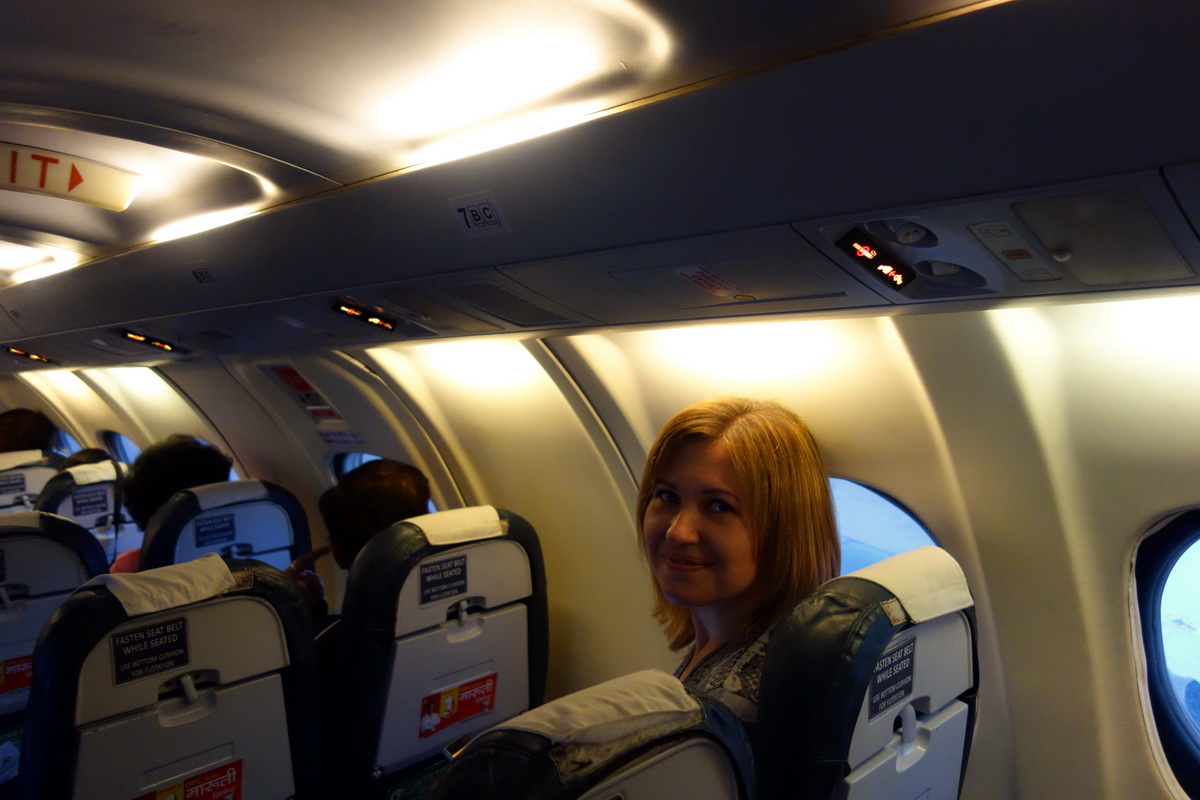
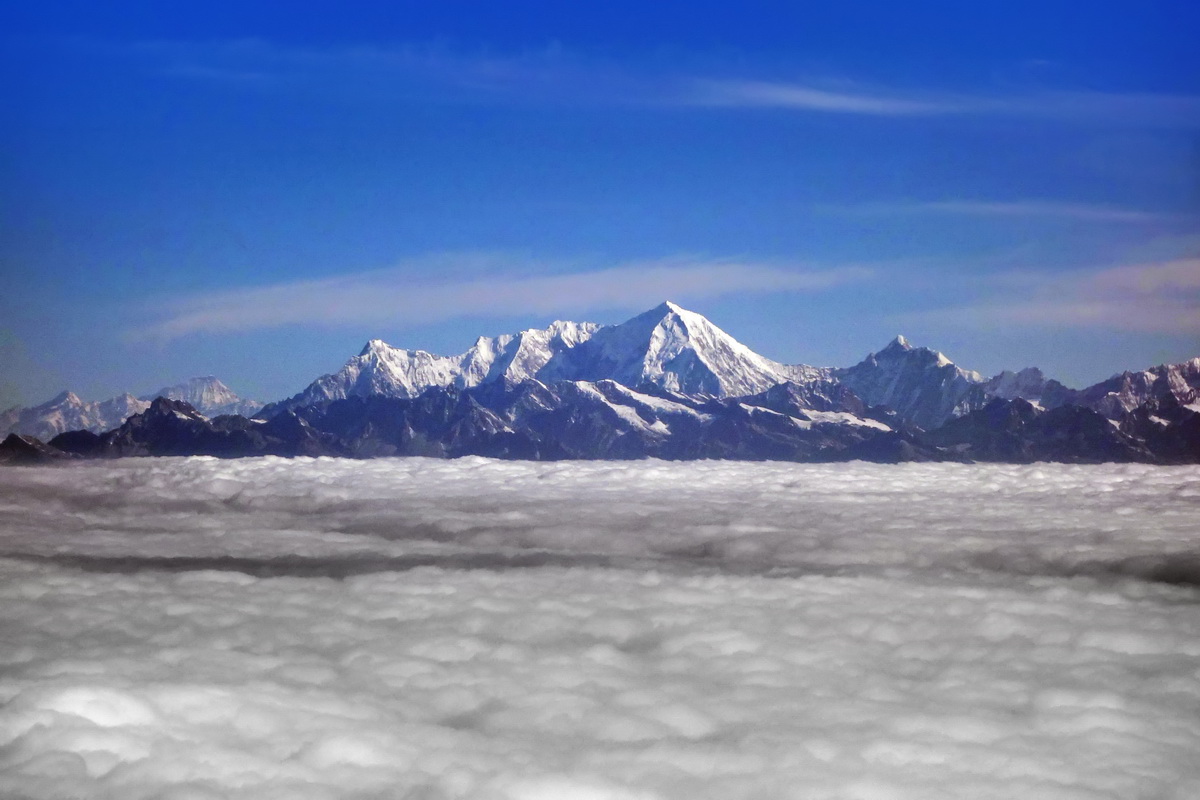
After passing through a thick layer of clouds, the snow-covered peaks of the Himalayas came clearly into view. The excitement of what we saw was boundless. We fly along the Himalayas toward Everest.
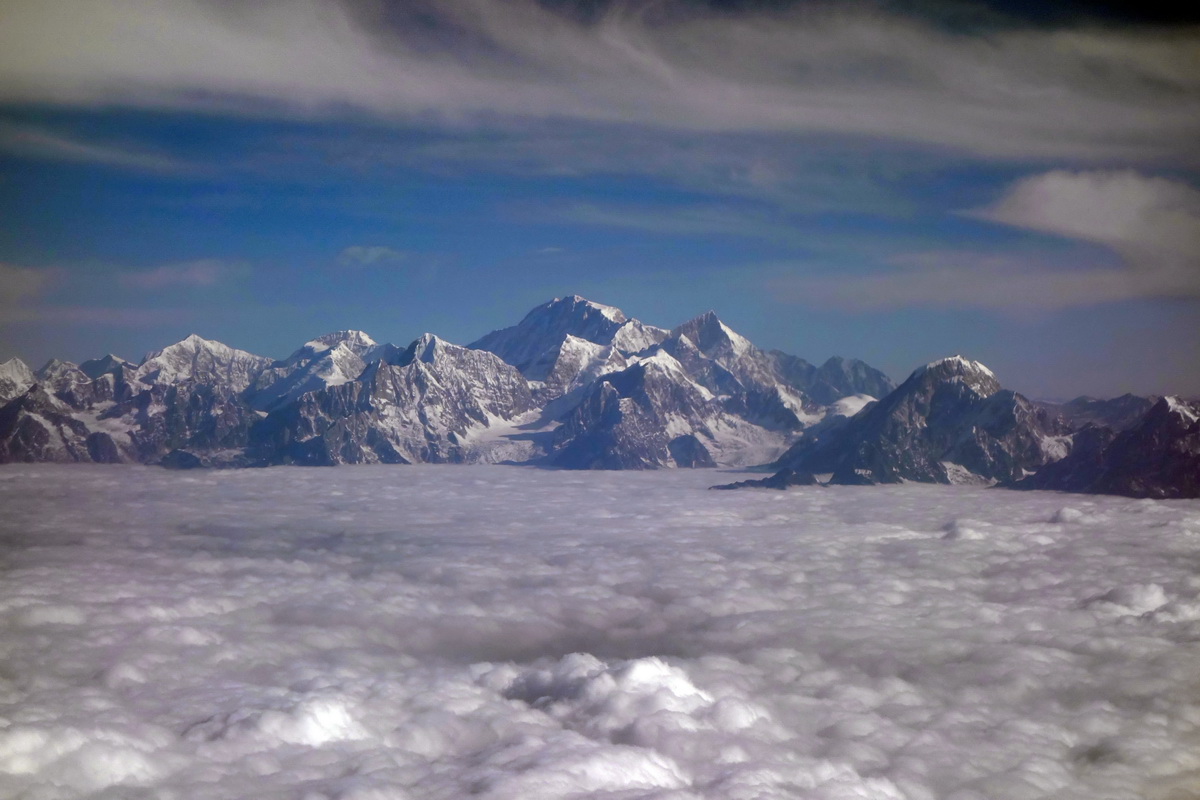
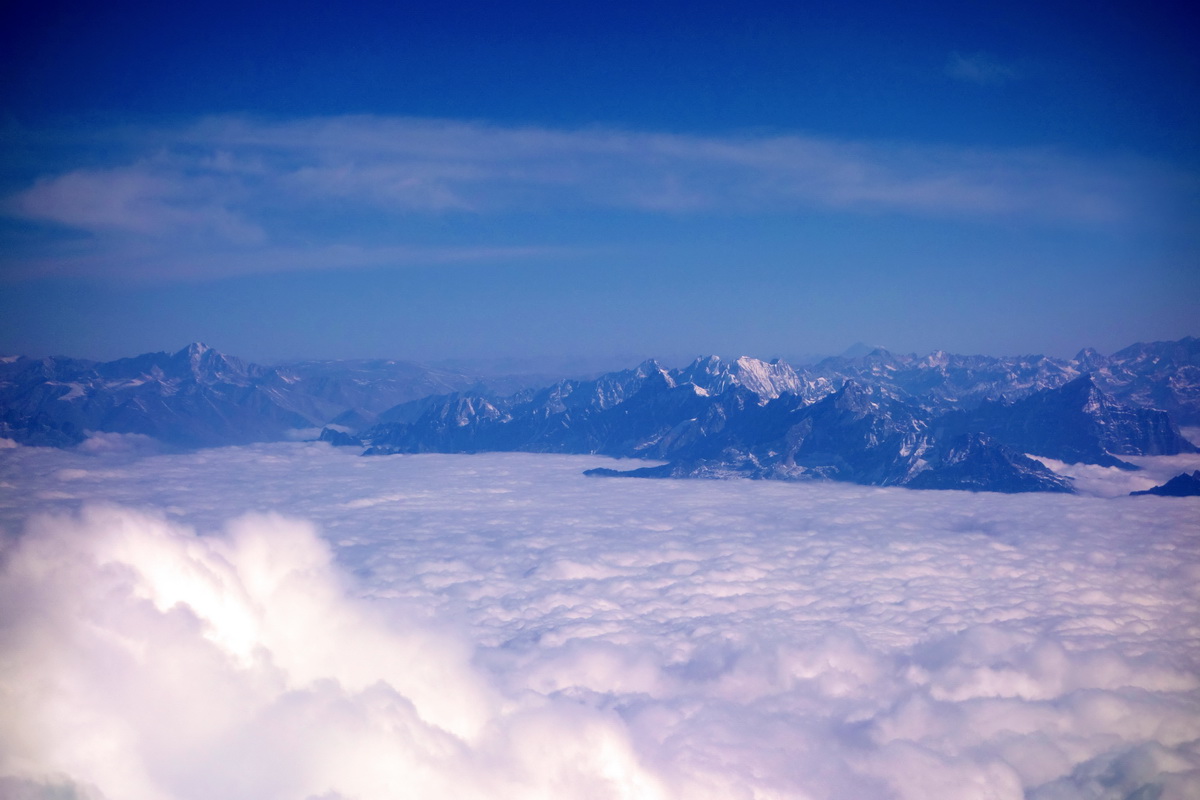
The flight attendant invited each passenger to the cockpit to admire the views of the accompanying mountains through the pilots’ window.
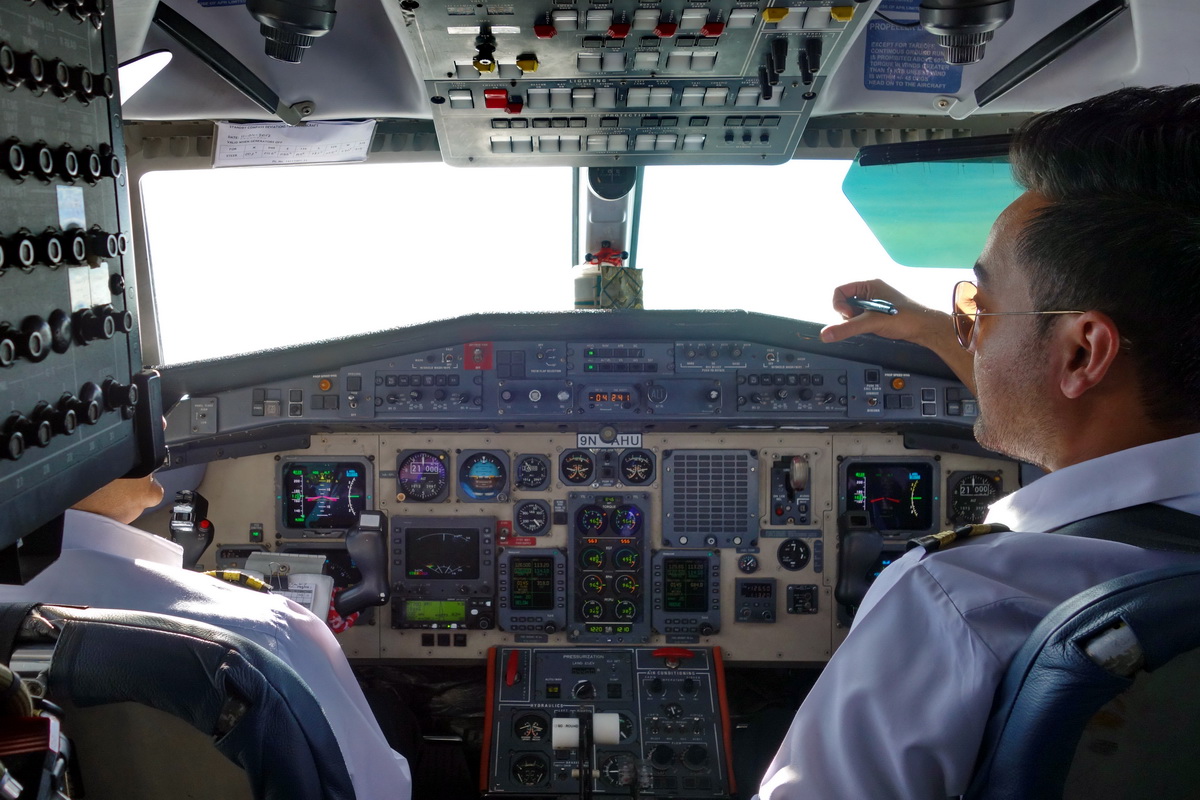
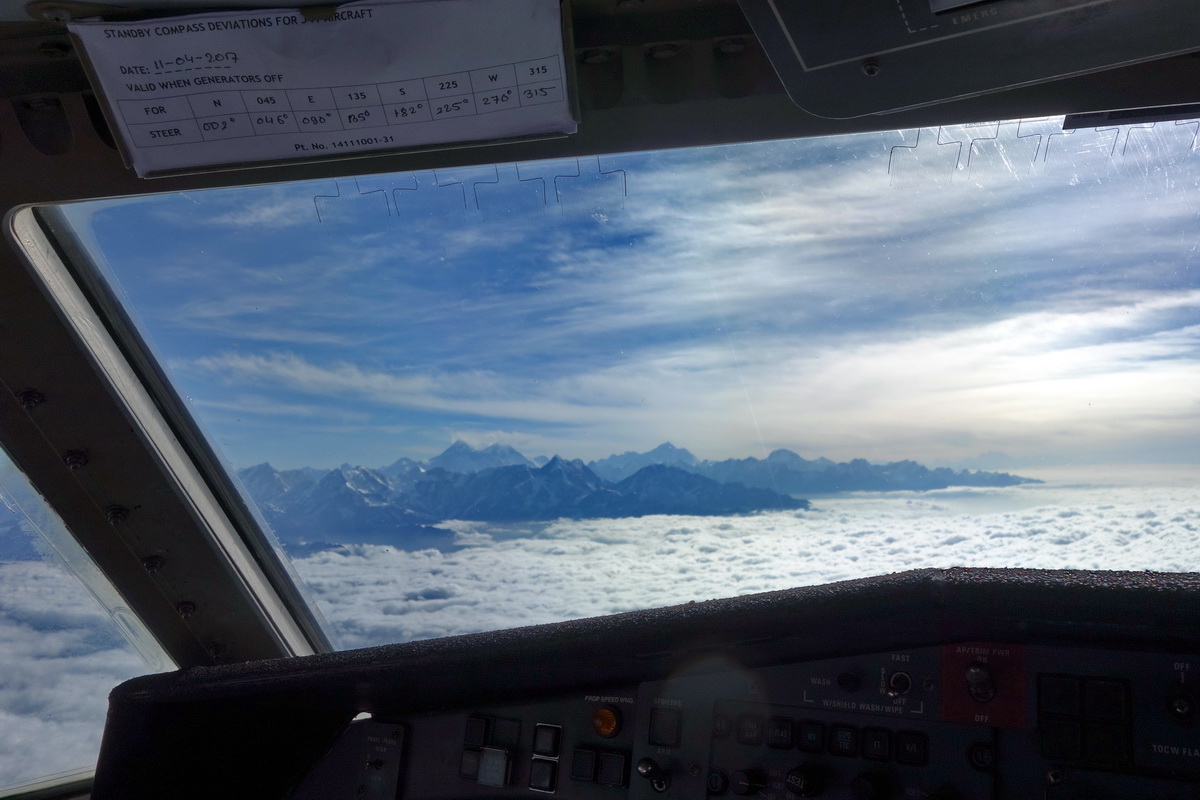
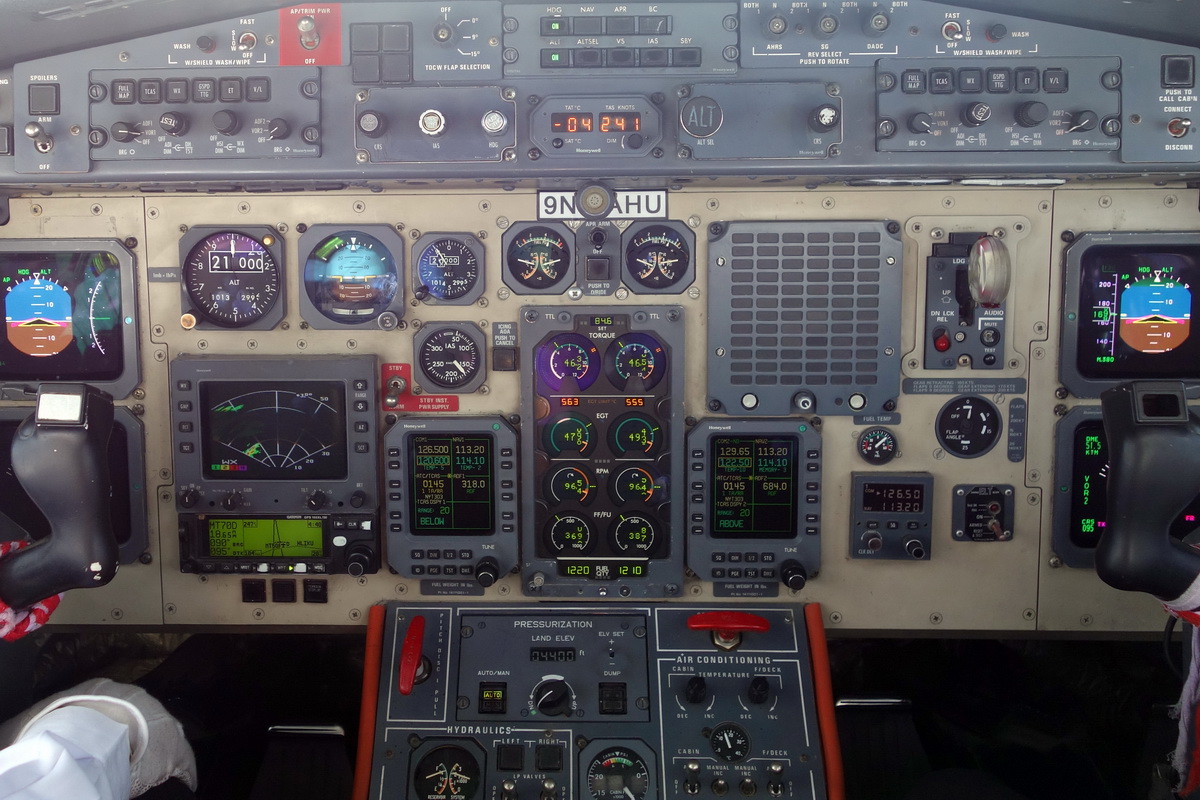
Seeing the highest mountains on Earth is so breathtaking that you literally “can’t believe your eyes.” The feeling of seeing these mountains is indescribable.
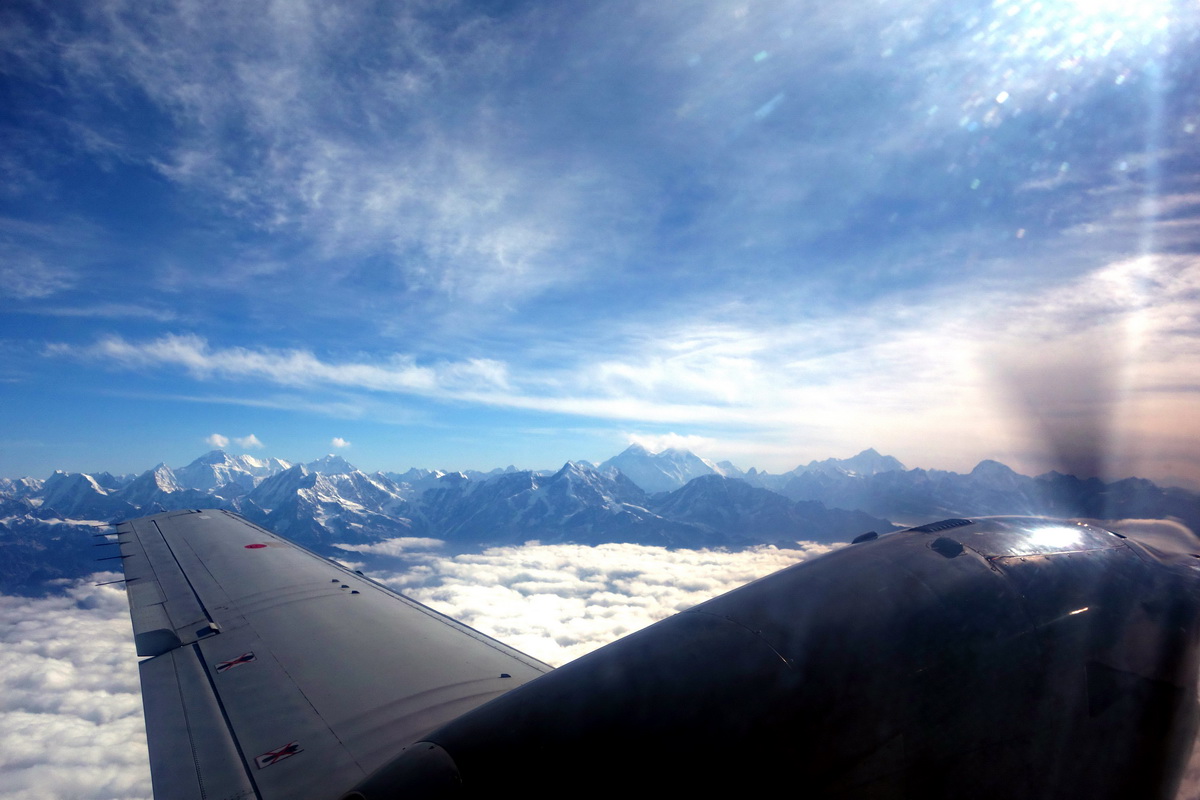
And there’s Everest, towering 8,848 meters above sea level. The peak lies directly on the border between Nepal to the south and China’s autonomous region, known as Tibet, to the north.
Mount Everest was discovered by George Everest, who served as the Surveyor General of India, in 1841. Since then, the official name given to the world’s highest peak comes from the discoverer’s surname. The Tibetan name for the mountain is Chomolungma (“Divine Mother of Life”), and the Nepalese name is Sagarmatha (“Mother of the Gods”).
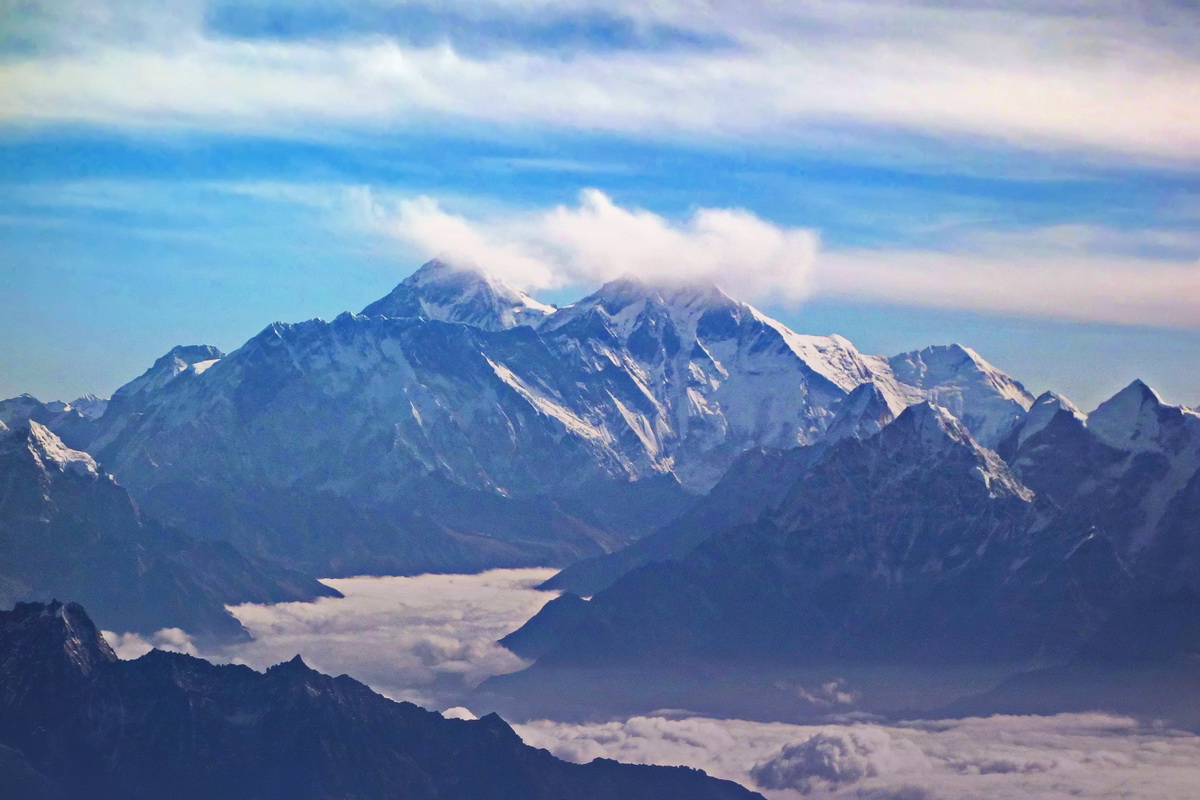
Everest captivates and makes you feel how weak humans are before the power of nature.
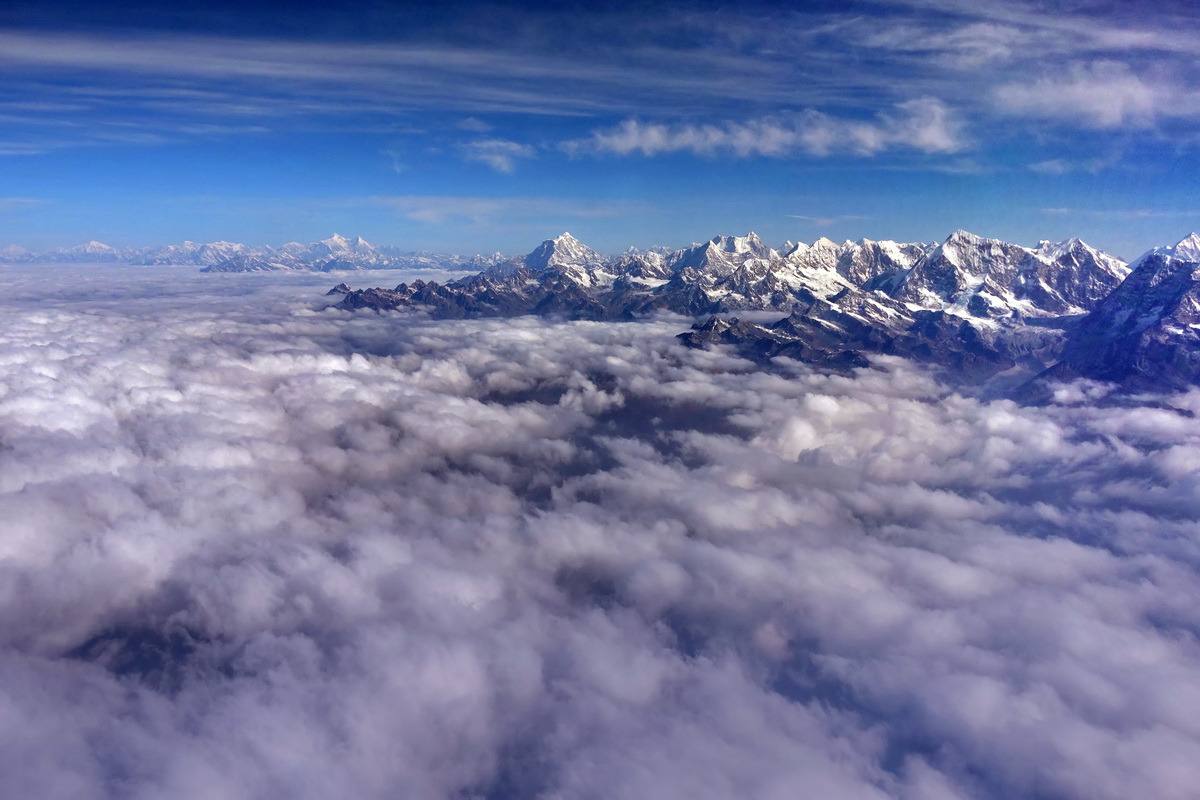
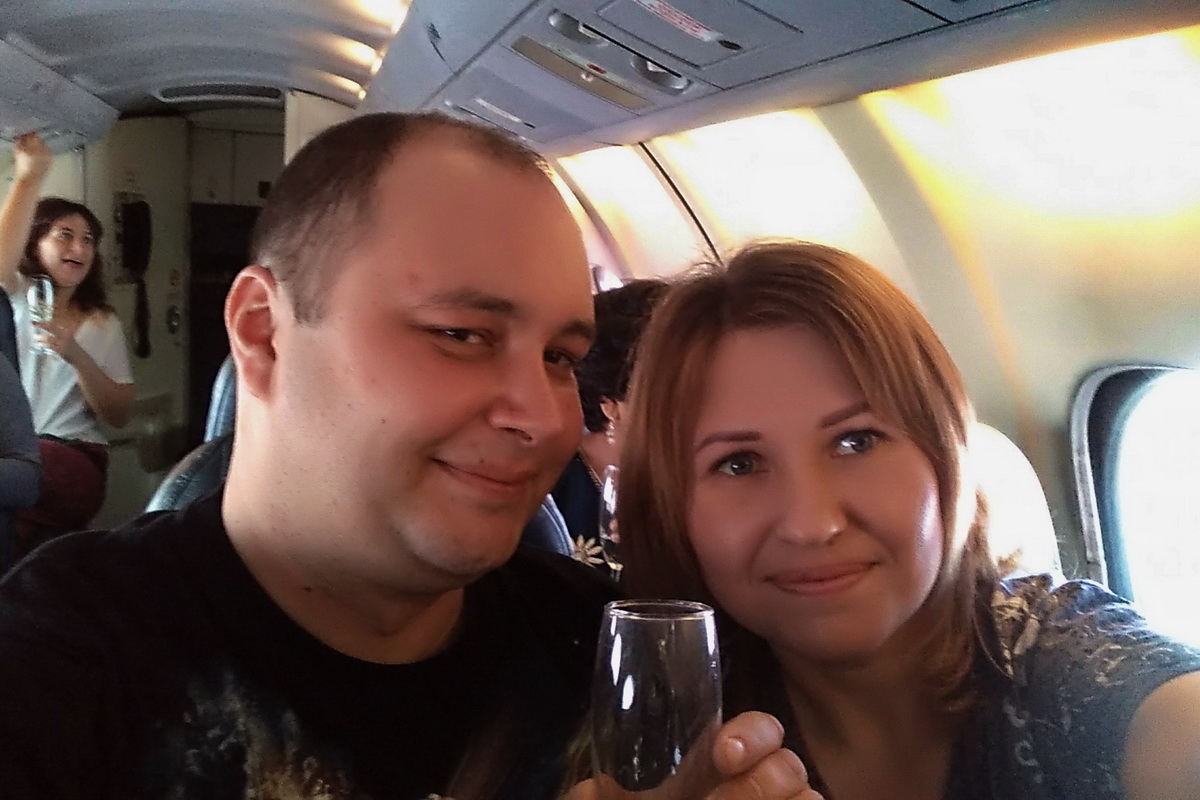
It’s nice to celebrate a successful flight near Everest with a glass of champagne.
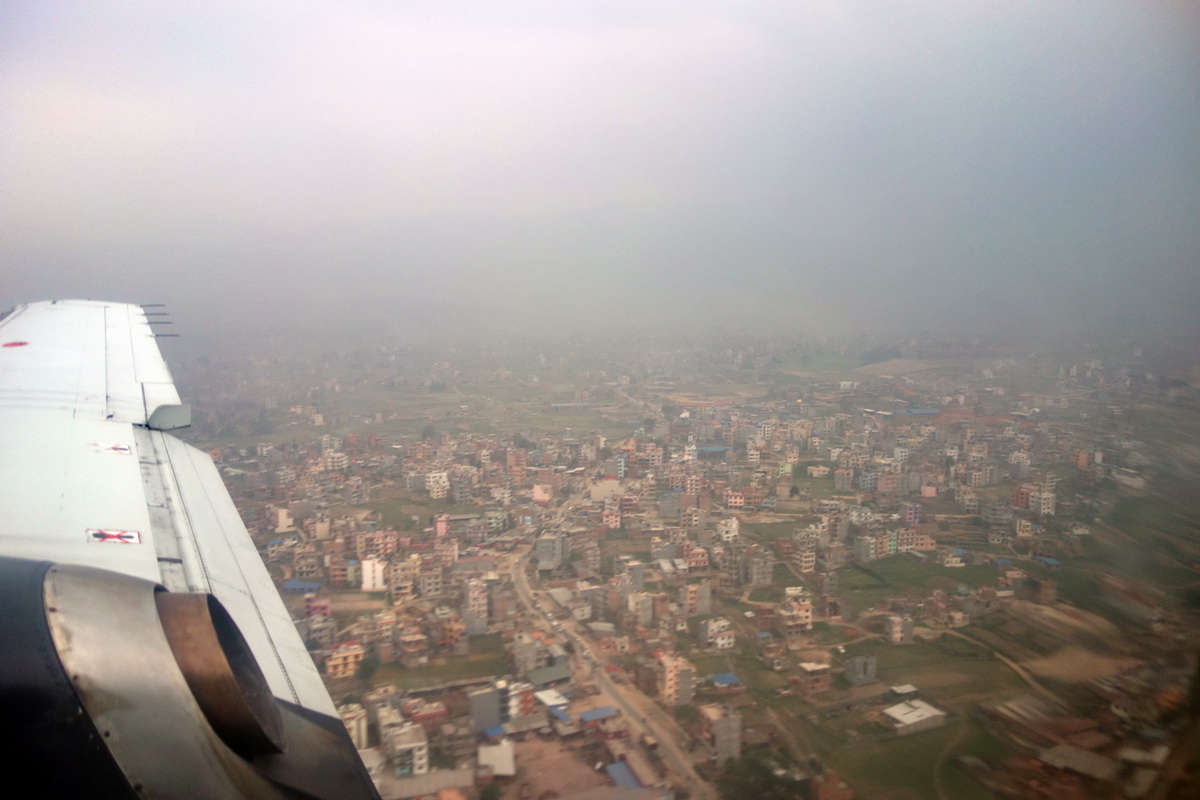
We land.
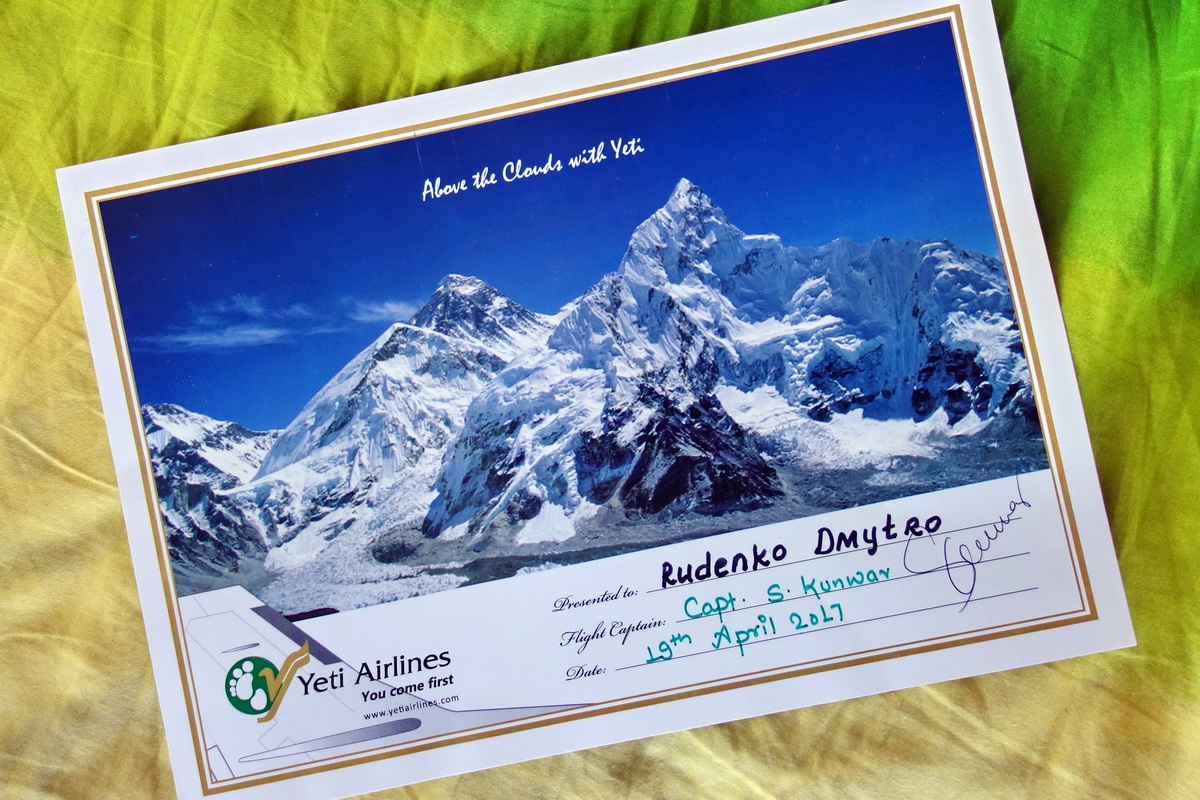
The flight attendant handed each passenger a certificate stating that we are now among the lucky ones who have seen Everest from the plane.
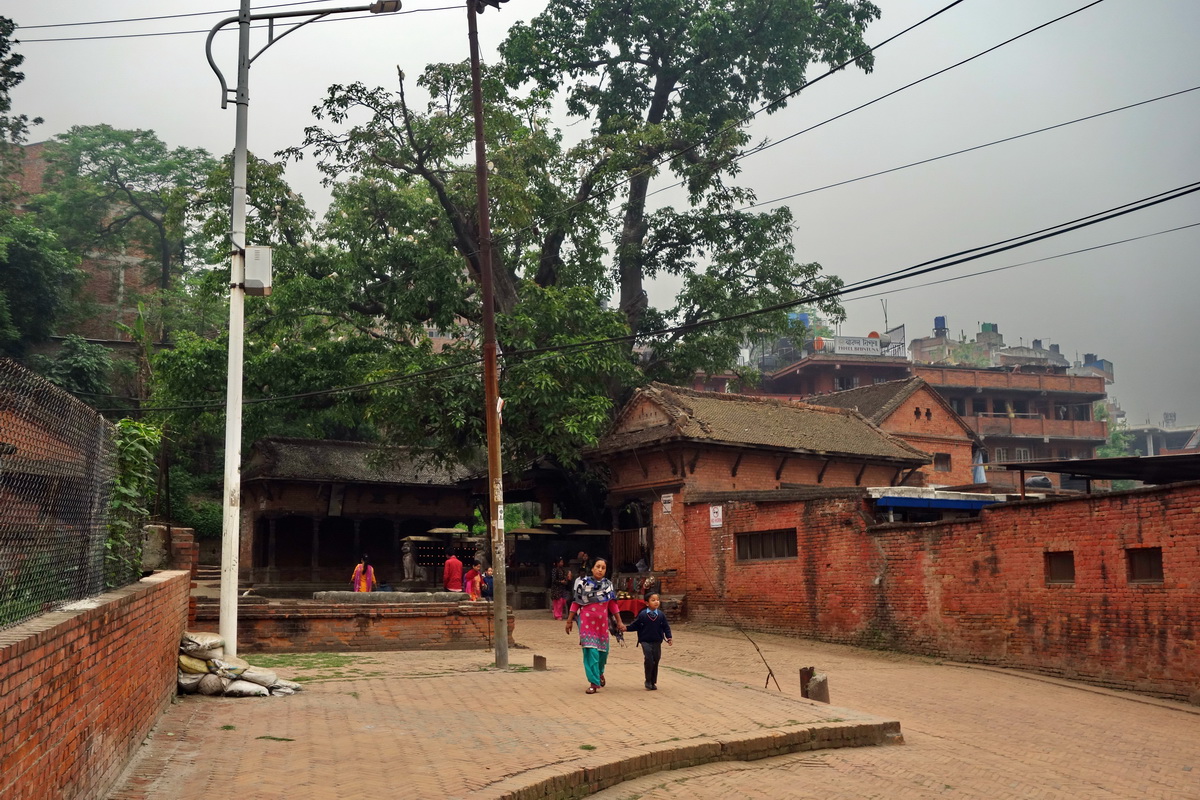
Bhaktapur
Still under the pleasant impression of the flight along the Himalayas, we decided, after consulting with a taxi driver at the airport parking lot, to head to the ancient Newar city of Bhaktapur. This city is located 16 kilometers from Kathmandu and is one of the three largest cities in Nepal. It is situated at an altitude of approximately 1,400 meters above sea level, like Kathmandu.
Bhaktapur was founded in the 12th century and was the capital of the Nepalese kingdom in the Kathmandu Valley until the 15th century. The city’s population is about 70,000 people. The local residents are primarily engaged in agriculture and craftsmanship.
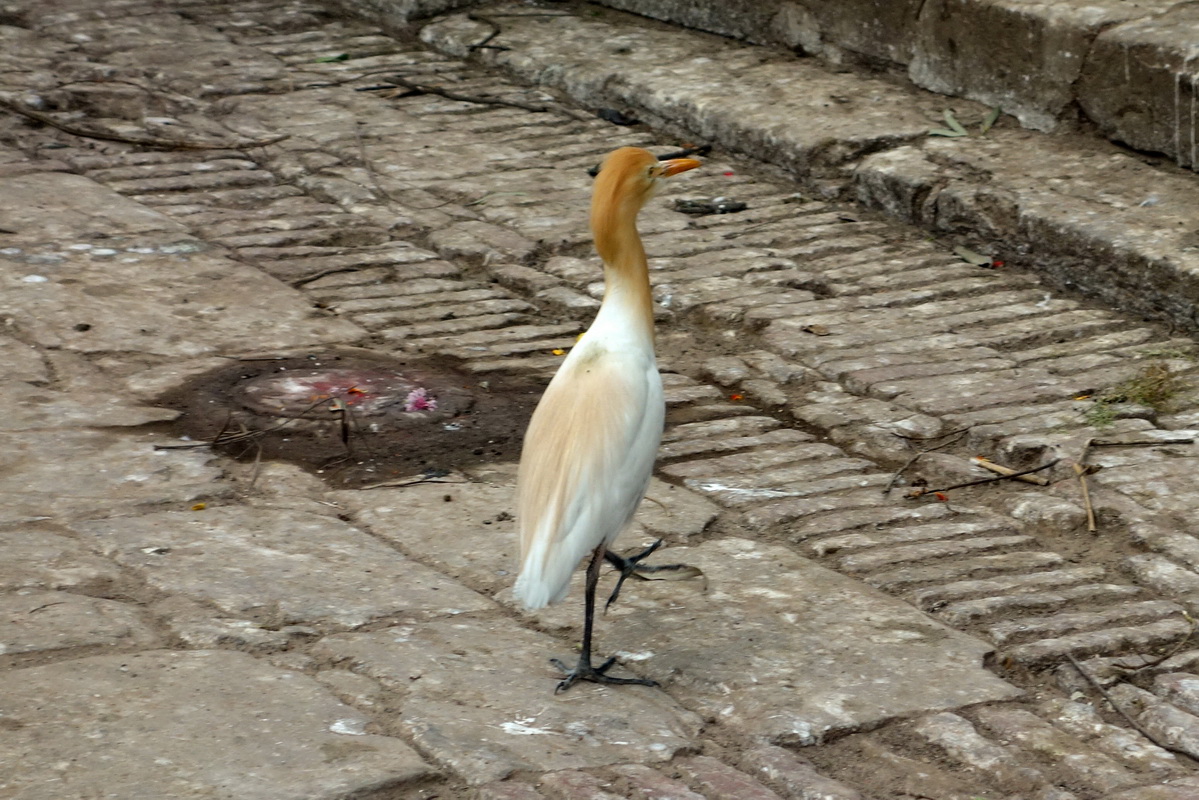
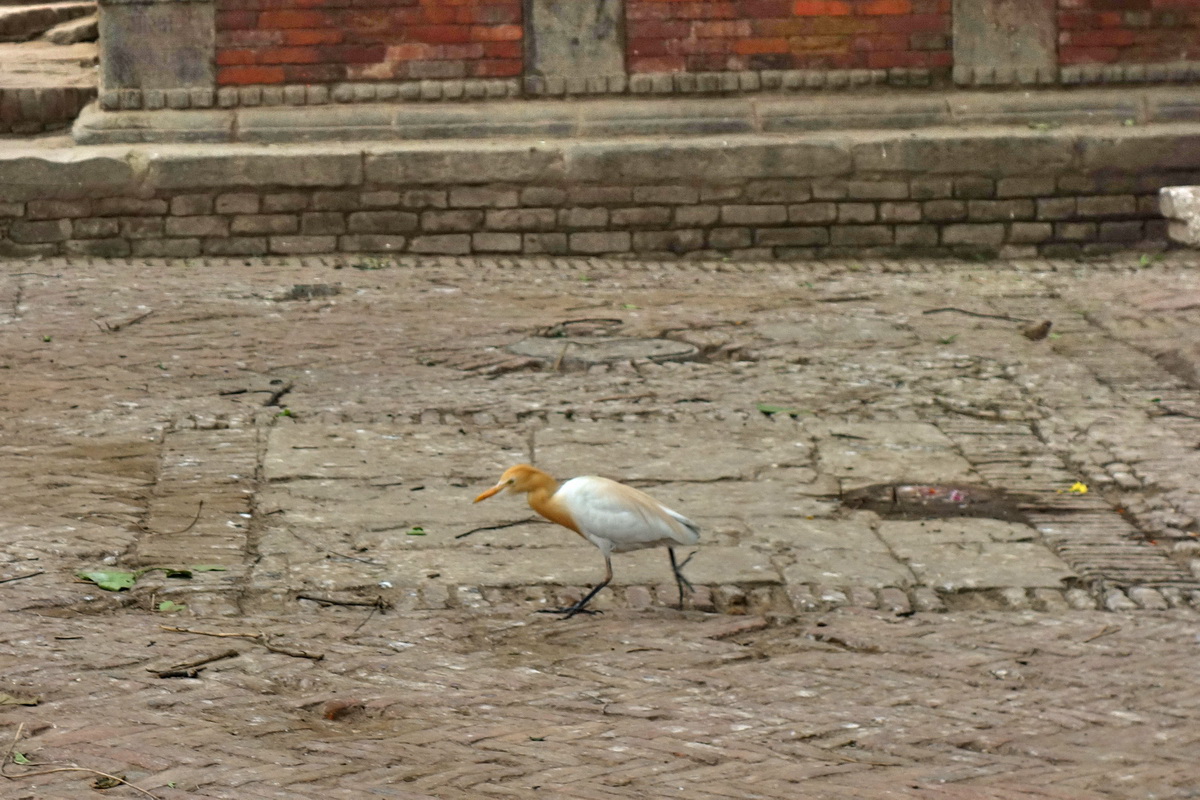
Egrets can be seen all over the city. There are a lot of them here.
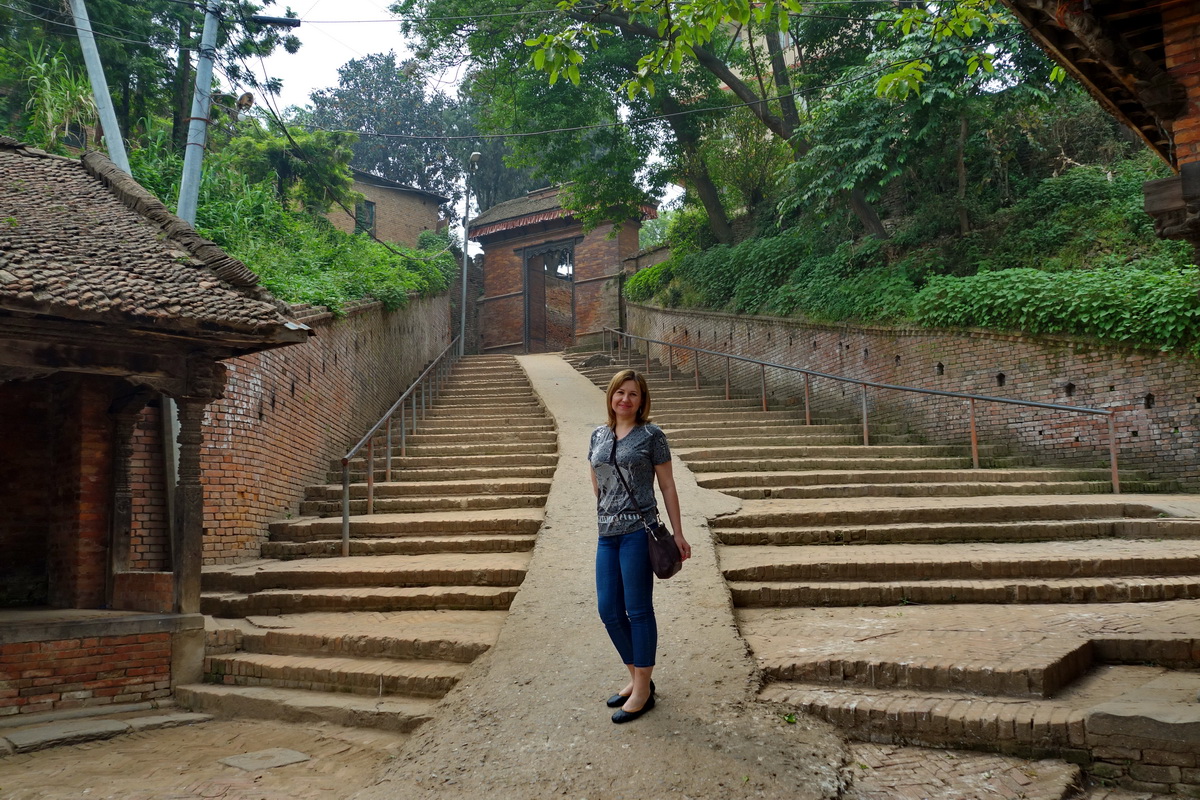
As we approached the central square of the city, we were very surprised by the entrance fee—it was $15 per person. And that’s just for access to the city’s central square. Quite expensive! Oh well, welcome to the old city!
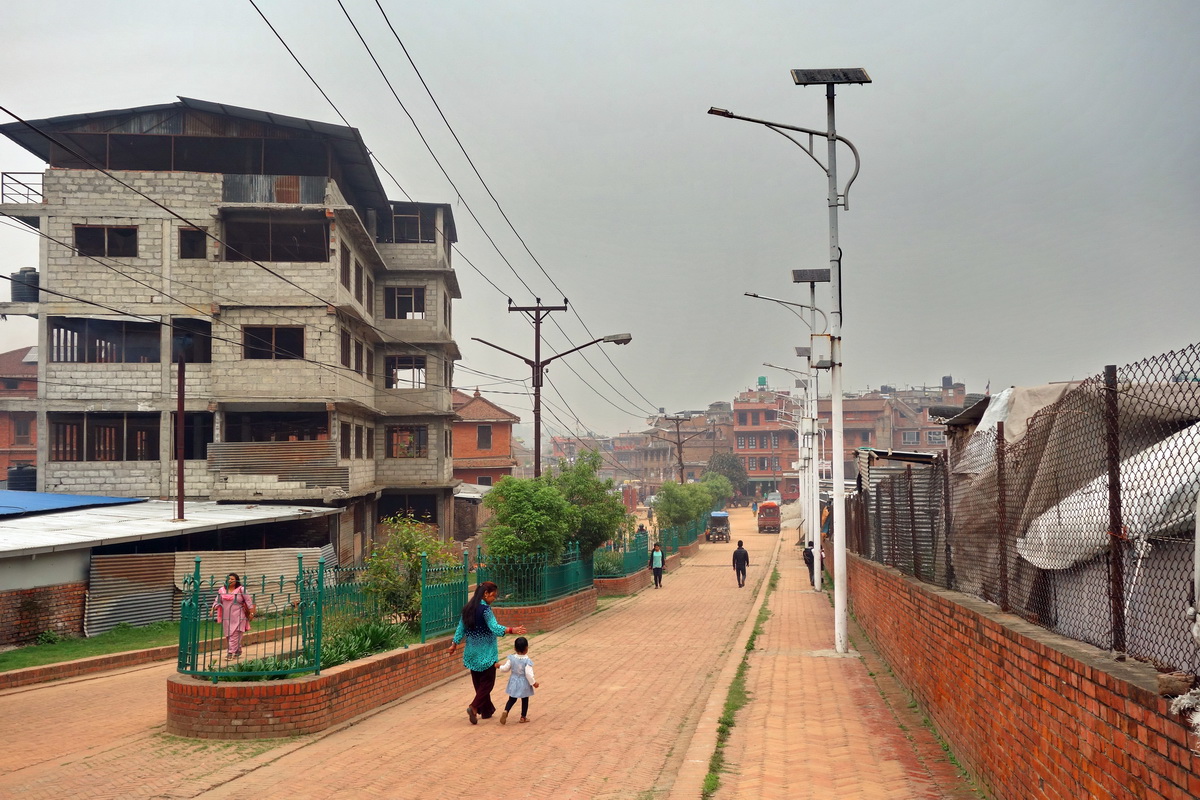
There isn’t much vehicular traffic in the city. The streets are mostly paved. Car movement is prohibited on the central square.
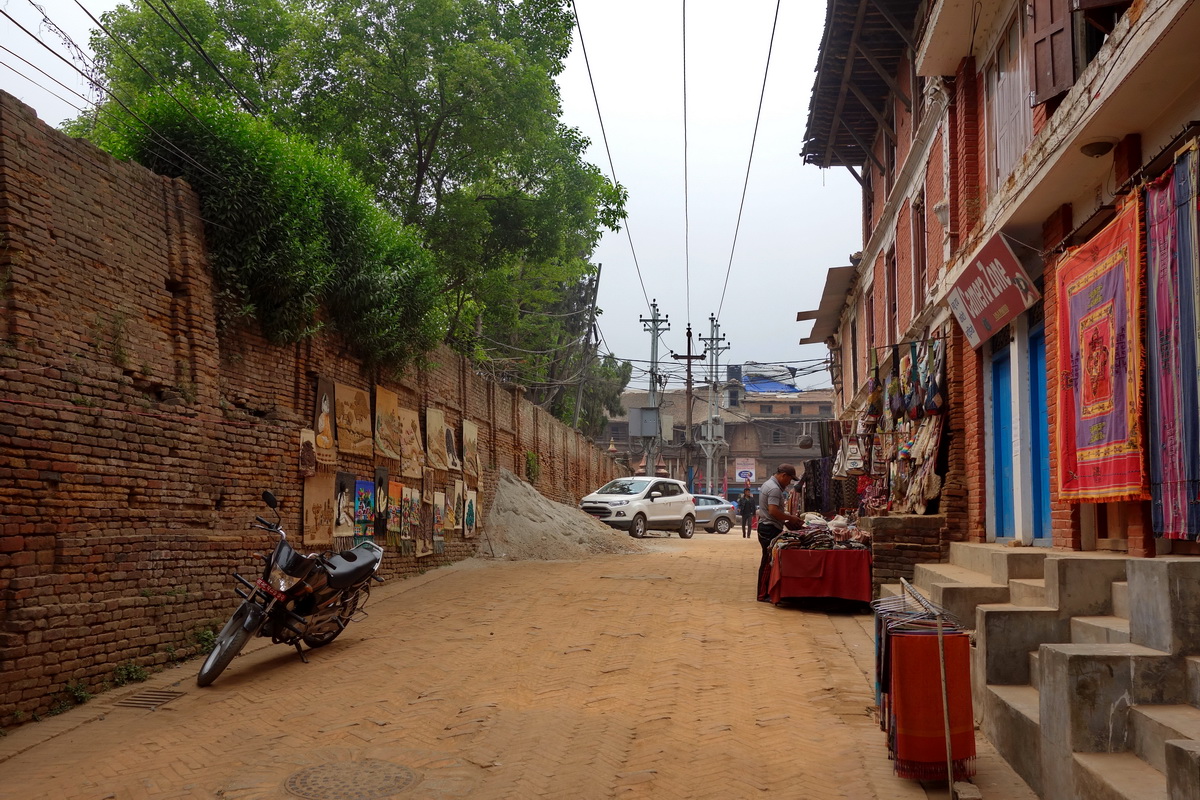
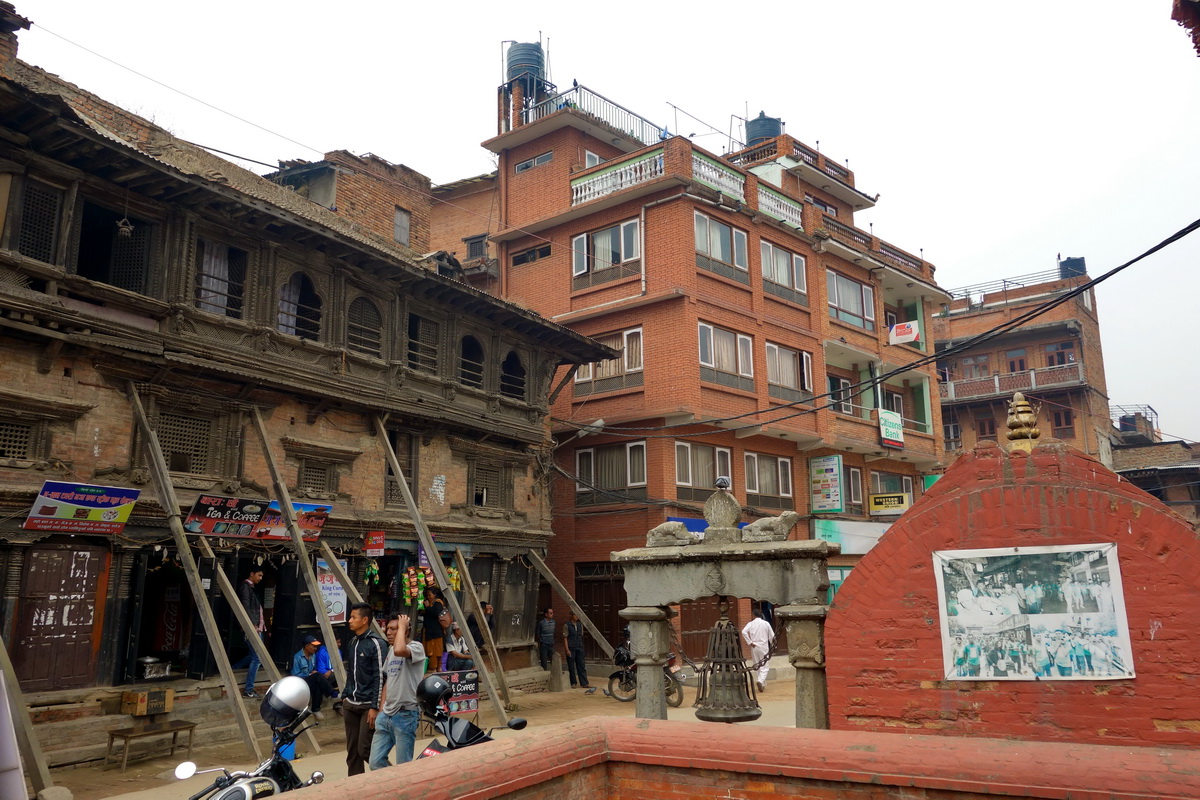
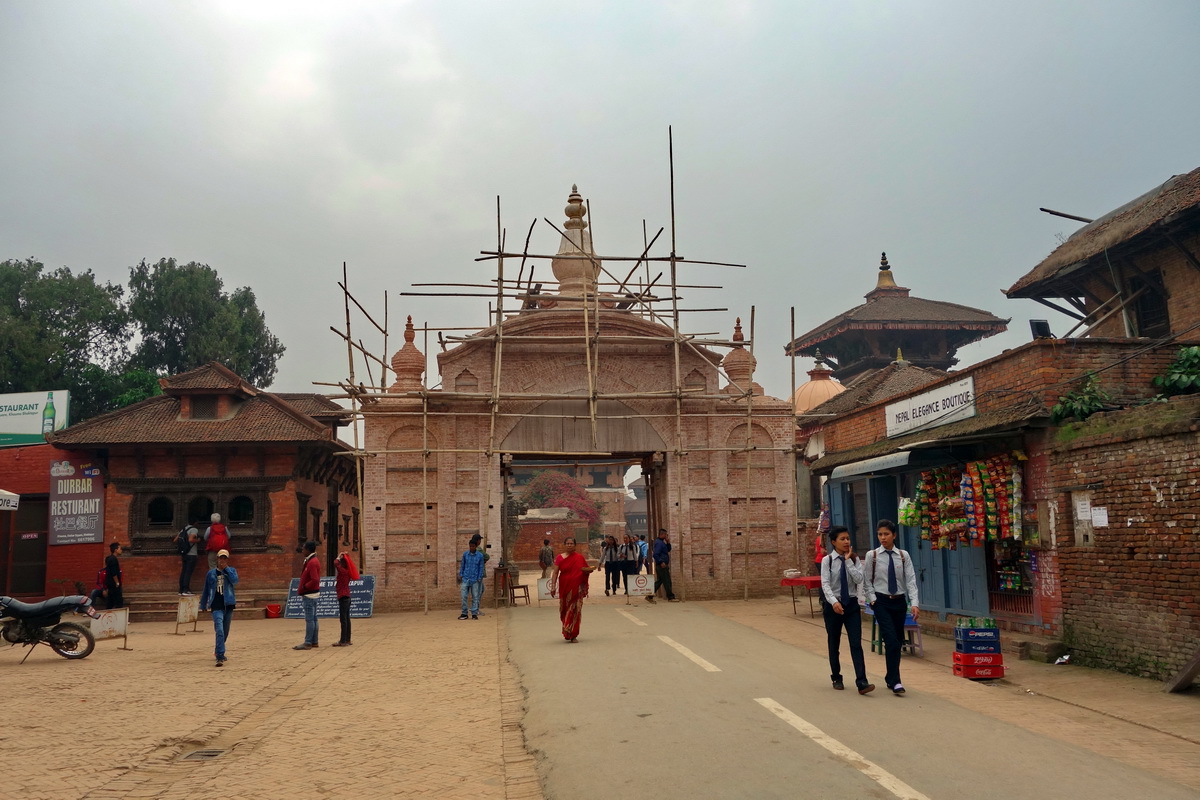
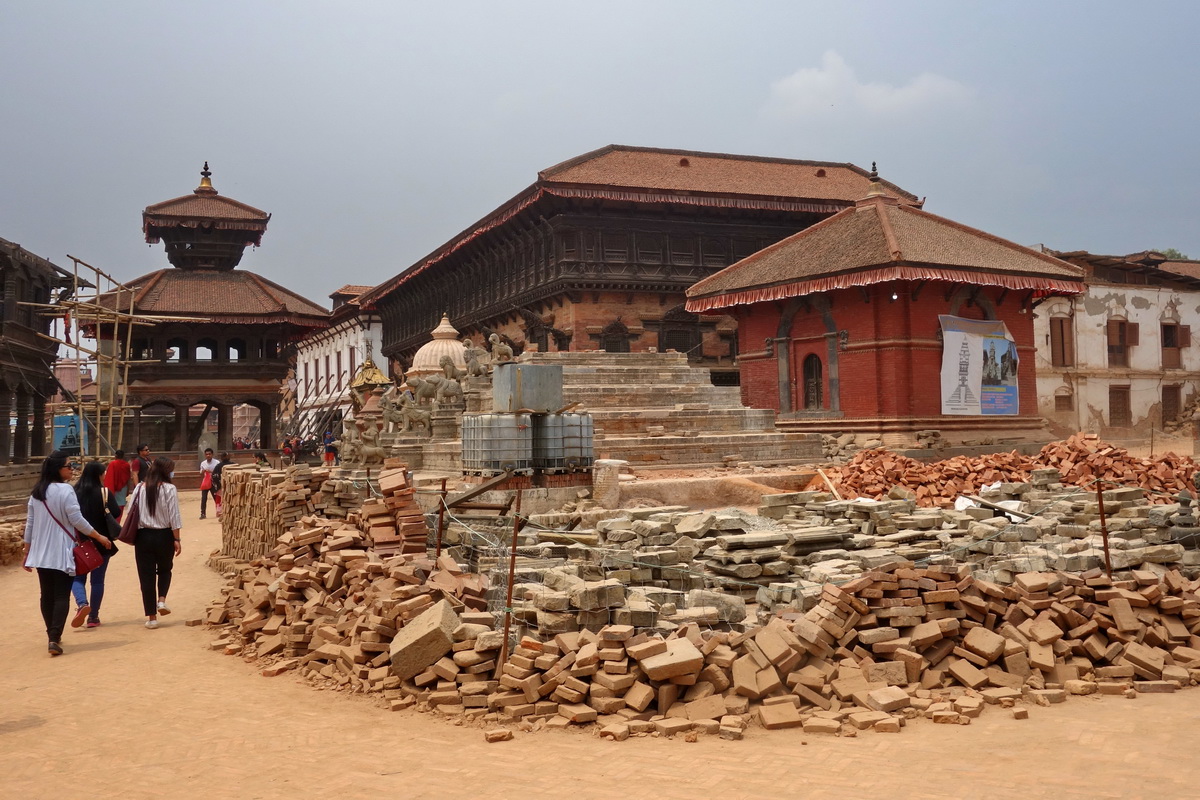
Bhaktapur is considered a museum city. You can wander its streets for a long time, encountering interesting temples and monuments at every step. Unfortunately, many attractions were heavily damaged by the 2015 earthquake.
Due to the earthquake, many temples and buildings are currently under reconstruction. The main attractions of Bhaktapur are considered to be Durbar Square with its temples and pagodas, as well as the royal palace. We decided to head there and compare the Durbar Square in Bhaktapur with the one we previously visited in Kathmandu.
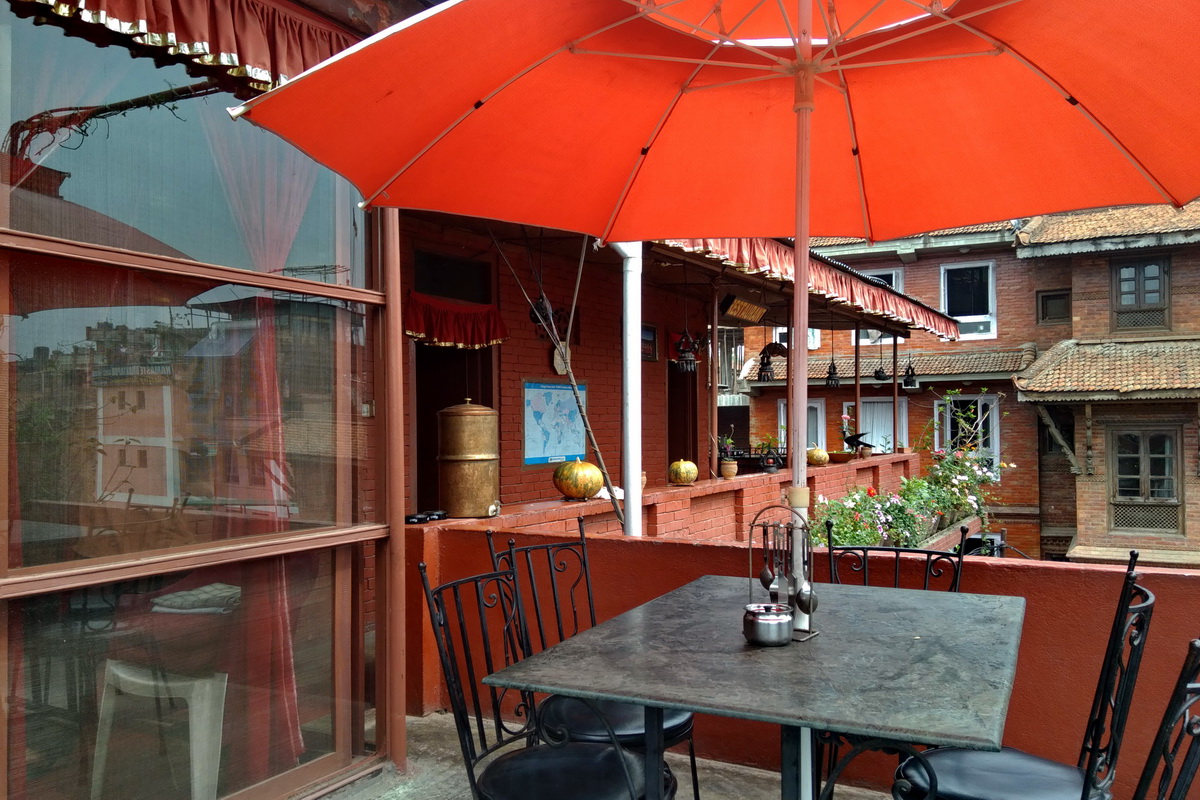
But first, we’ll stop for a bite at a nice restaurant with stunning views of the old city.
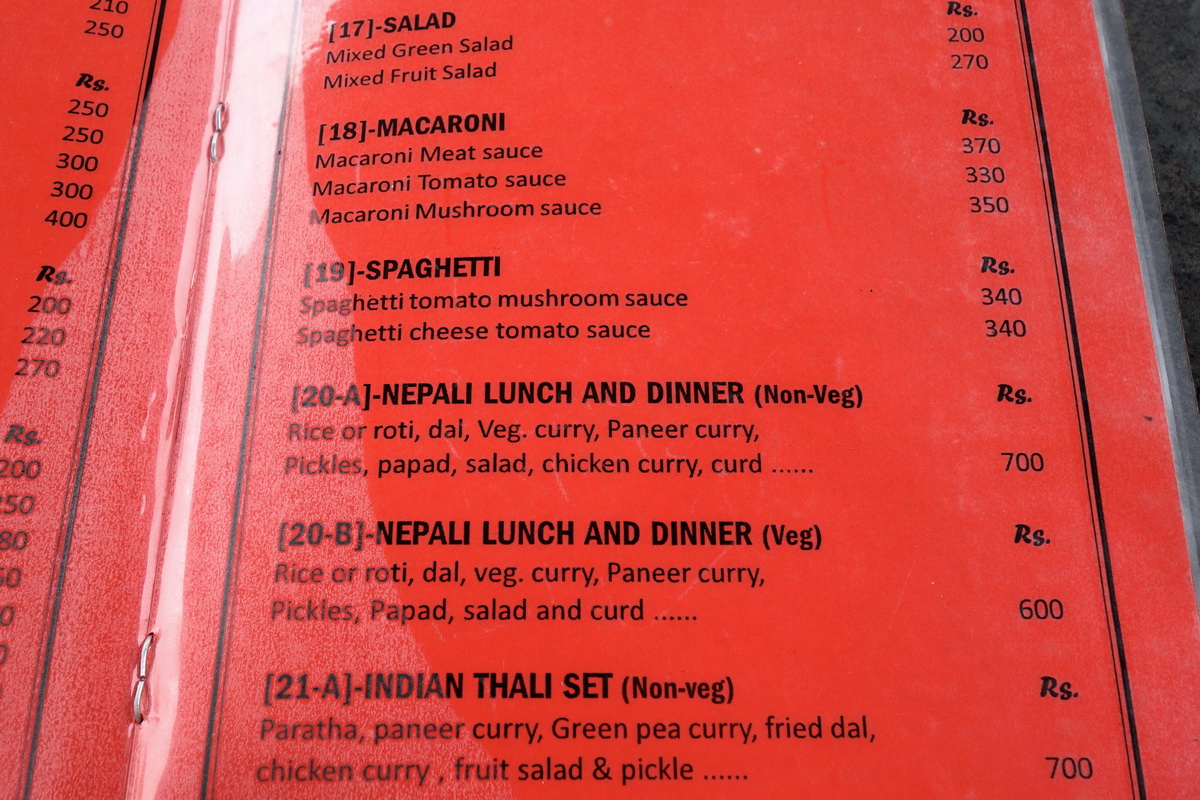
The restaurant caters to tourists, so the prices are accordingly higher. We’ll order a Nepalese lunch for two (item 20A). With tea, it will cost about $10. Not bad.
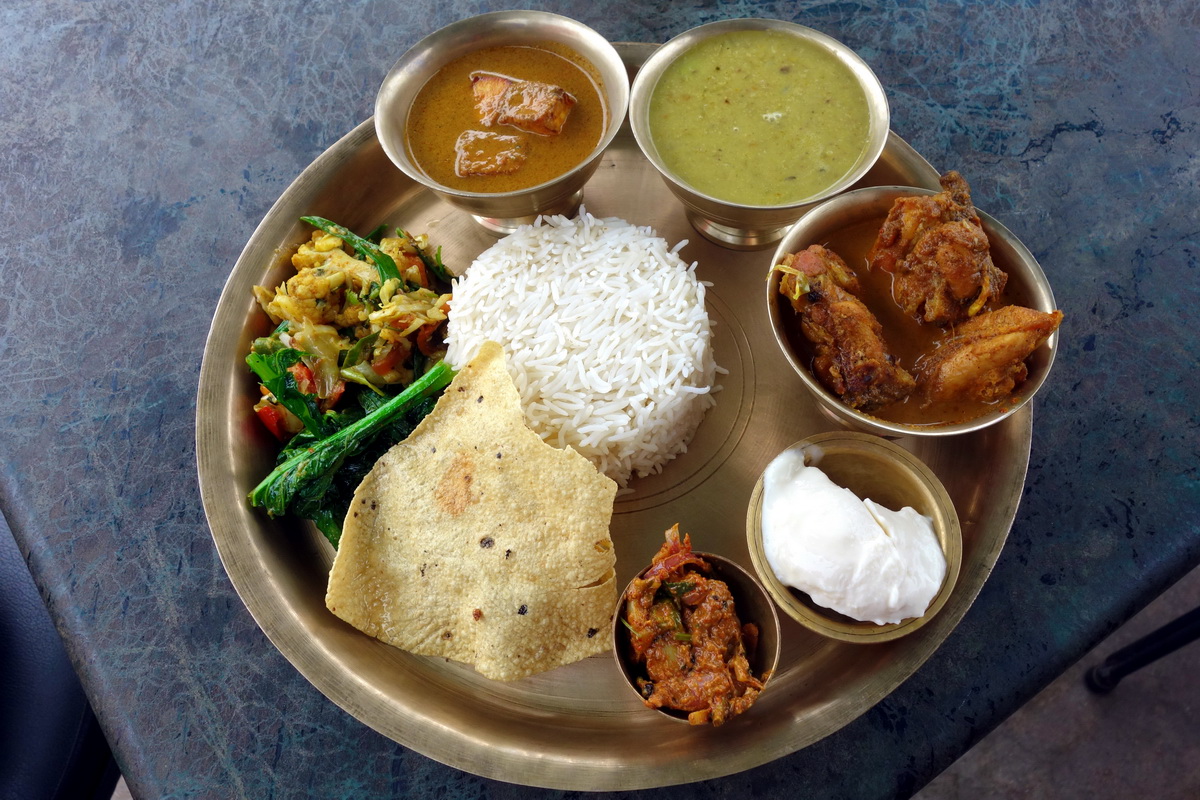
The dish itself. It looks very interesting and quite tasty, though the noticeable spiciness prevents fully enjoying it. But it’s edible :)
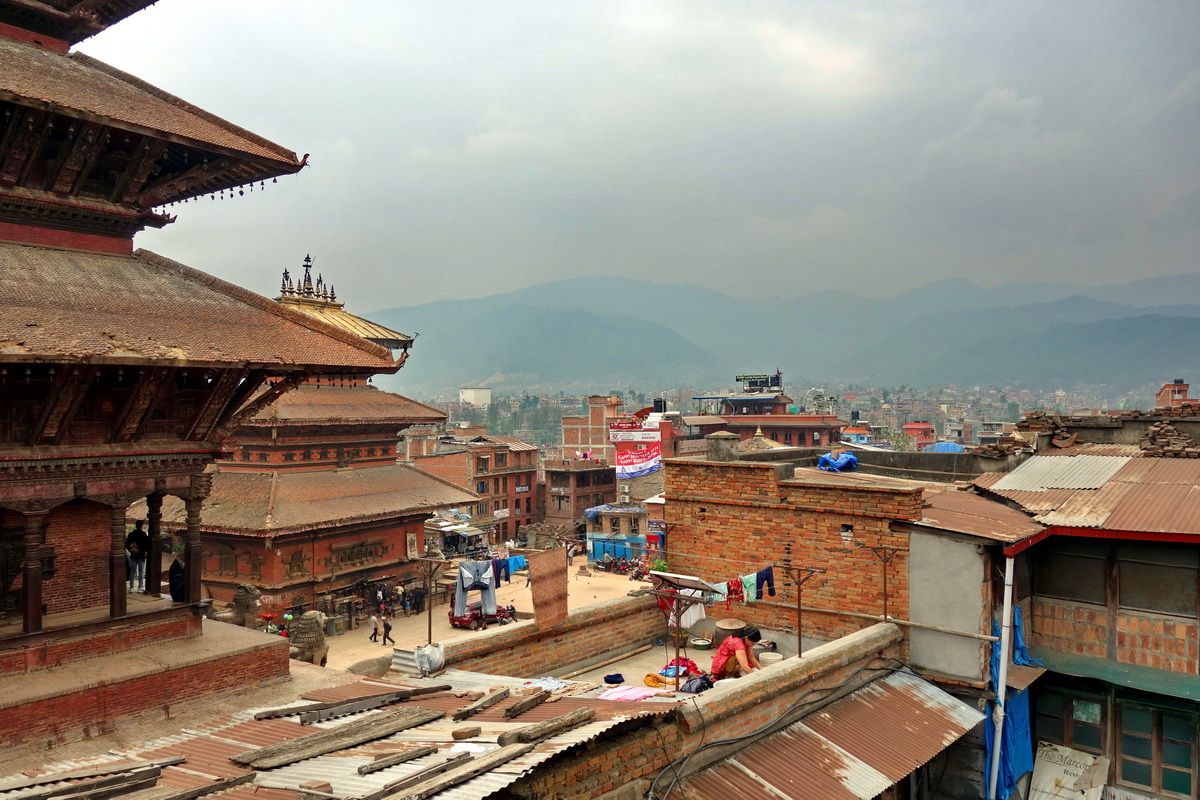
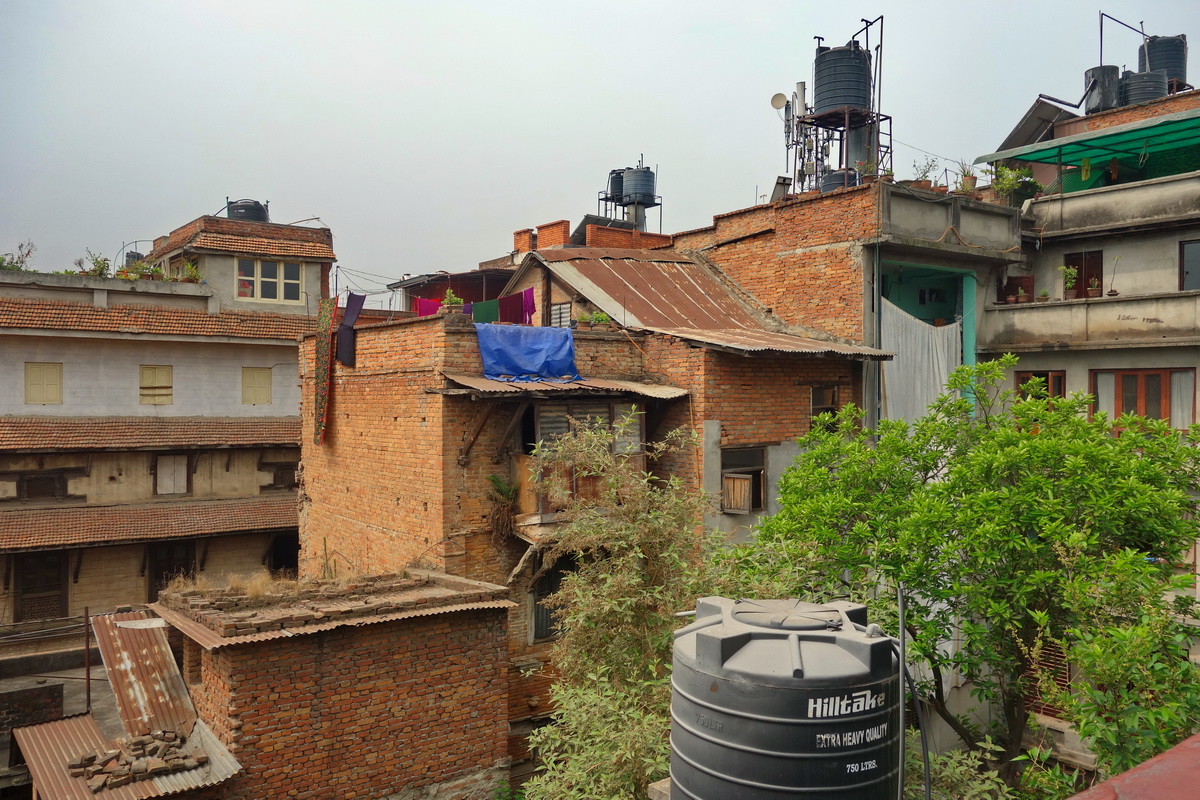
We admire the stunning view of the old city and the tallest pagoda in Nepal—the Nyatapola Temple, located on Taumadhi Square.
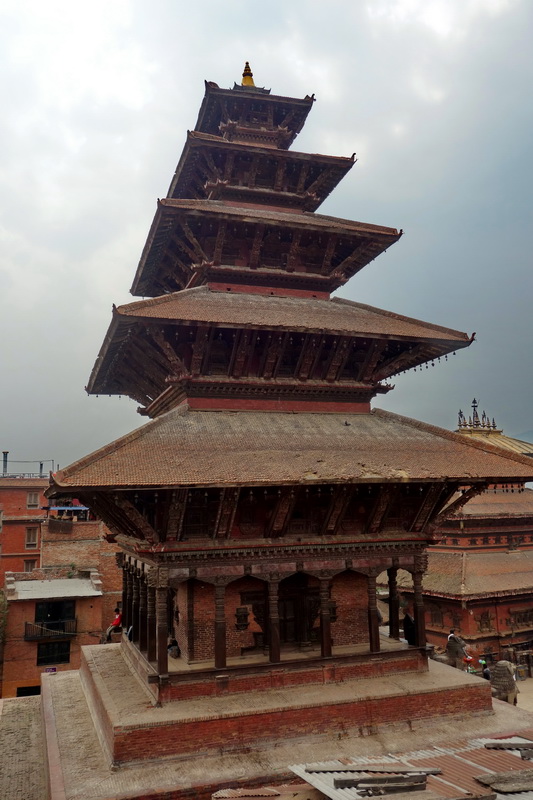
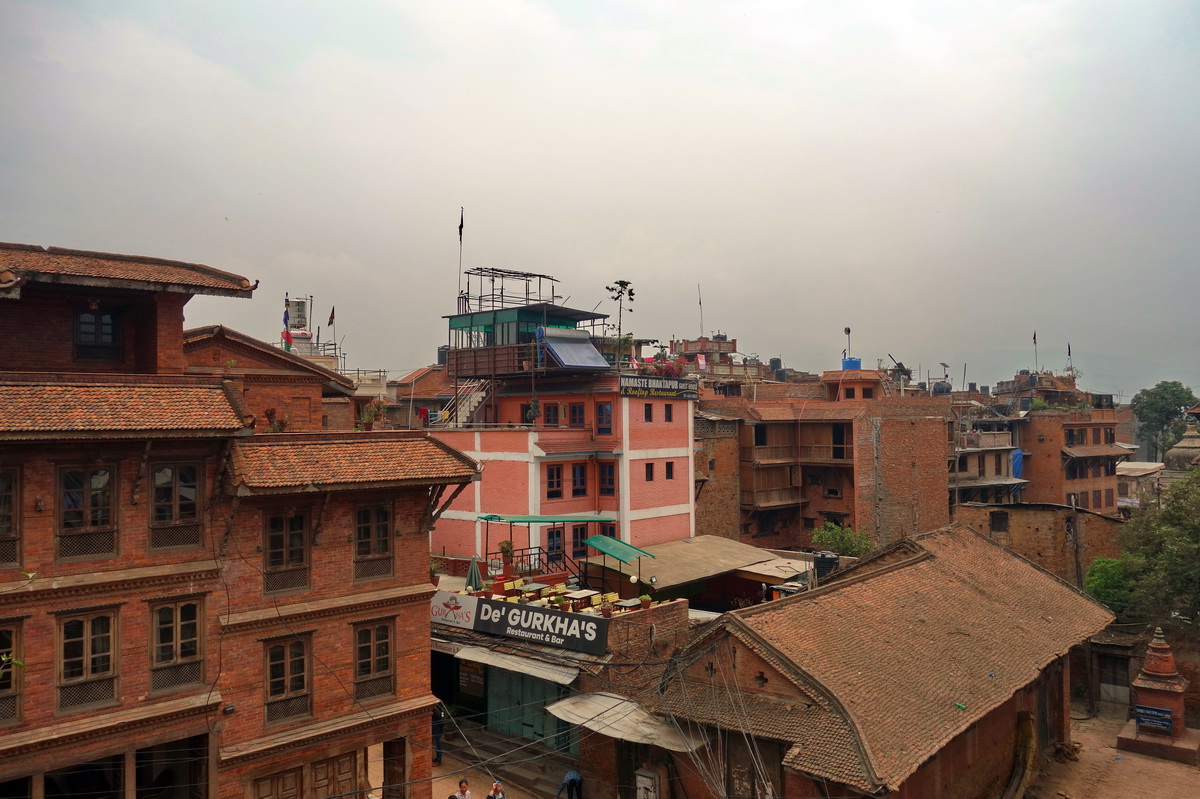
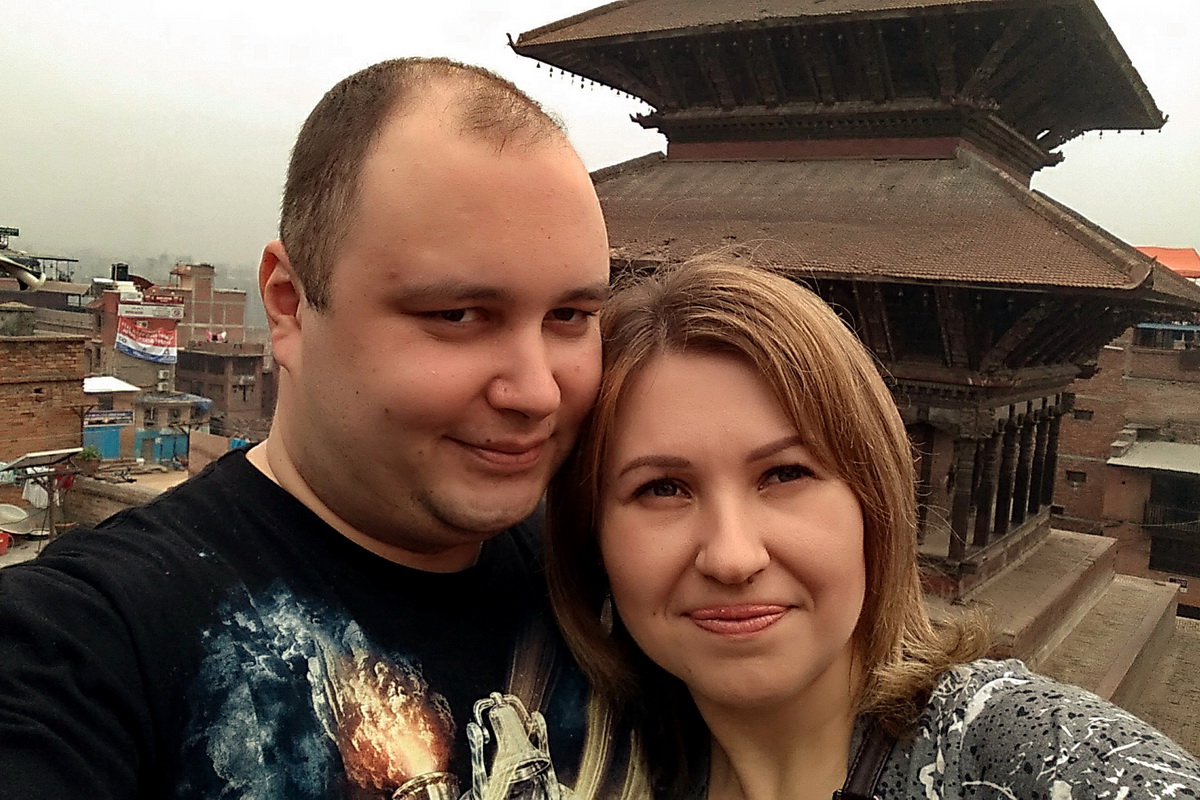
After a delicious and very spicy lunch, we went to take a closer look at this pagoda. The Nyatapola Temple is a kind of symbol of Bhaktapur. It is a 30-meter pagoda. It’s a vivid example of traditional Newar temple architecture—the indigenous people of the Kathmandu Valley. The temple’s name translates to “five-storied,” and it indeed consists of five levels, symbolizing the main elements of nature: water, earth, fire, wind, and sky.
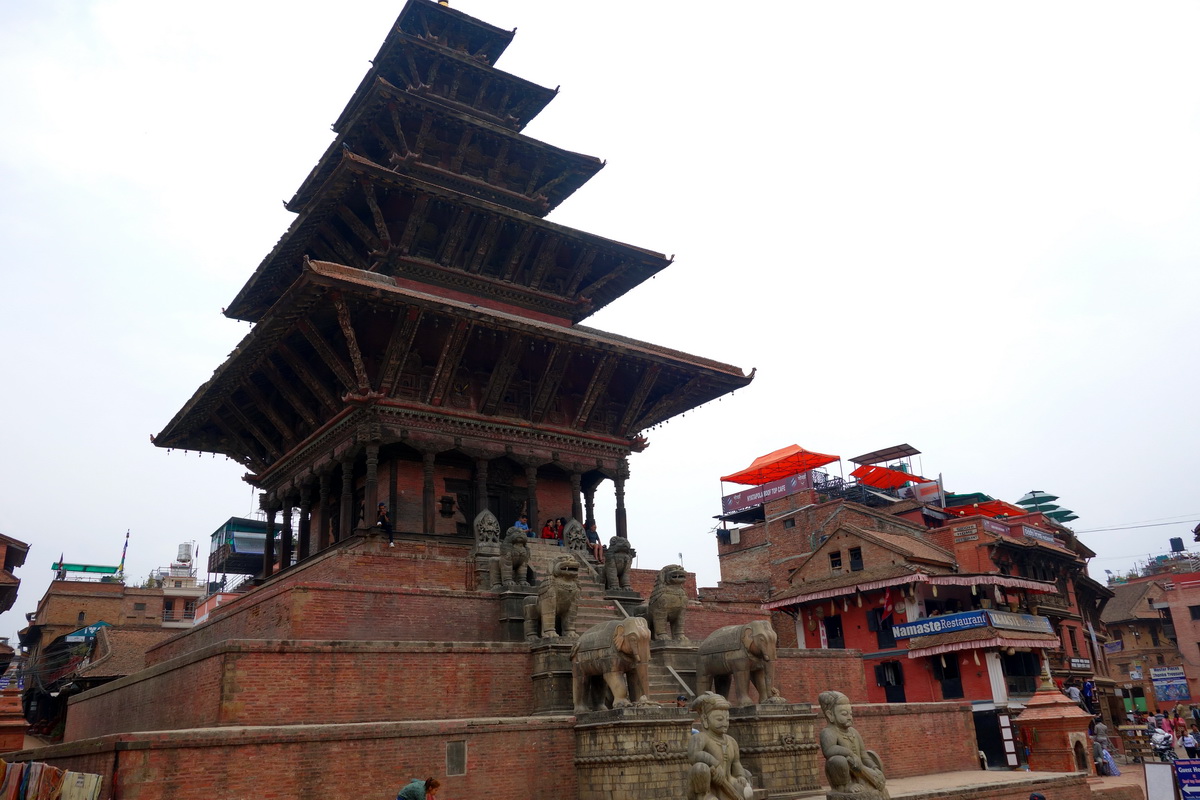
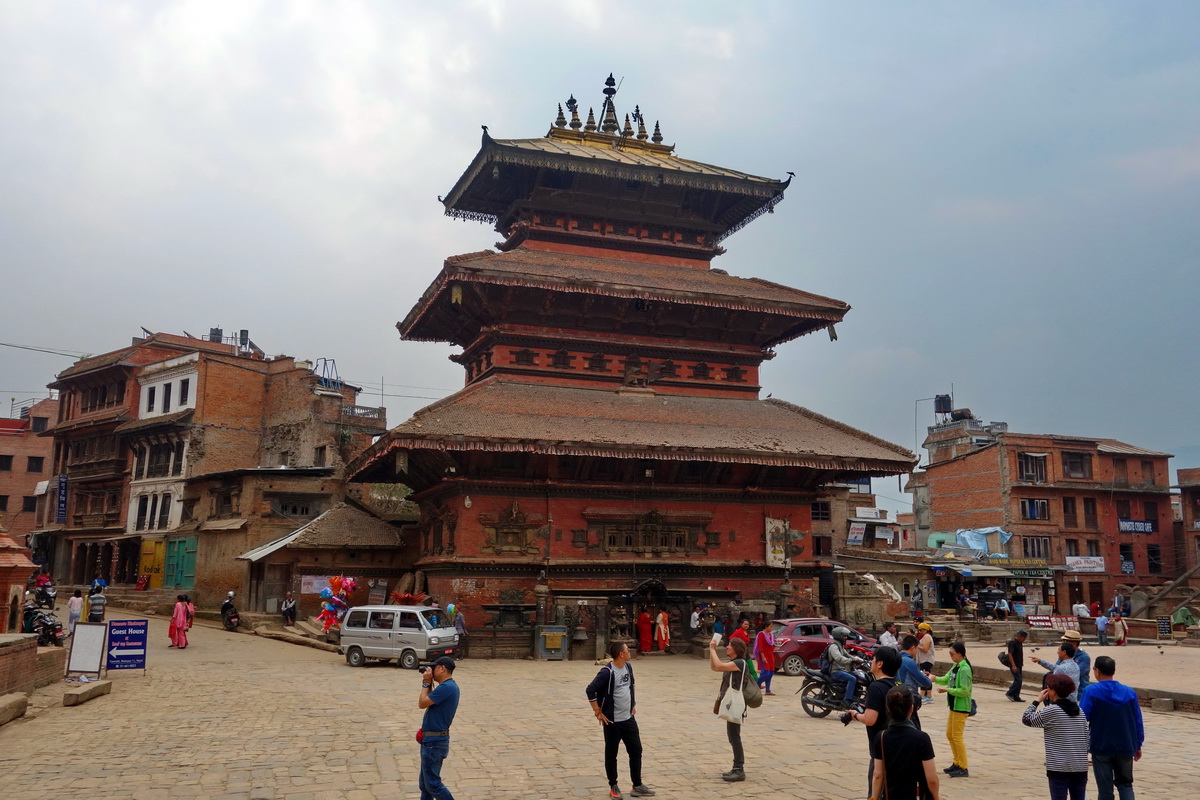
This is the Bhairava Temple (the fearsome aspect of Shiva in Hinduism). It is a three-story structure symbolizing Shiva’s anger. Legend has it that the temple’s main relic is the head of Bhairava, which was cut off by an unknown saint when Shiva secretly visited Bhaktapur. The temple was built in the pagoda style.
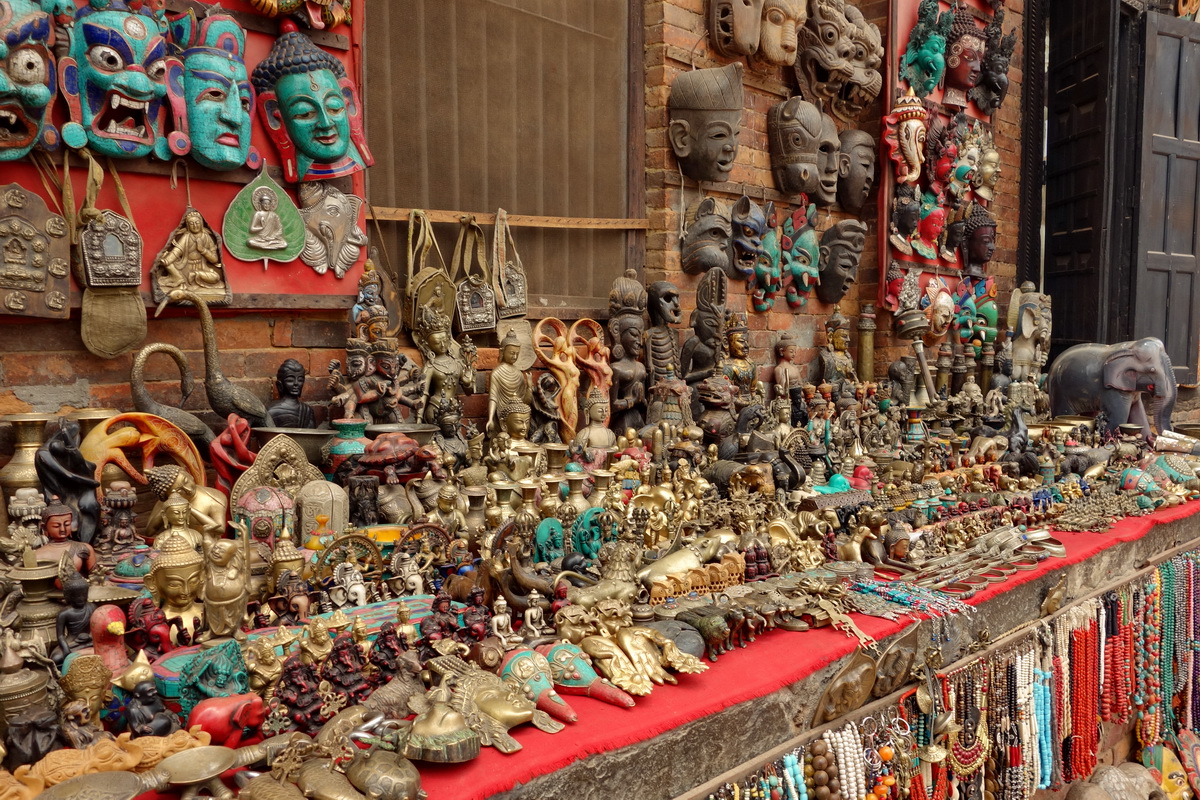
We step out onto a street with vendors selling various curiosities and souvenirs. There are religious items made of wood, metal, and clay—statuettes of Hindu gods, sacred animals, avatars of Vishnu, manifestations of Shiva, ritual masks, and more. All of this is incredibly colorful (except for the masks—they’re genuinely creepy) and attracts tourists’ attention.
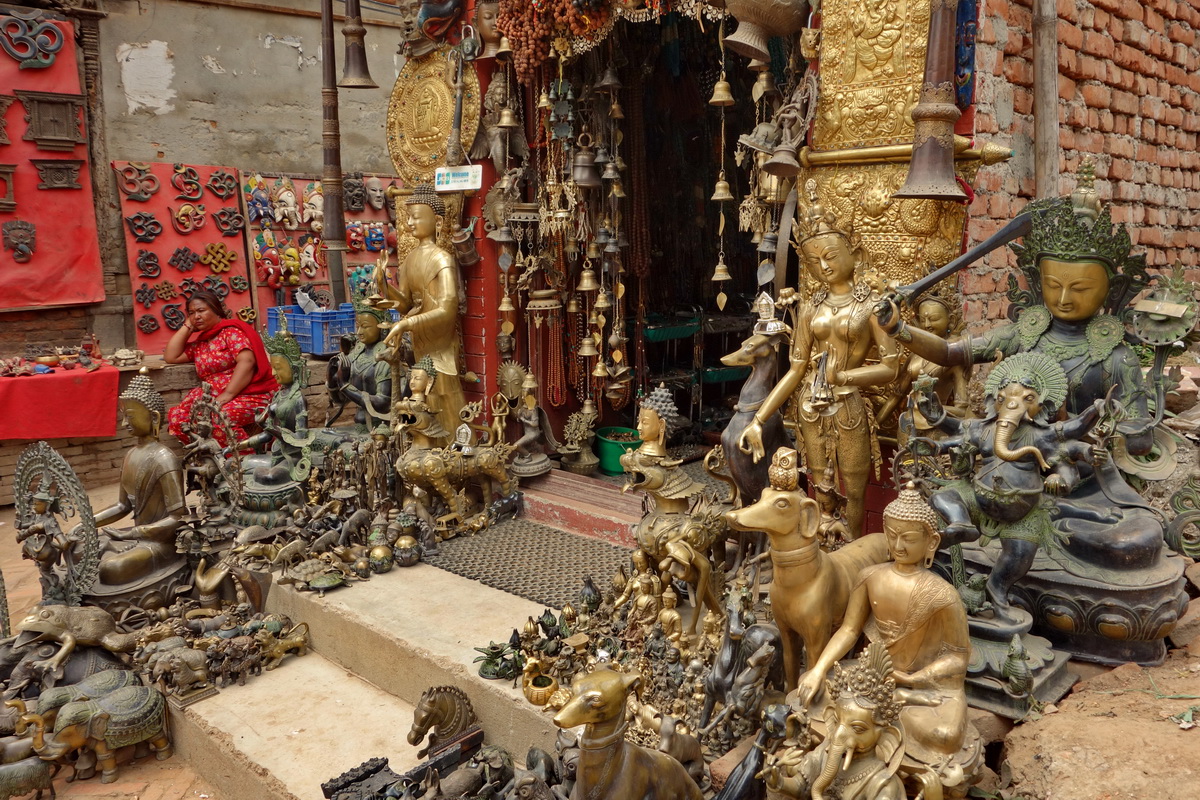
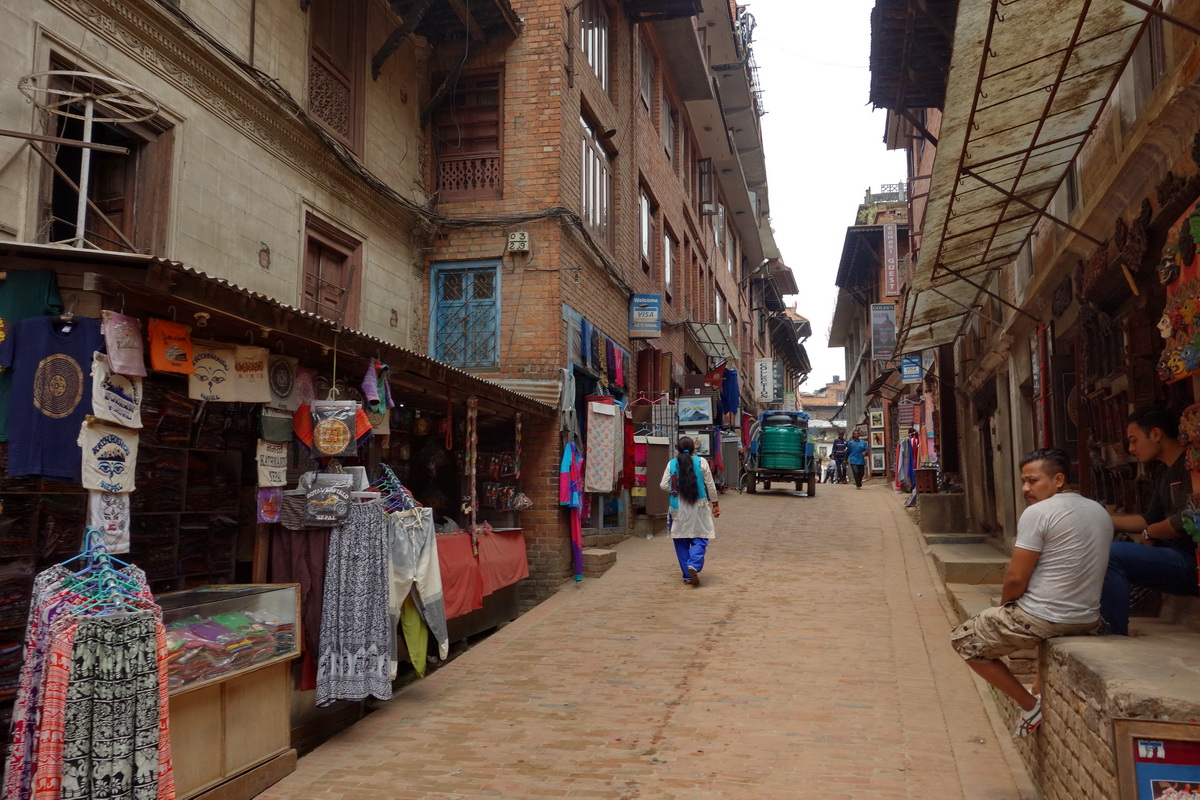
Next to ancient pagodas, you can buy local clothing and street food.
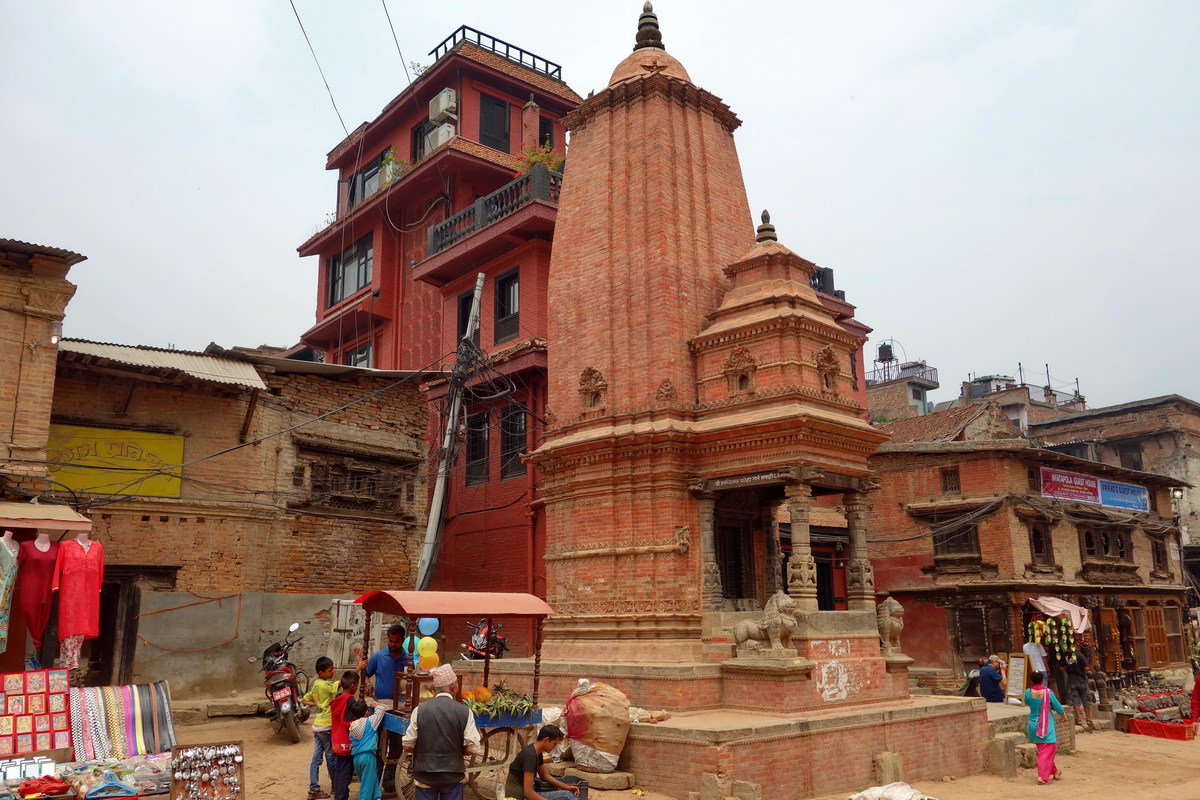
There are noticeably fewer tourists in Bhaktapur than in Kathmandu.
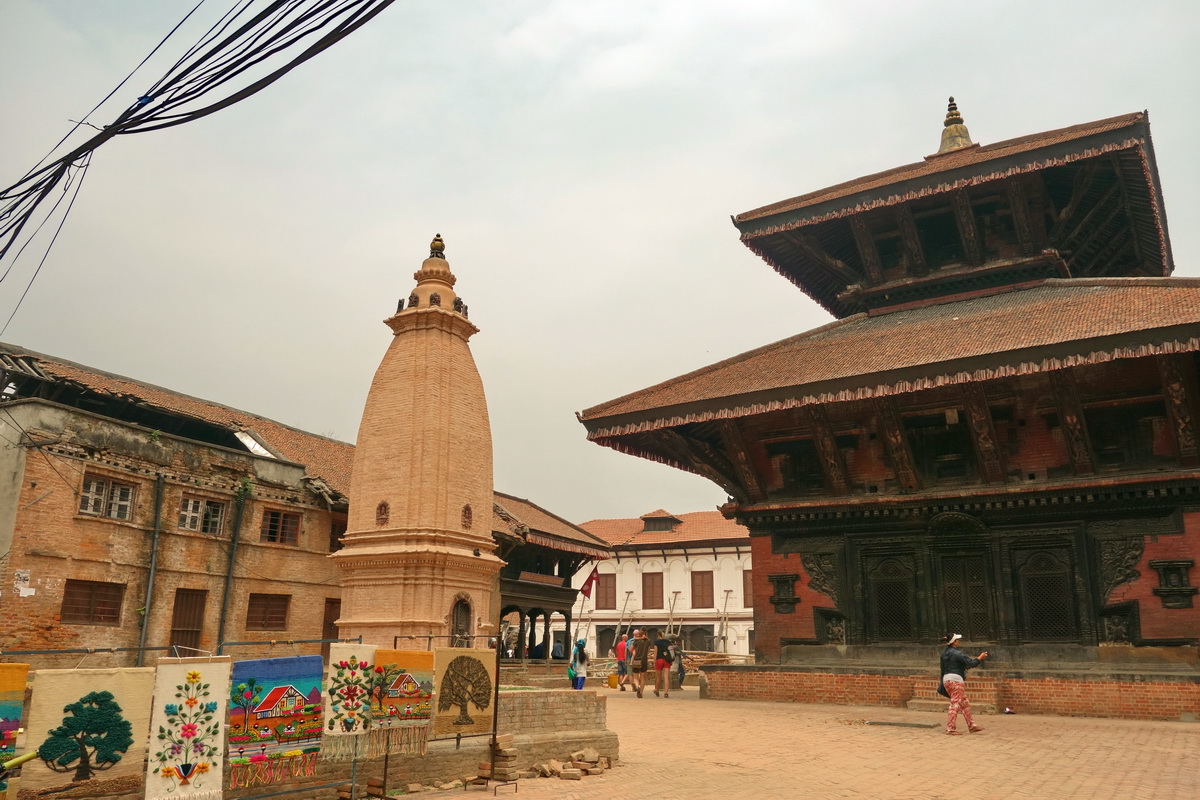
So we can stroll through the city calmly. However, locals occasionally approach us offering guide services, which is a bit bothersome.
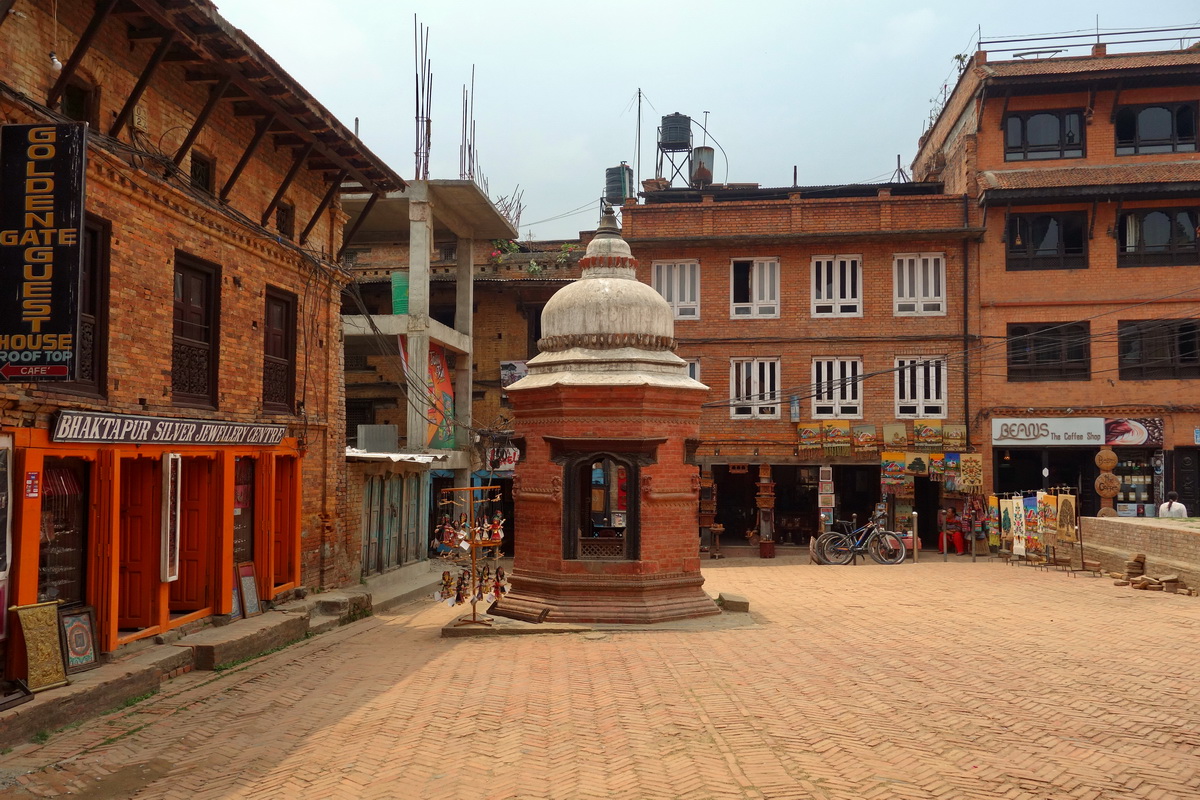
We pass by the Taleju Bell. It was created in 1737 and is popularly known as the “barking bell,” which made it famous worldwide. It is located on the terrace of the Vatsala Durga Temple on Durbar Square. The bell was rung every evening to ward off evil spirits. It earned its nickname for a reason—its tone affects dogs in a certain way, causing all the dogs in the area to start barking.
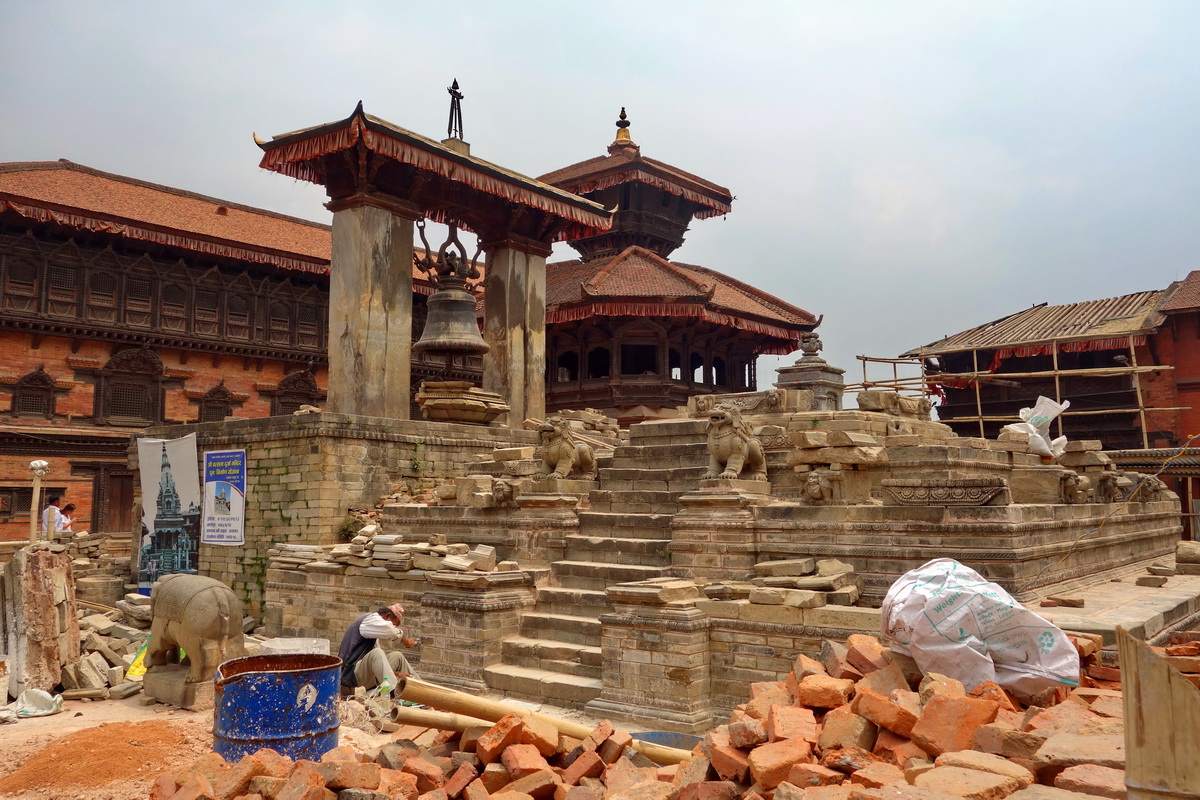
This is Durbar Square itself. It’s called the treasure of Bhaktapur.
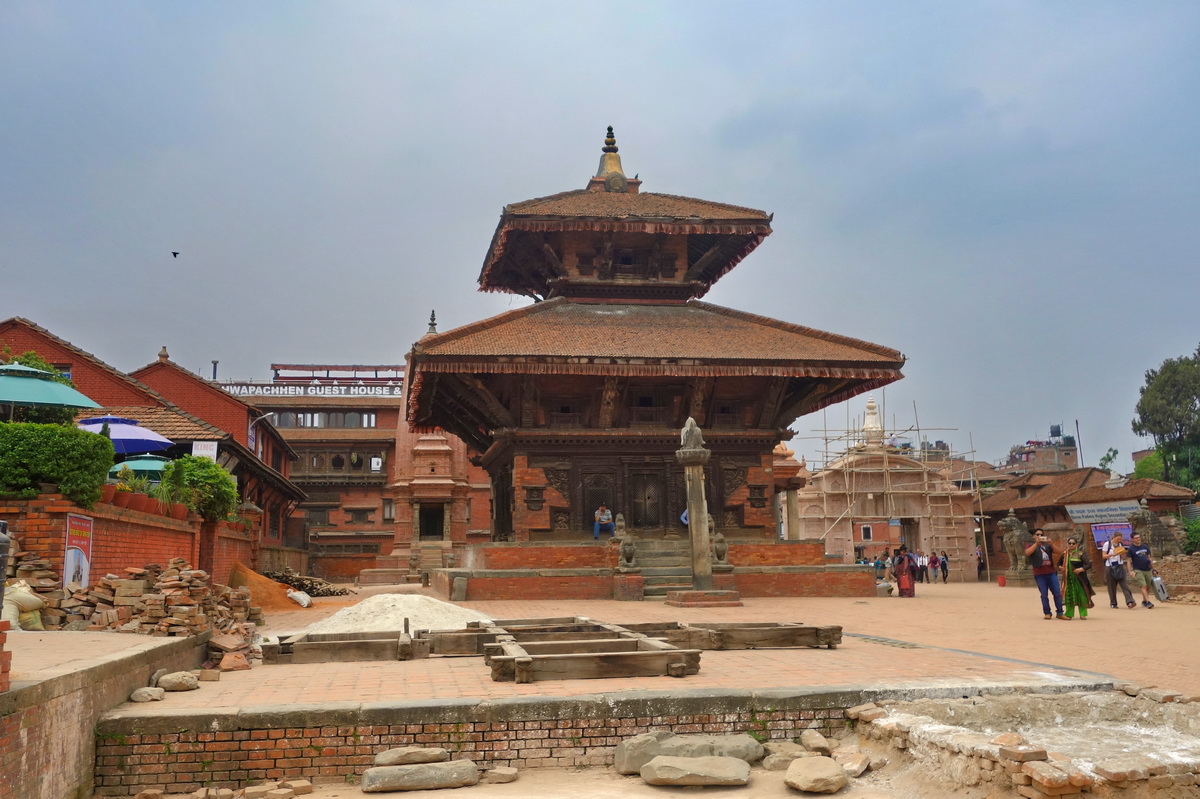
It showcases numerous masterpieces of traditional Nepalese architecture and sculpture. In the 14th–17th centuries, when the city was the capital of the Nepalese kingdom, the square began to transform into a site for building palaces and temples, which are now listed as UNESCO World Heritage Sites.
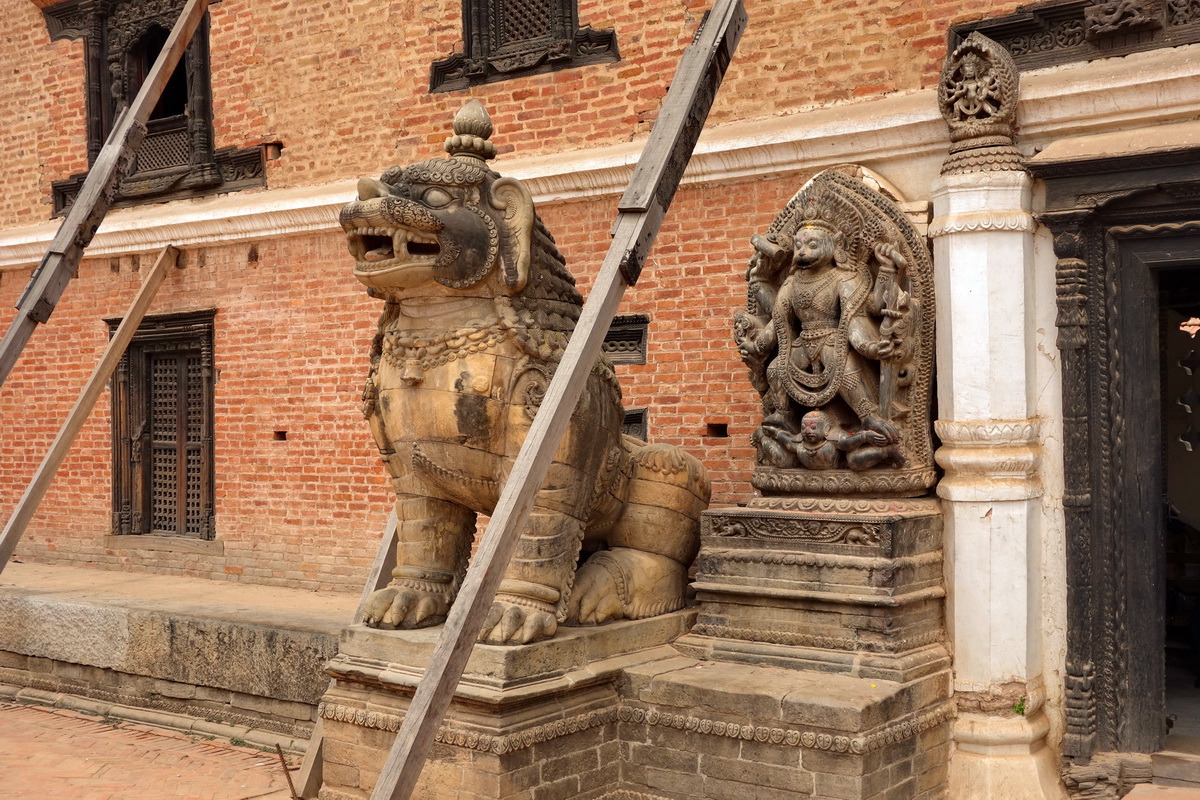
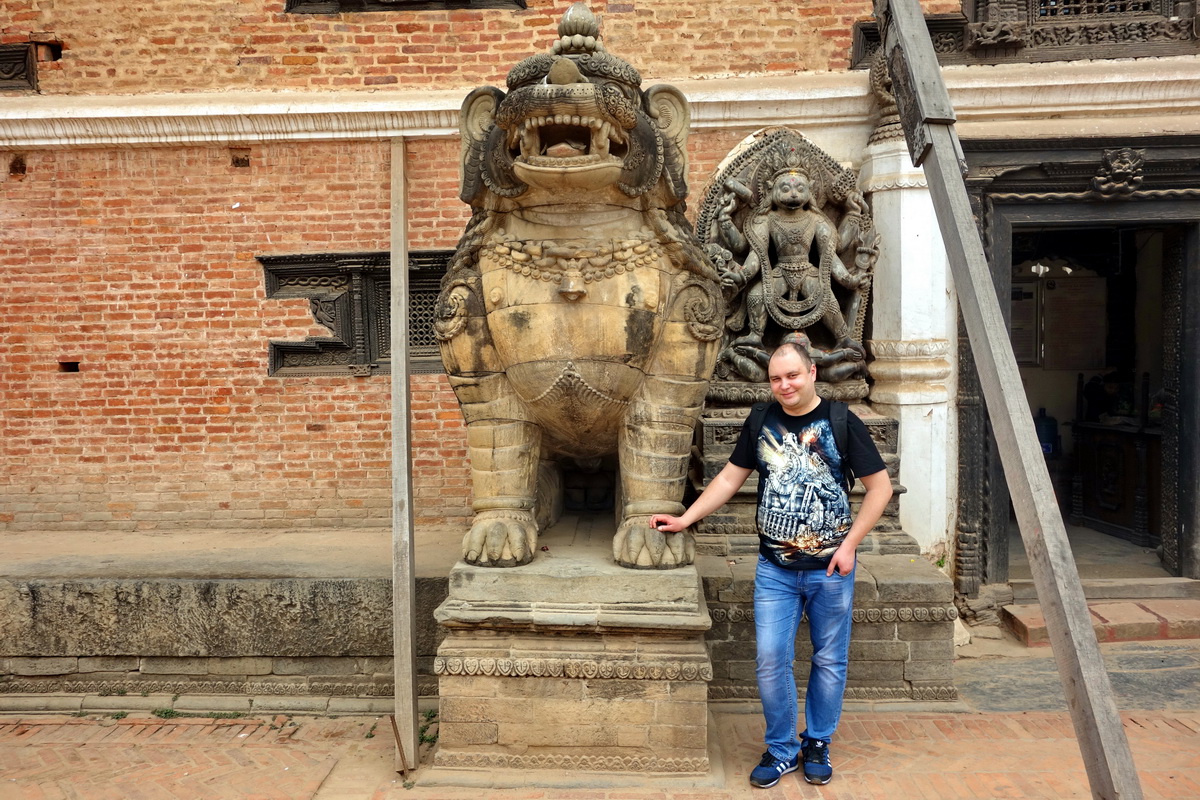
This place is revered in Nepal. As we mentioned earlier, vehicle access to the square is prohibited.
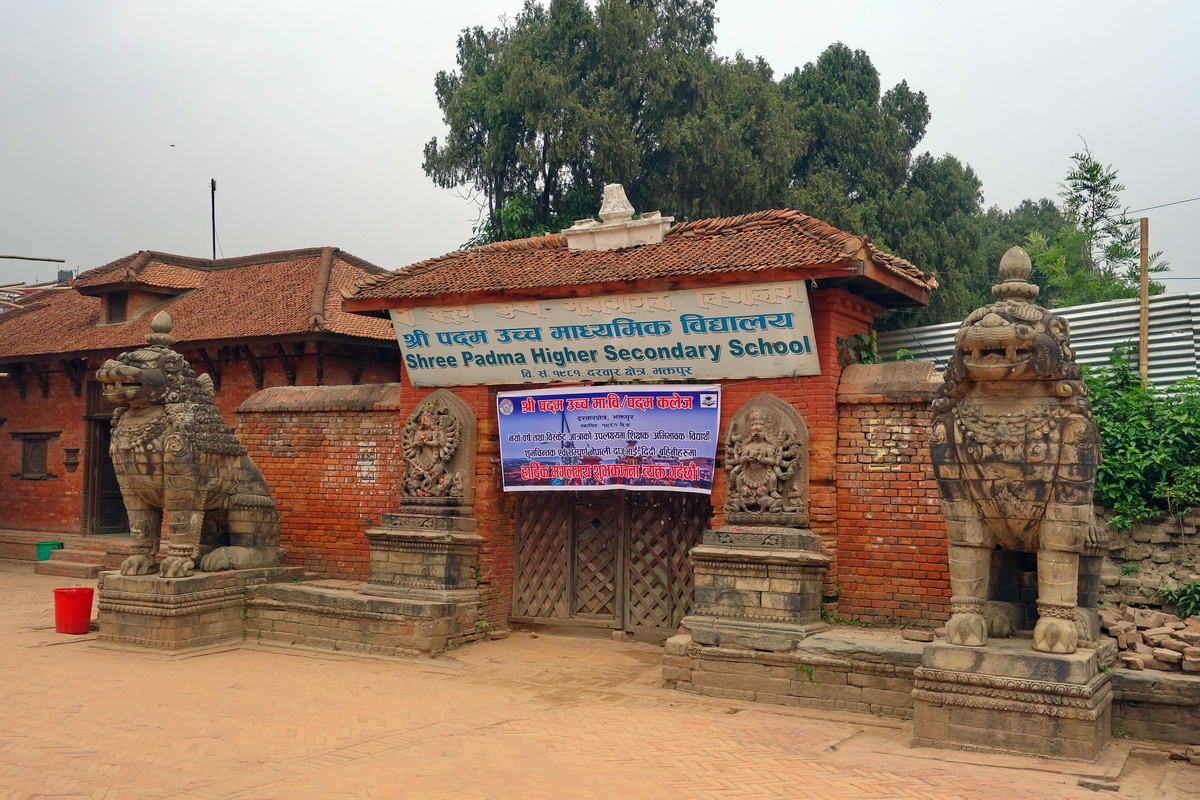
We arrived at Durbar Square in great spirits. But the square was a bit disappointing due to the many destructions. However, if you overlook that, it feels compact and harmonious. The wood carvings on many temples are very beautiful.
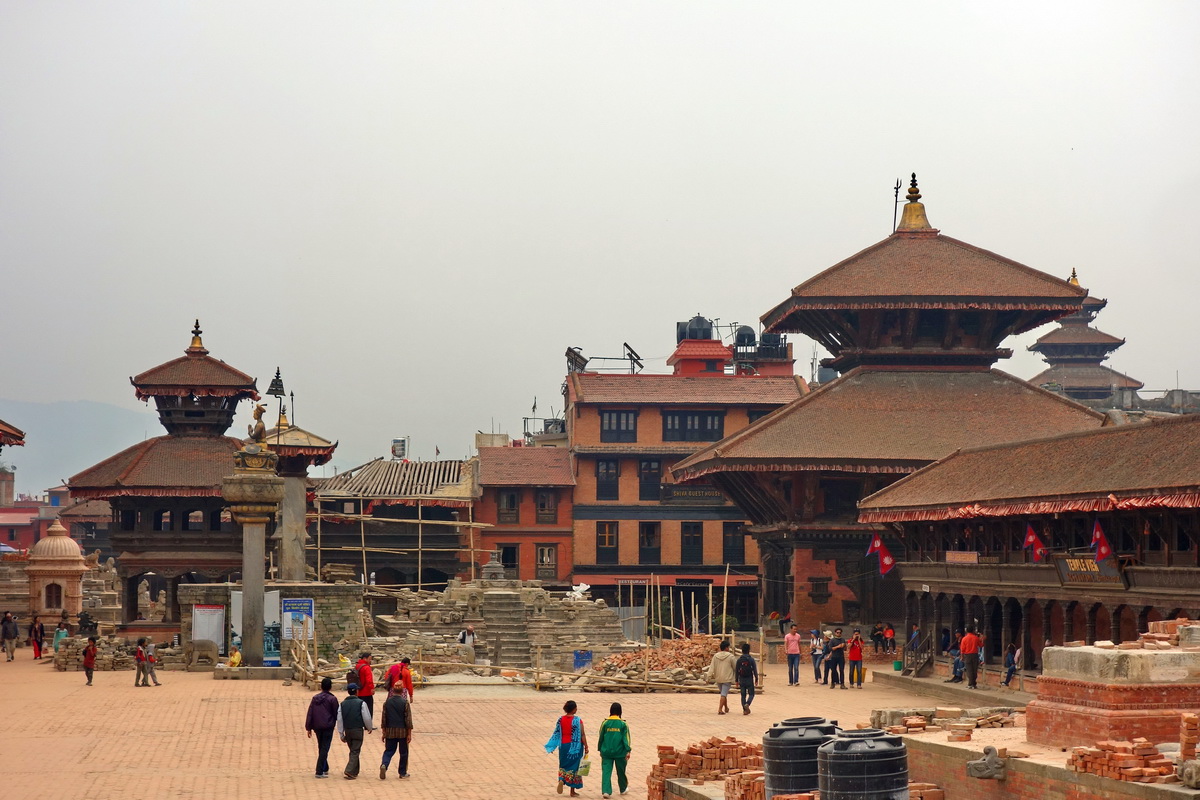
Unfortunately, we didn’t see this square before the 2015 earthquake. But even in its current state, it’s impressive.
By the way, on the left in the photo is the temple of the living goddess Kumari. In Nepal, a girl is chosen to be Kumari. She undergoes a strict selection process and lives in a three-story temple under the care of a Hindu priest and a nanny. For several years, Kumari does not experience the joys that ordinary children do. This continues until the girl has her first menstruation. From that day, the chosen one ceases to be Kumari and is returned to her family.
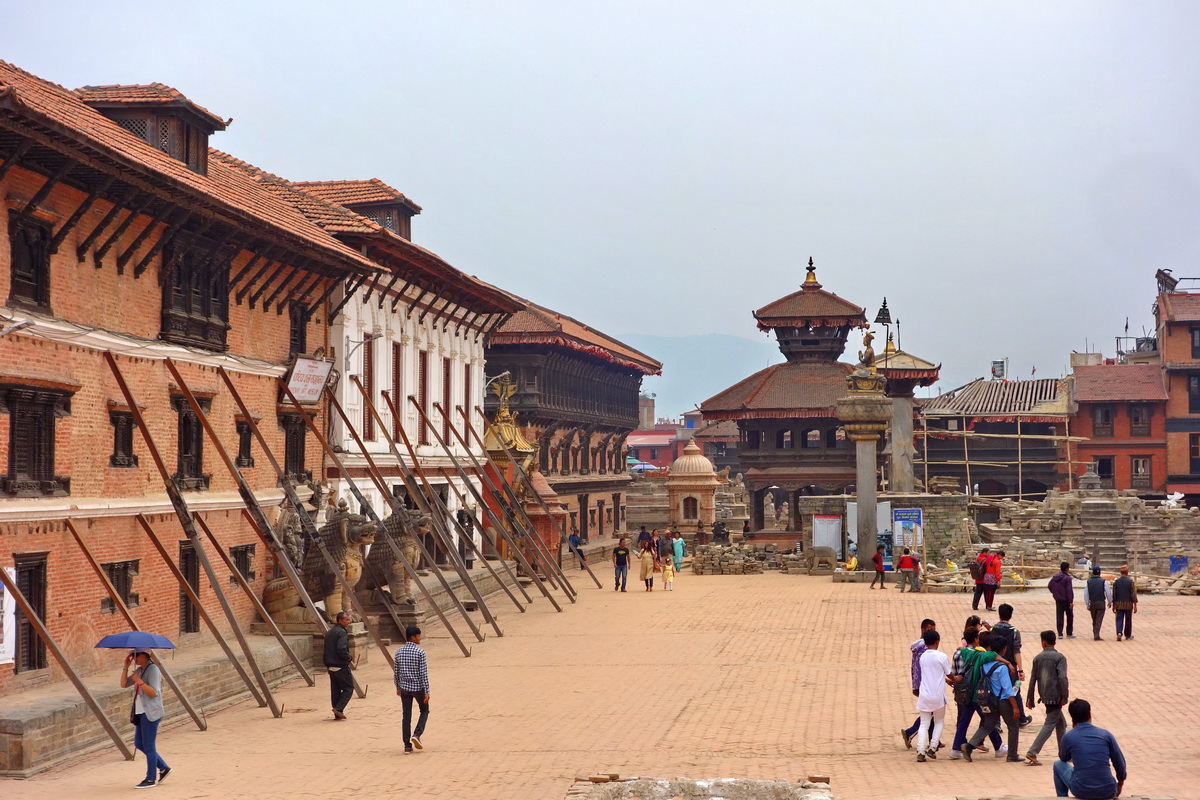
On the left is the impressive royal palace, called the “55 Windows.” It was built in the 15th century. The building got its name from the 55 windows on its balcony, considered a true masterpiece of wood-carving art. And they weren’t too lazy to carve those windows :) The palace was the official royal residence until 1769. Next to it are the Golden Gate—the entrance to the main inner courtyard of the “55 Windows” palace. The gate is considered one of the most beautiful and richly decorated of its kind in the world, adorned with demons and deities of exceptionally fine craftsmanship.
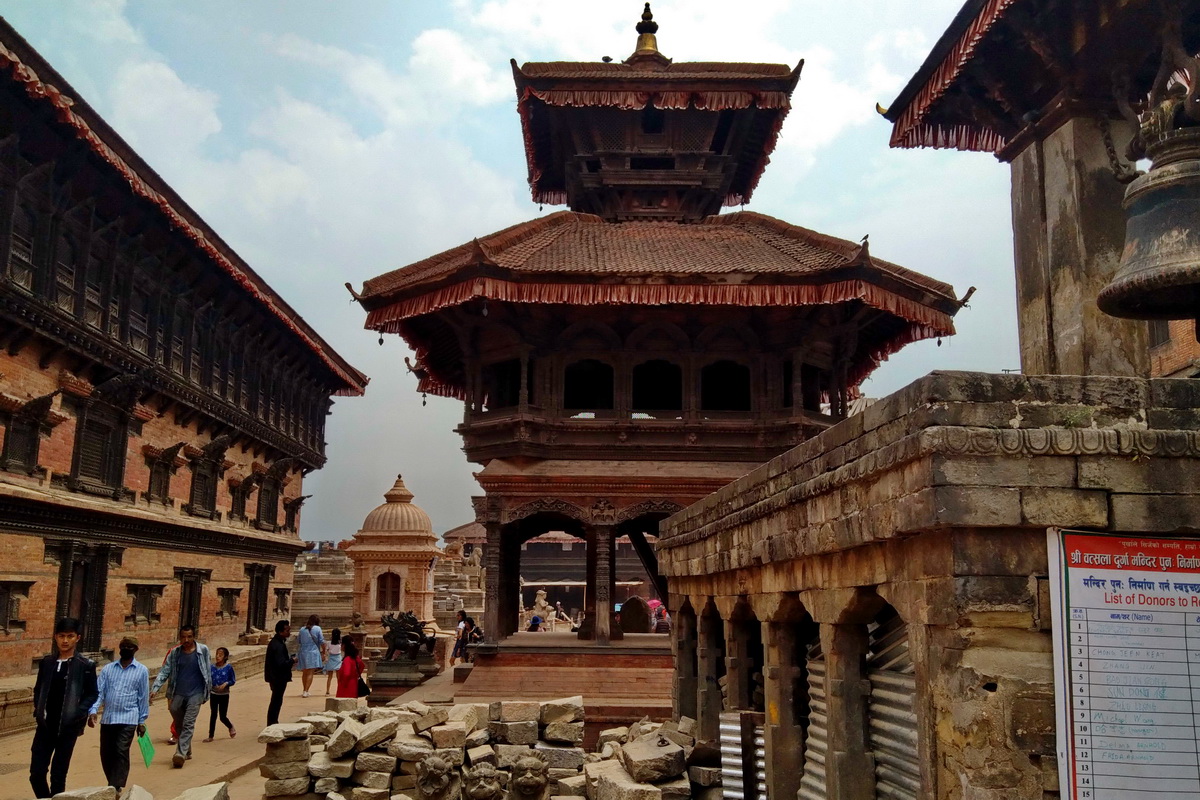
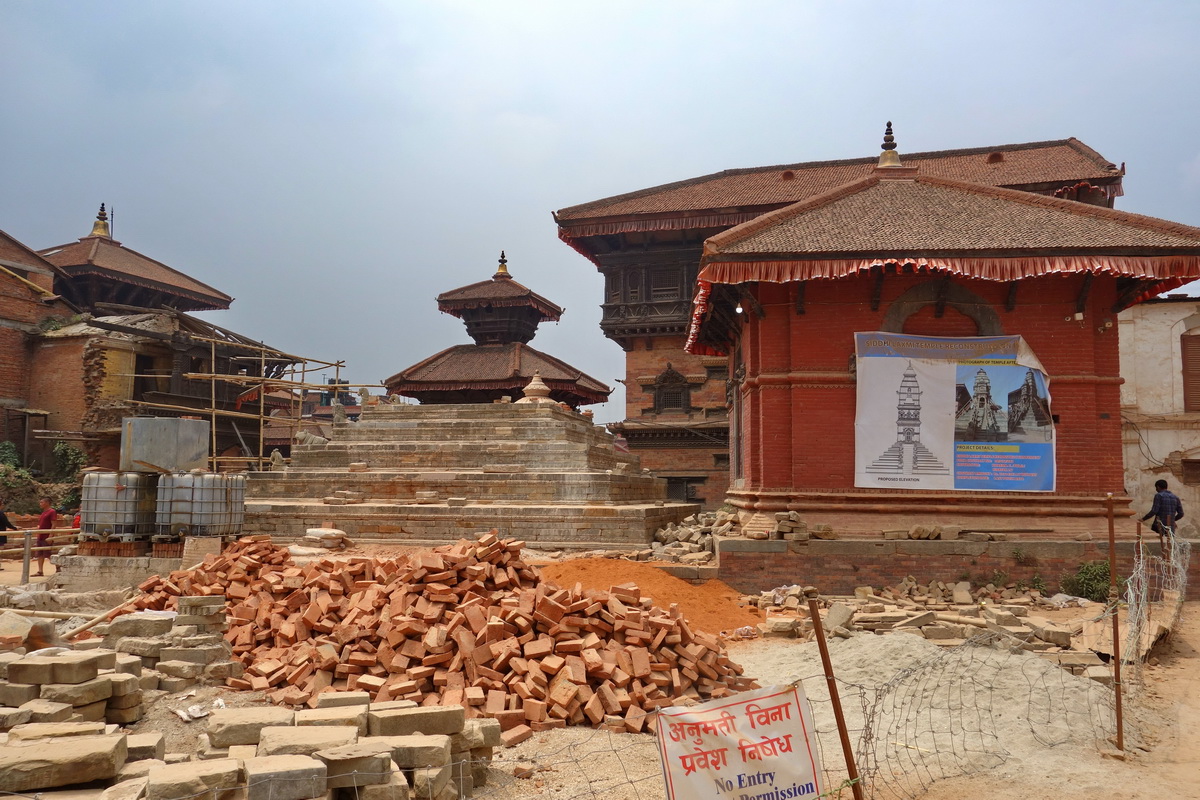
Currently, the palace houses the National Art Gallery with ancient examples of Buddhist and Hindu art. Opposite the palace is, or rather was, the Vatsala Hindu temple.
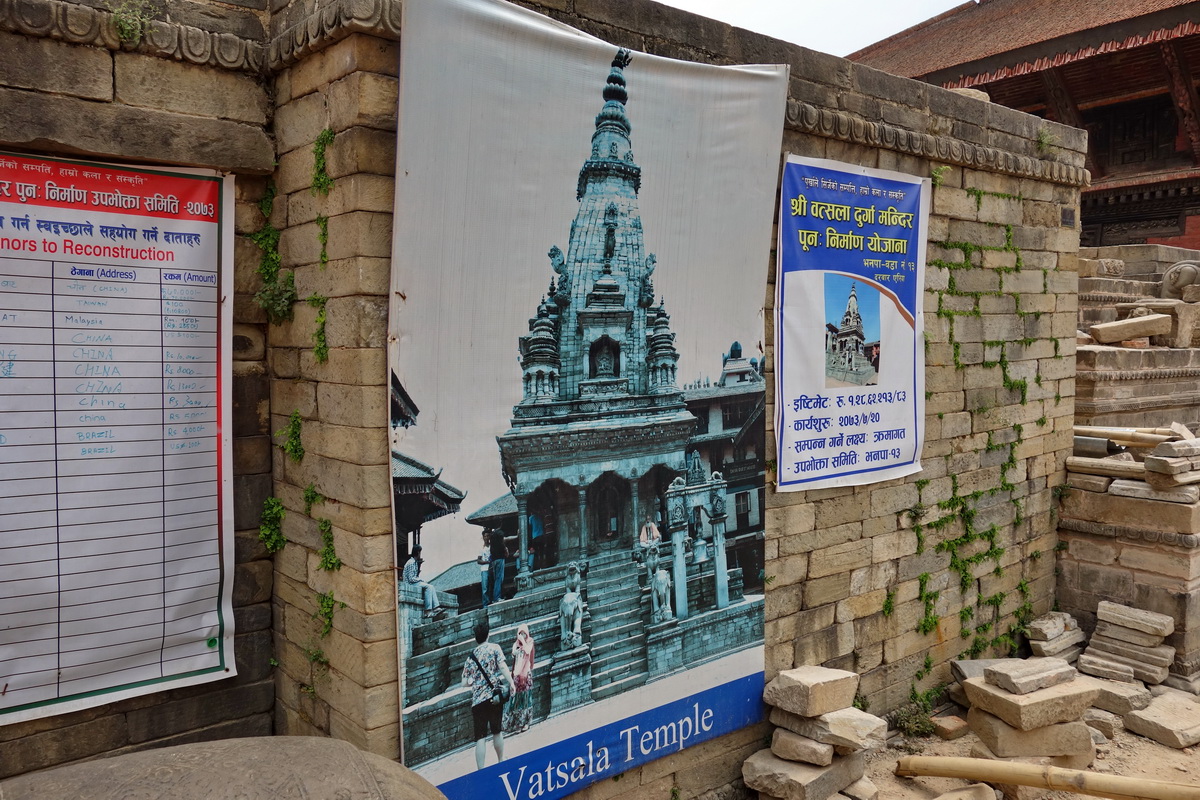
Now, there’s just a pile of stones in its place. Workers are trying to restore something. It’s a sad sight.
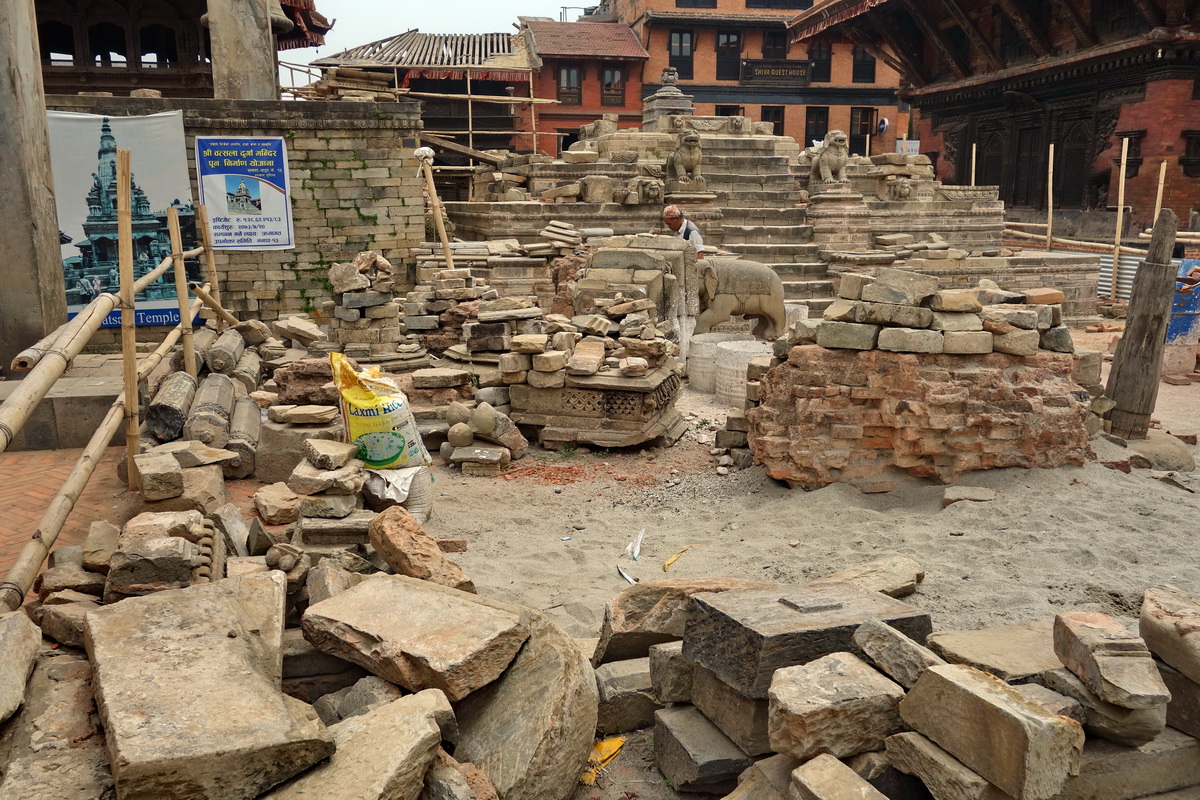
Bhaktapur is rightly called the cultural capital of Nepal, as this is evident in all its external and internal splendor. Since Bhaktapur was the capital of the Nepalese kingdom, that’s why it has Durbar—Palace Square.
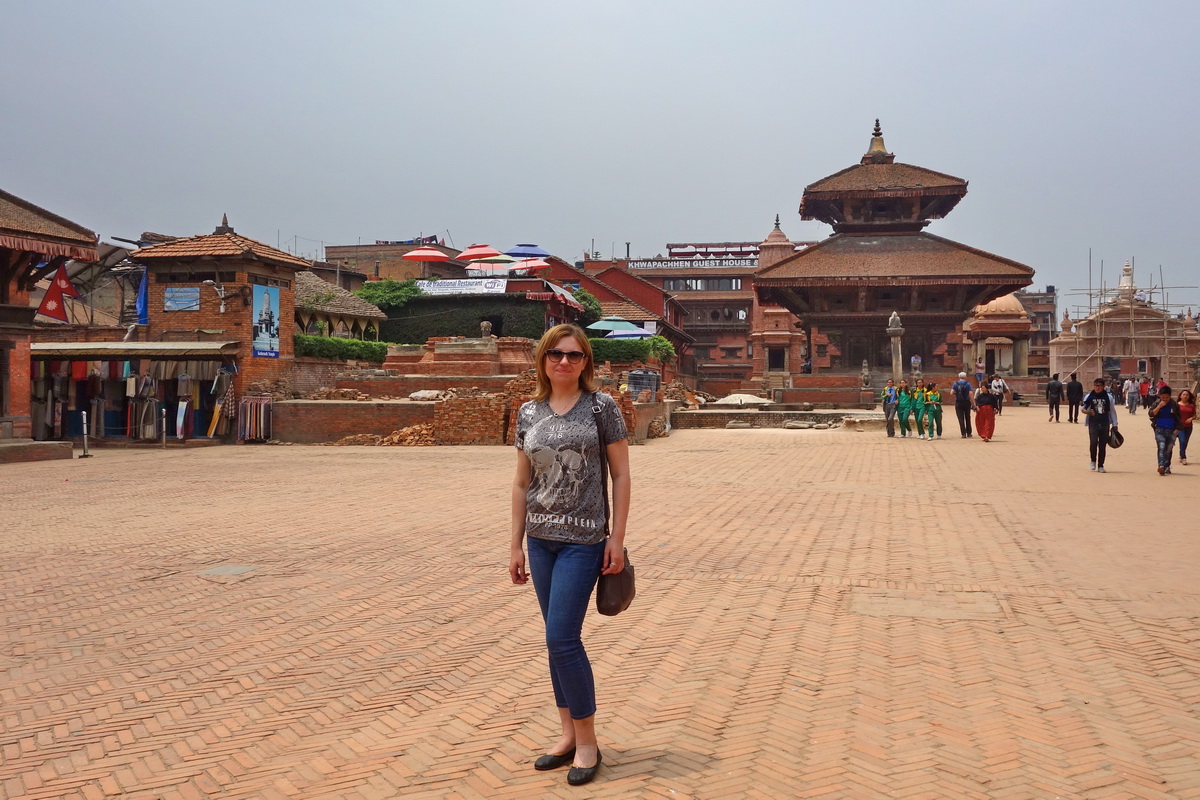
Bhaktapur is considered a city of artisans.
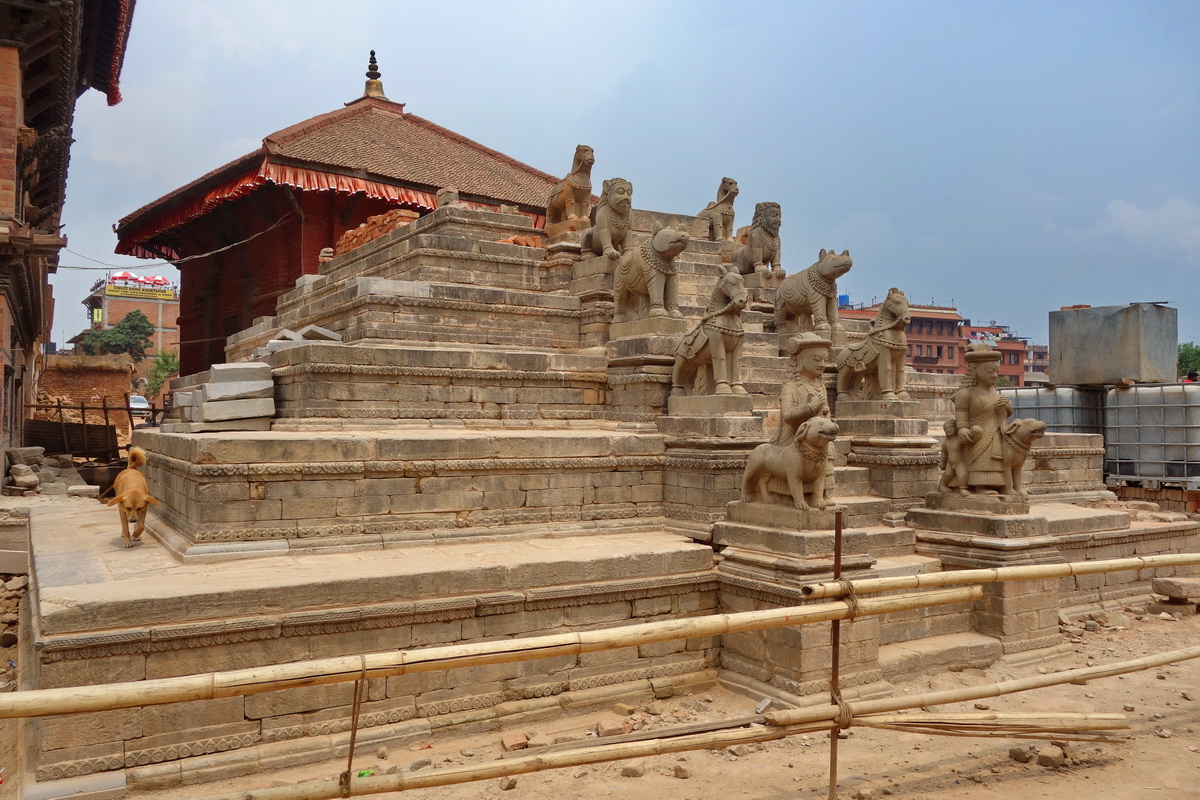
This is part of the Siddhi Lakshmi Temple, also known as Lohan Dega. On both sides of the temple staircase are statues of a man and a woman pulling reluctant children by the hand and leading dogs on leashes. Behind them are horses, rhinos, kimpurushas (semi-divine beings with human heads and lion bodies), and camels.
Some other ruins we couldn’t identify.
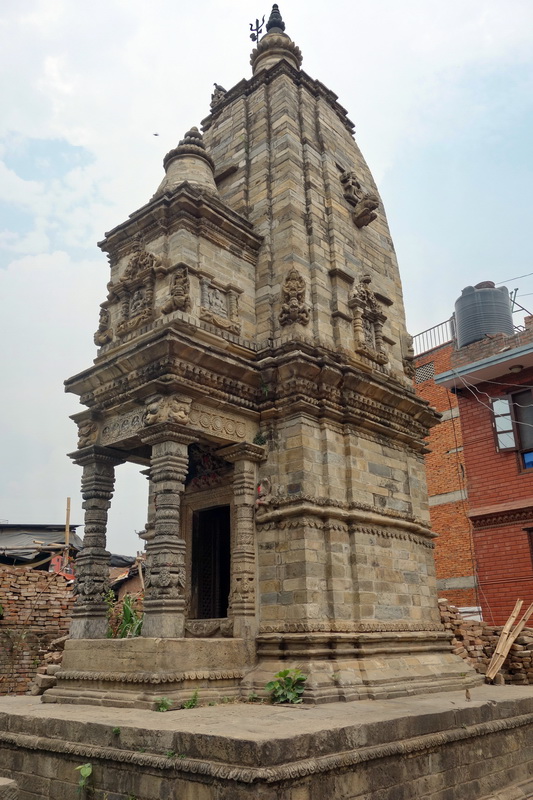
This was the Fasidega shrine before the earthquake. Here you have bulls, lions, and, of course, elephants. It’s dedicated to Shiva.
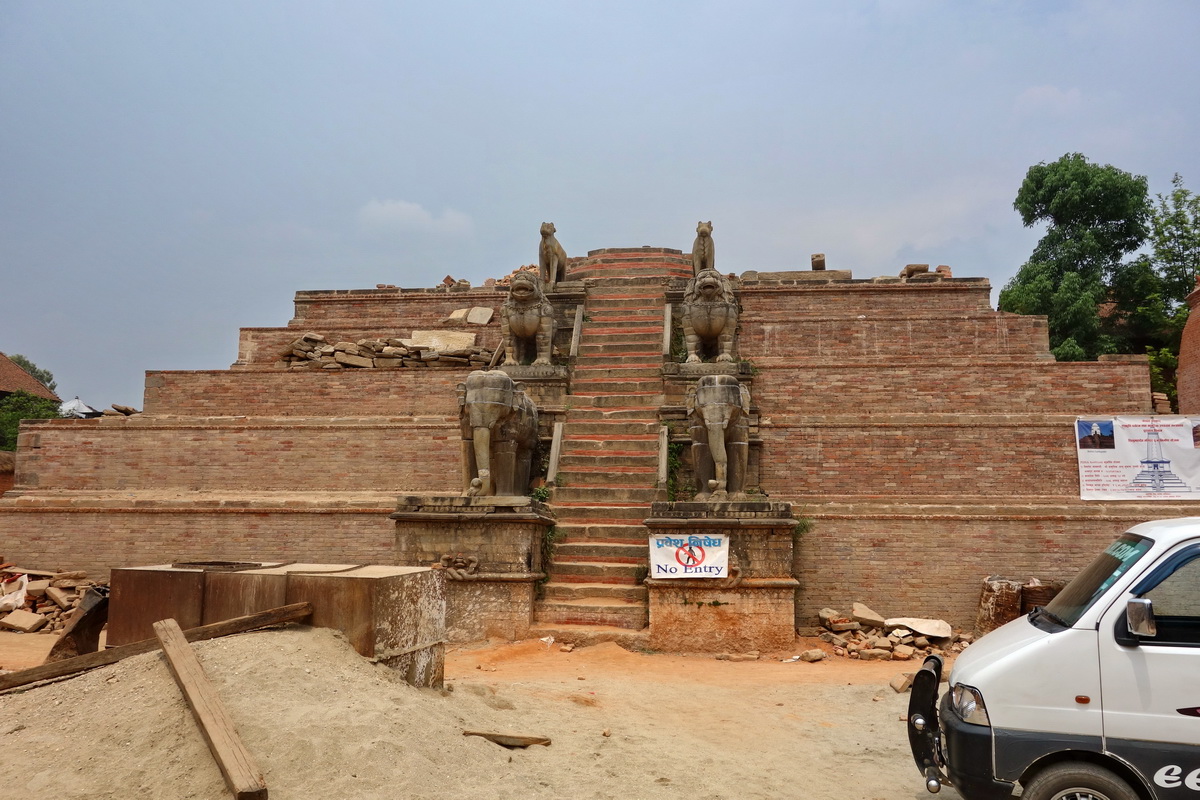
Durbar Square is truly a collection of various art forms: wood carving, stone sculptures, metal forging, and more. We spent several hours on the square, just walking and observing everything around us. Having fully admired the beauty of Durbar Square, we decided to stroll through the city. We head toward the exit from the central square.
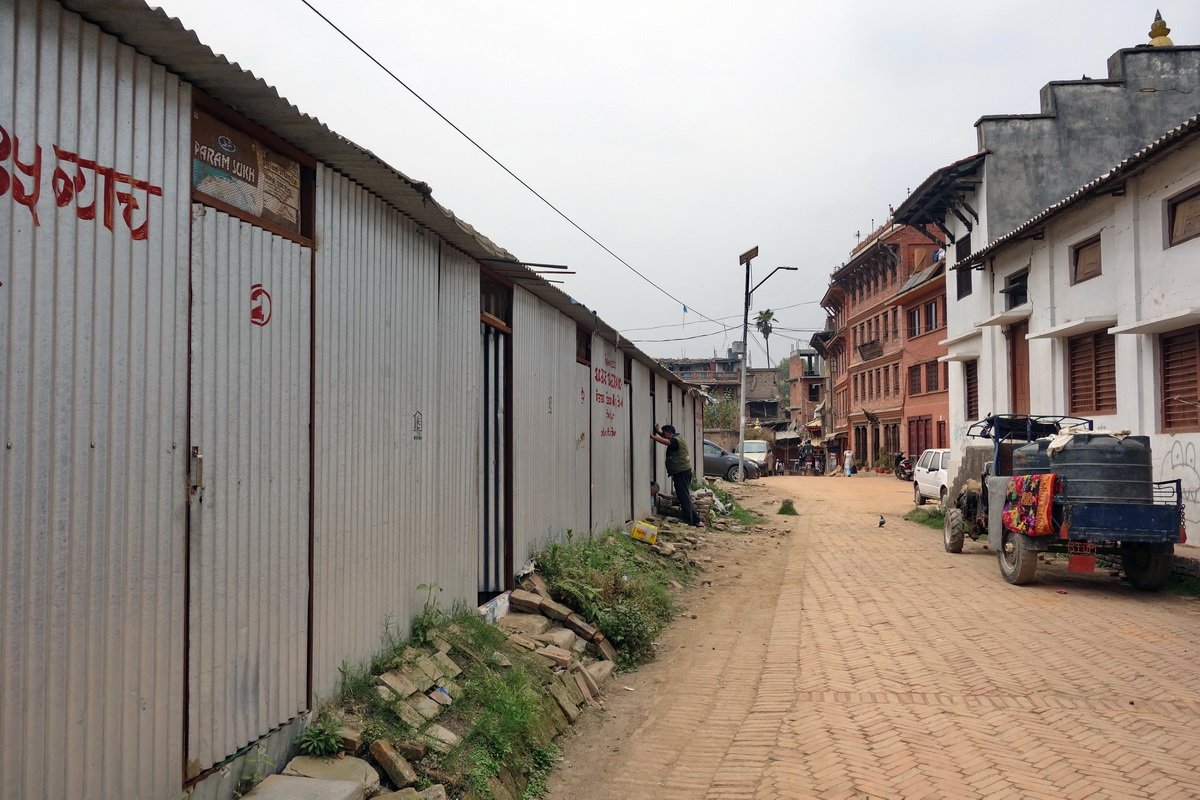
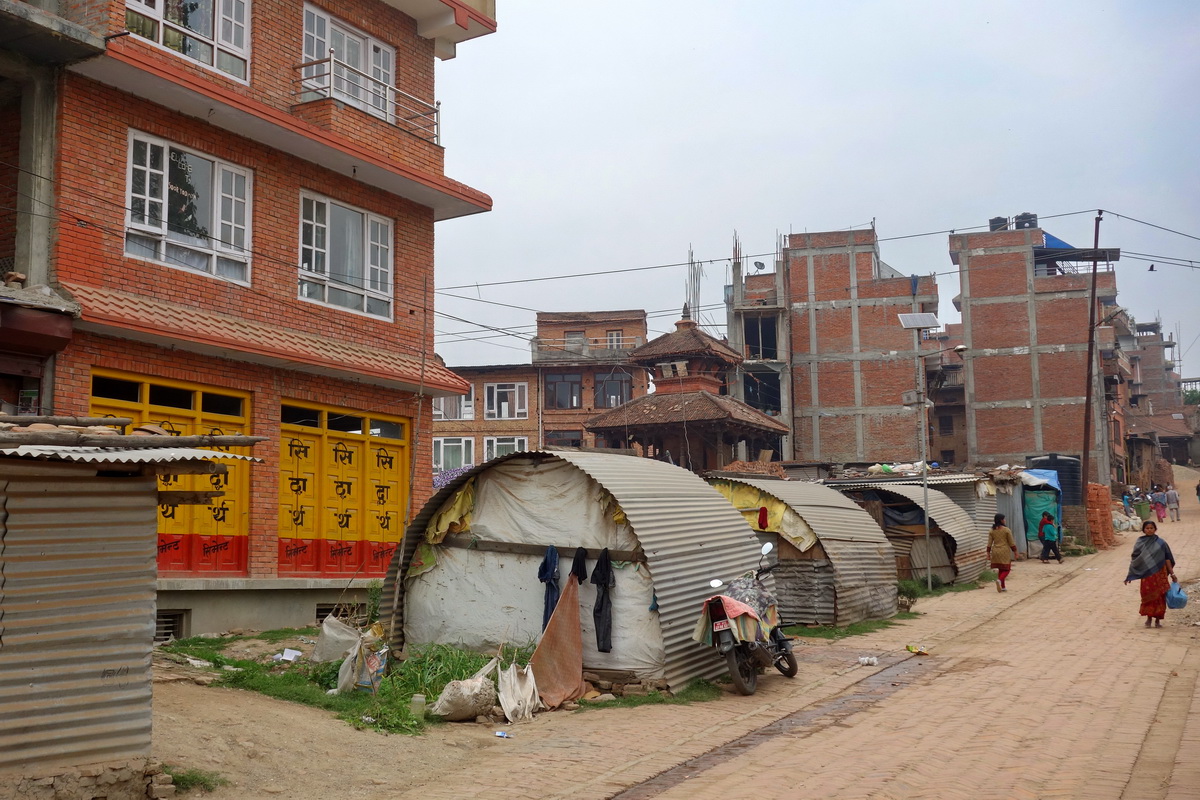
We pass by metal barracks where people who lost their homes in the earthquake live. Not a pleasant sight :(
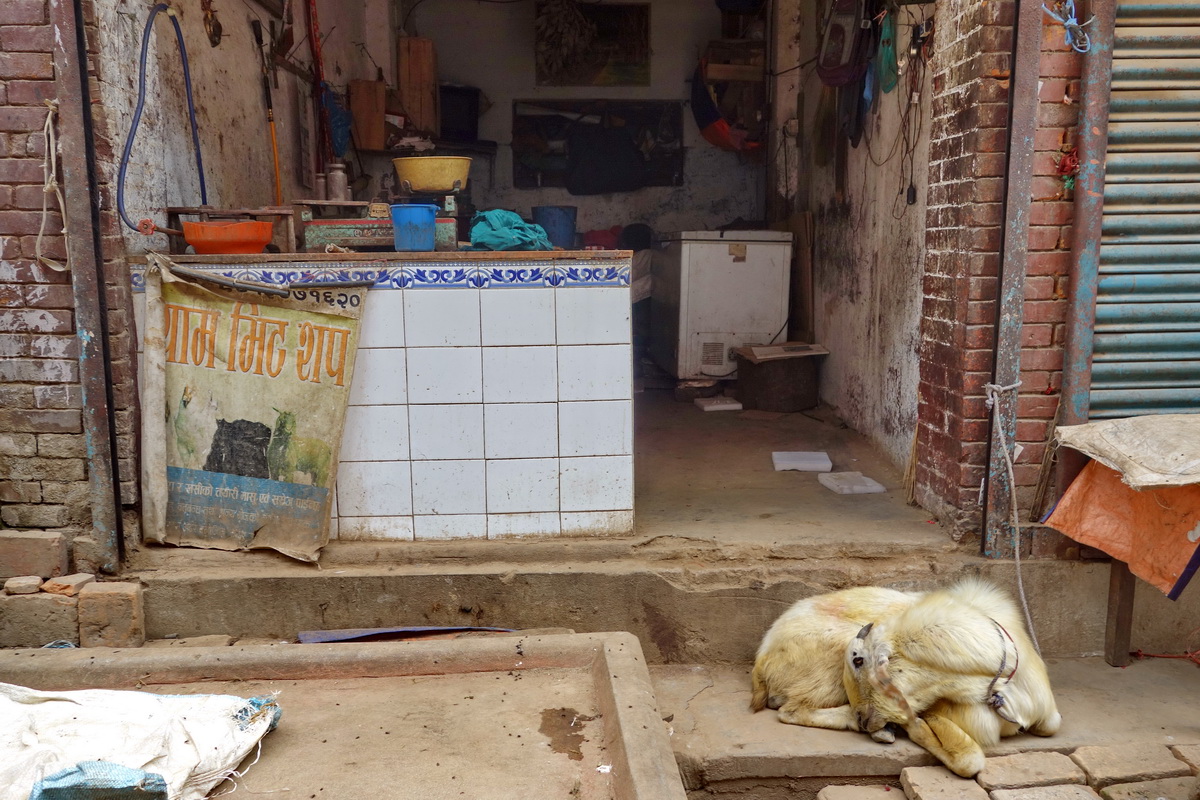
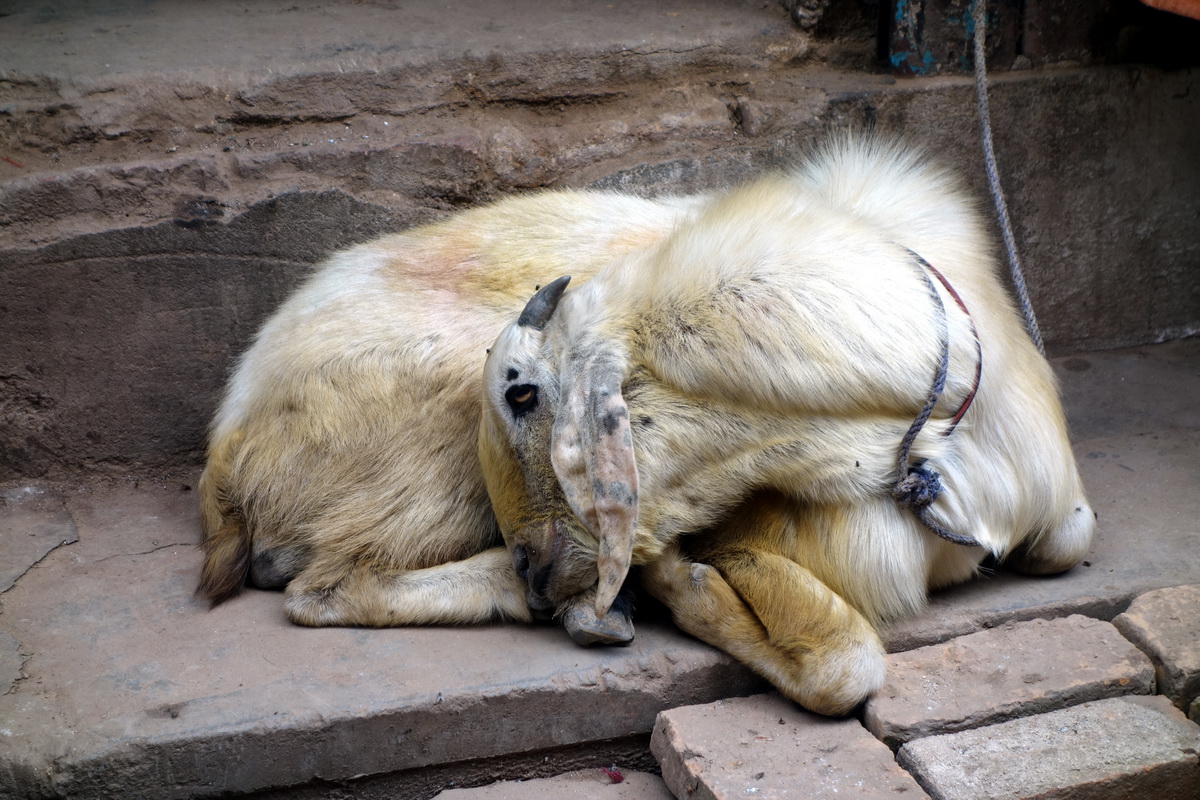
A goat is for sale.
We step out onto a shopping street.
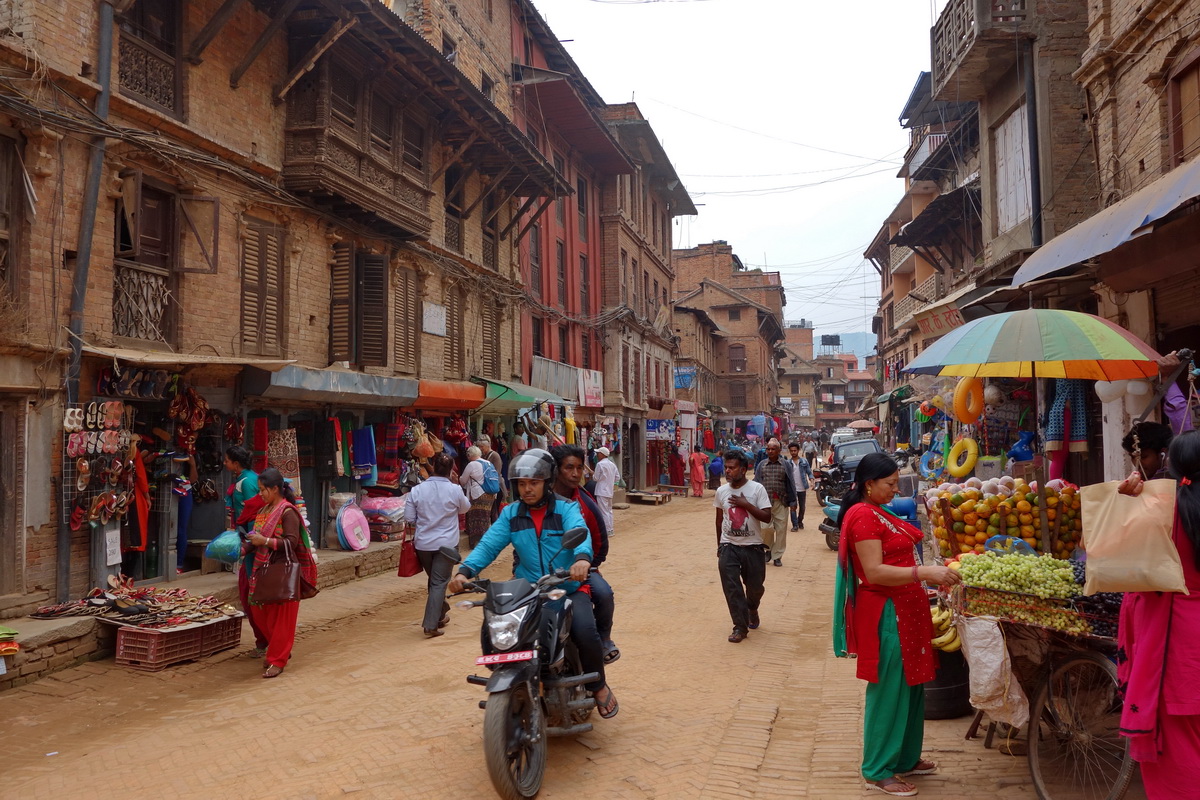
You can grab a bite of local food at almost every corner.
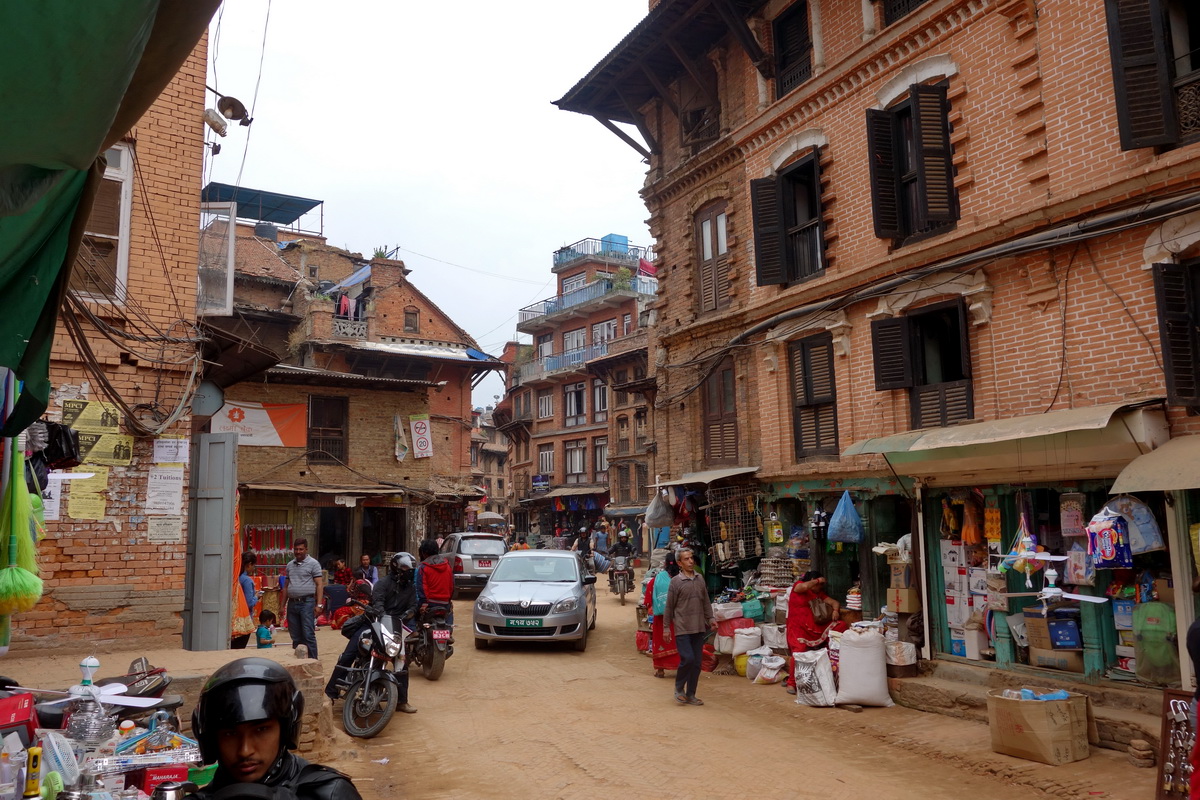
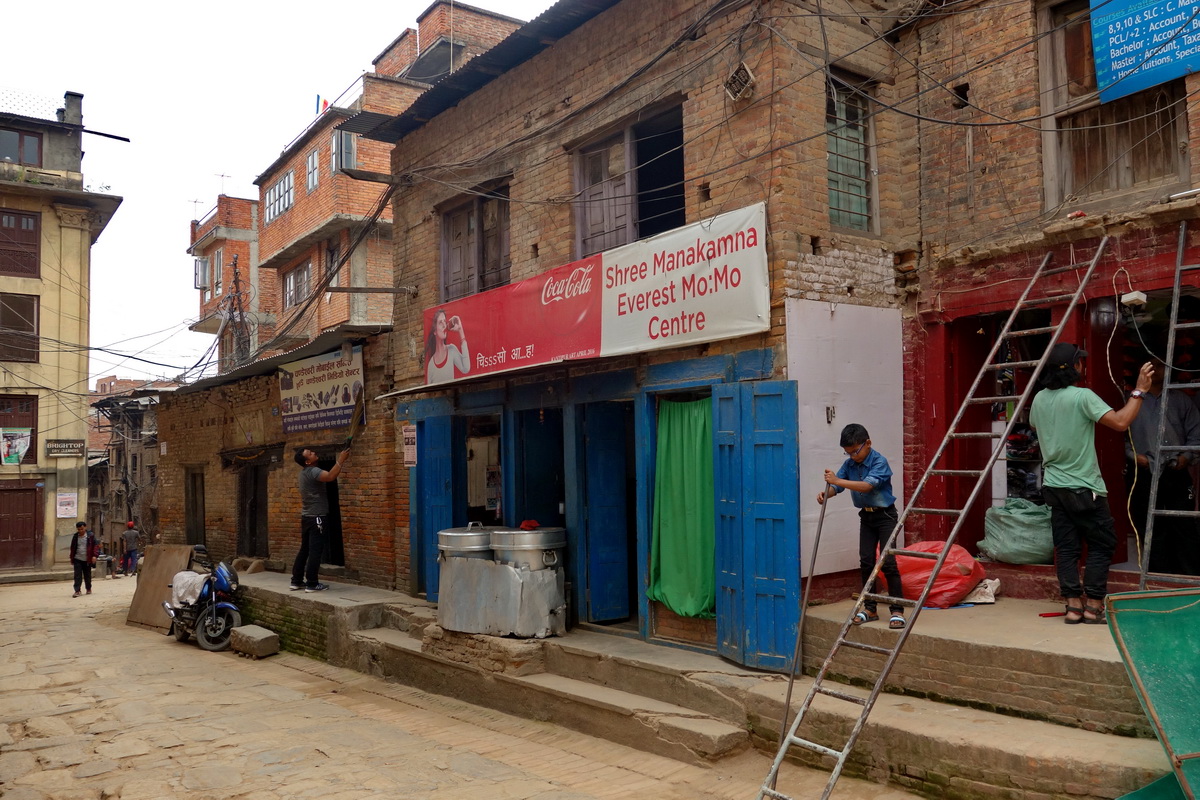
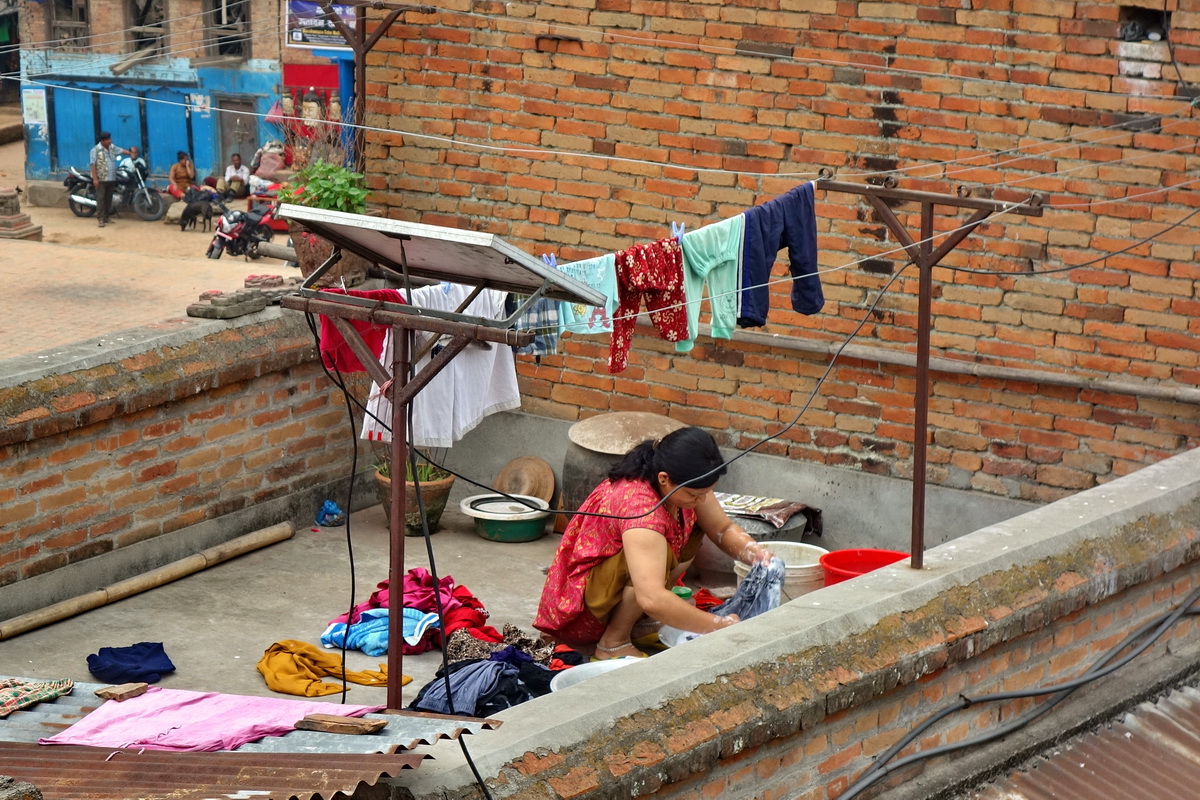
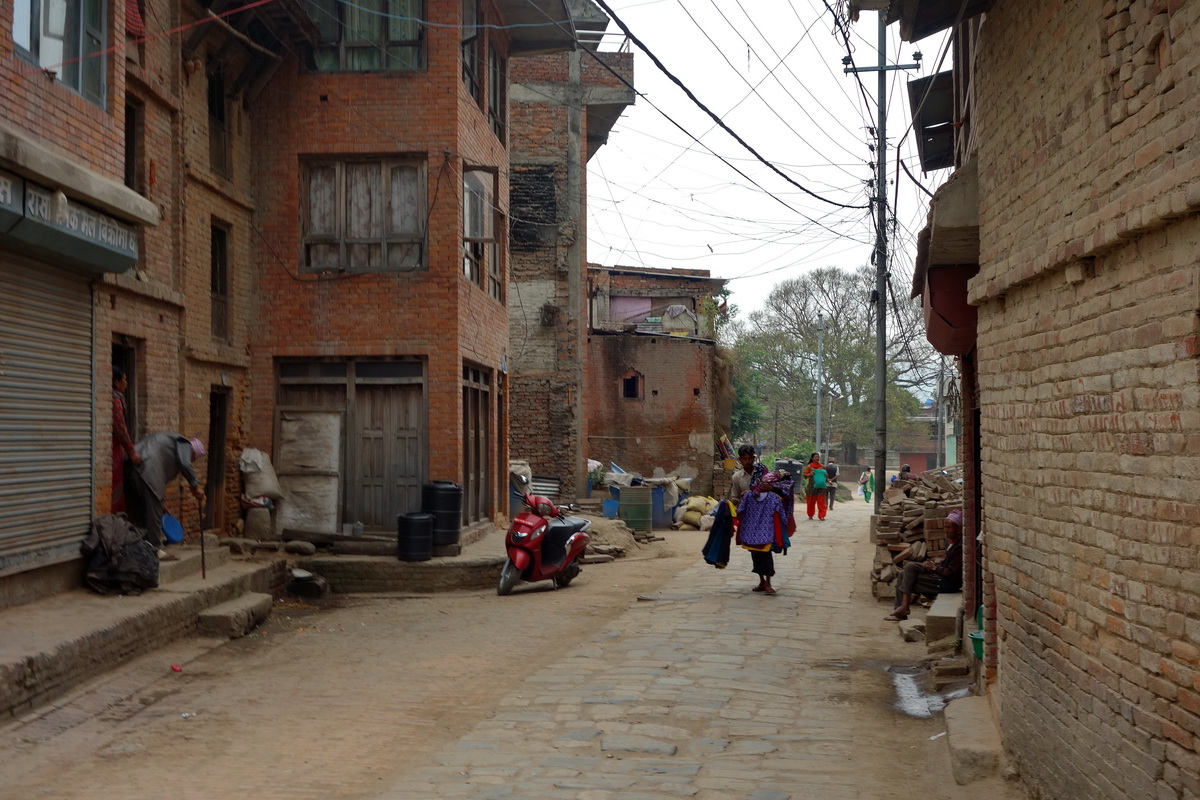
We stroll through the city streets and observe how ordinary Nepalis live.
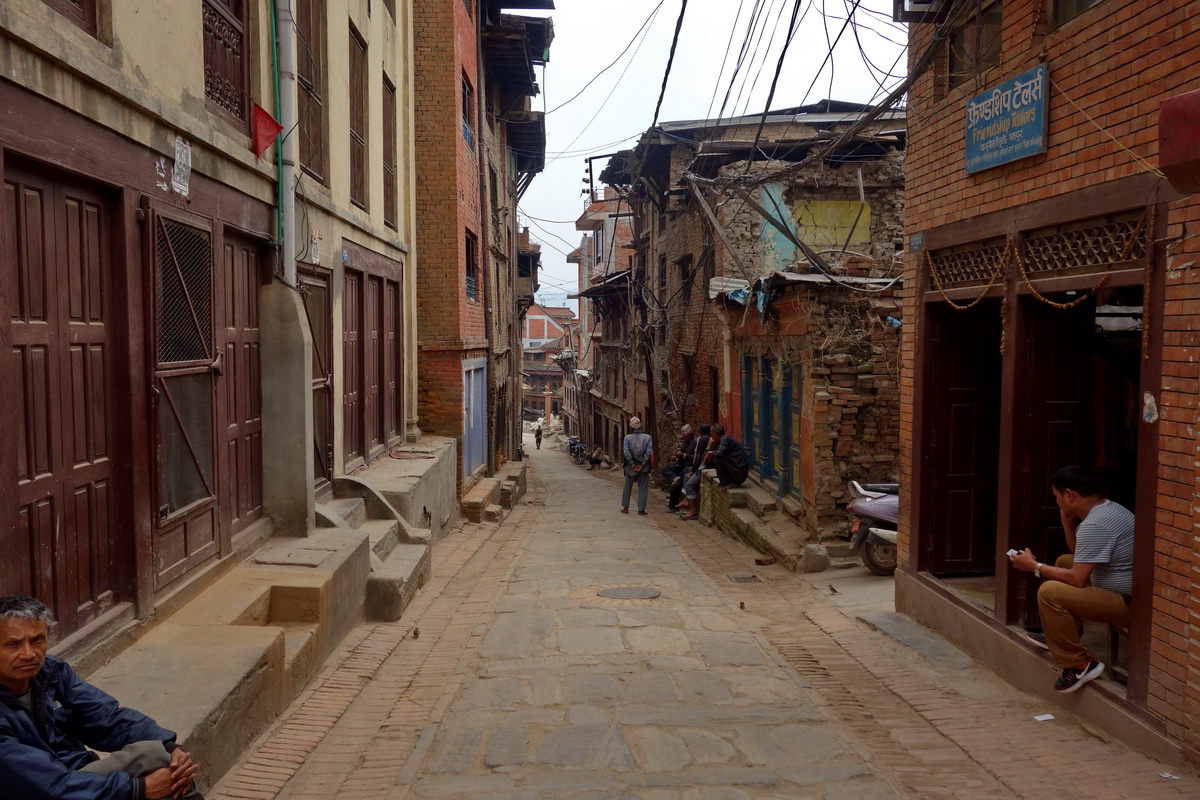
Almost all windows lack glass.
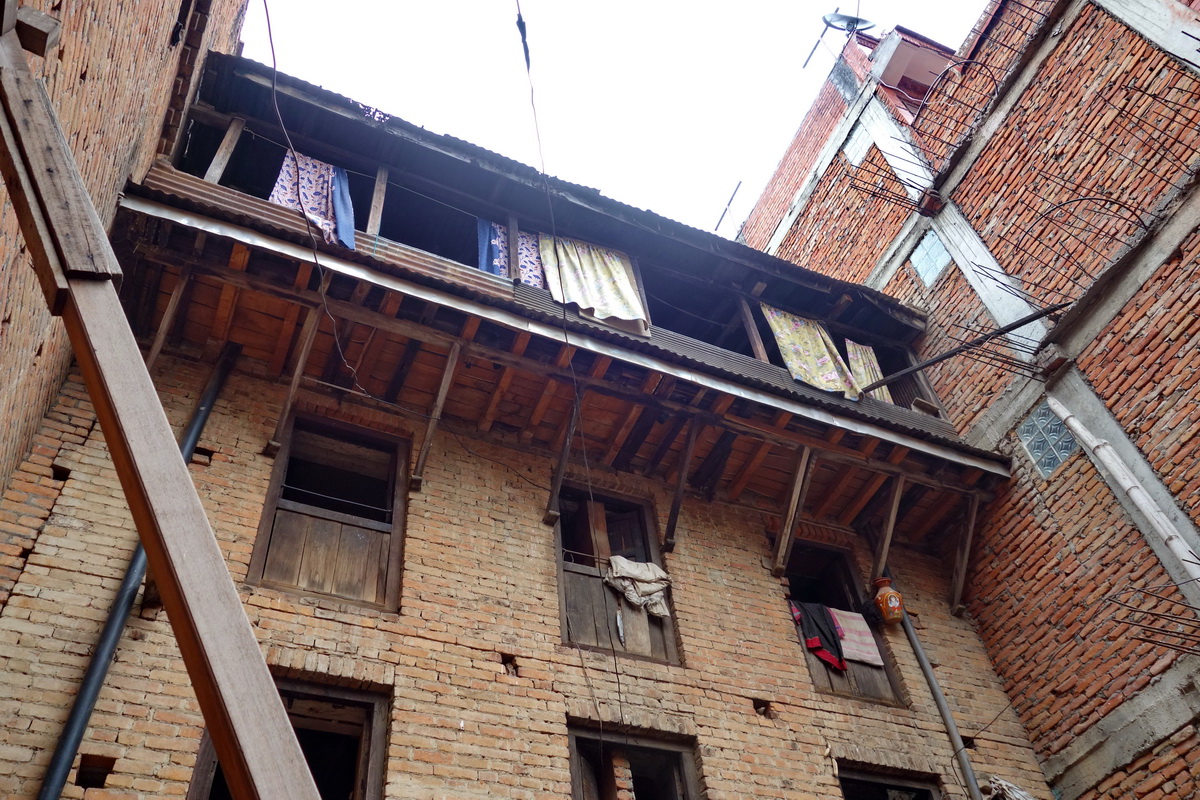
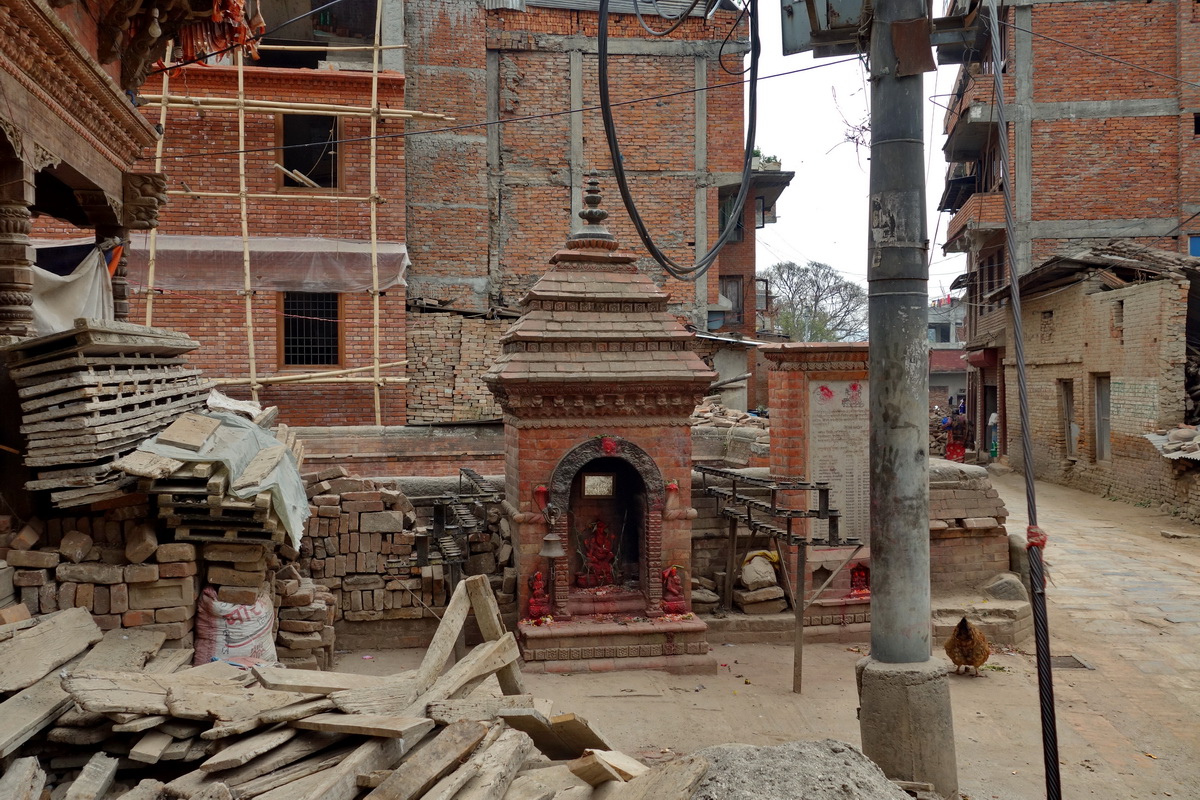
A bit further from the tourist center, Bhaktapur becomes increasingly dilapidated. The entire city has a lot of earthquake damage.
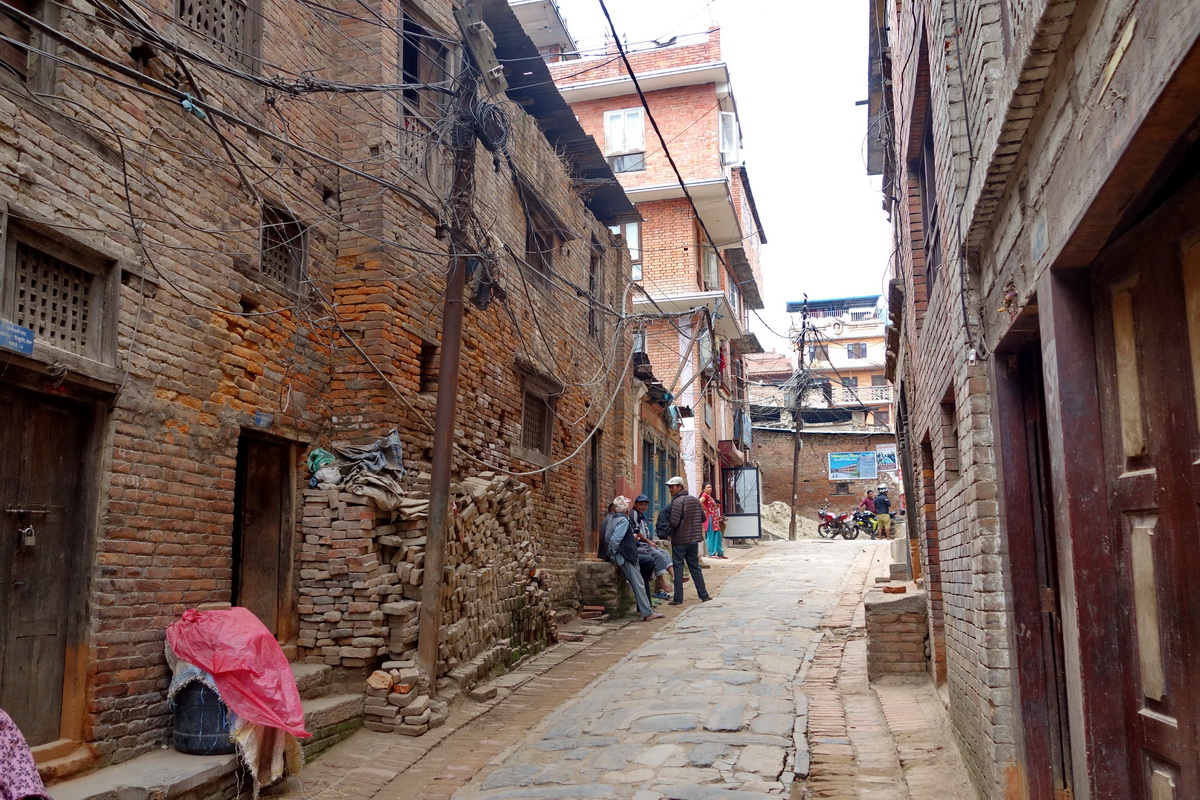
You can wander its streets for a long time, encountering interesting temples at every step.
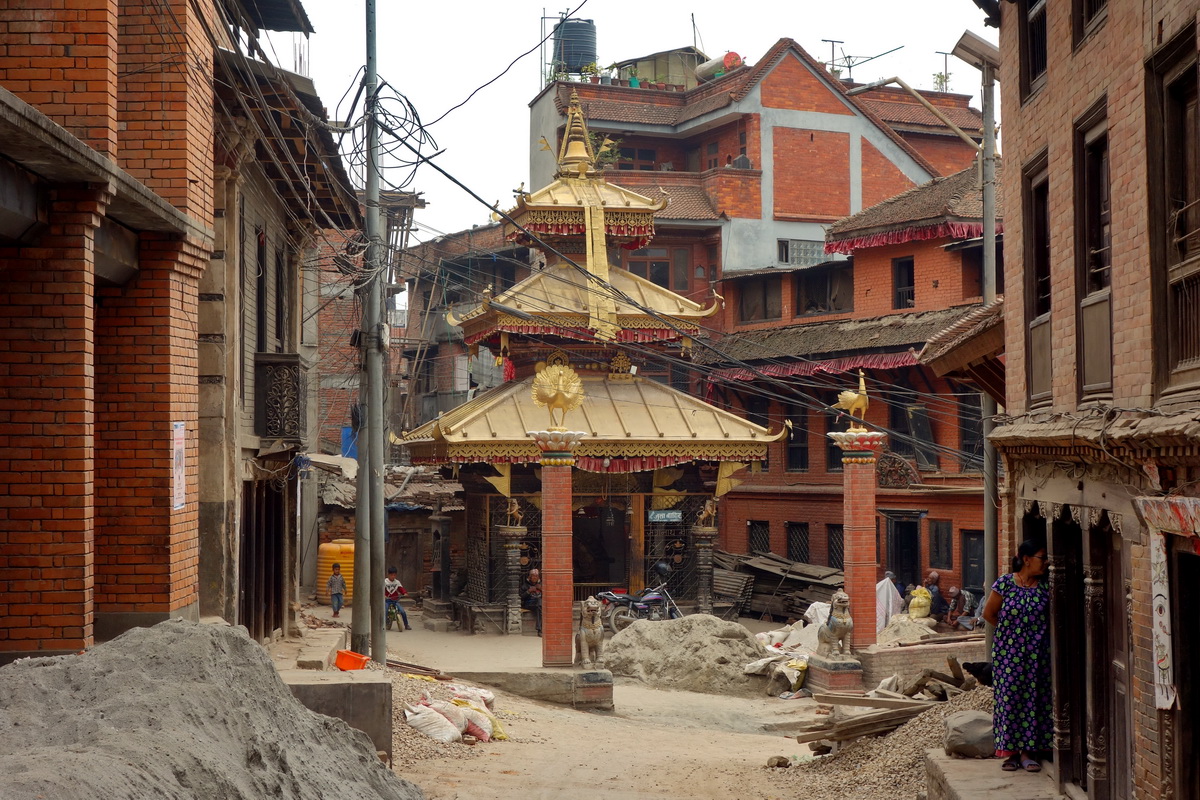
And statues like these.
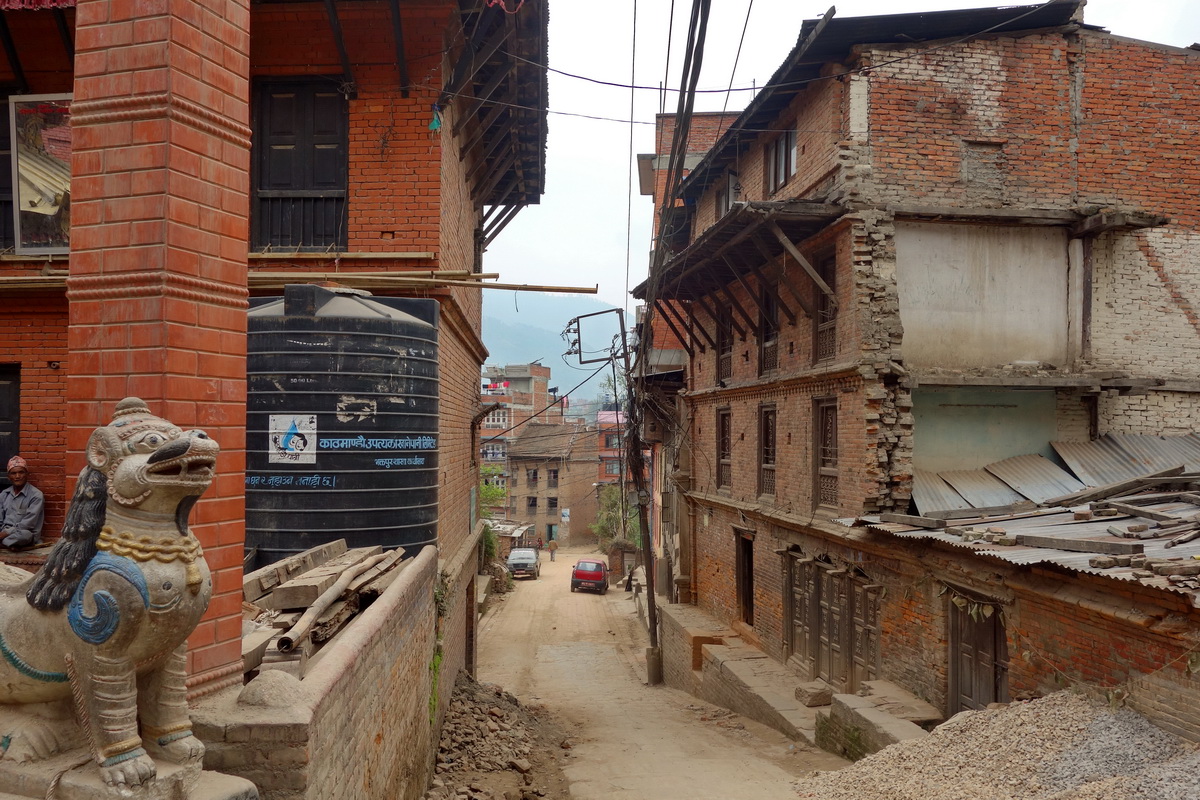
We meet domestic animals on the narrow streets.
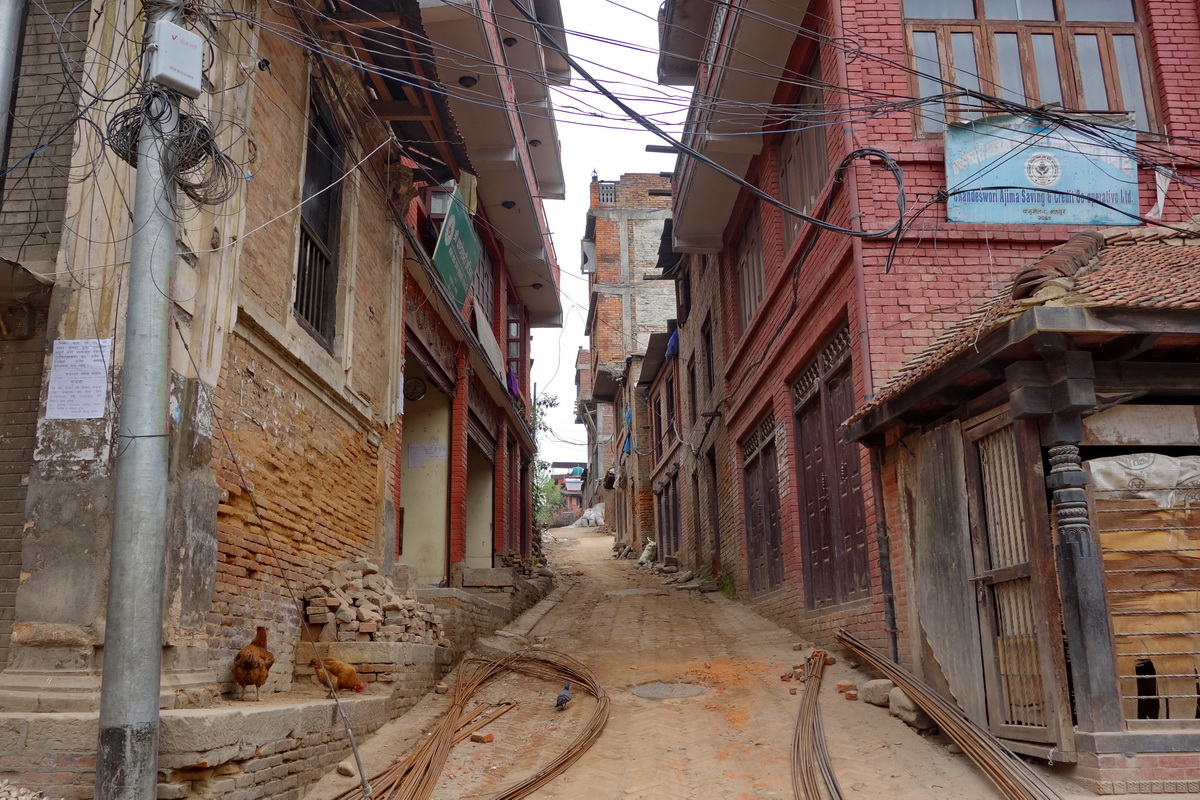
Piles of stones and bricks lie in the middle of the streets.
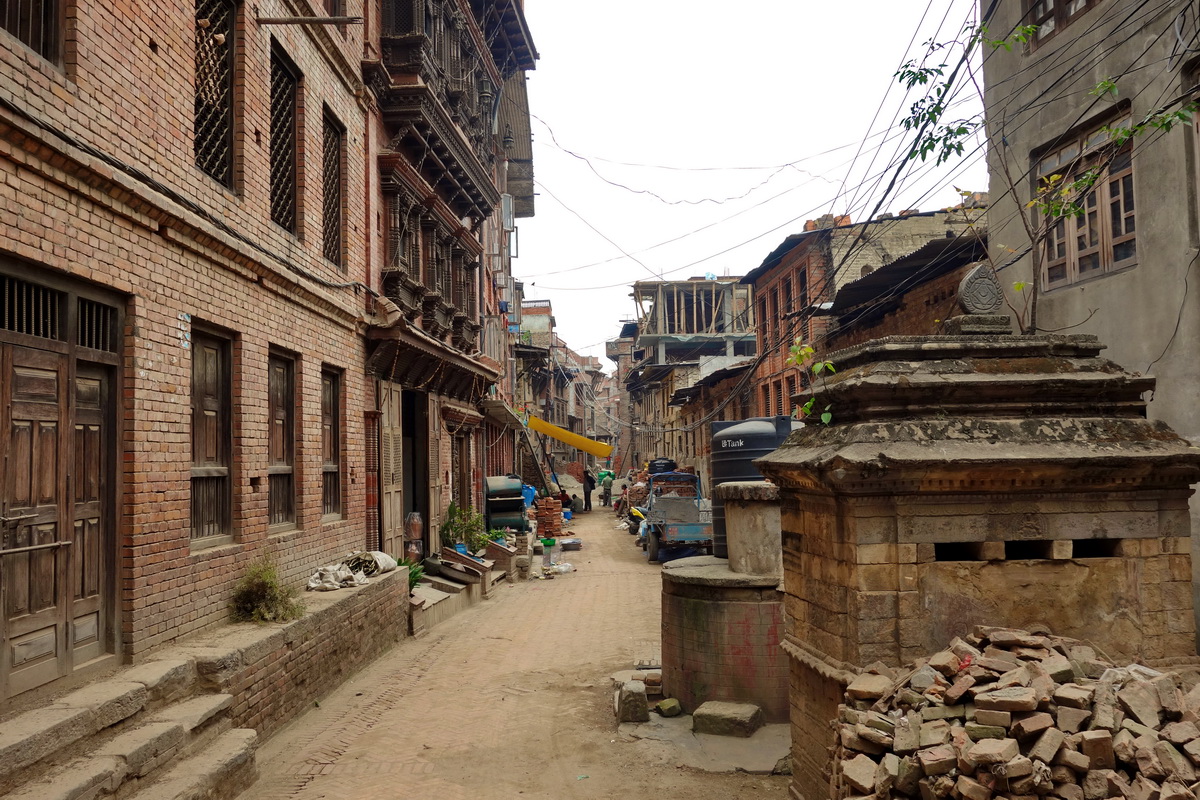
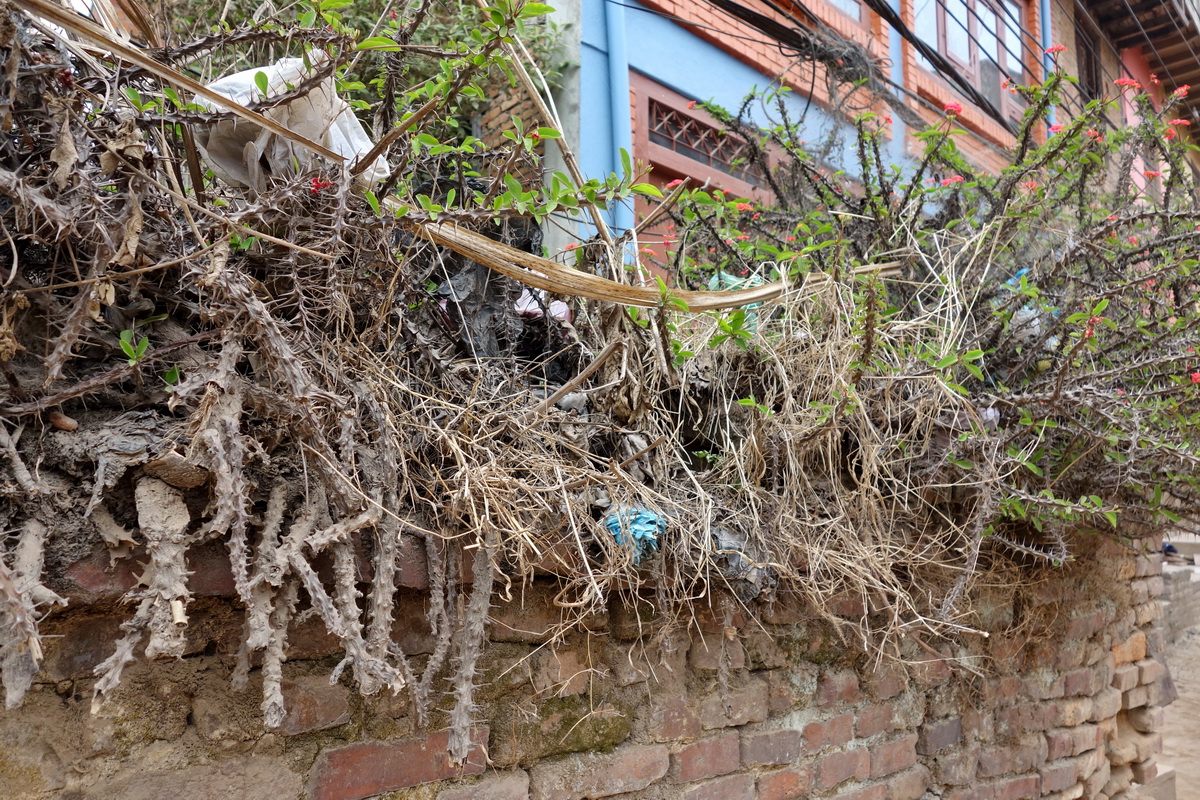
Instead of barbed wire.
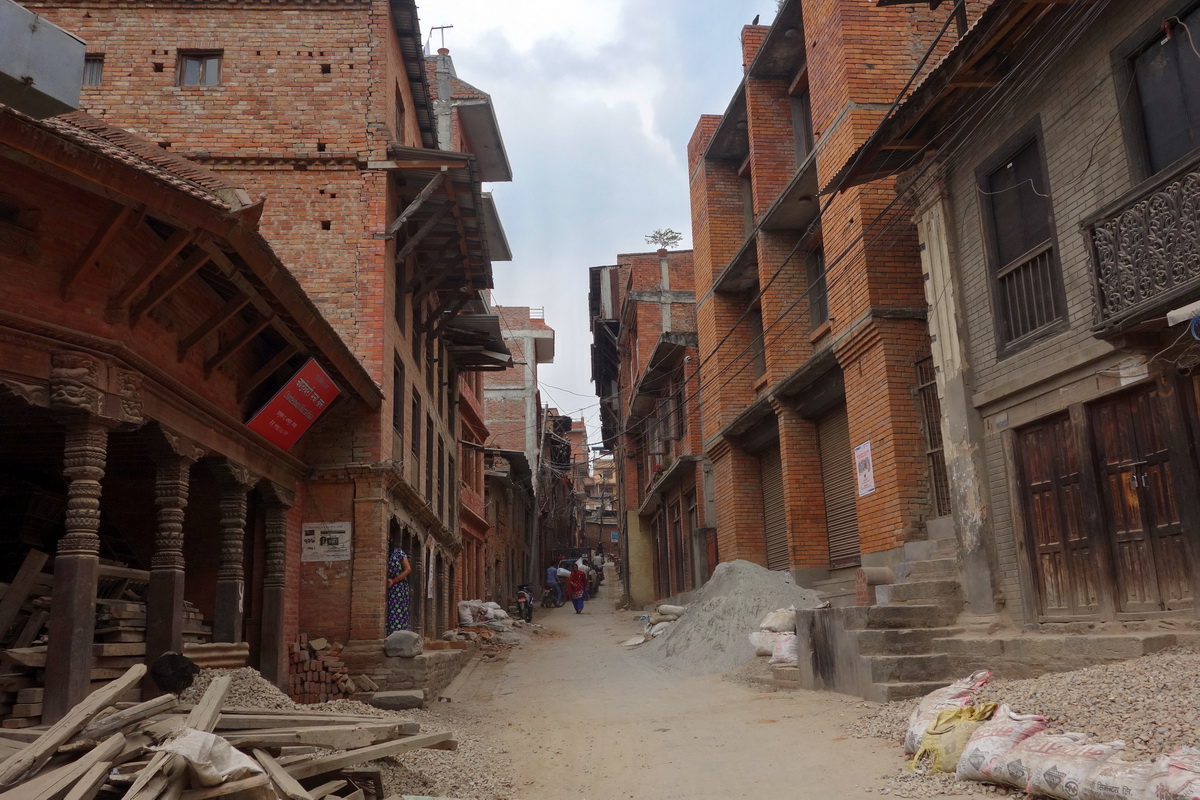
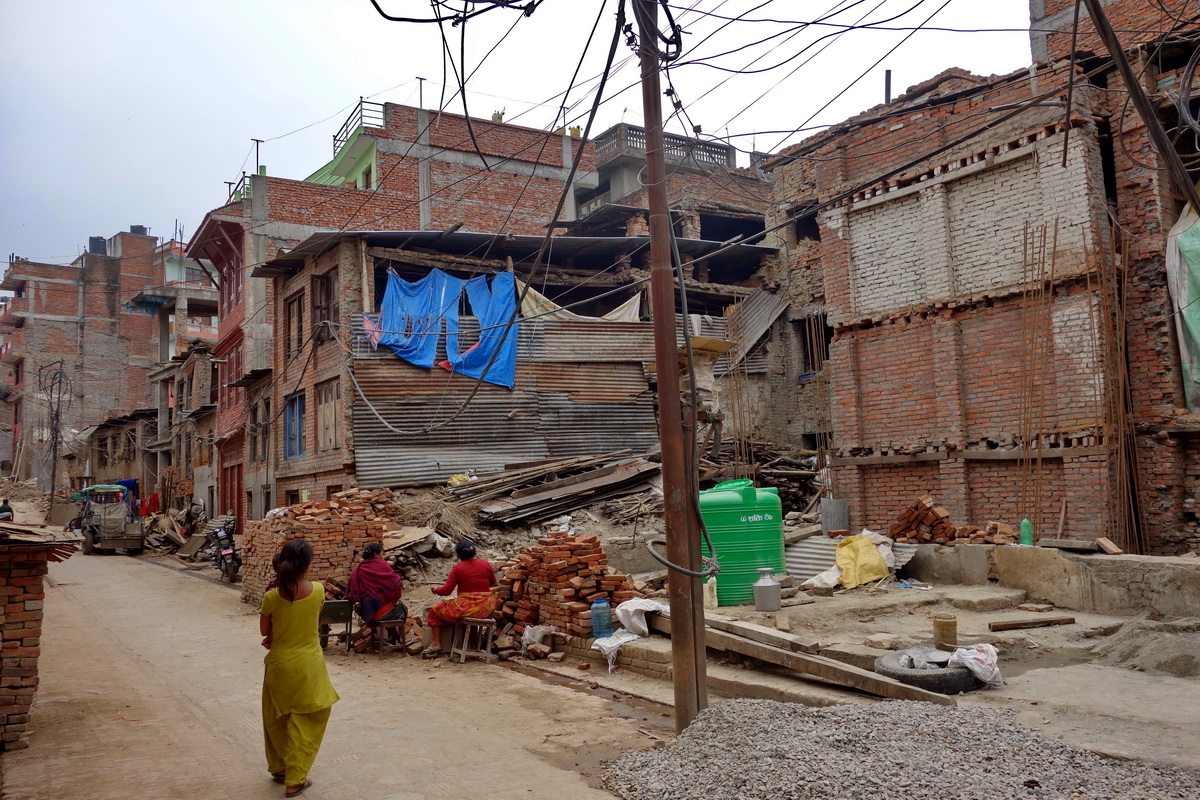
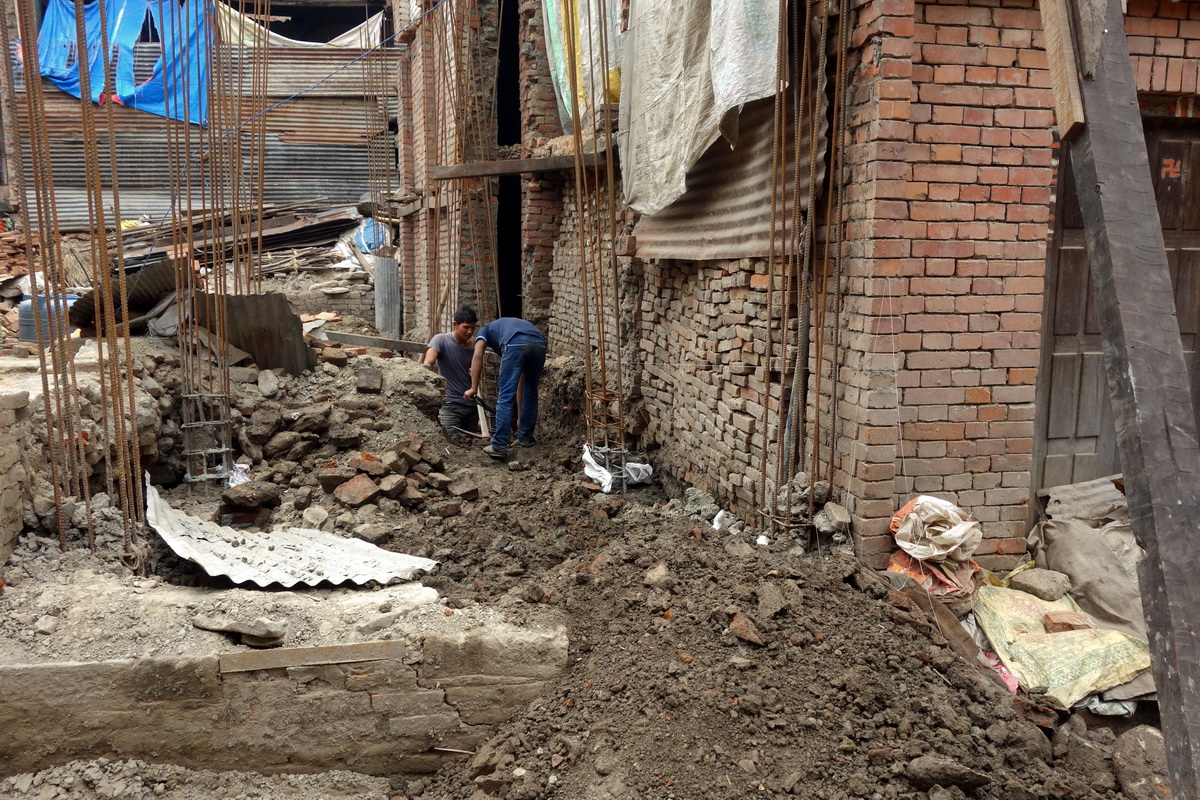
Locals are slowly rebuilding their destroyed homes.
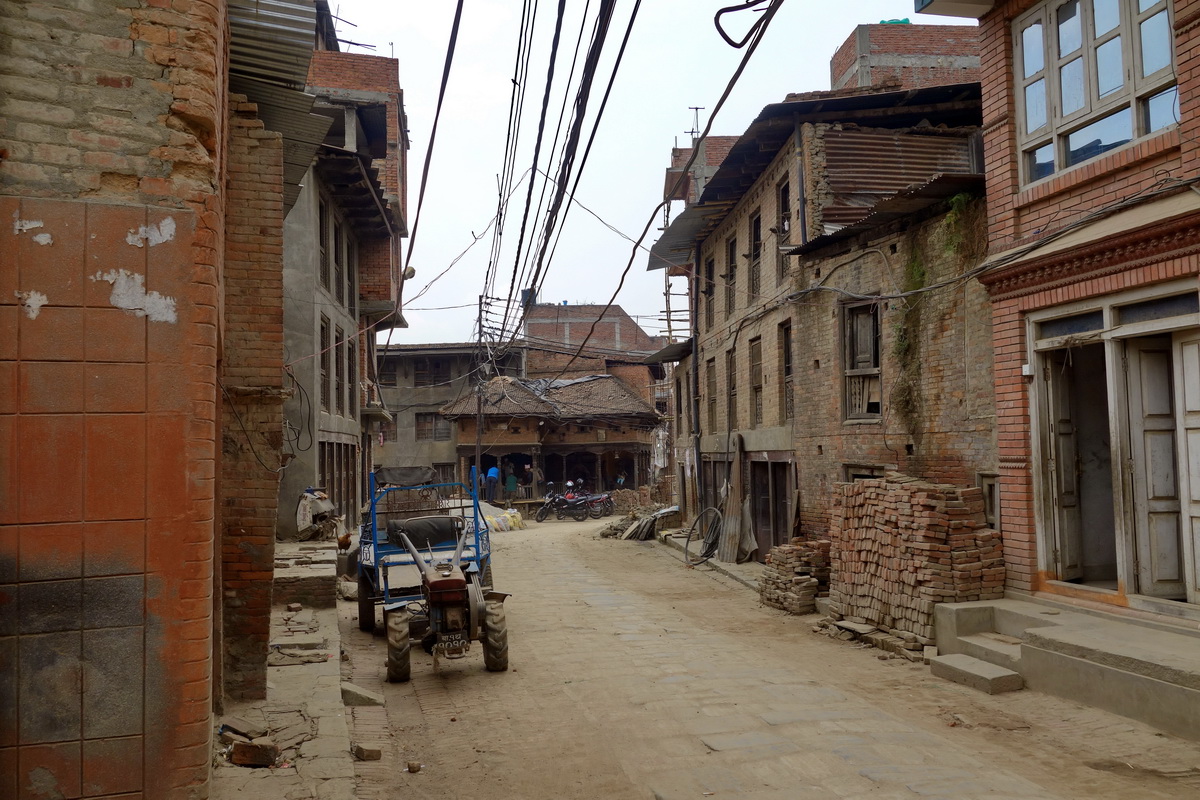
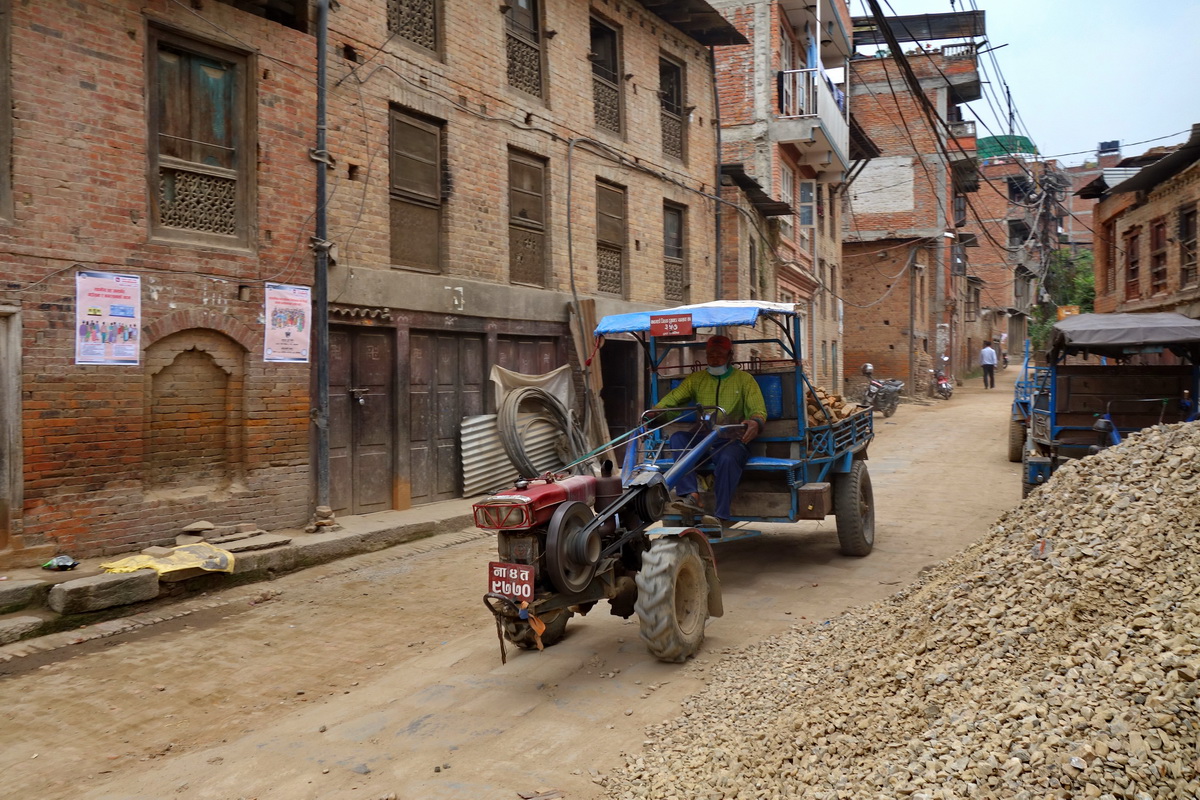
People frequently passed us on local vehicles used to transport various items and construction materials.
Many people live in half-destroyed houses and structures.
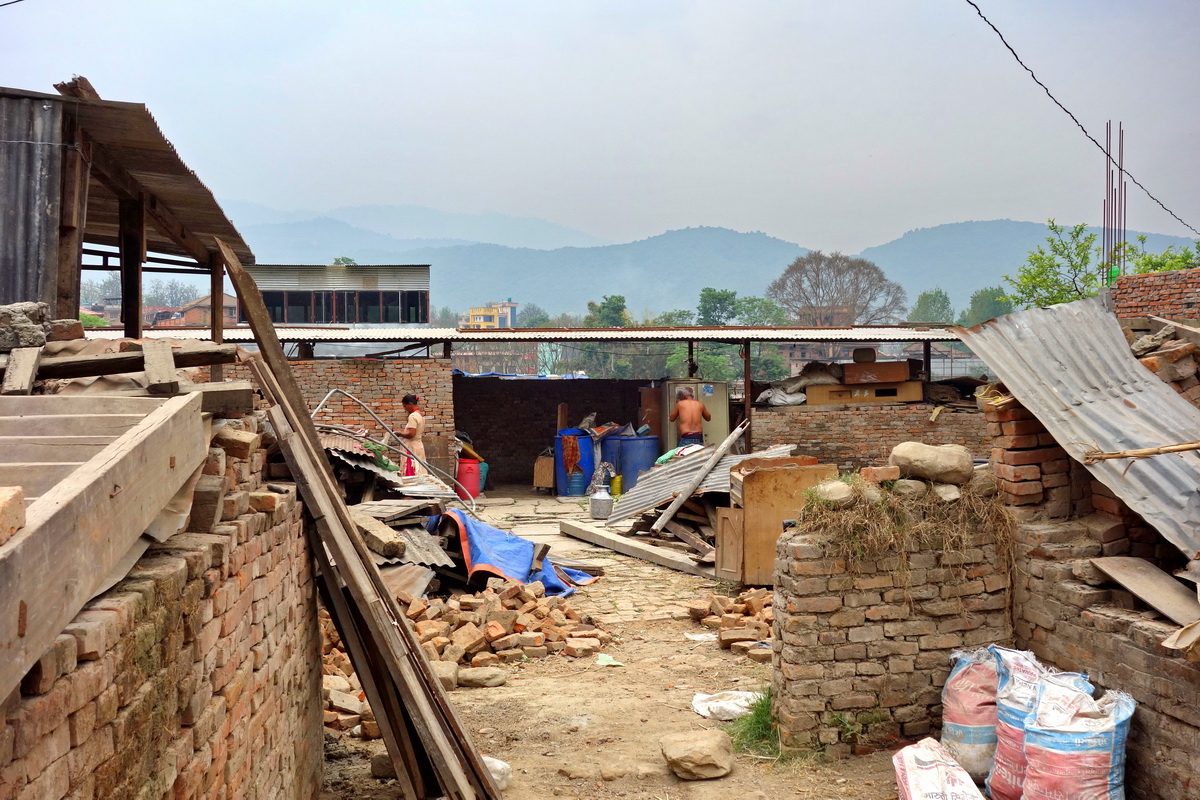
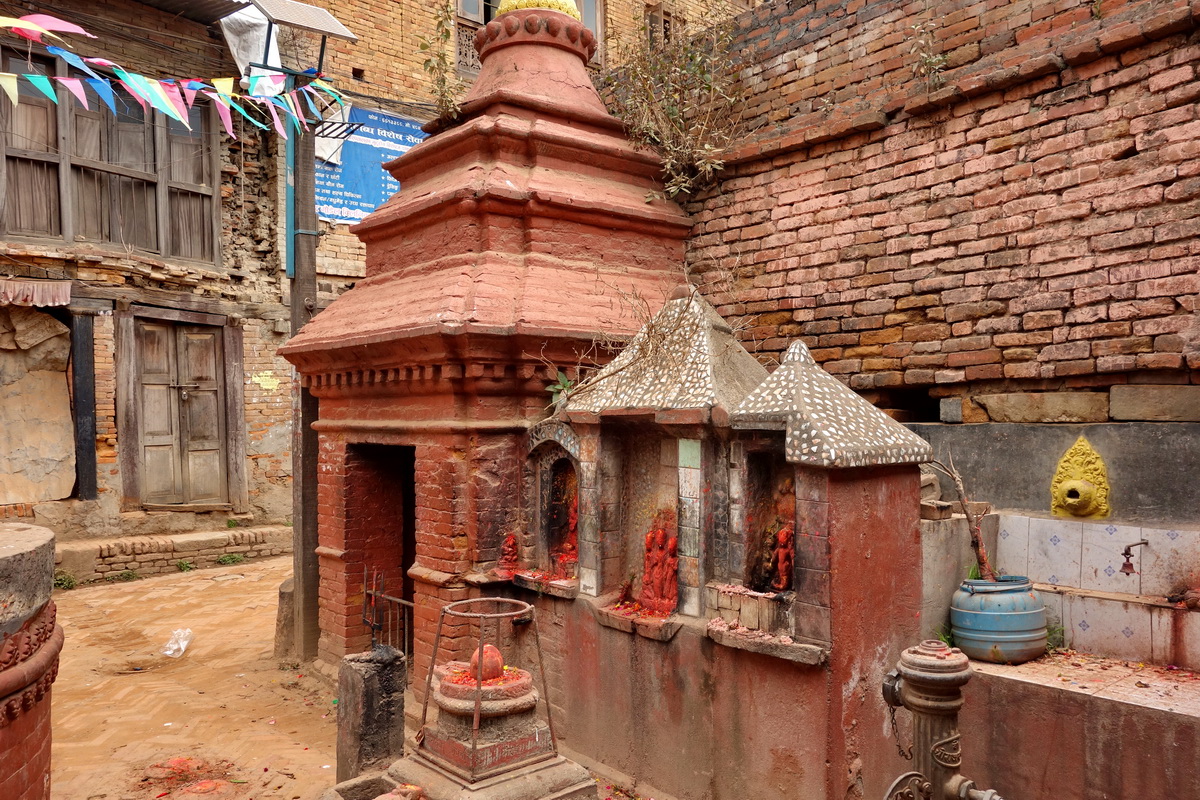
A small shrine in the middle of the street.
It feels like everyone is busy with something. Judging by the city’s appearance, it seems like we’ve traveled back in time.
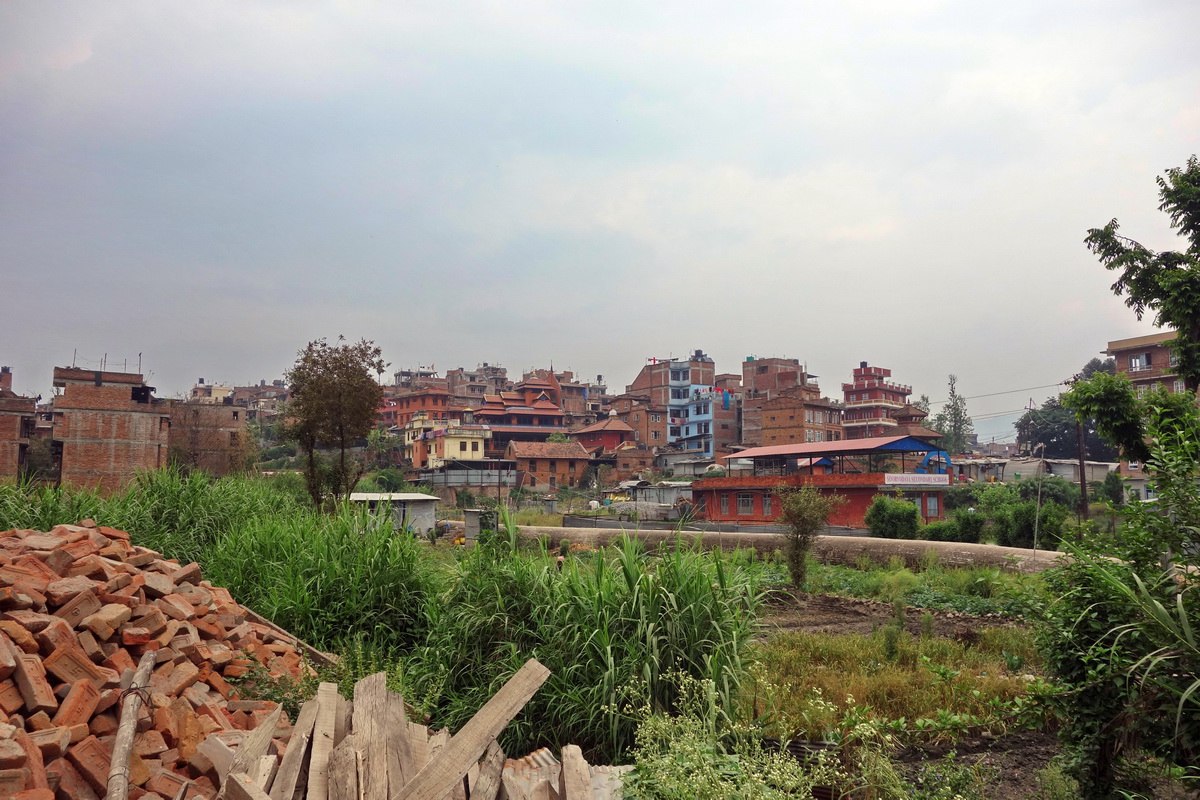
A small garden.
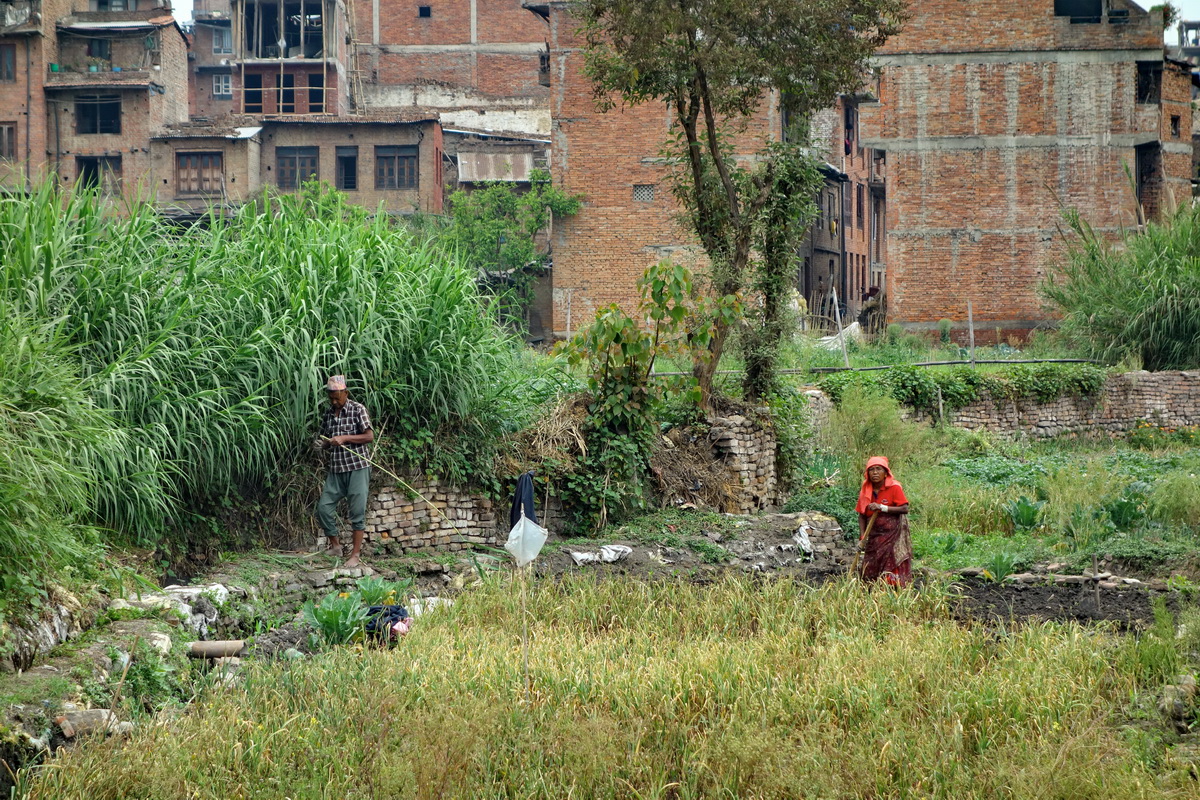
Local residents are working.
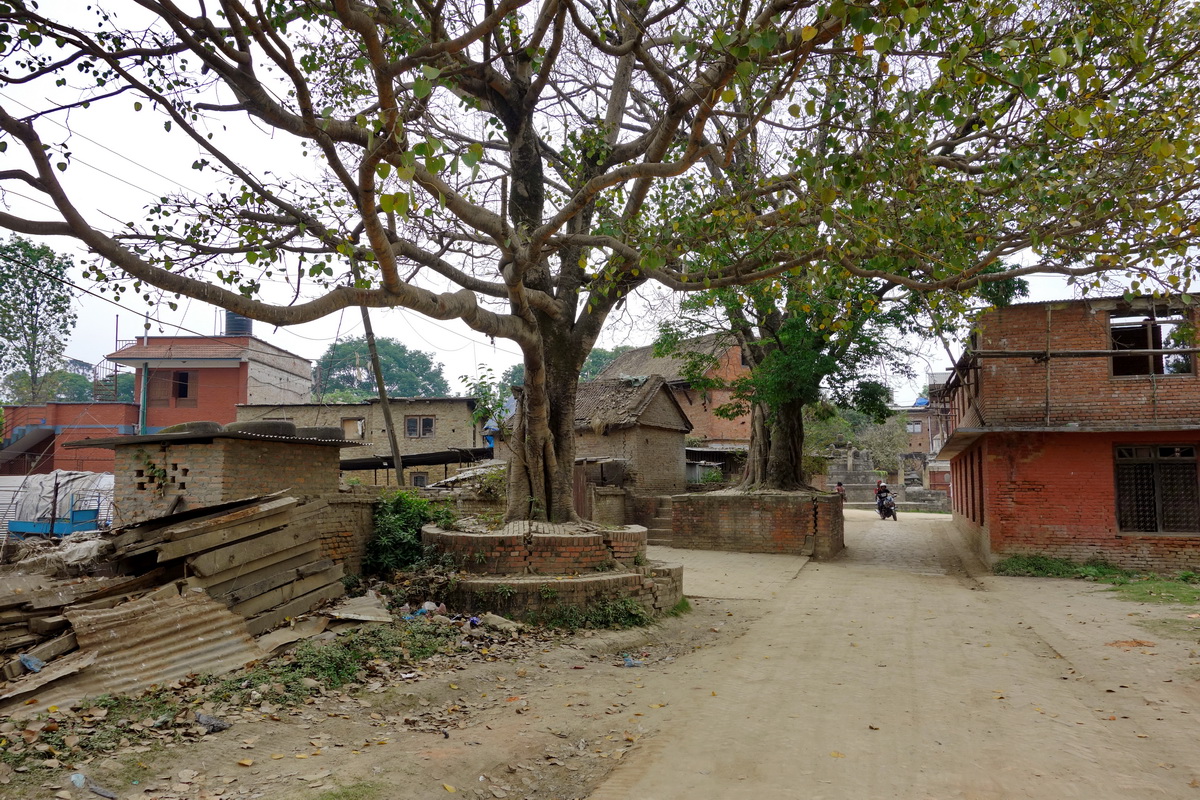
We pass by unusual trees.
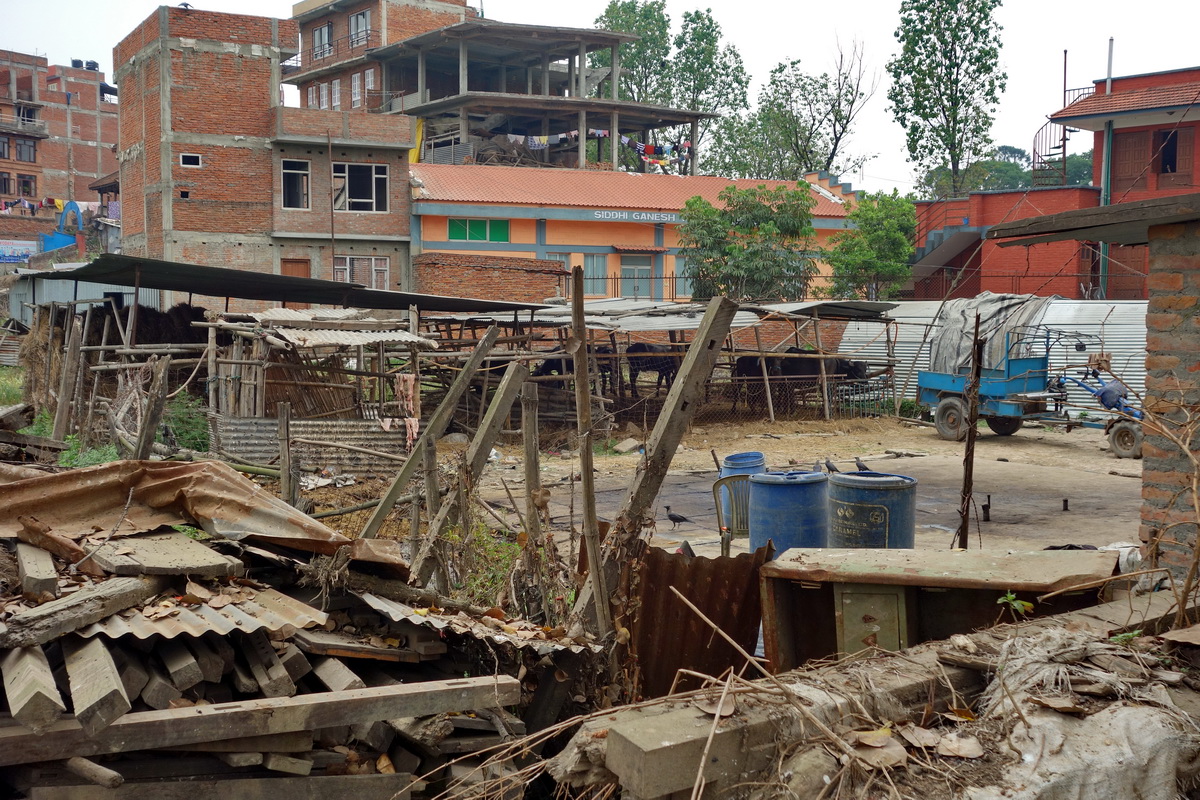
More ruins.
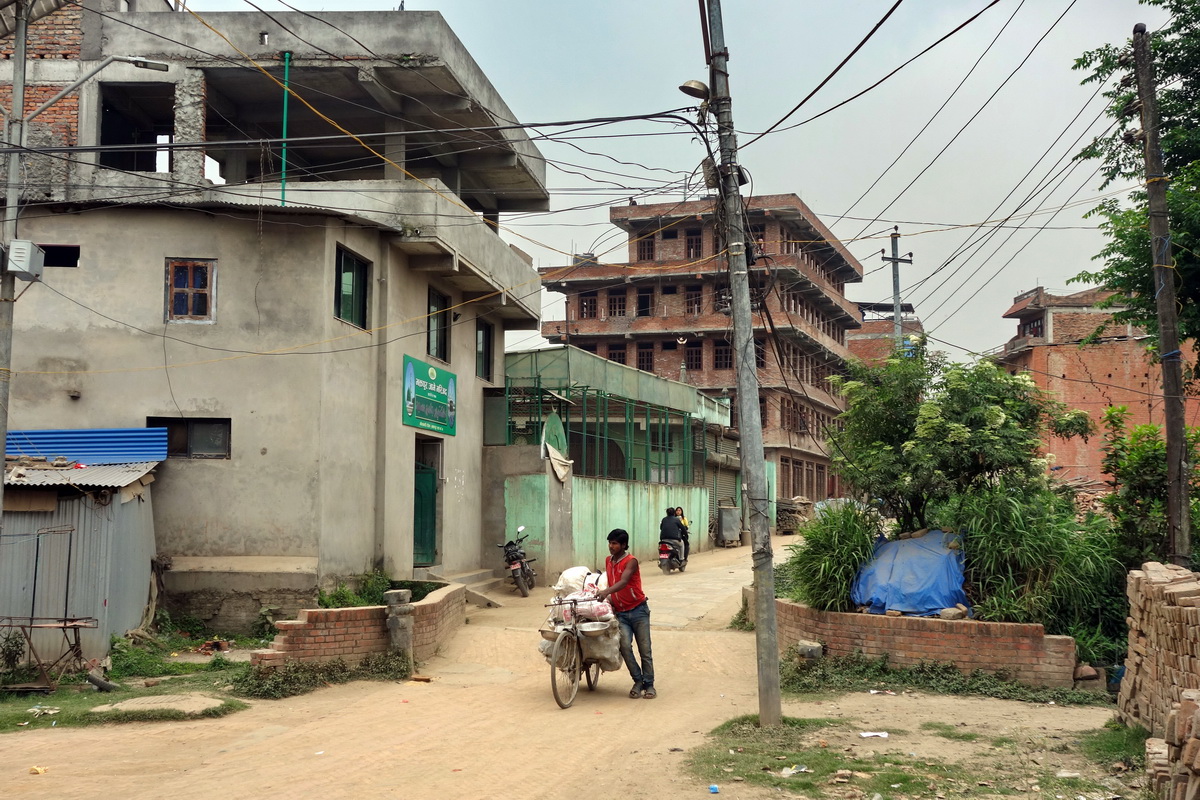
The streets are sparsely populated; we hardly encounter tourists here.
Another sacred place with a lingam at the top.
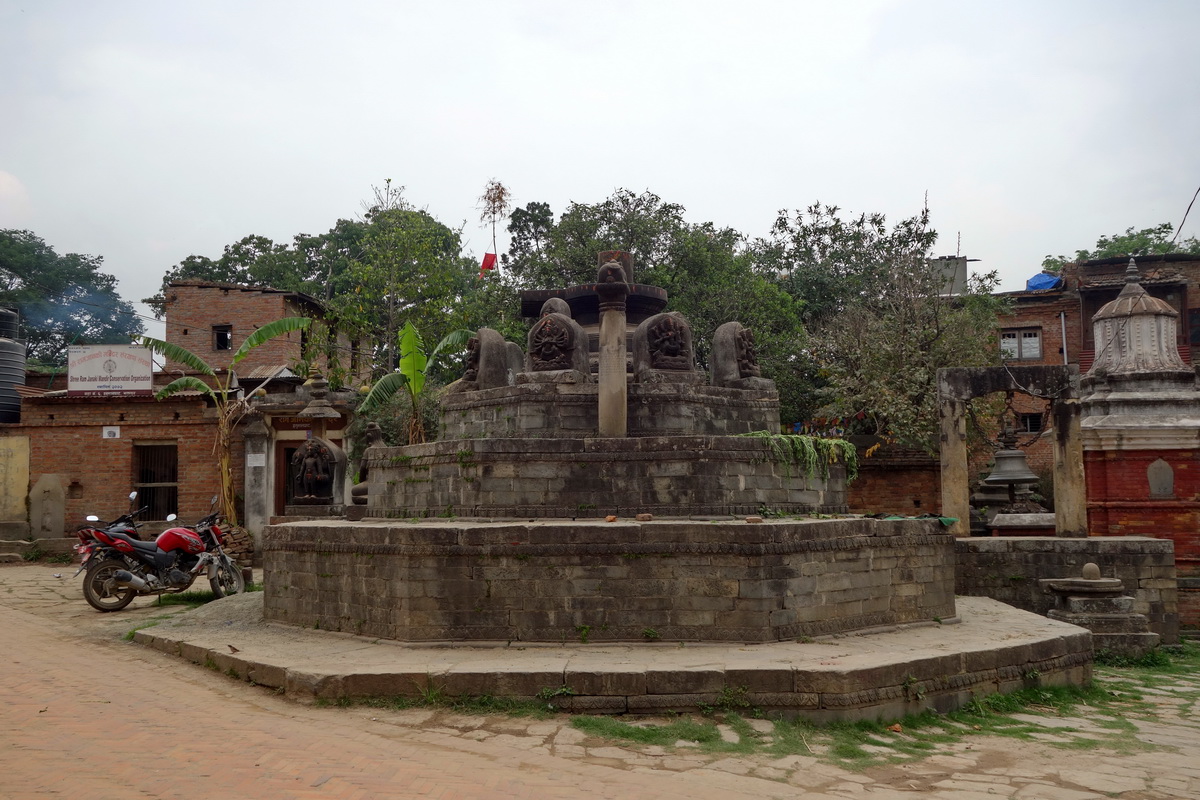
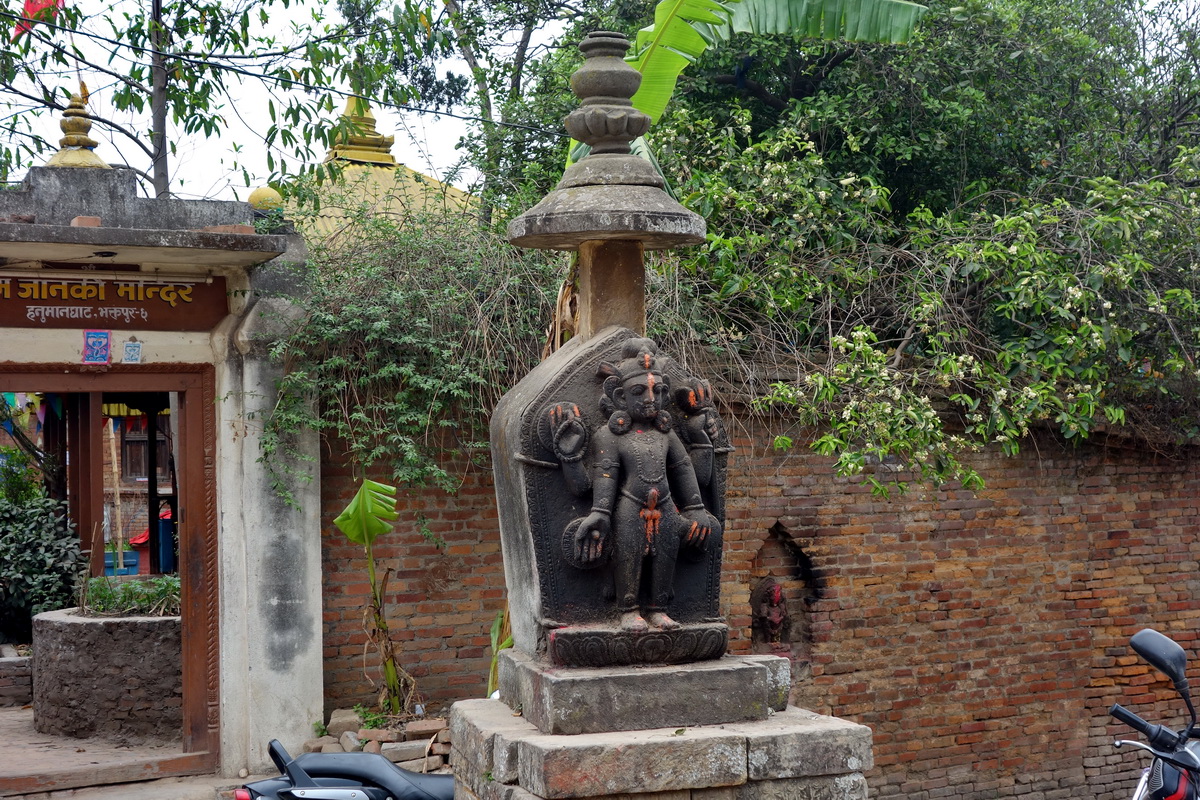
We walk past metal “huts.” People live here in complete poverty.
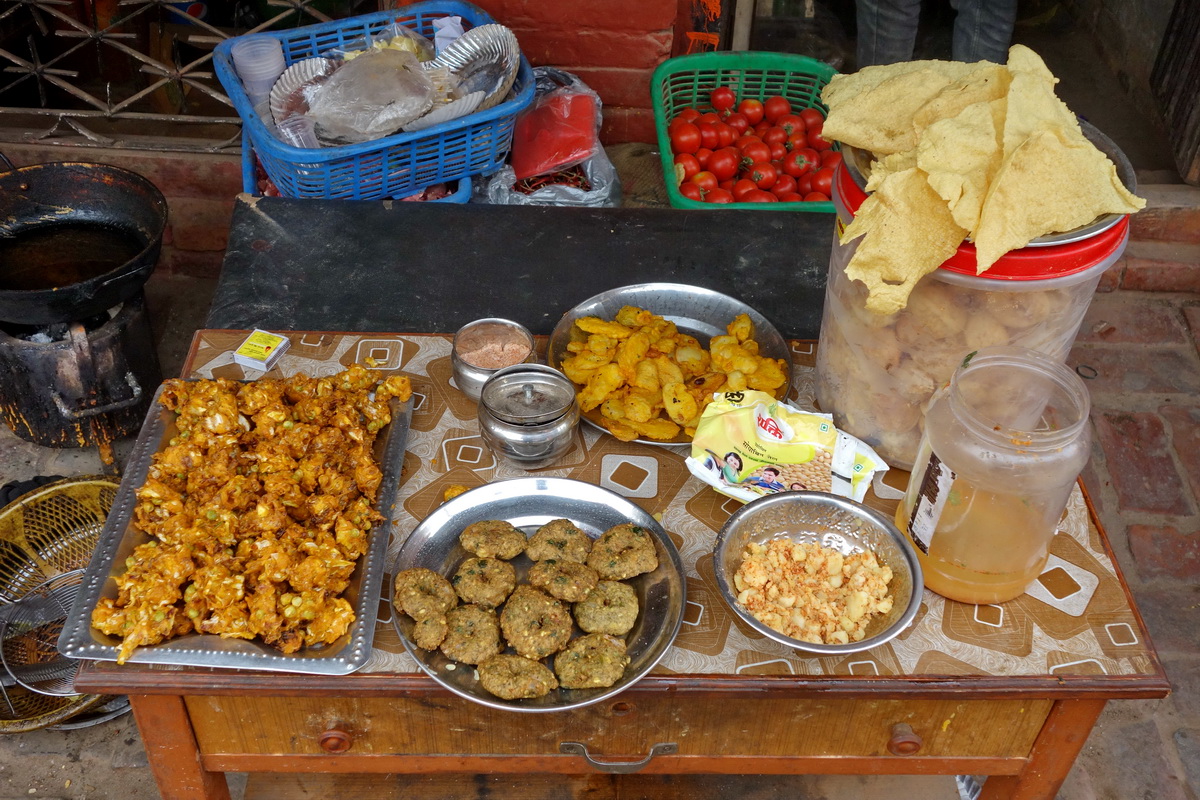
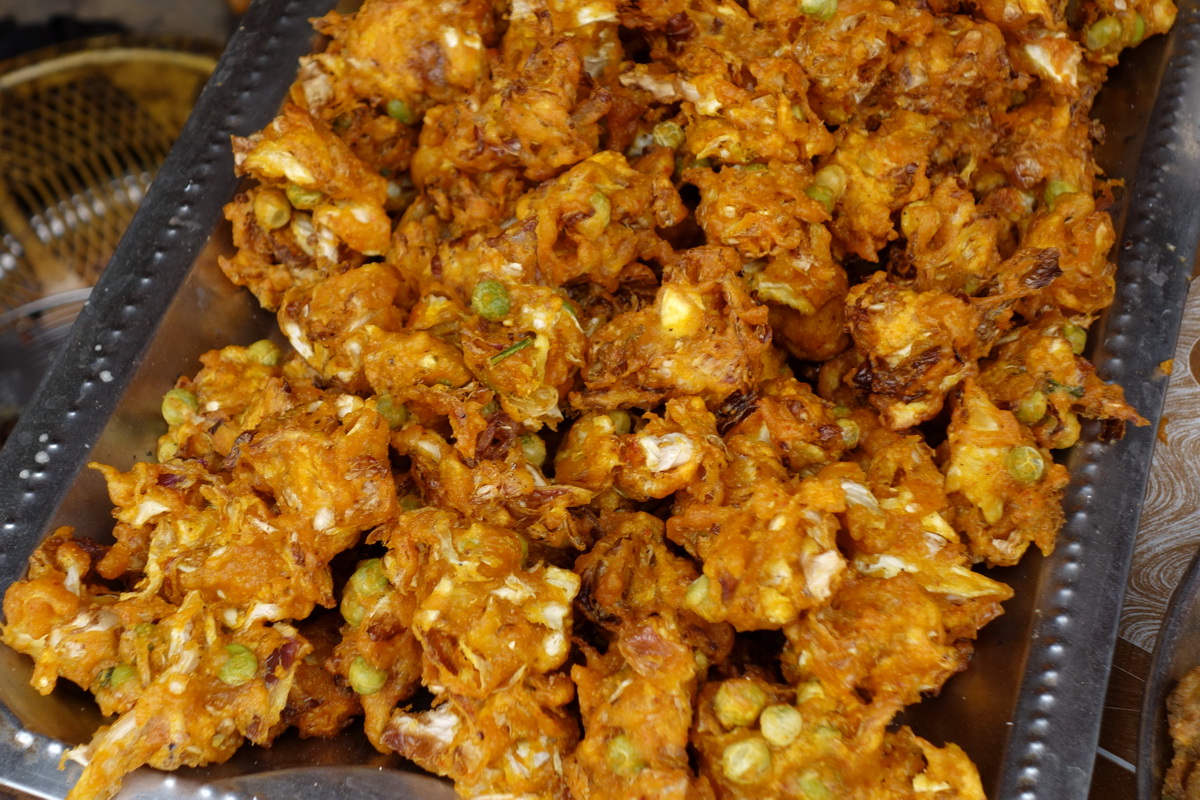
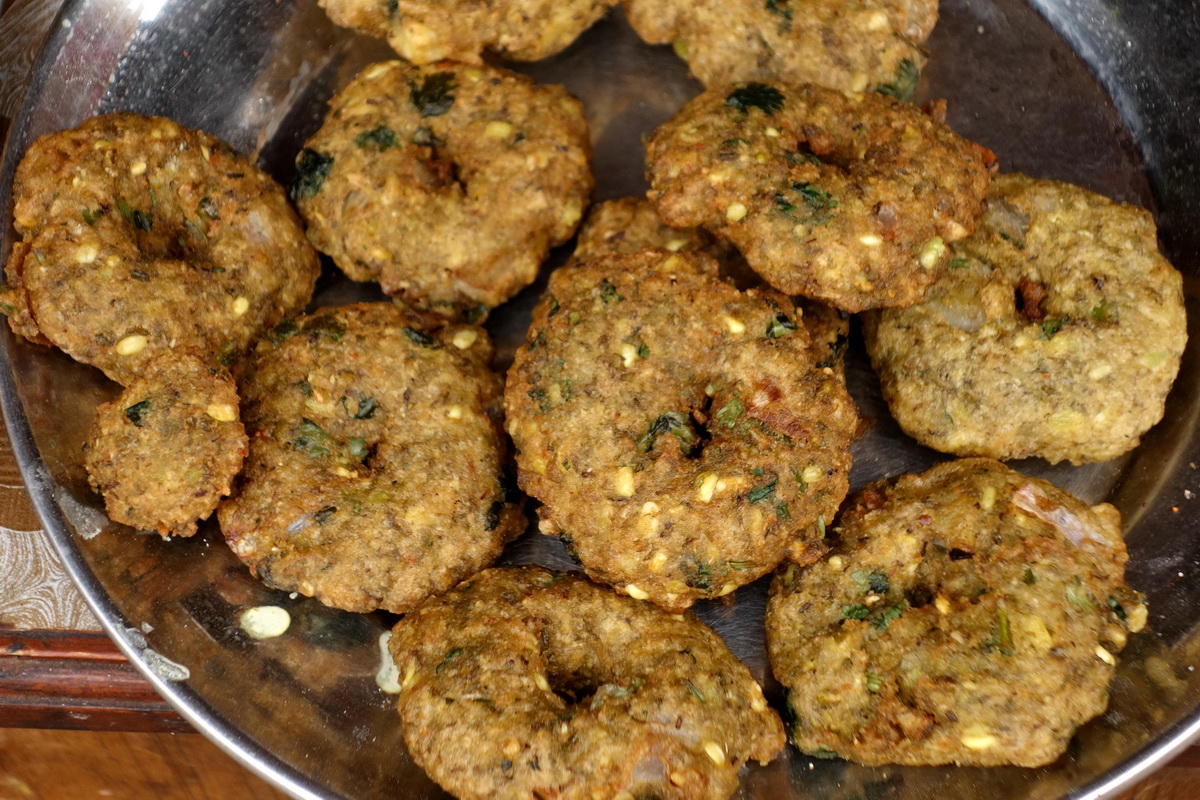
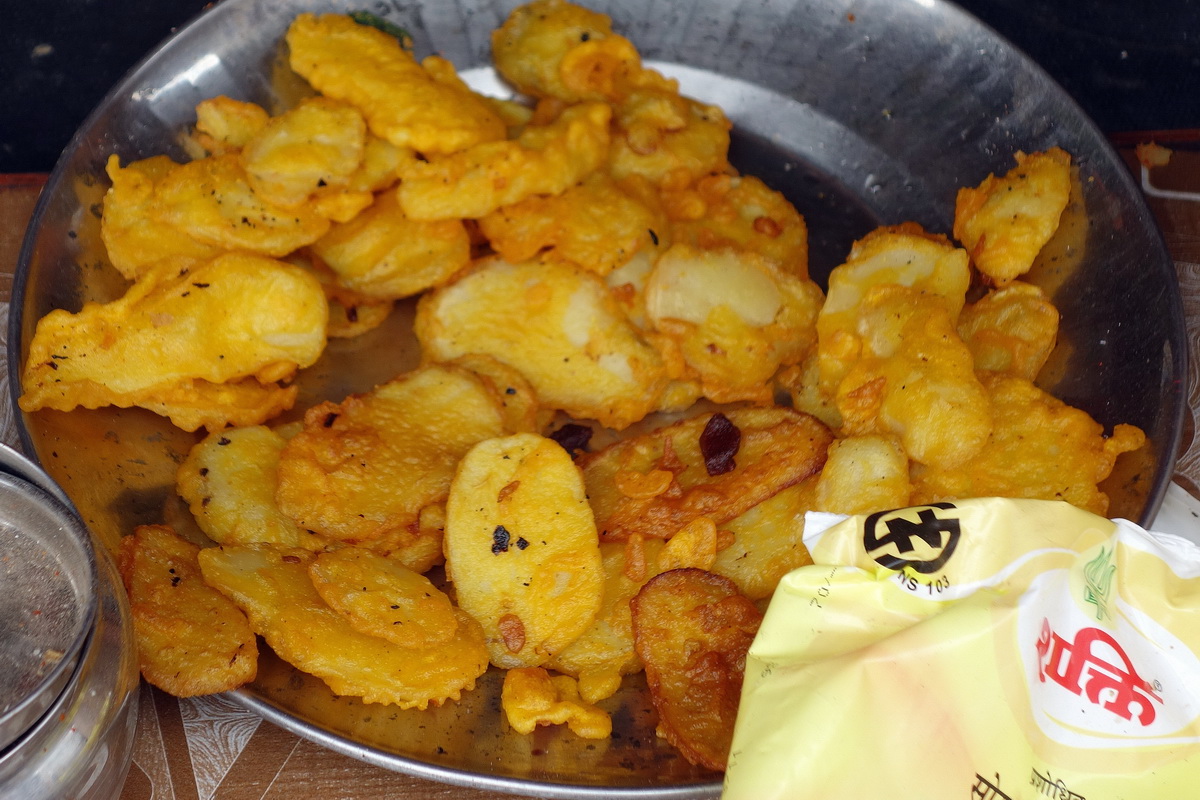
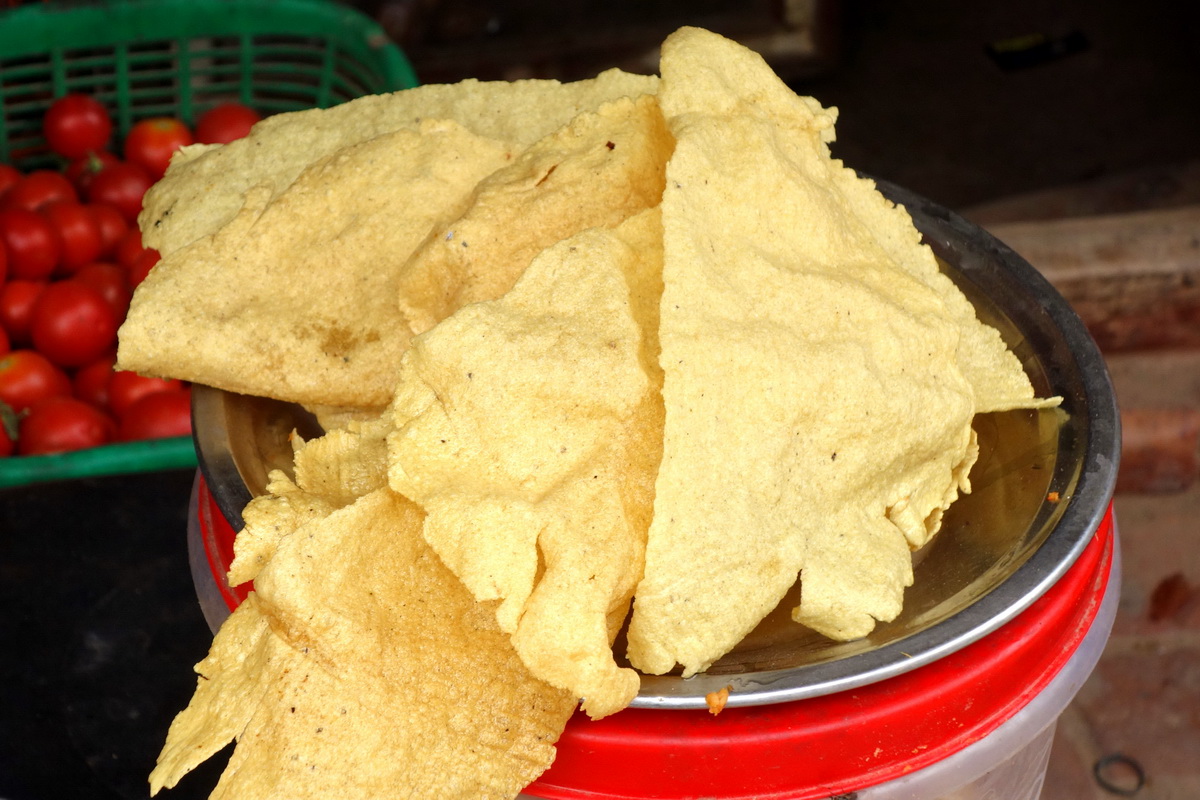
We grab some local fast food. It looks quite unusual. Especially since the schoolboy who sold me these dishes wrapped them in a page from a school notebook with grades :) Oh well, it’s edible :)
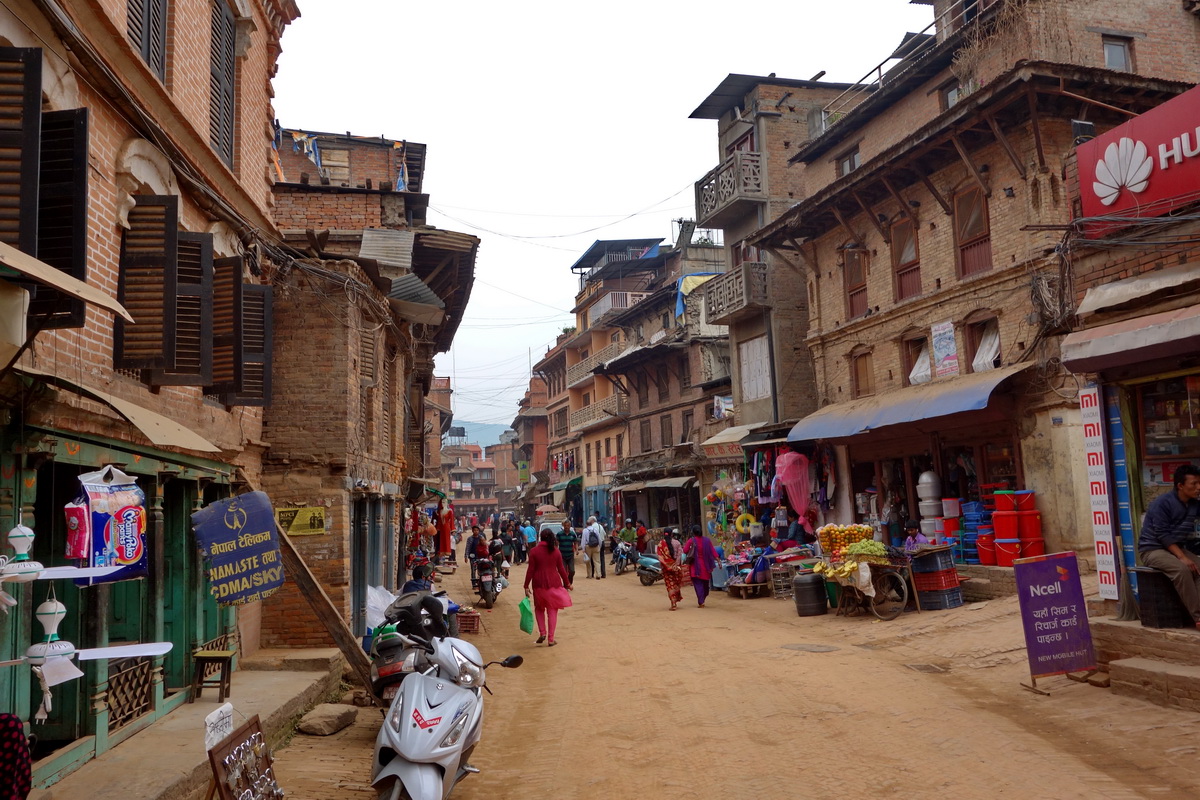
We return to a livelier street.
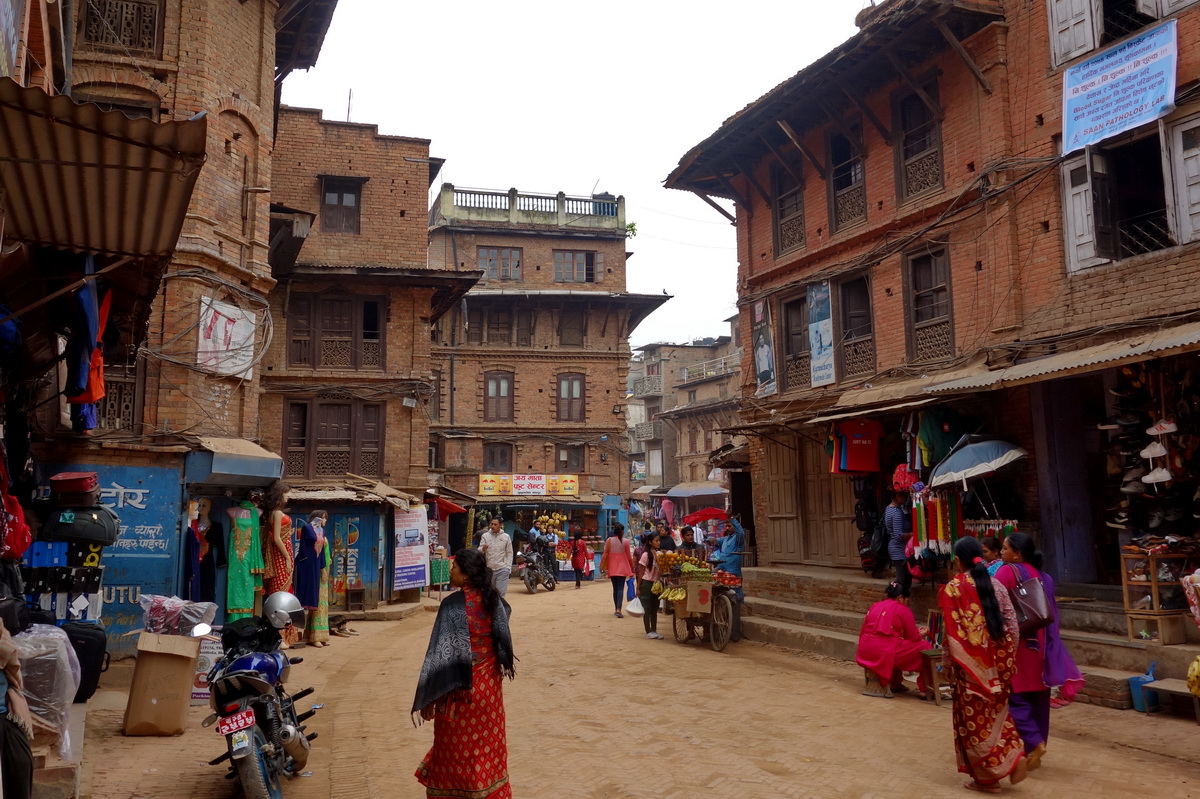
There are many stalls with souvenirs and food here.
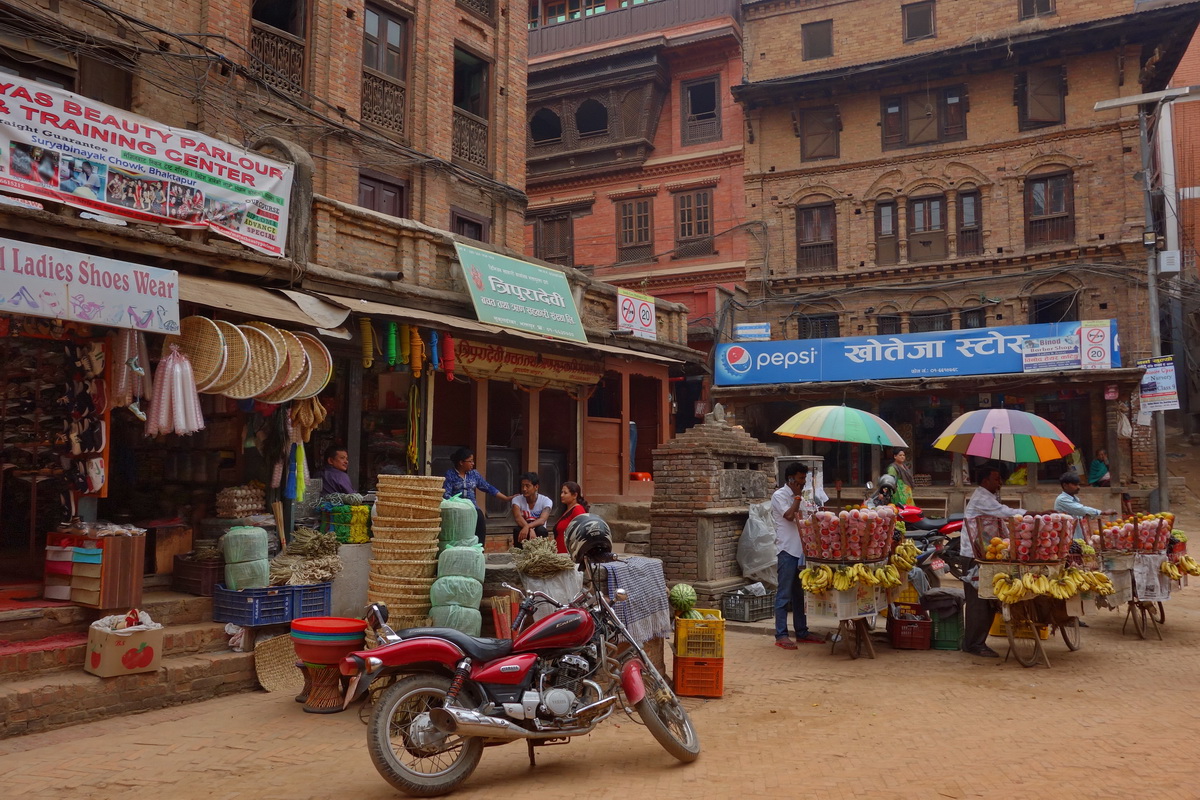
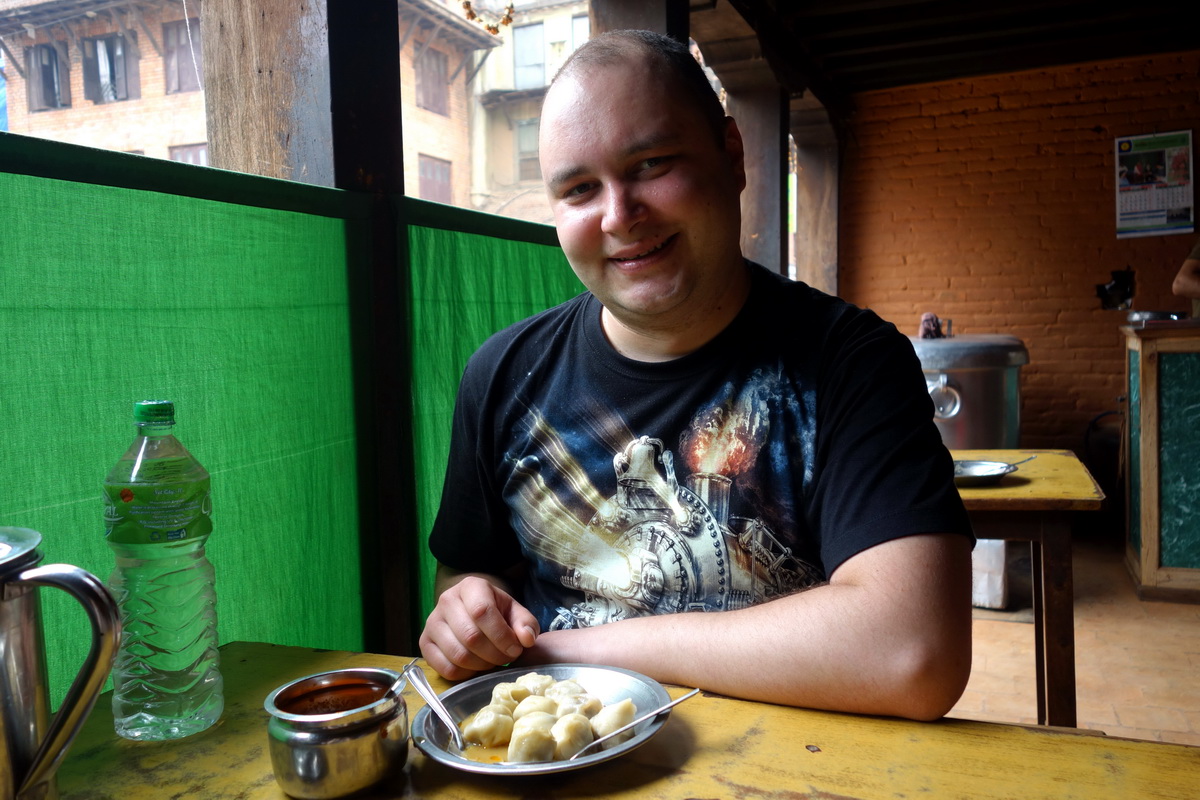
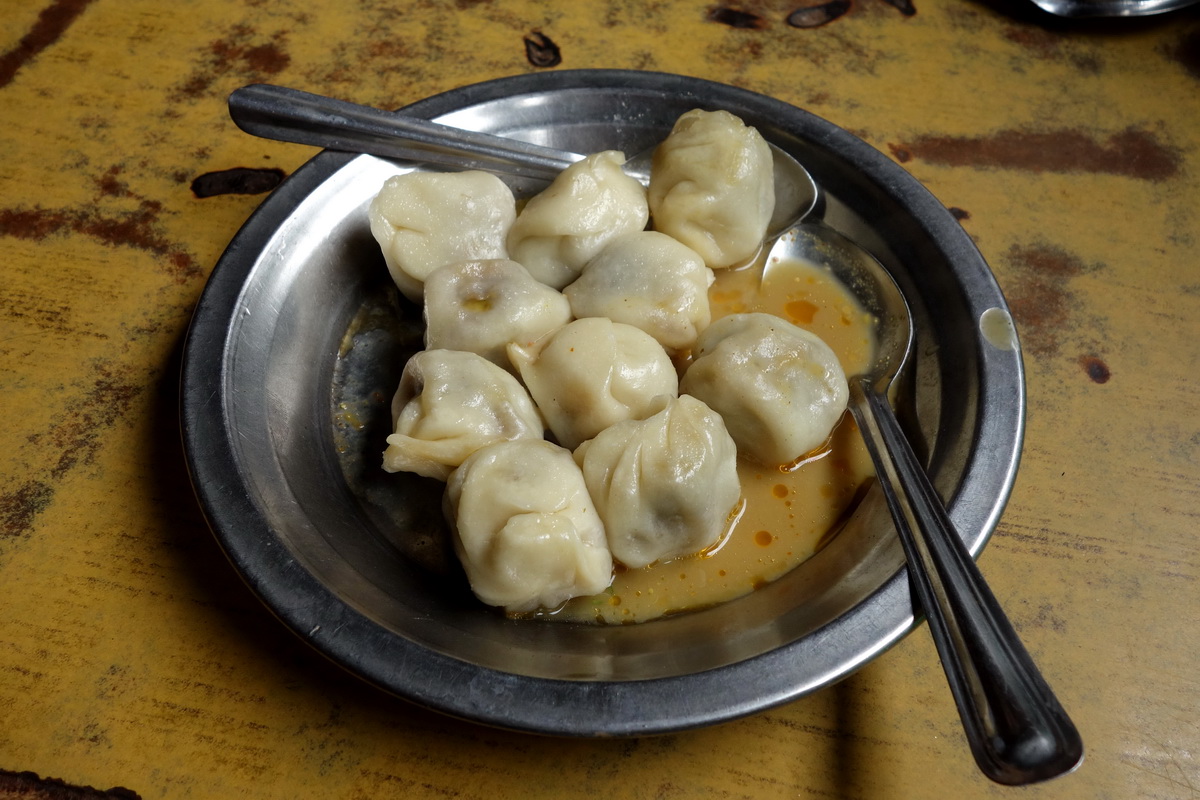
We eat our favorite momo and it’s time to move on.
Read the continuation: Part III. Pokhara.