Part I. Kathmandu.
Nepal is a fascinating and unique country in South Asia, most of which is located in the ridges of the Himalayan mountain system and borders India and China (more precisely, the Tibet Autonomous Region, part of the People's Republic of China). The capital of Nepal is Kathmandu.
Nepal stretches 650 kilometers along the Great Himalayan Range, while its width does not exceed 200 kilometers. The country has no access to the sea, but this does not make Nepal any less attractive to tourists. Nepal's terrain is highly diverse, changing from south to north—from a narrow strip of jungles through mid-mountains to the high peaks of the Himalayas. The lowest point in Nepal is at an elevation of just 70 meters, while the highest point in Nepal and the world is Mount Everest, standing at 8,848 meters. Additionally, eight of the fourteen highest peaks in the world, exceeding 8,000 meters above sea level, are located in Nepal.
Nepal is a republic, with the head of state being the president. The population of Nepal is 28.5 million people. No special vaccinations are required to visit Nepal. However, it is necessary to obtain medical insurance, which is required for obtaining permits to visit protected areas within the country.
The cheapest way to travel to Nepal from Kyiv is via Sharjah or Dubai with airlines such as Air Arabia or Flydubai. We chose Air Arabia. The flight from Kyiv to Kathmandu included a layover in Sharjah, UAE. The flight from Kyiv to Sharjah took about 5 hours, and from Sharjah to Kathmandu, about 4 hours.
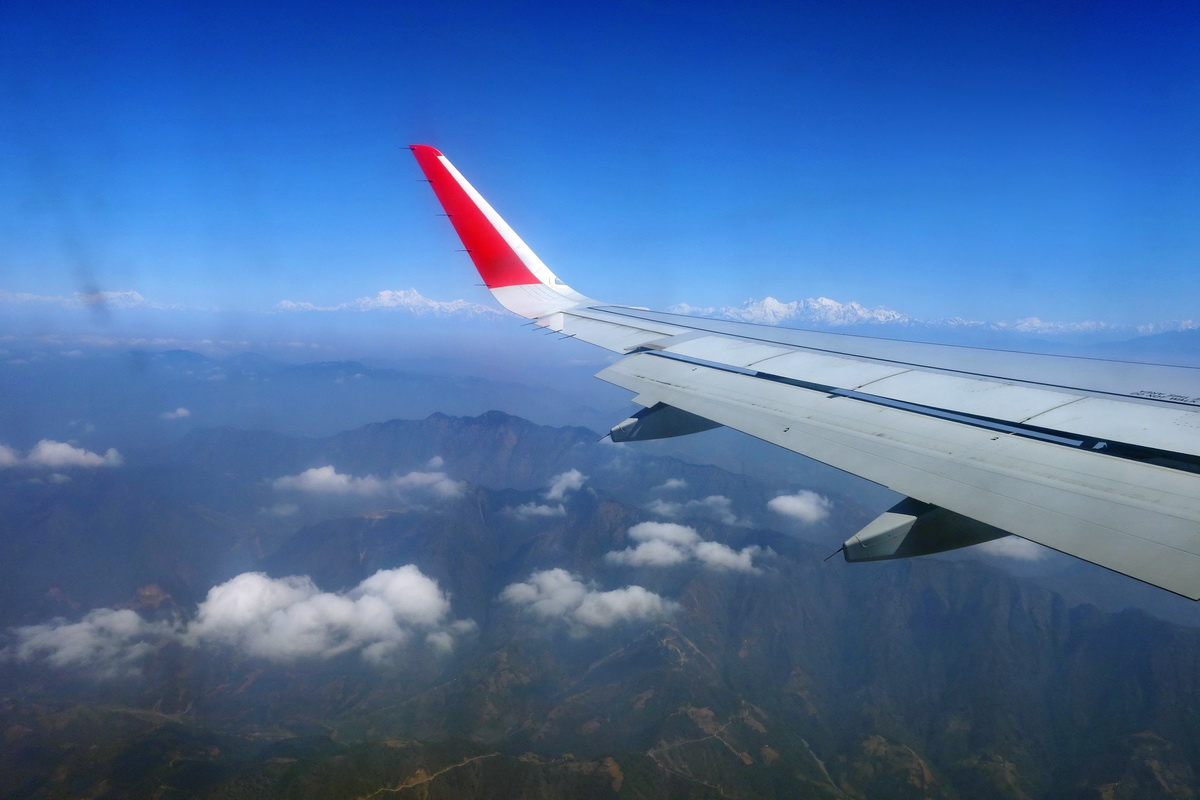
Flying over Nepal, mountains begin to appear for the first time, as there are no mountains over most of the Indian territory we flew over. In the distance, the snowy peaks of the Himalayas are visible on the horizon.
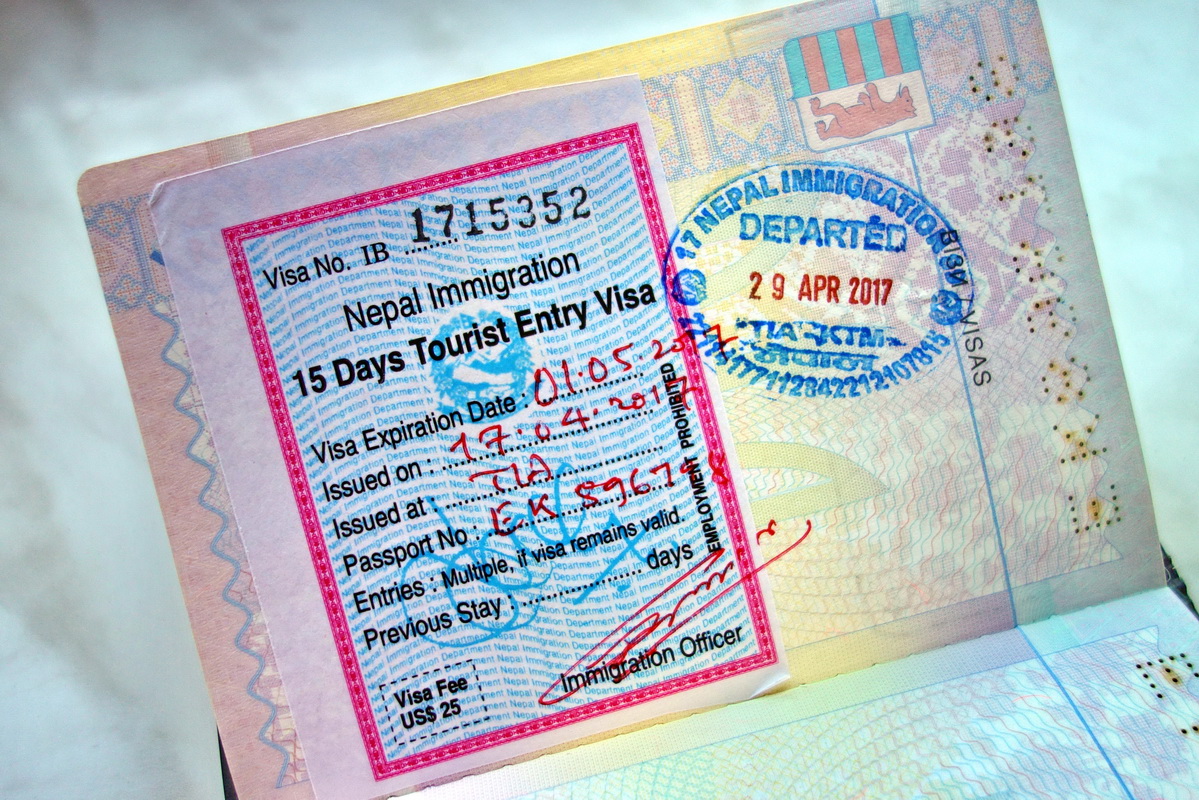
Visa. A visa for Nepal is issued at the border, or more precisely, directly at the airport. To obtain a visa, you need two 3x4 cm photos, a completed application form, and $25 (for a two-week visa). However, you can also fill out a visa application with a digital photo on the immigration service website, print it out, and present it at passport control. This significantly speeds up the visa process, which we decided to take advantage of.
Nepal's culture is in many ways similar to that of India. Perhaps due to the unforgettable impressions from visiting India in 2013, I developed a desire to visit Nepal, which I managed to fulfill in the spring of 2017. Organizing the trip took a little over a month. During this time, we planned a detailed travel itinerary, booked all necessary flight tickets, and outlined an approximate route for a short trekking trip in the Himalayas.
The travel itinerary was planned as follows:
Kathmandu » Bhaktapur » Pokhara » Annapurna » Chitwan » Kathmandu
The entire journey through Nepal lasted 13 unforgettable days.
Language. The official language of the country is Nepali or Nepalese (नेपाली). Nepali uses the Devanagari script (Indian script). This language is native to 44.6% of Nepal's population. Despite its official status, many other spoken languages of various ethnic groups living in Nepal are used in the country. However, English is widely used in the tourism sector. In large cities, there are many English schools and advertisements for English language courses. Our trip was not without Nepalis who knew some English words, such as "hello," "how are you," and so on.
Kathmandu is the capital and largest city of Nepal, located at an elevation of 1,300 meters above sea level. The city's population exceeds 1 million people. Life in Kathmandu is bustling in the truest sense of the word. The city's streets are filled with crowds of people mixed with cars, motorcycles, and cycle rickshaws. The sound of car horns and the ringing of ritual bells never cease. The locals are very kind and welcoming, eagerly trying to sell something or offer their services for trip organization. Life is particularly vibrant in the tourist hub—the area called Thamel. This district is home to numerous shopping rows, hotels, and cafes.
In 2015, Nepal experienced a series of major earthquakes, the first of which occurred on April 25, 2015, with a magnitude of 7.8. This earthquake was the most powerful since 1934. Over eight thousand people died, more than 14 thousand were injured, tens of thousands of homes were destroyed, and over half a million structures, including ancient historical temples and UNESCO heritage sites, were damaged. The strongest tremors occurred on April 25 at 11:56 a.m. local time. The tremors were felt in Nepal's capital, Kathmandu, and destroyed many buildings there. Tremors were also felt on Everest, triggering avalanches that killed at least 19 climbers.
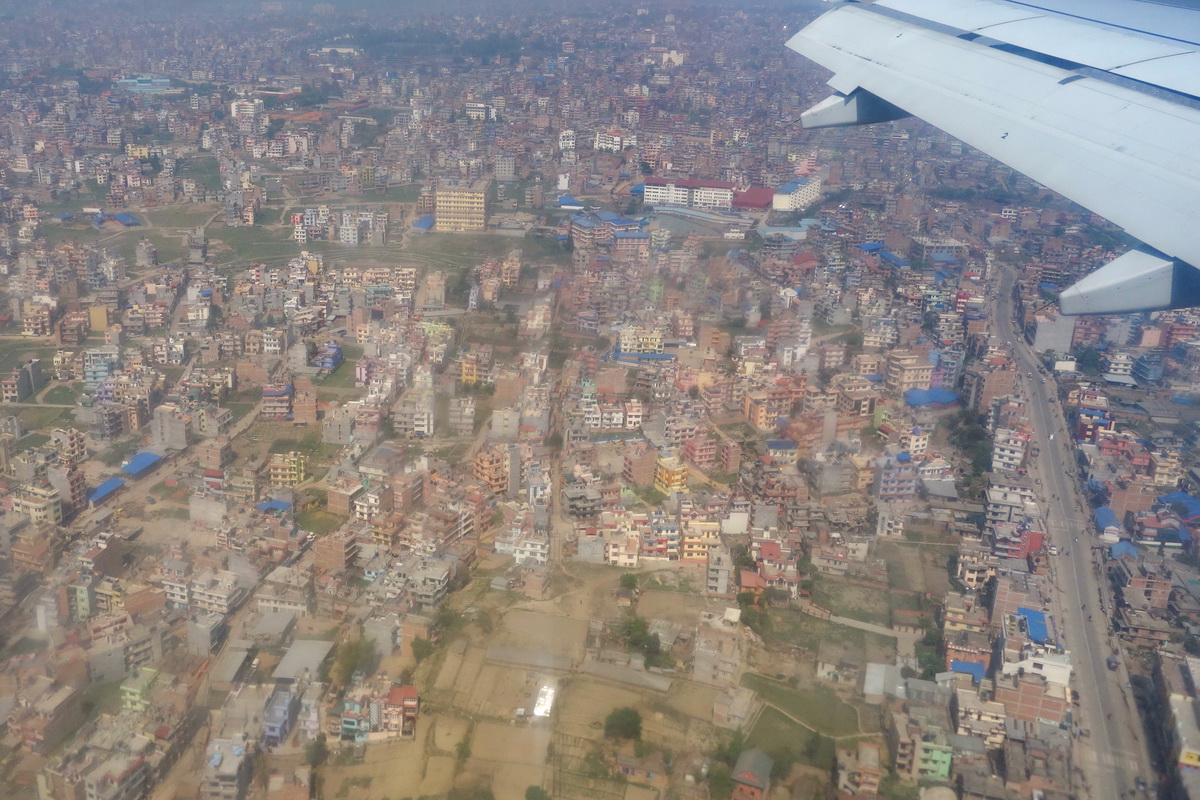
We land in Kathmandu. The airplane window slightly distorts the view, but overall, it’s clear that most of the city consists of relatively low-rise buildings.
The visa issuance process upon arrival took very little time, thanks to the fact that we had applied for a visa online in advance. As a result, we left the airport quite quickly. By the way, upon arrival in Nepal, you need to adjust your time immediately, as it differs from Kyiv summer time by 2 hours and 45 minutes.
Currency. The first thing to do upon arriving in Kathmandu is to exchange money. Nepal uses its own currency—the Nepalese rupee. Money can be exchanged at exchange offices, most of which are located in the tourist areas of major cities. We exchanged some money at the airport and the rest in the city center. The exchange rate at the airport and in central Kathmandu differs slightly, and the rate is quite convenient—100 dollars gets you approximately 10,100 Nepalese rupees.
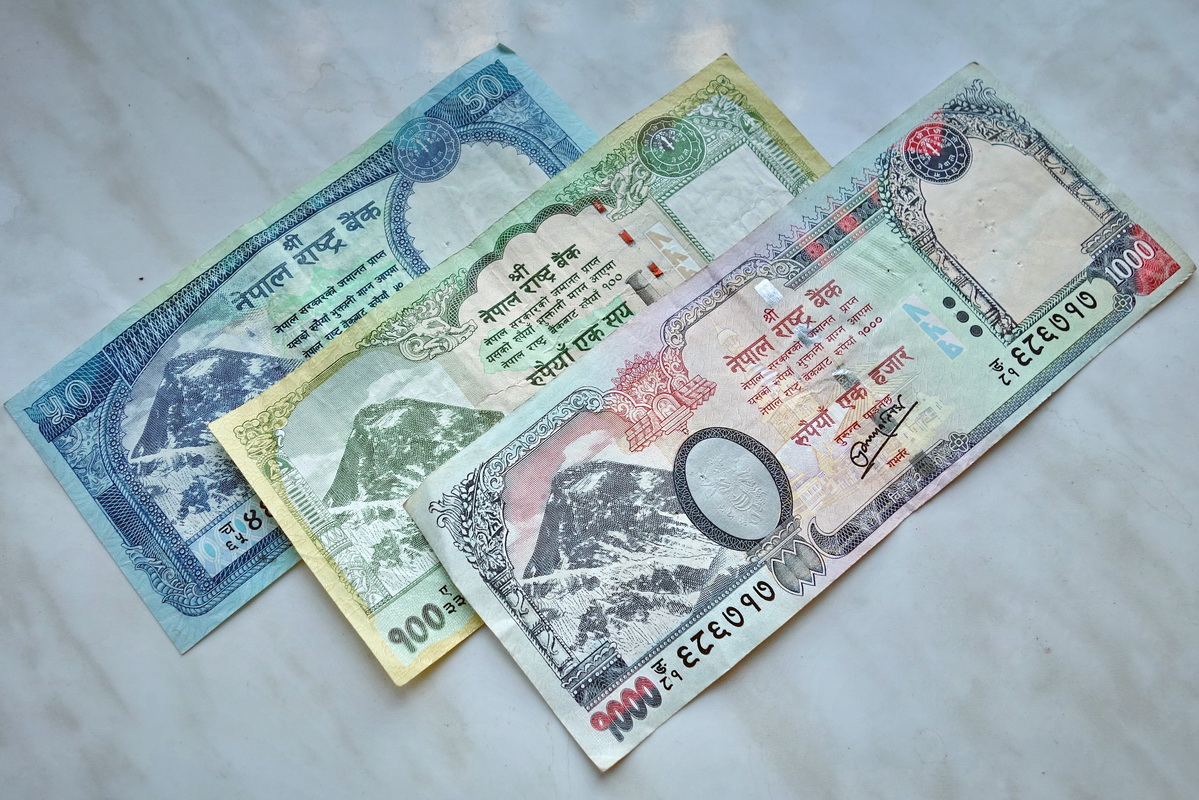
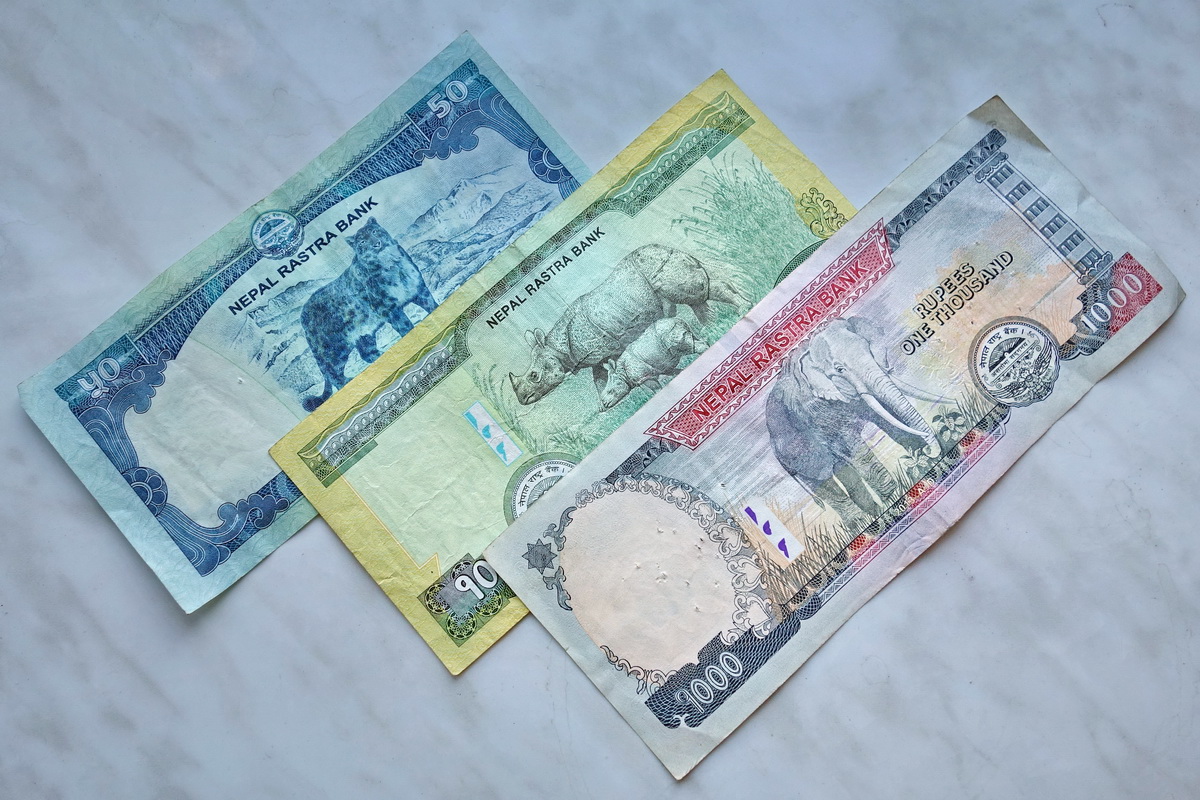
Notably, the front side of Nepalese rupees features various animals native to Nepal, while the back side always depicts Everest.
Upon exiting the airport, we were immediately approached by quick-witted taxi drivers, and we promptly headed to the city center. However, we didn’t make it all the way to the tourist hub. Faced with heavy traffic, we decided to walk to our hotel—it was faster. In general, we rarely used taxis, preferring to explore the city on foot.
On the way to the hotel, we stopped to grab a bite at a typical tourist restaurant. The restaurant’s menu.
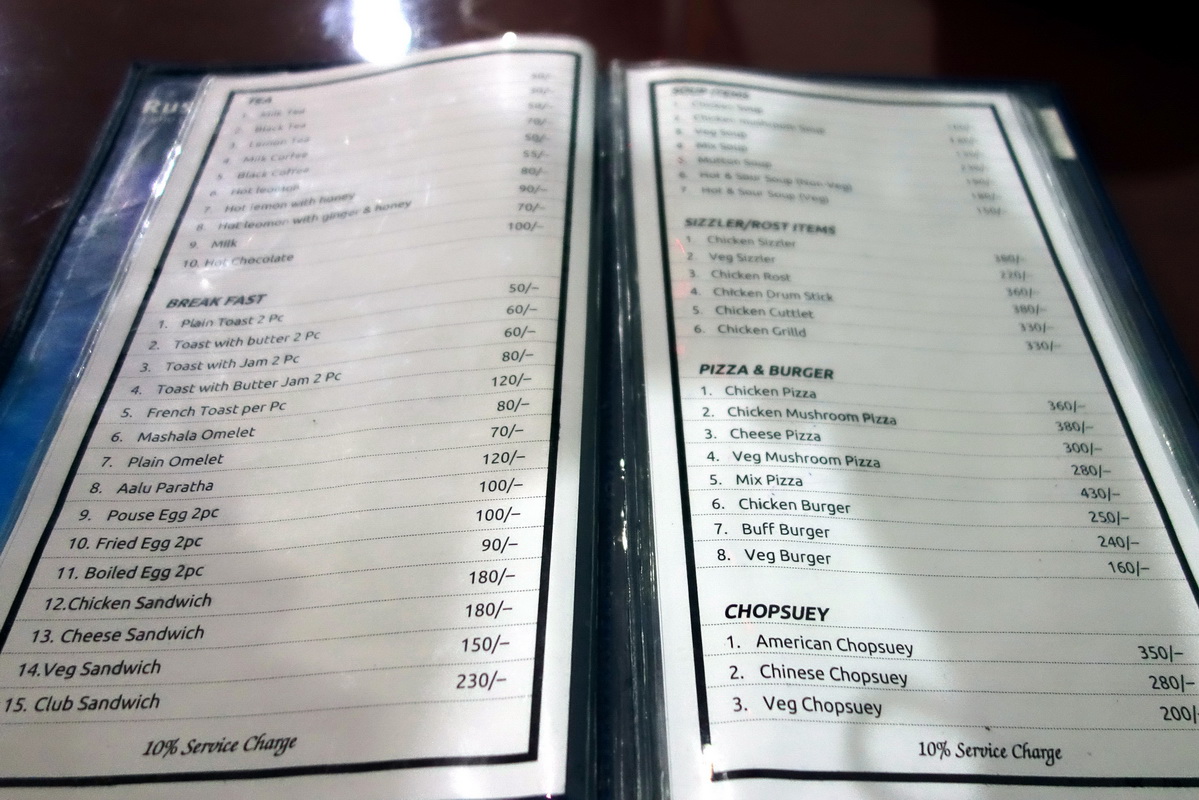
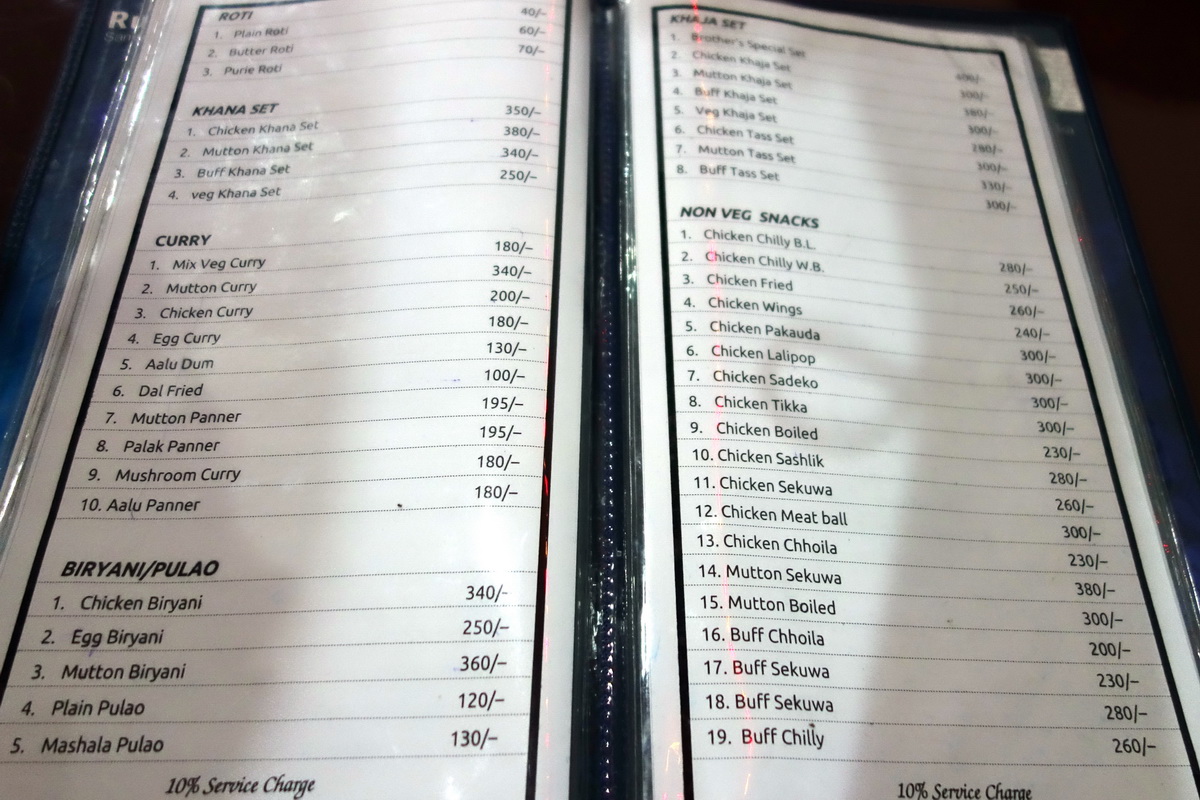
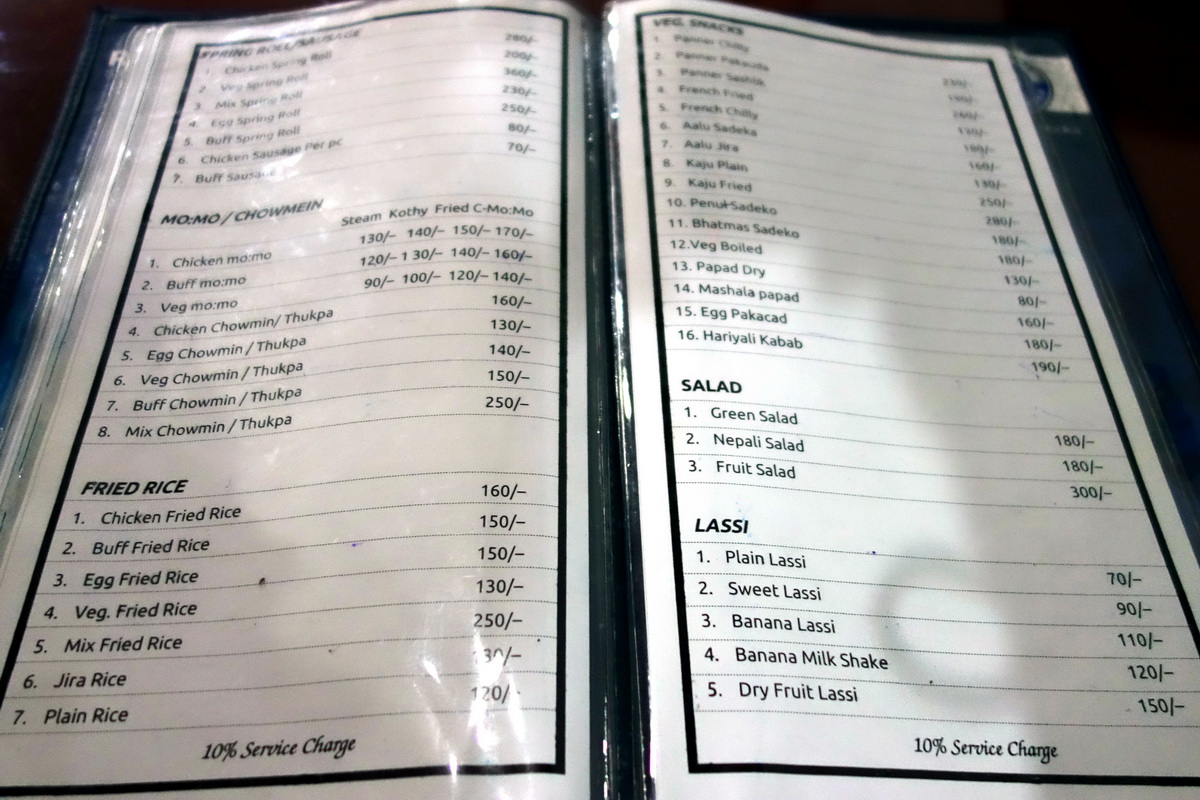
We immediately decided to order a traditional Nepalese dish that is very popular here—momo. Momo is a dish made of dough filled with meat or vegetables and spices. Momo is similar to our dumplings or khinkali. In Nepal, momo is most commonly made with buffalo or chicken meat. They are typically served on a plate with 10 pieces, accompanied by a spicy sauce in a separate container. We ordered momo with buffalo and chicken meat. They differ in appearance—chicken momo looks more like dumplings, while buffalo momo resembles khinkali.
The dish is very tasty, despite its noticeable spiciness. During our trip in Nepal, momo became one of our favorite dishes in the country.
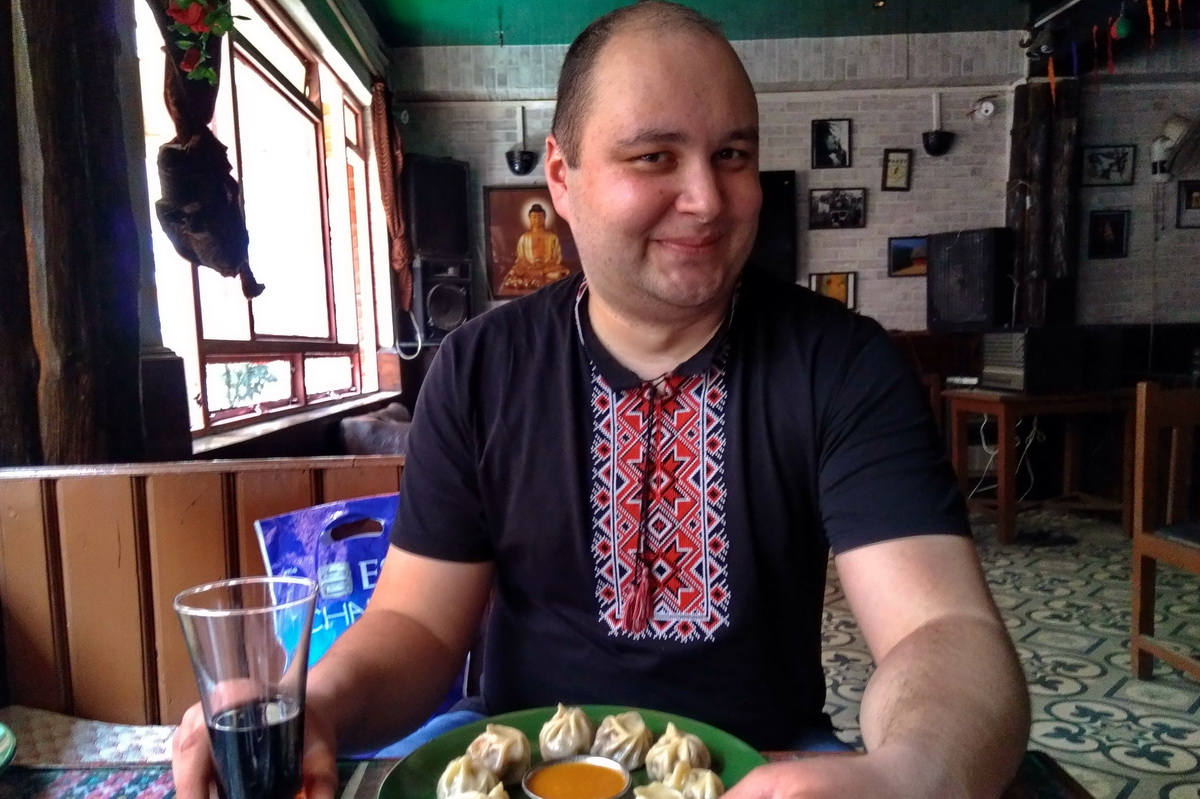
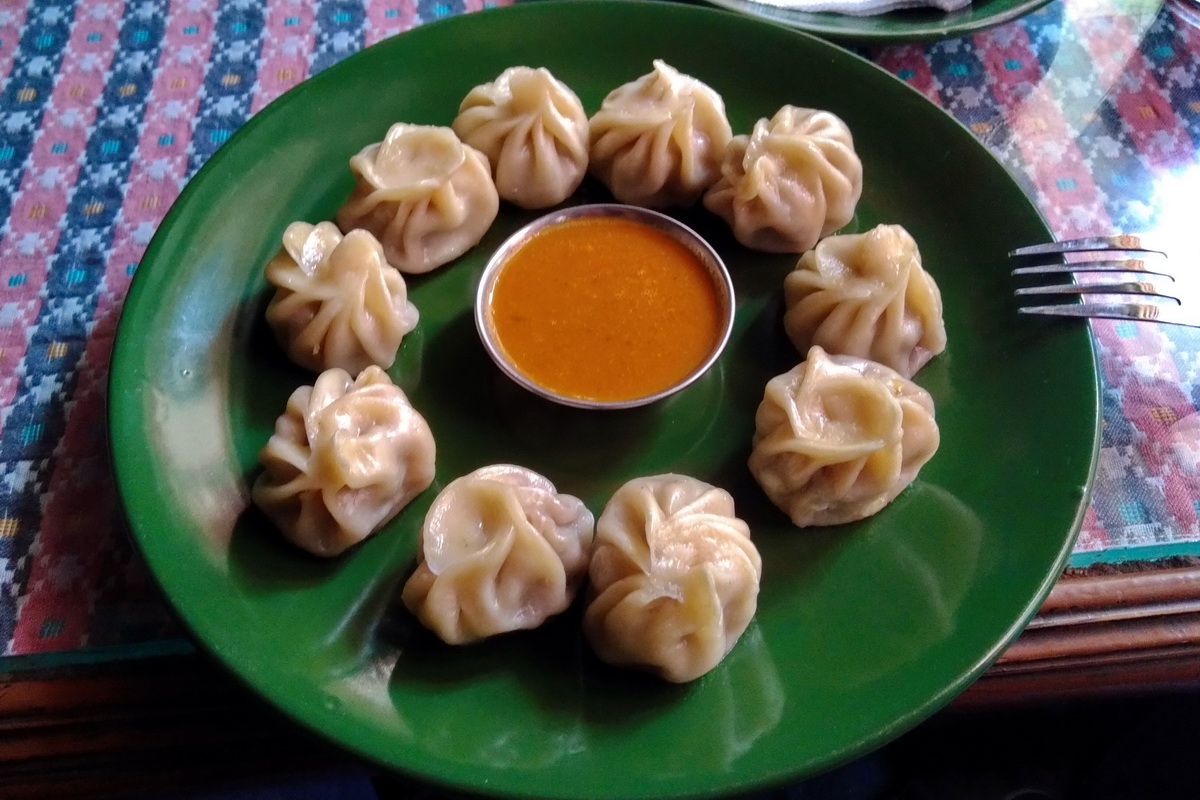
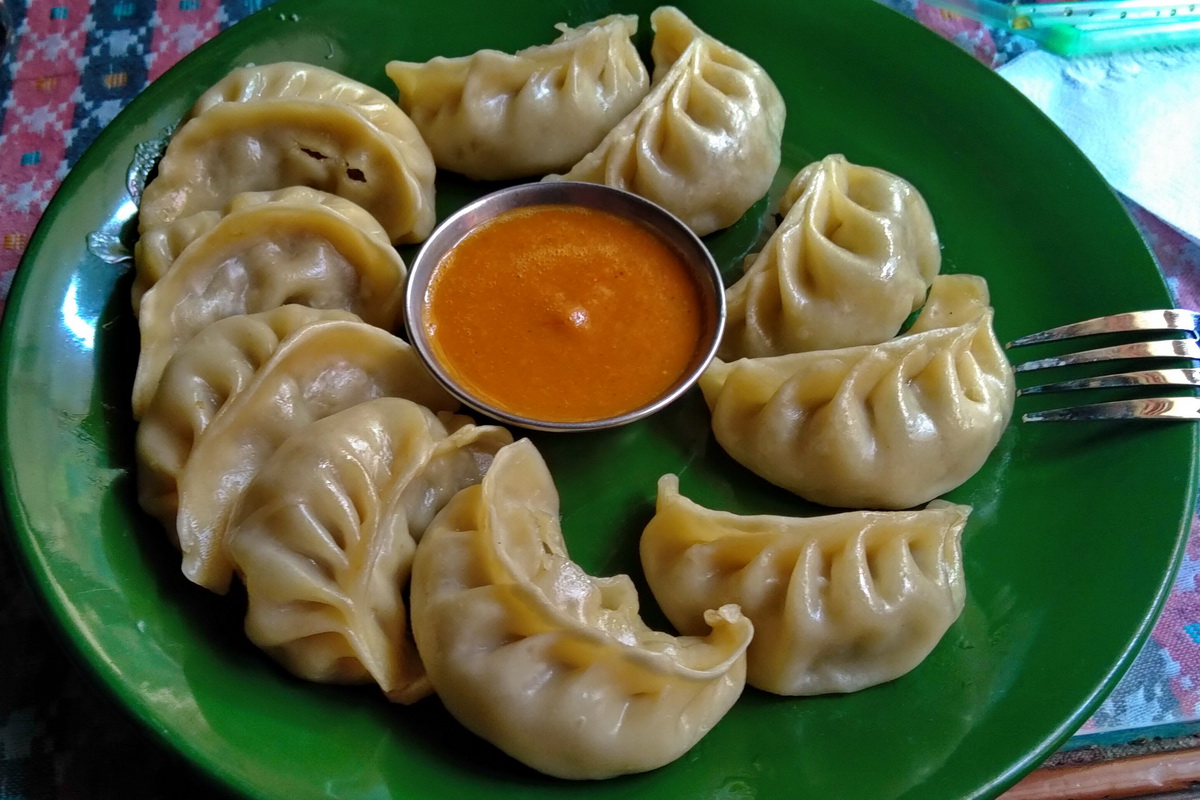
Overall, food in Nepal is quite affordable. A portion of momo at local eateries costs about 60 cents. Ordering two portions for two people with drinks costs no more than $2.5. That’s very cheap!
In tourist restaurants, prices are about three times higher, but even then, it’s inexpensive. Typically, a good meal at a tourist restaurant cost us no more than $10 for two.
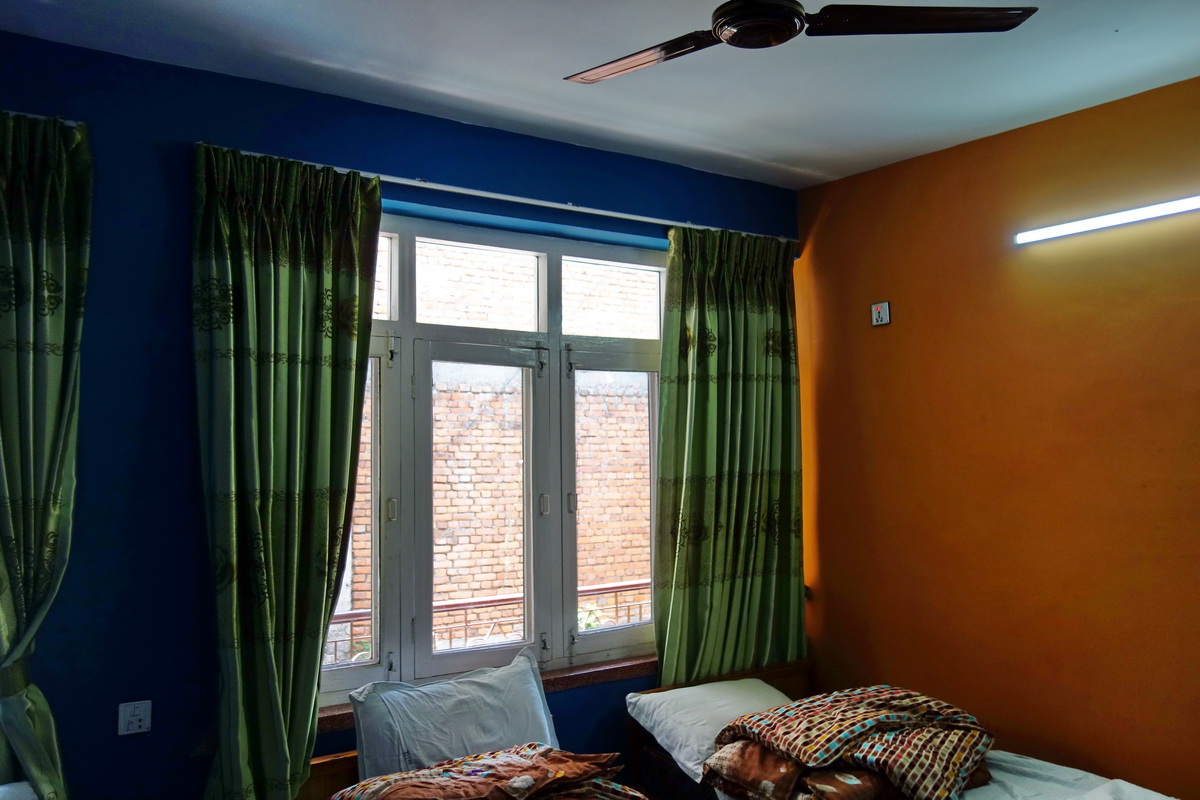
We check into the hotel. A typical budget hotel in Kathmandu. Hotels in Nepal are generally clean and cozy, but air conditioners are rare, though fans are always available. The cost of a room in such hotels is around $20–30.
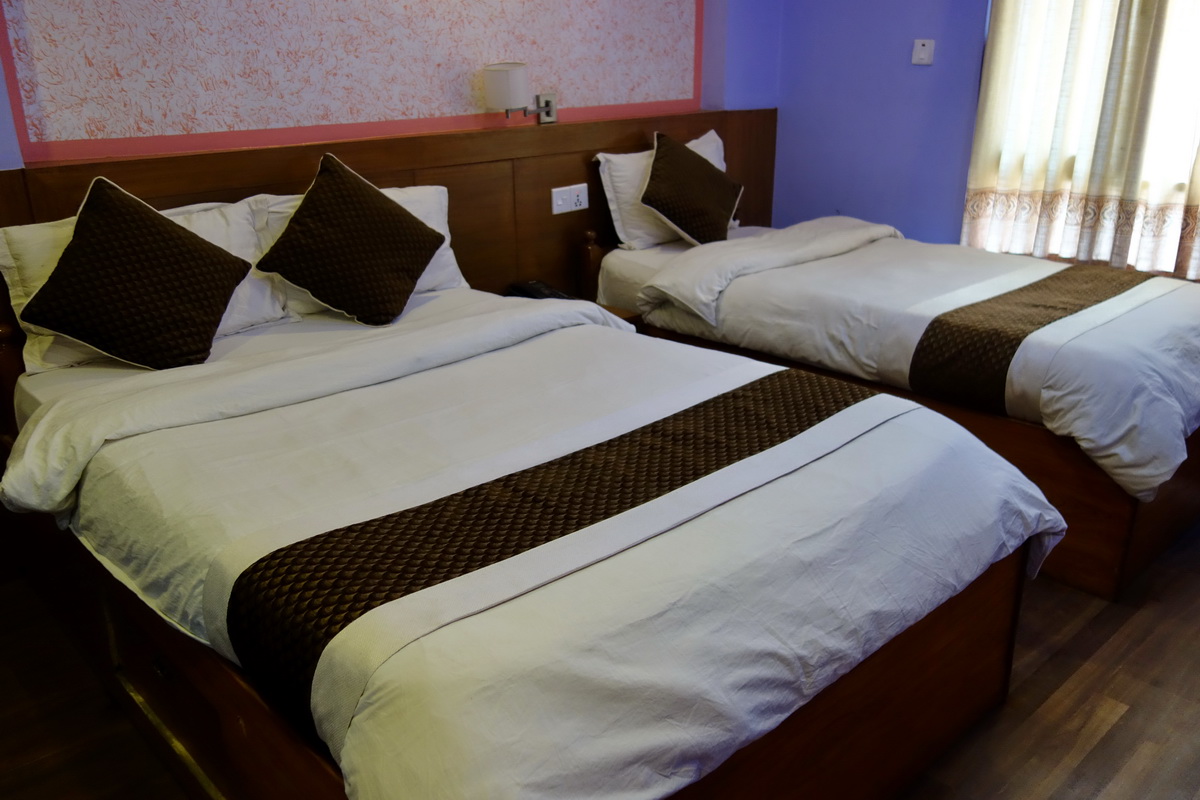
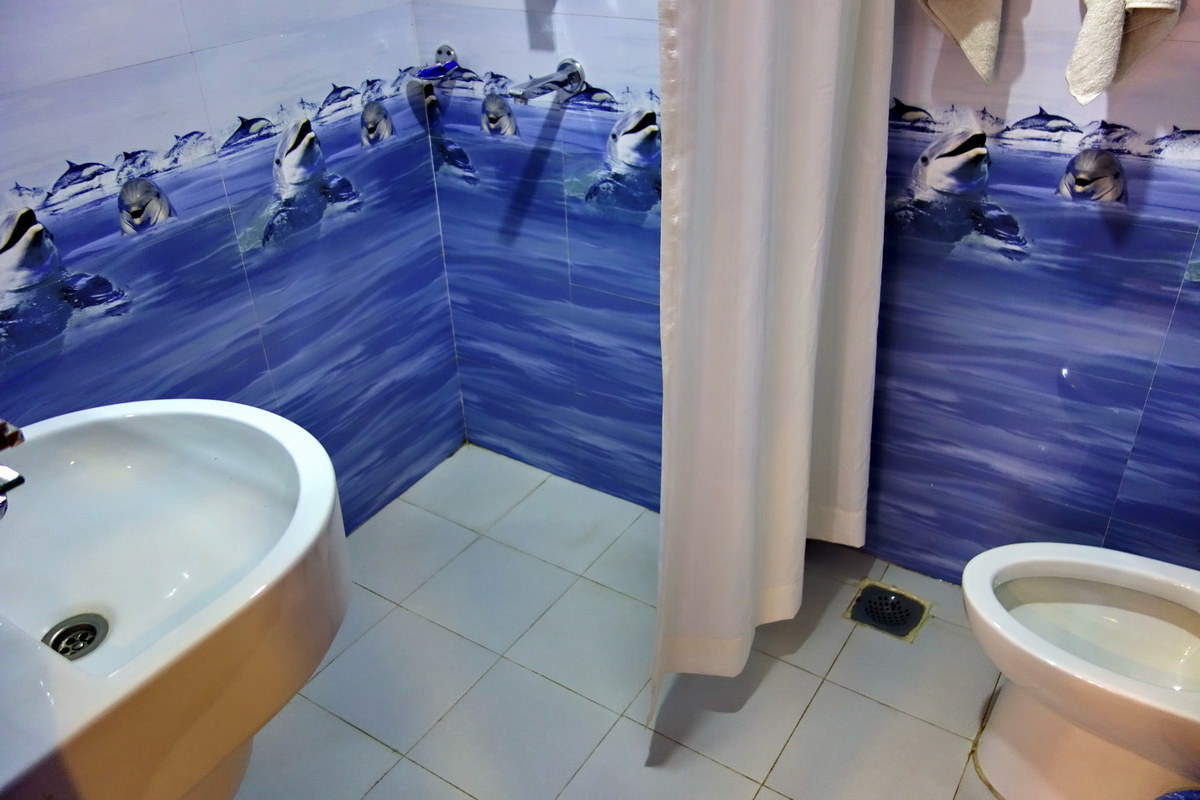
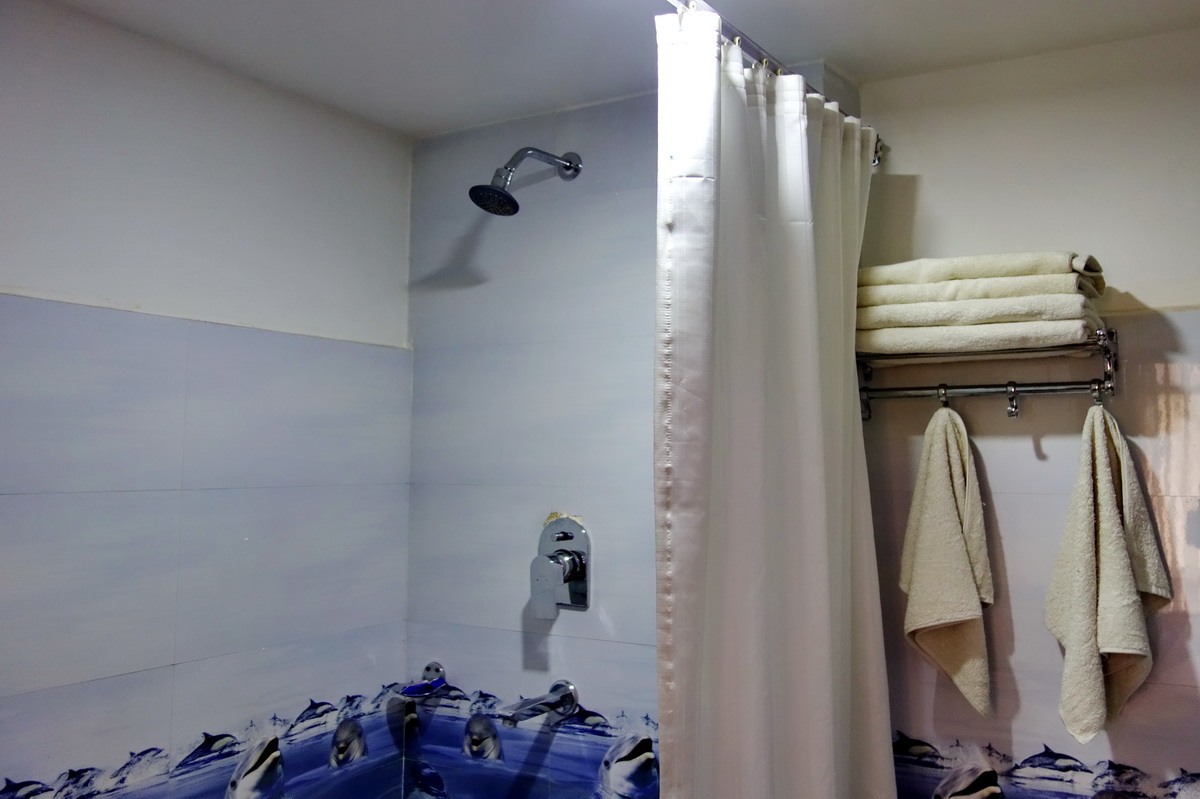
A stunning view from the window is guaranteed :)
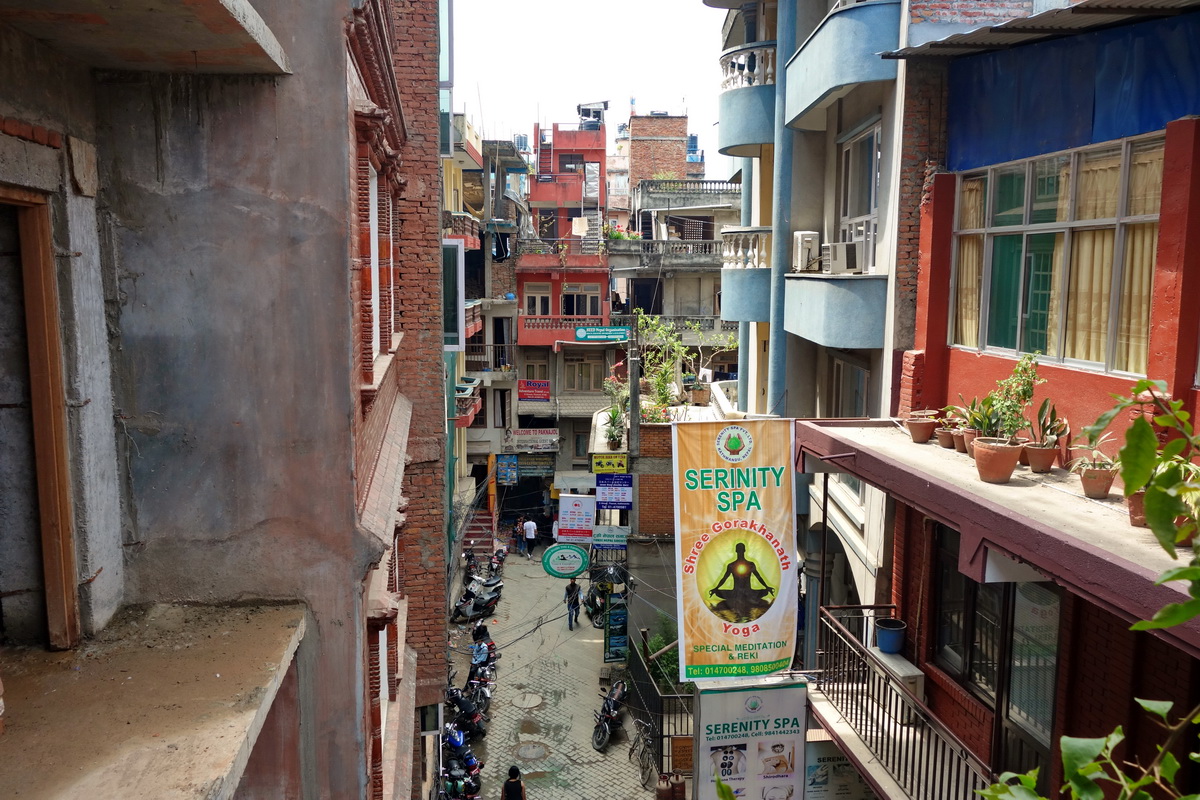
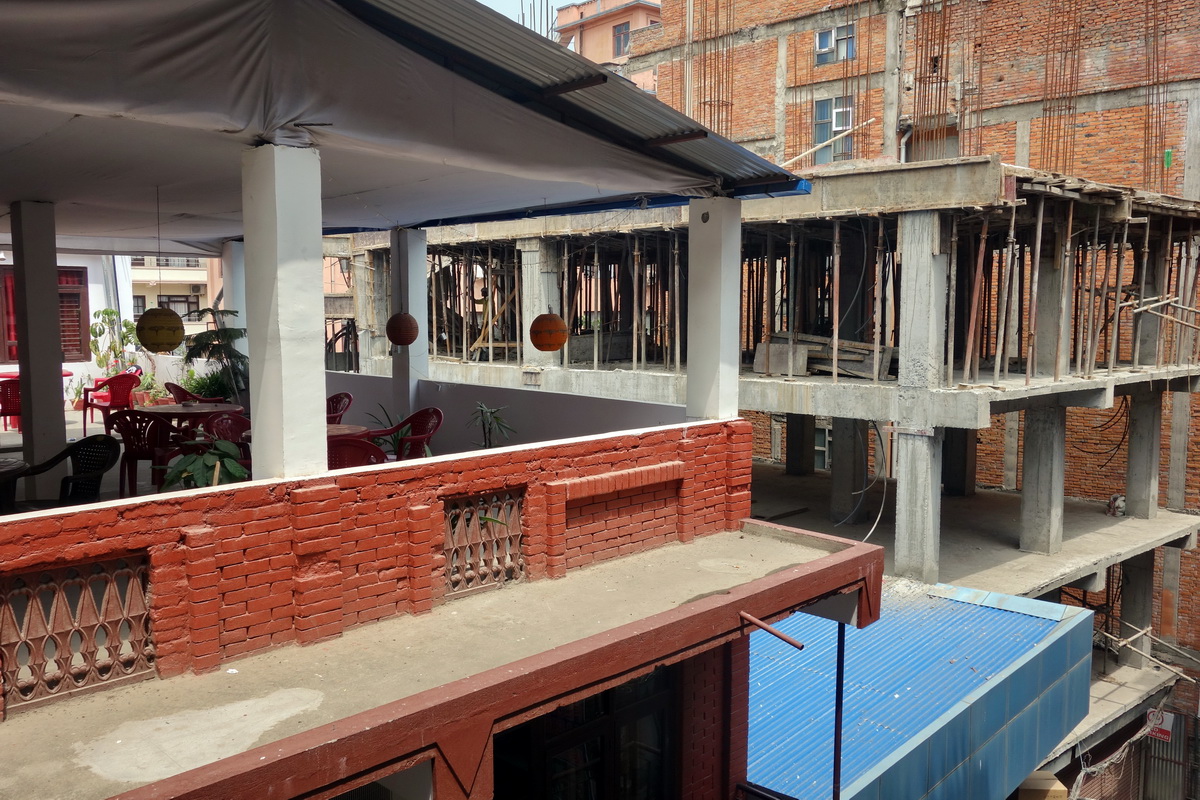
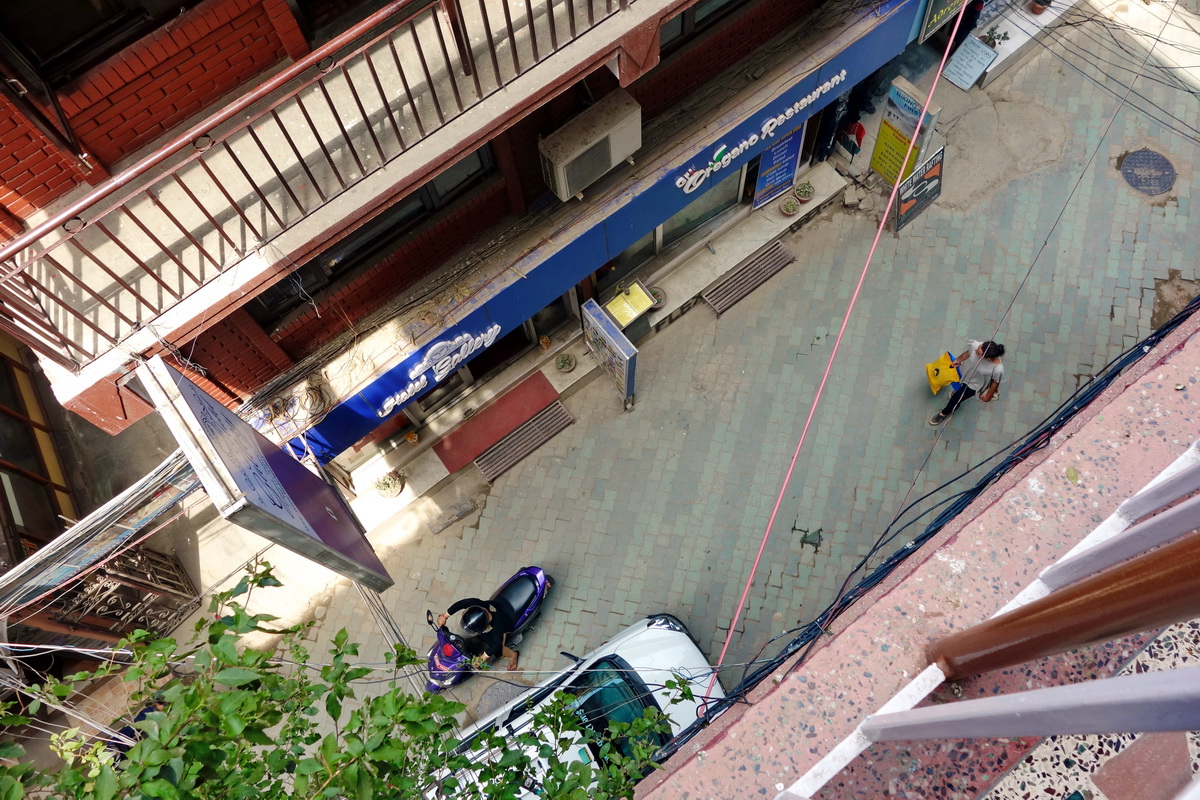
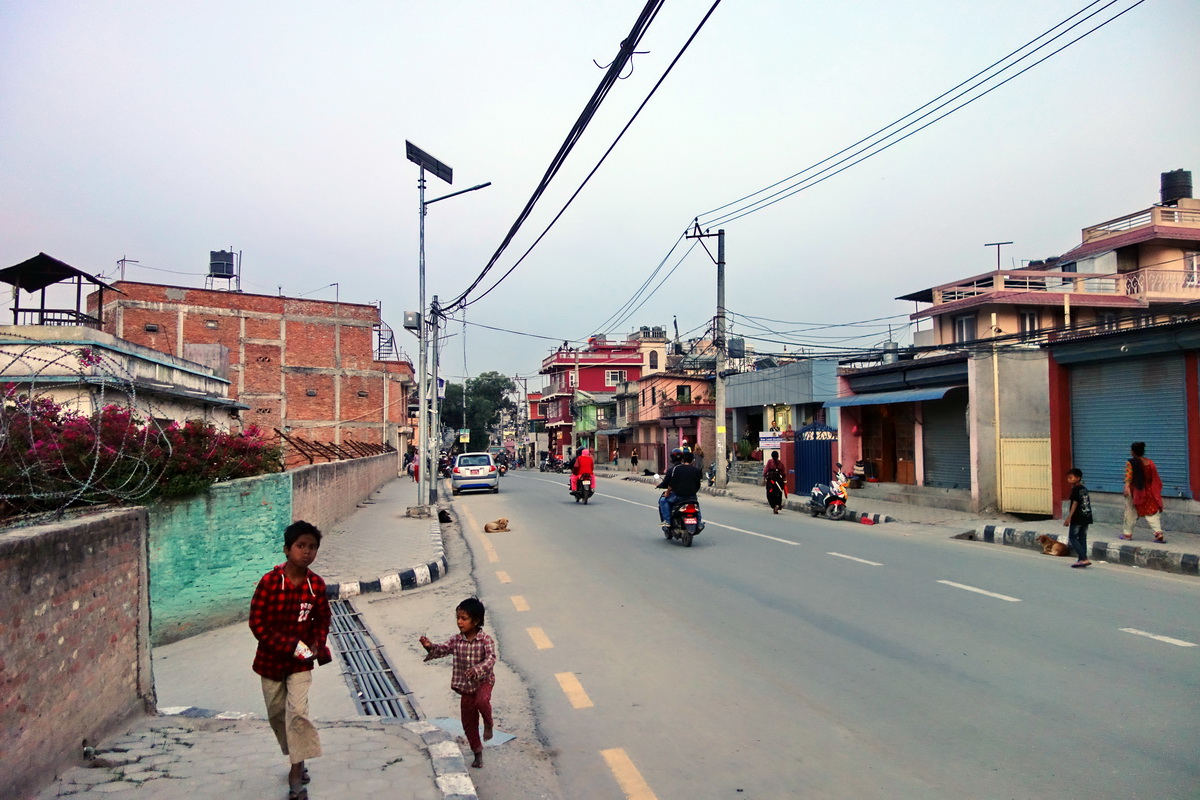
The first impression of Kathmandu is that it’s quite dusty and noisy. To protect their respiratory systems from dust, locals use gauze masks. Additionally, the city streets are filled with heavy traffic (like in India, driving is on the left), so walking around the city is not very comfortable at first. But you get used to it over time.
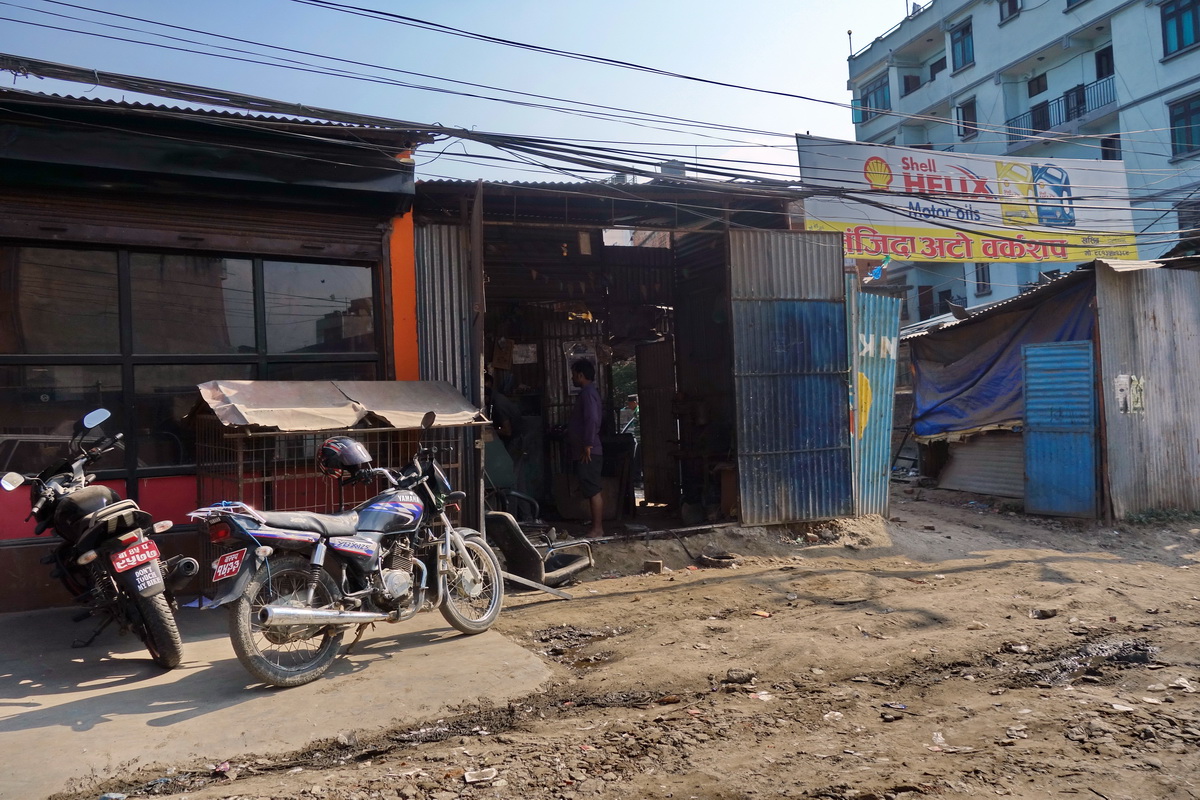
We head out to explore local attractions. A typical view of Kathmandu’s streets from a car window. The photo also partially shows the quality of Nepalese roads. And this is the city center! Roads in this country are generally nonexistent. They are mostly either broken asphalt or dirt roads with gravel. So, traveling around the country is not very comfortable due to heavy shaking.
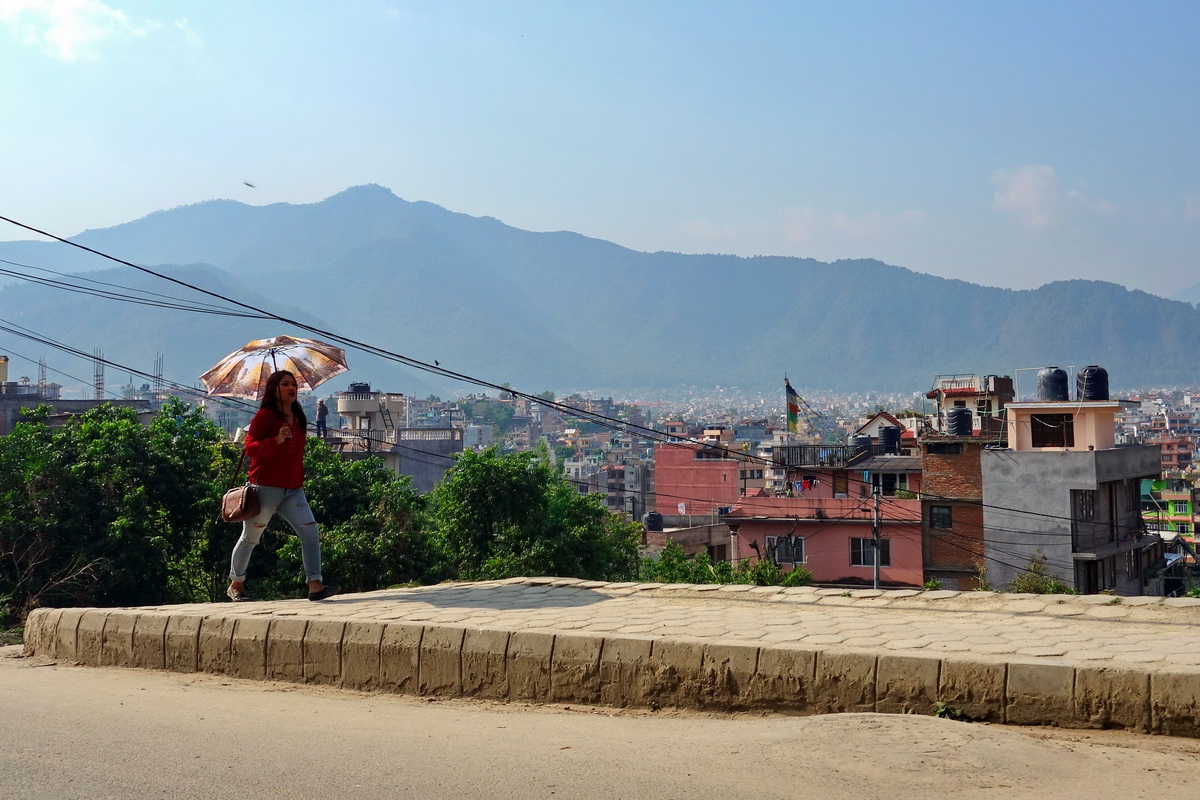
Nepalese women often use umbrellas to shield themselves from the scorching sun. Although it’s not very hot in April, the sun still beats down.
Religion. Despite being the birthplace of the founder of Buddhism, Prince Siddhartha Gautama, who became known as the Buddha (meaning awakened or enlightened), the primary religion in Nepal is Hinduism. According to official data, over 80% of Nepal’s population practices Hinduism, less than 10% follow Buddhism, and only a small portion adheres to Islam and Christianity. A distinctive feature of Hinduism in Nepal is its close connection with Buddhism. This is why many Hindus pray in Buddhist temples, and vice versa.
The Kathmandu Valley is a true melting pot of religions. Here, you can find images of Hindu gods in Buddhist temples or Buddhist stupas in Hindu temples. In the holiest Hindu temple, Pashupatinath, the lingam of Shiva is covered with a mask of Buddha once a year, while in Swayambhunath (a Buddhist complex), Hindus worship the deity Swayambhu as Shiva, though for Buddhists, Swayambhu is the Buddha.
One of the main factors contributing to this blending of the two religions is the belief that the Buddha is considered a manifestation of Vishnu, one of the three main gods in the Hindu pantheon. In Indian cosmology, Brahma is considered the original creator of all existence, Shiva plays the role of destroyer and recreator, while Vishnu represents the aspect of preserving the world and manifests on the physical plane as teachers or messengers who bring knowledge of salvation in difficult times.
Swayambhunath Temple. Swayambhunath is one of the main temples in Kathmandu. This Buddhist temple complex is located three kilometers from Kathmandu’s tourist center. It is also called the "Monkey Temple" due to the large number of small monkeys living there. The entrance to the temple.
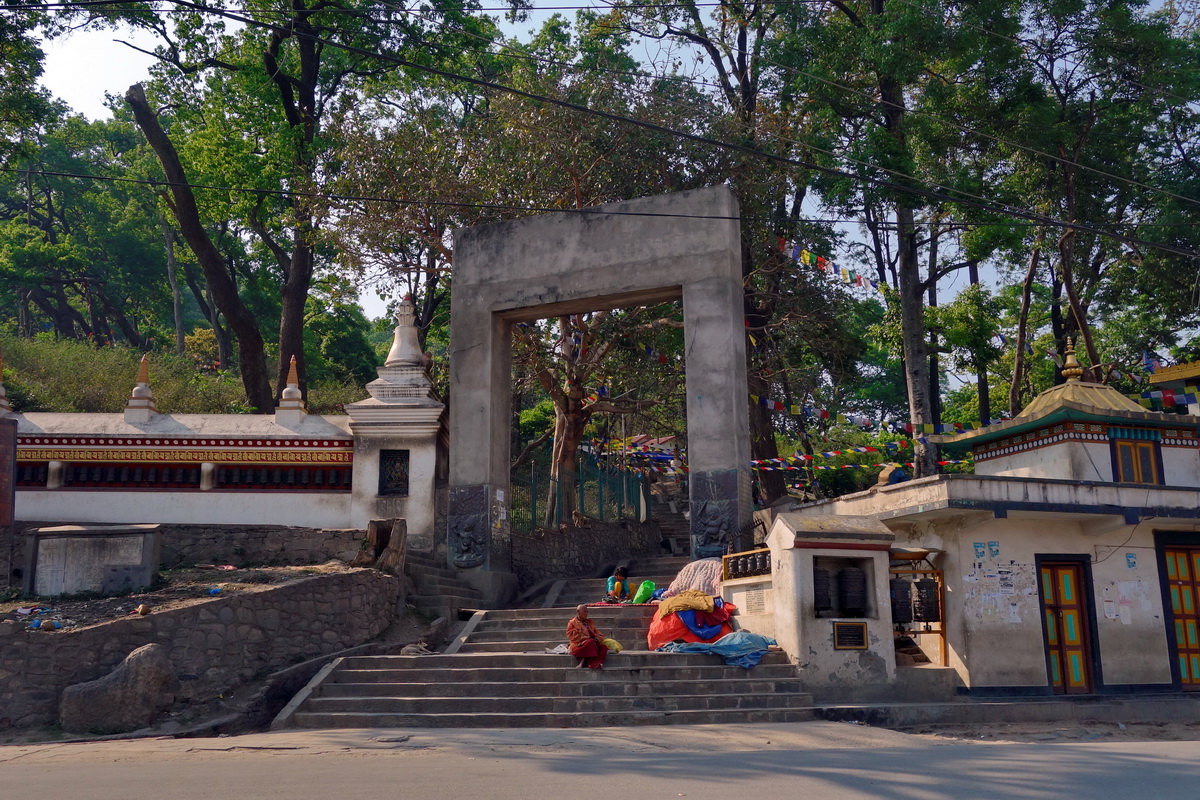
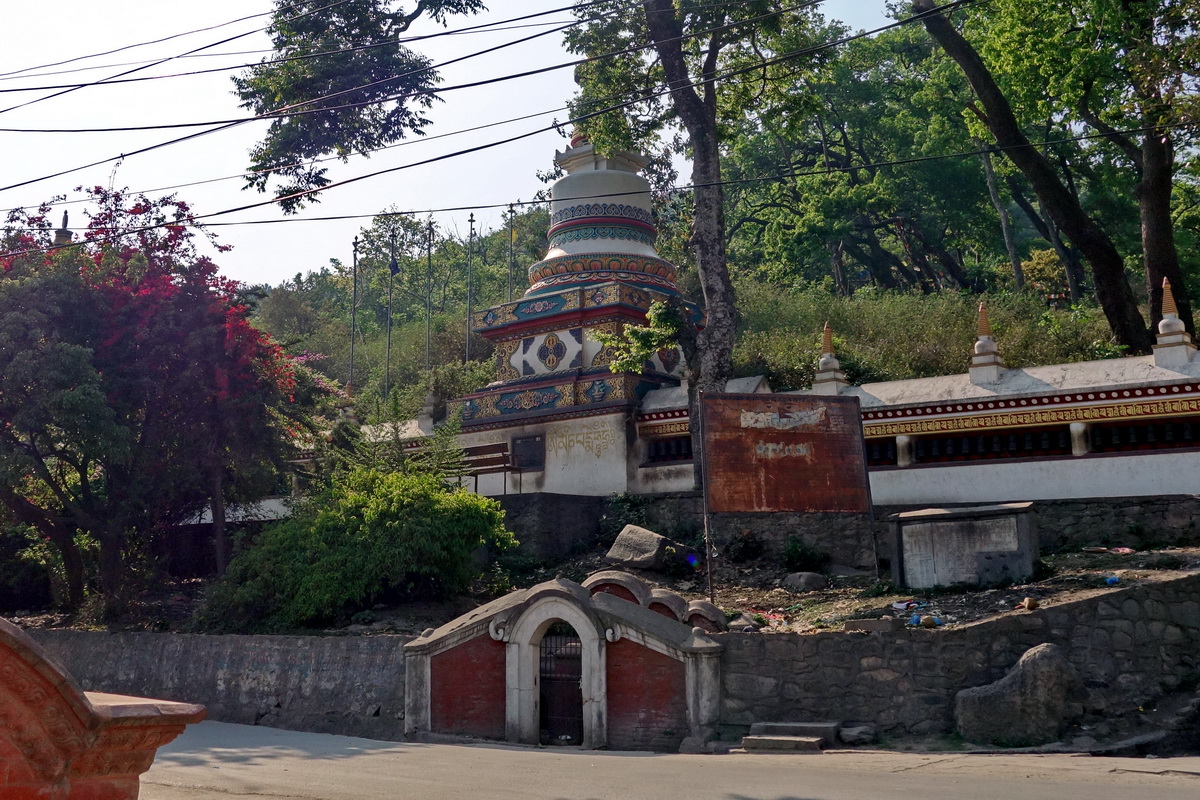
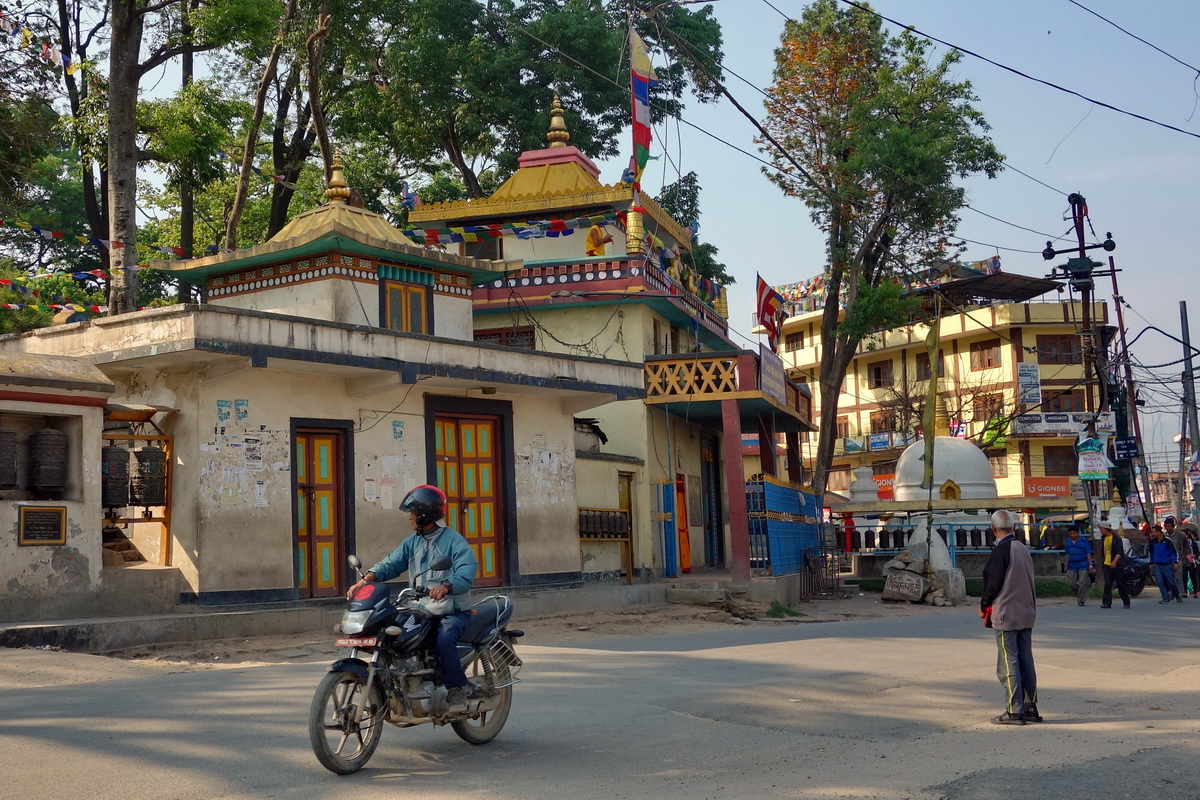
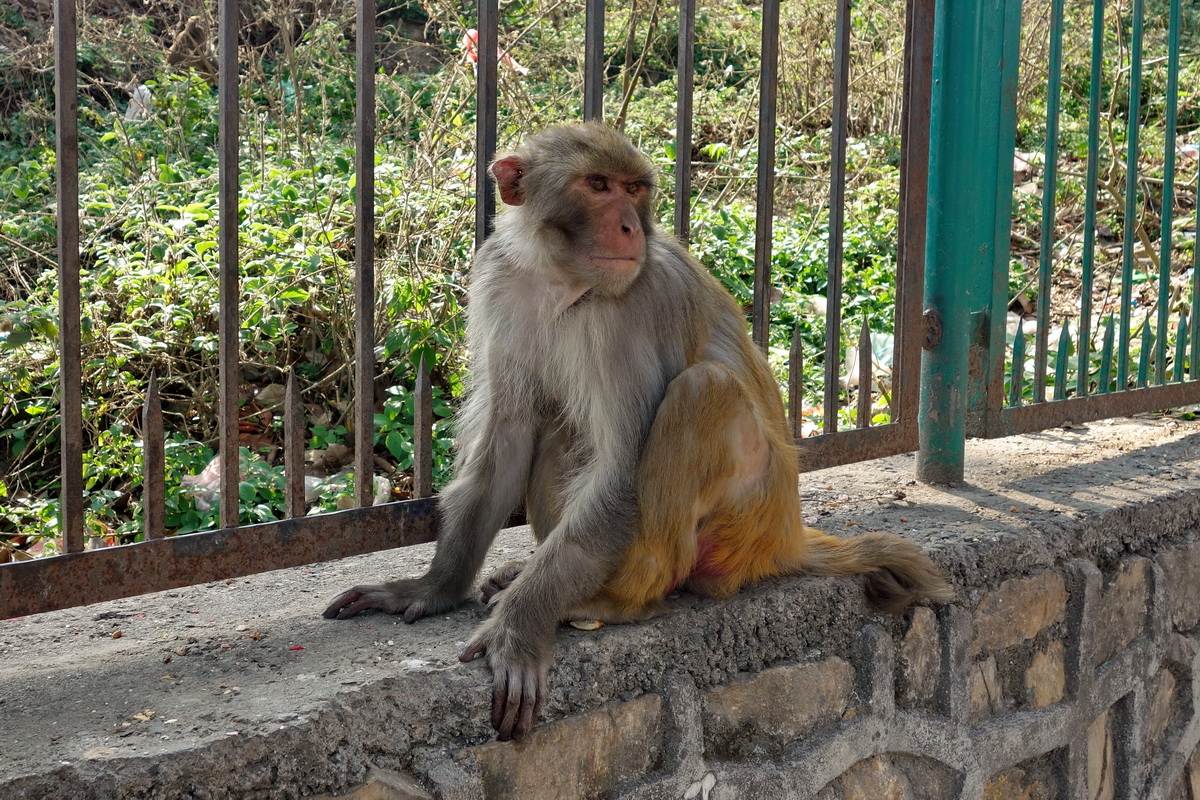
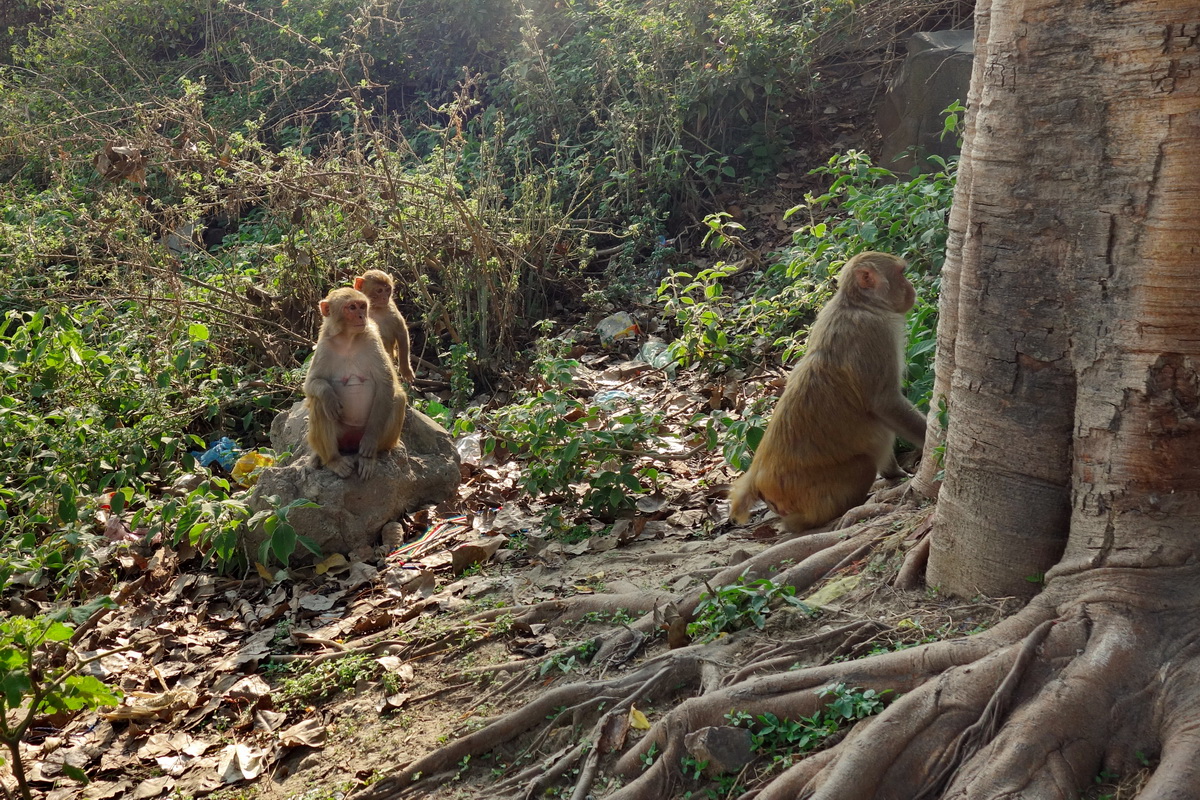
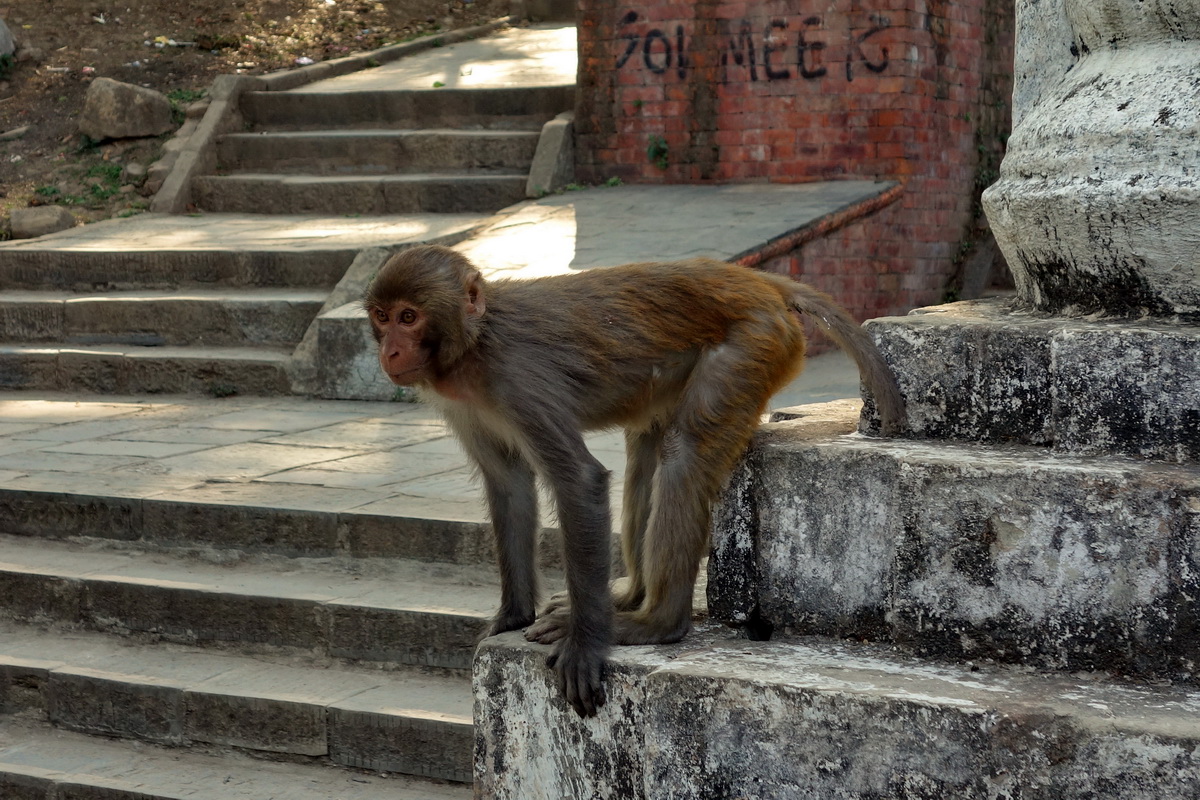
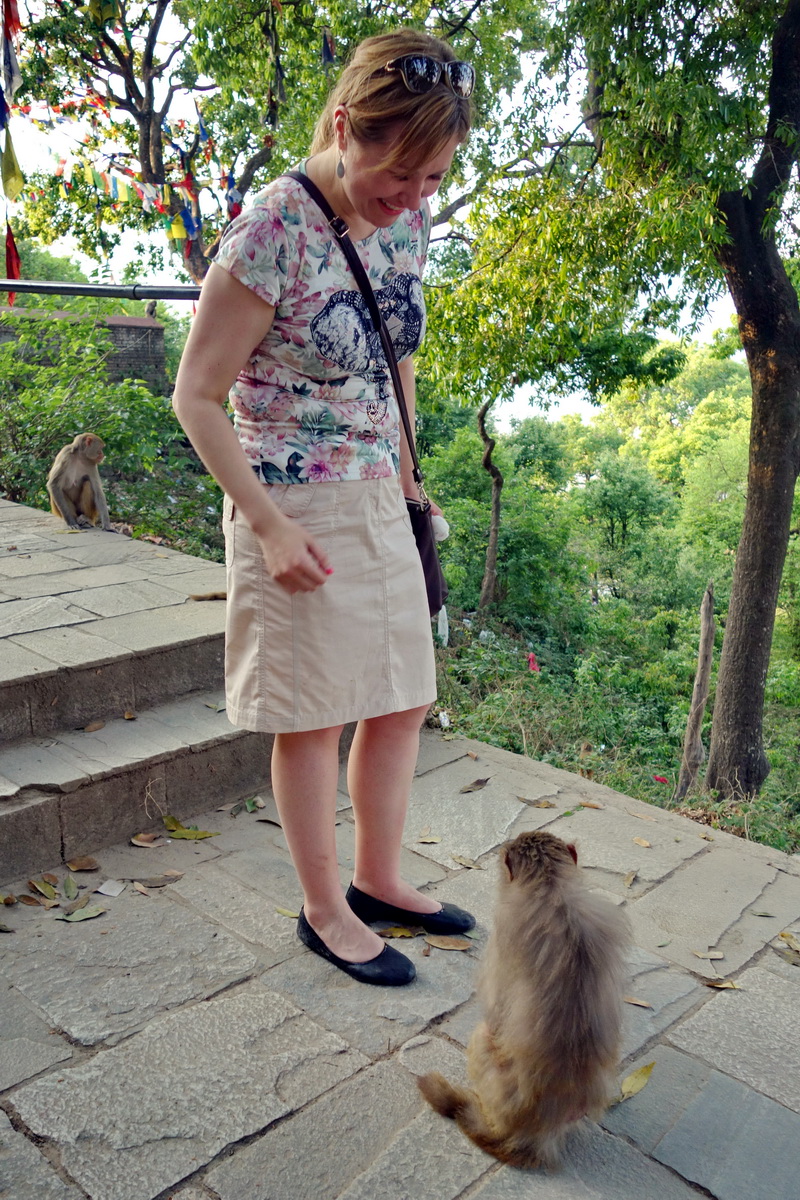
We are immediately greeted by a large number of small monkeys living in the temple grove on the mountain slopes. They are fed by tourists, pilgrims, and temple attendants.
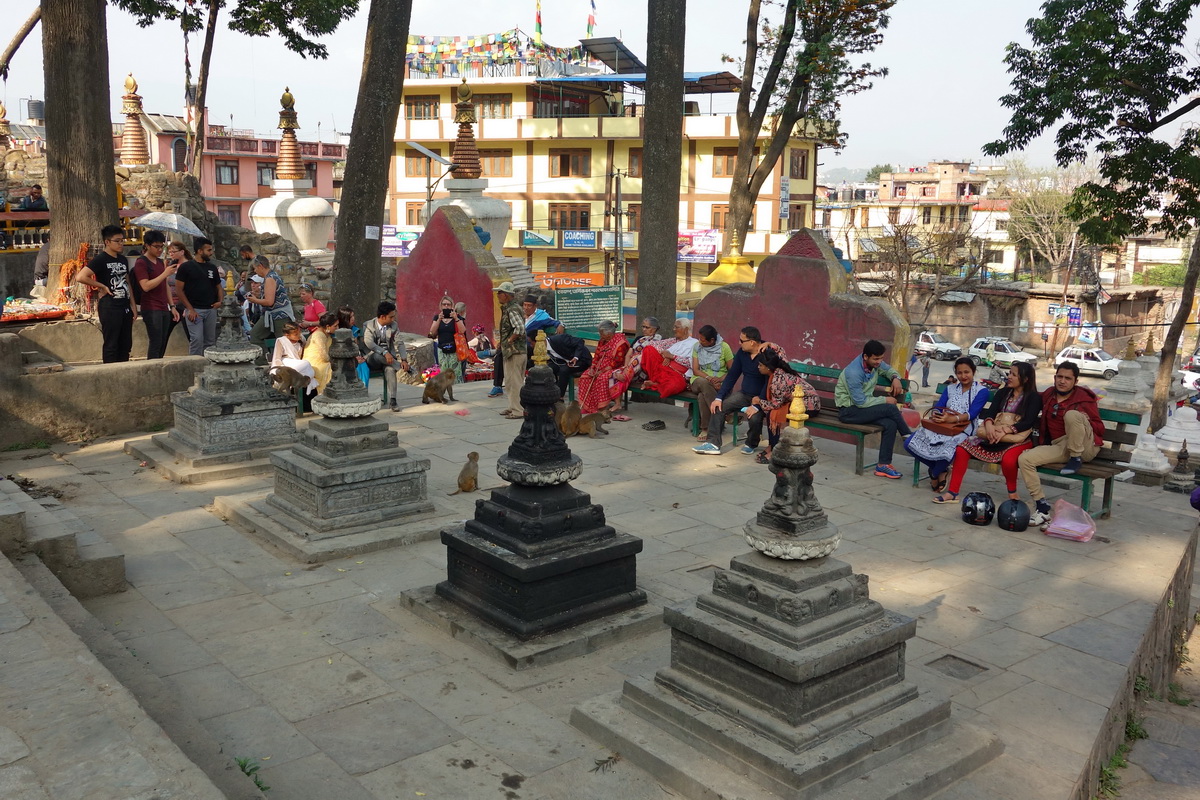
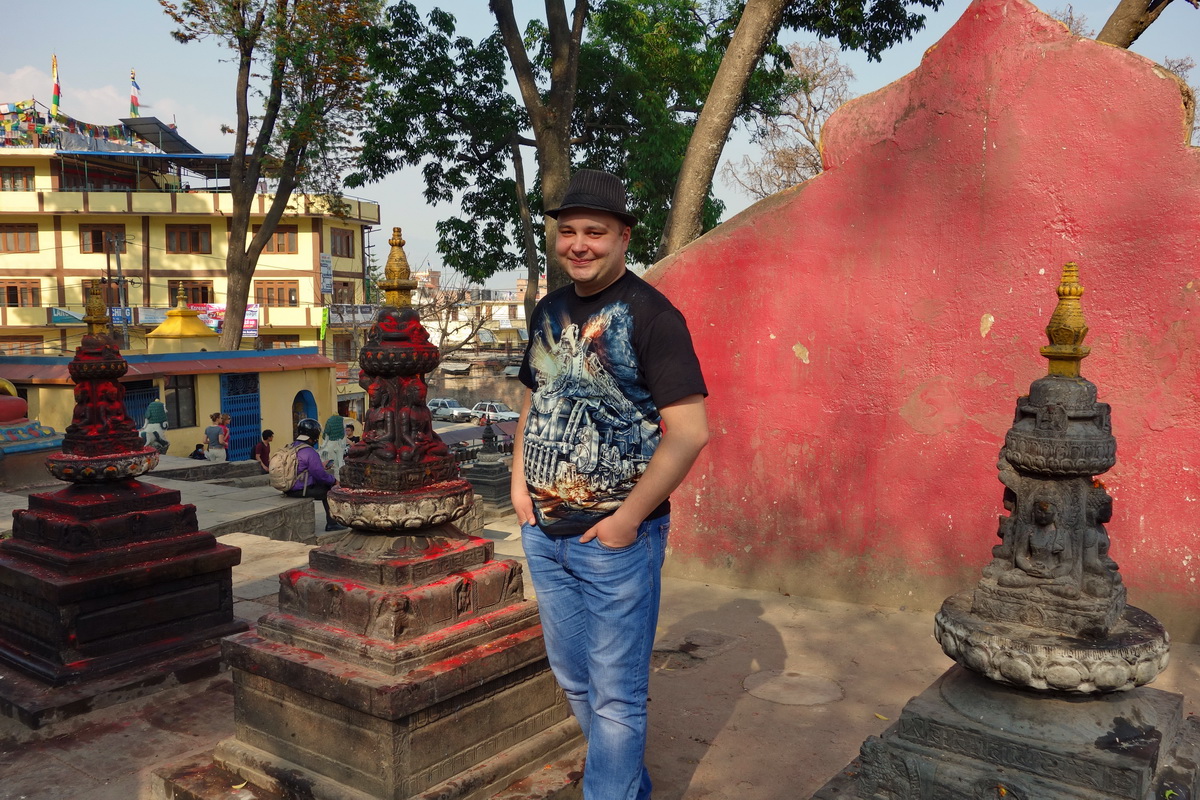
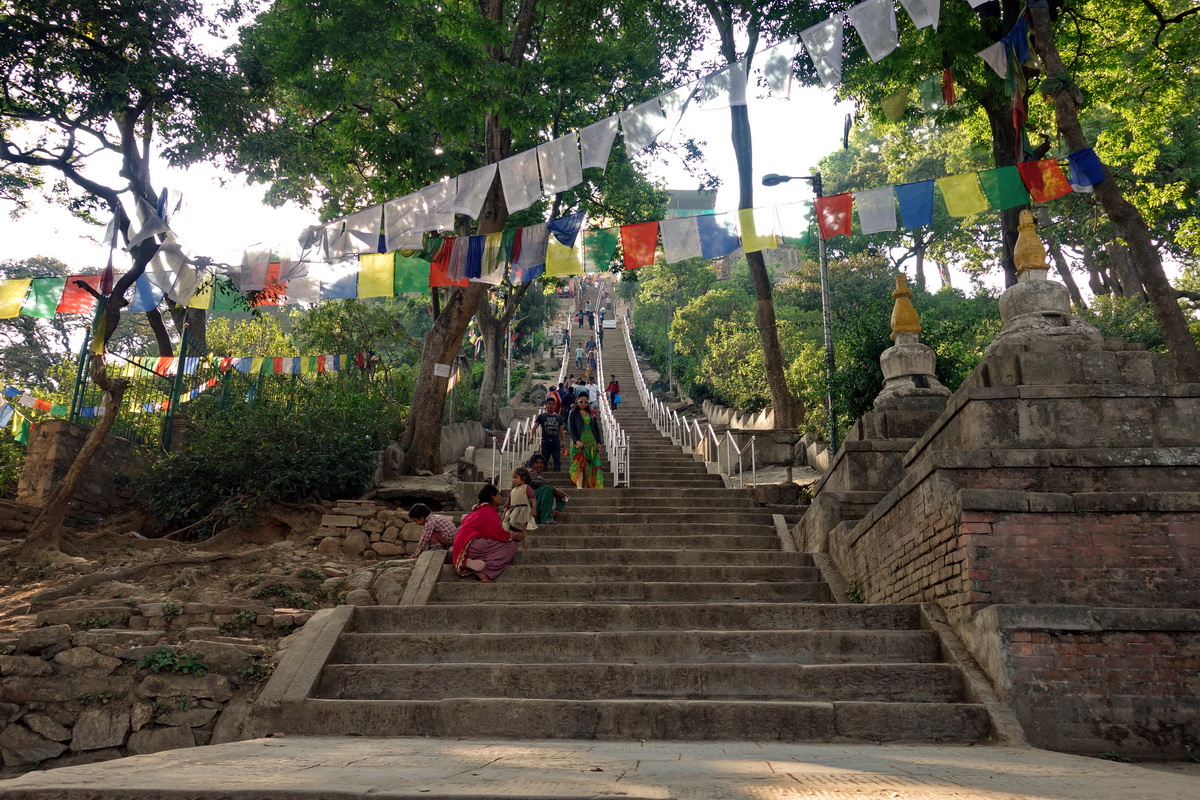
Small stupas on the temple complex grounds. The main large stupa is located on a high hill. To reach it, you must climb 365 steps—one for each day of the year.
We climb higher.
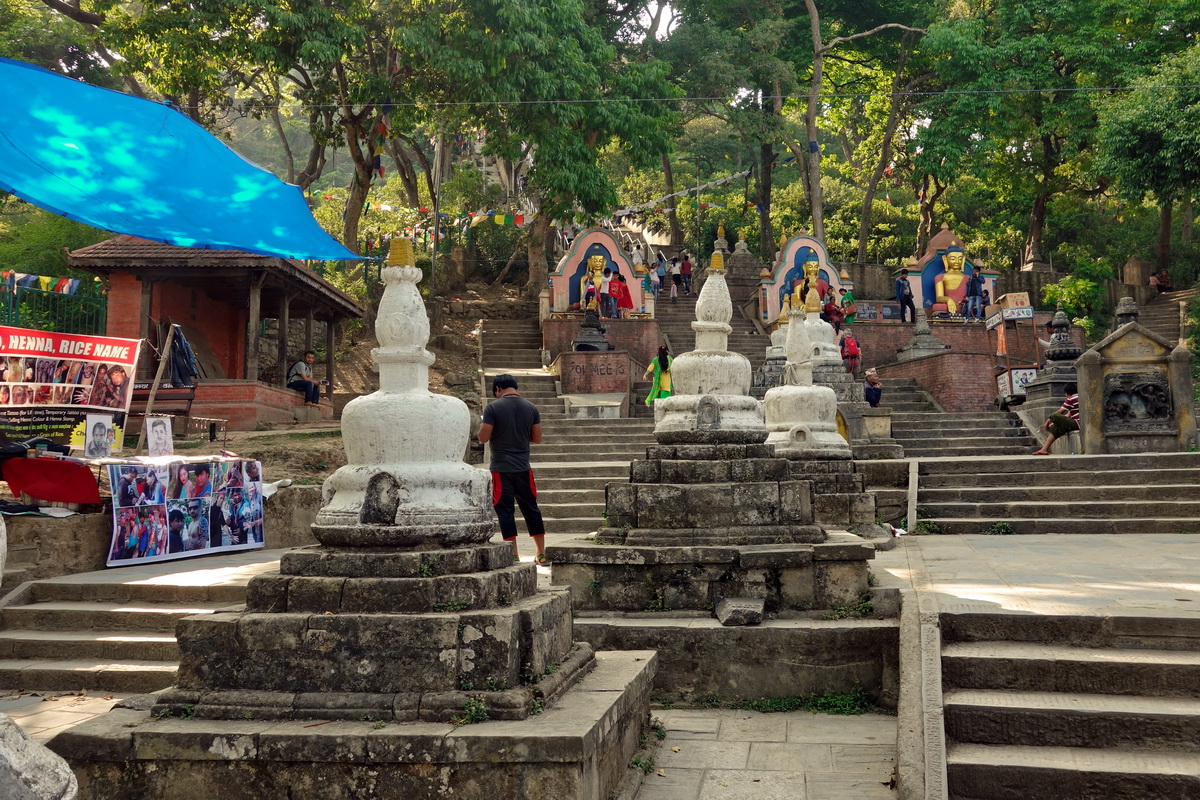
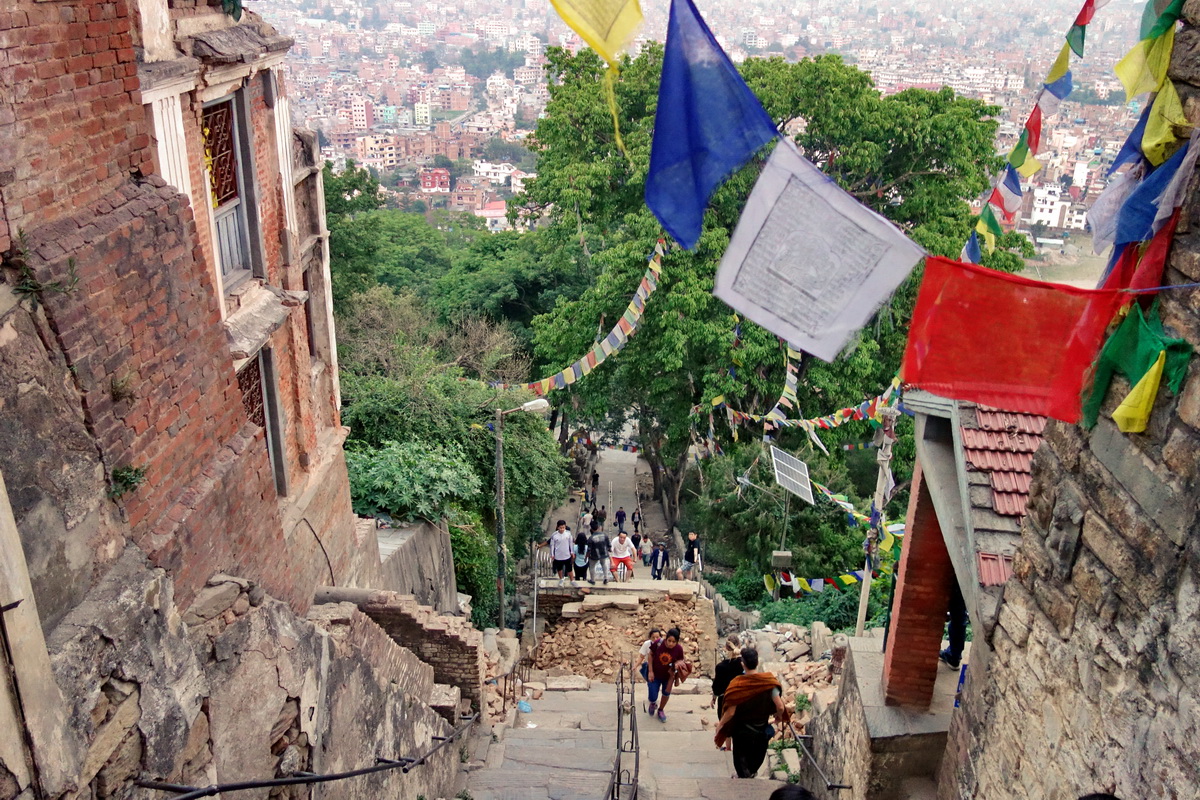
The ascent to the stupa.
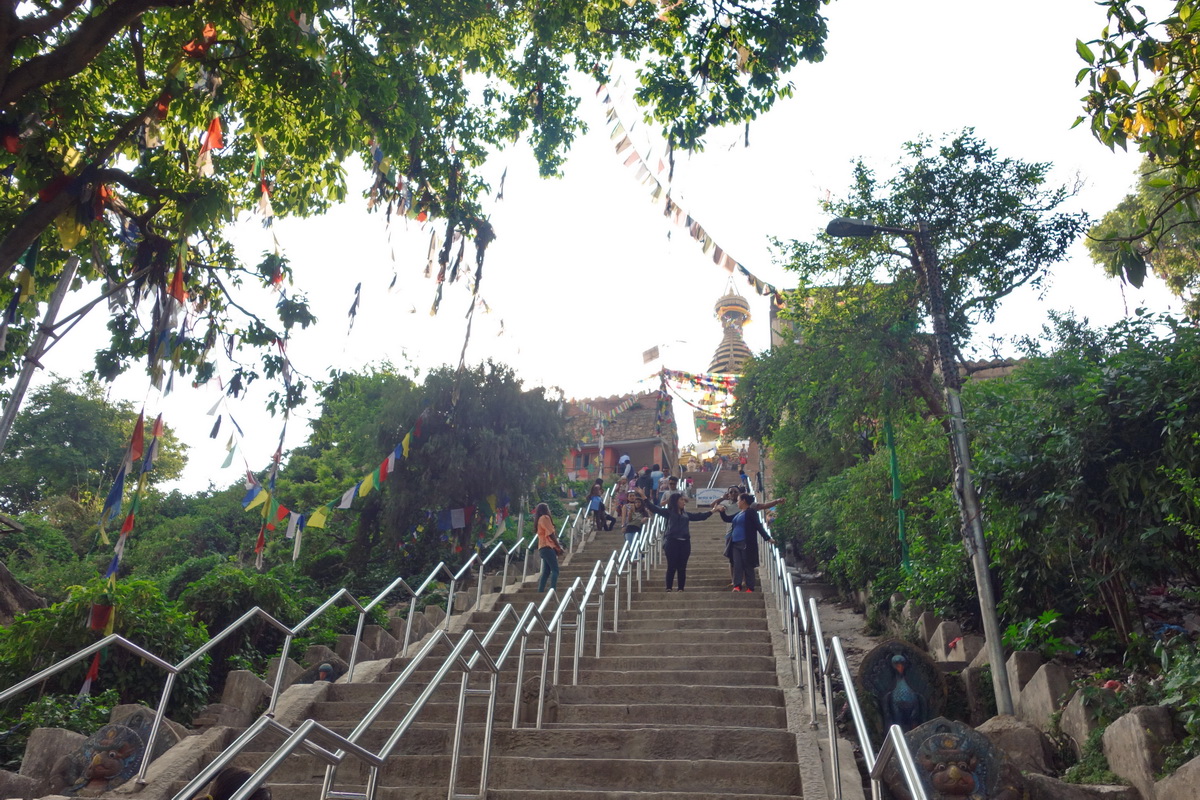
Finally, we made it :) It’s not an easy task, especially for the first day in Kathmandu.
The sides of the stupa face the cardinal directions with a 60-degree rotation. There is a legend that in ancient times, the North Pole shifted by 60 degrees.
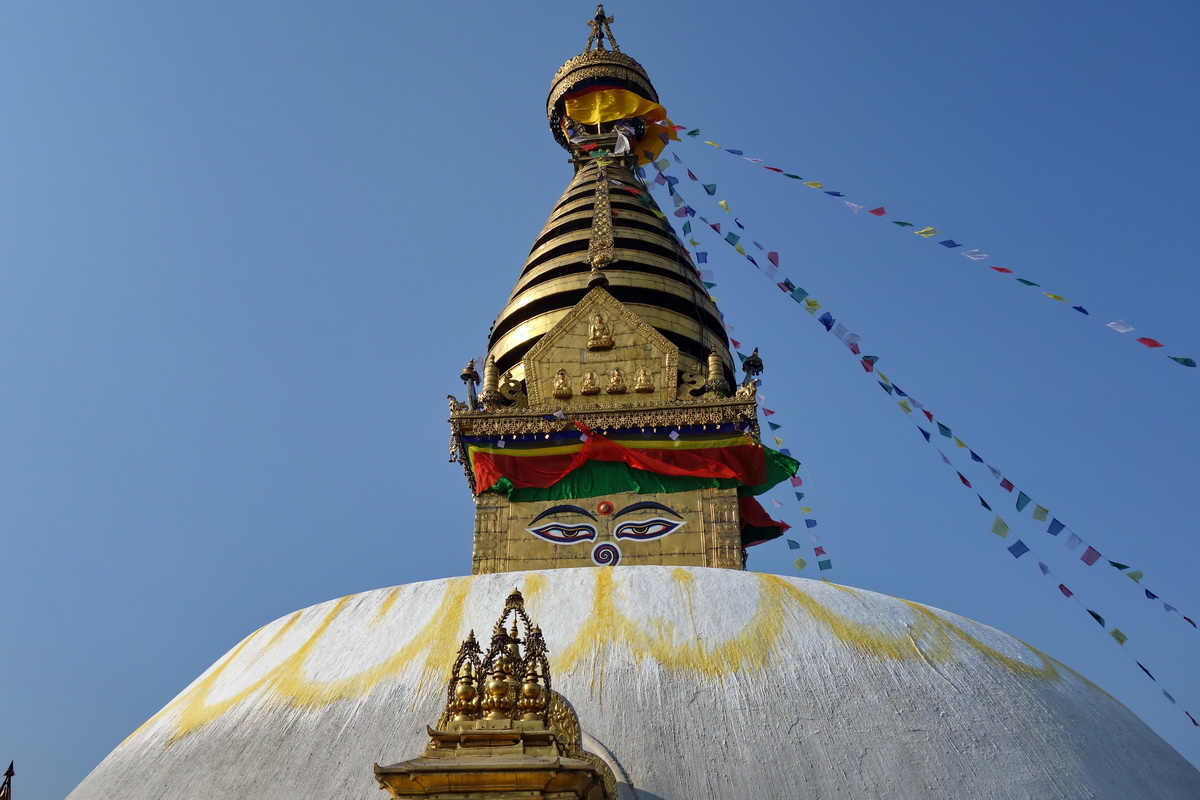
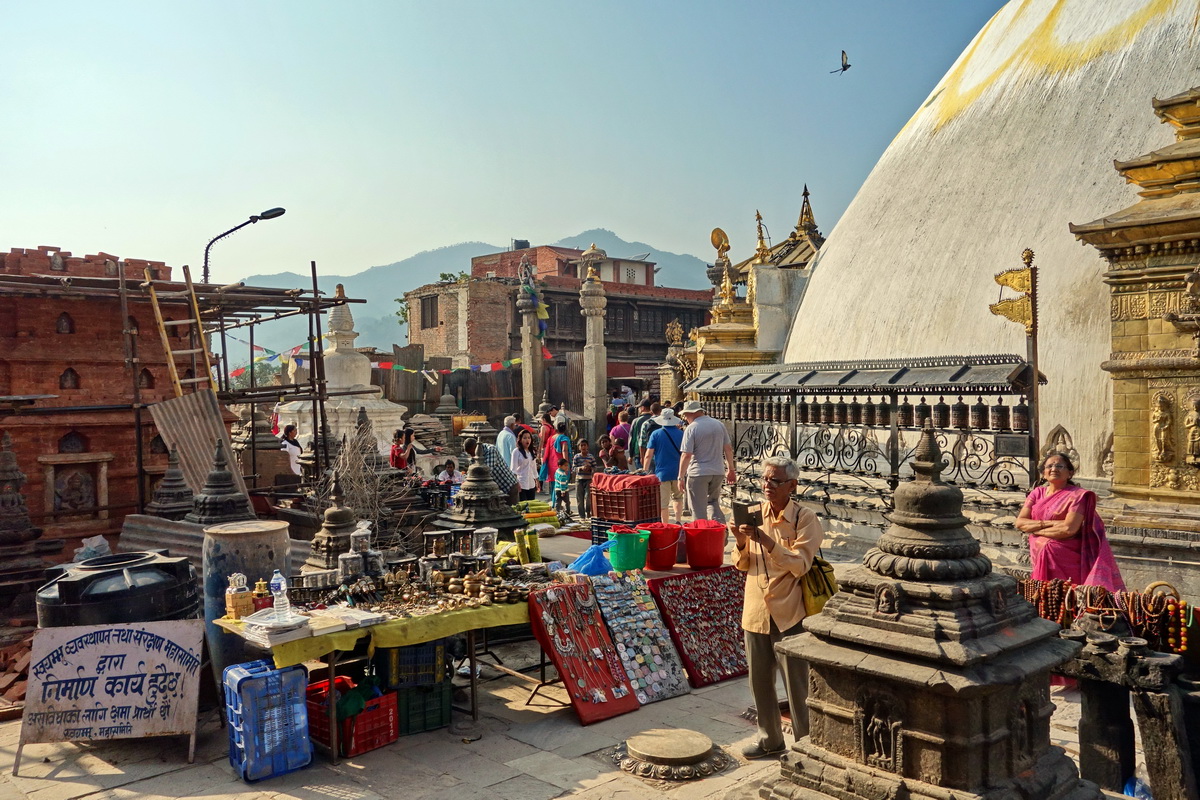
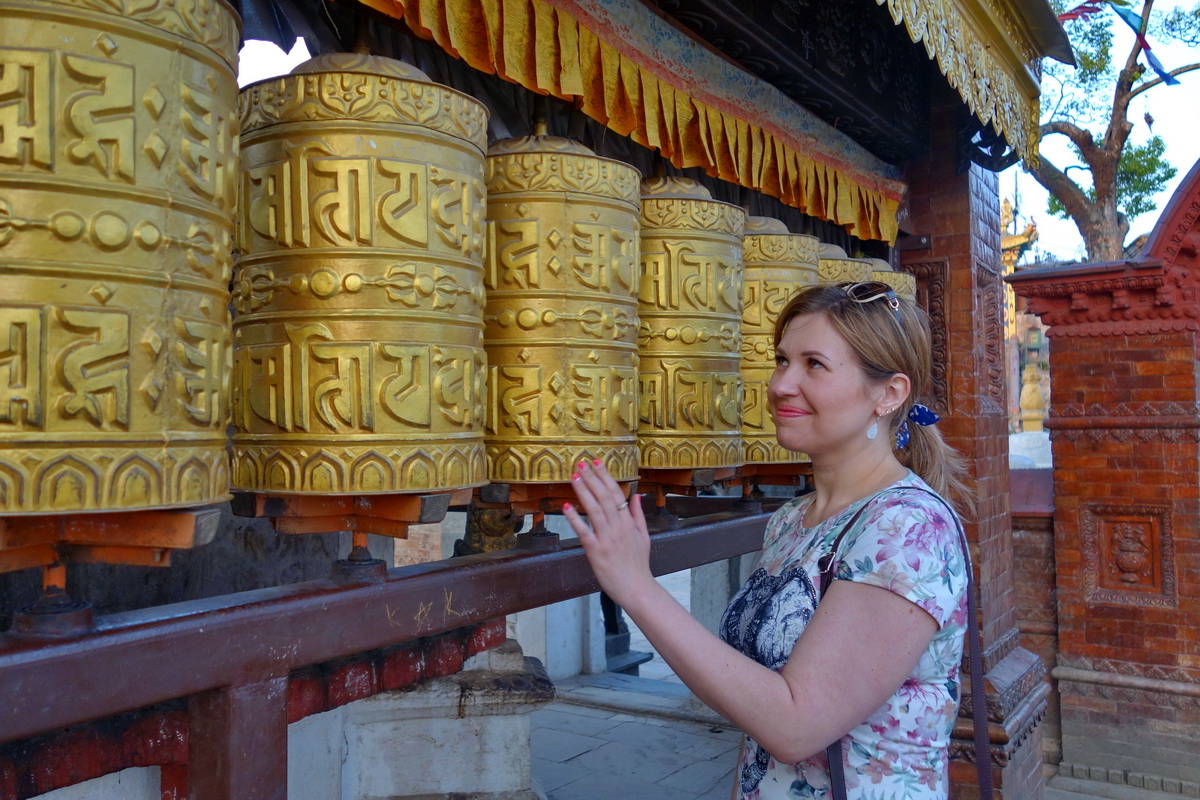
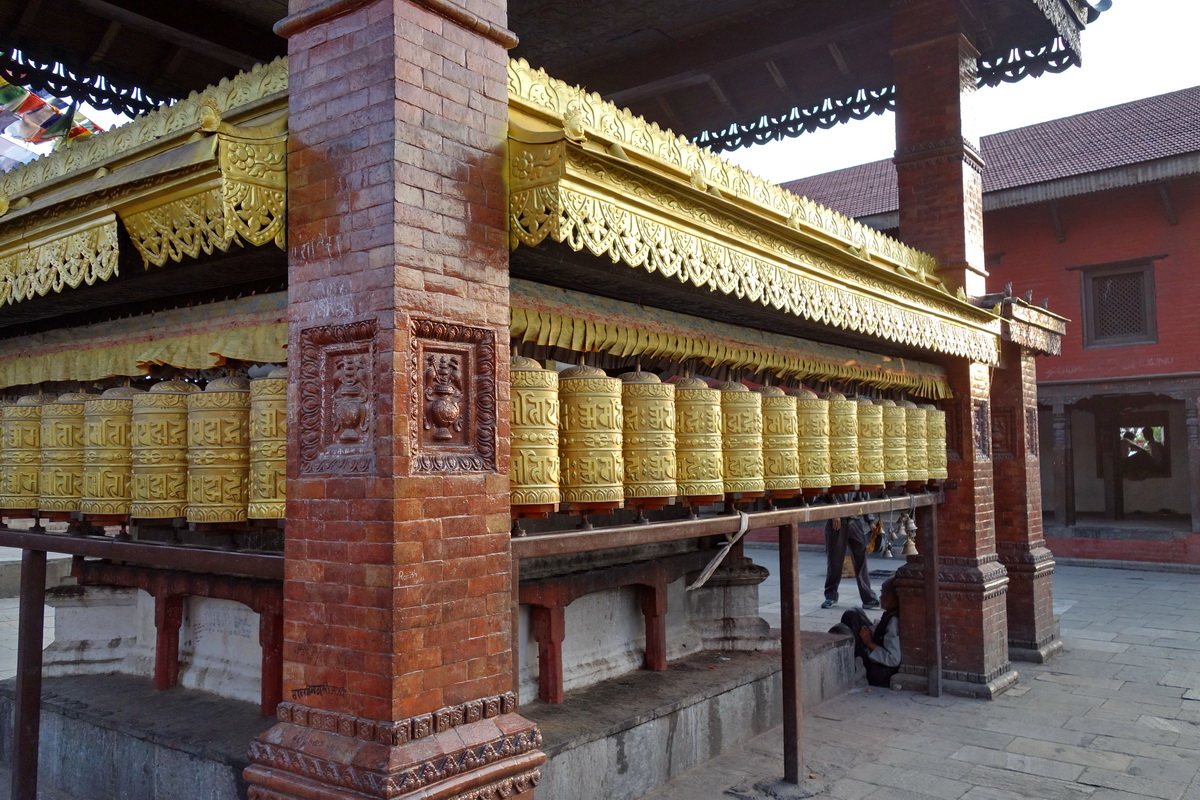
Around the stupa are numerous prayer wheels inscribed with Tibetan prayers. Spinning a prayer wheel is considered equivalent to reciting the prayer. The wheels must be spun while walking around the stupa clockwise.
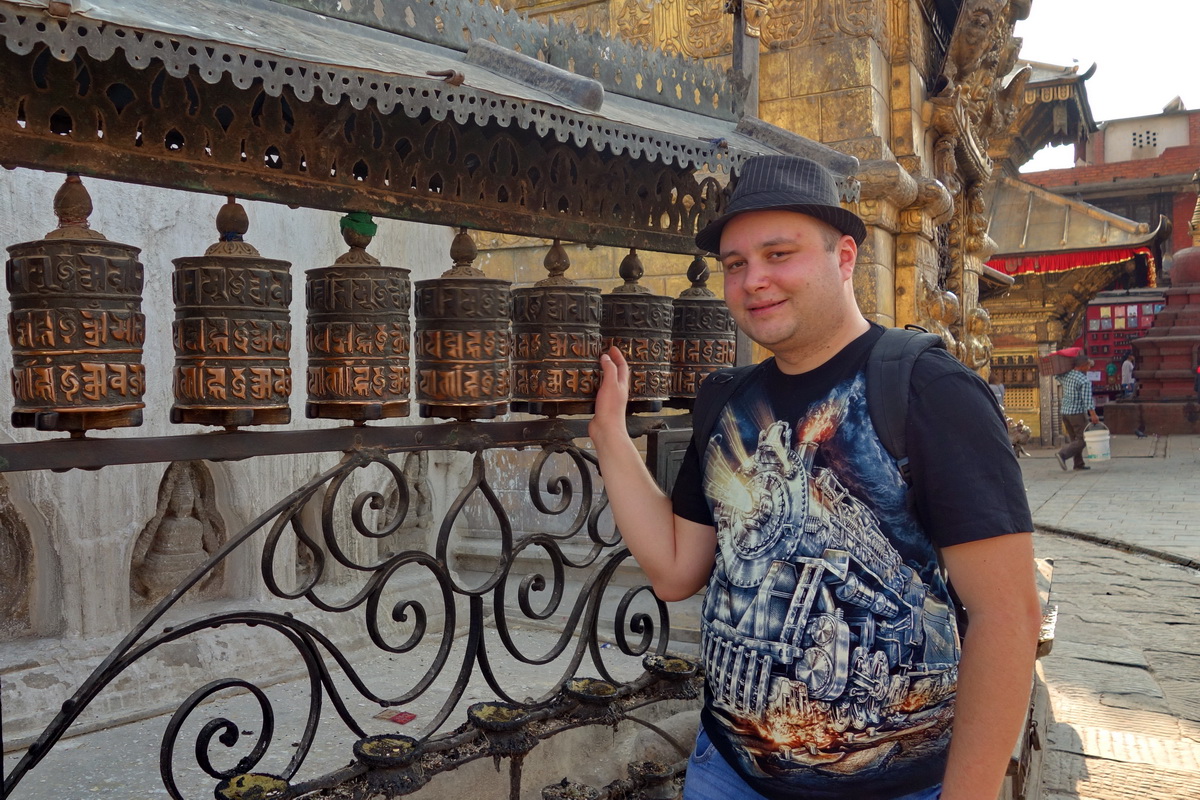
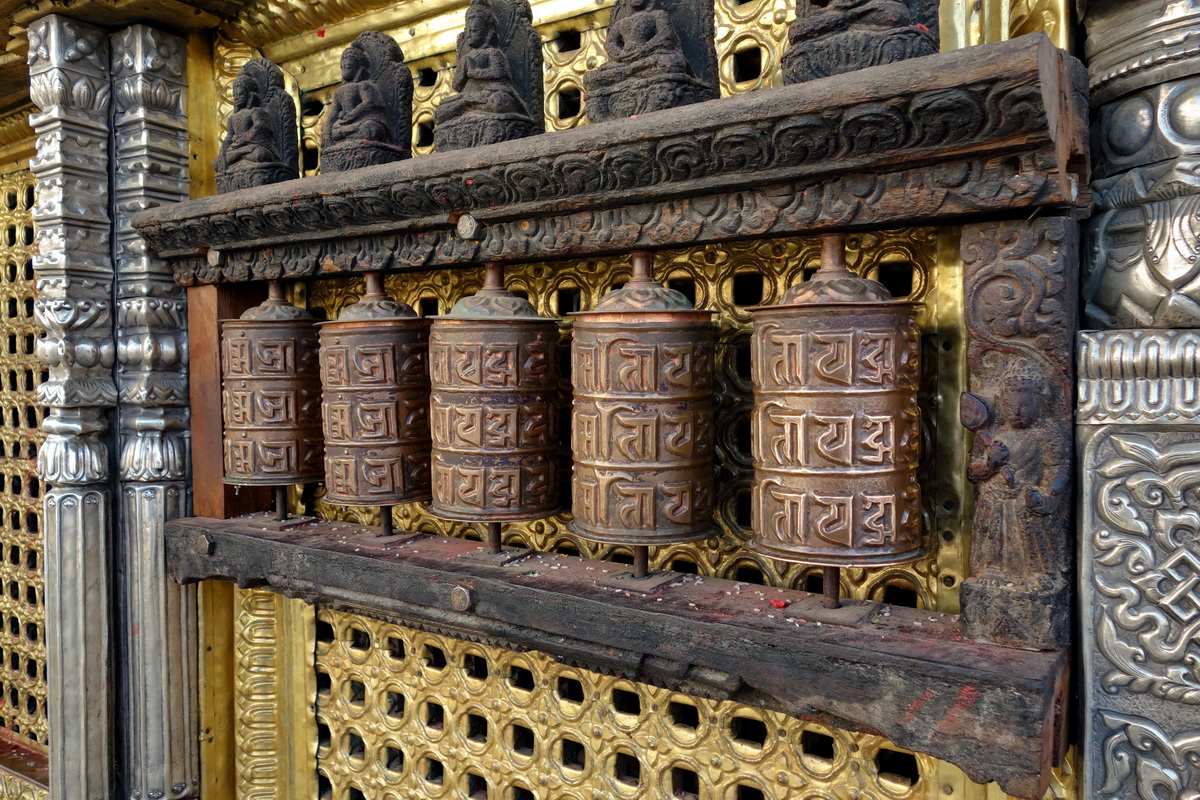
In addition, various Buddhist and Hindu temples, as well as several Tibetan monasteries of different schools and traditions and a Tibetan school, are located around the stupa.
Swayambhunath is also revered by Hindus, who have a small shrine near the stupa.
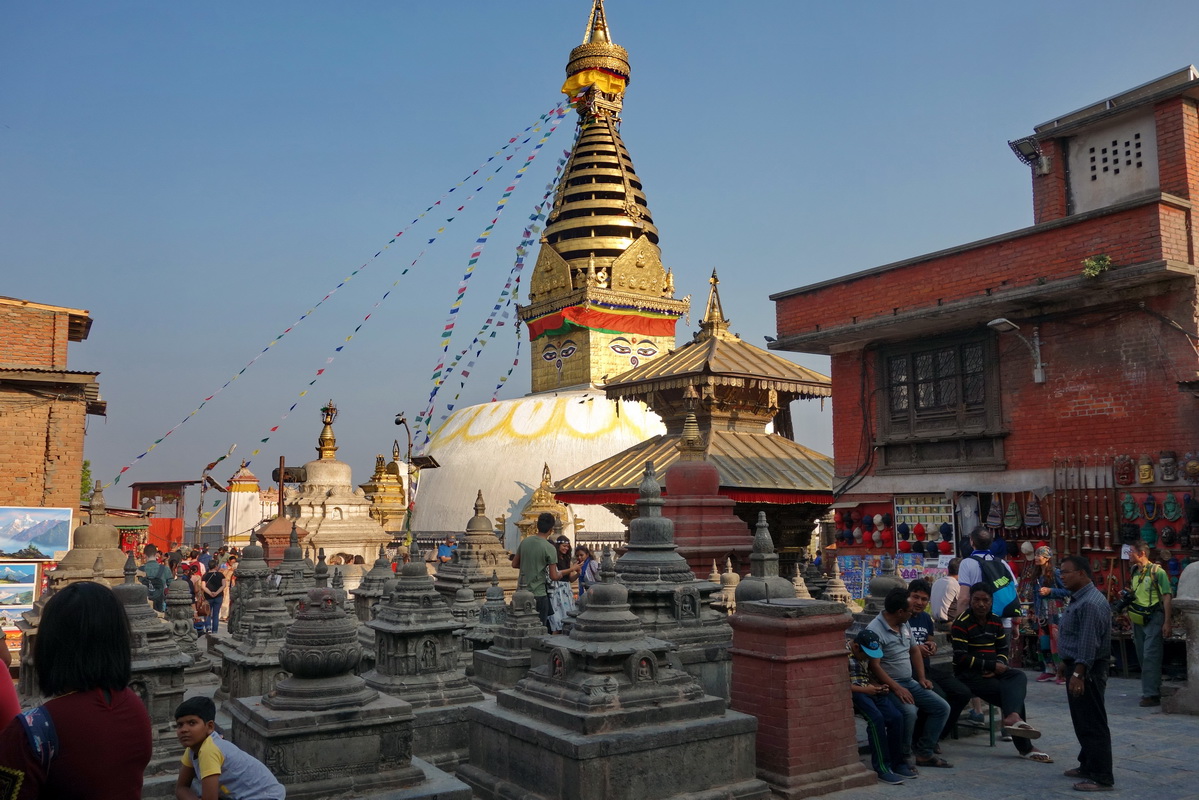
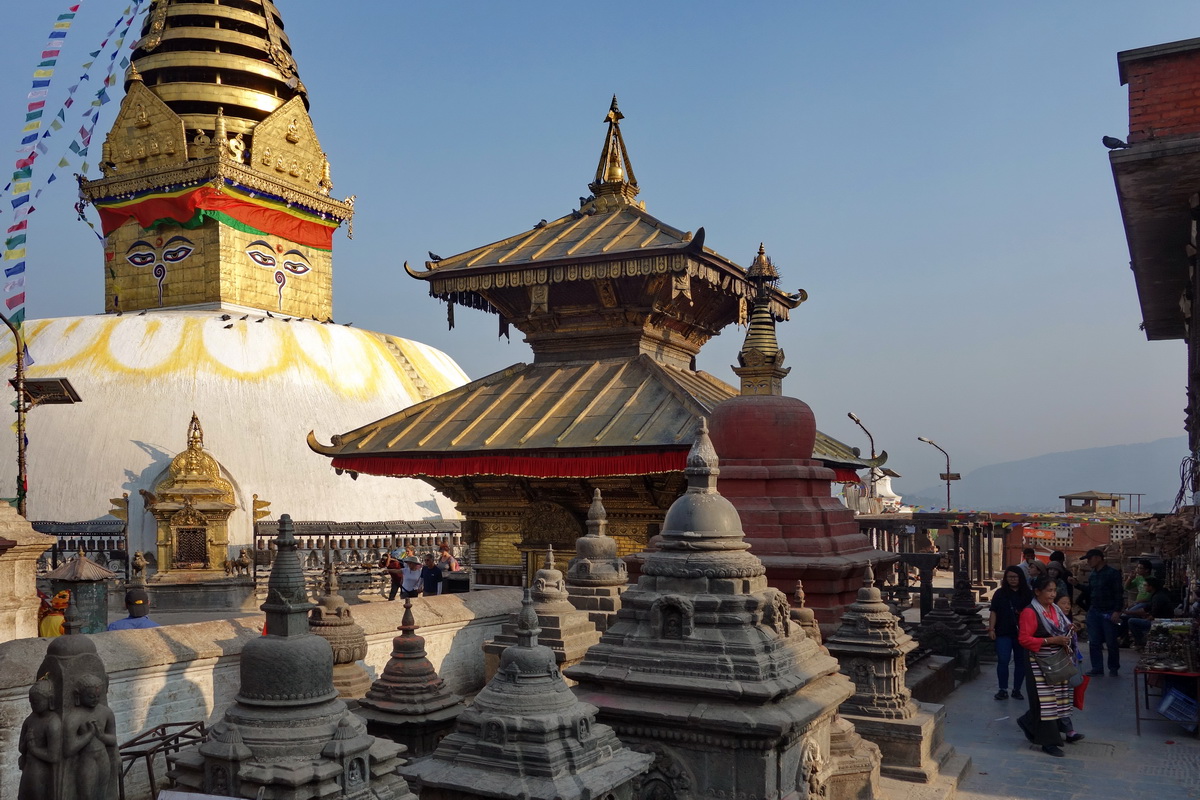
Despite the crowds of people and tourists, it’s really cool here. There’s a unique atmosphere, characteristic of other temples in Nepal as well. This is a very pleasant place with a special energy.
You can often hear the soothing traditional mantra Om Mani Padme Hum here. This is one of the most famous mantras in Mahayana Buddhism, particularly characteristic of Tibetan Buddhism. The mantra is imbued with many meanings, all of which explain the significance of its sacred syllables. The mantra is rarely interpreted in its literal translation: “O, jewel shining in the lotus flower!”
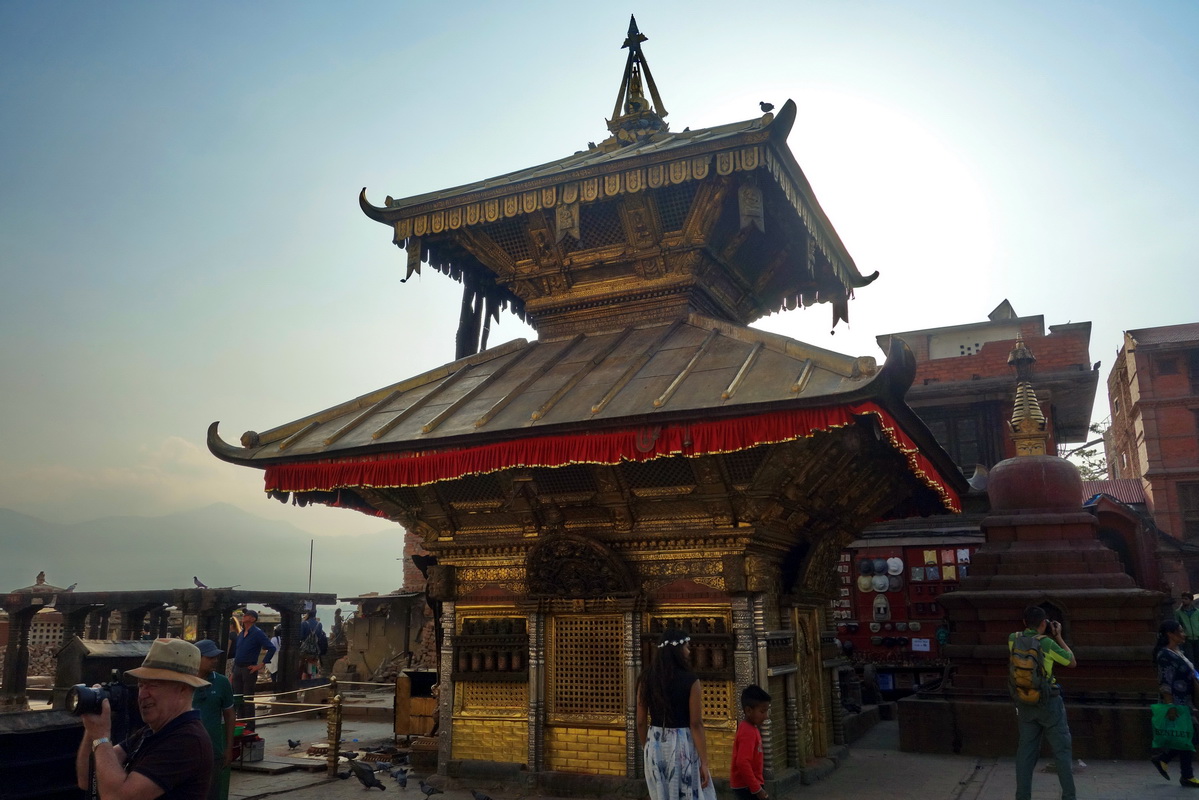
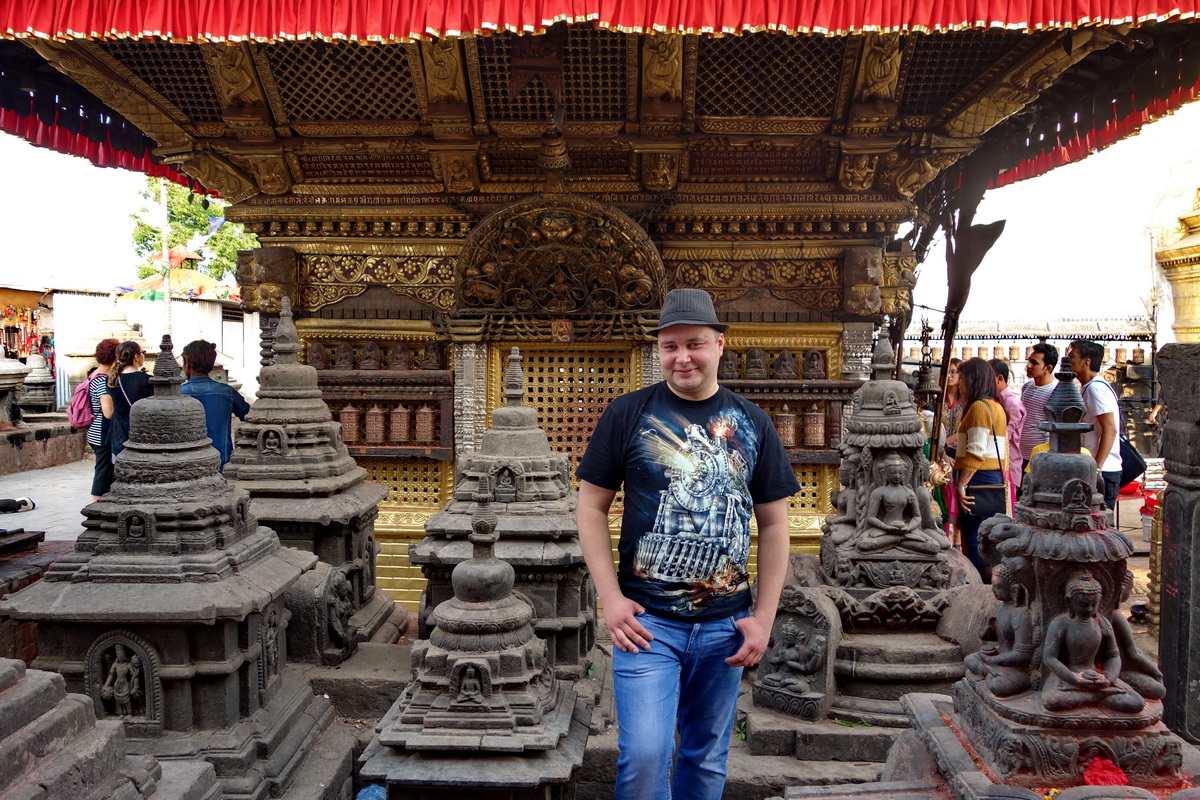
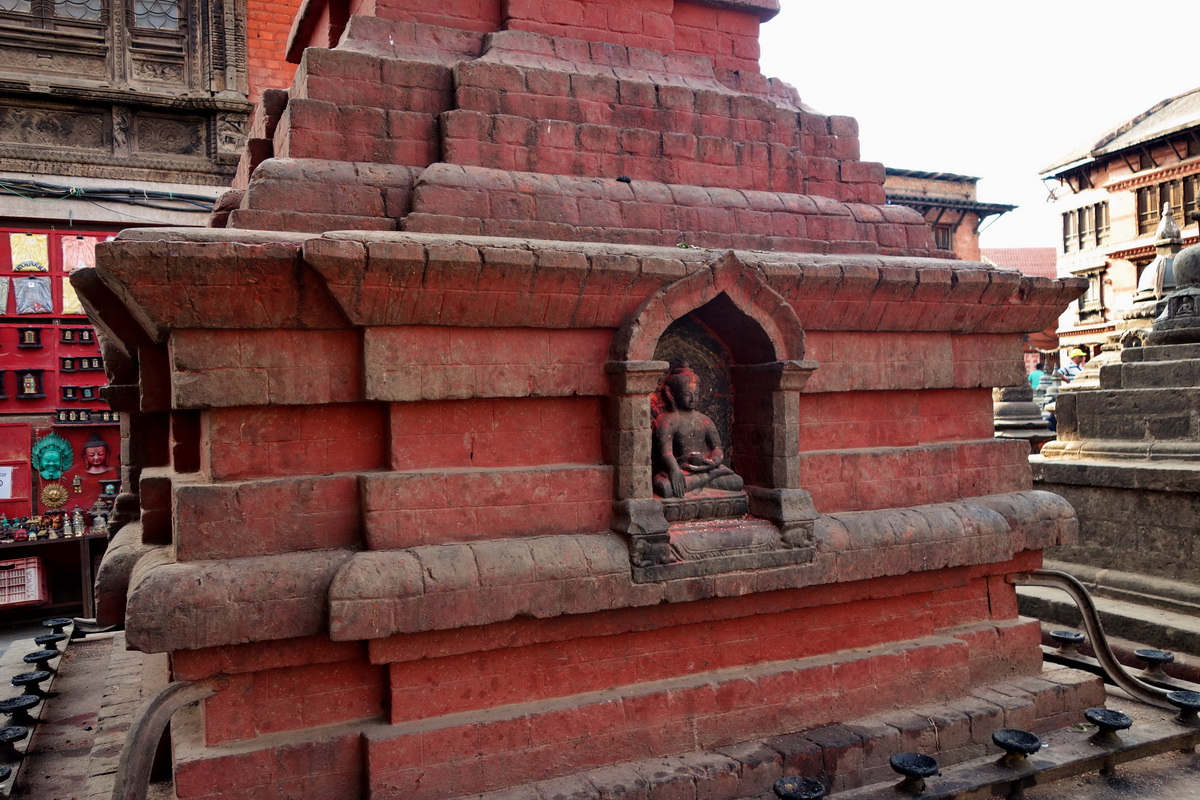
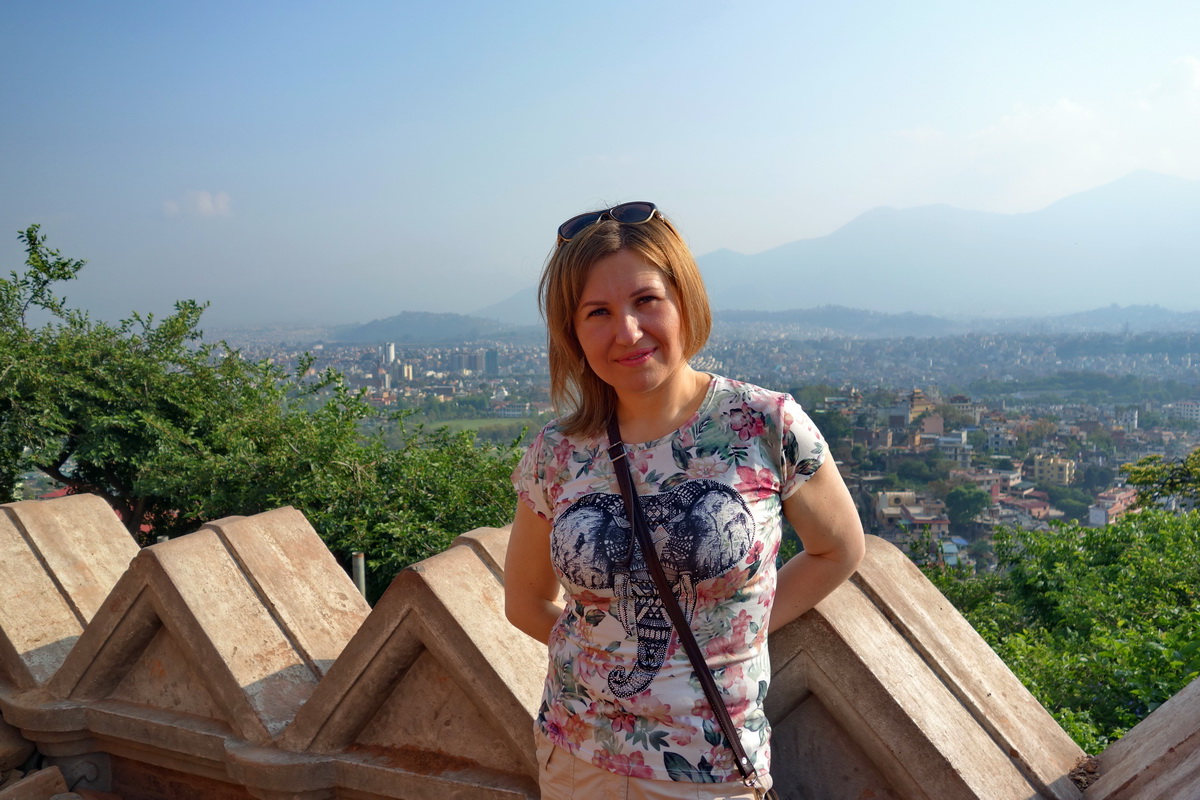
A photo of my girlfriend with Kathmandu in the background, offering a great view of Nepal’s capital.
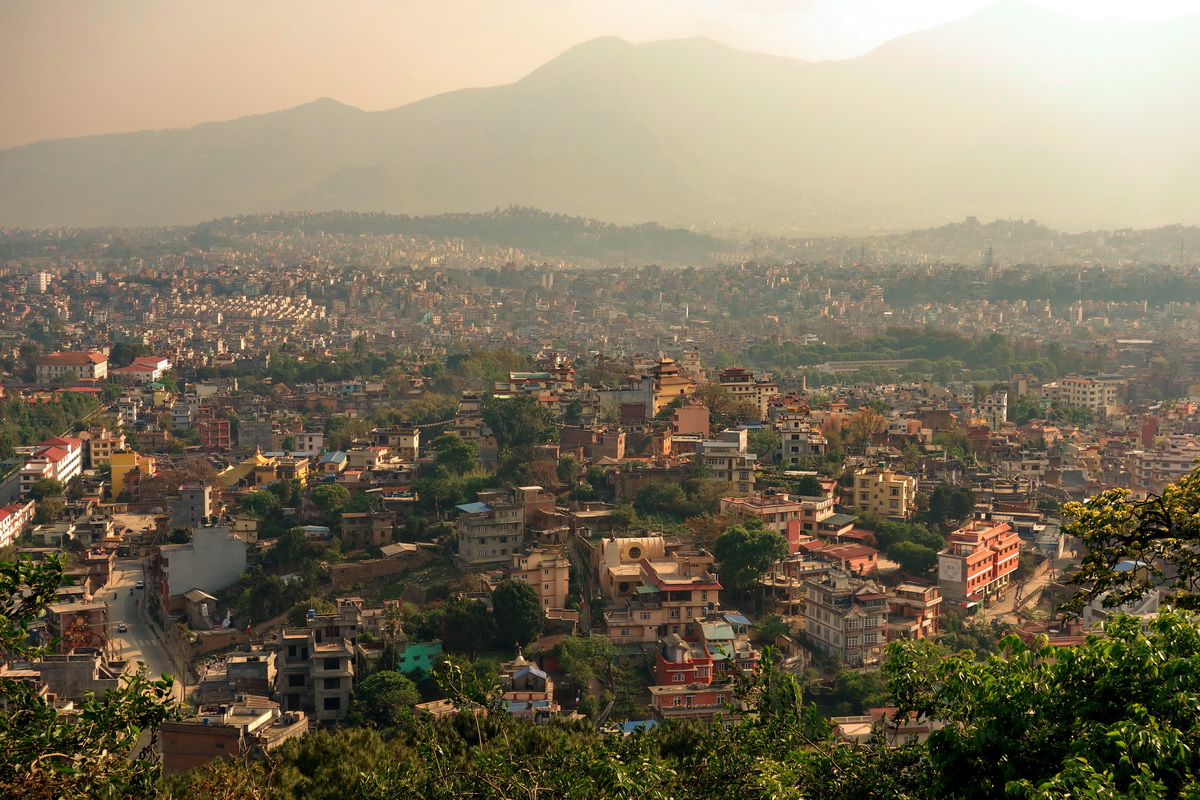
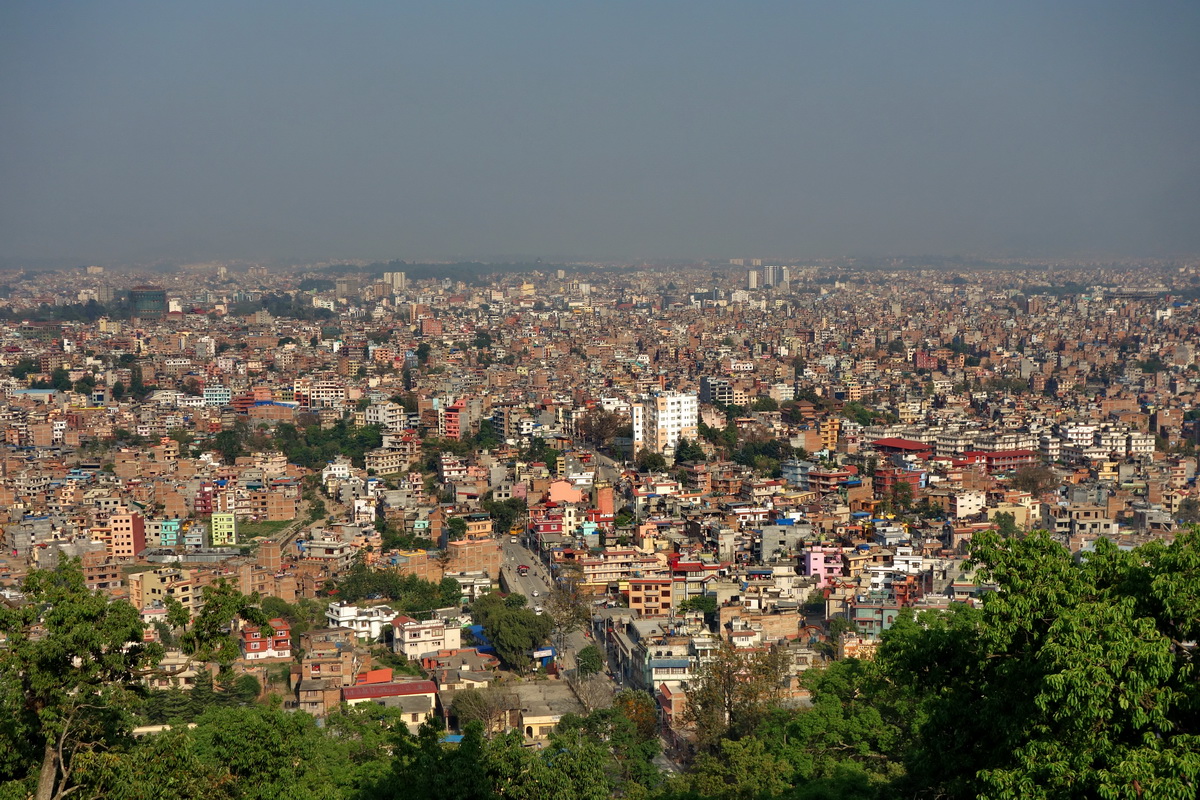
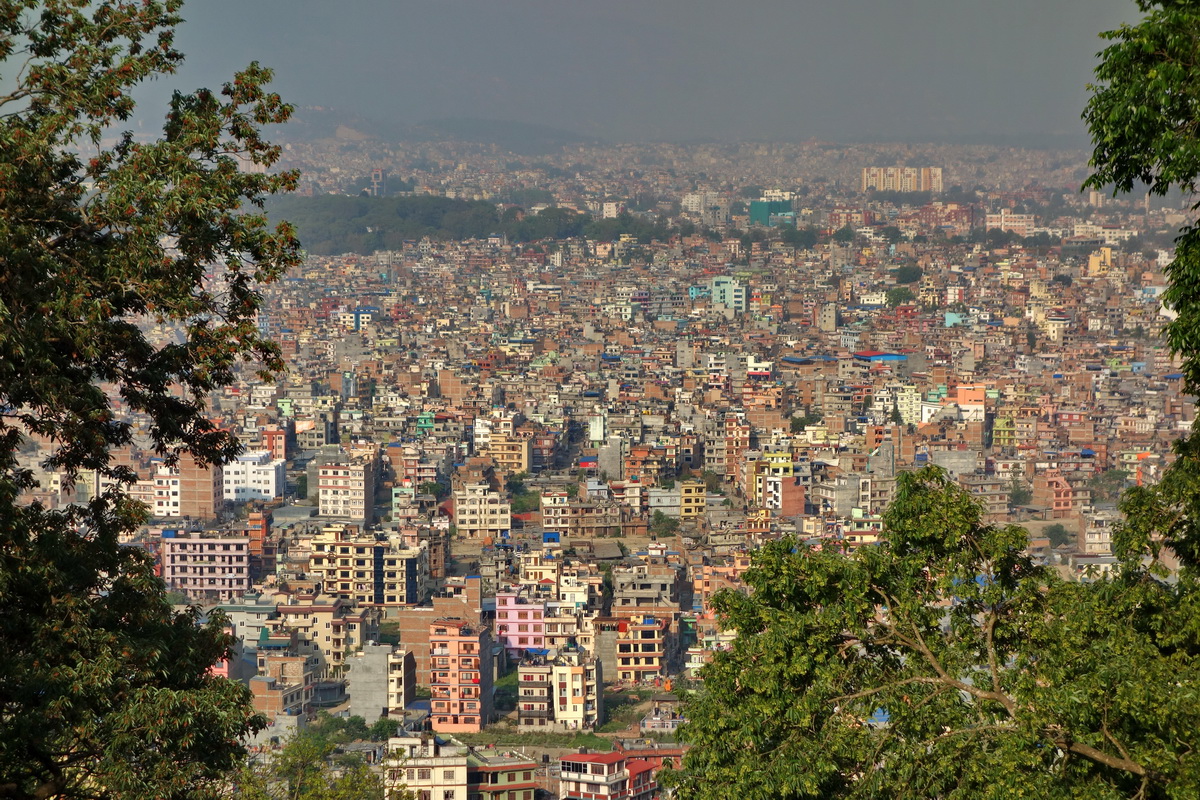
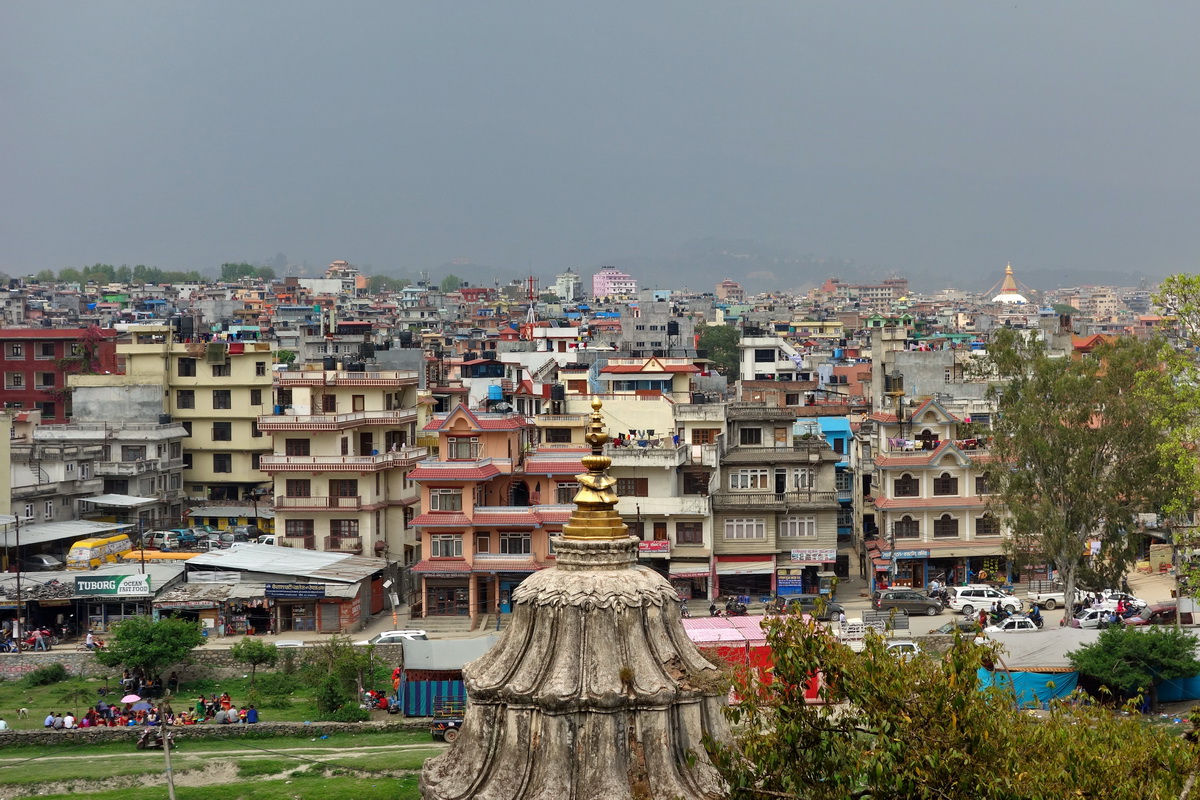
Views of Kathmandu.
We feed a monkey with bananas. Feeding monkeys requires caution—they’re not entirely safe!
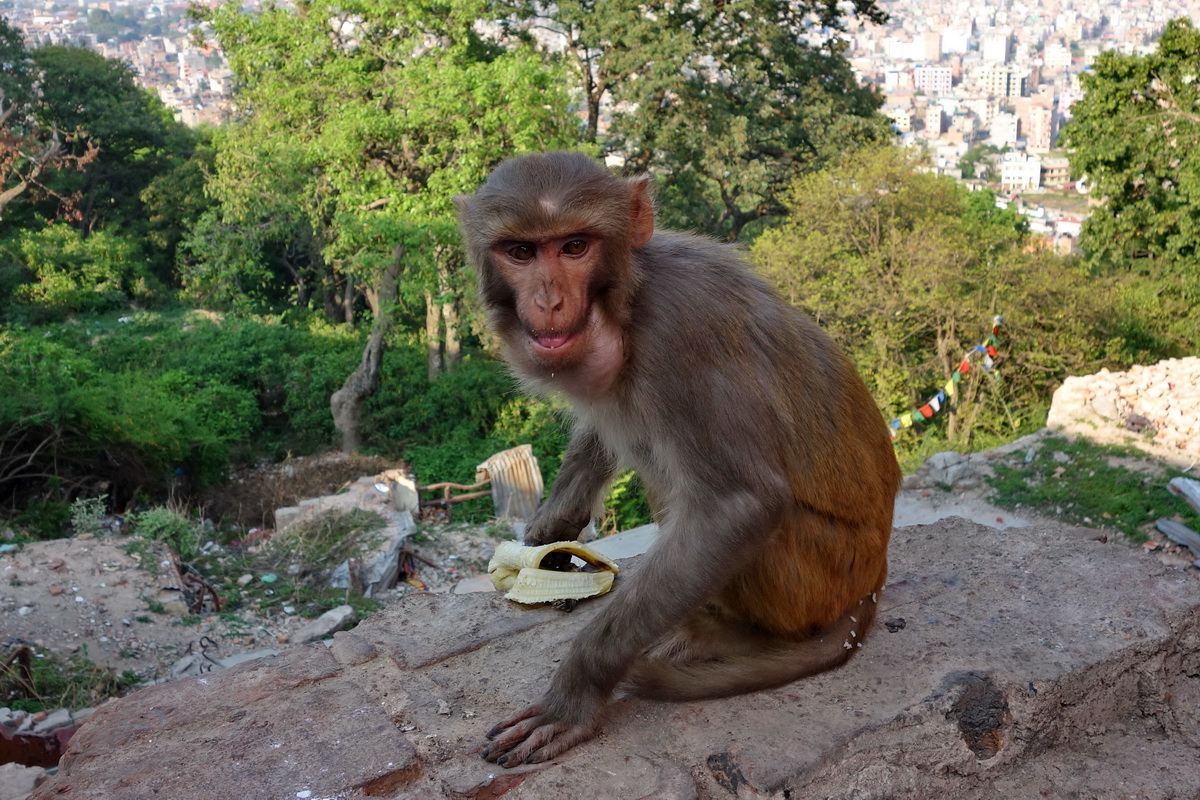
Here, visitors to the Swayambhunath stupa feed the monkeys. By the way, you can buy various fruits, including bananas, at the entrance to the stupa and on its grounds to snack on yourself or treat the monkeys. Monkeys also eat the fruits left by pilgrims as offerings.
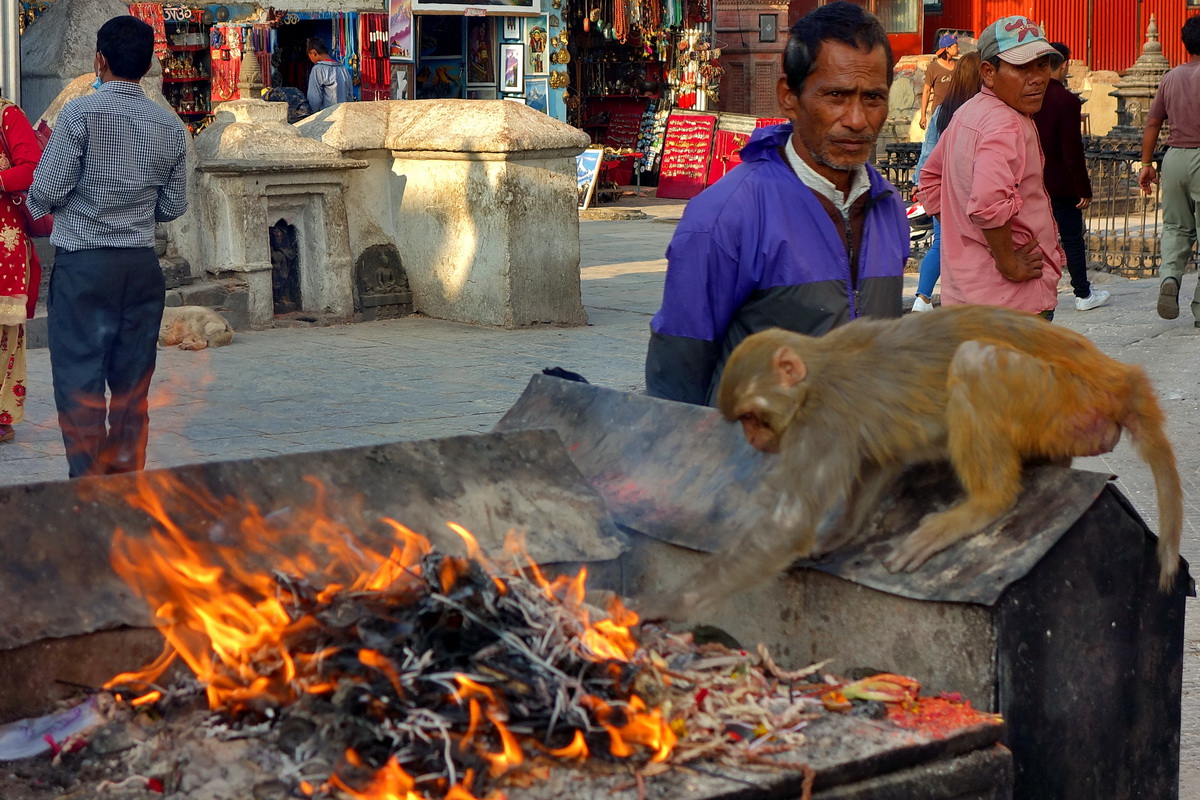
A monkey desperately tries to find something edible in burning trash.
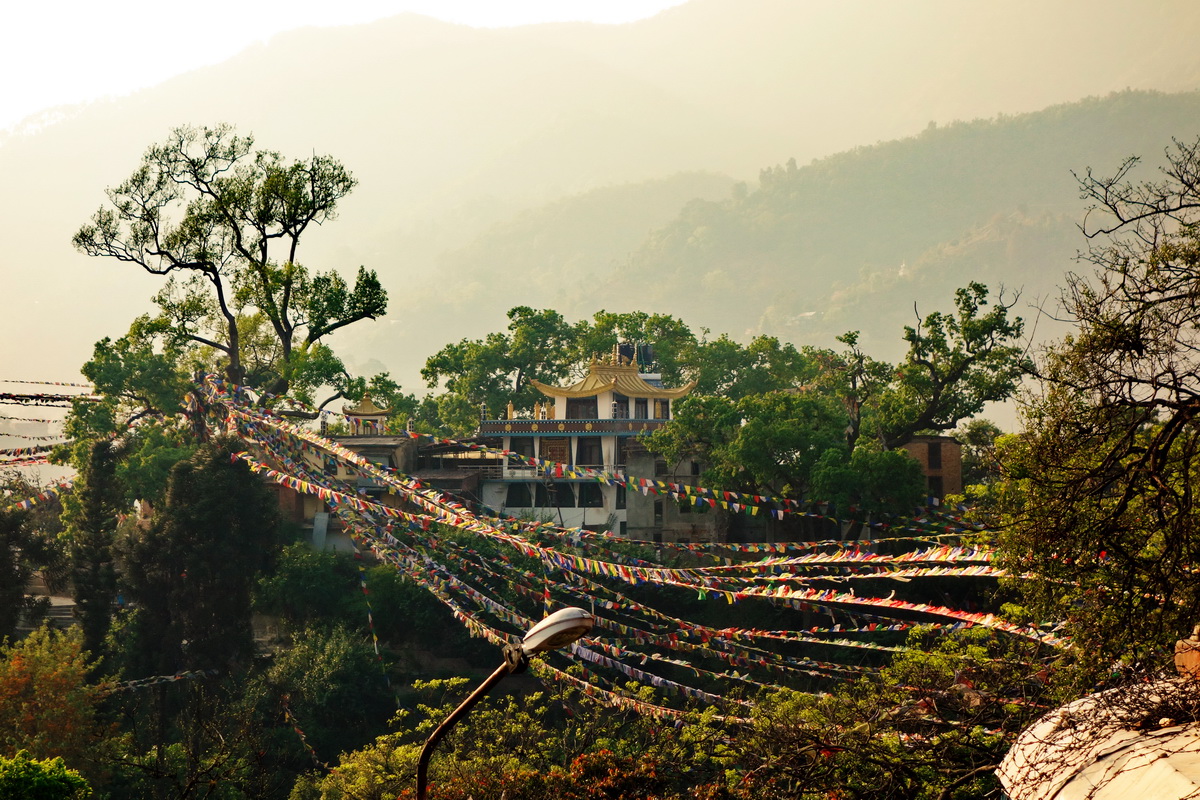
A view of the neighboring monastery, which we’ll now descend to.
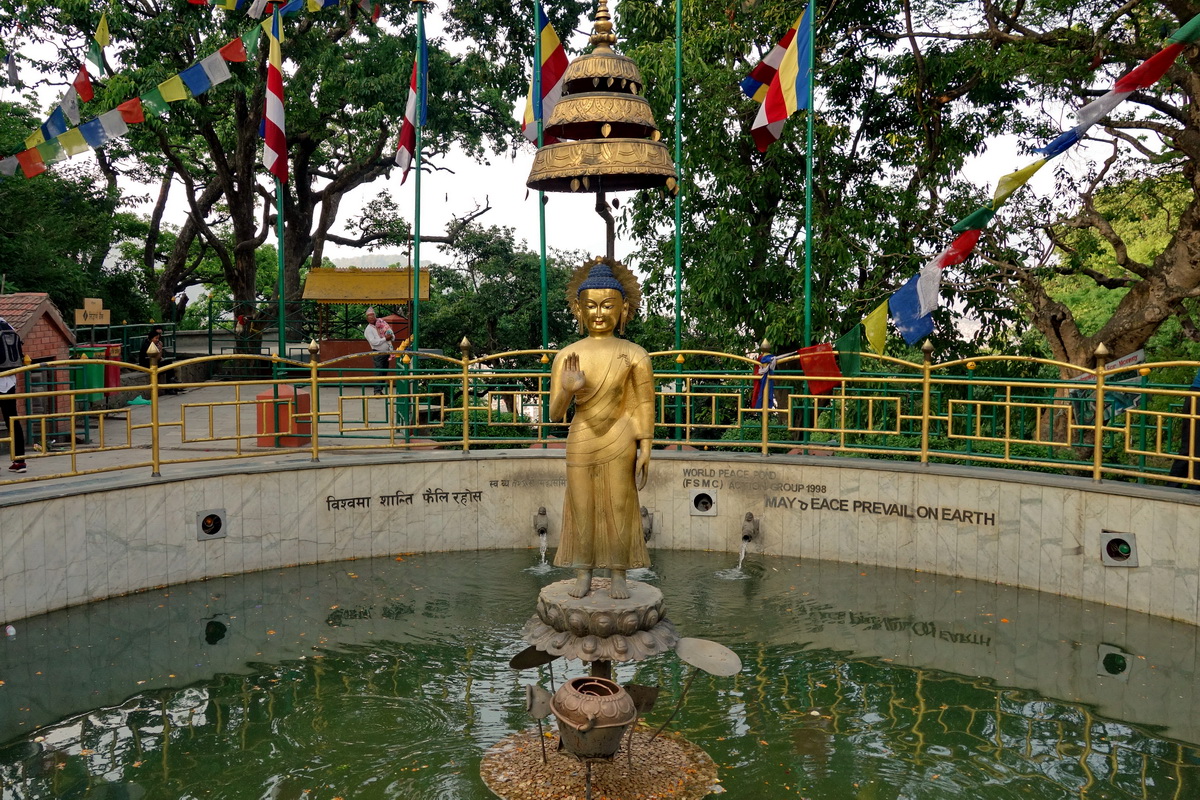
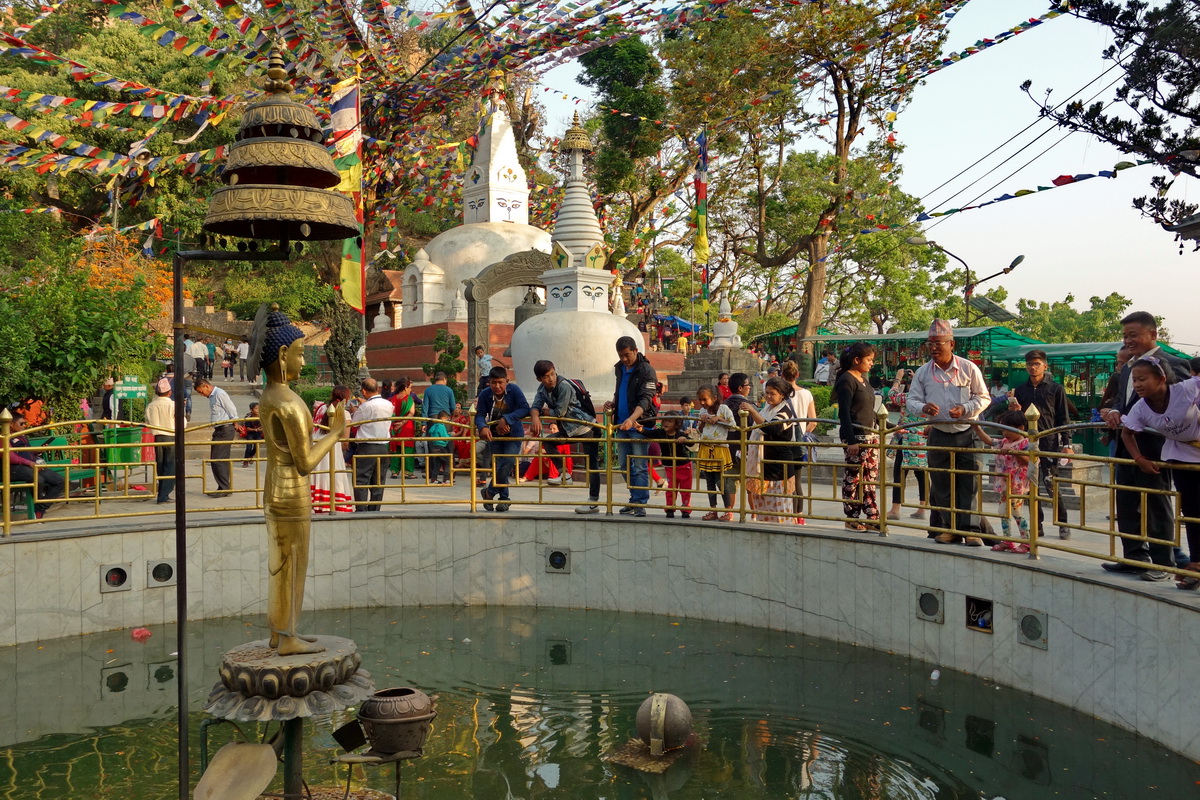
A Buddha in a pond where it’s customary to toss coins :) We threw in a few Emirati dirhams.
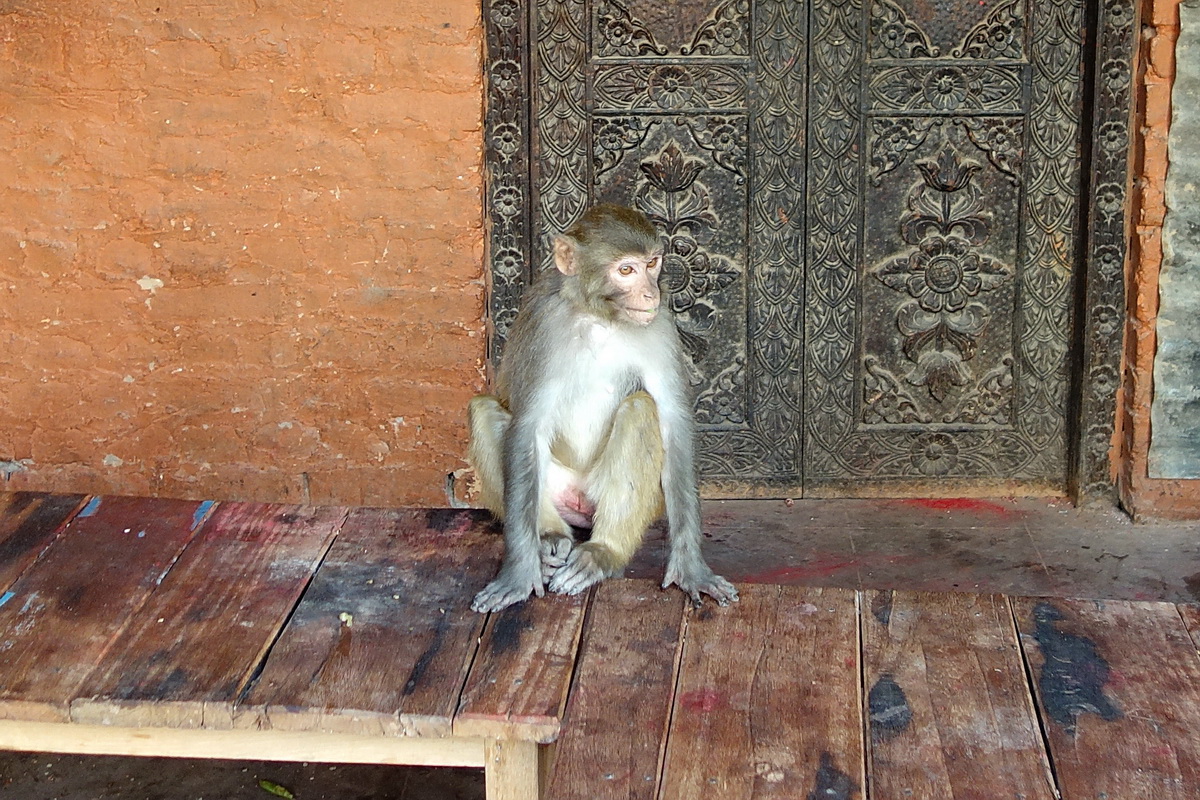
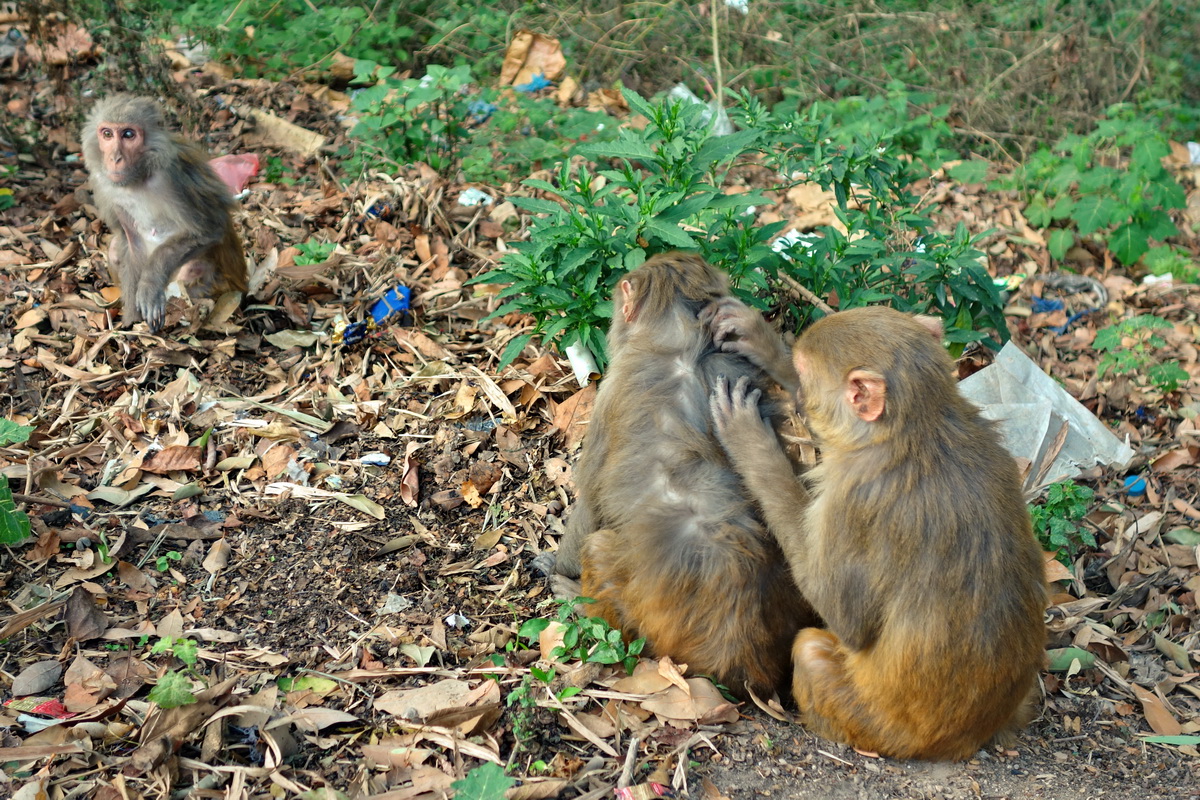
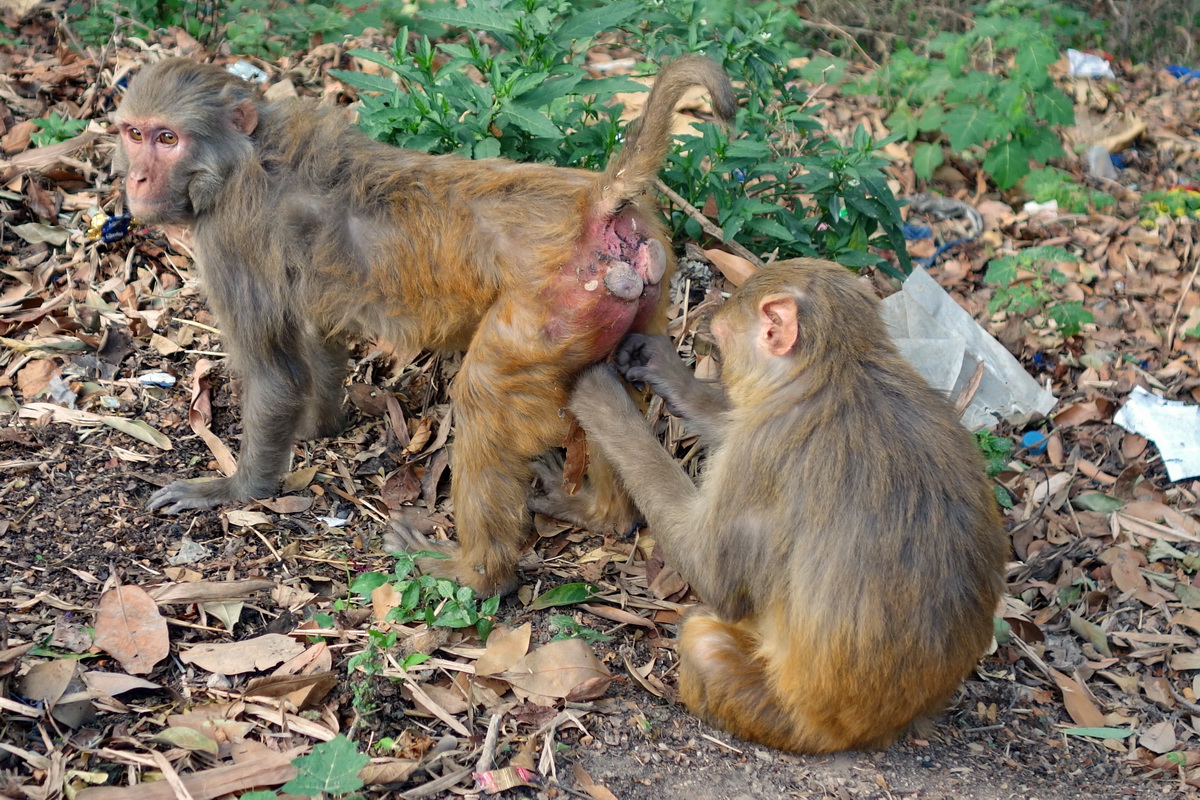
Monkeys rest and keep an eye out for something to snack on.
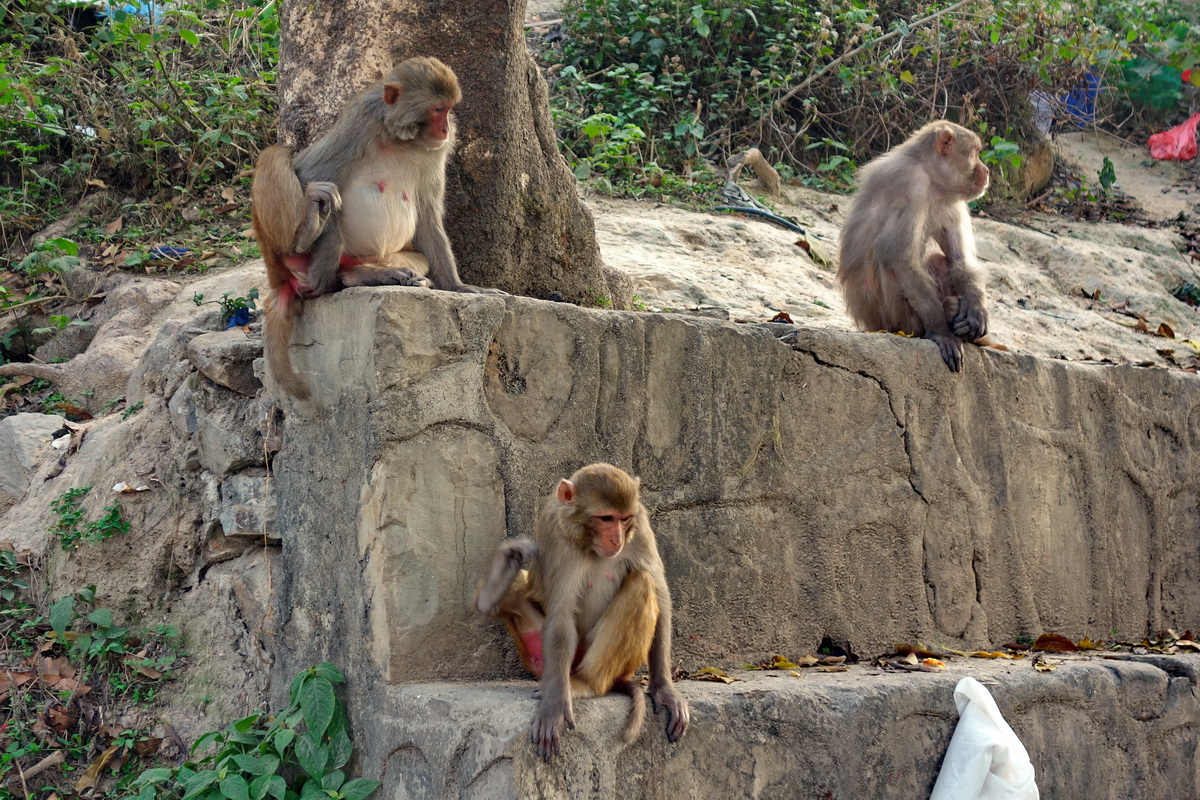
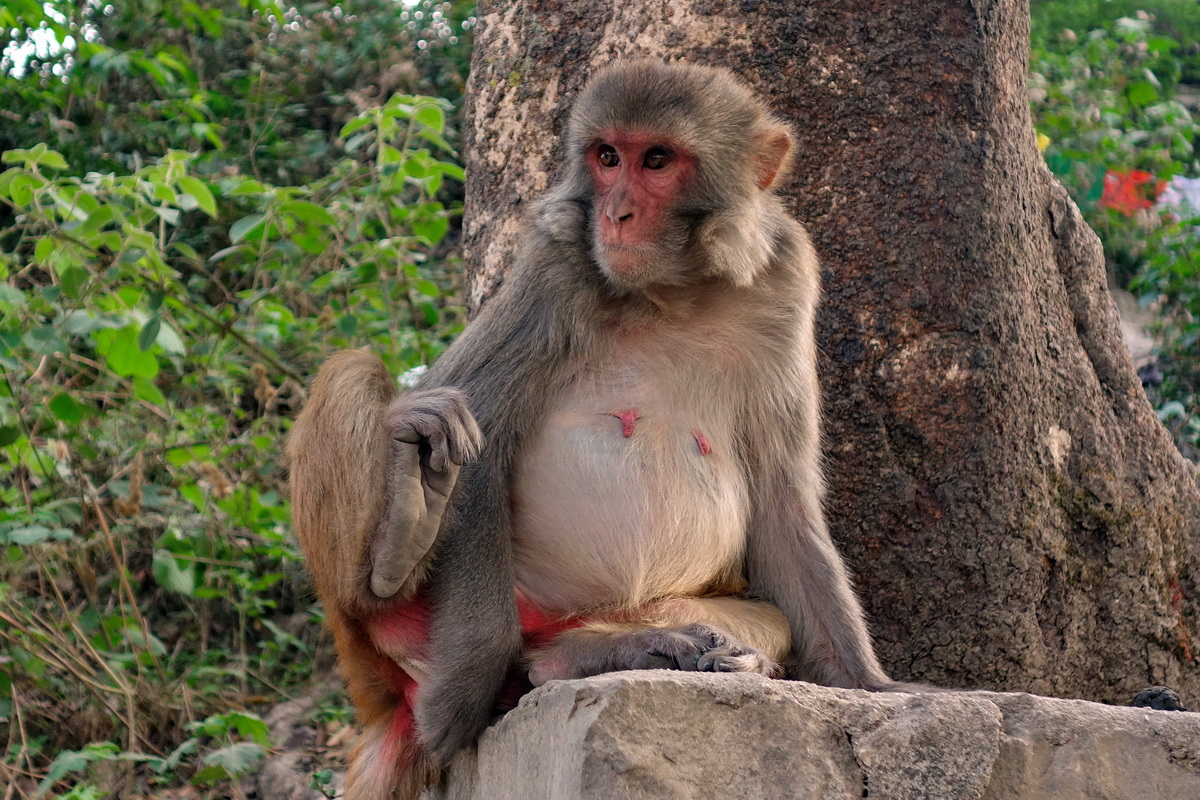
The monkeys here live independently and, judging by their behavior, feel perfectly at home, considering themselves the masters of this temple.
...
You can easily approach the monkeys and take photos with them. But when they see food, they get excited and start behaving more aggressively. While you try to feed some, others might attack and snatch the food.
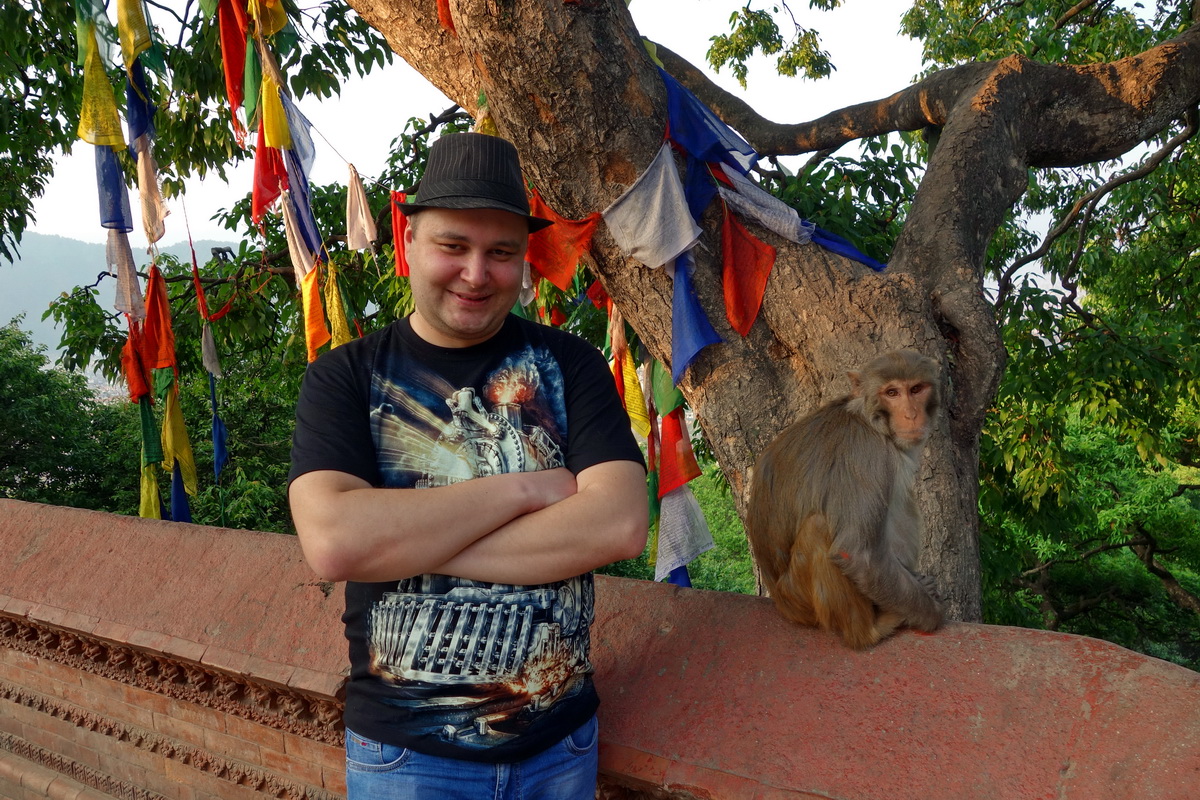
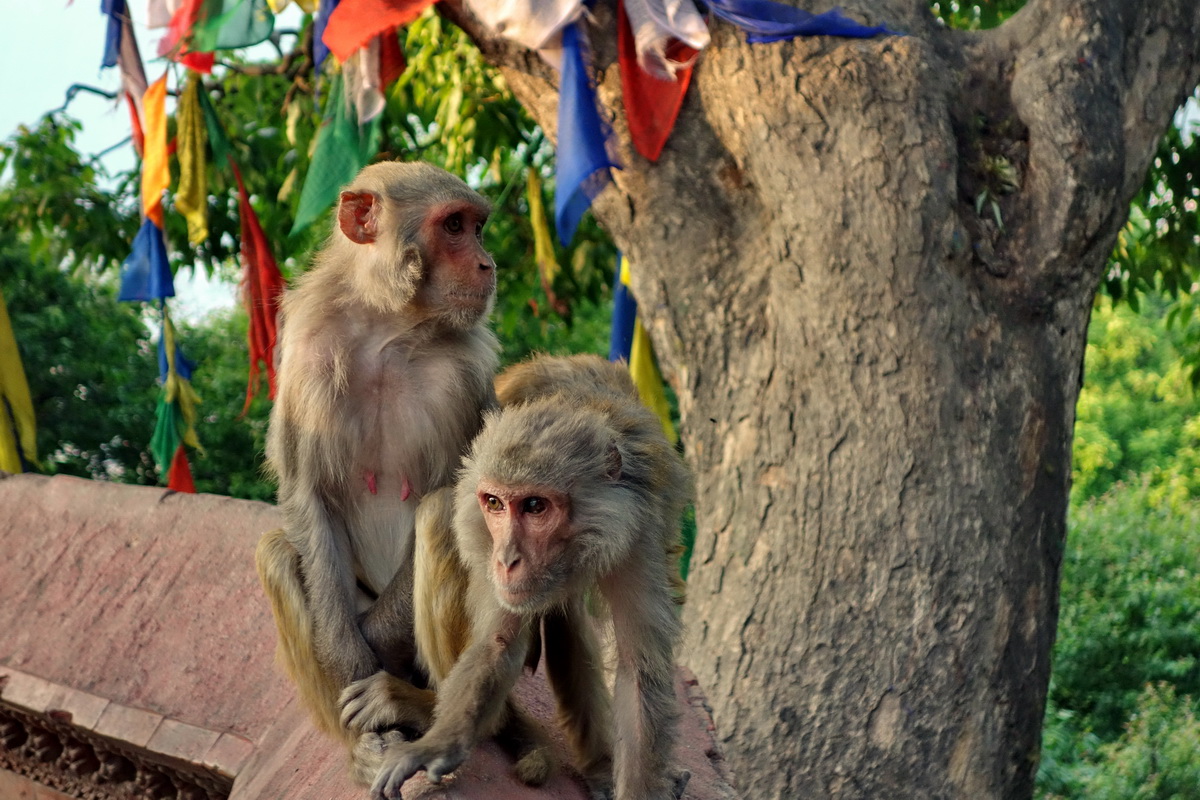
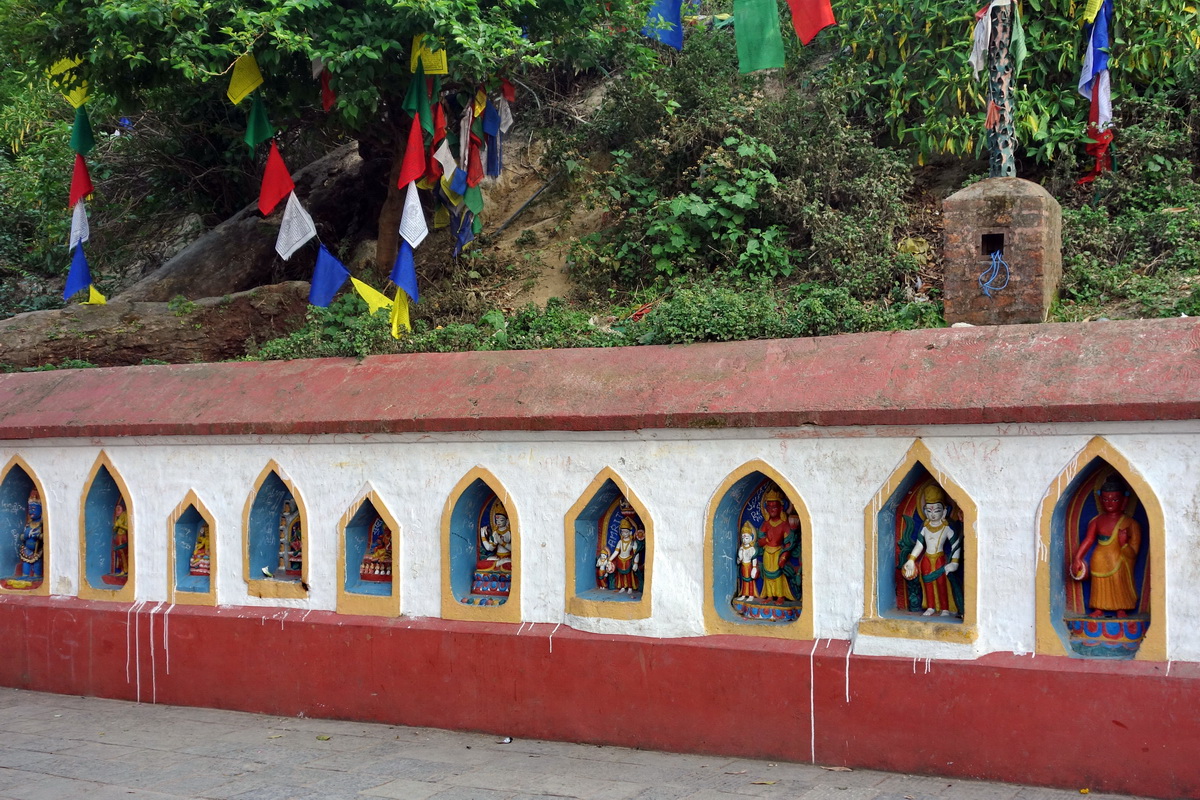
It is believed that long ago, the Kathmandu Valley was a lake, and the Monkey Hill, where the Swayambhunath stupa stands, was an island. The other side of the hill is relatively quiet. You can sit on a bench and rest here.
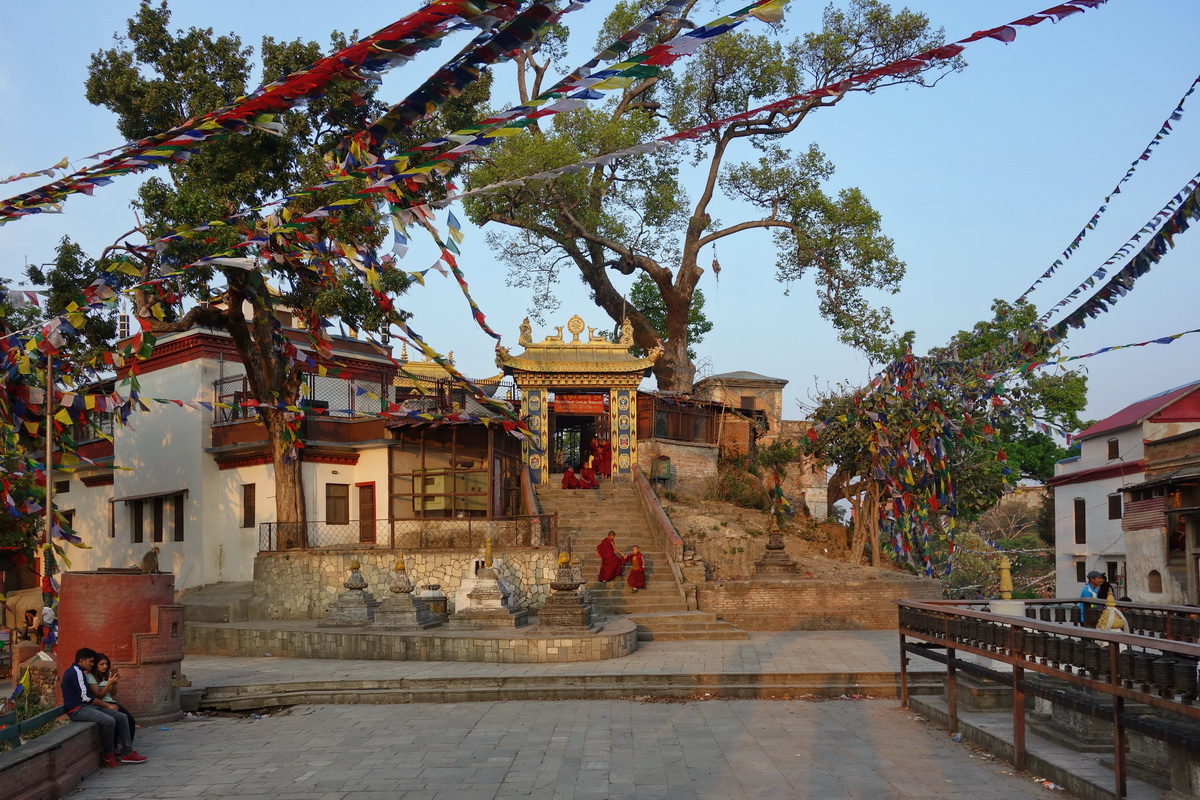
And spin the prayer wheels.
We head back to the stupa.
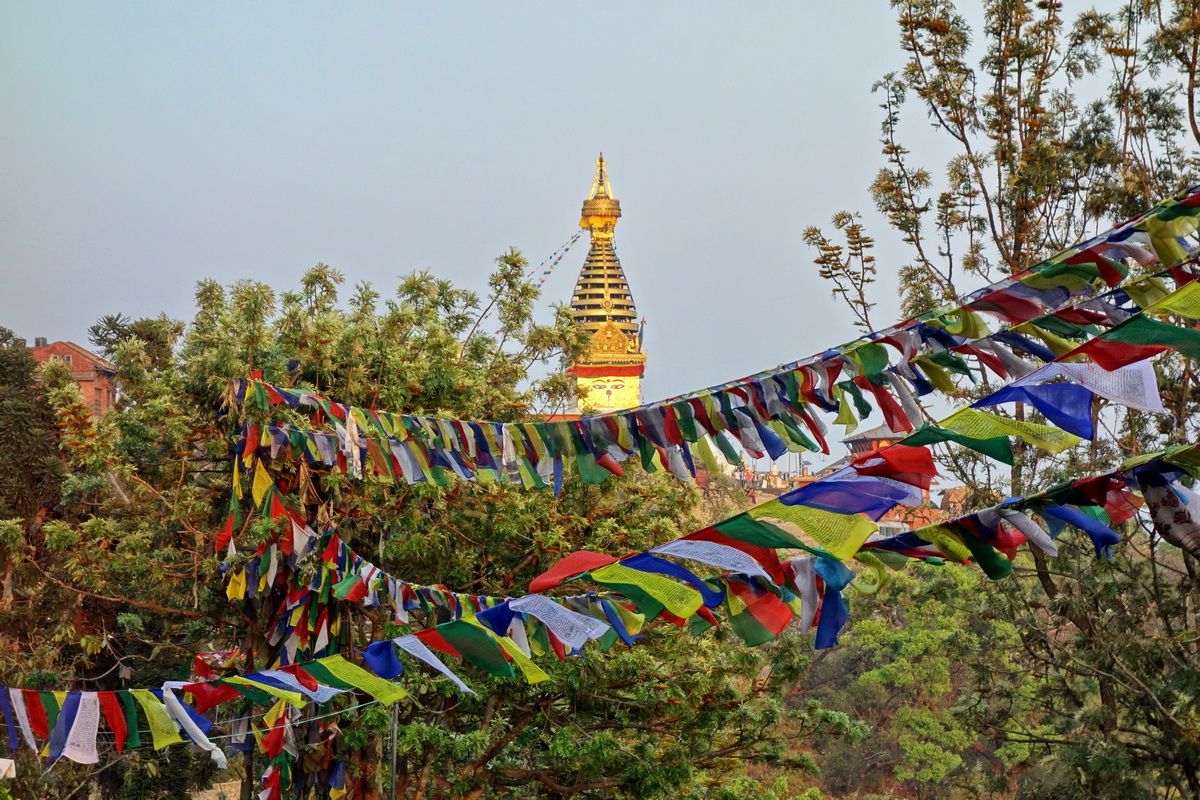
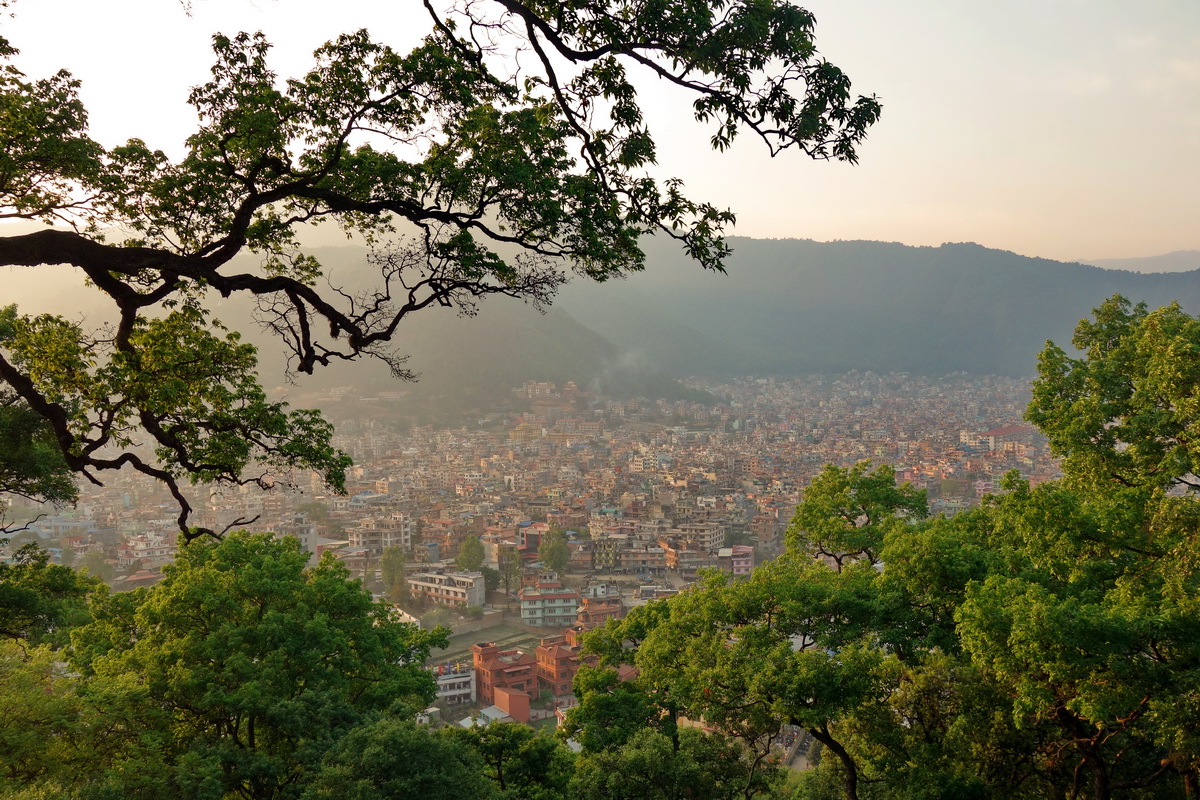
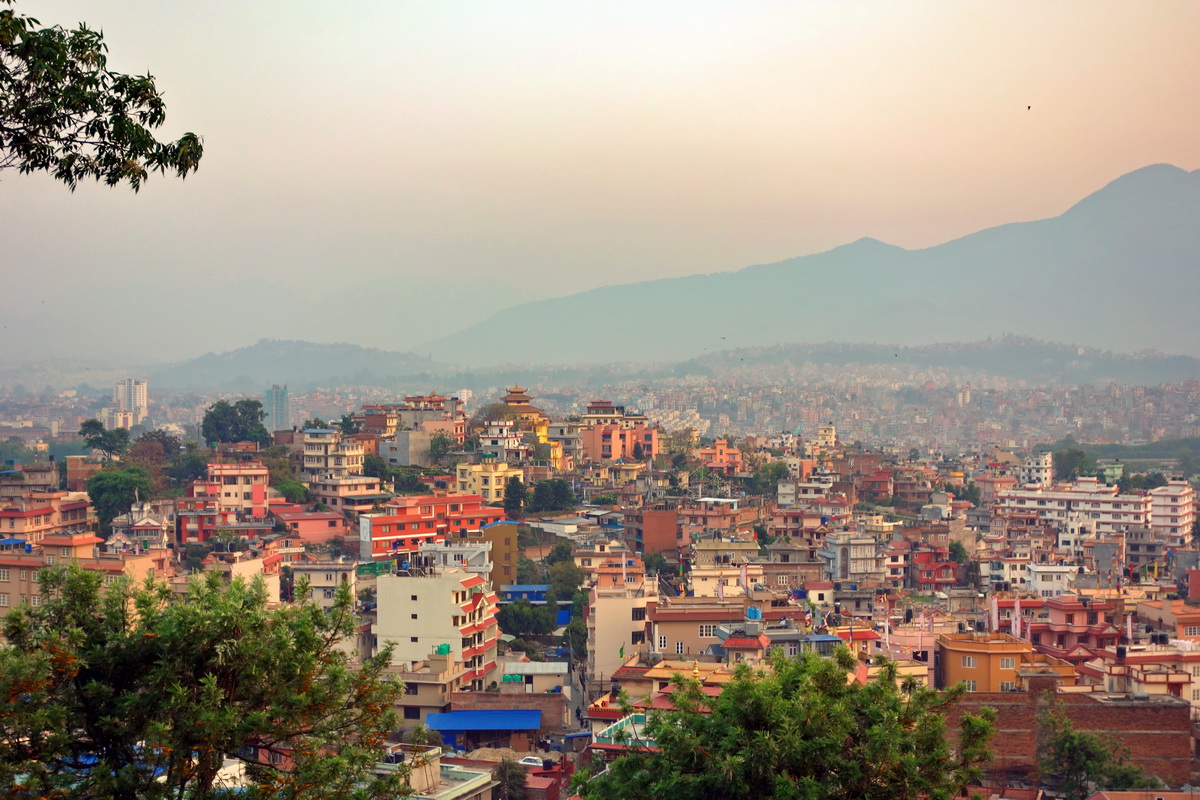
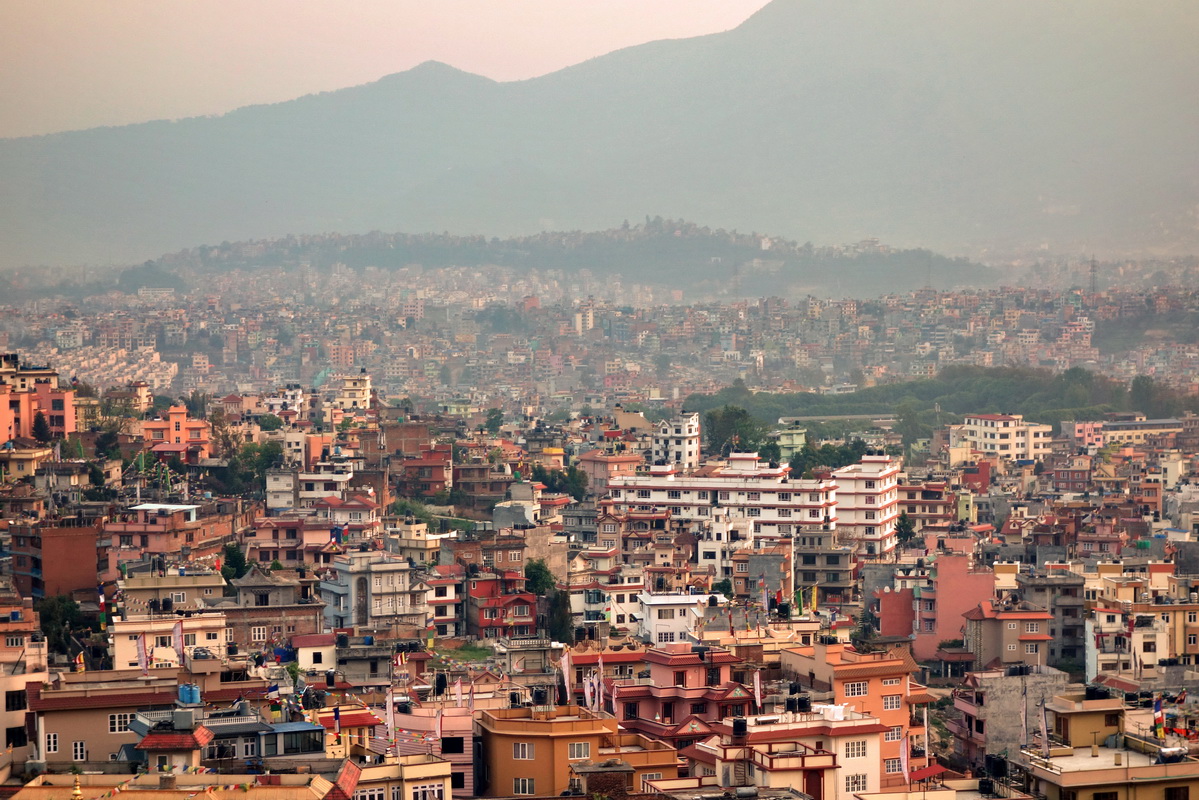
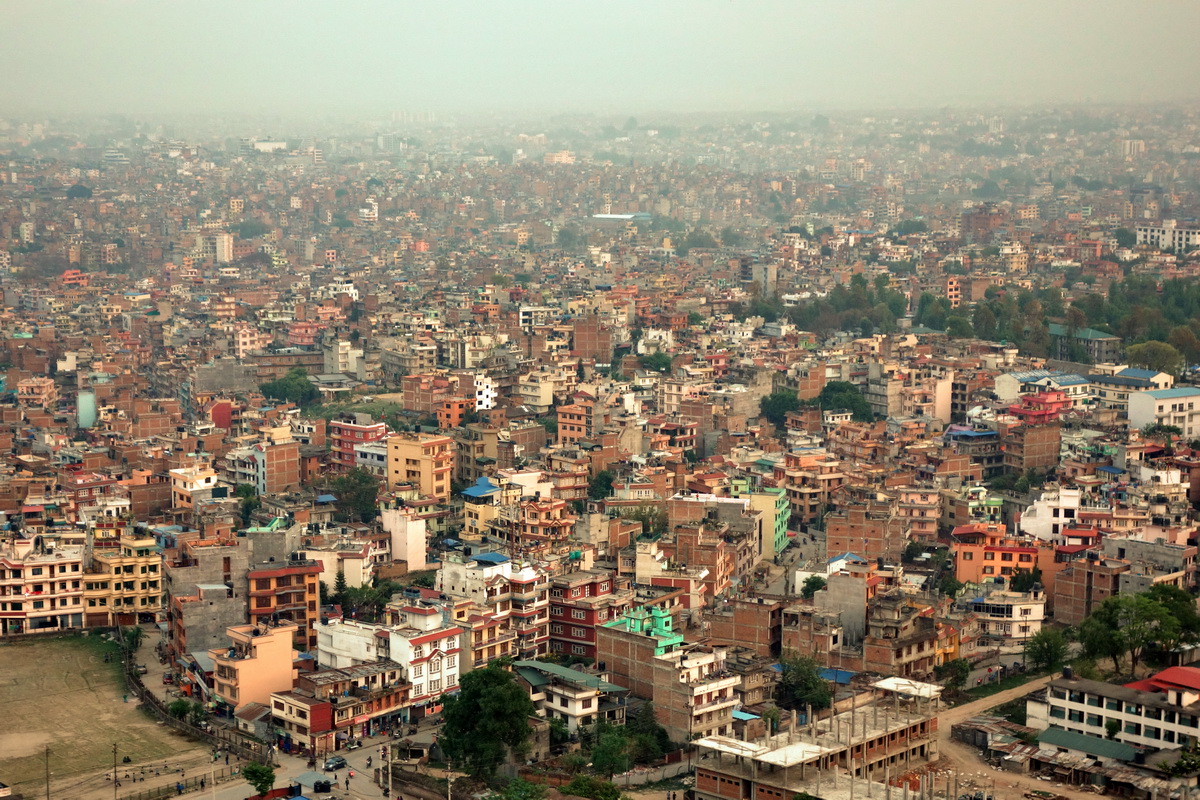
Along the way, we admire the beautiful view of Kathmandu.
We descend.
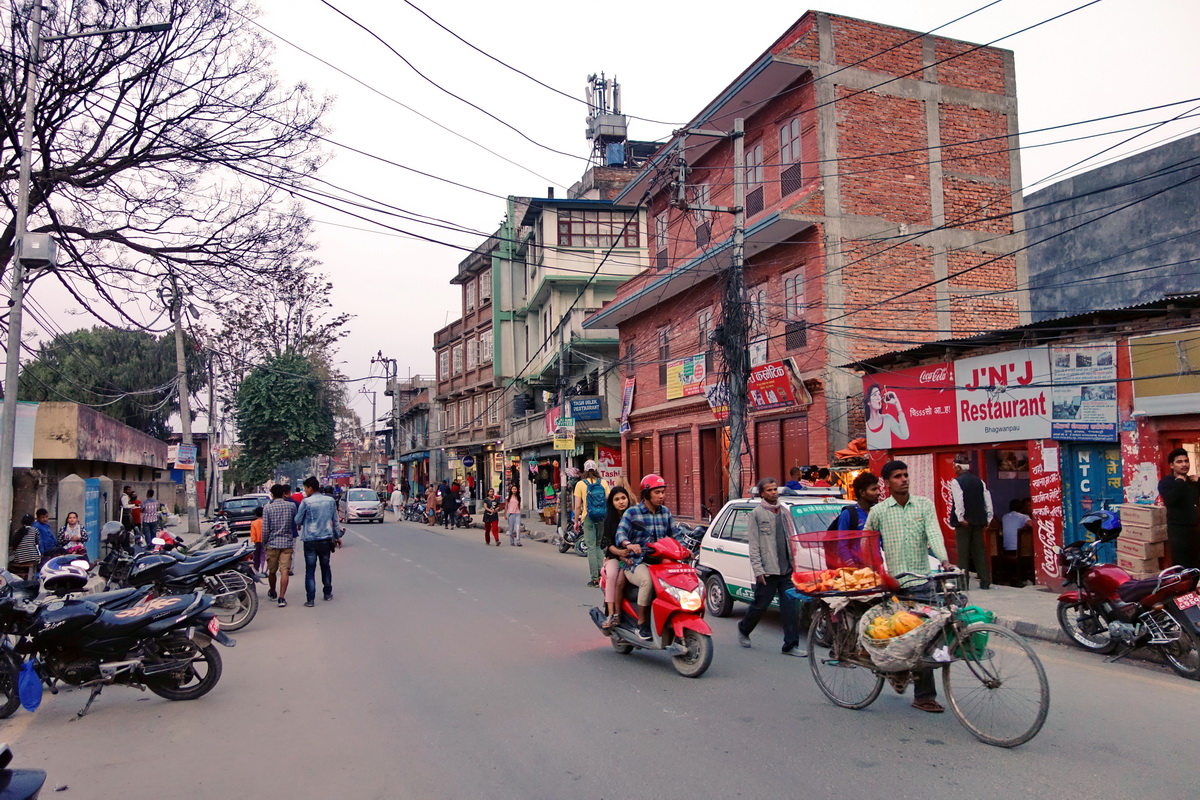
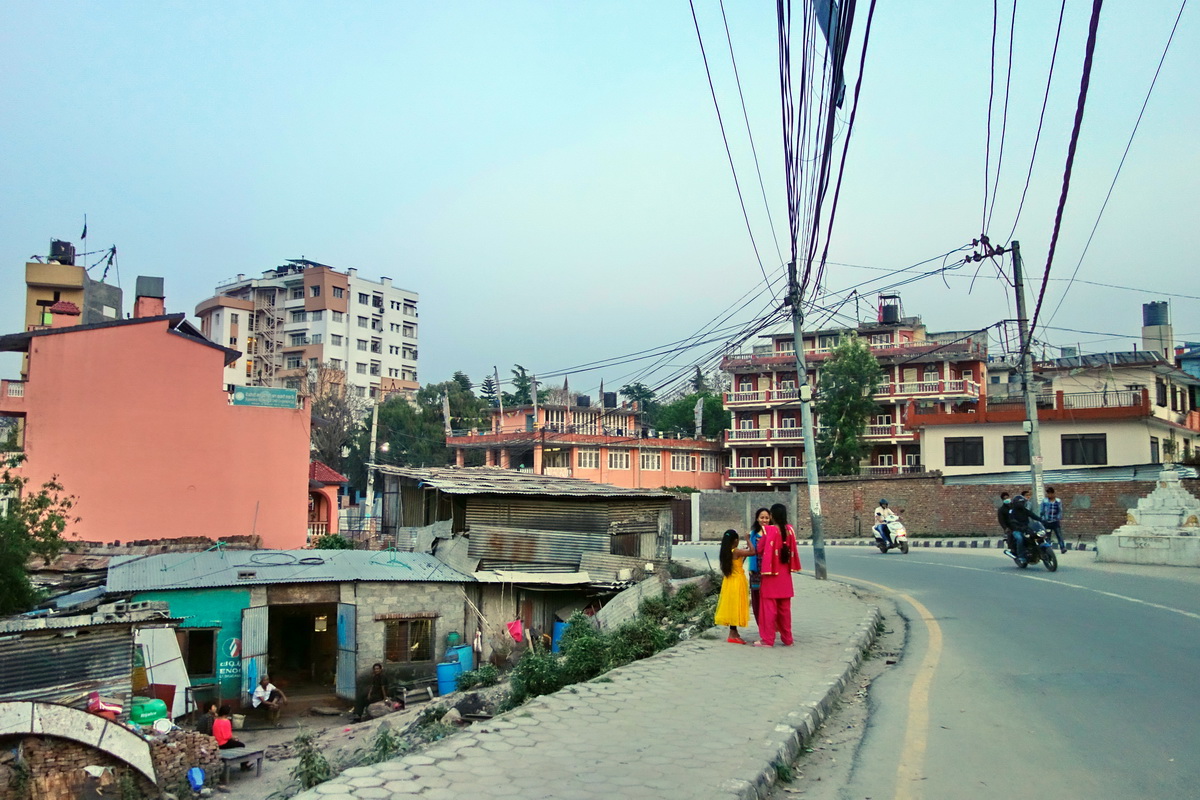
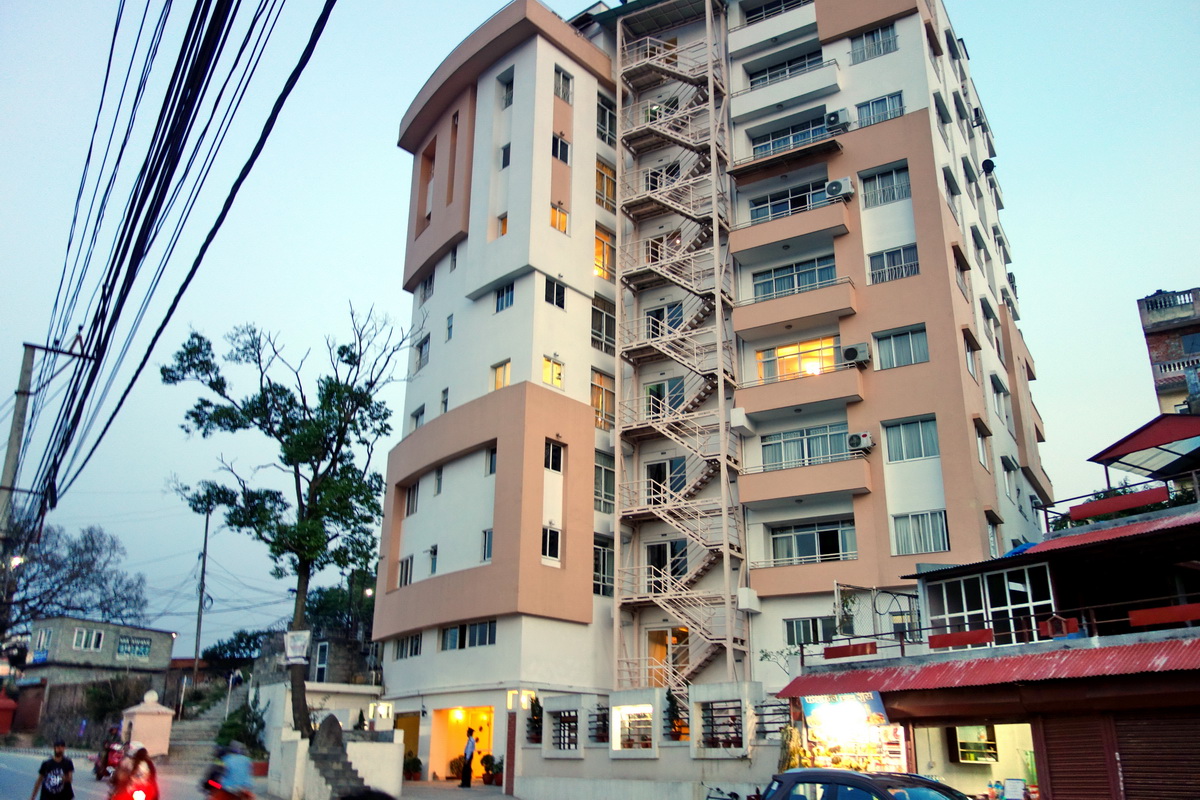
We walk back to the hotel through evening Kathmandu. The contrast is striking—next to dilapidated slums stands a new modern building.
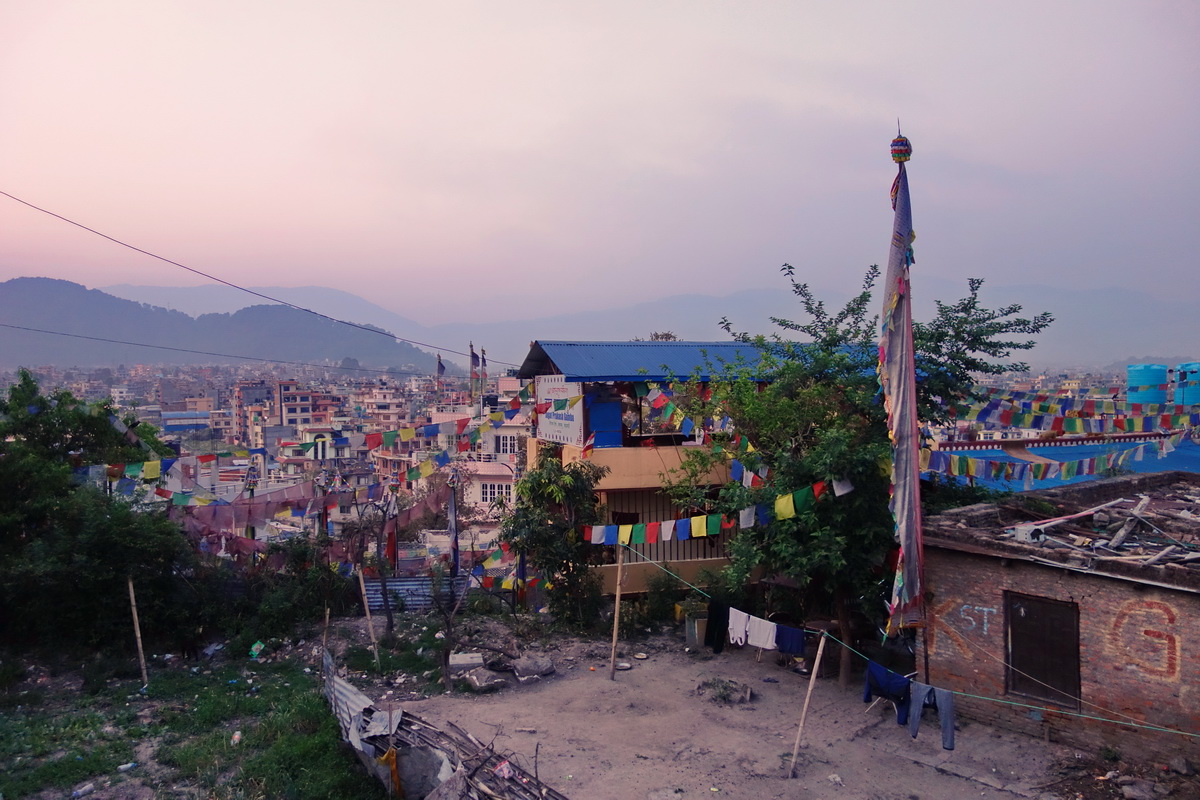
The hill with the Swayambhunath stupa in the rays of dawn.
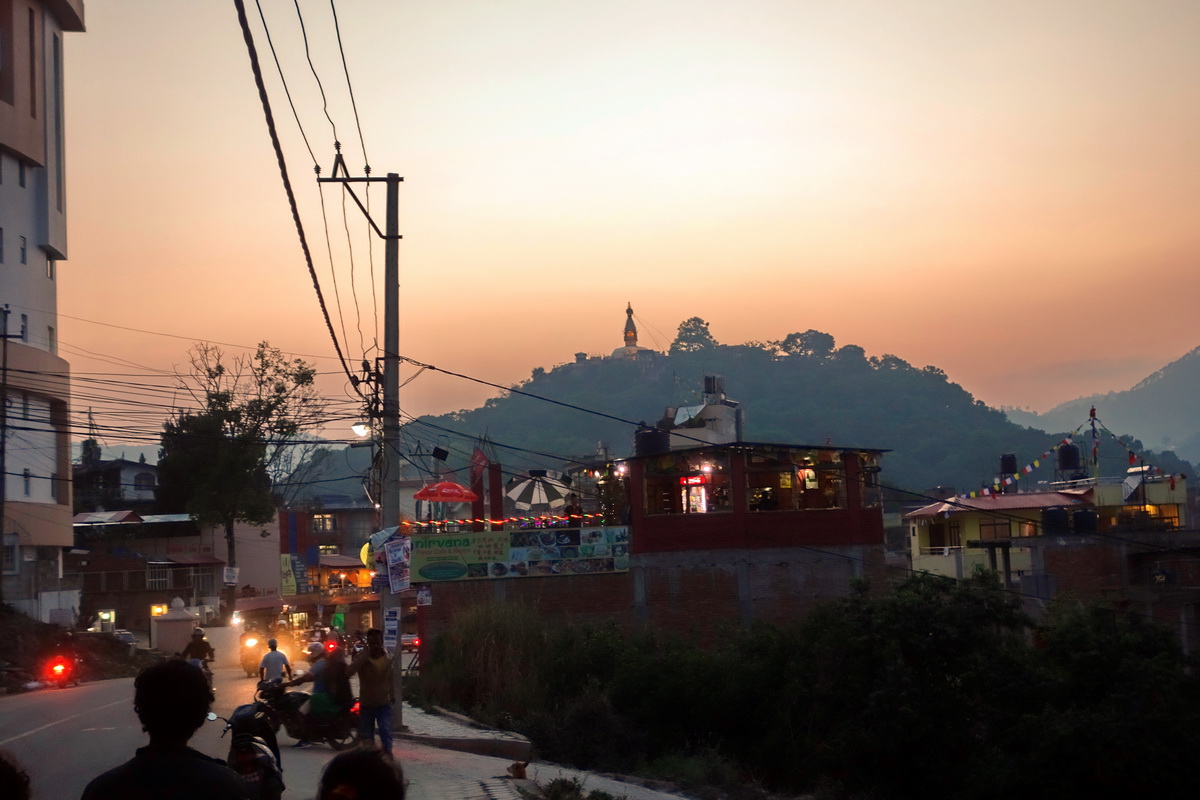
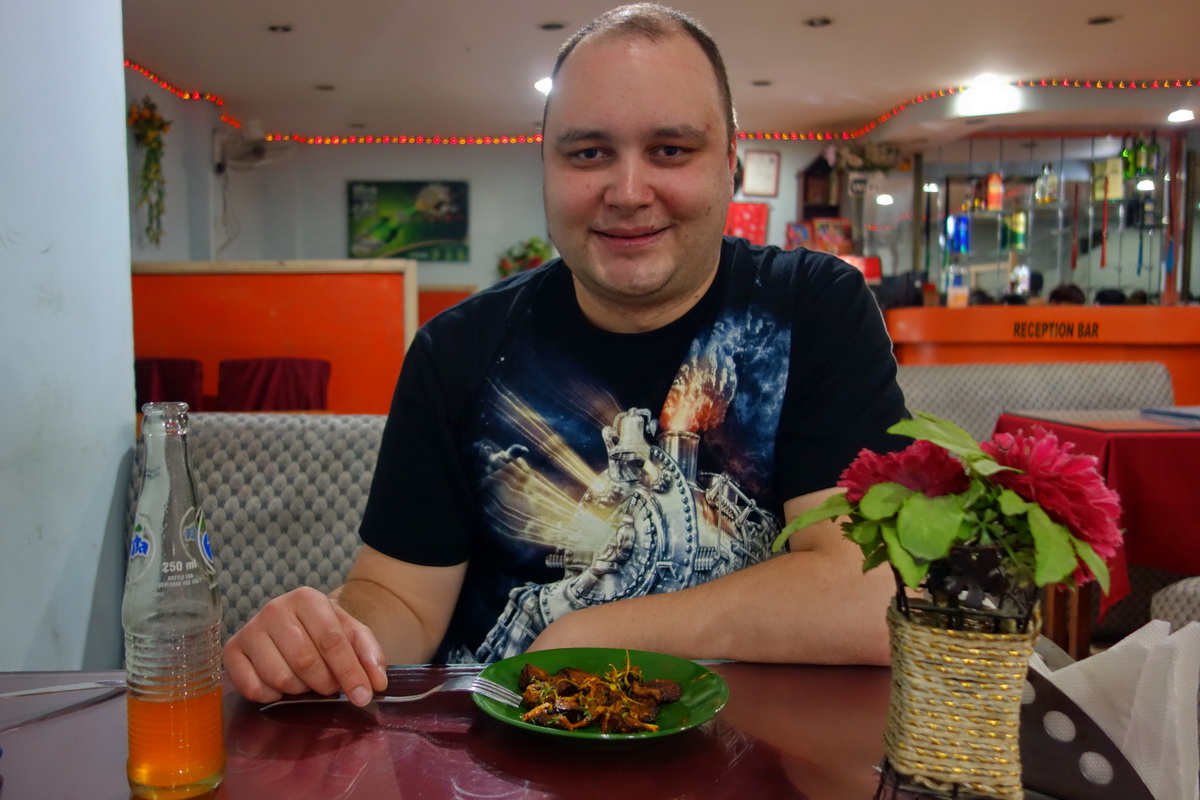
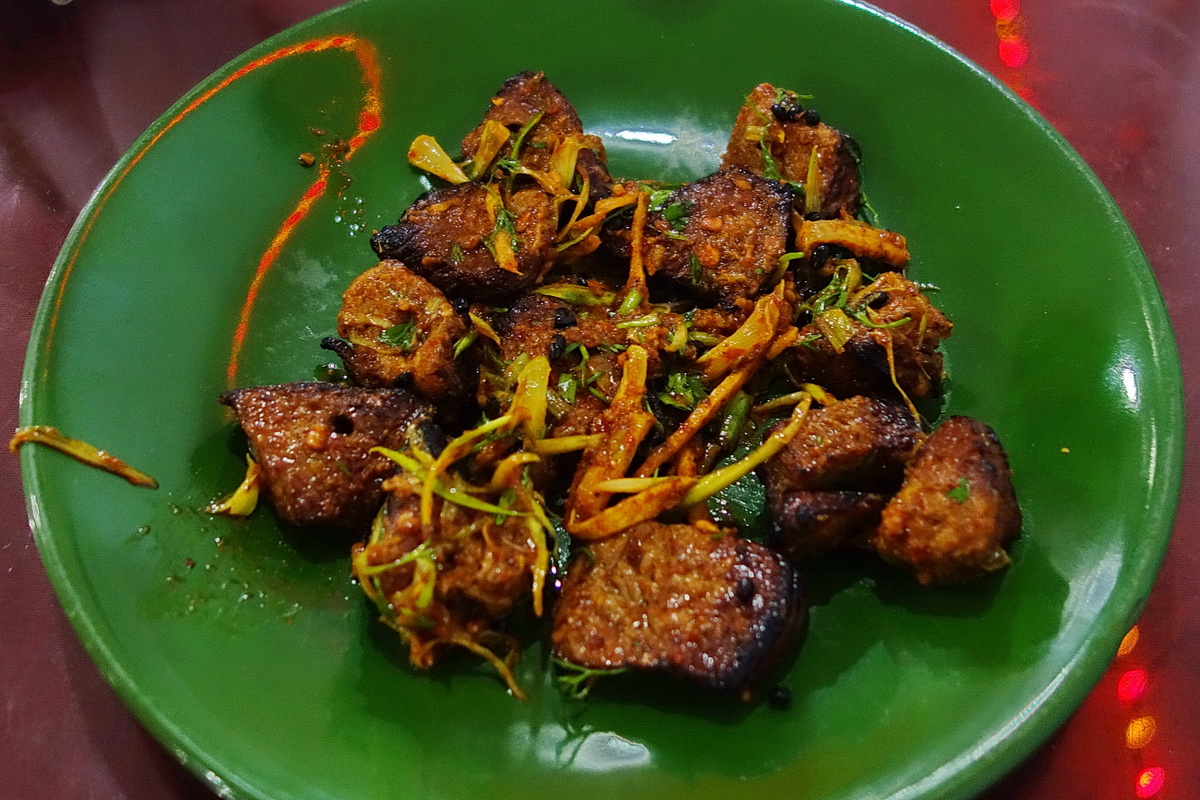
We look for a place to eat something Nepalese. We order fried buffalo meat. The dish is quite spicy, and in fact, almost all the dishes in the Kathmandu establishments we visited were quite spicy. The buffalo meat itself is very tough, even small pieces are hard to chew. But it’s still very tasty.
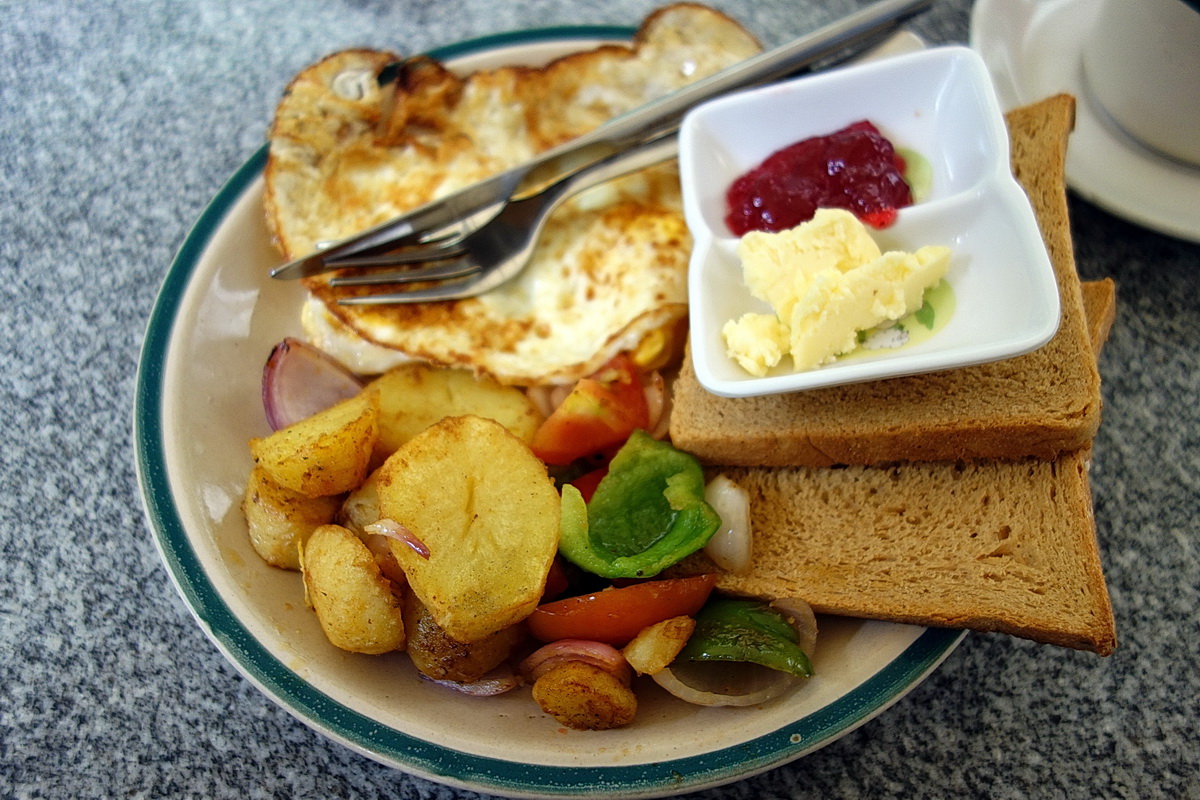
Breakfast at the hotel.
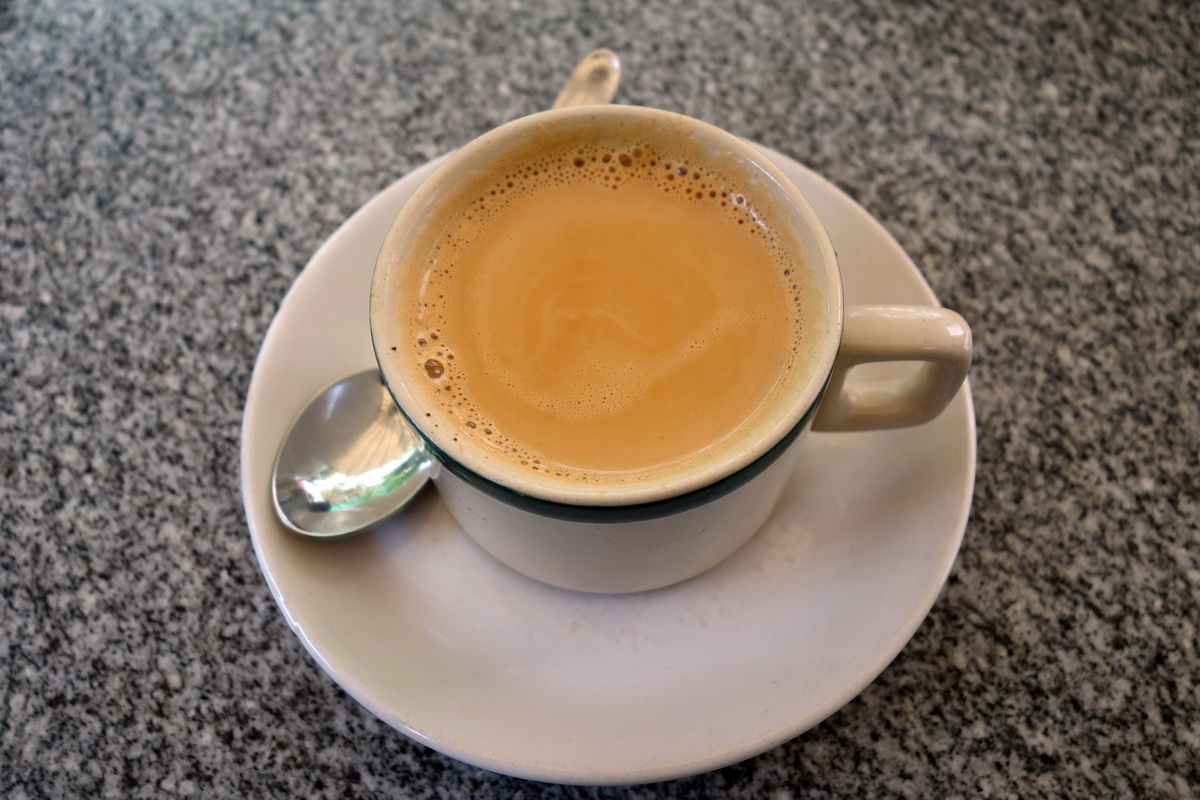
In Nepal, people typically drink black tea with spices prepared with milk, called “masala tea.”
After breakfast, we head to Pashupatinath by taxi.
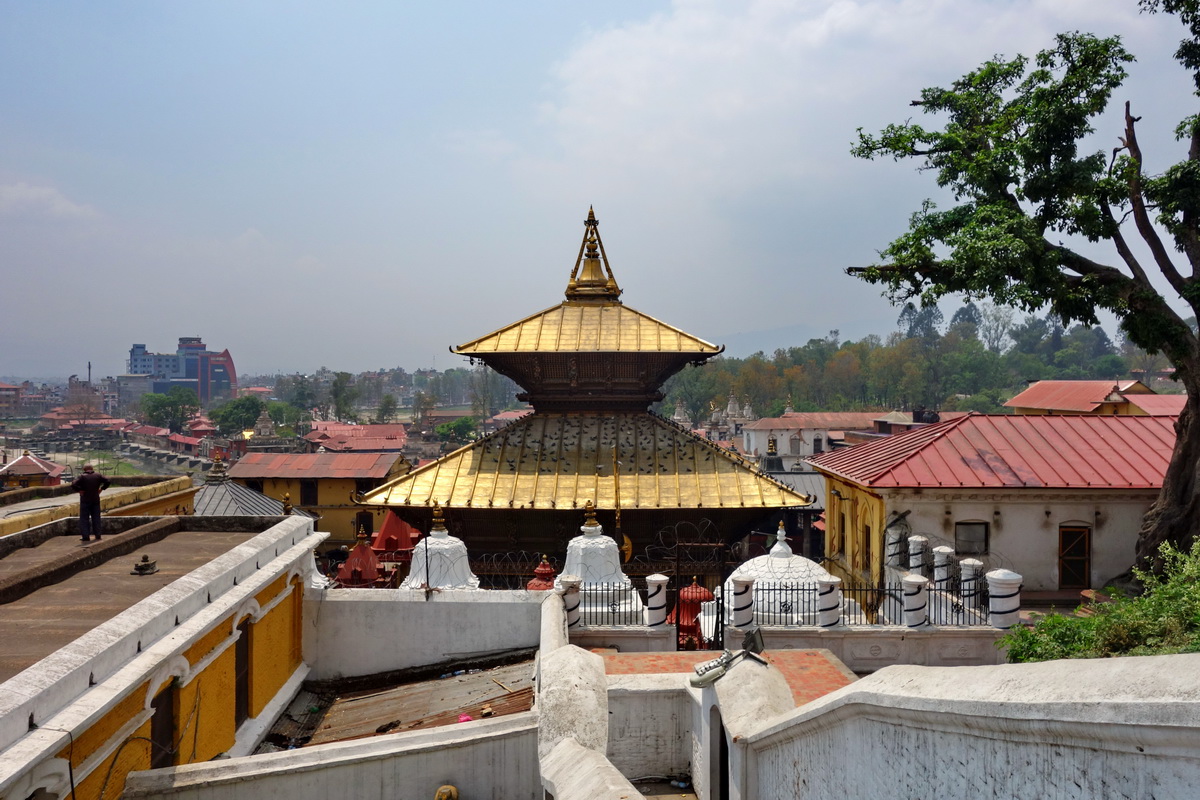
Pashupatinath Temple. This is a large Hindu temple complex located on both banks of the Bagmati River, which originates in the mountains and flows into the Ganges. The main temple of the complex is a building with a golden spire and a gilded roof. Pashupatinath is considered the most important holy temple of Shiva in the form of Pashupati—the king of animals and patron of all living beings. Every day, numerous pilgrims, mainly from Nepal and India, come here to receive Shiva’s blessings. Pashupatinath is known for its cremations.
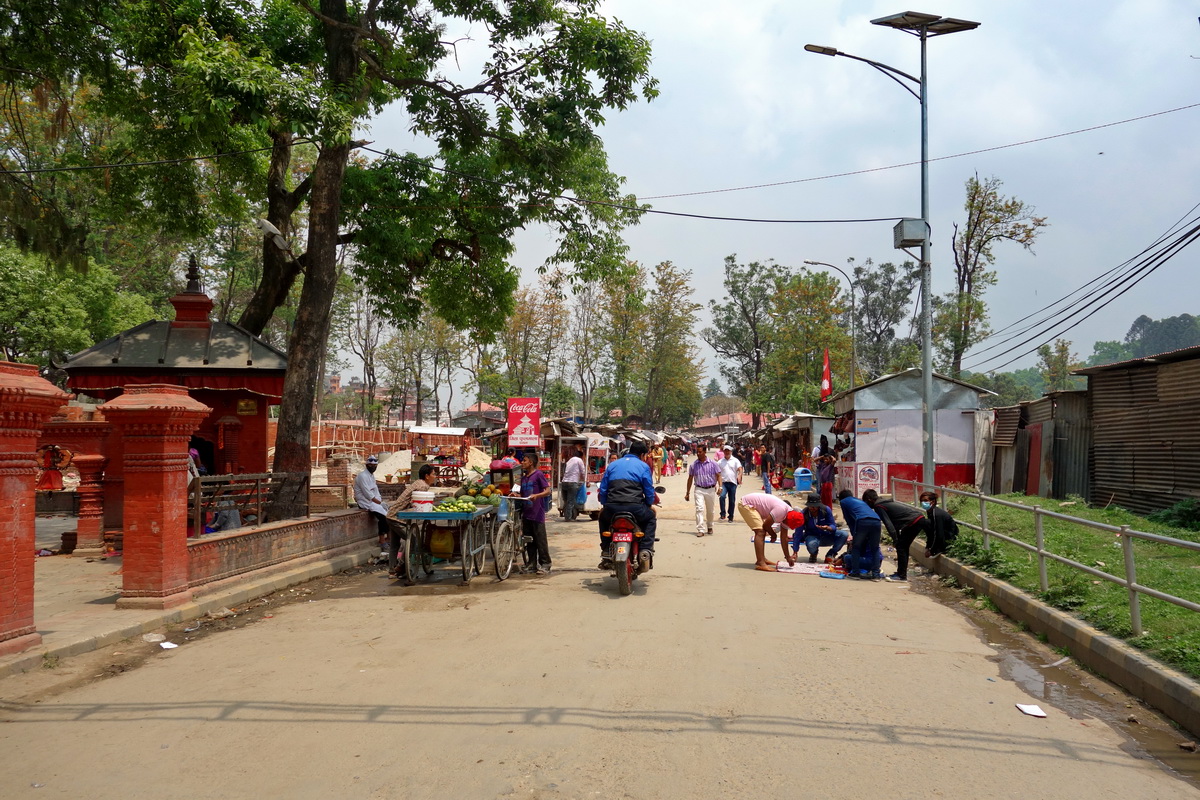
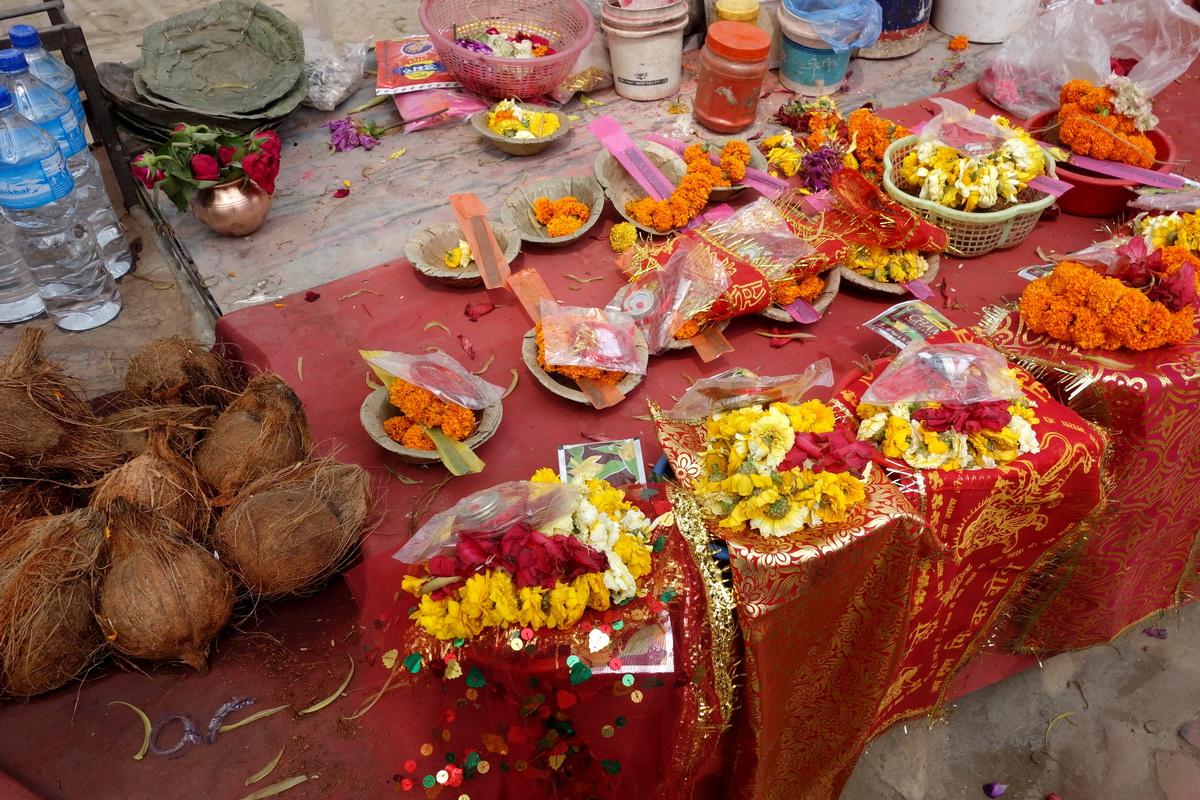
This road leads to the entrance of Pashupatinath. It’s quite crowded and noisy, with many beggars asking for alms. Along the road, there are various stalls selling souvenirs, amulets, colorful Holi dry paints, offering kits, and much more.
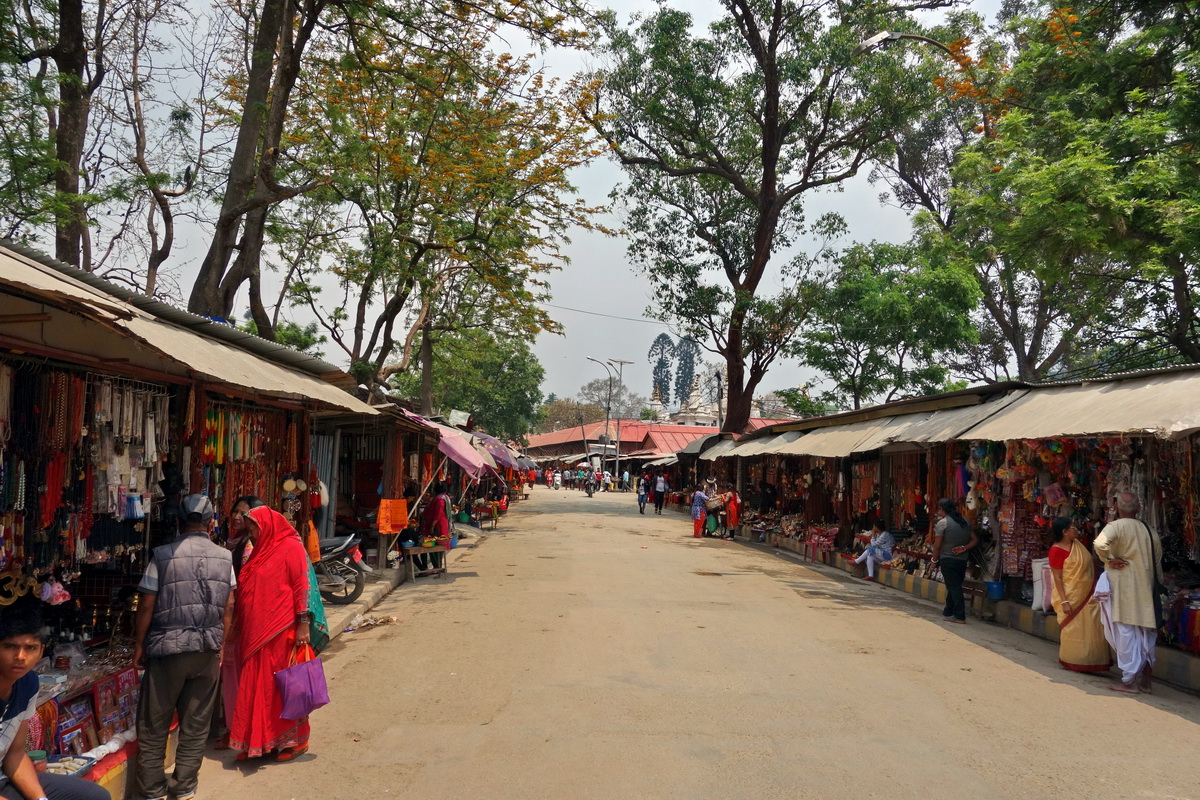
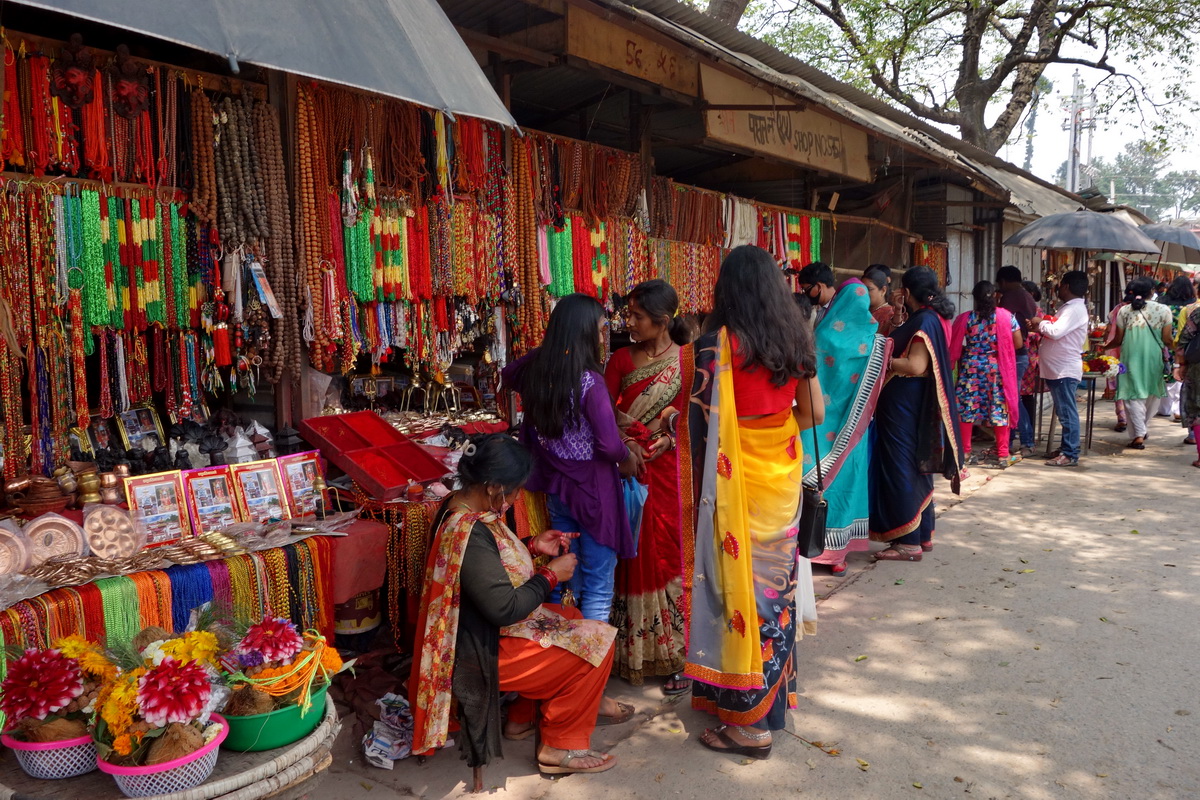
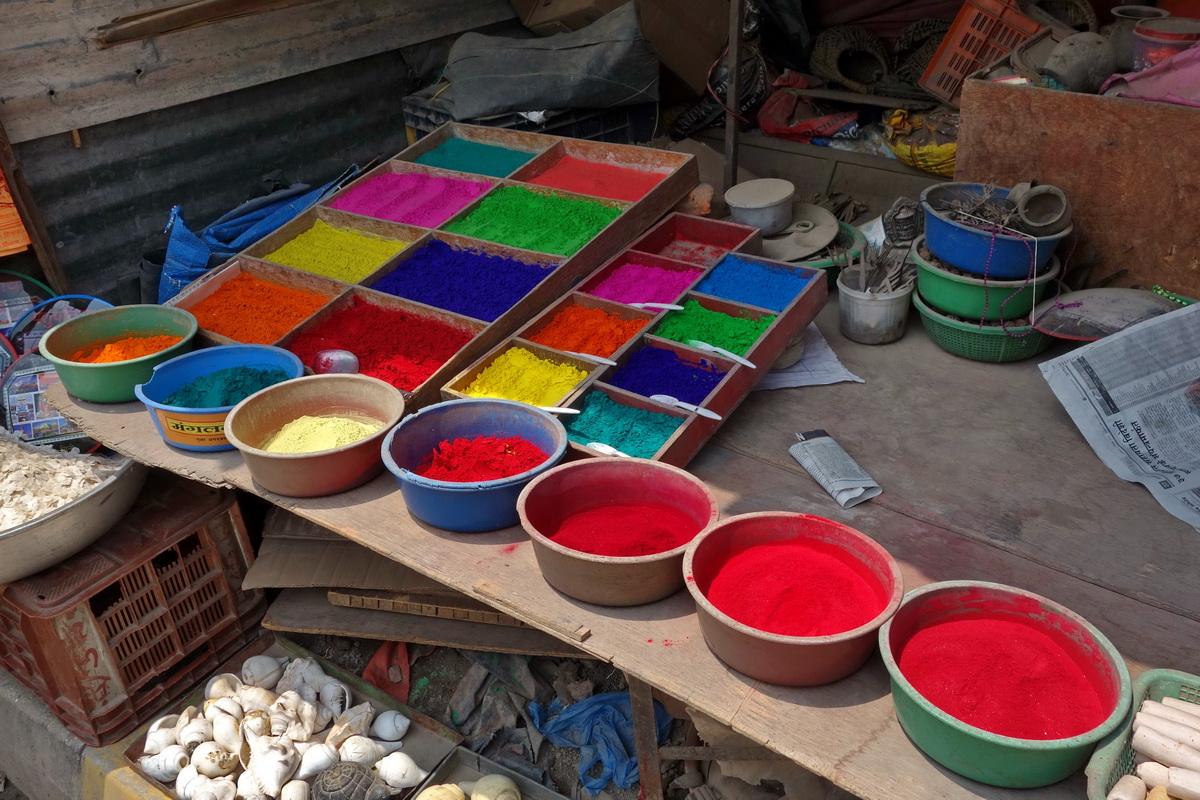
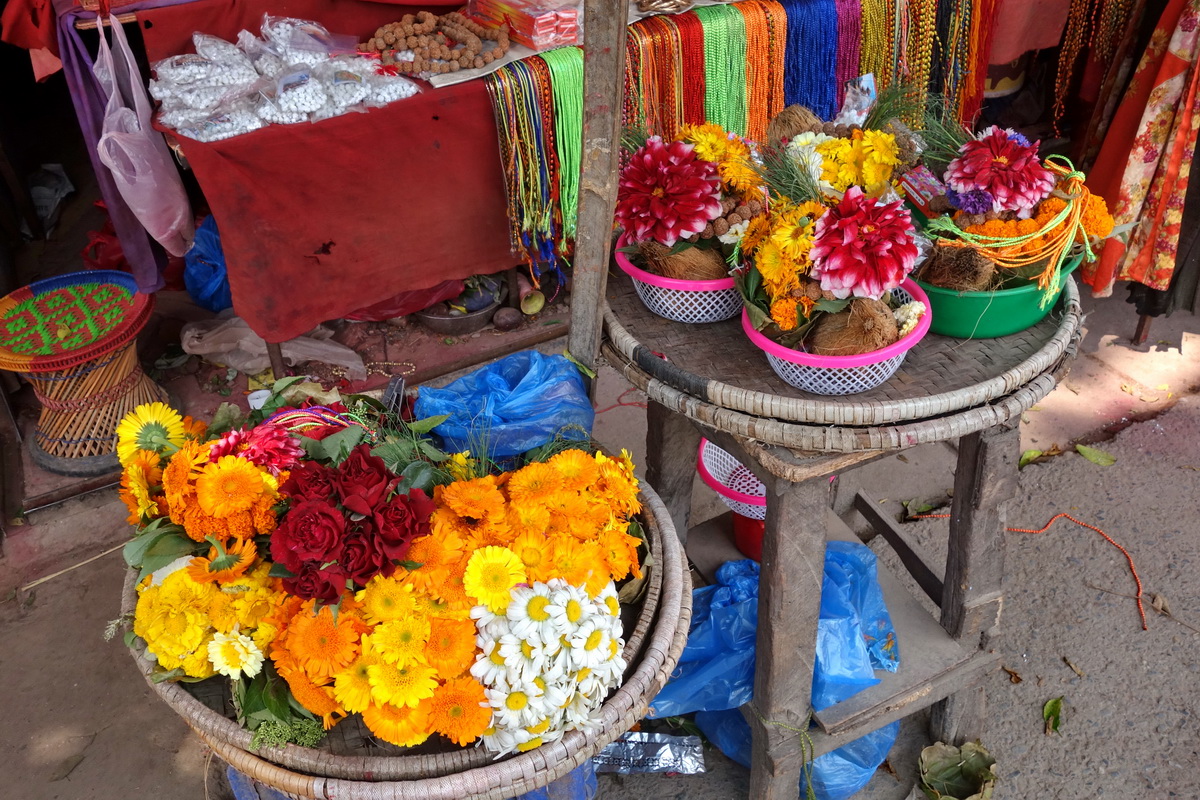
In central Kathmandu and its tourist district Thamel, it’s relatively clean, but what we saw here was a bit shocking—piles of garbage greeted us right at the entrance to the temple complex.
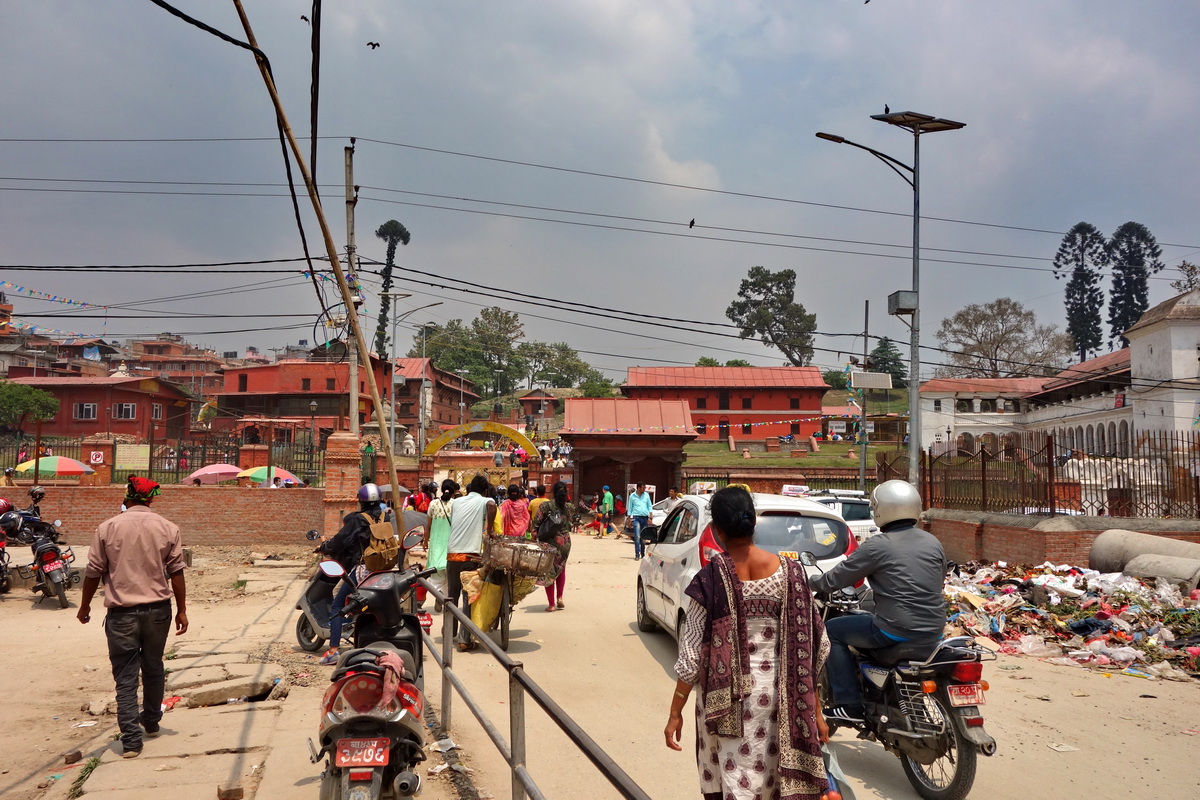
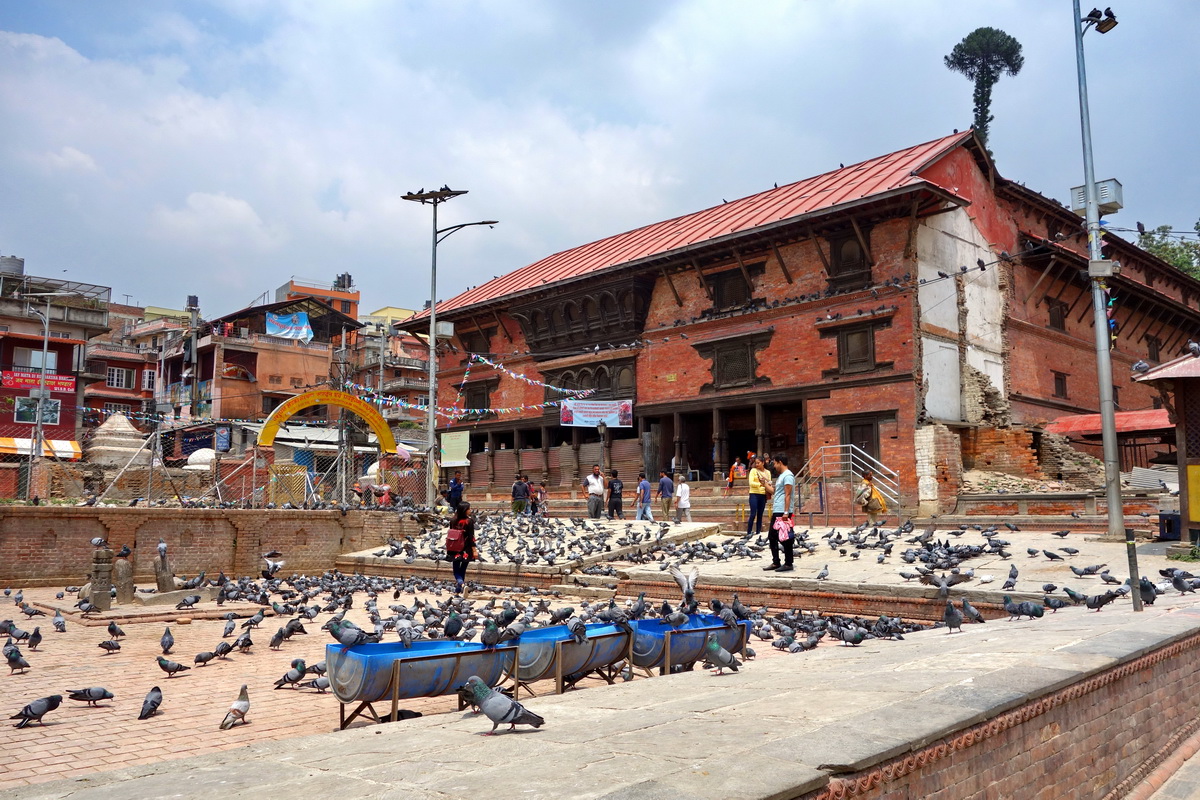
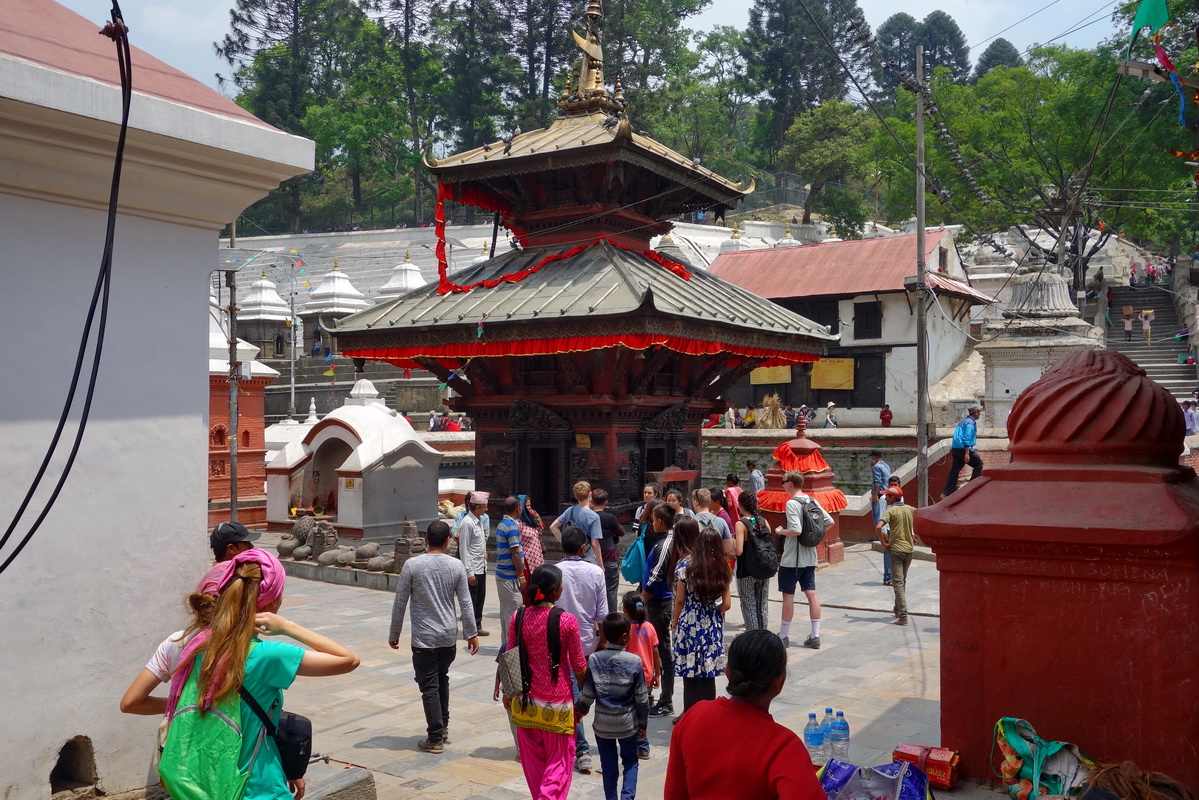
We buy entrance tickets and proceed to the square where the entrance to the main Pashupatinath temple is located. The entrance is a square-shaped pagoda, with a huge statue of a bull in its courtyard. Entry to the main temple courtyard is closed to tourists. We were allowed only up to the gates, where a young man in military uniform informed us that we could not go further, as entry is permitted only for Hindus.
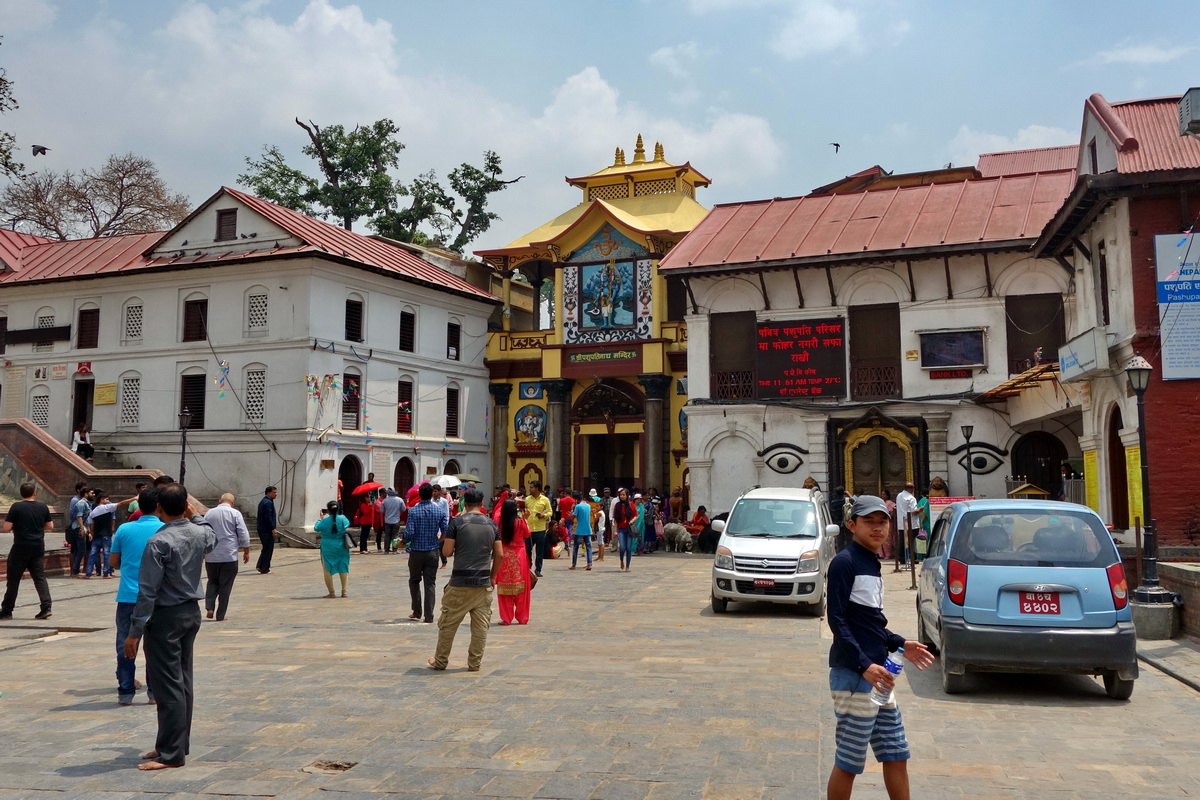
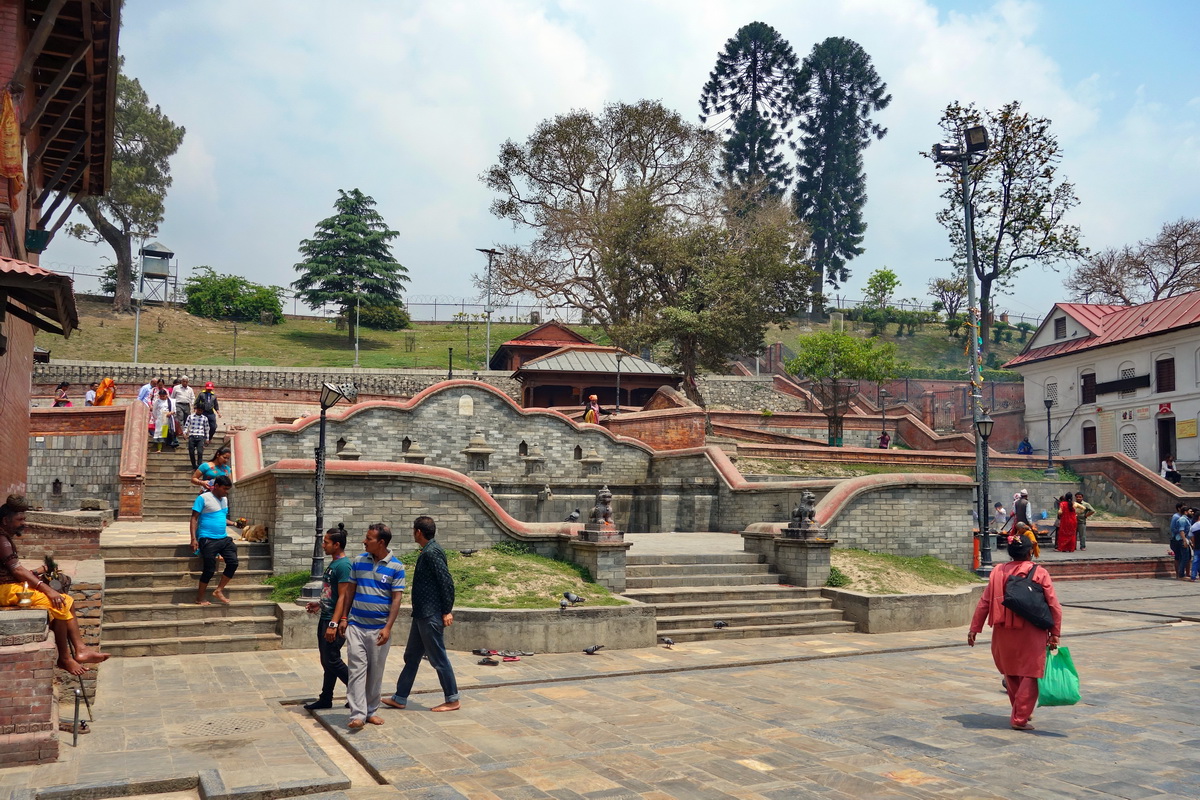
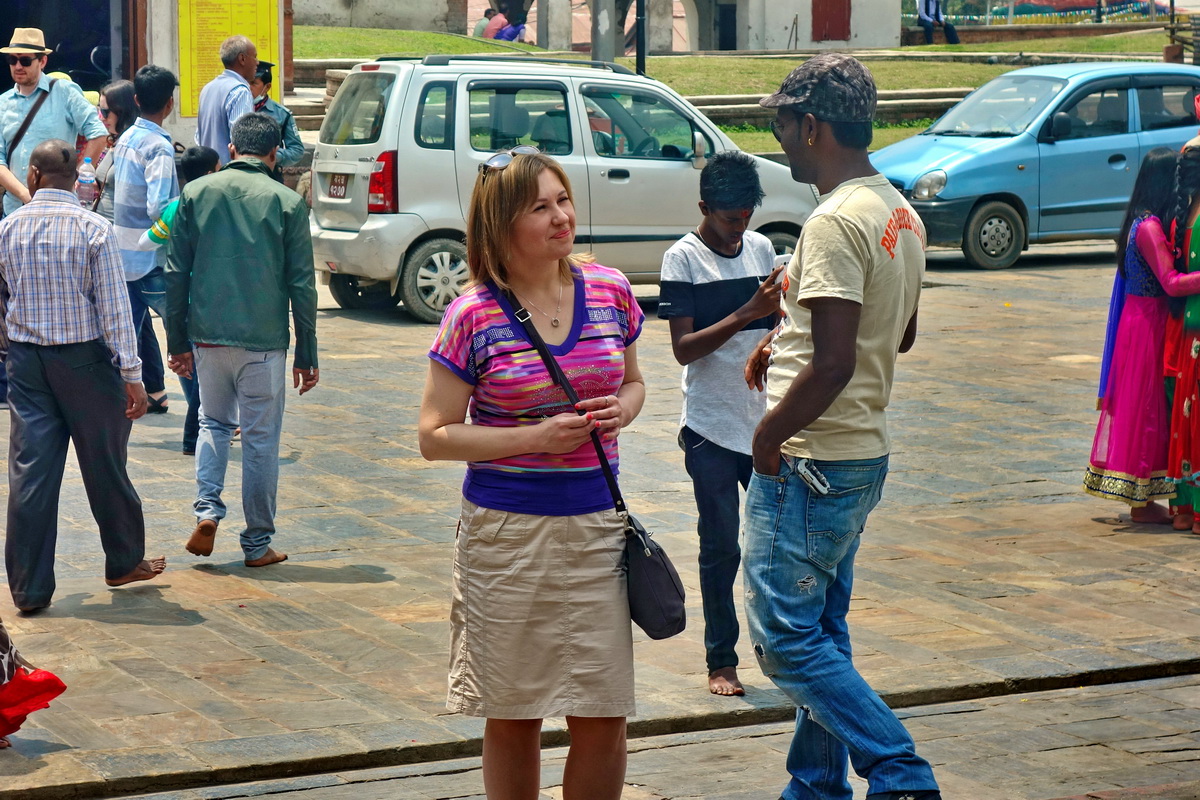
During our walk around Pashupatinath, Nepalese guides occasionally approached us, offering their services. We politely declined and explored the temple complex on our own.
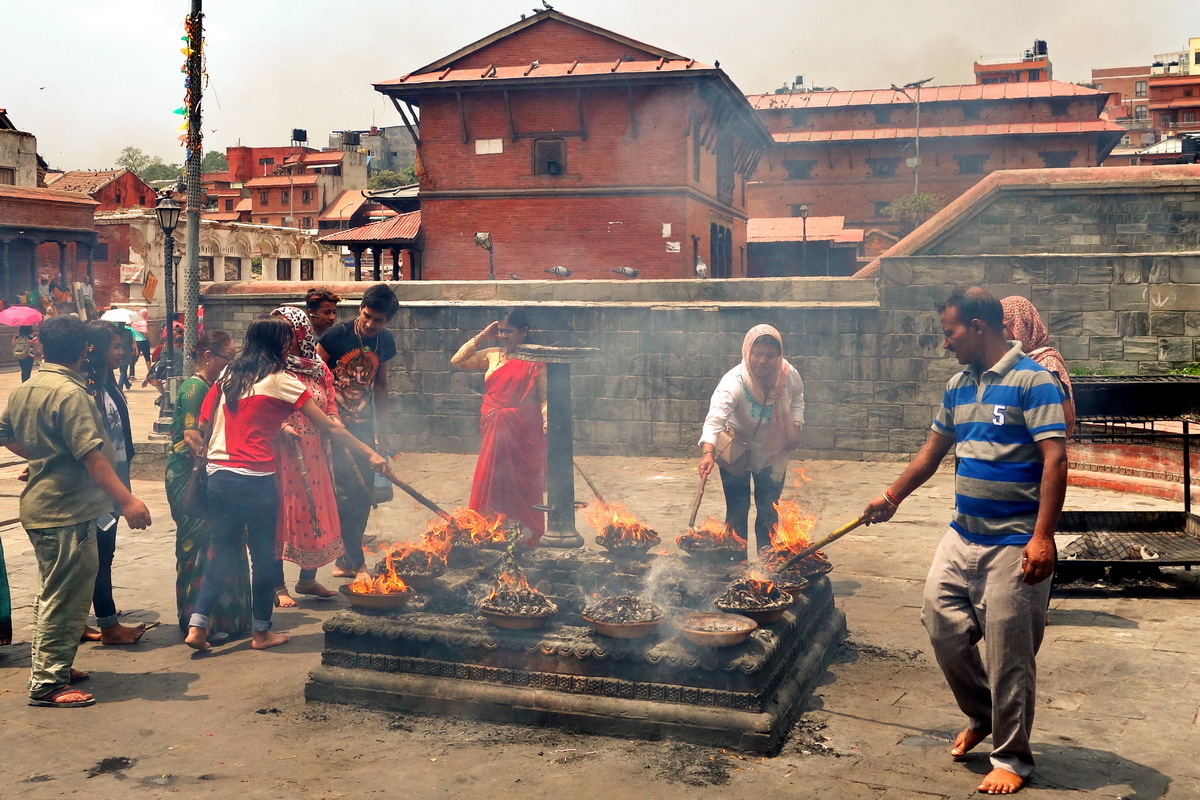
Hindus burn some resinous substance in special bowls (we hope it’s incense), and then apply the ashes on sticks to their foreheads. We were offered to apply the ashes, but we declined.
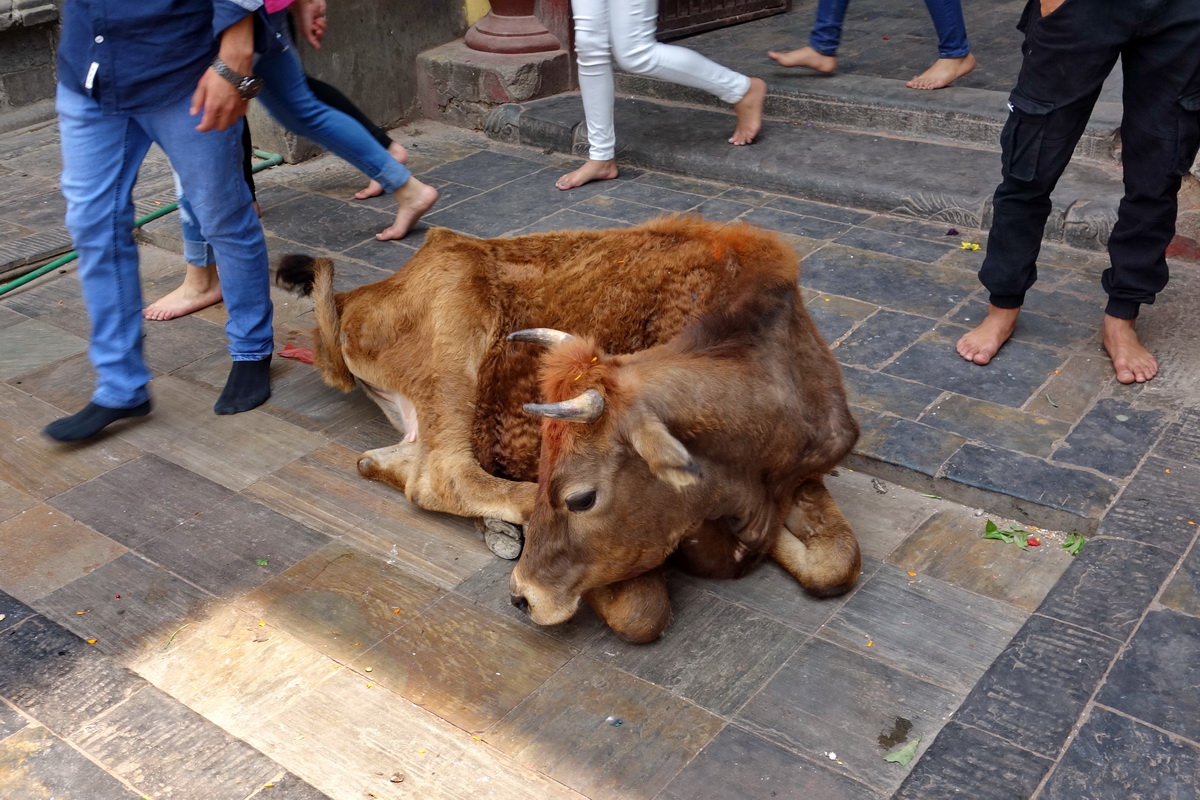
A bull rests on the square in front of the gates to the main Pashupatinath temple. Like in India, cows in Nepal have a sacred status.
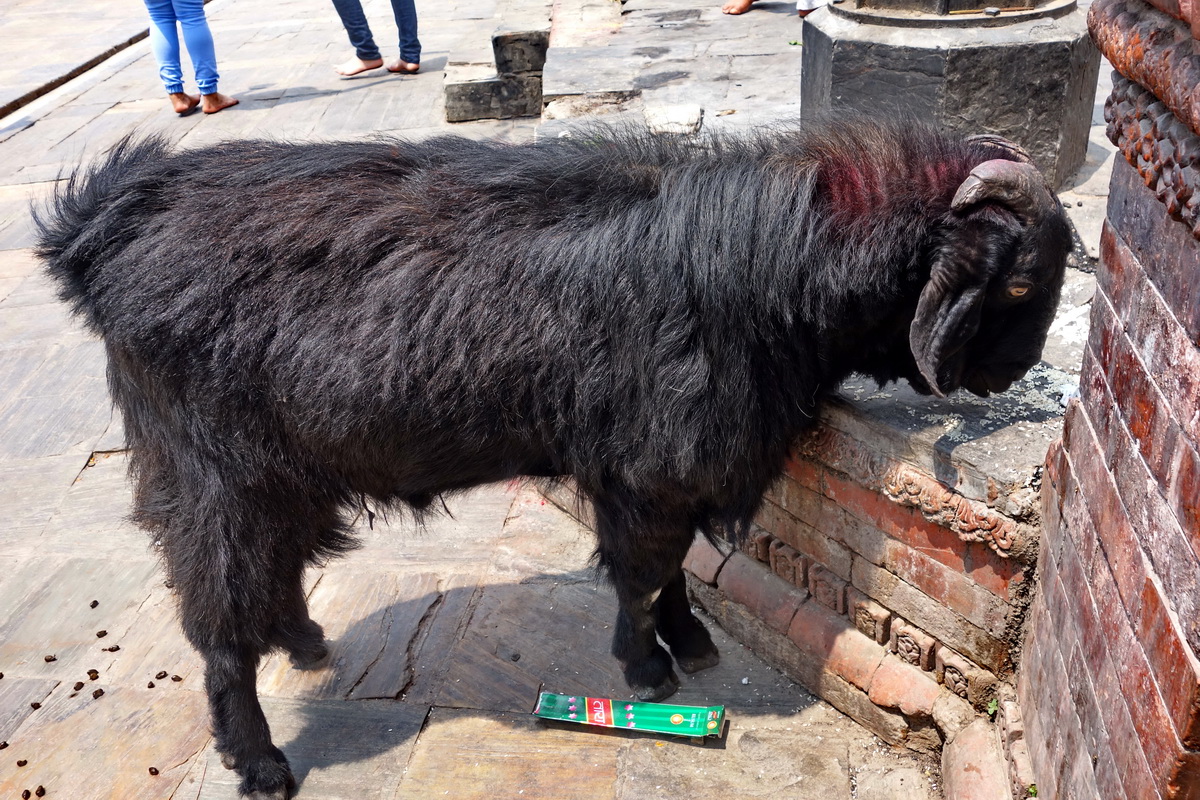
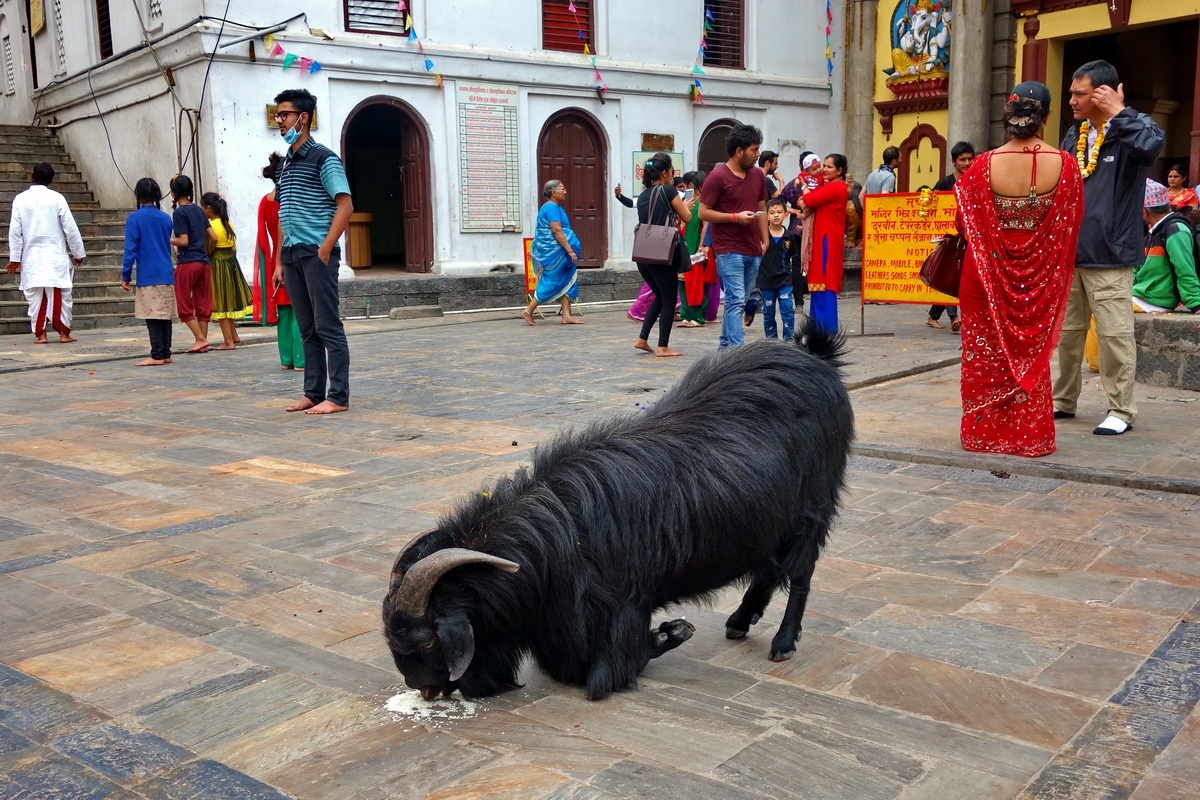
A shaggy goat covered in Holi paints eats sacred rice.
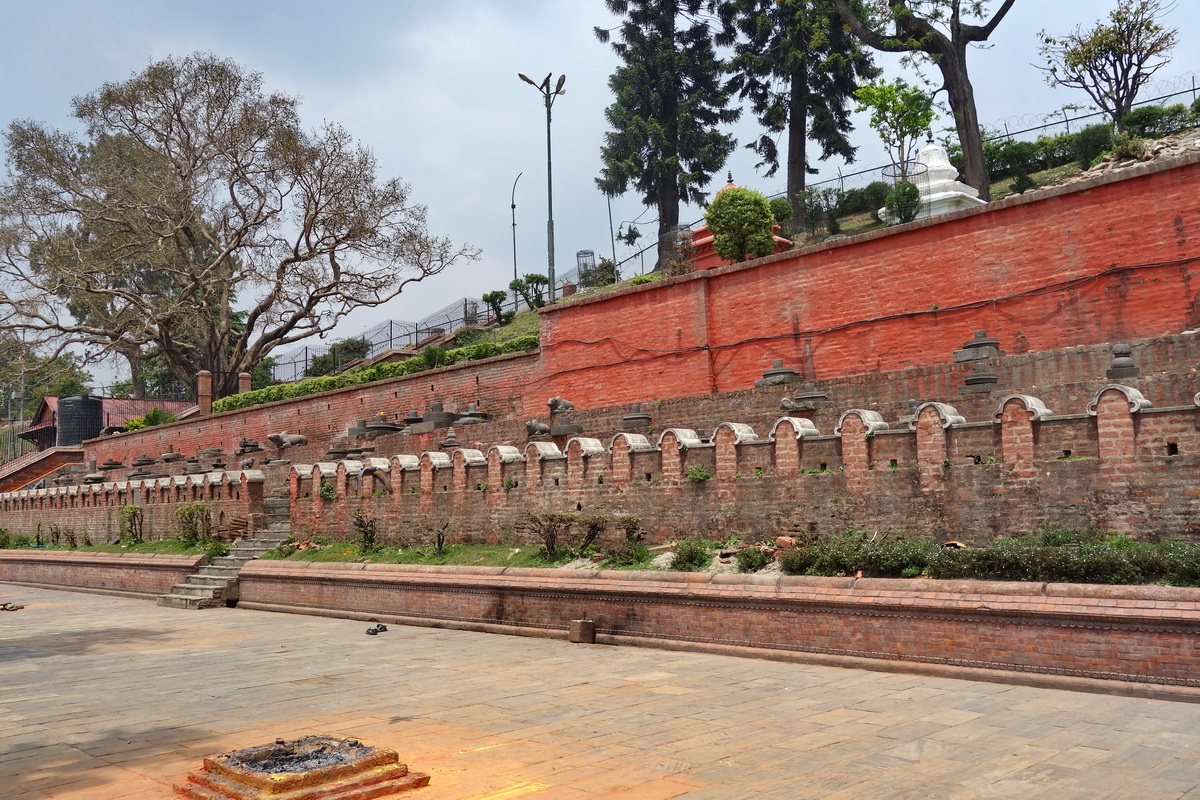
Since we weren’t allowed into the main temple, we decided to view and photograph it from the side. To do this, we climb the steps on the square.
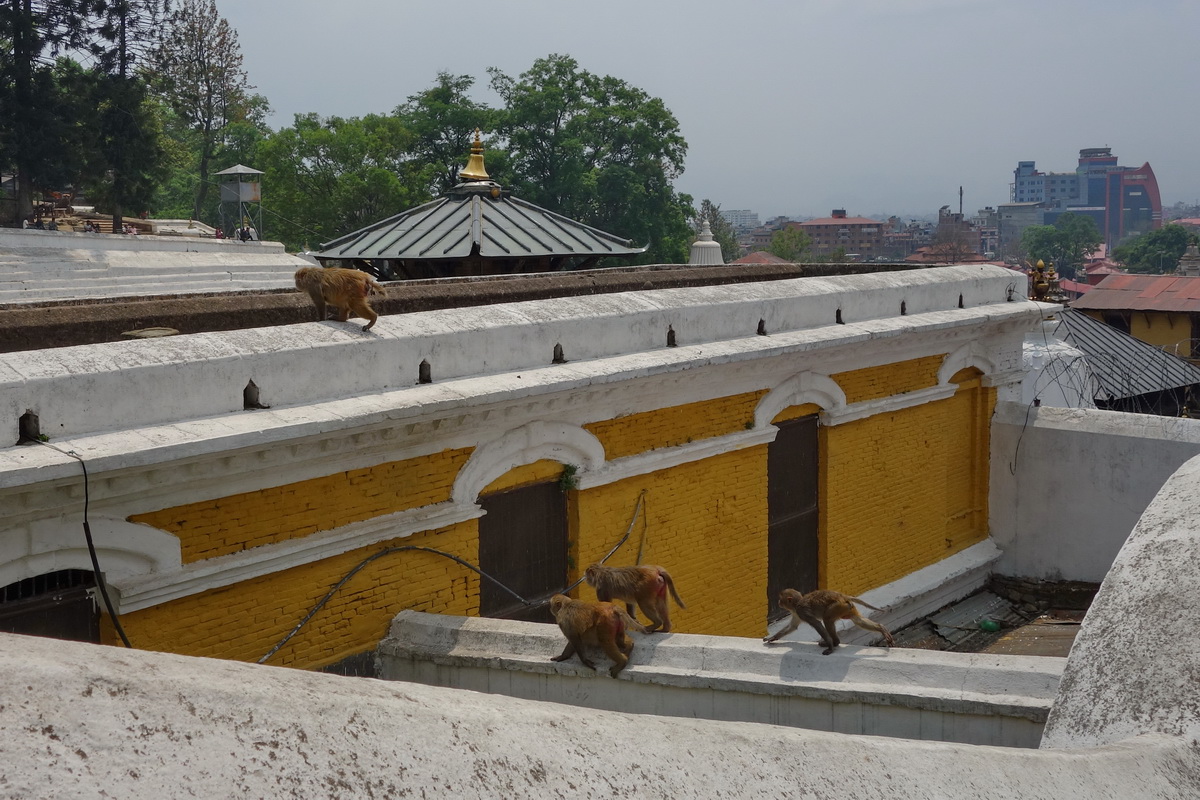
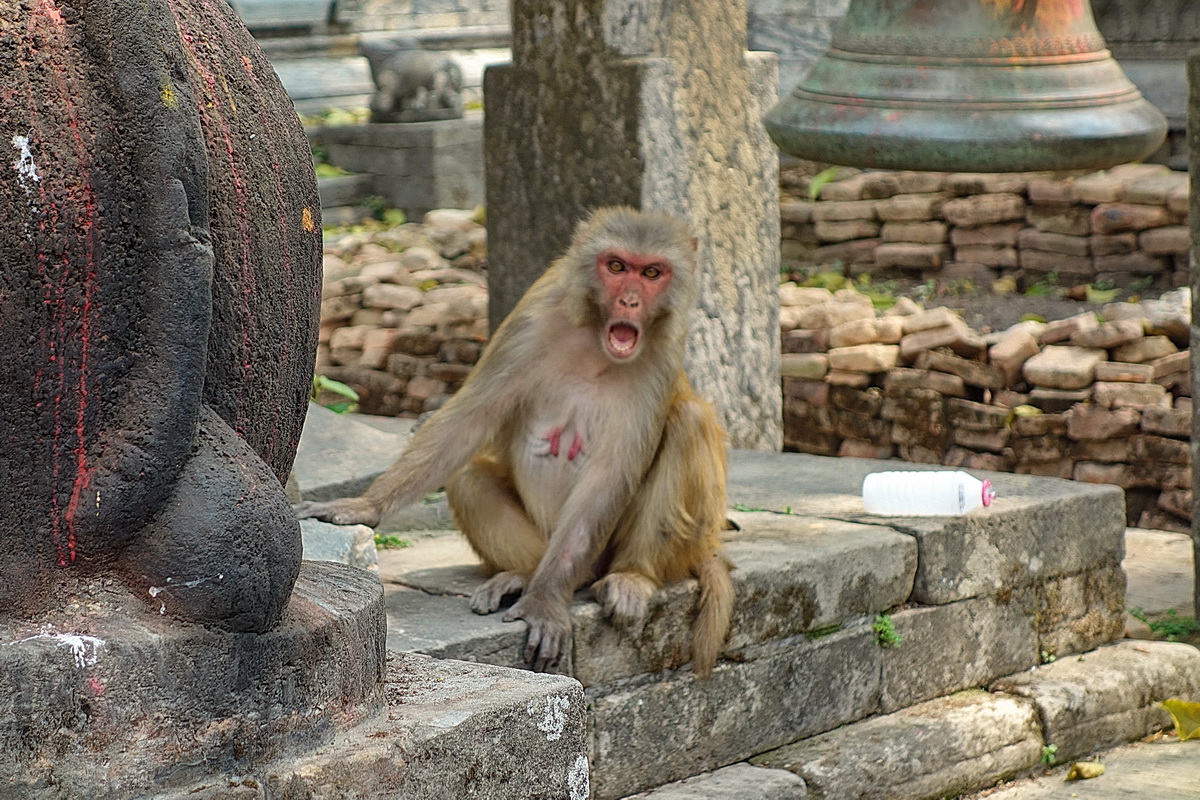
Pashupati is the patron of animals, so monkeys feel at home near the temples of the complex.
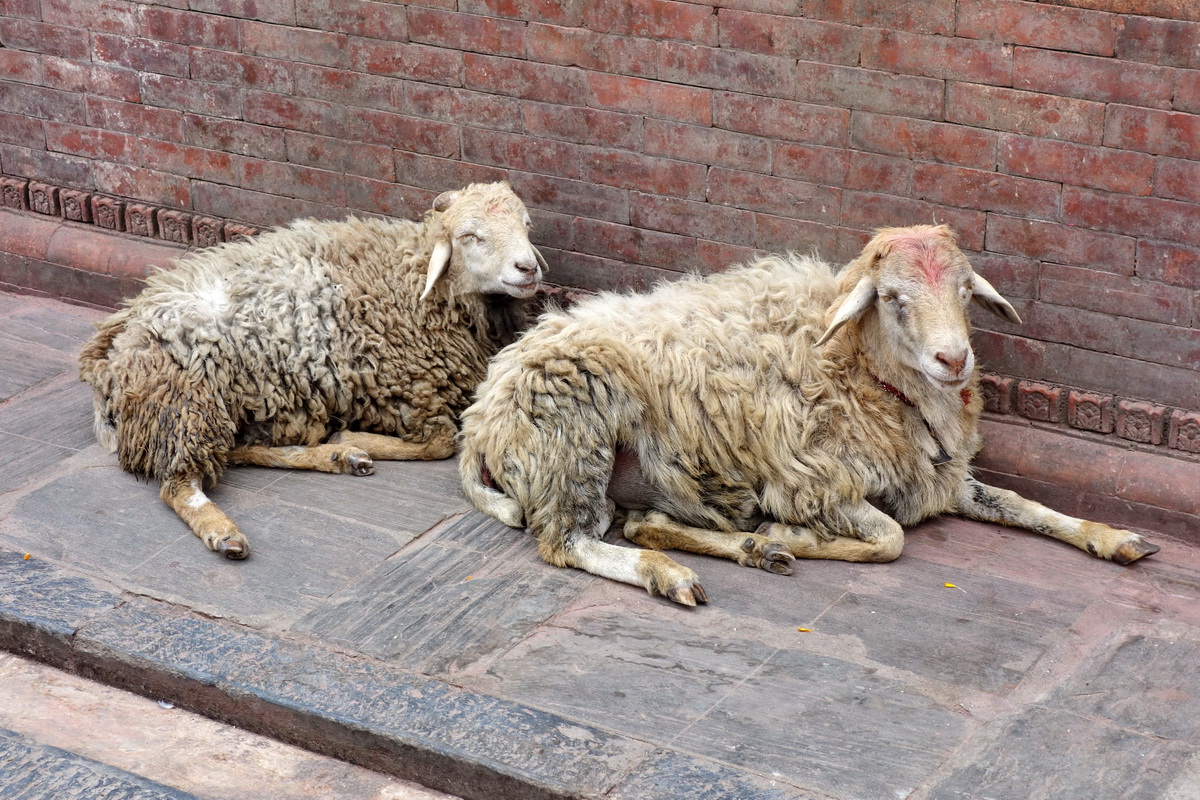
And sheep too :)
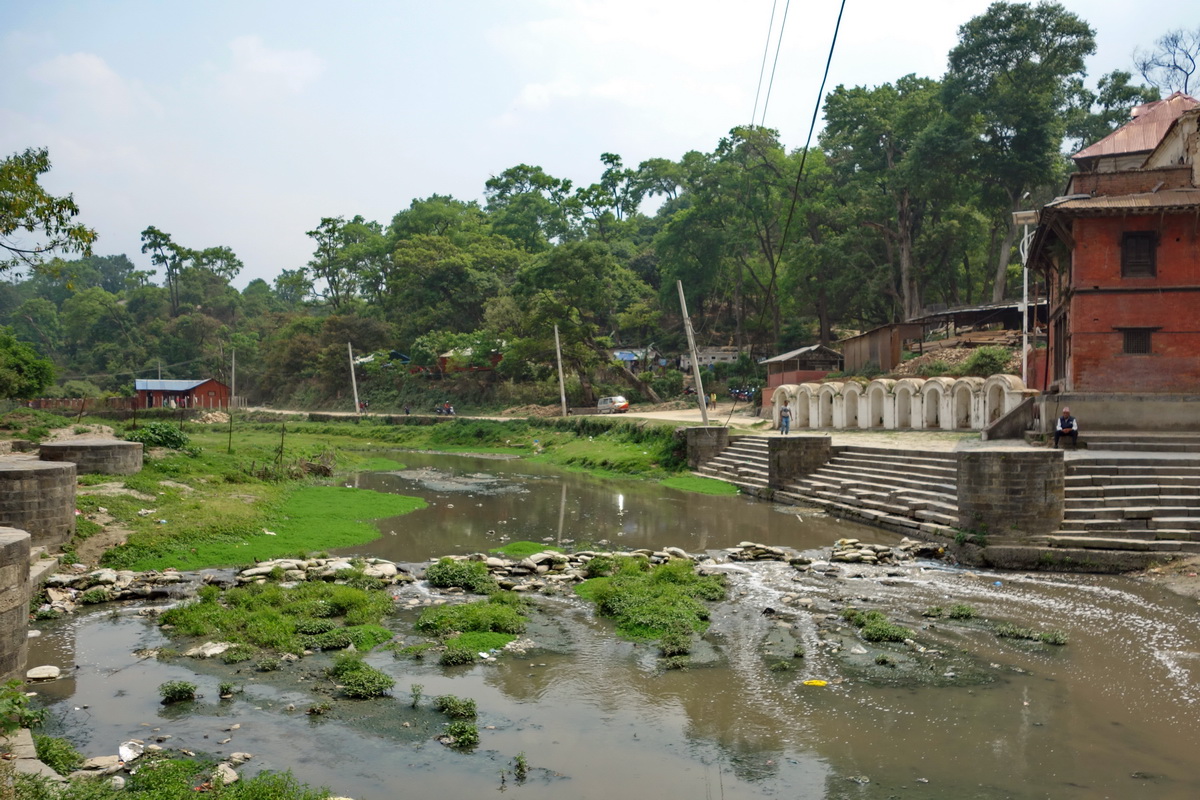
We go to observe the funeral ceremonies on the other bank of the Bagmati River (if you can even call it a river).
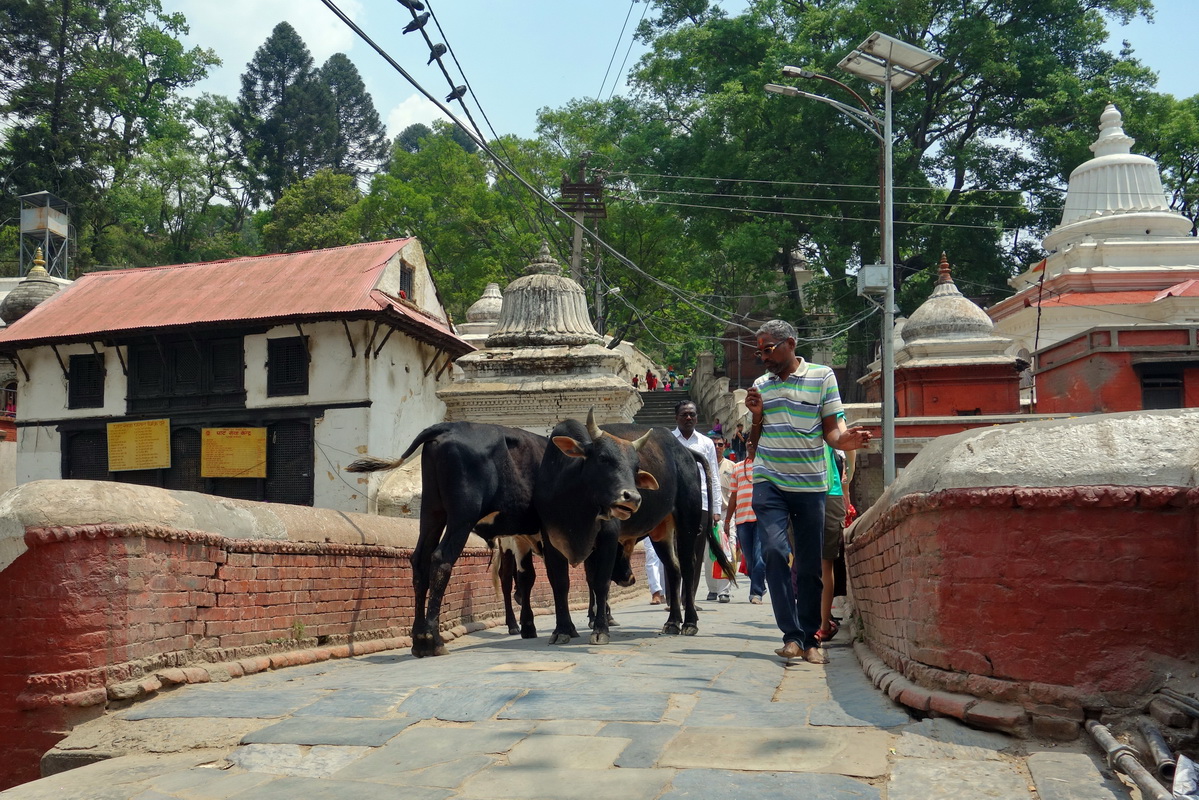
On the bridge over the river, we are greeted by small bulls.
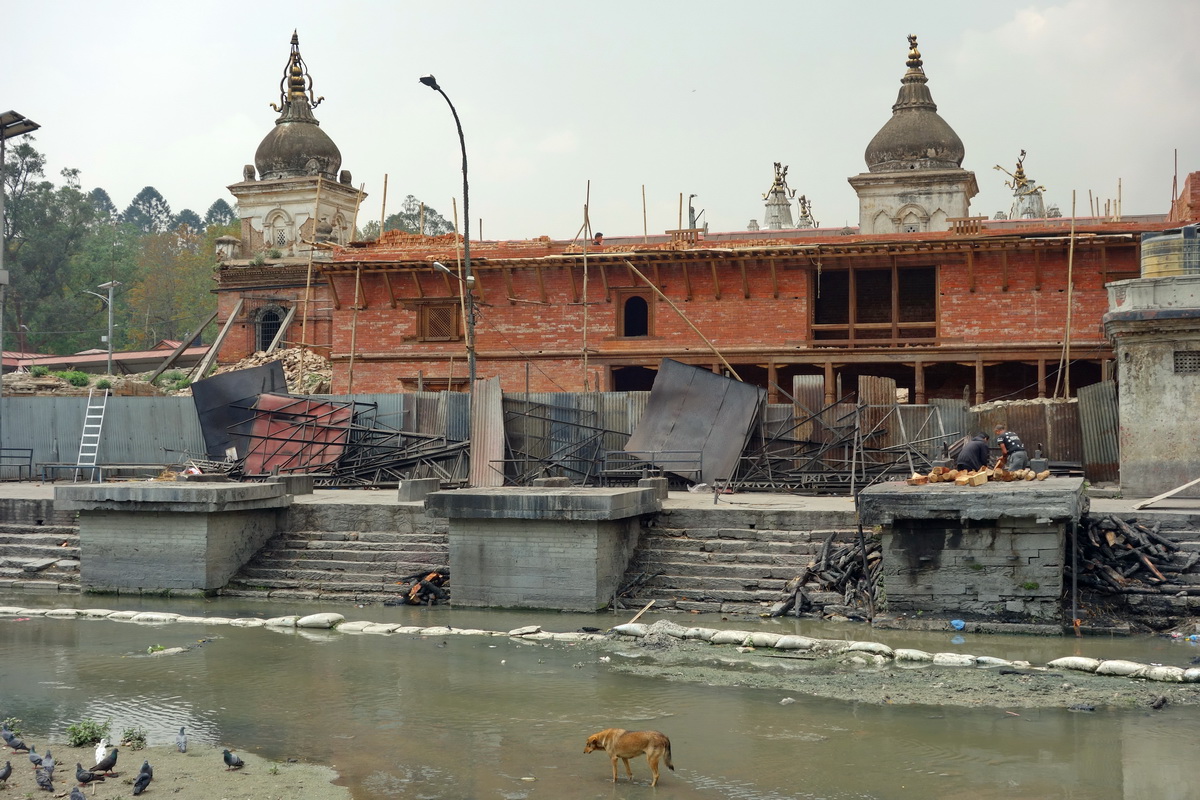
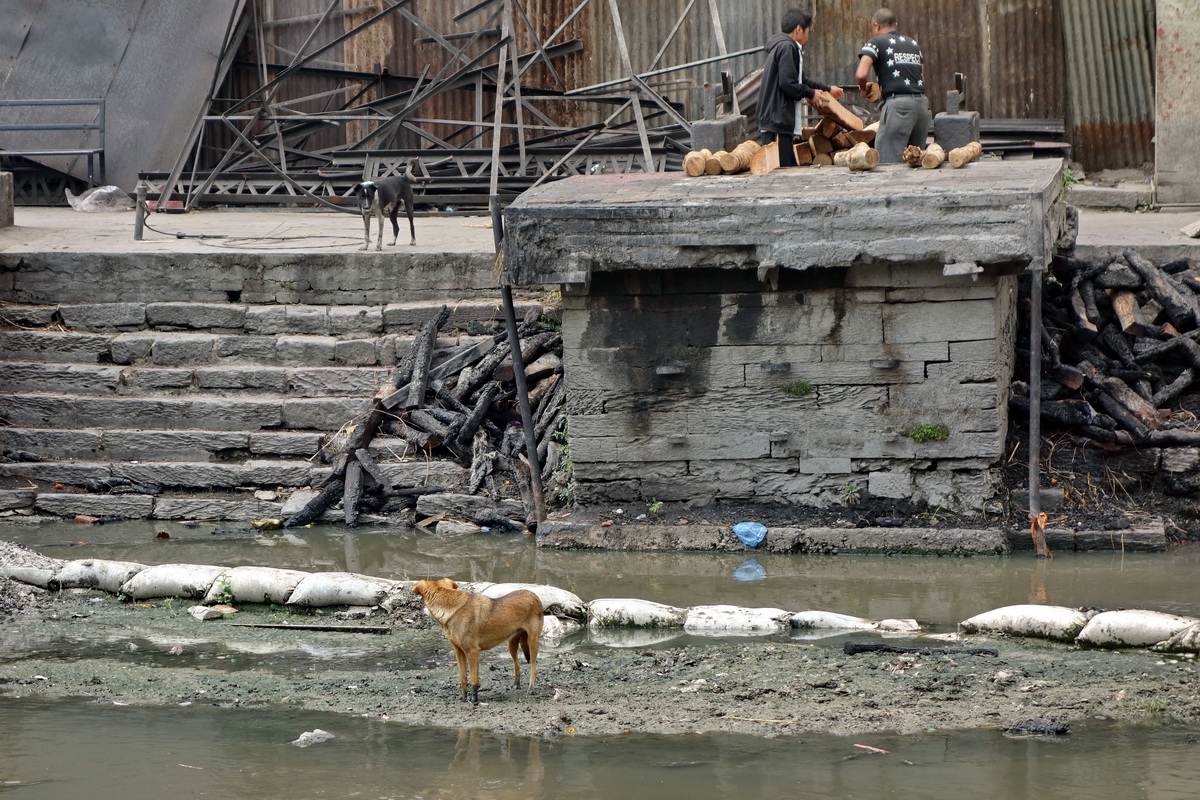
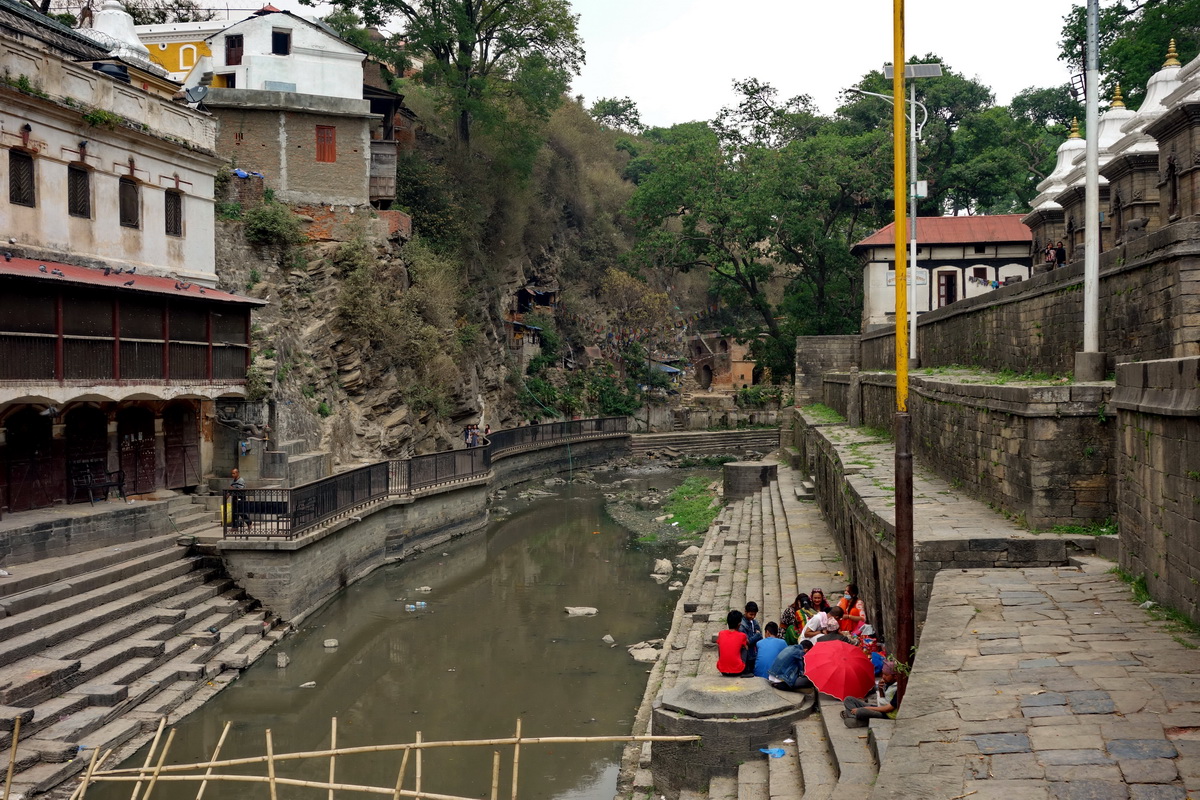
On these platforms by the river (south of the bridge), funeral pyres are lit, and cremations are performed. The photo shows platforms for the cremation of lower castes. After cremation, the ashes are placed into the water. In the Bagmati River, people bathe for ritual purification, and the bodies of the deceased are also washed there before cremation.
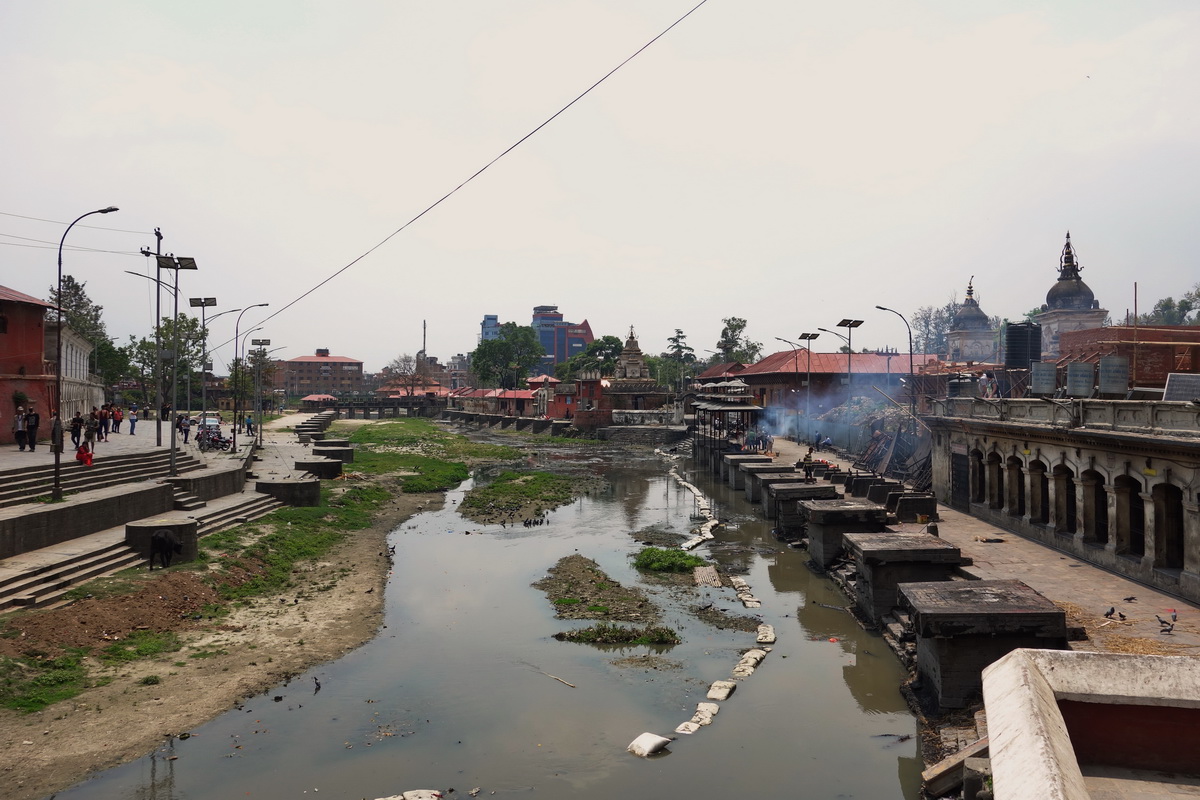
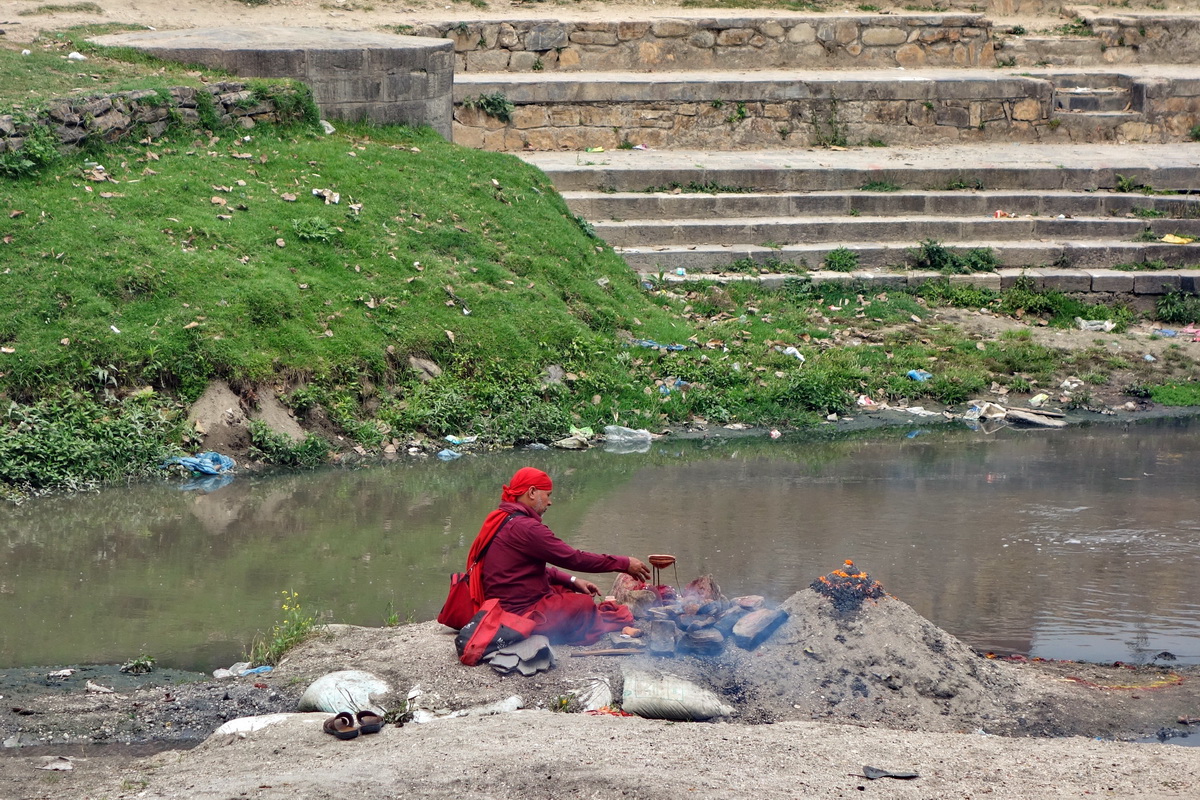
We descend closer to the river. The river is dirty, with a distinctive, not very pleasant smell.
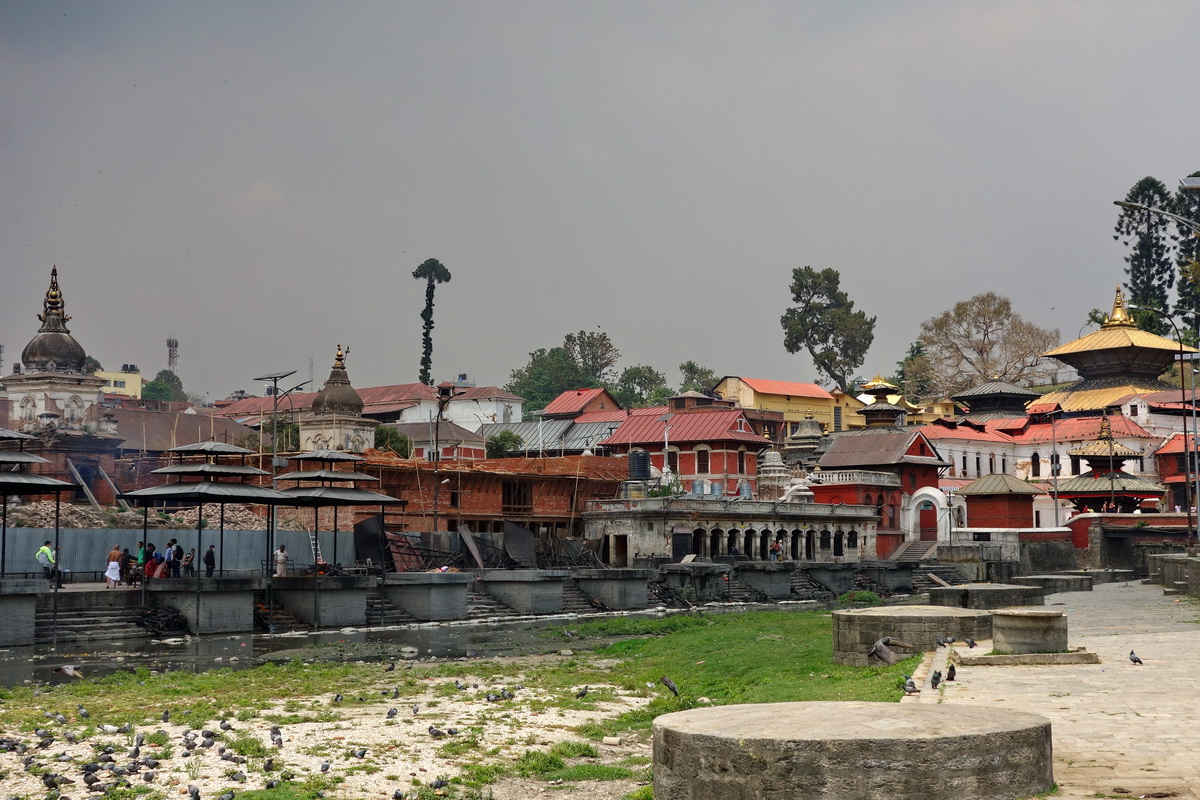
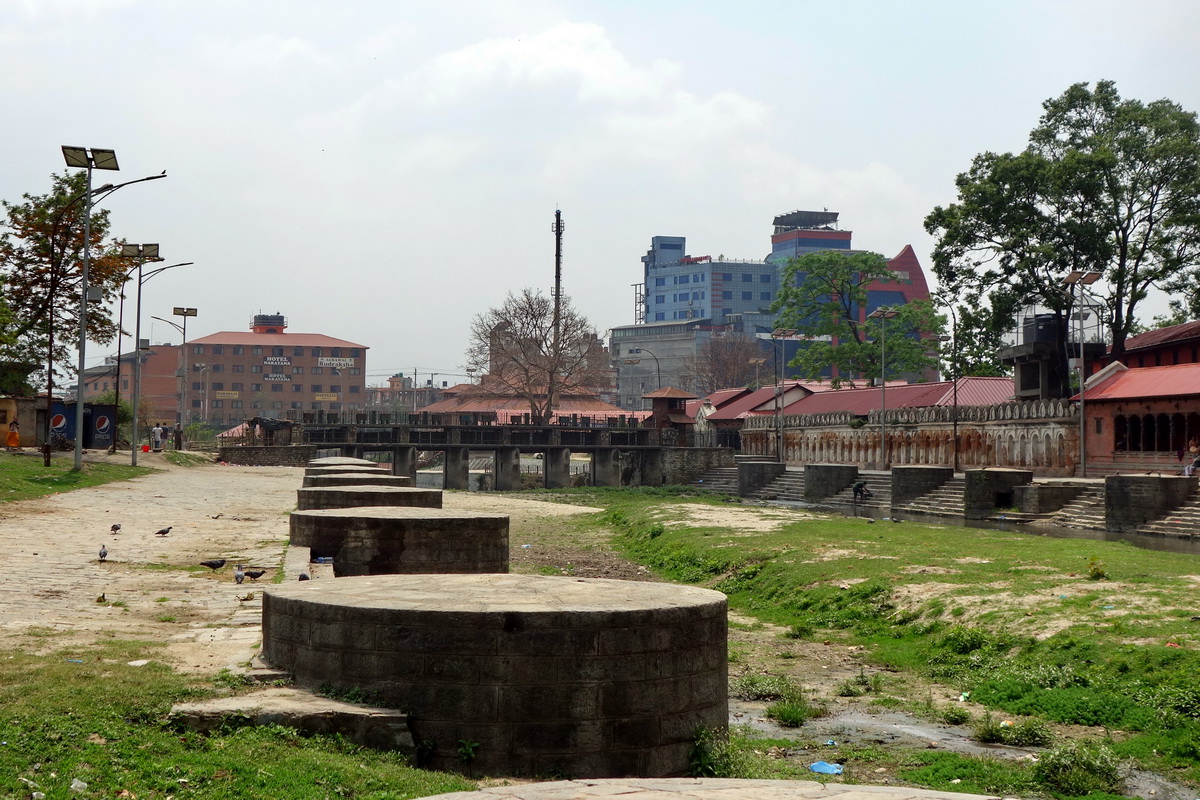
And there’s quite a lot of garbage around.
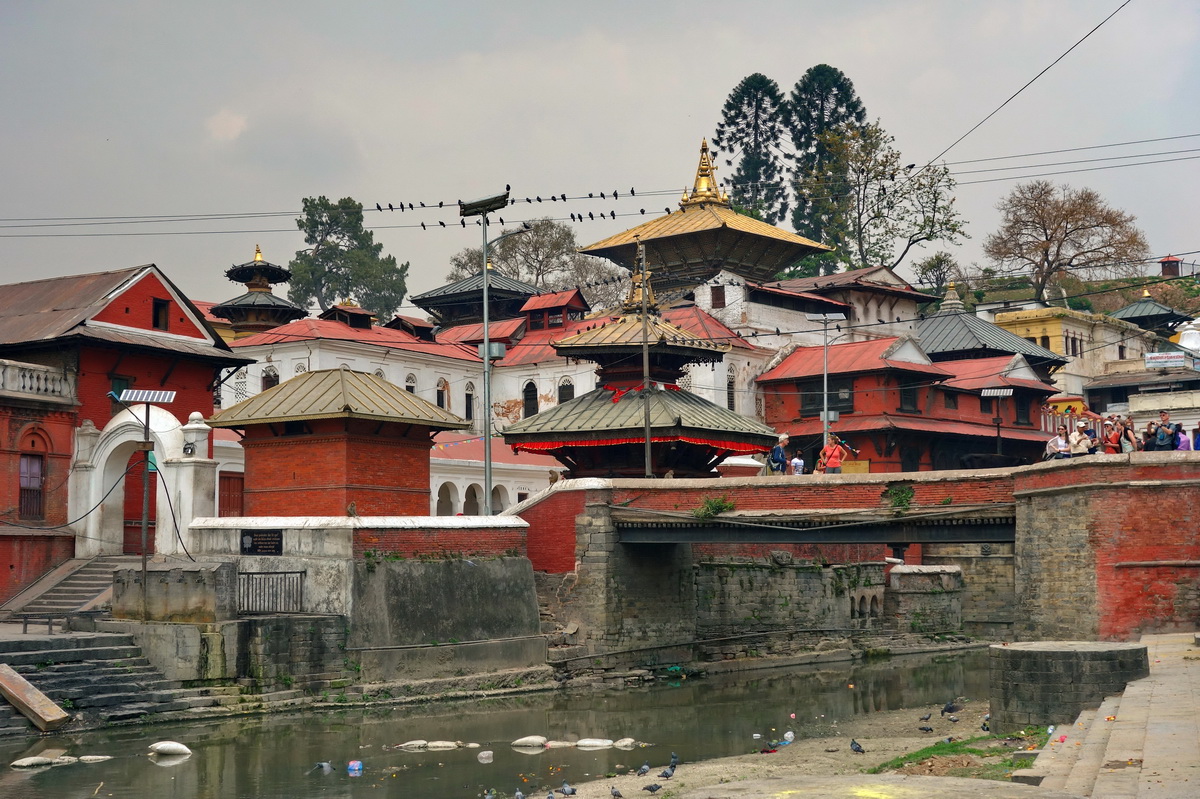
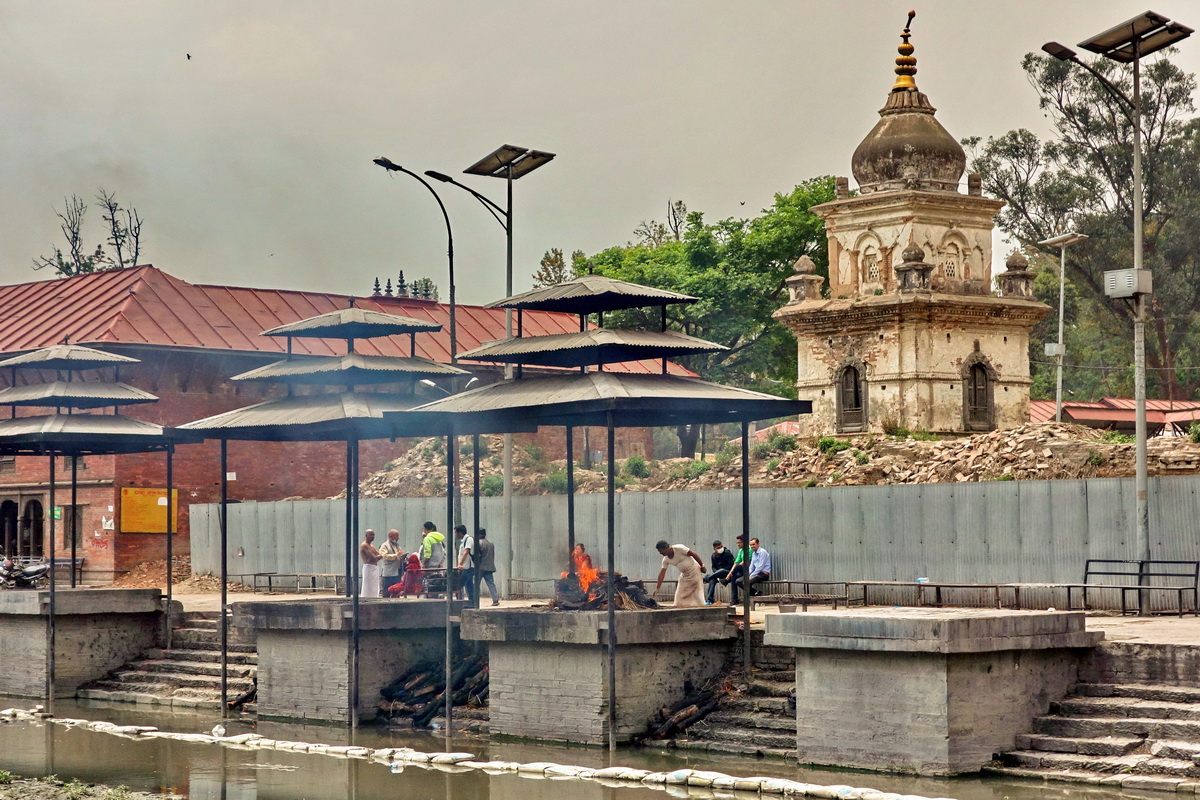
Here, north of the bridge, the bodies of deceased members of higher castes are cremated, and there is a special platform for members of the royal family.
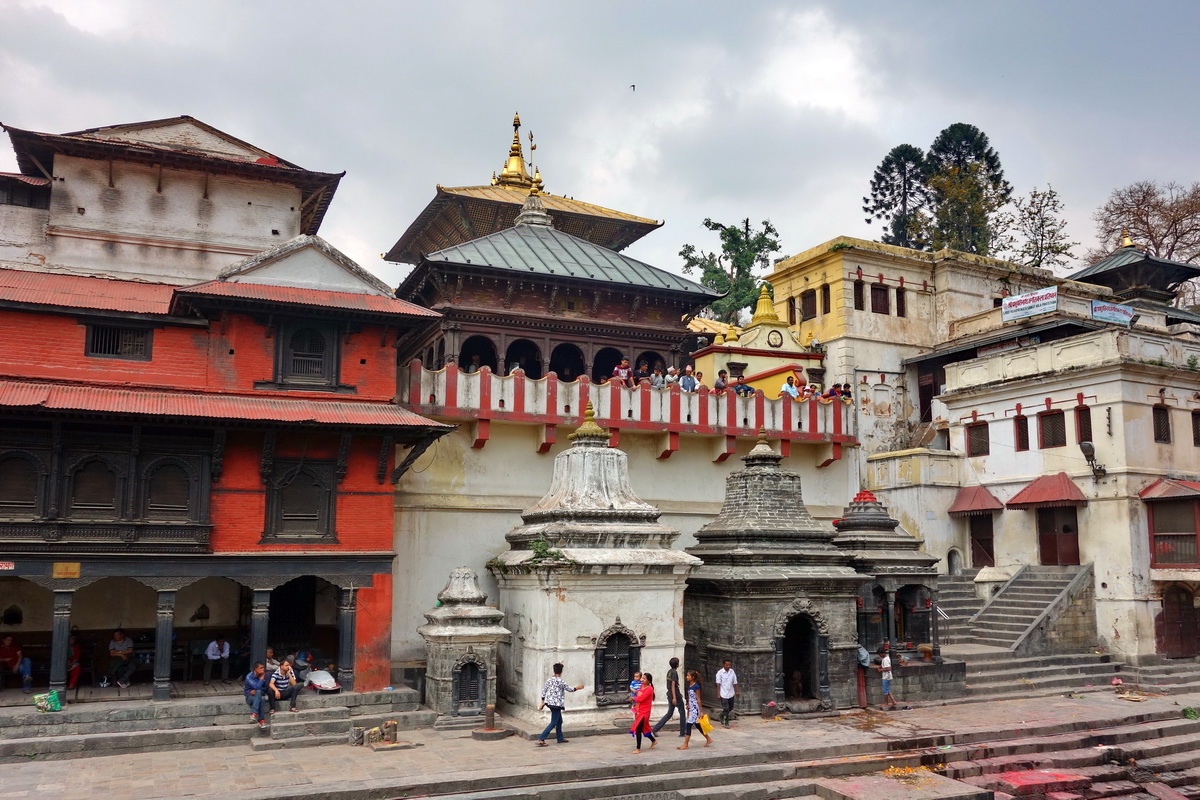
It’s a very strange place: burning bodies, crowds of onlookers and birds, a dirty river below, stench, and smoke. By the way, on the other side of the temples, there is a shelter organized by Mother Teresa, where the poor and homeless receive food.
The photo shows the cremation of a deceased person. In Hinduism, it is customary for the eldest son to cremate the father’s body, the youngest son to cremate the mother’s. If there are no sons, the closest male relative oversees the farewell. If there are no relatives, local workers cremate the body. Being cremated in such a holy place is considered a great honor for a Hindu. The process of cremating bodies here never stops.
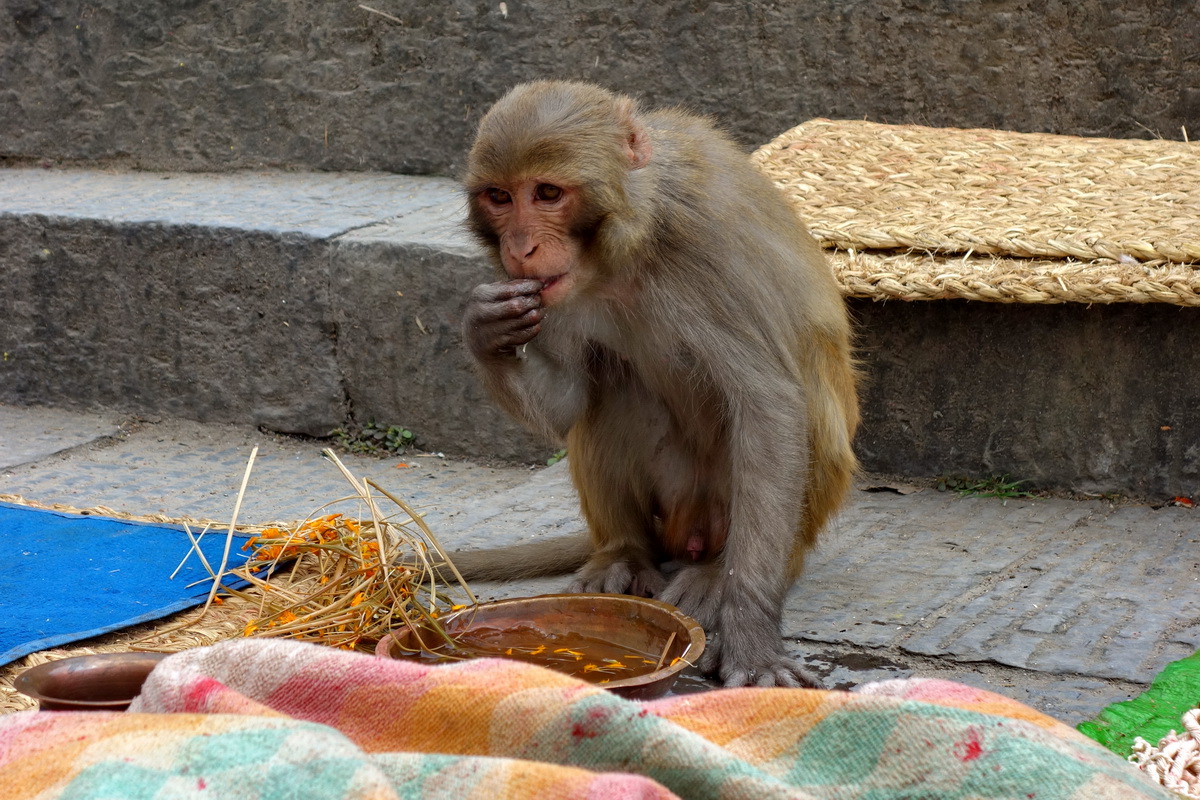
Pashupatinath also stood out to us for its large number of monkeys.
Upstream along the right bank of the river, there are caves for hermits.
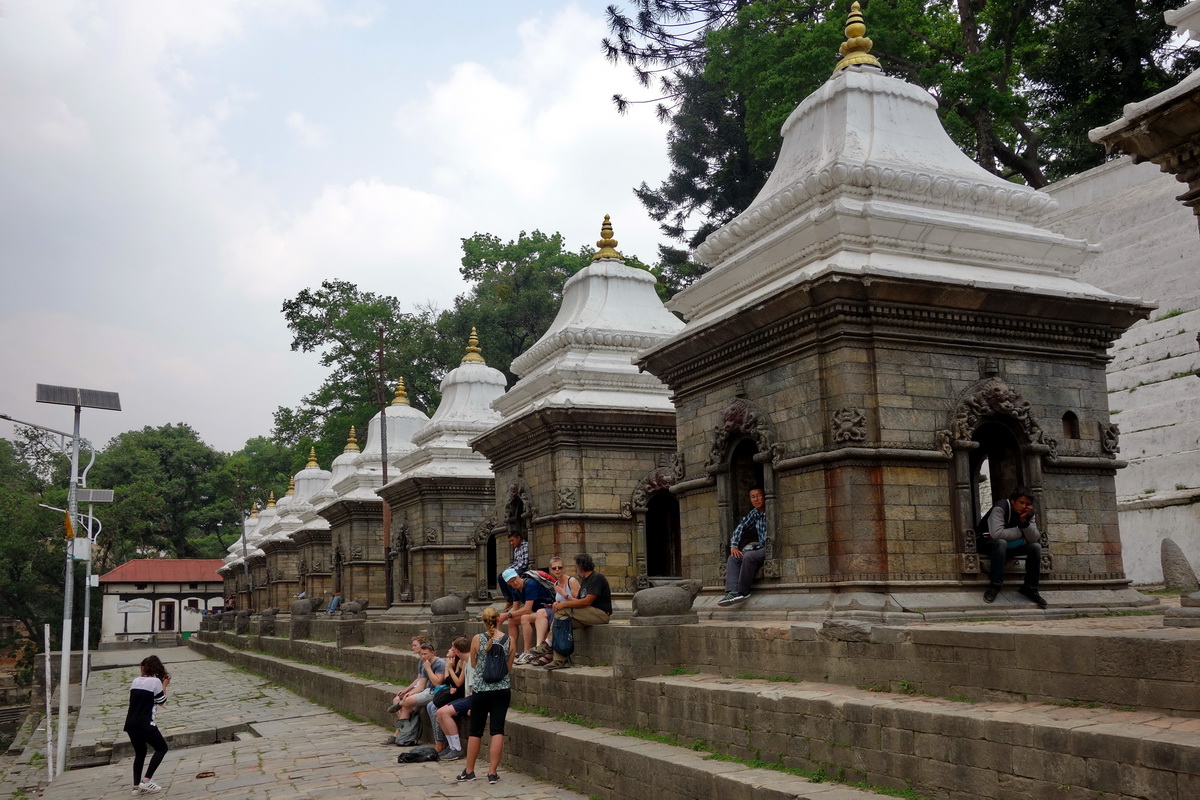
Opposite the cremation platforms are 11 small Shiva temples with lingams. In total, there are 108 such small lingam temples in the complex.
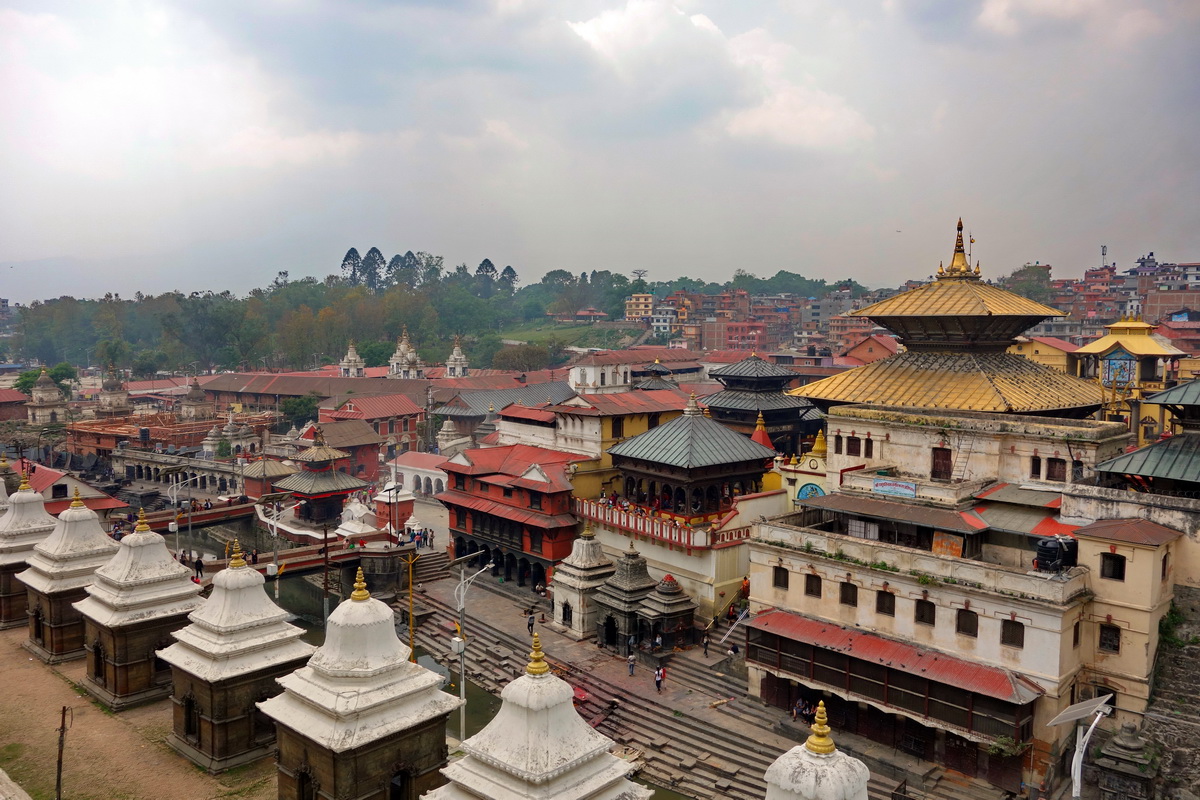
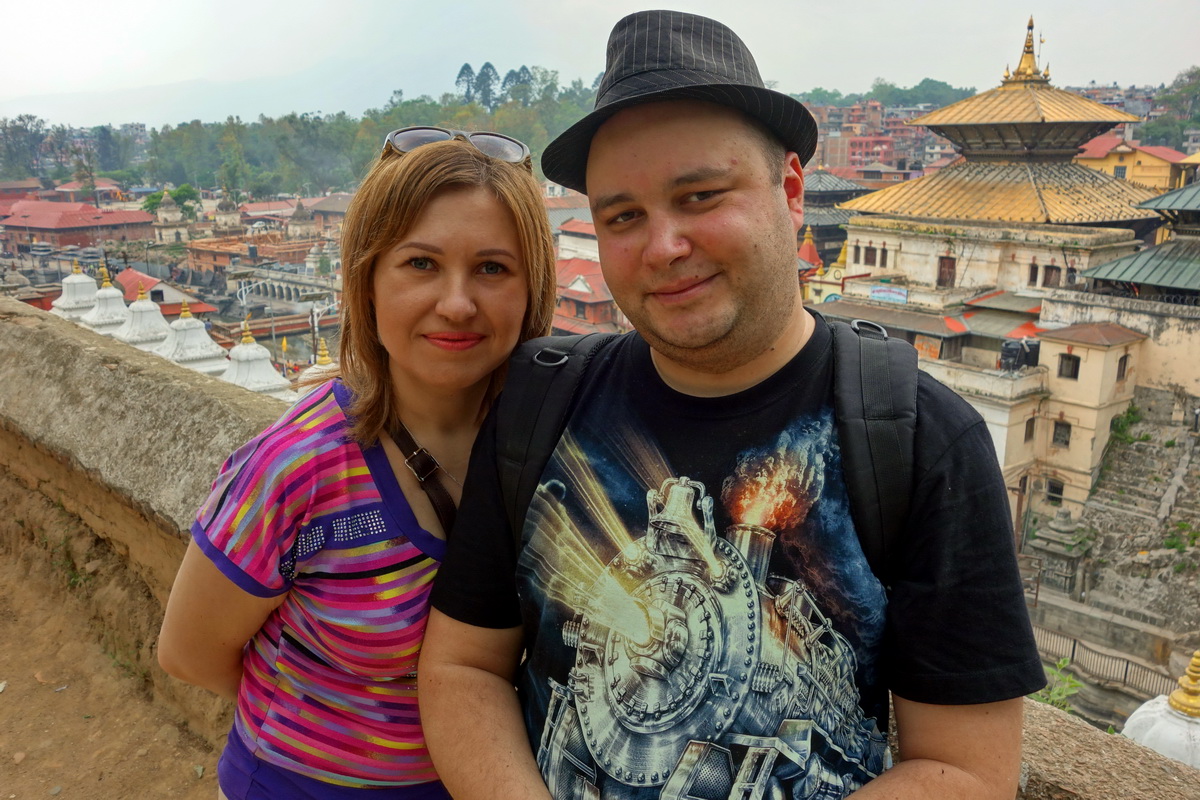
Elderly people come to the complex to live out their final days, and there is a hospice at Pashupatinath for those awaiting death.
In the park, you can meet numerous sadhus (wandering holy men, devotees of Shiva) practicing yoga. Of course, many of them are performative “sadhus” in colorful attire, which attracts tourists. They earn a living by posing for photos with tourists for a few dollars.
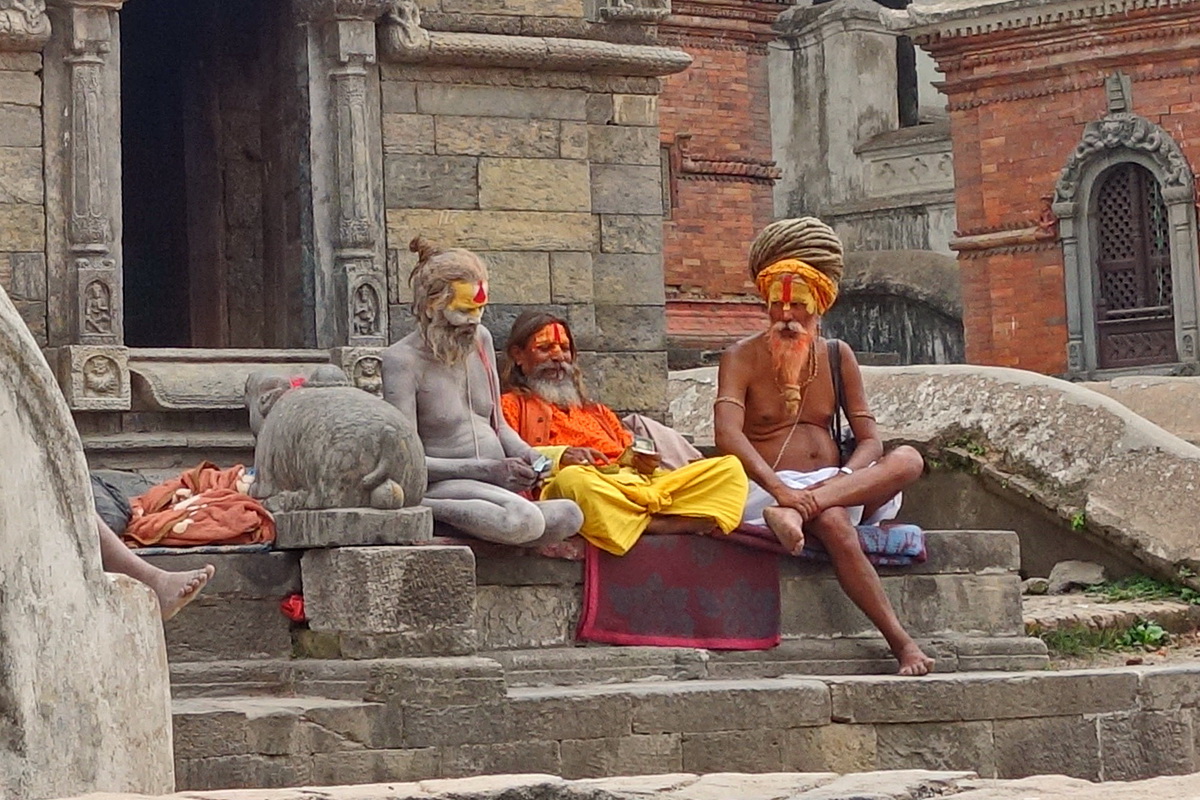
It’s somewhat unusual that on the opposite side of the river, directly across from the cremation sites, there is an observation platform where people can “enjoy” the spectacle. By the way, the local monkeys have no shame when it comes to begging for food :)
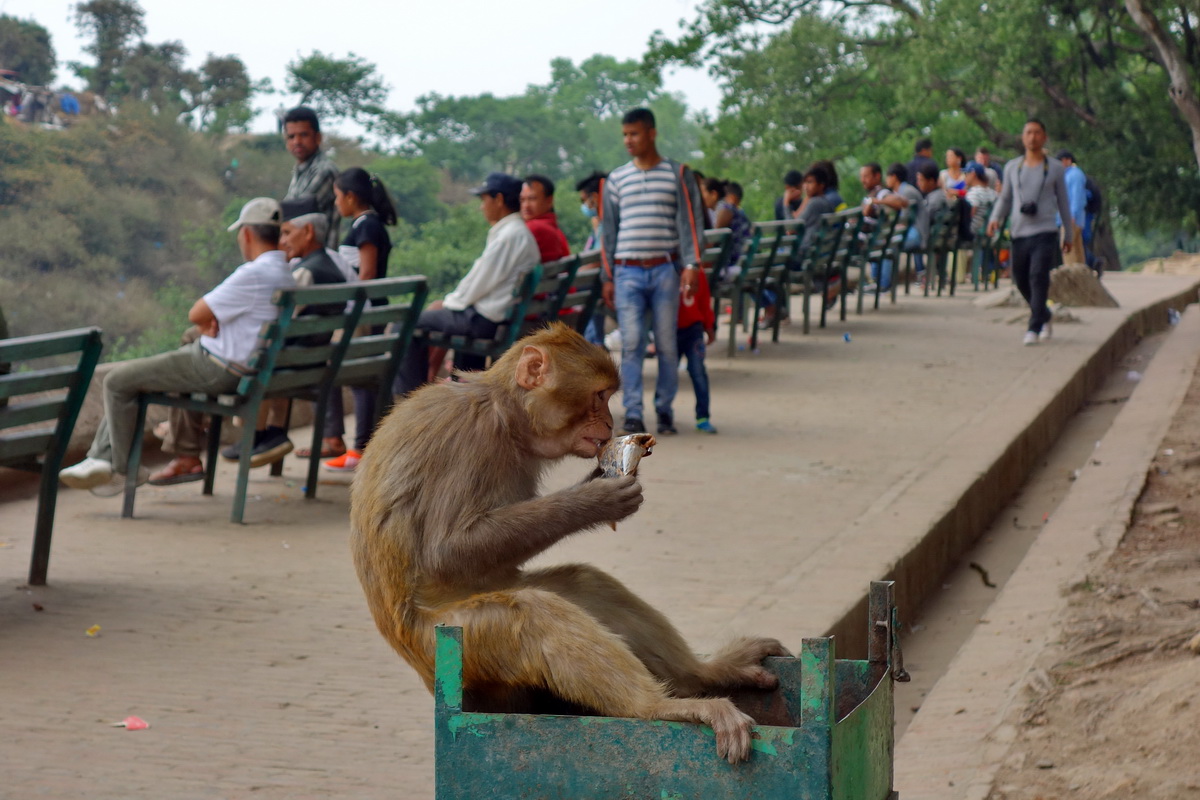
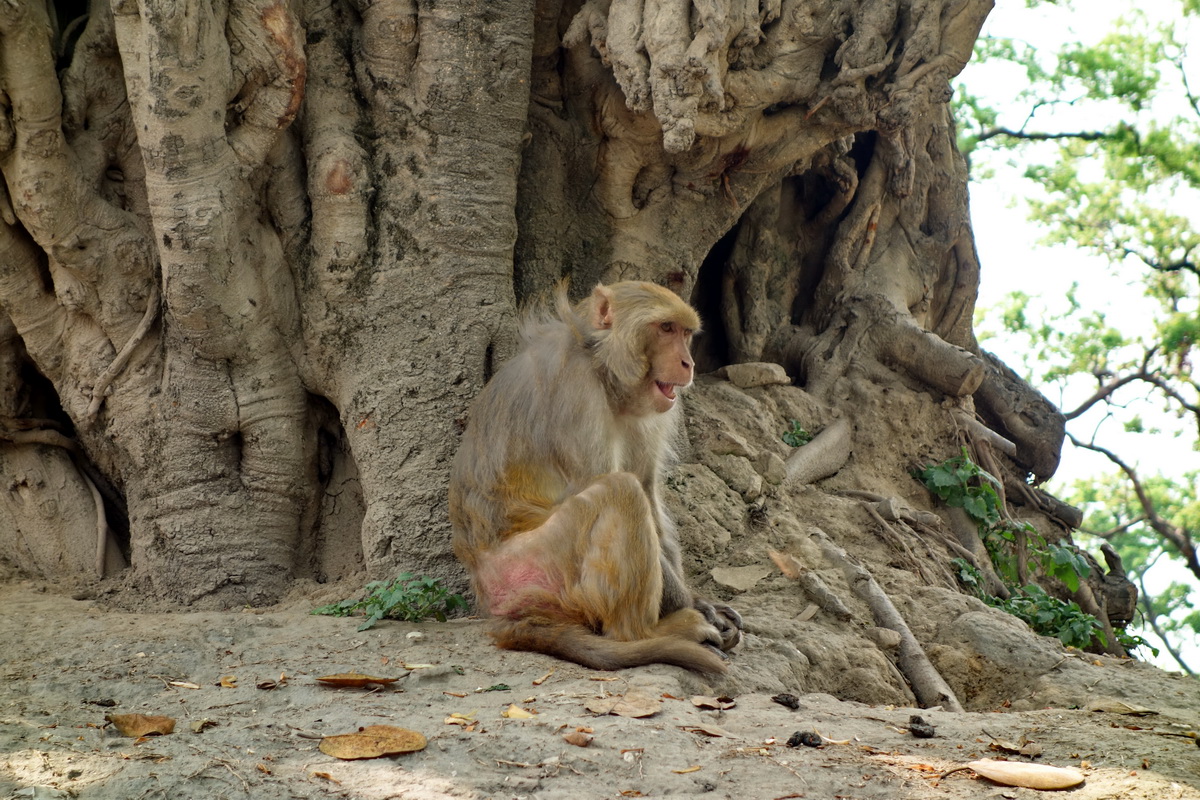
Gorakhnath Temple. We climb the steps to the monkey park, where hundreds of monkeys jump and hang from branches. Deep within the park, on the eastern side of Pashupatinath, on a hill, is the Gokarnath Temple.
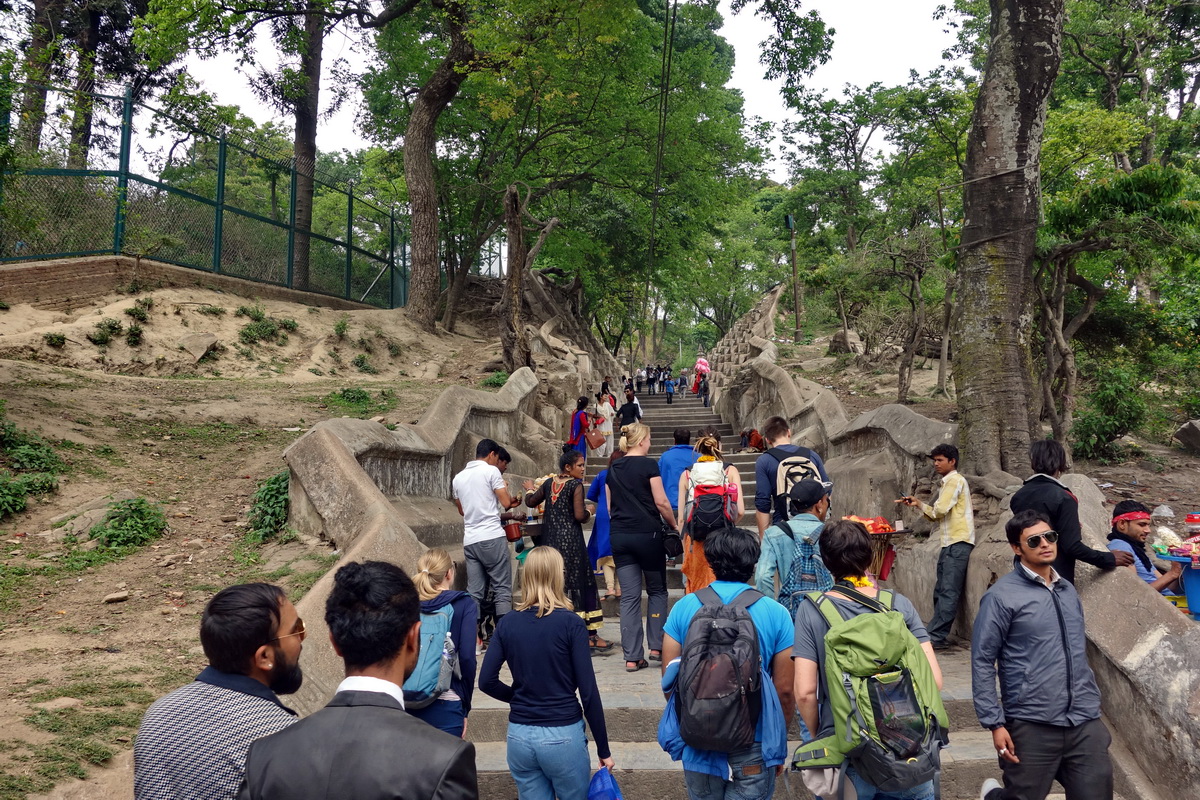
We then move on to the large Guhyeshwari complex. It was built in honor of Shiva’s consort, the goddess Sati (Parvati).
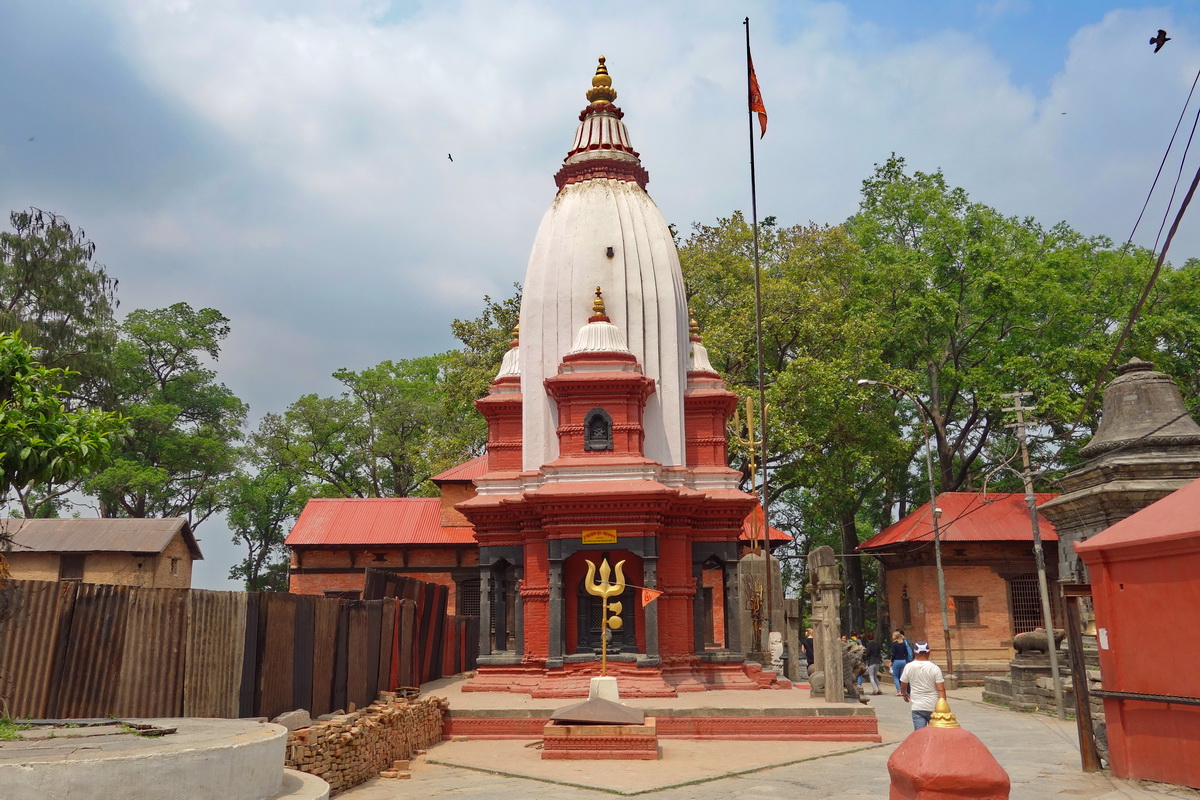
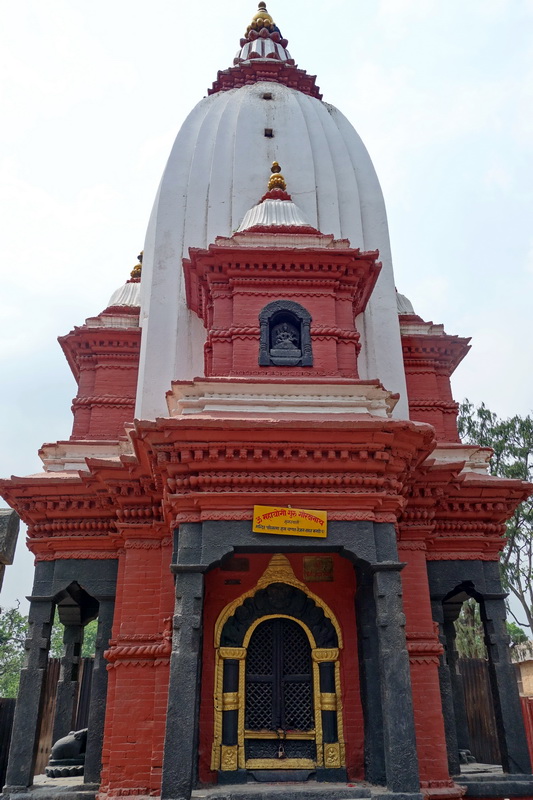
The Guhyeshwari Temple is considered a temple of the feminine principle, visited by men. Women pray at the lingams.
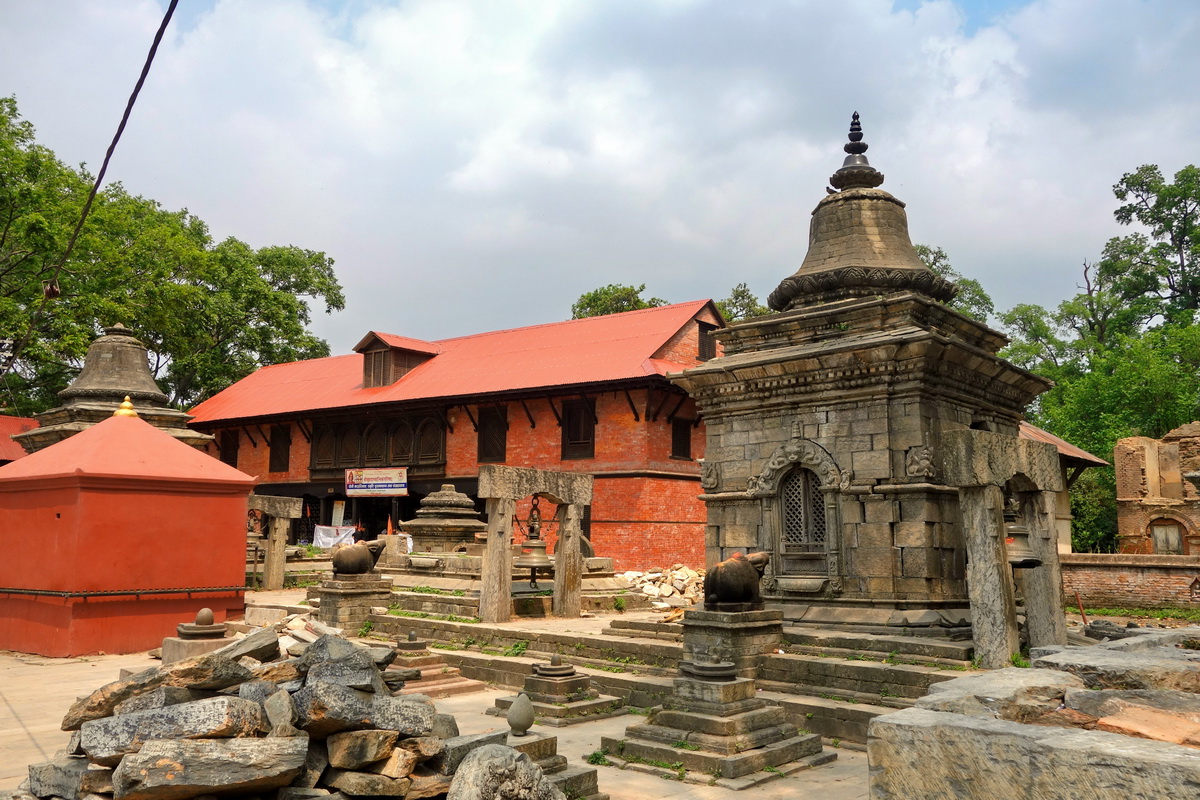
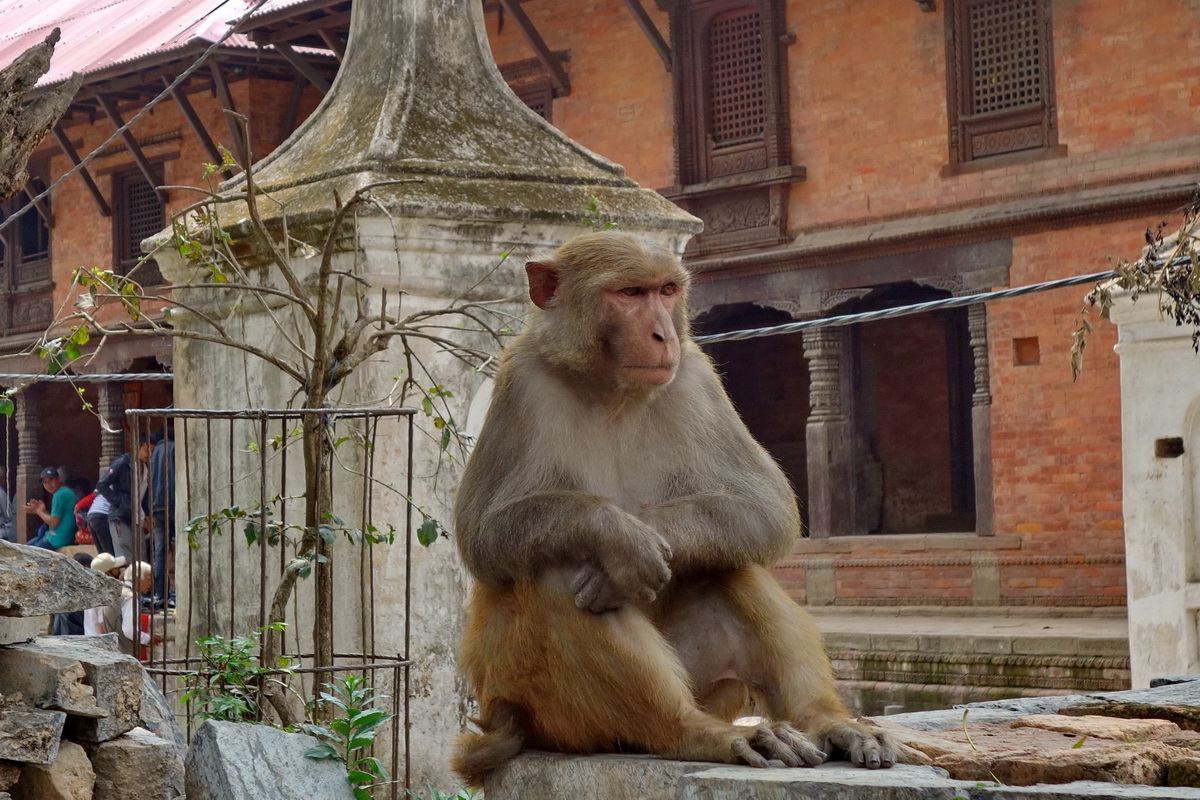
This is where you truly feel the passage of time and ancient culture.
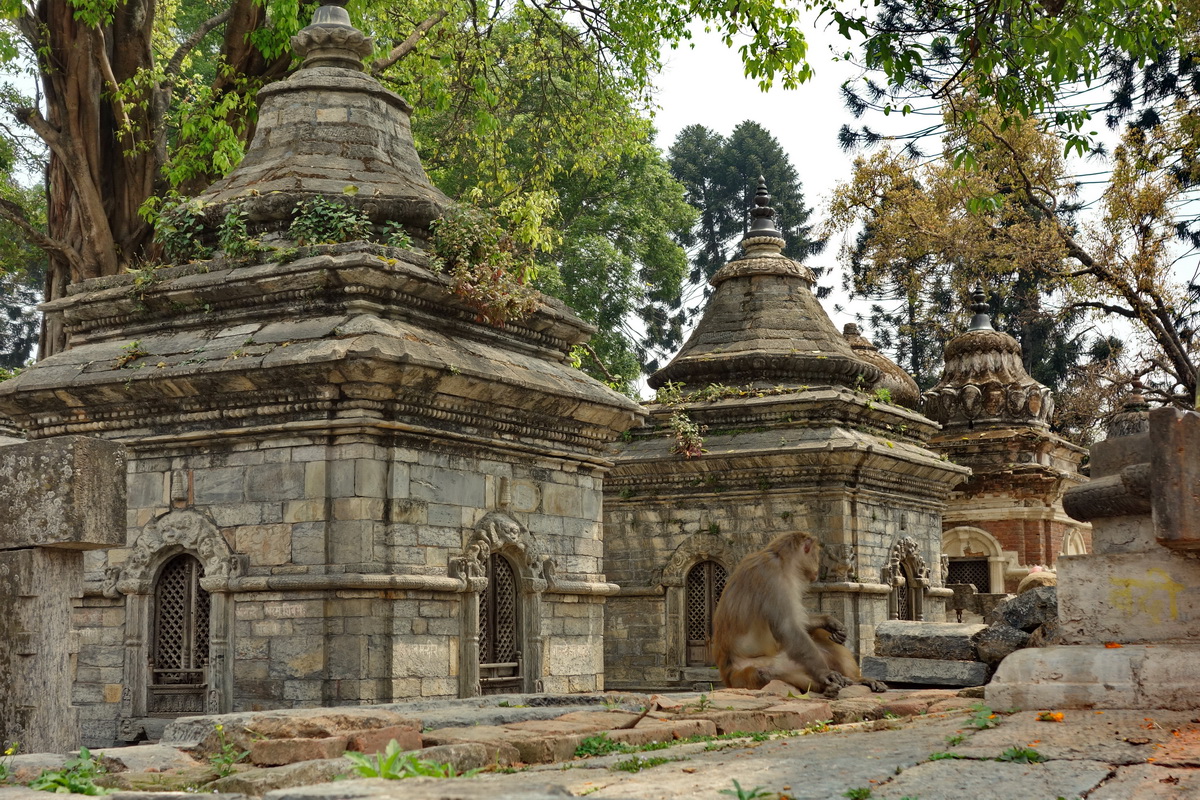
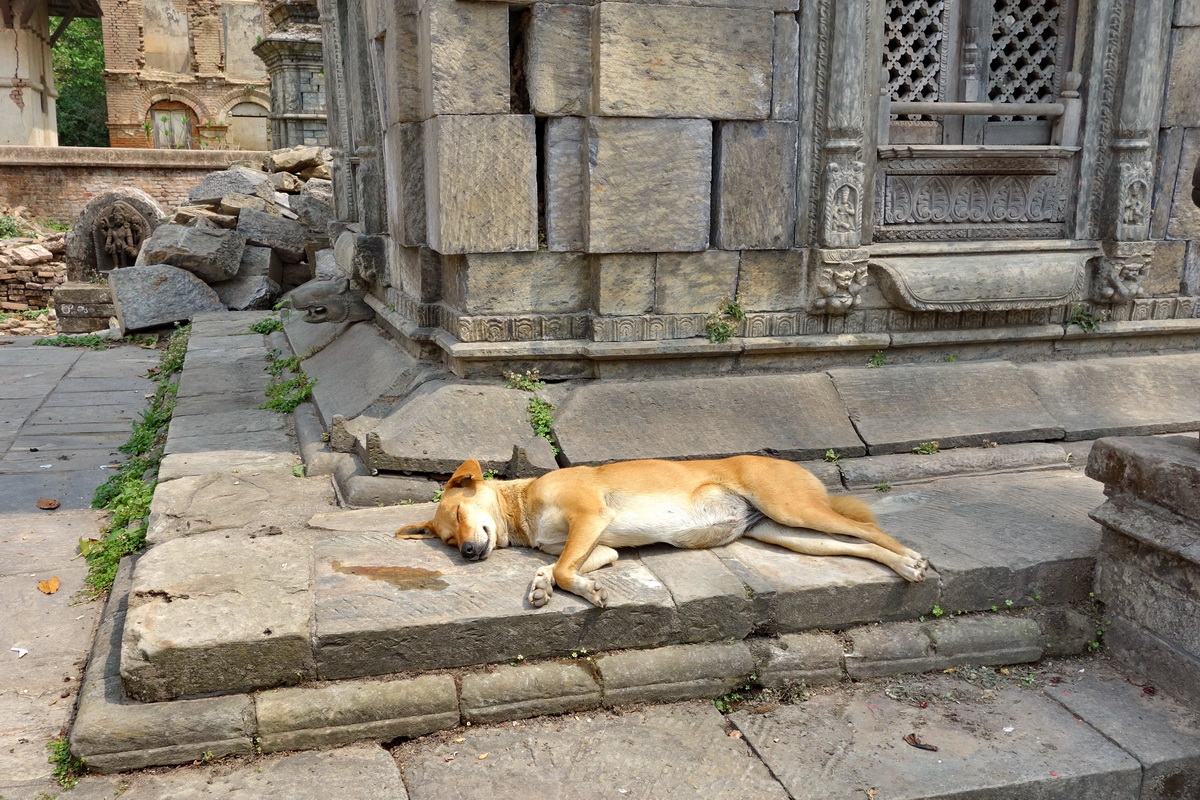
We stroll among the pagodas.
On the eastern bank of the river, there is a huge park with many monkeys.
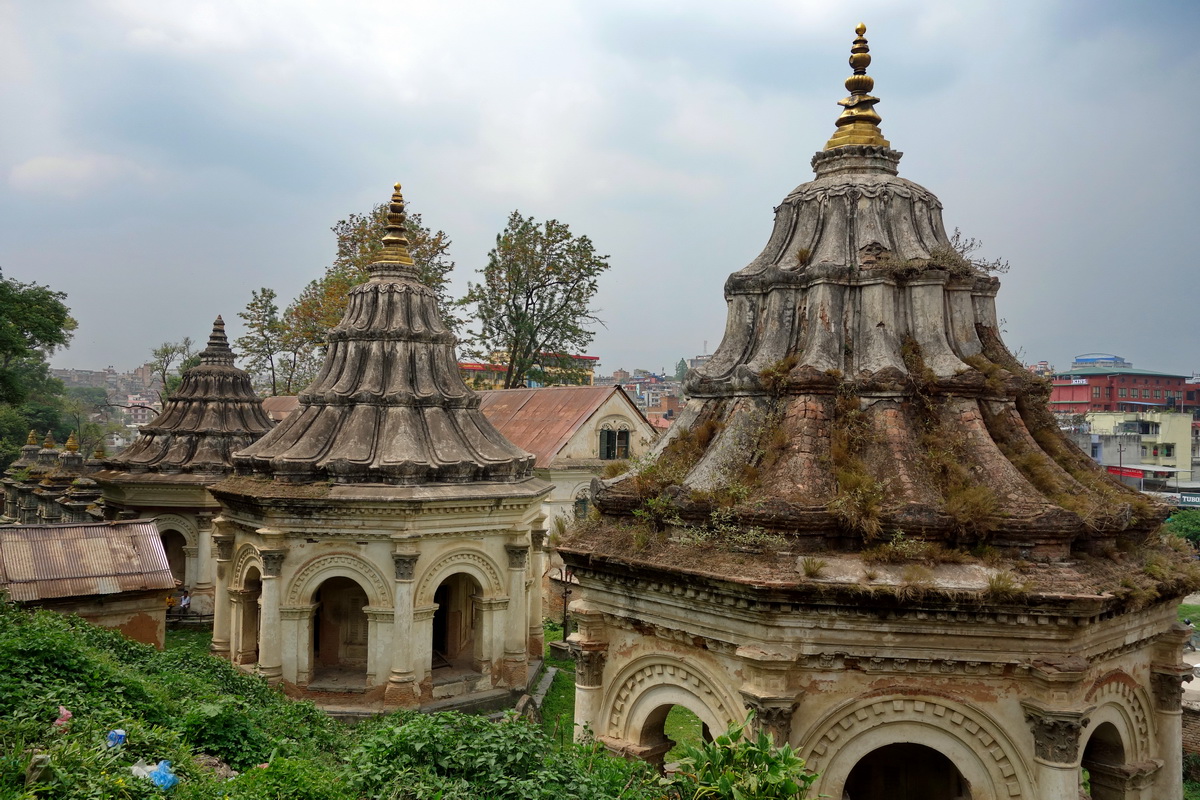
The architecture of the local pagodas is impressive.
We leave the temple complex and see the Bagmati River again. A man appears to be performing some ritual. A rather gloomy place :)
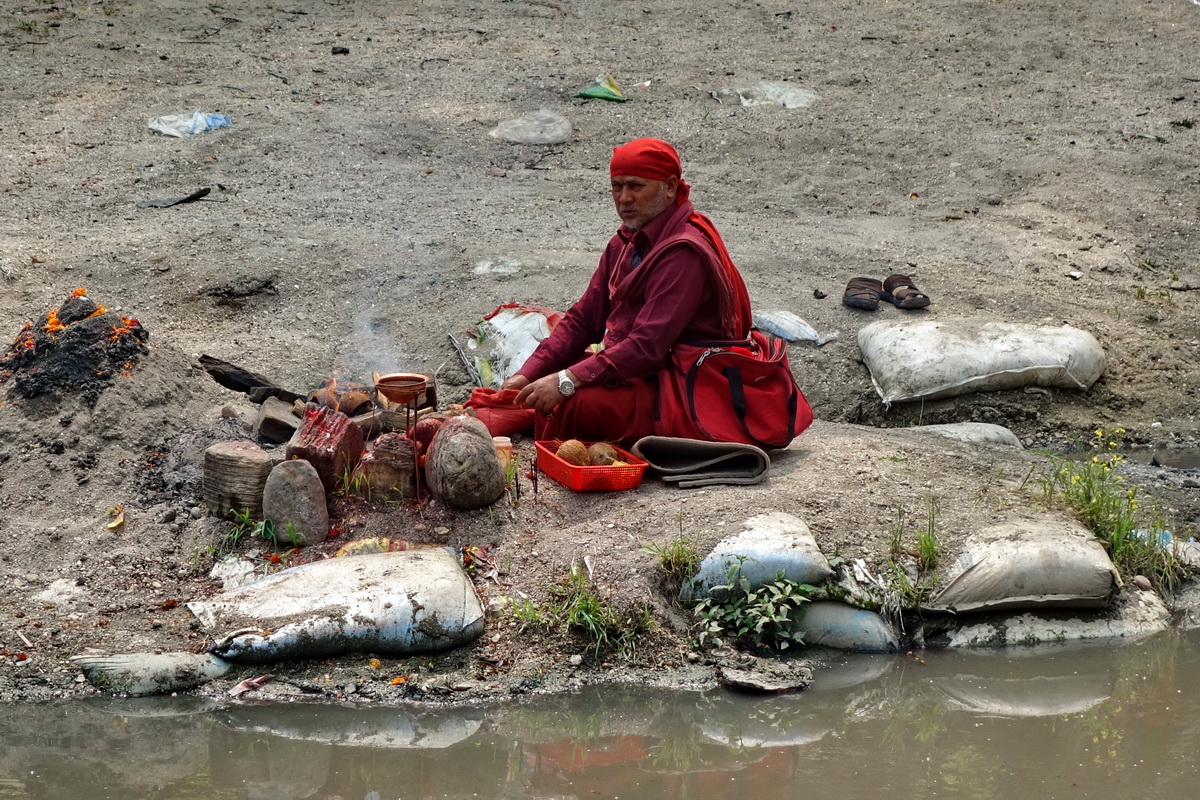
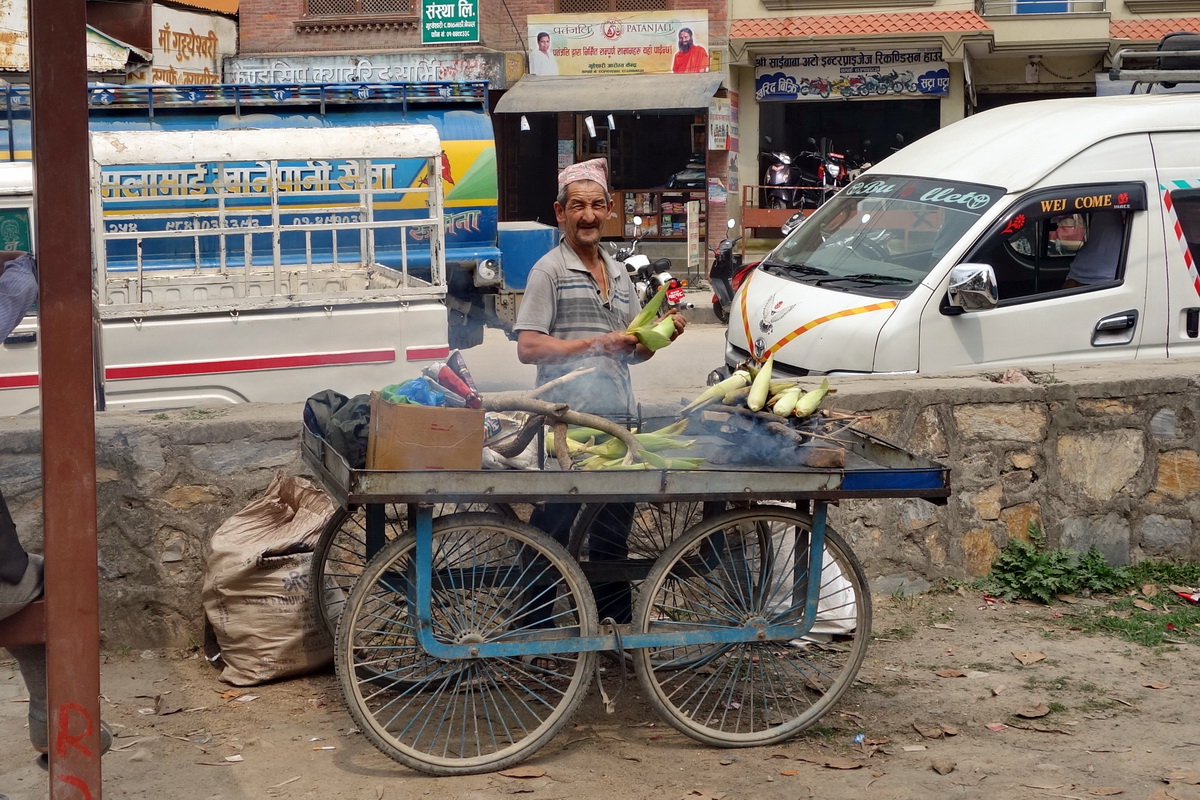
Next to the river, garbage, and the distinctive smell that lingers here, you can eat roasted corn and buy flowers for offerings.
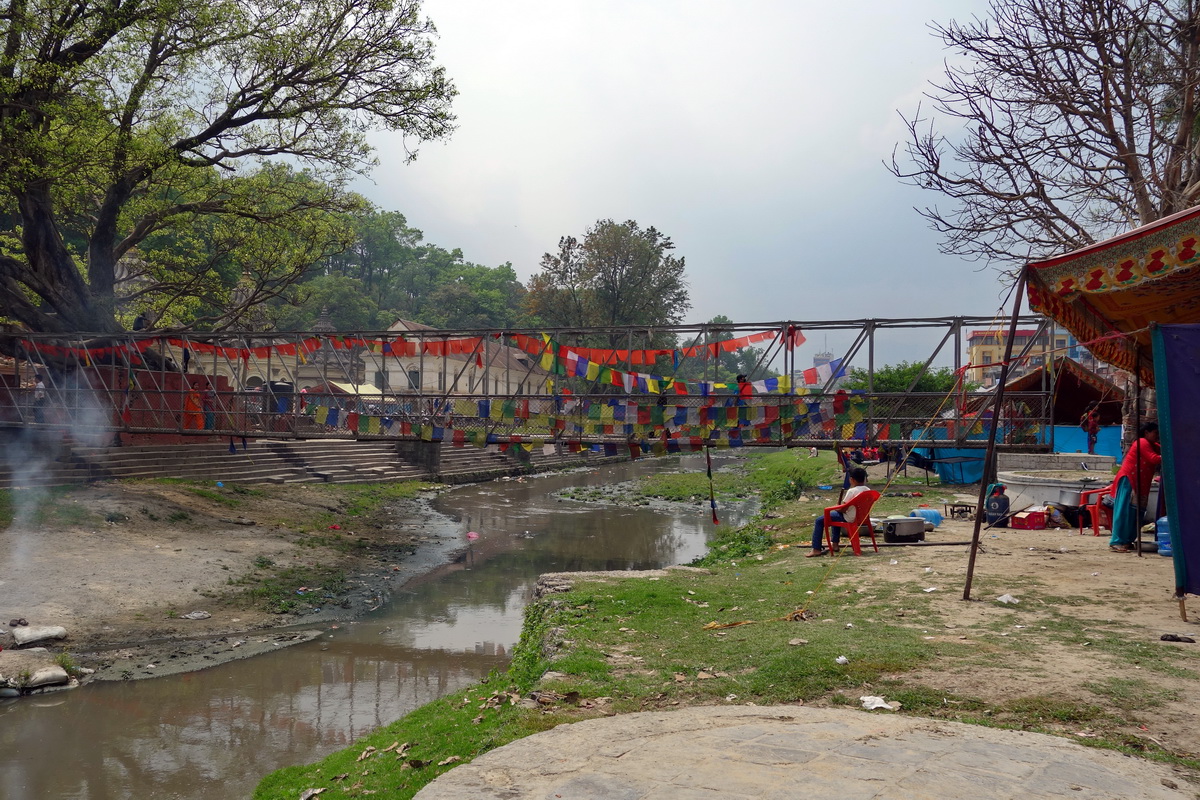
The bridge over the Bagmati.
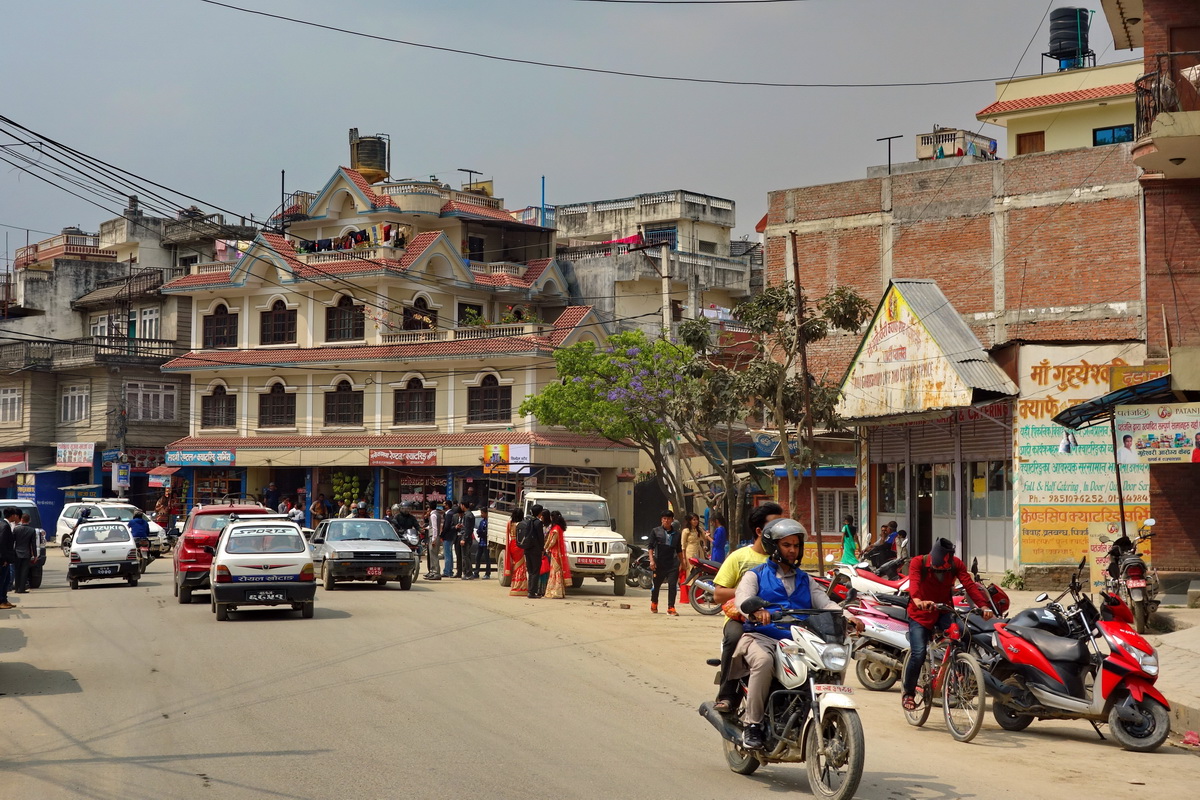
We head toward the Boudhanath Stupa.
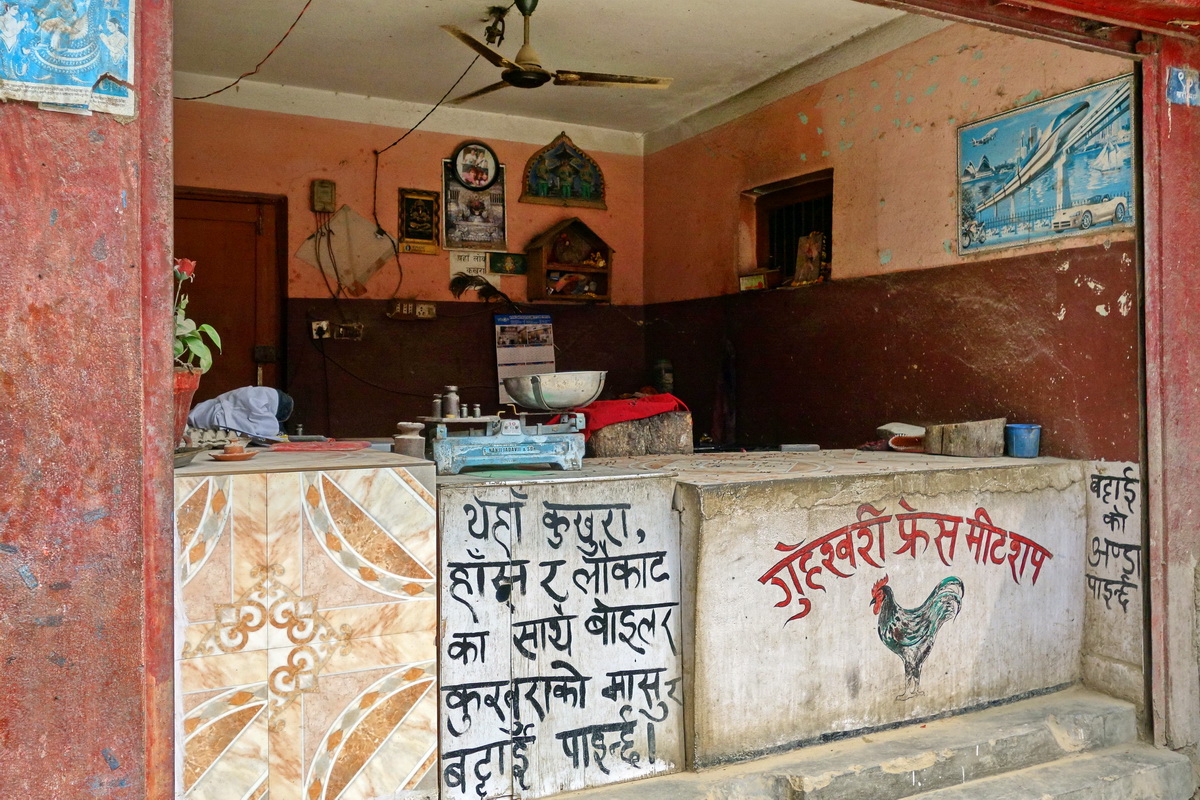
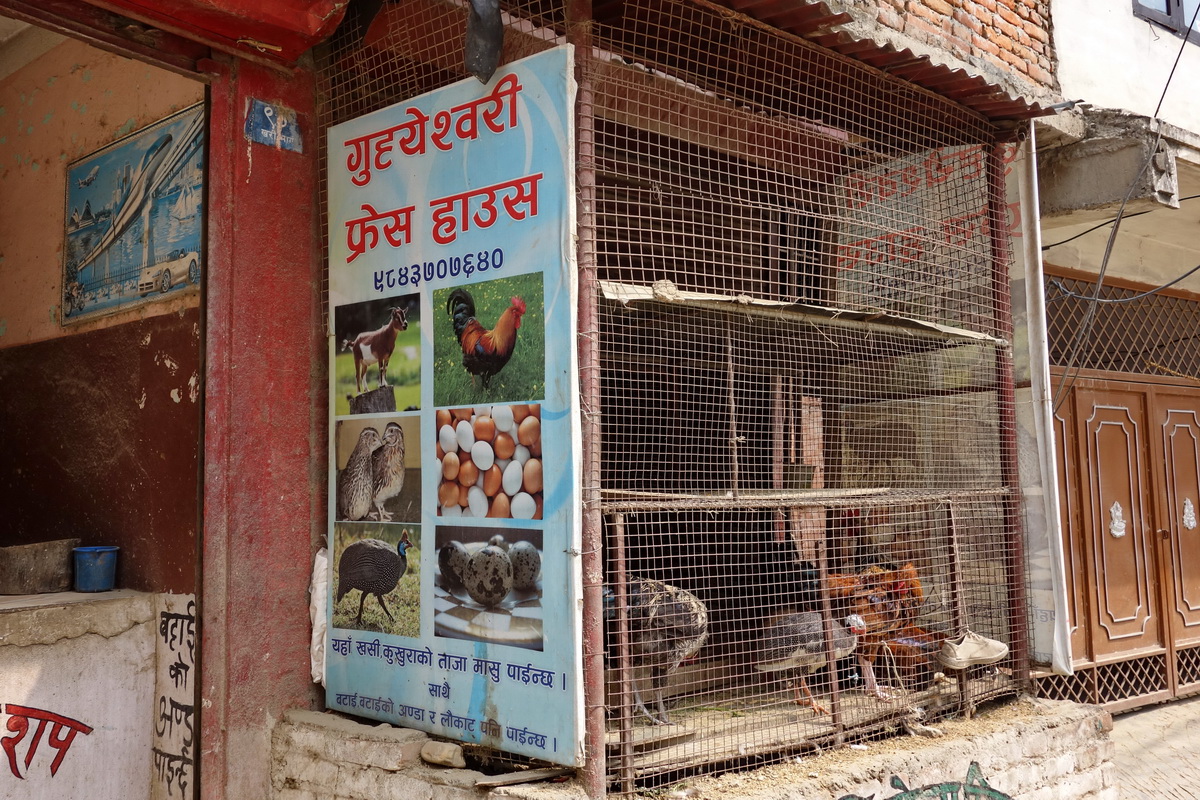
Sale of live chickens and other animals.
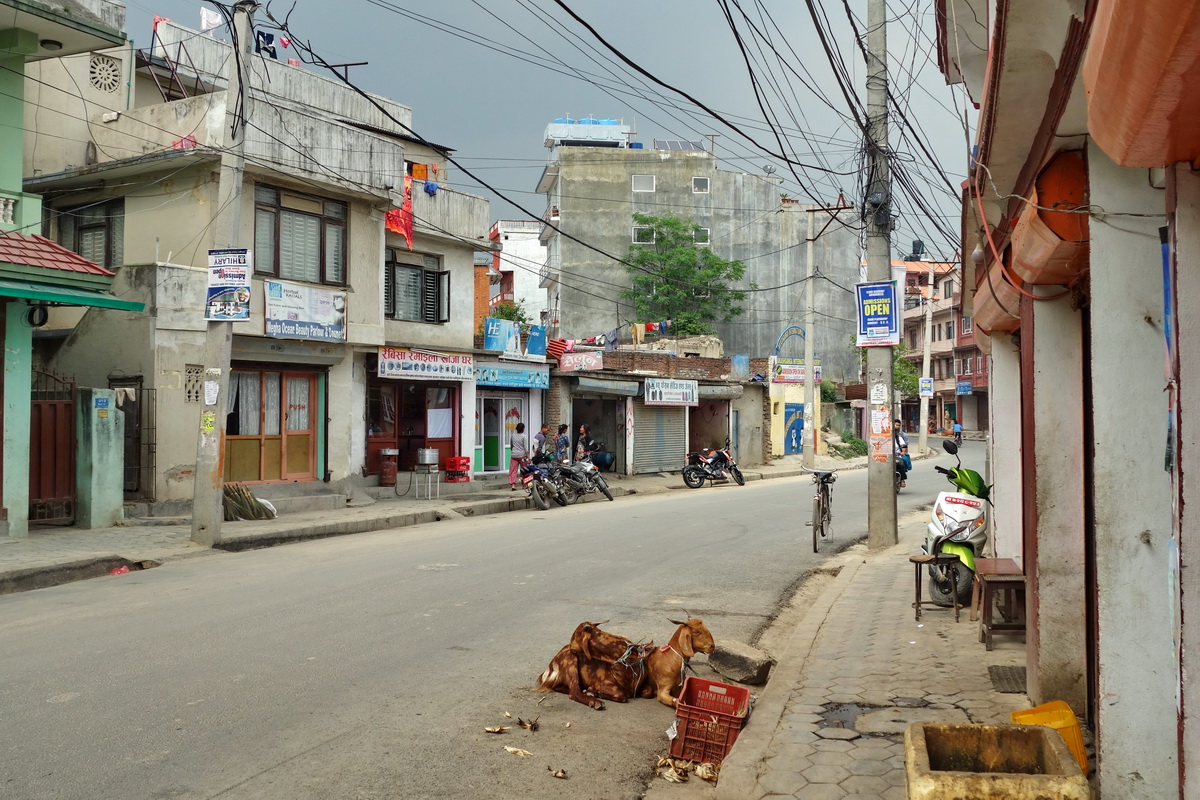
Animals rest right on the roadway.
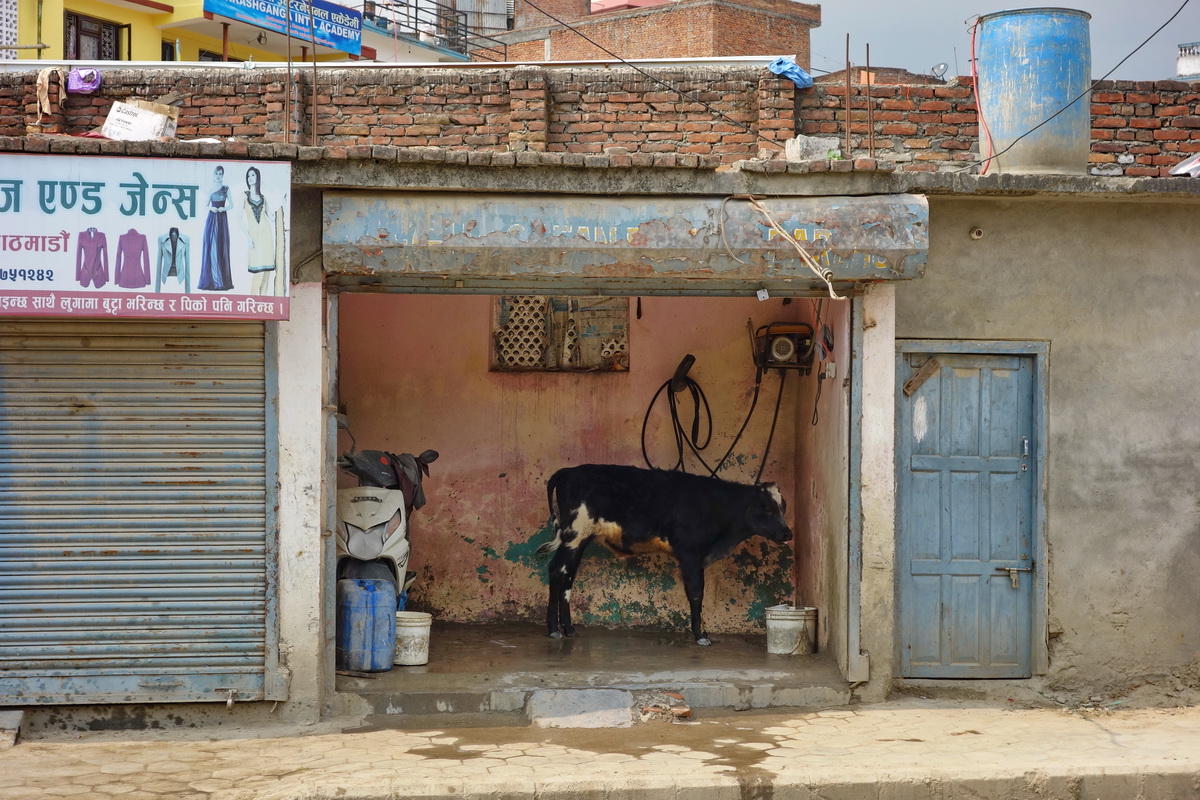
A cow decided to get washed at a car wash :)))
...
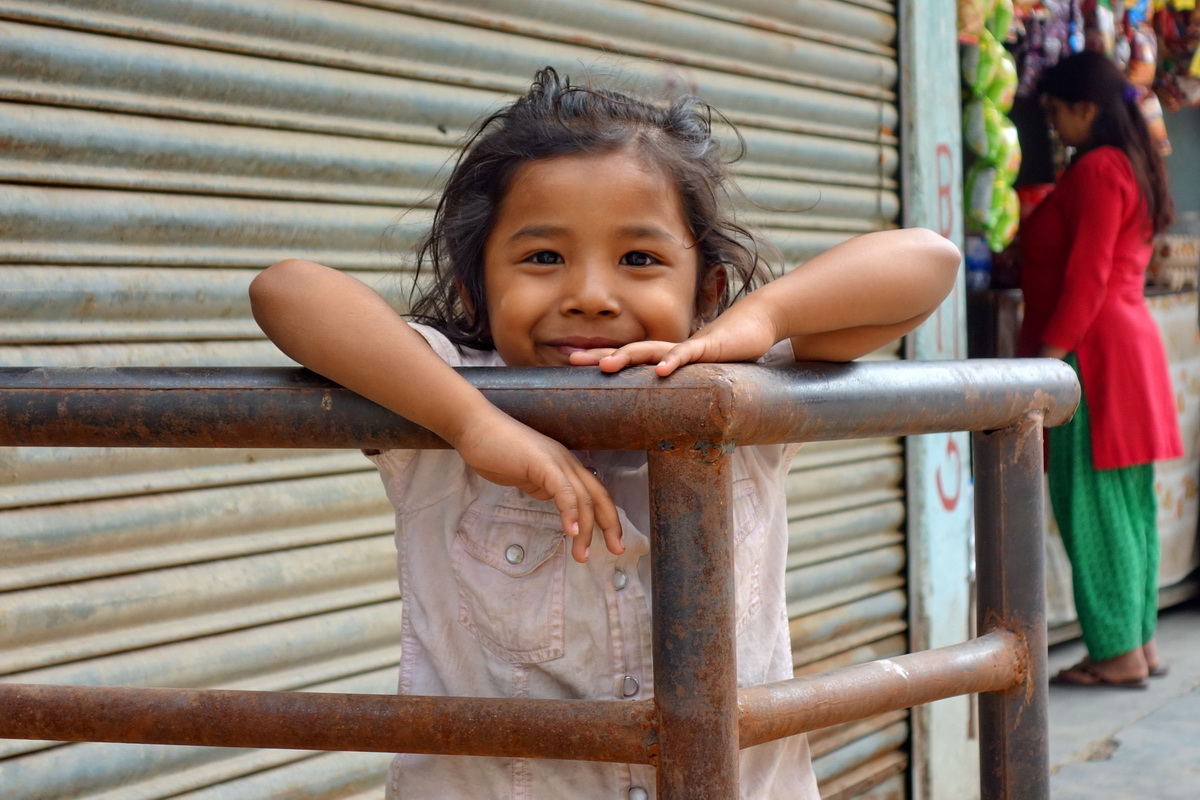
A little Nepalese girl.
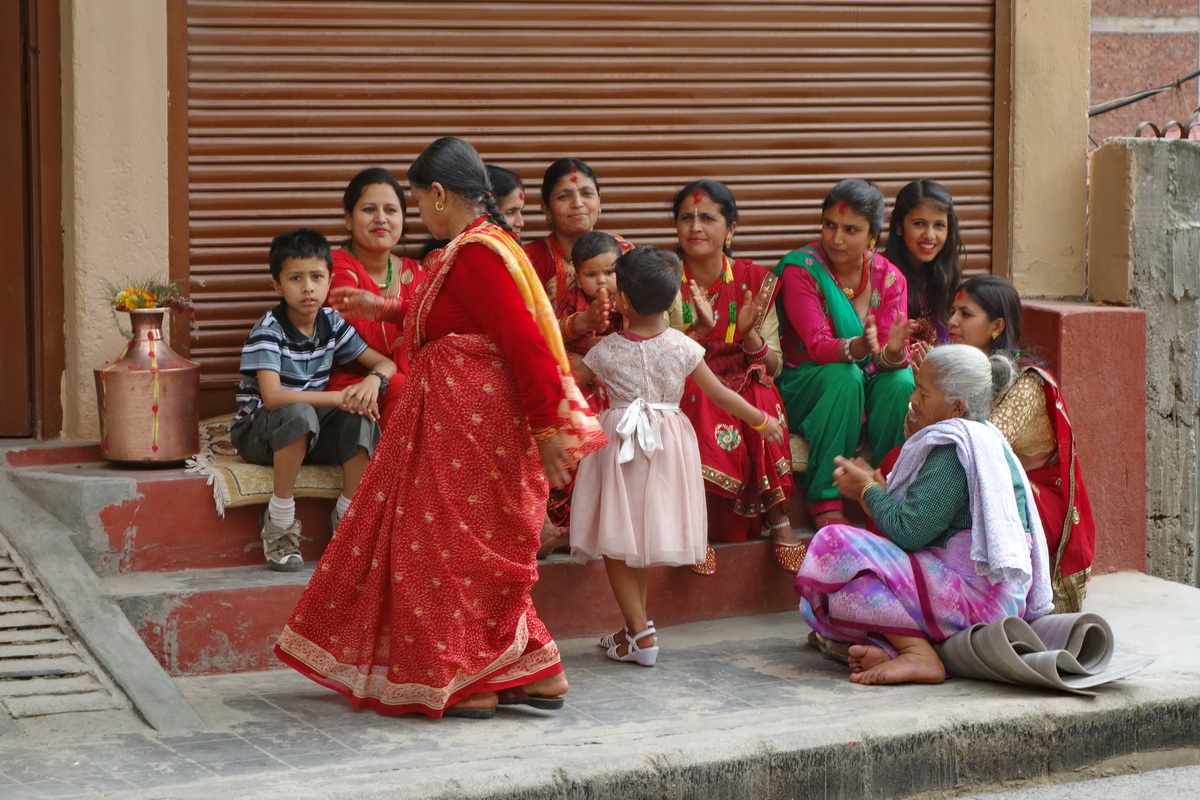
Dancing.
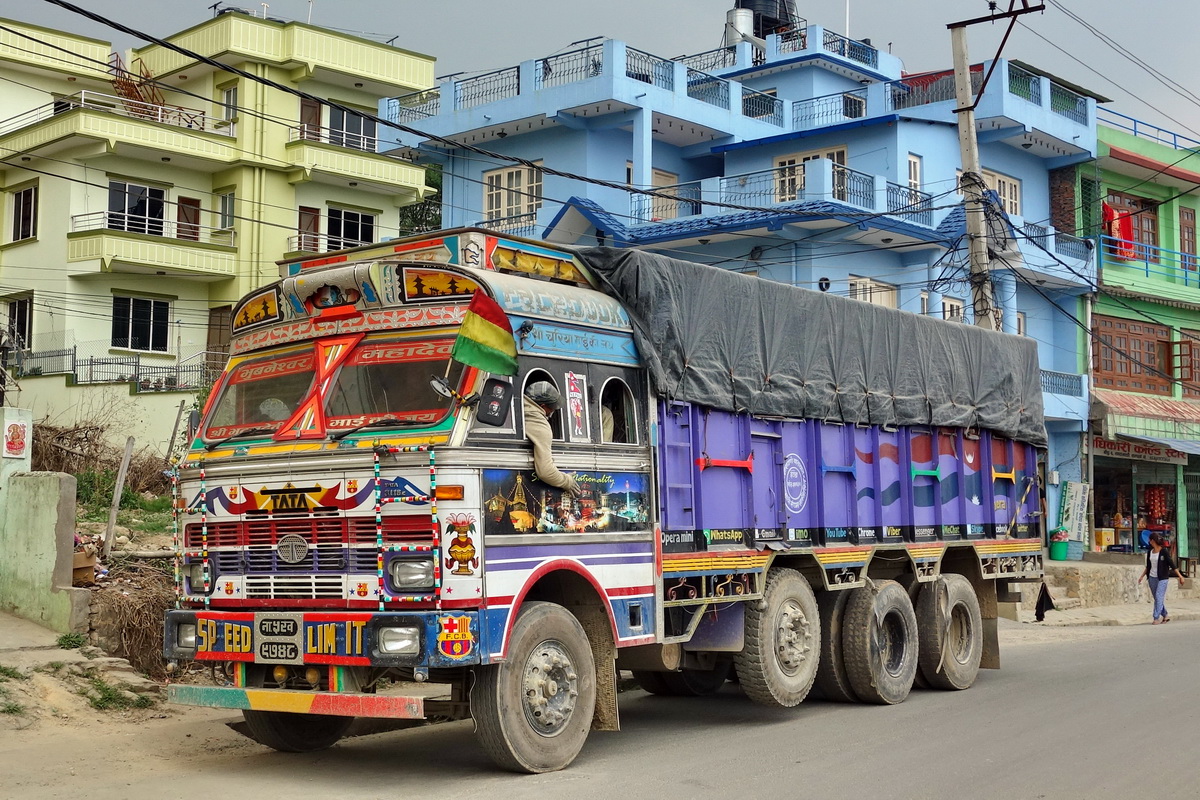
A Nepalese truck. Similar trucks can be found in India as well.
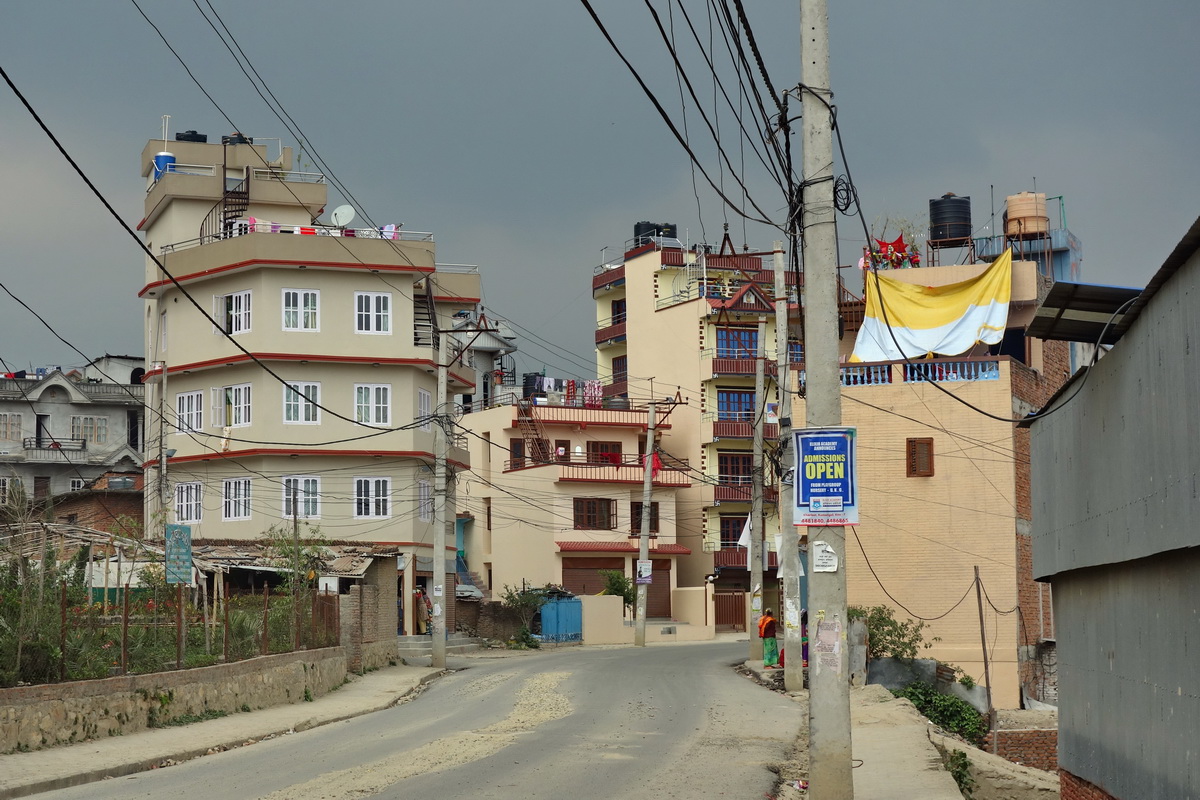
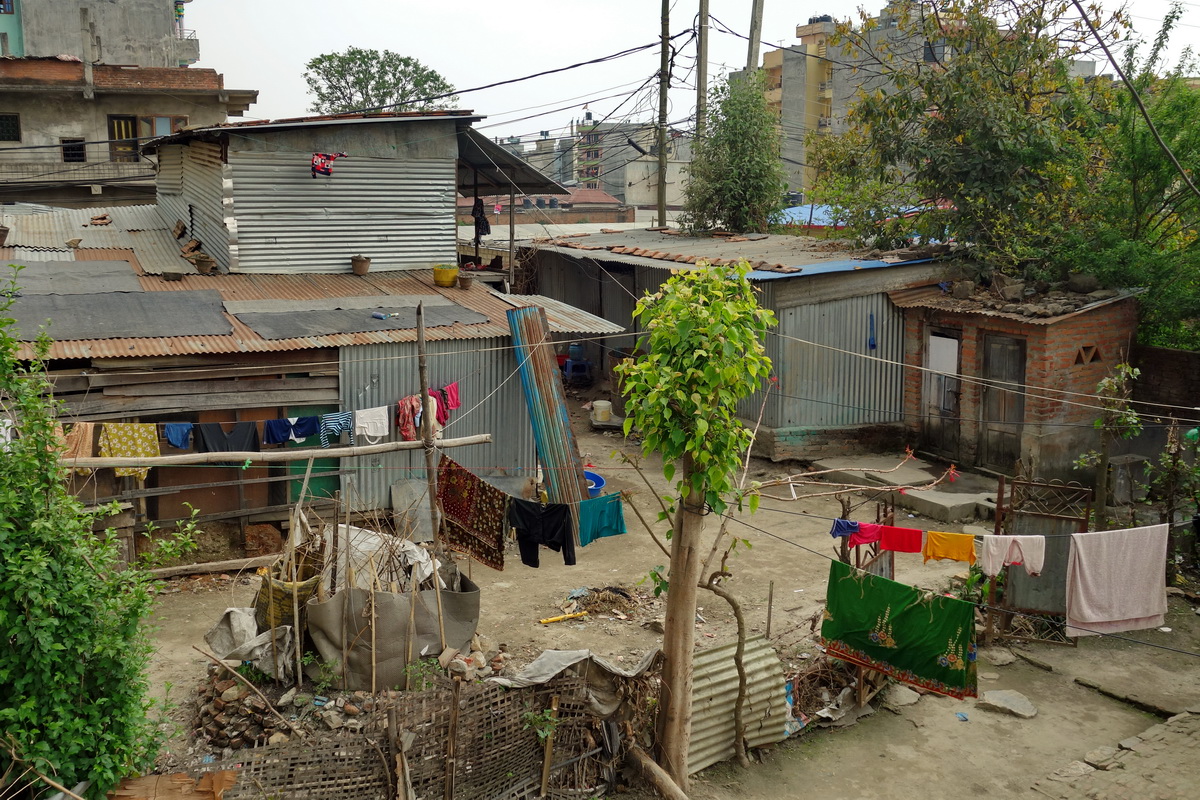
We come across slums along the way.
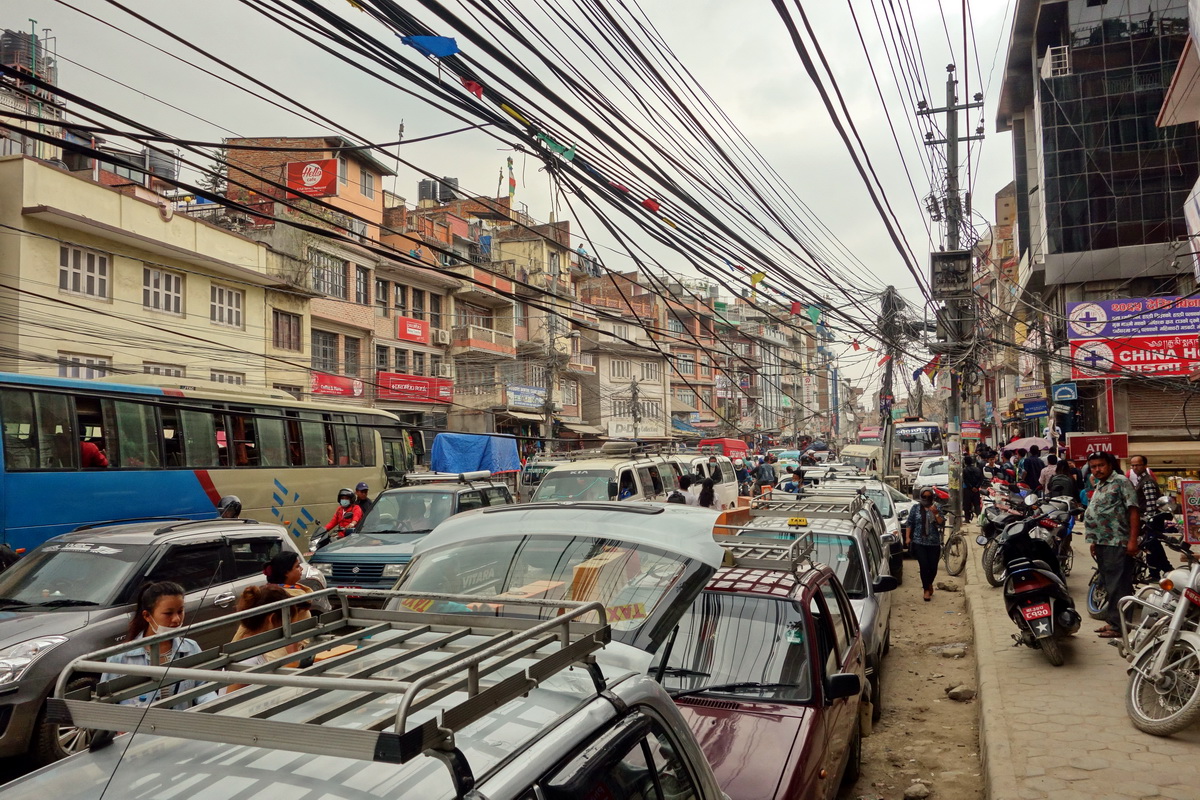
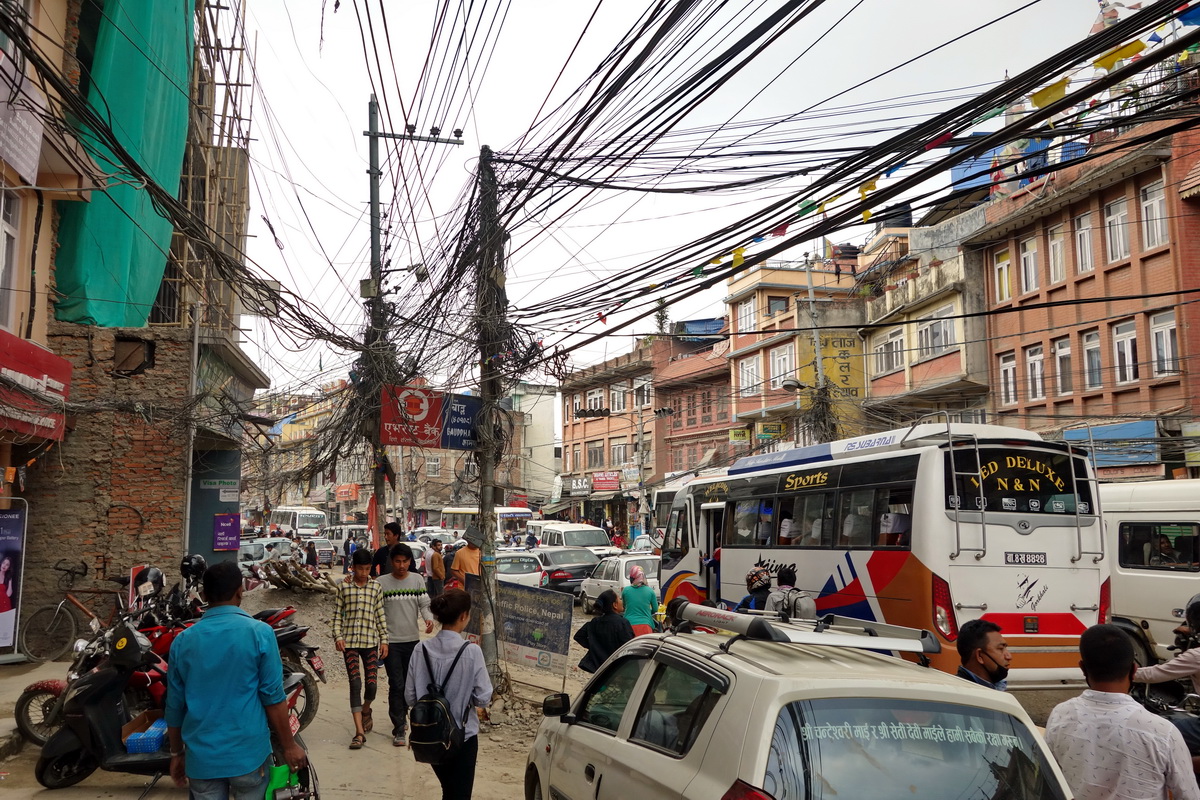
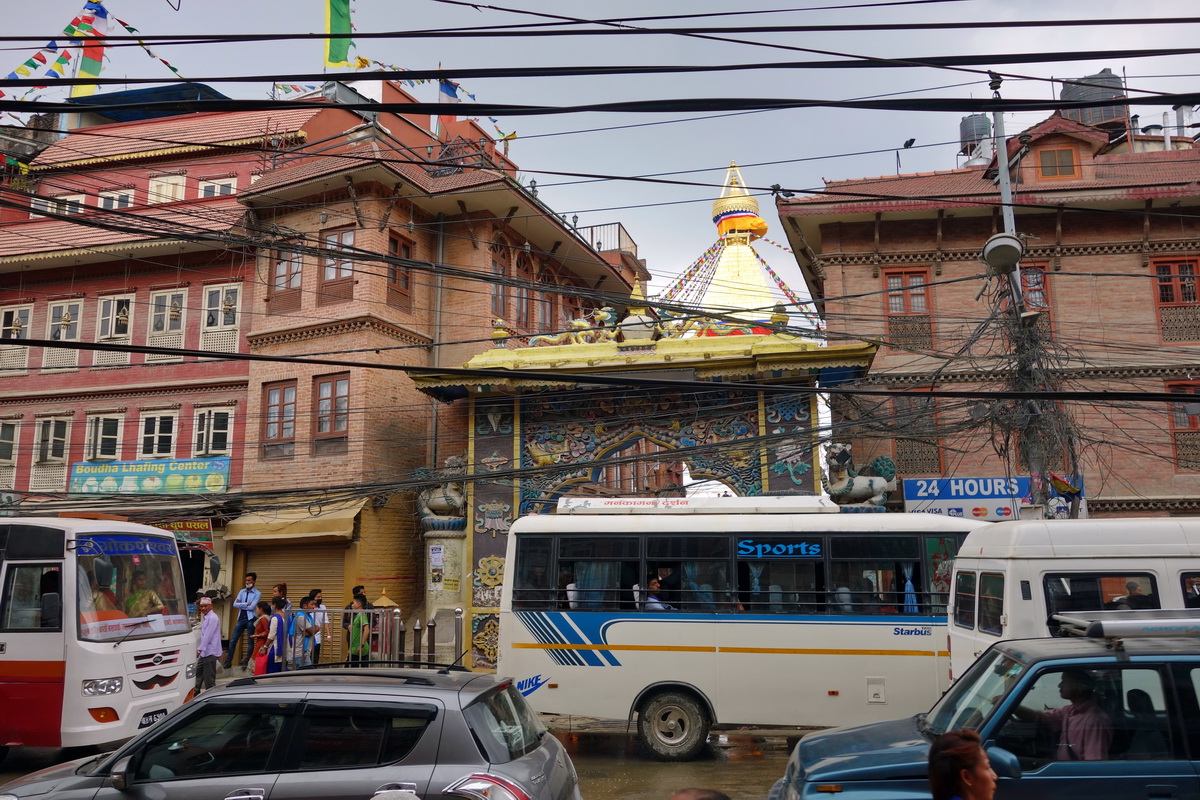
Boudhanath Stupa. On this busy street with a tangle of wires and heavy traffic lies the Boudhanath temple complex, where we were heading on foot from the Pashupatinath temple. It should be noted that crossing the road in such traffic is no easy task for an ordinary tourist, especially since there are no pedestrian crossings nearby. Although in Kathmandu, the presence of a pedestrian crossing doesn’t make things much easier.
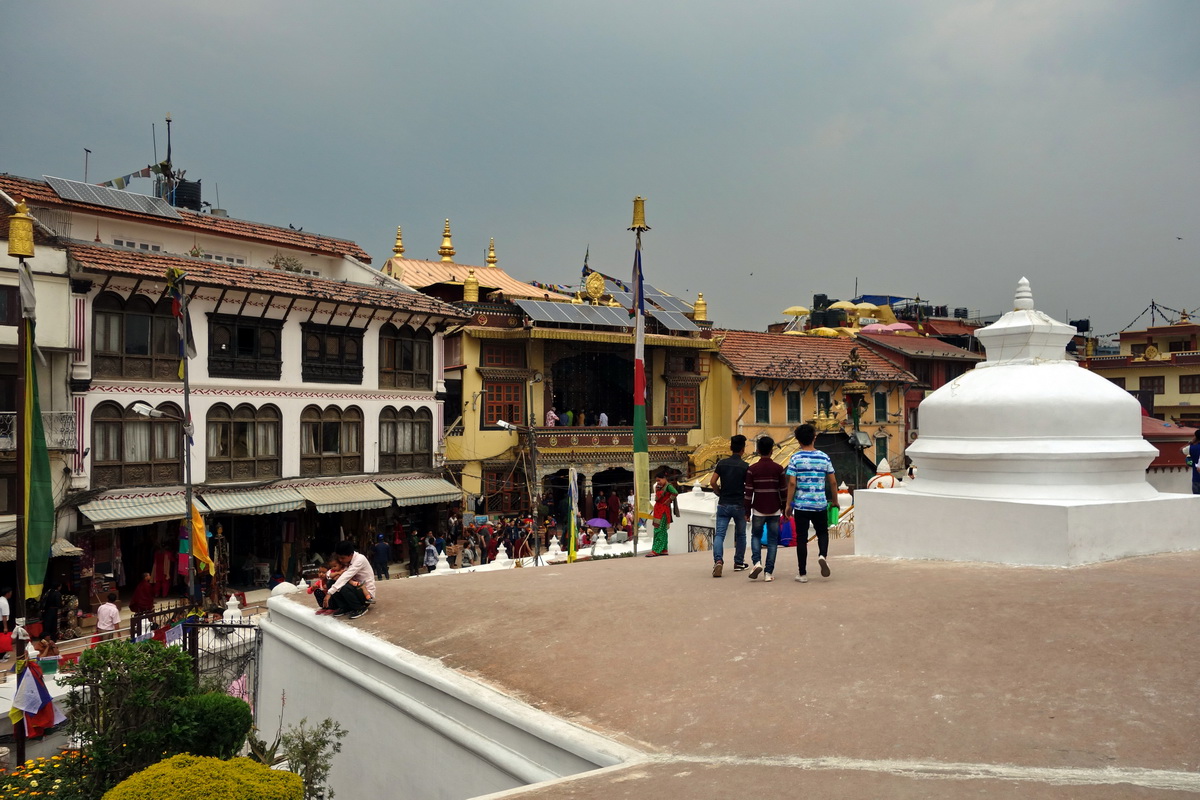
This is the entrance to the Buddhist Boudhanath temple complex. At the center of the complex is a large Buddhist stupa, surrounded by dozens of Tibetan monasteries of various traditions. Boudhanath is considered the main center of Tibetan Buddhism in Nepal.
Entry to the complex is paid, with a fee collected at the entrance.
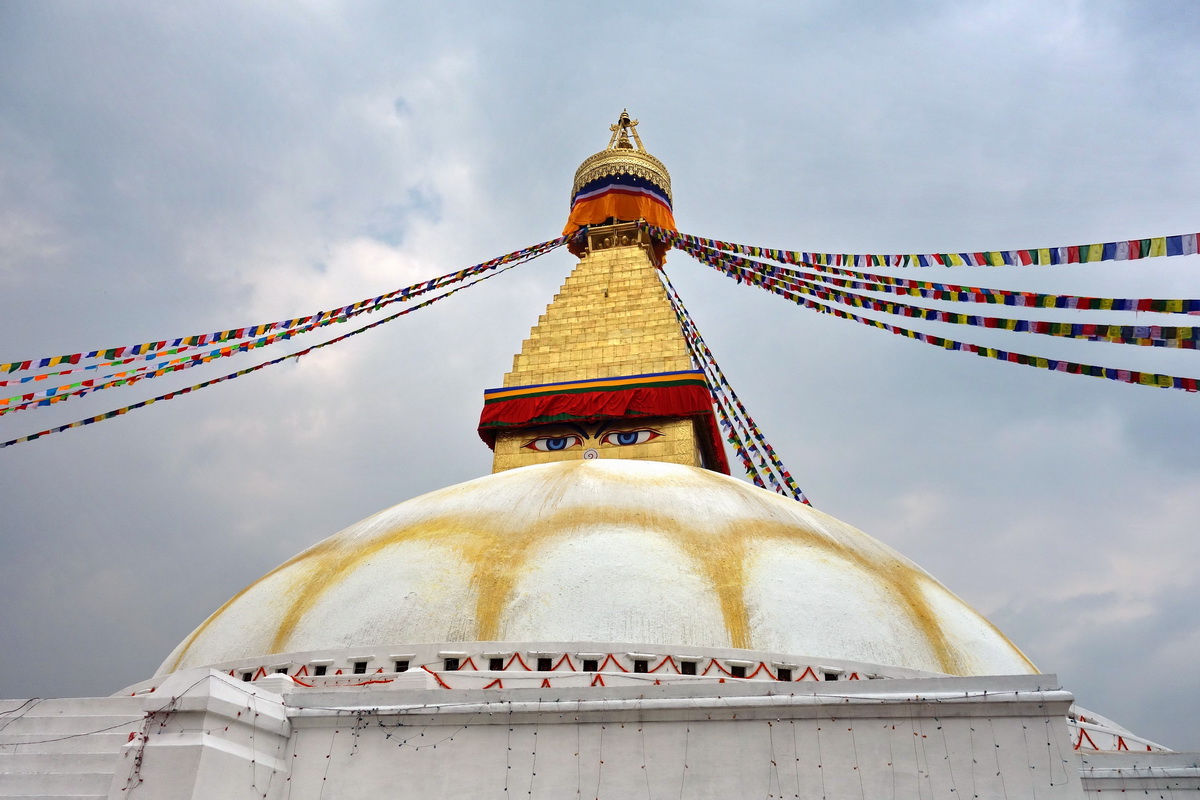
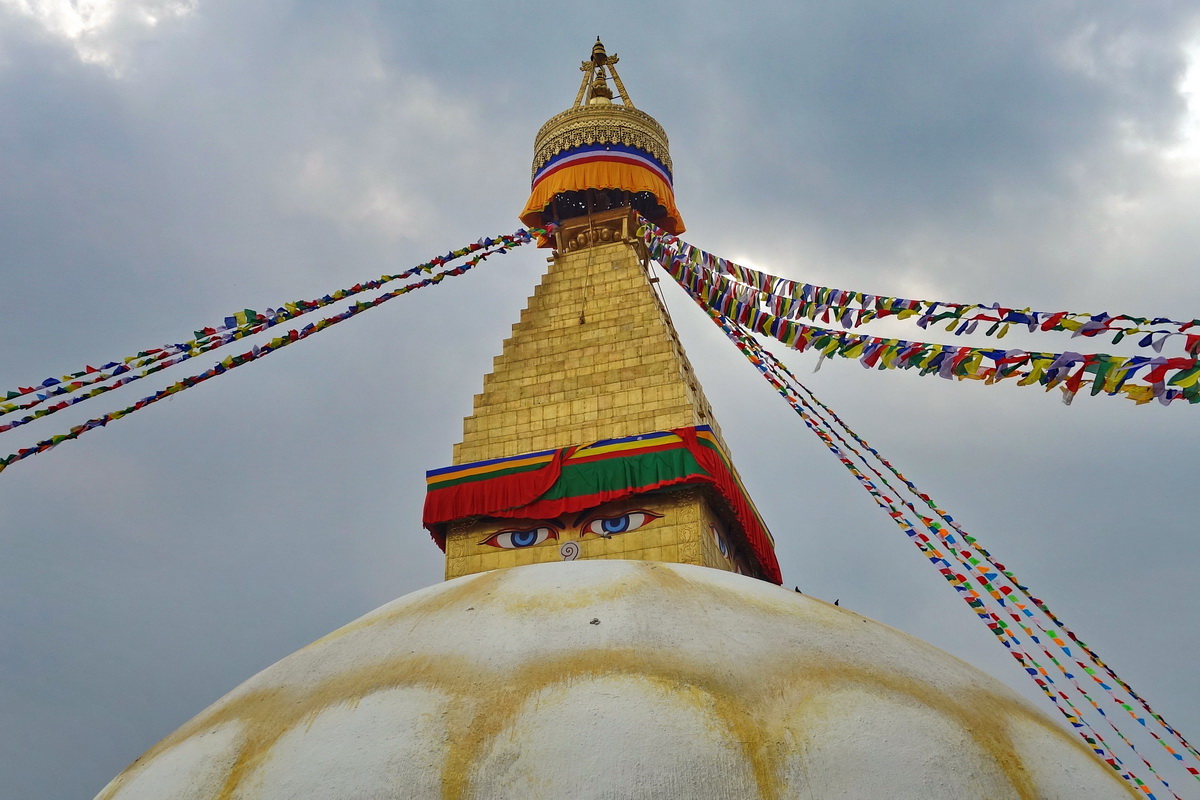
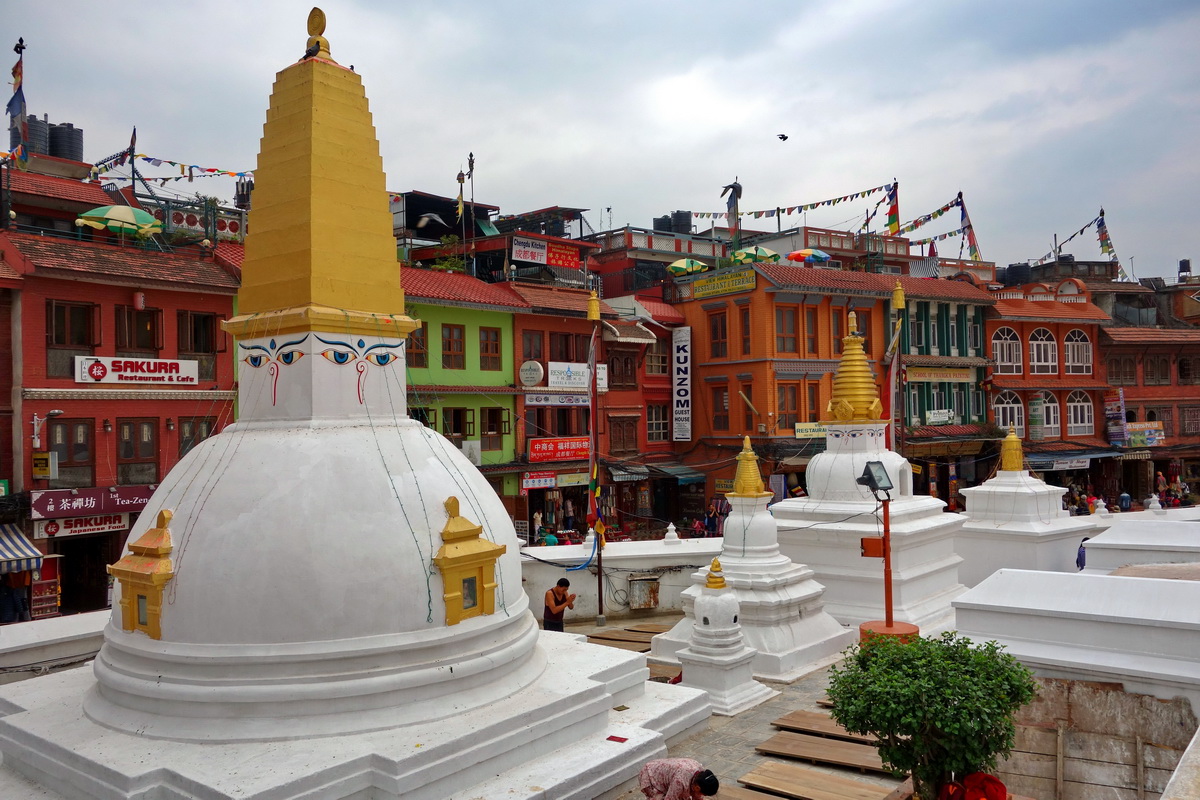
The Boudhanath Stupa was built in the 6th century and represents a three-dimensional, three-level mandala. In Buddhism, a mandala symbolizes the model of the universe, encompassing all four elements. The stupa’s base represents earth, the spherical dome symbolizes water, and the spire represents fire. The element of air is symbolized by an umbrella in the form of a ring atop the spire. From the square base of the spire, the “all-seeing eyes of the Buddha” look out in the four cardinal directions. Boudhanath is considered the largest Buddhist stupa in the world, with a diameter of about 100 meters and a height of 40 meters.
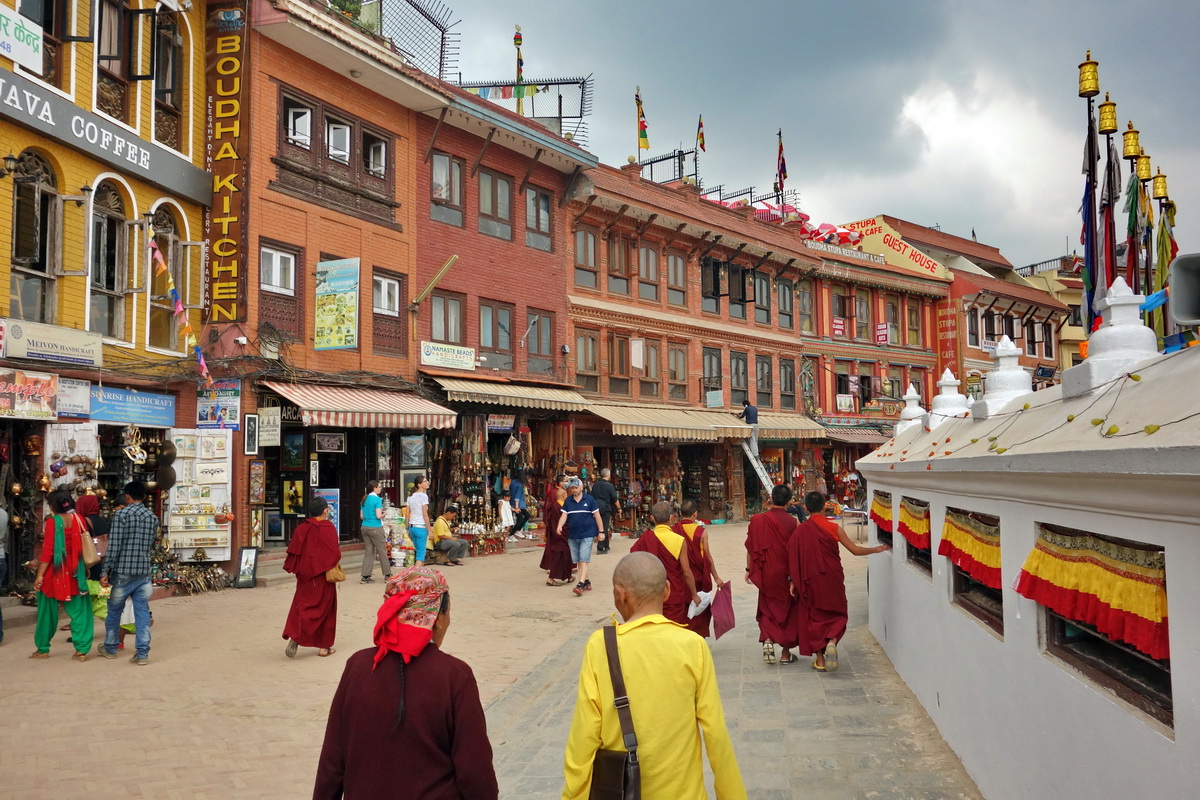
The stupa descends in terraces from top to bottom, with smaller stupas on each level, and is surrounded by a fence with prayer wheels. The wheels are not visible in the photos, as they are behind colorful curtains. The stupa can be circumambulated both around the fence, touching and spinning the prayer wheels, and along the terraces of each level. It is said that the stupa should be circumambulated an odd number of times clockwise, as this is considered a form of mantra recitation. We happily did so and walked around the stupa three times :)
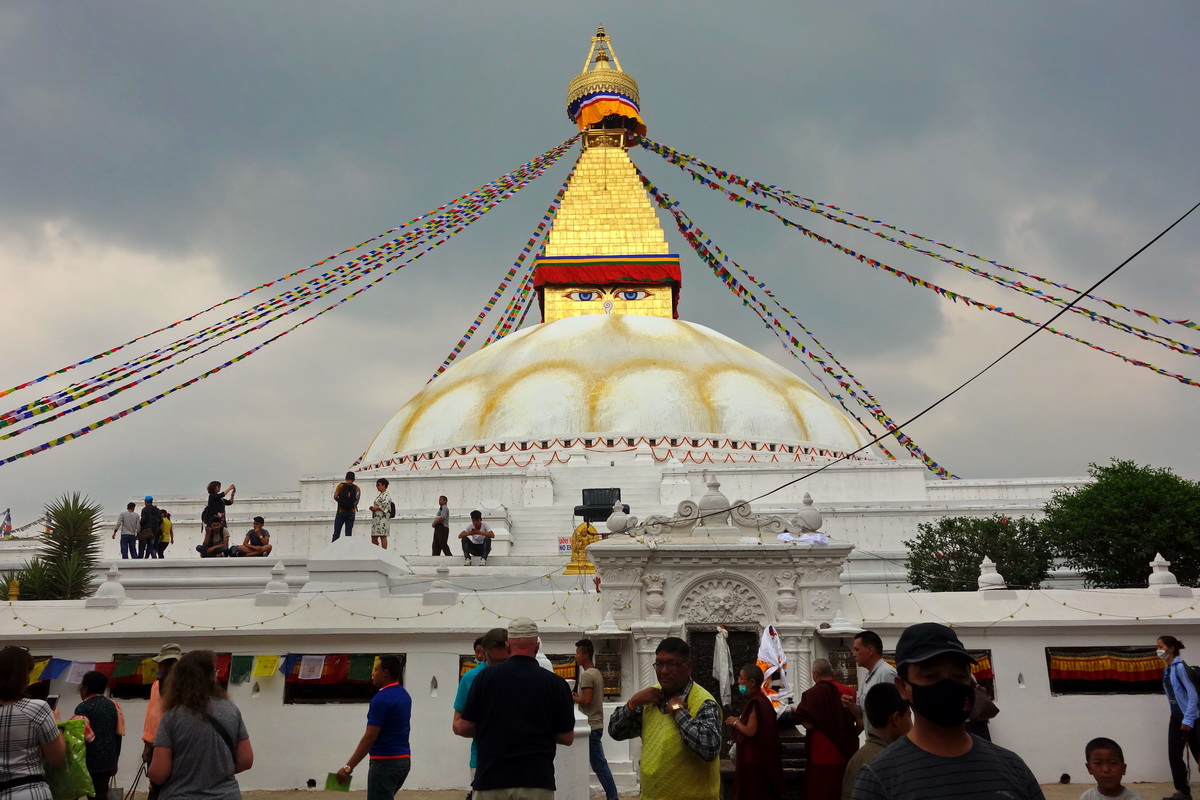
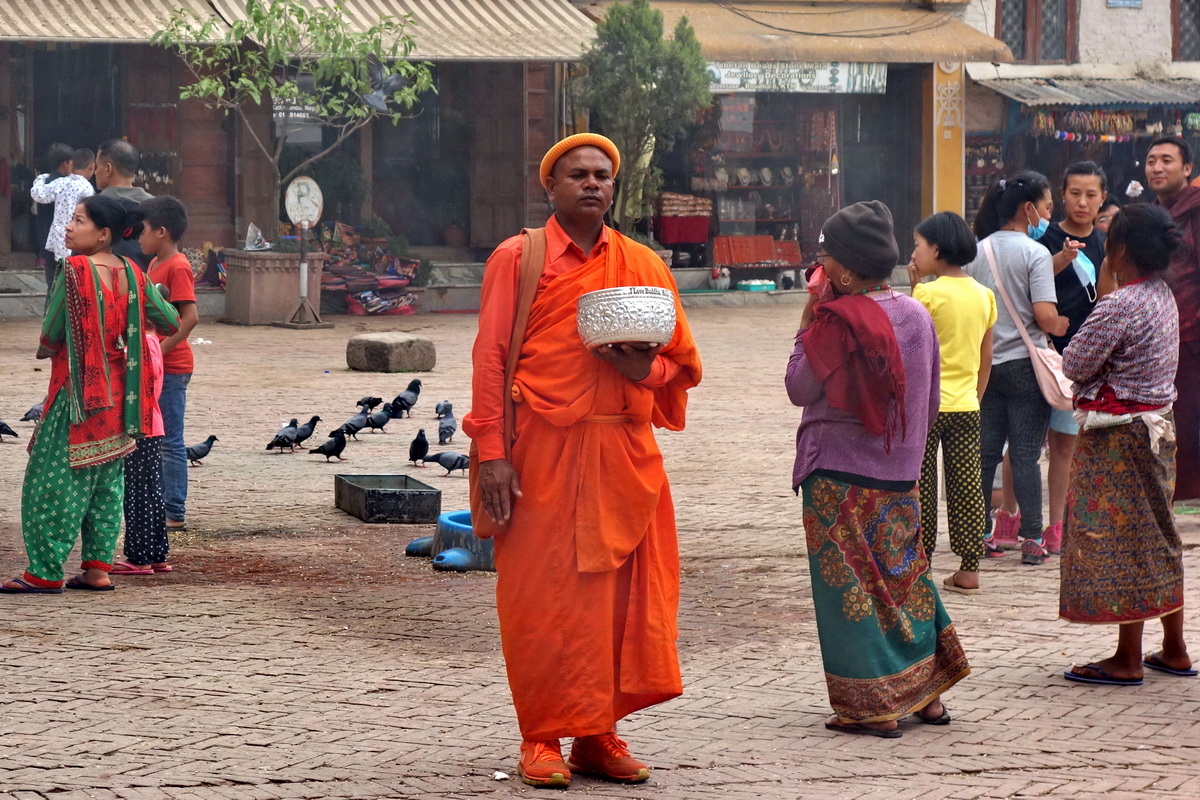
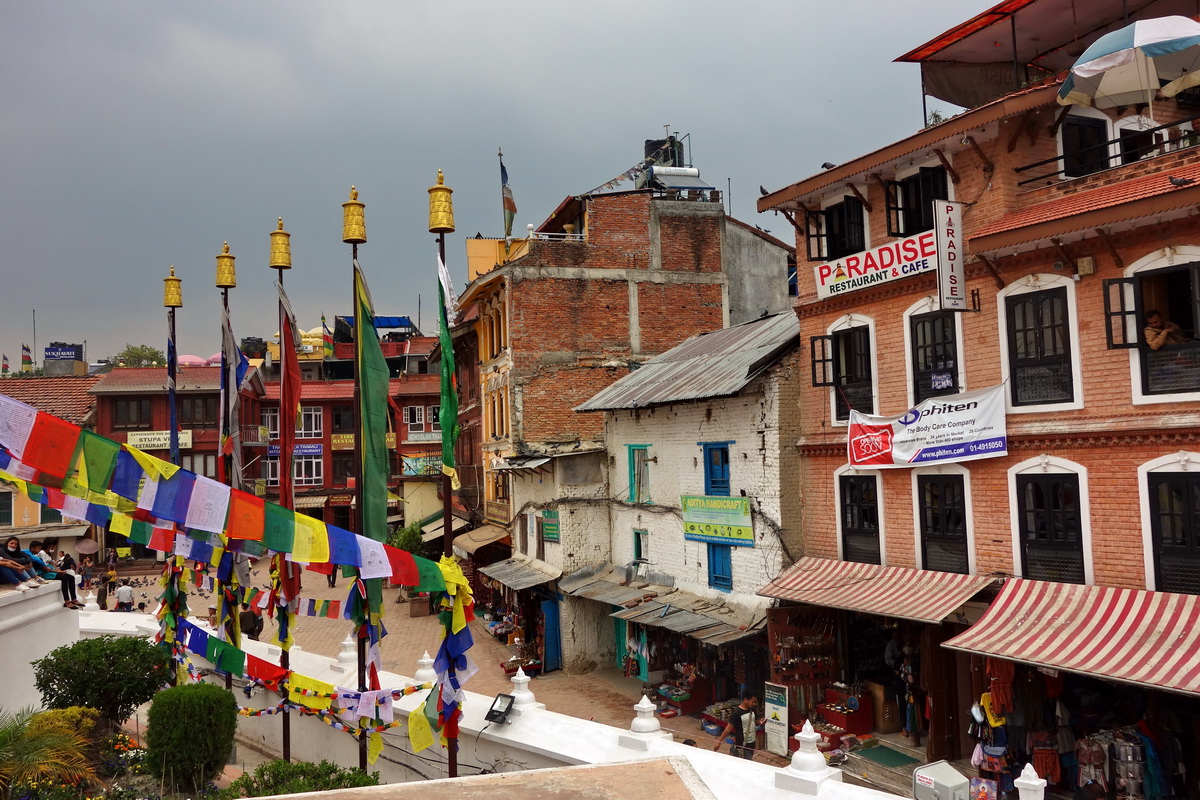
As I mentioned earlier, the stupa is surrounded by monasteries representing various schools of Tibetan Buddhism, as well as three- and four-story buildings with souvenir shops, stores, and restaurants. Here, you can meet both tourists casually strolling through the complex, admiring the sights, taking photos, and spinning prayer wheels, and pilgrims and Buddhists reciting mantras, praying, collecting donations, and performing ritual prostrations.
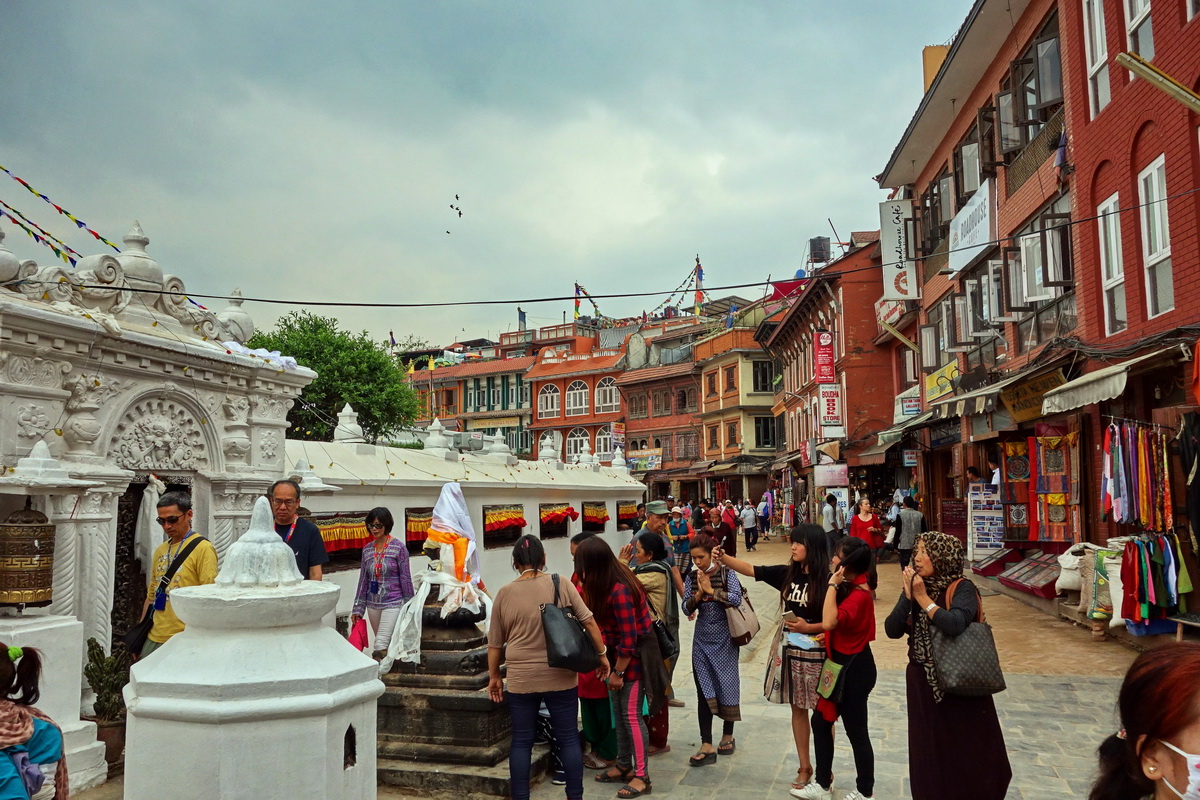
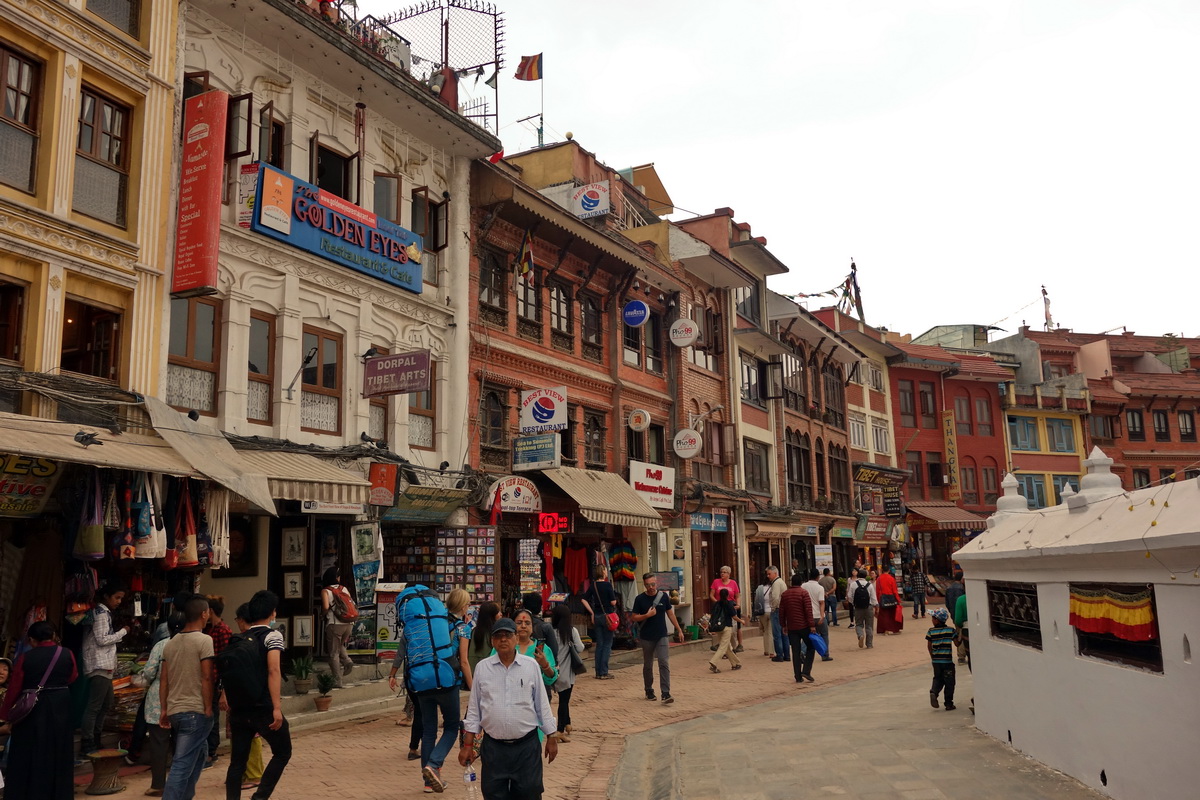
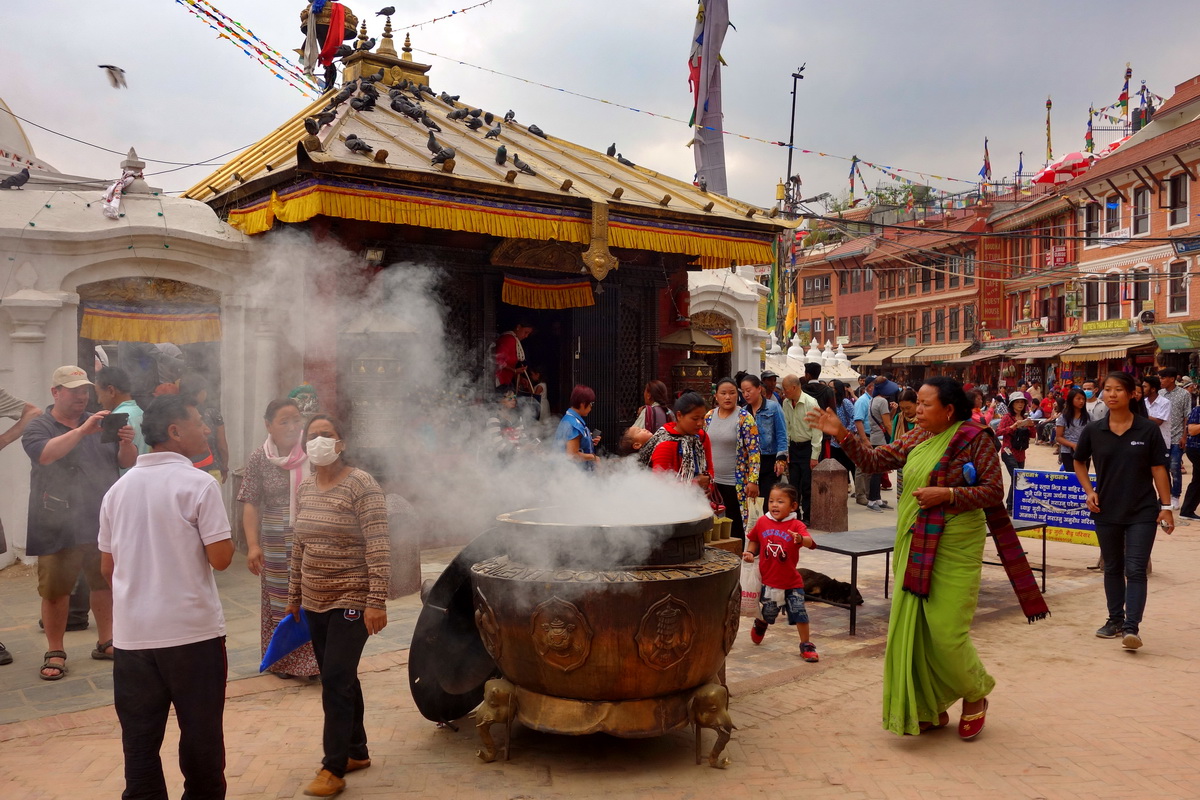
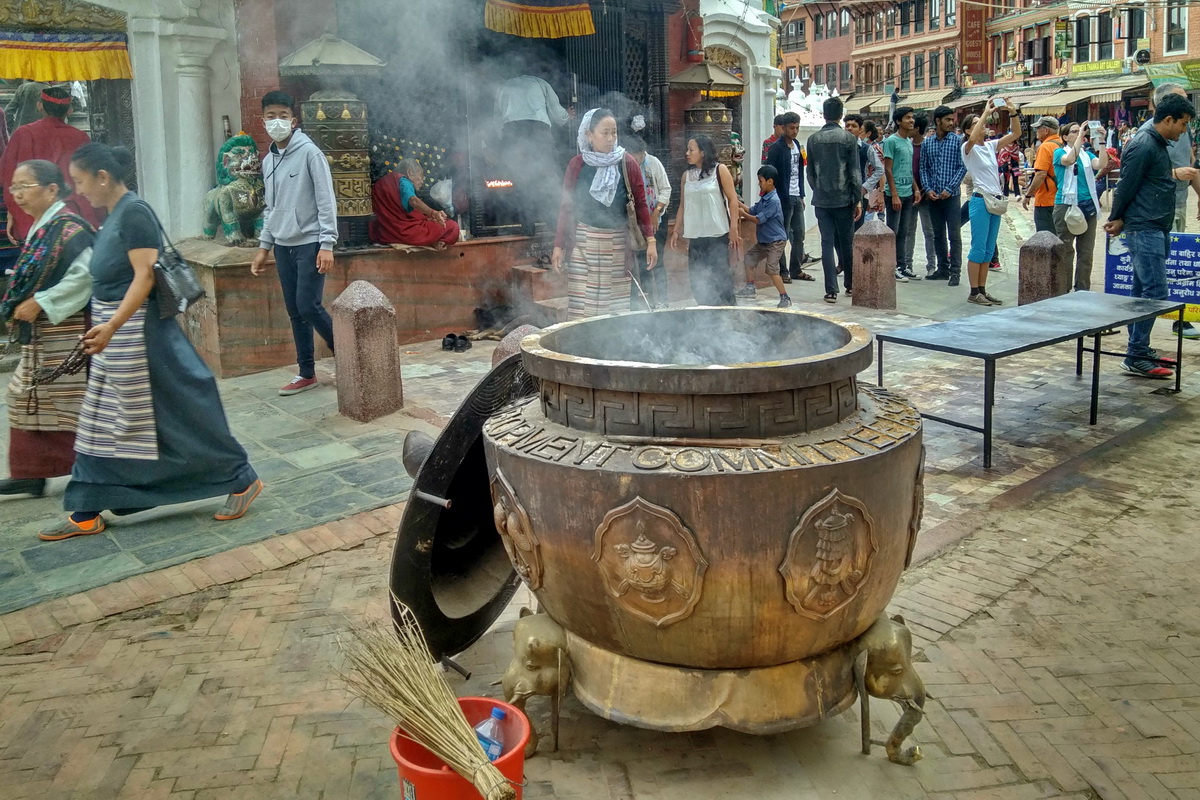
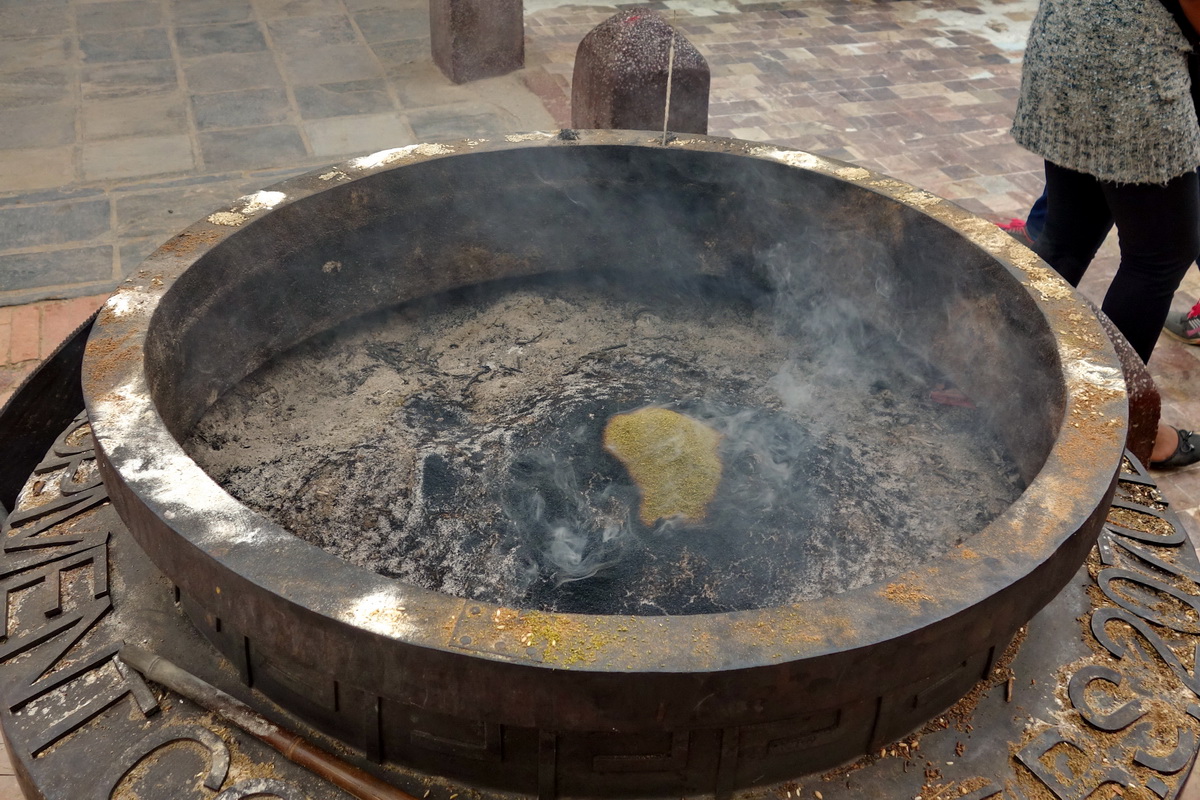
This is a cauldron where incense is burned. You can buy incense and toss it into the cauldron. In general, in Kathmandu, not only in temples but also on the streets, you often smell the sweet aroma of incense. In the background on the left is an unassuming entrance to a temple, through which you can climb to the stupa.
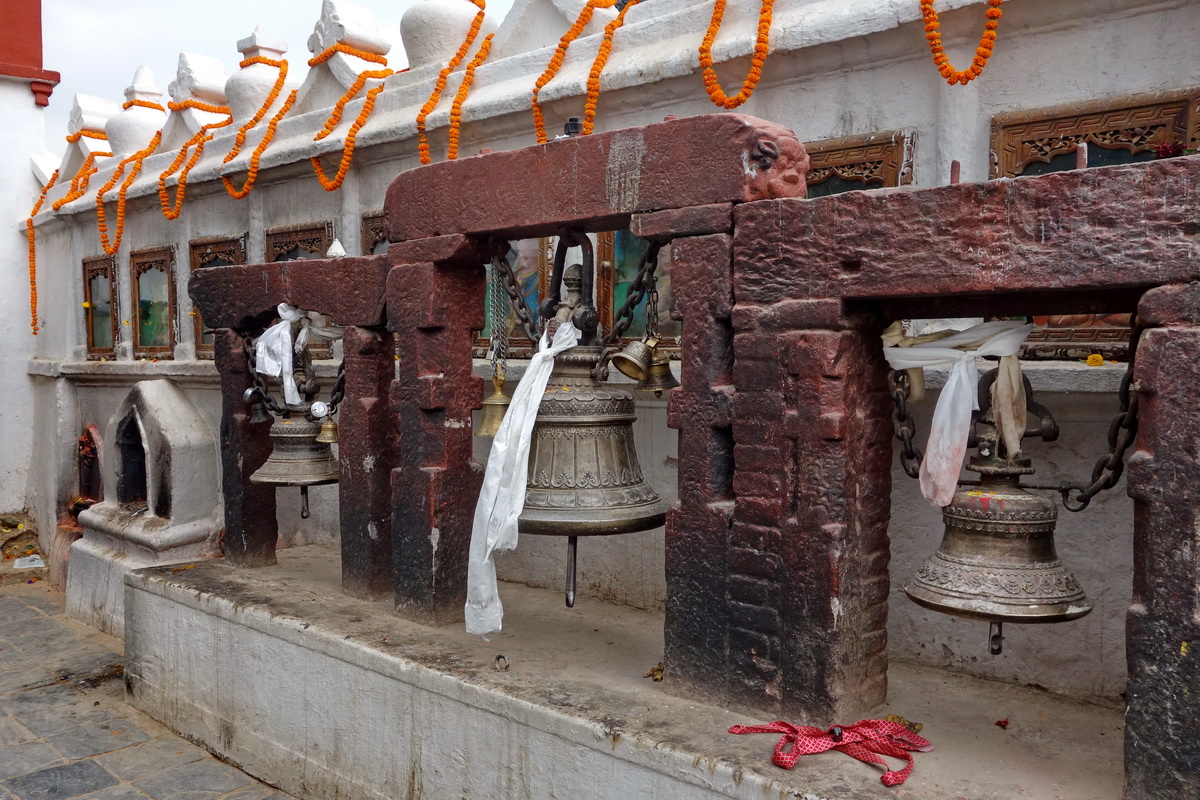
Just beyond the fence surrounding the stupa is a small open-air temple. On one side, there are small prayer wheels, and on the other, bells. It is believed that ringing a bell wards off evil forces and invokes the wisdom of all Buddhas. By the way, almost everyone who enters rings the bell and spins the prayer wheels.
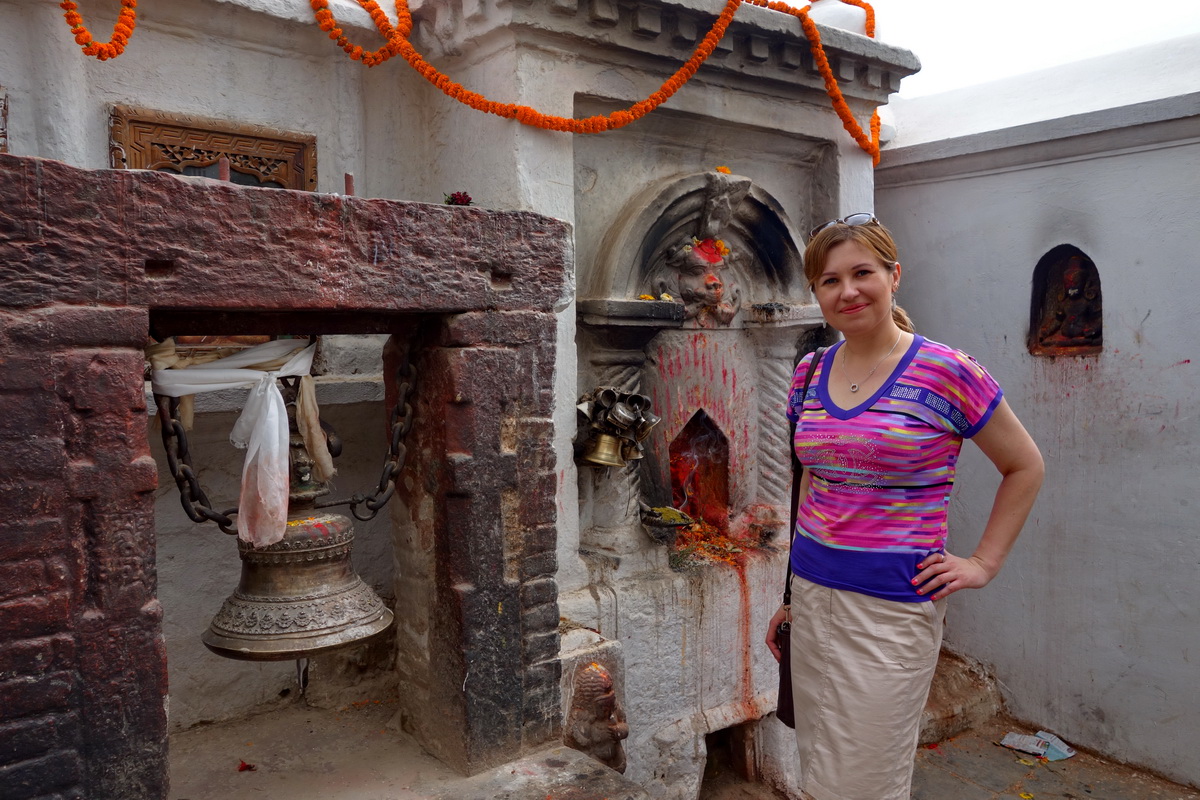
Here, anyone can have a red dot, the so-called “blazing pearl” or third eye, applied to their forehead. But we just take photos and climb the stupa.
The stupa is adorned with thousands of prayer flags inscribed with mantras, or sacred texts. It is believed that when the wind blows the flags, it activates the texts and spreads them. Such flags are traditionally hung in significant places in Nepal—on mountain passes, bridges, and near monasteries and temples.
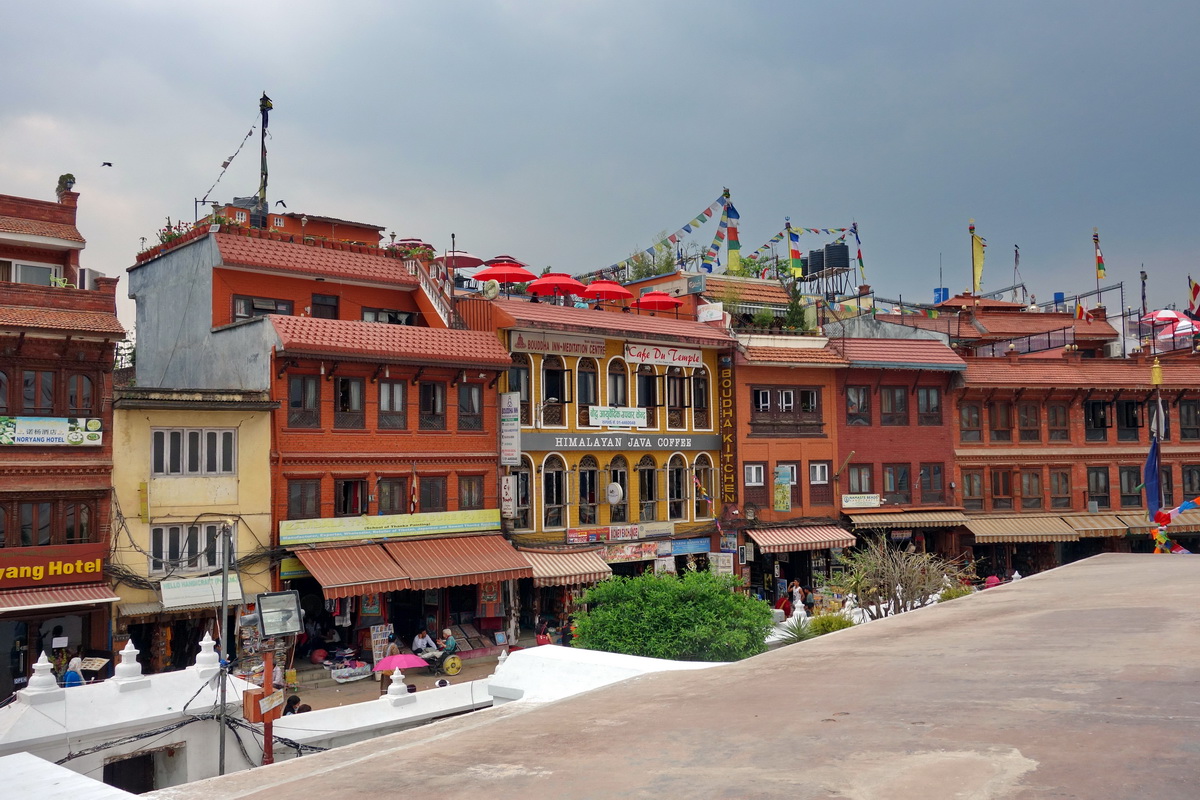
On the stupa’s terrace is a so-called incense burner. We took photos in front of it :) Tourists are prohibited from accessing the next terrace, so our walk continued around the stupa’s square.
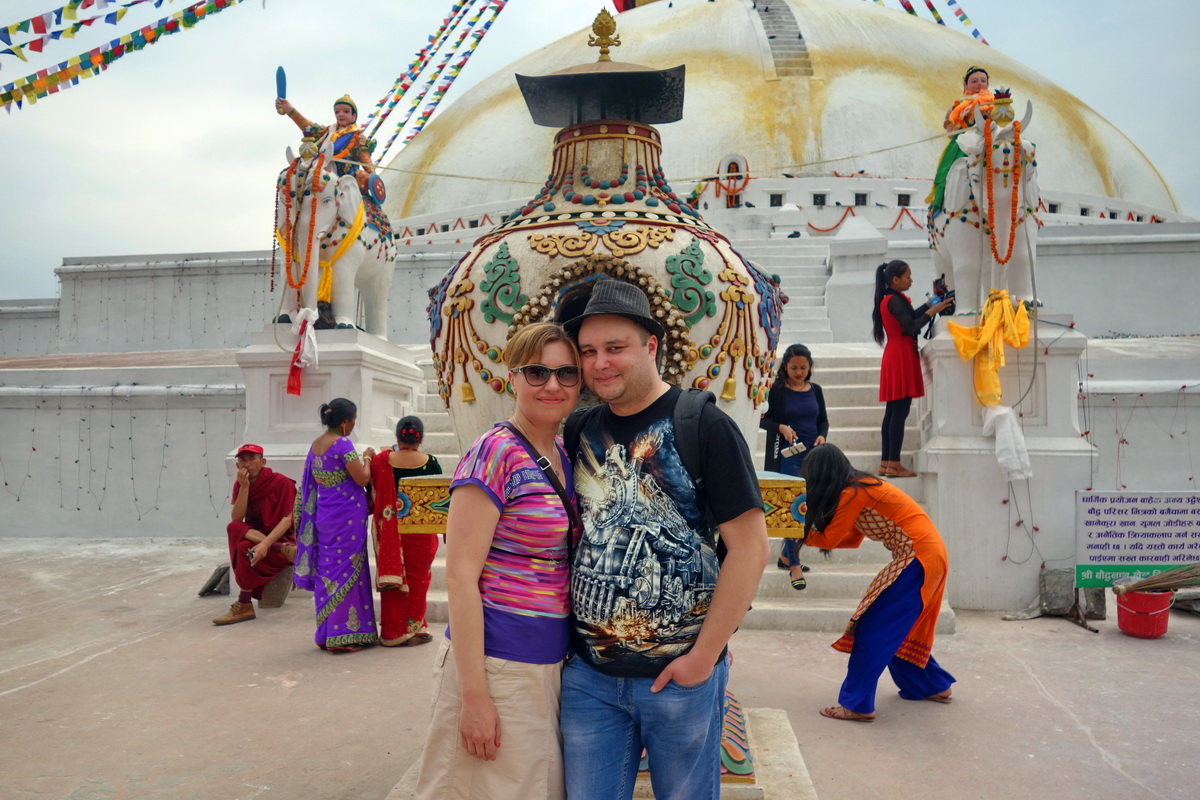
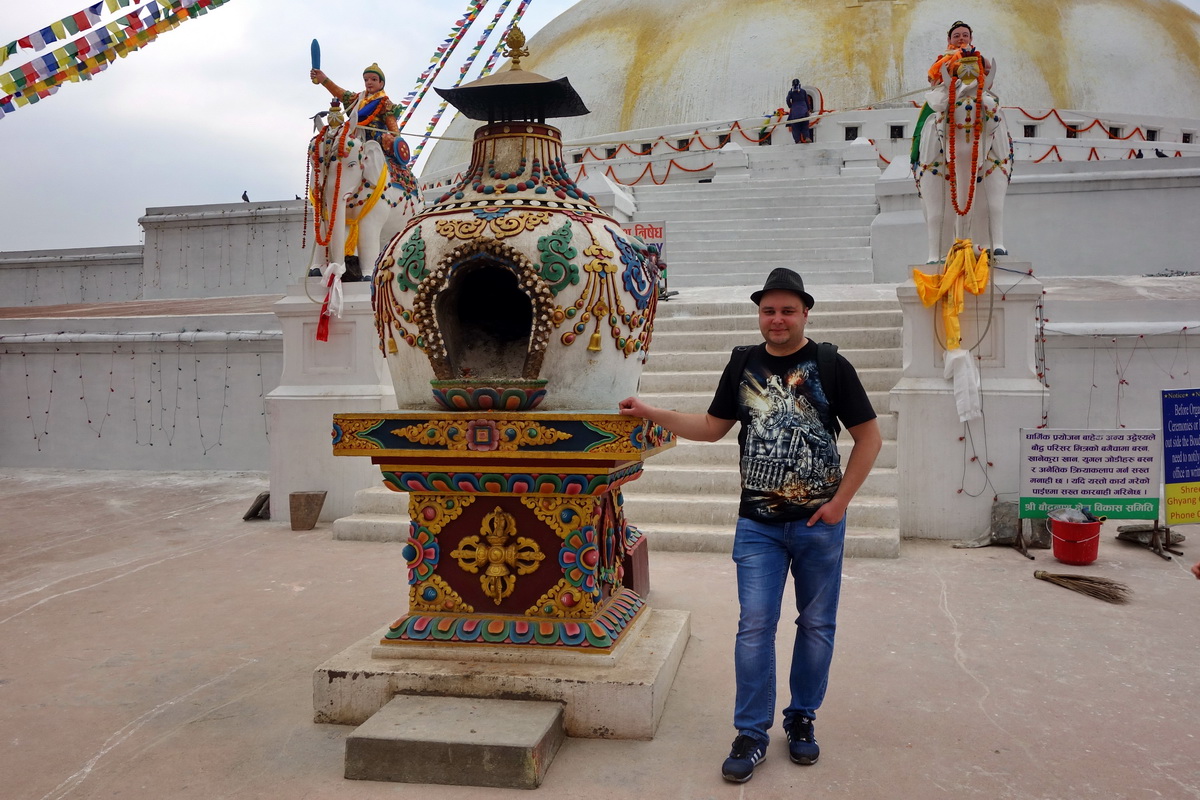
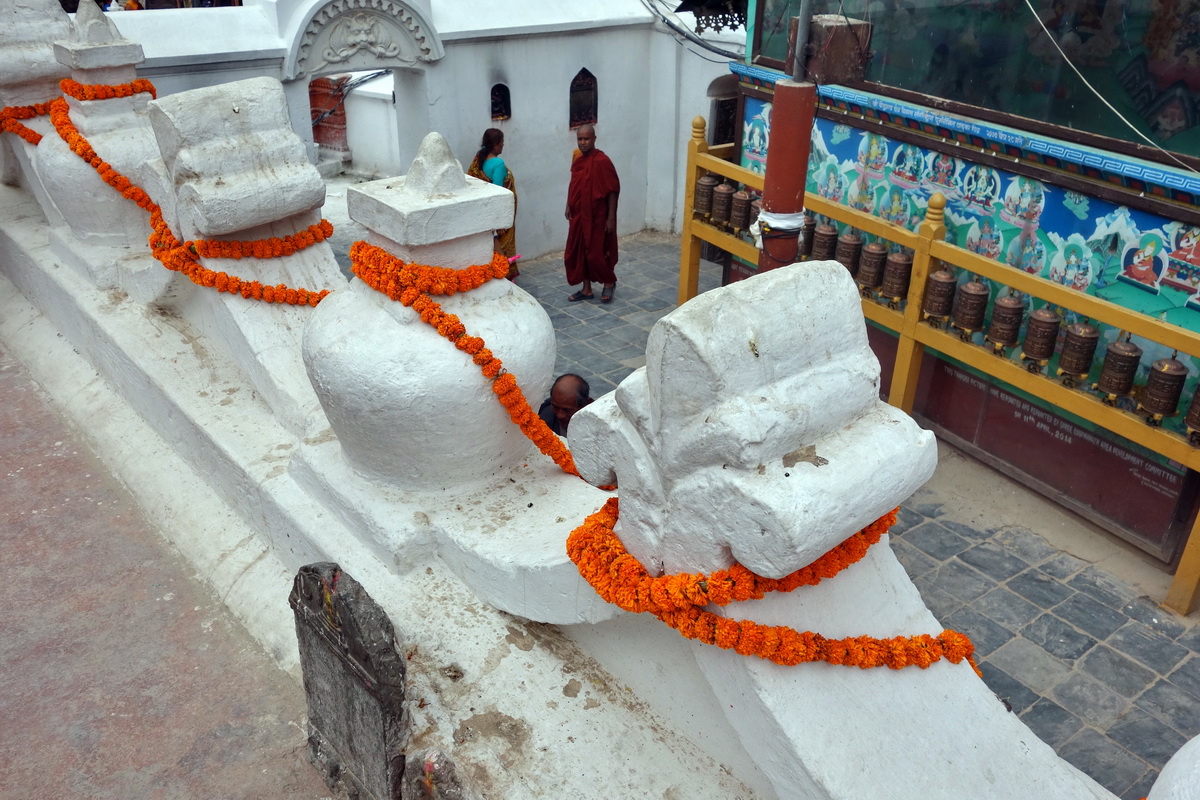
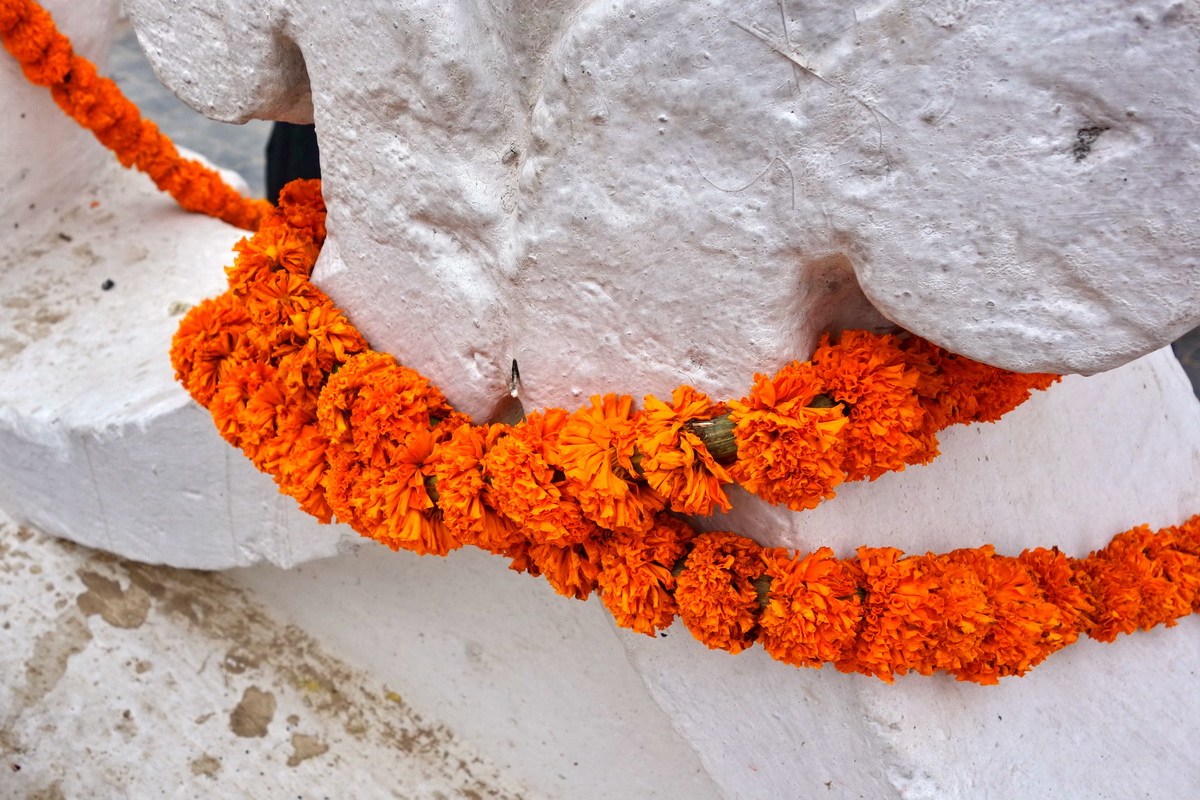
The Boudhanath stupa’s fences are decorated with vibrant floral garlands—symbols of love and joy.
This is one of the temples, from whose balcony you get a beautiful view of the stupa and the Boudhanath complex. At the entrance to this temple, like many others in Nepal, you must remove your shoes. Inside the temple is a huge prayer wheel, kept in constant motion by the many visitors to this place.
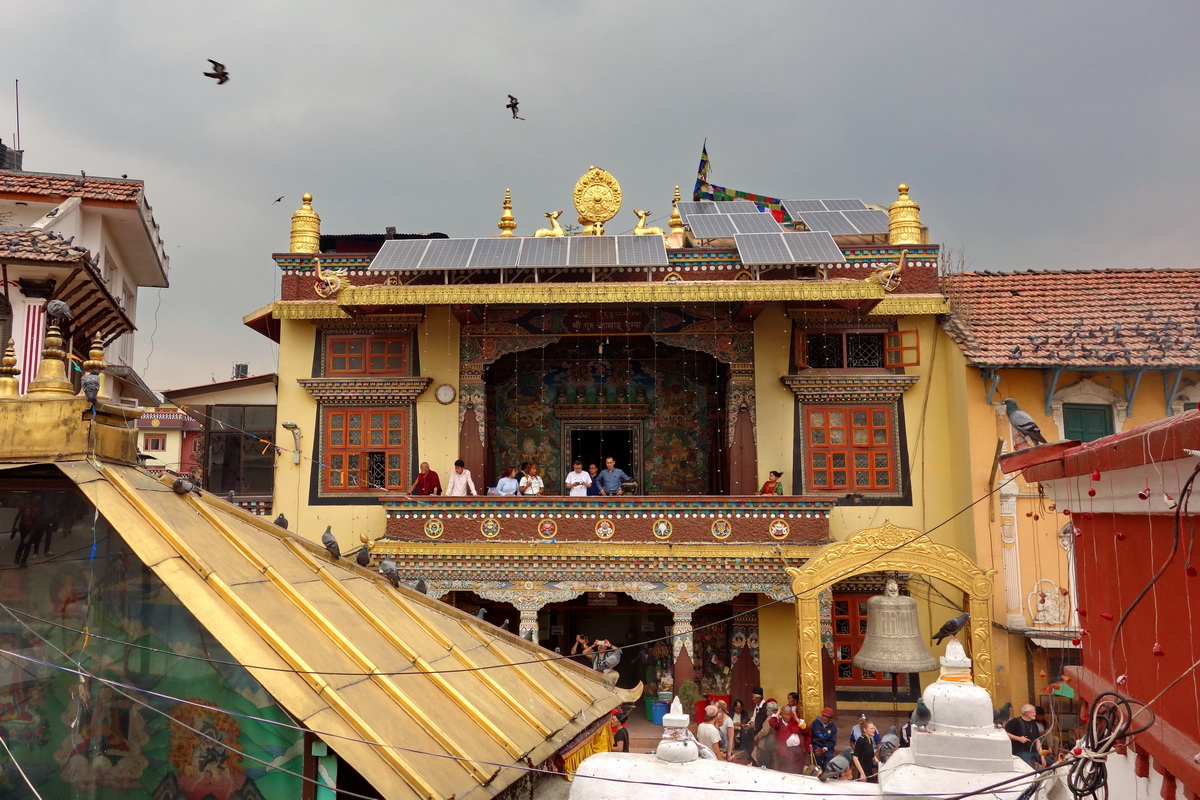
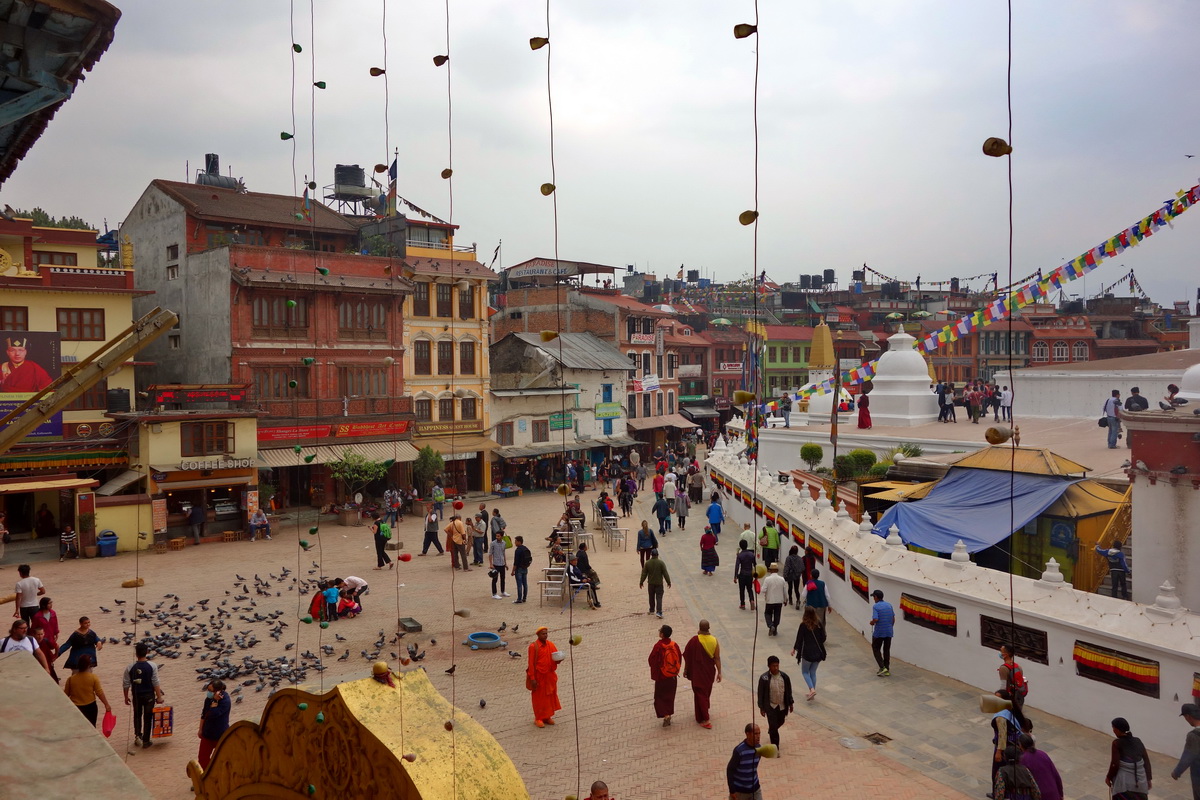
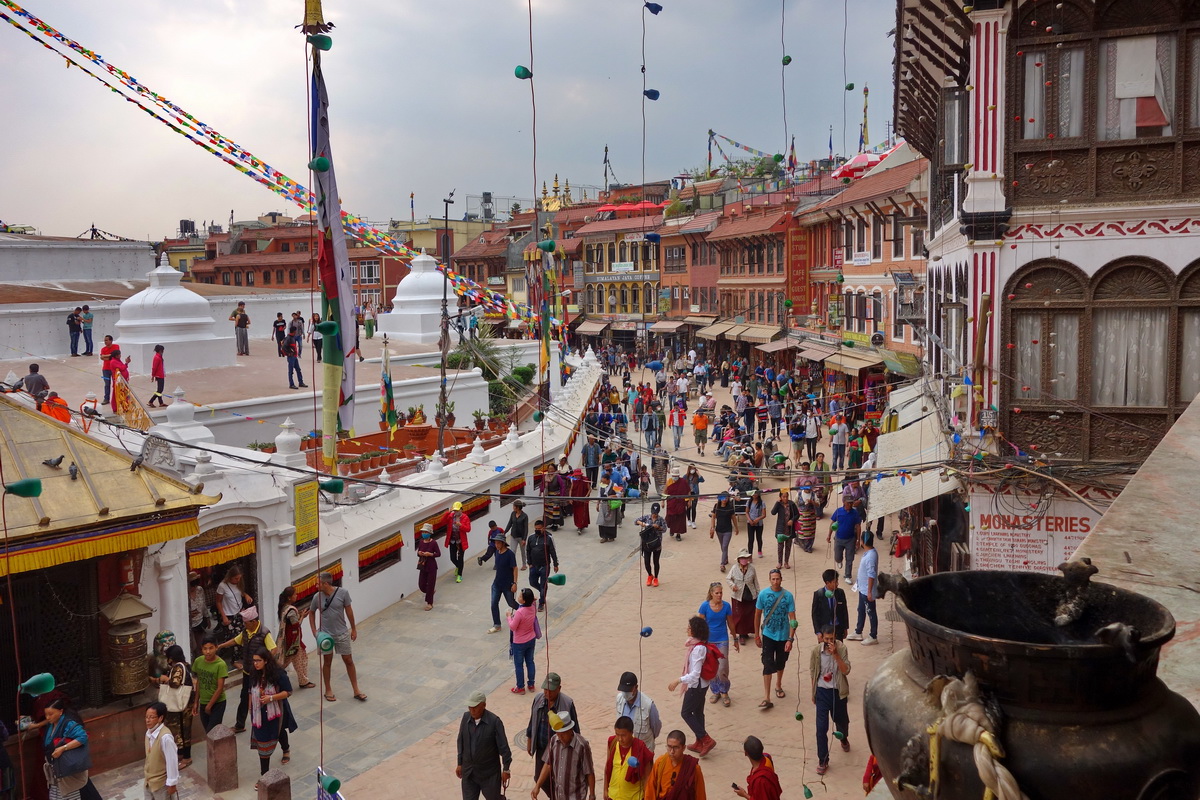
Having thoroughly explored this sacred place, it’s time to head back.
We grab some local fast food on the way. This dish consists of a dough shell filled with spicy boiled vegetables and topped with a spicy sauce. It’s tasty and interesting but quite spicy. I often ate this—it’s a decent snack, but not for everyone. It has a very peculiar appearance and is quite spicy.
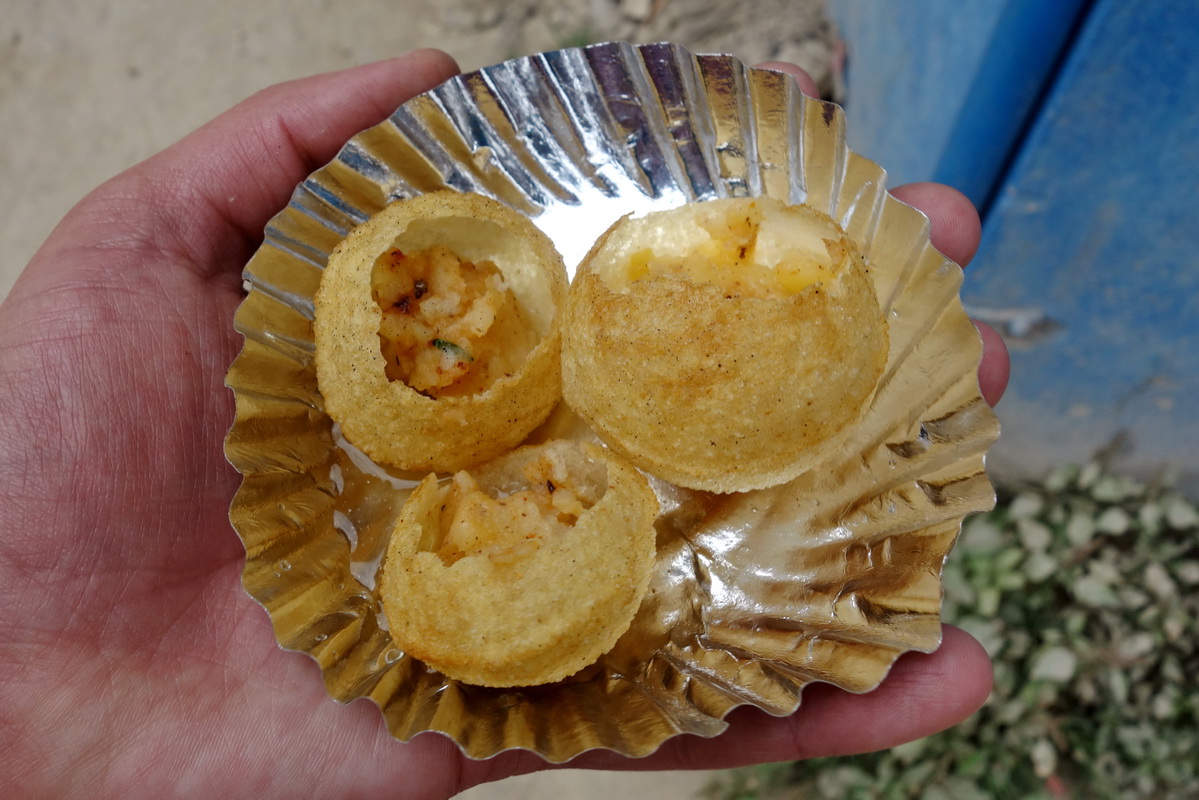
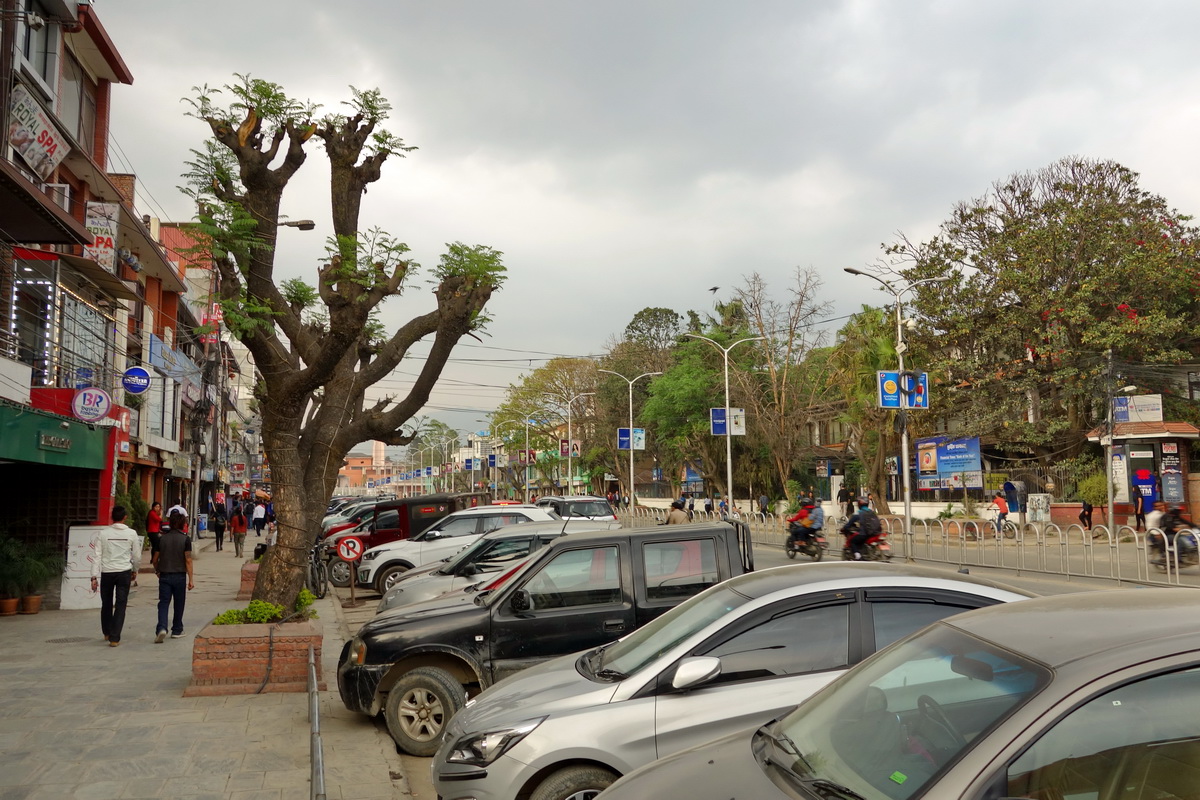
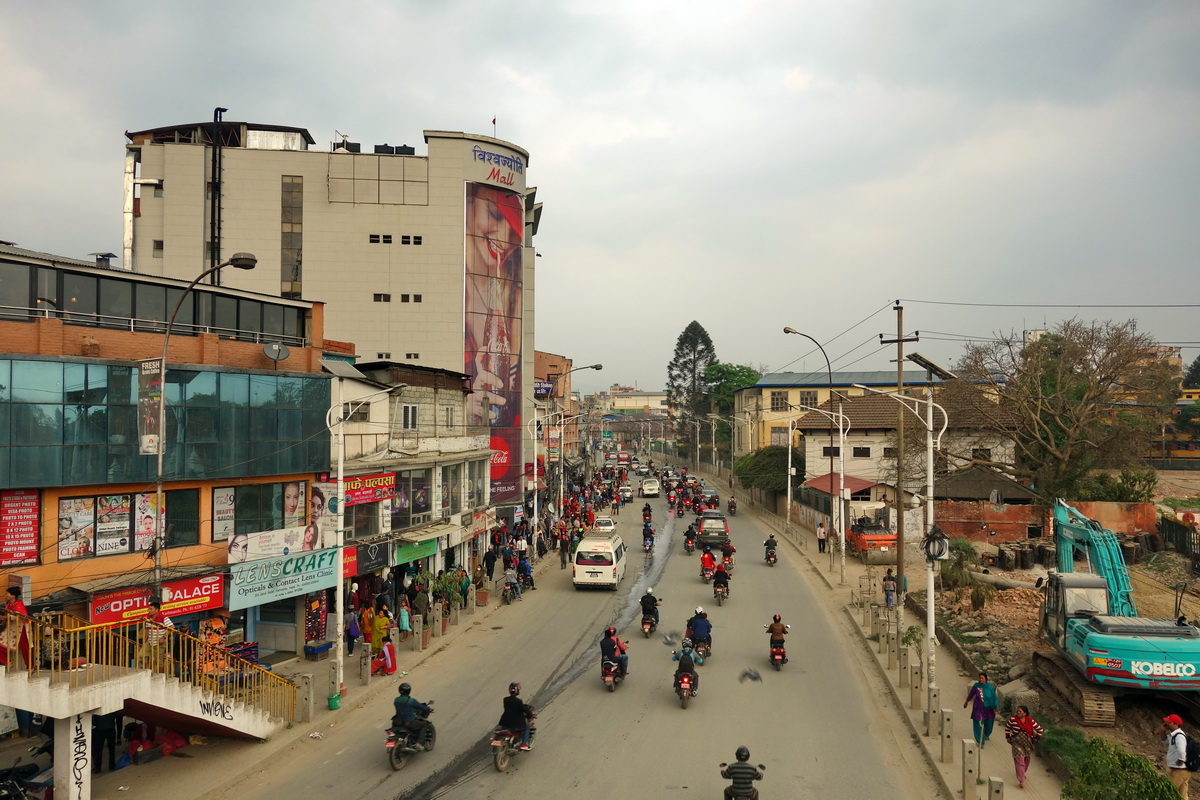
Central Kathmandu. One of the city’s main streets.
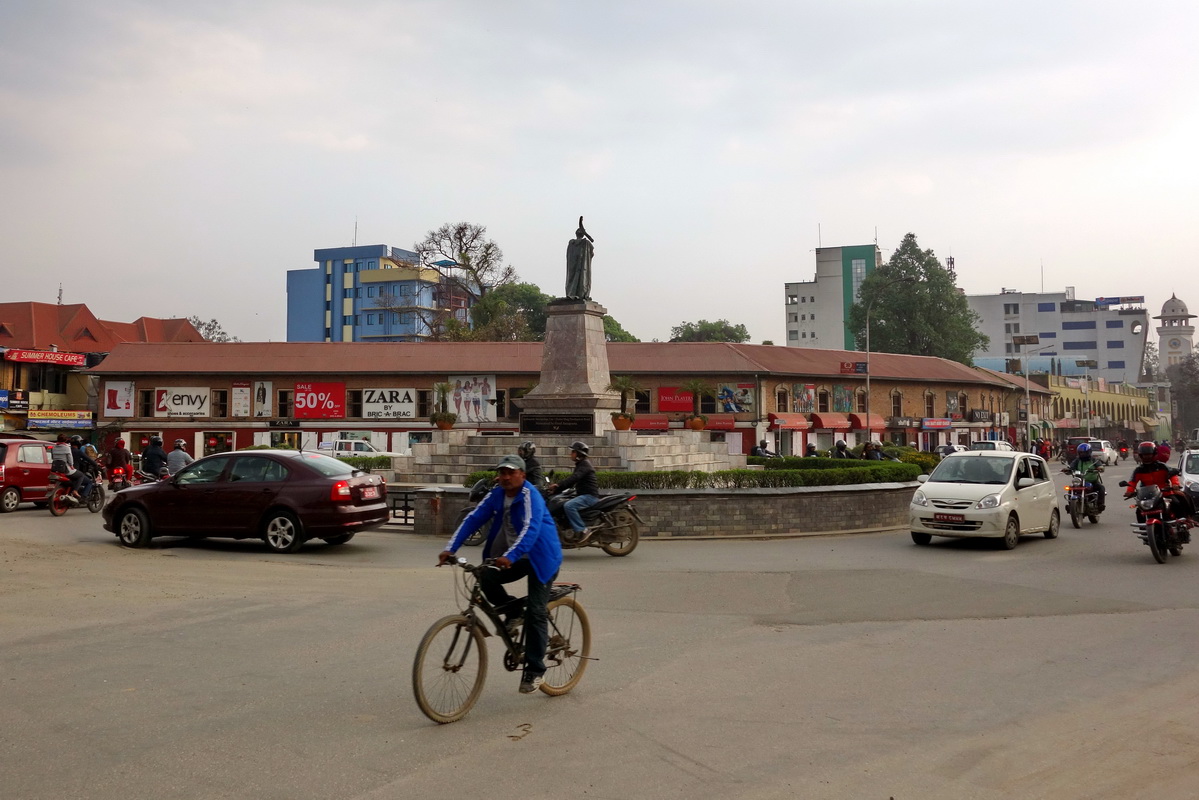
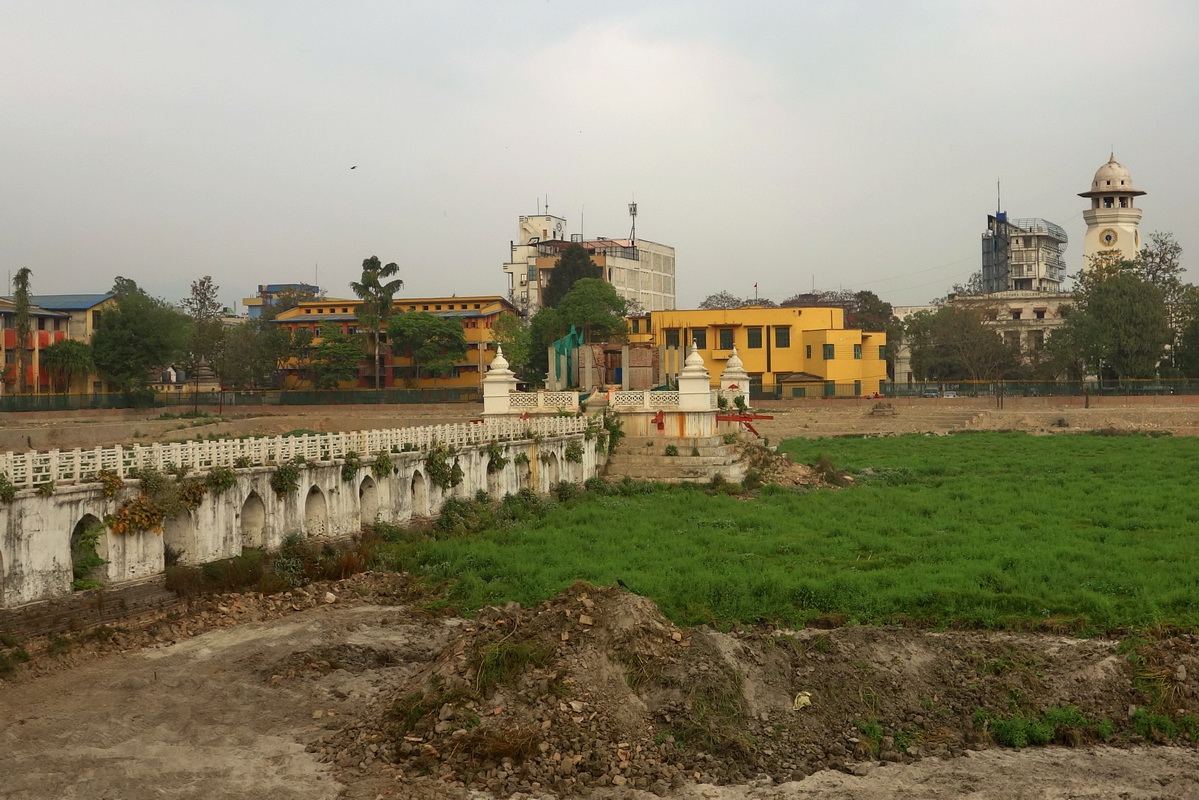
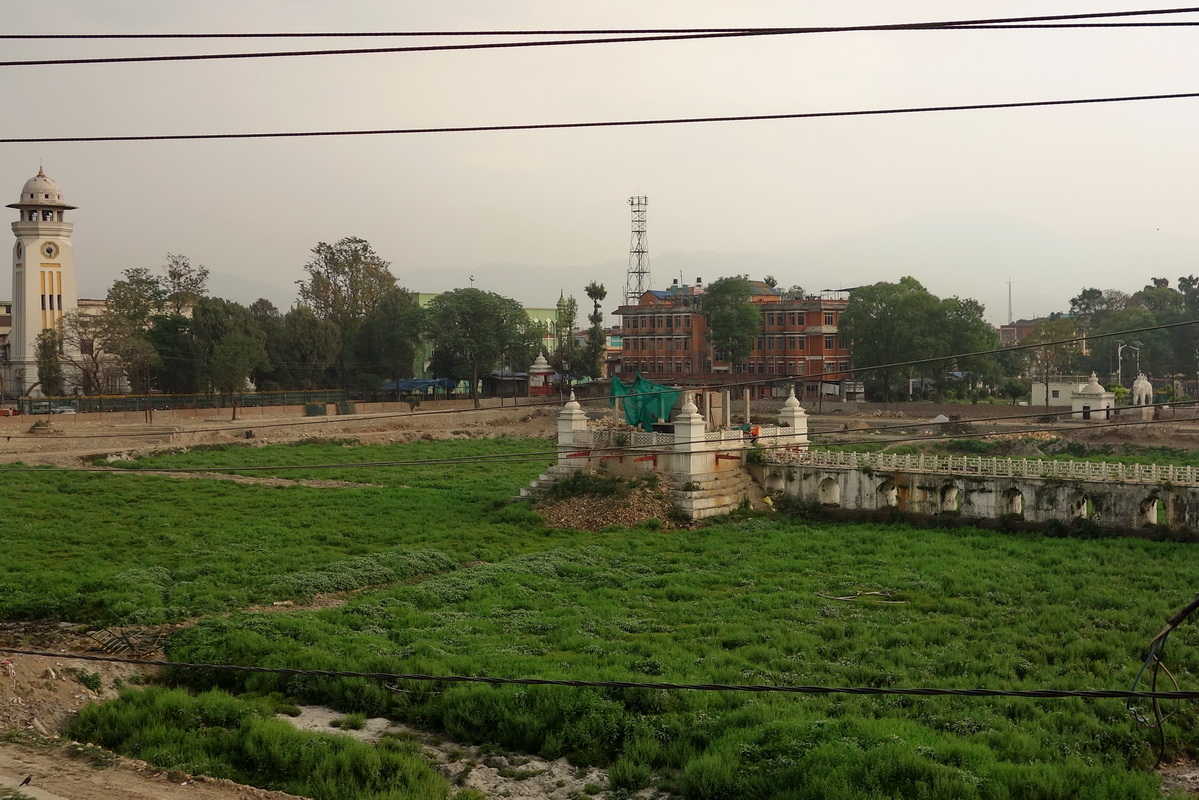
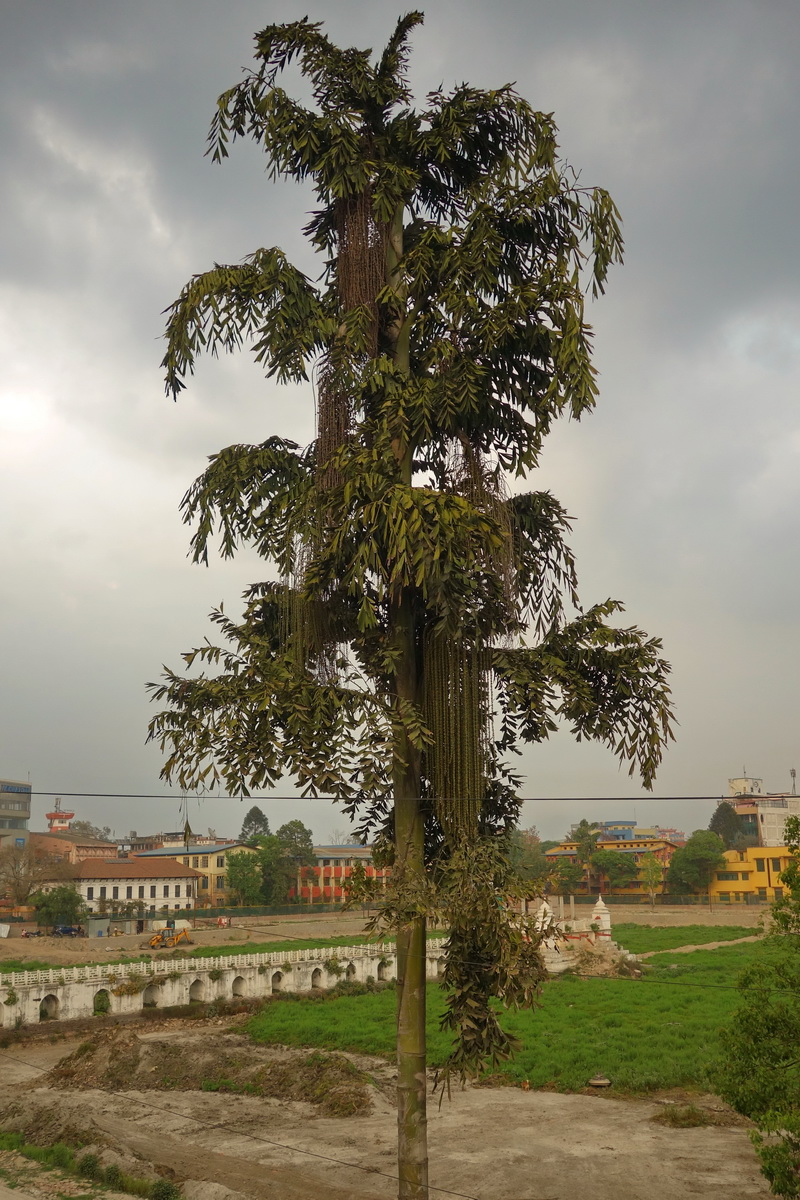
Rani Pokhari. Rani Pokhari, also known as the New Pond or Queen’s Pond, is an artificial reservoir in the central part of Kathmandu, the capital of Nepal. It is a local landmark.
However, at the time of our visit, the temple in the center of the lake was destroyed by an earthquake, and the lake had dried up and was overgrown with grass. The area was closed off. A sad sight :(((
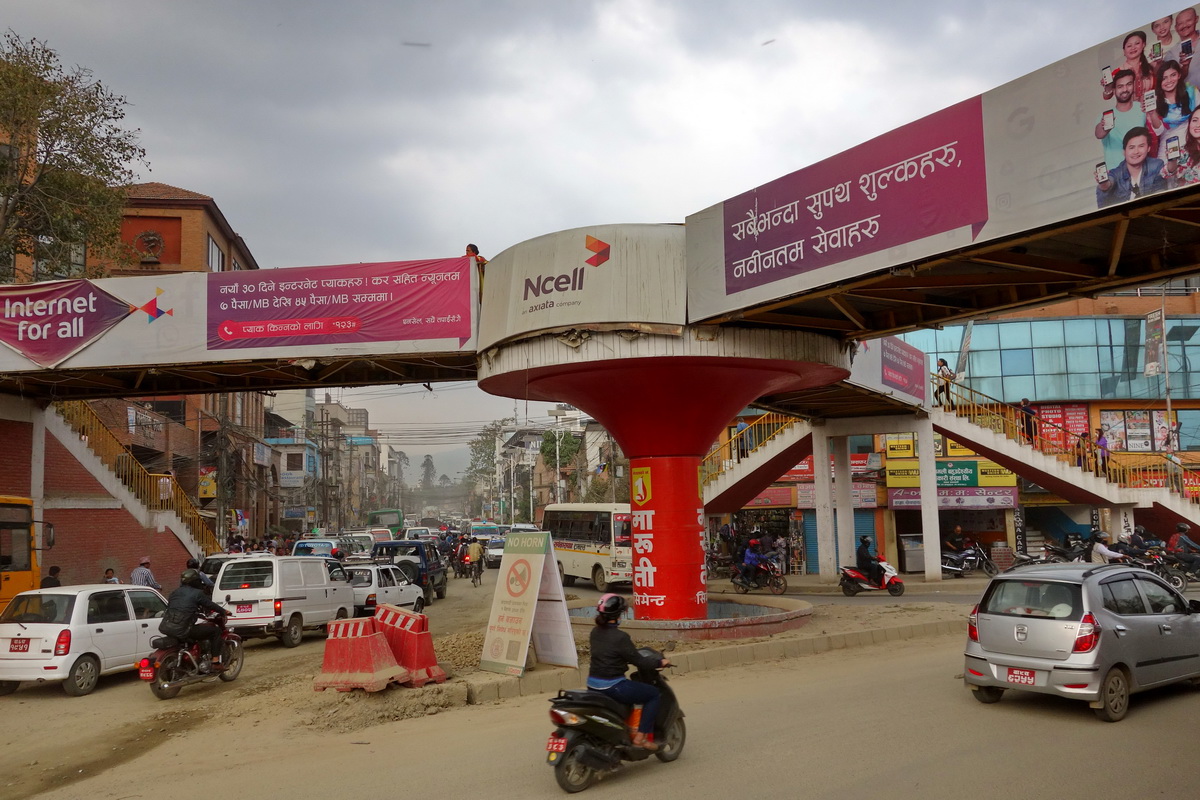
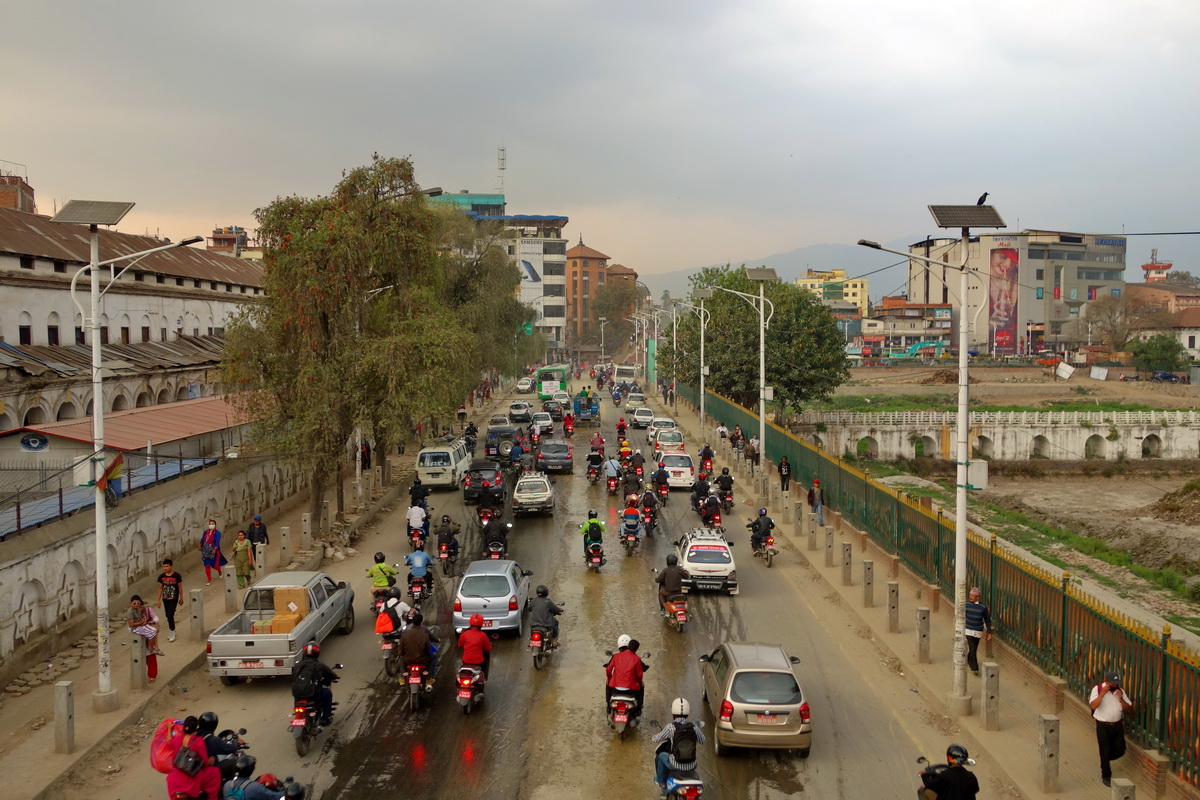
We move on. A view of one of the city’s main streets from a bridge.
We have dinner at a local eatery. Here, you can order typical Nepalese dishes, also available at other similar establishments. Besides our beloved momo, they offer noodles with meat and vegetables, soup, spring rolls, and more. We decided to order vegetable and chicken momo and a buffalo meat sausage. Everything was very tasty, though a bit spicy.
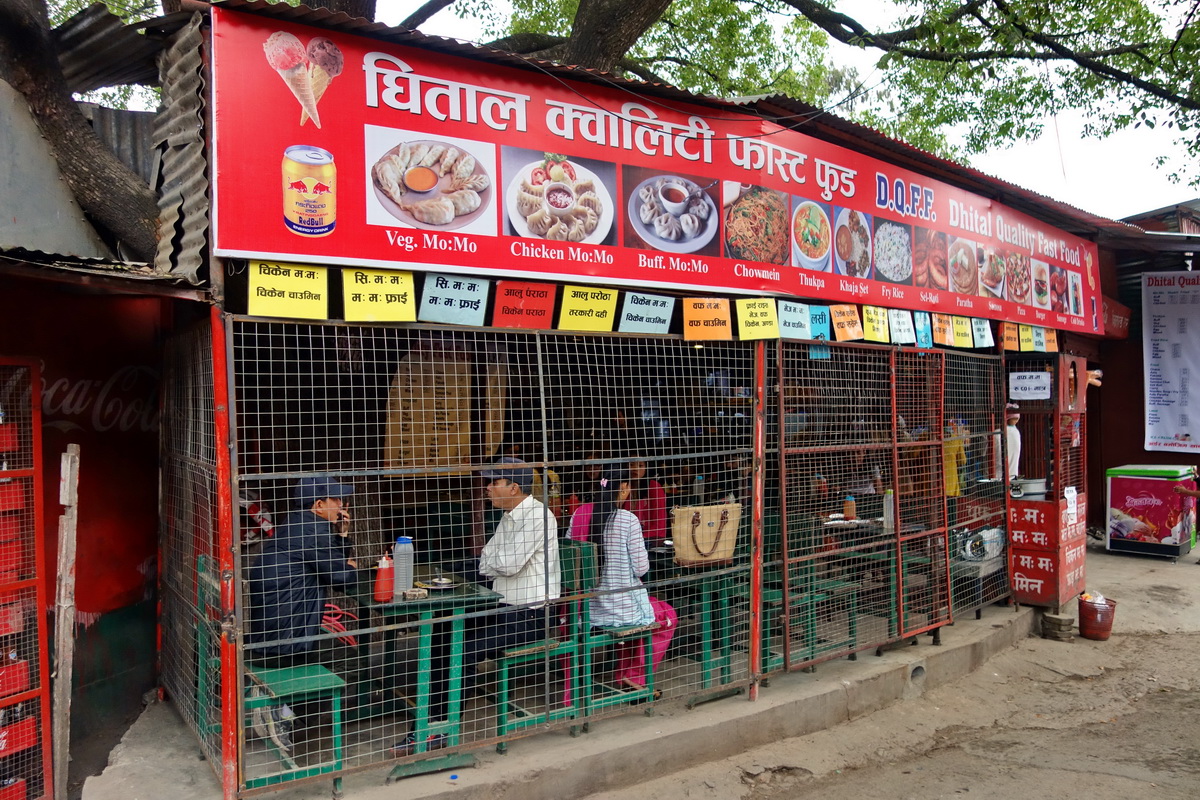
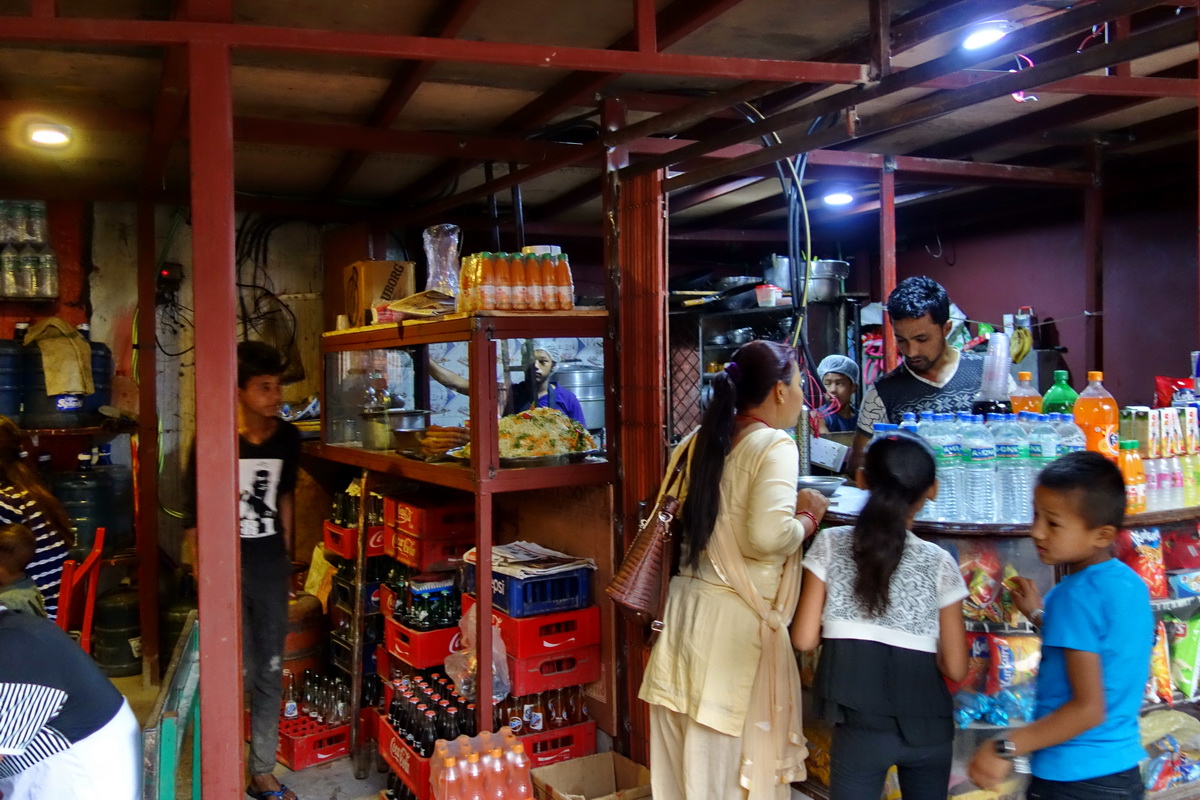
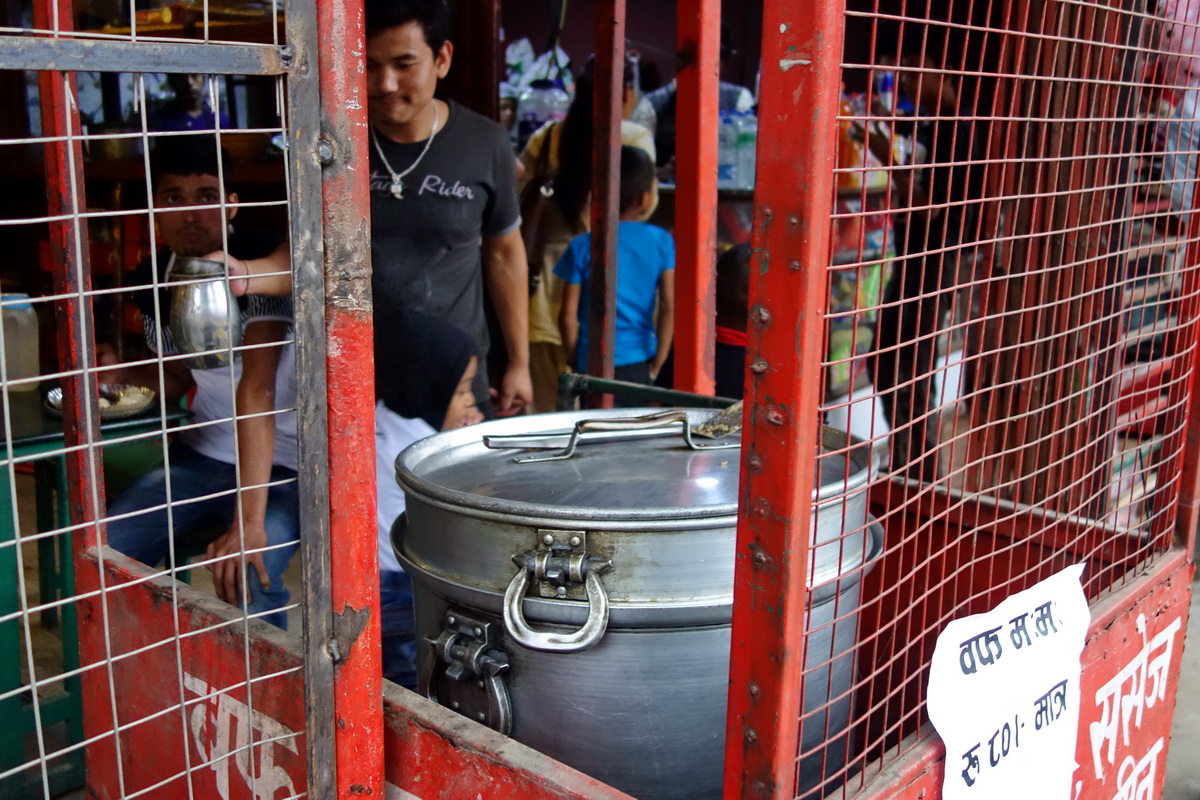
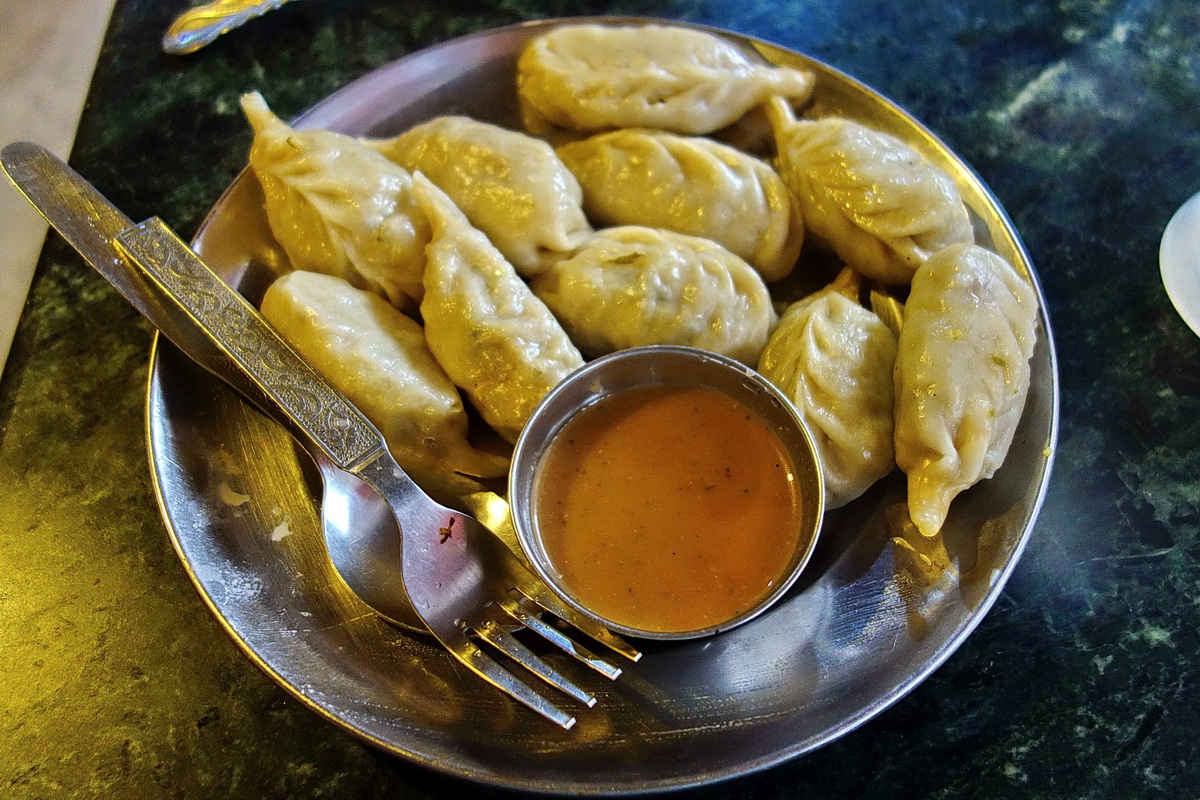
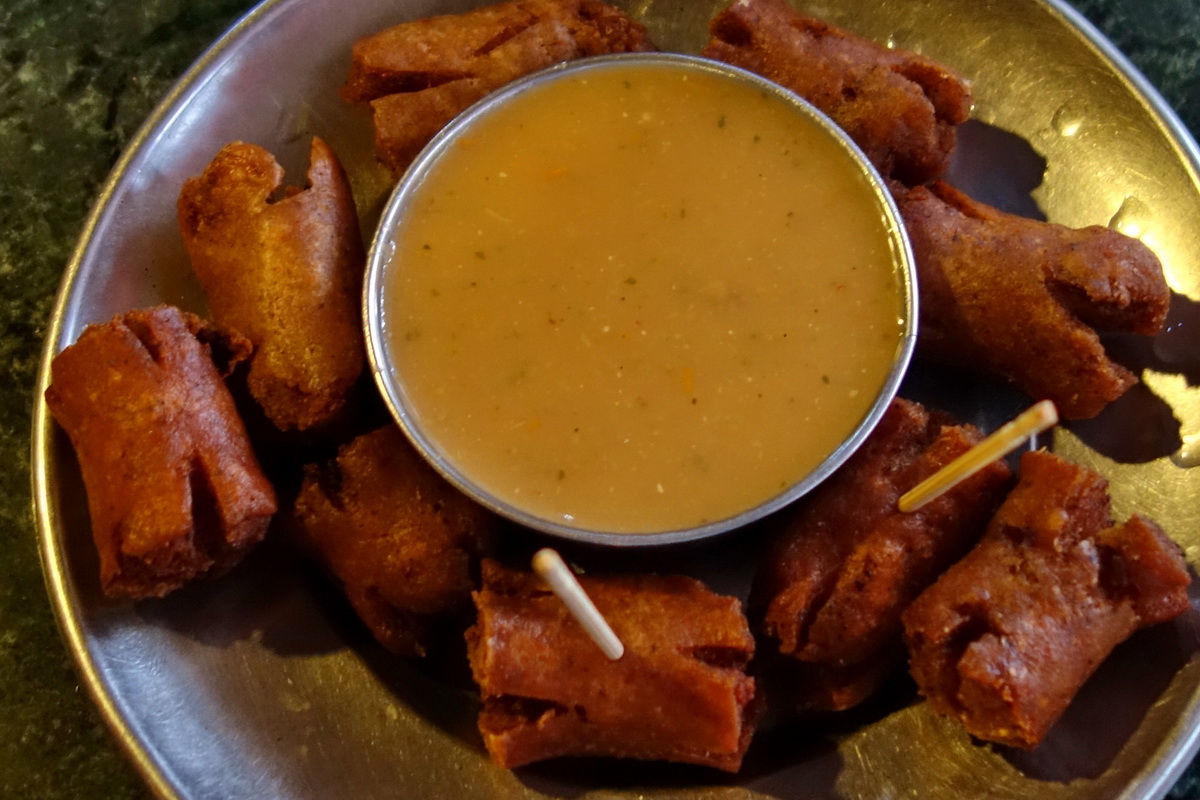
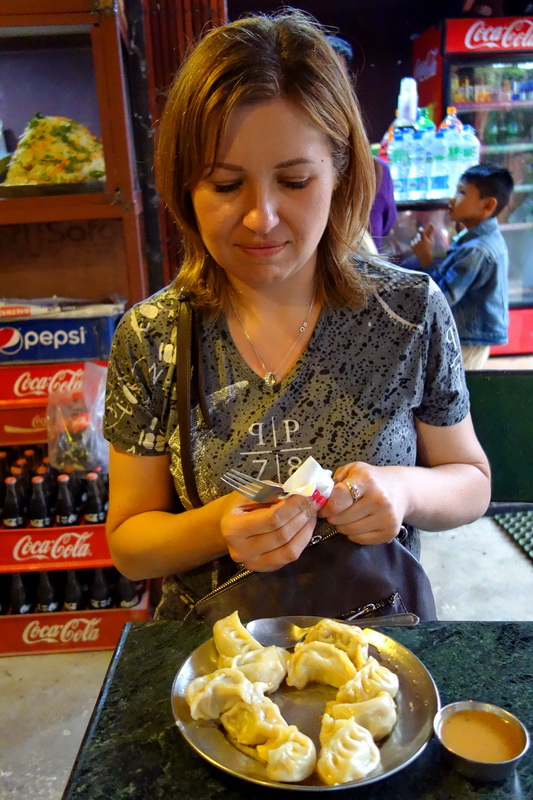
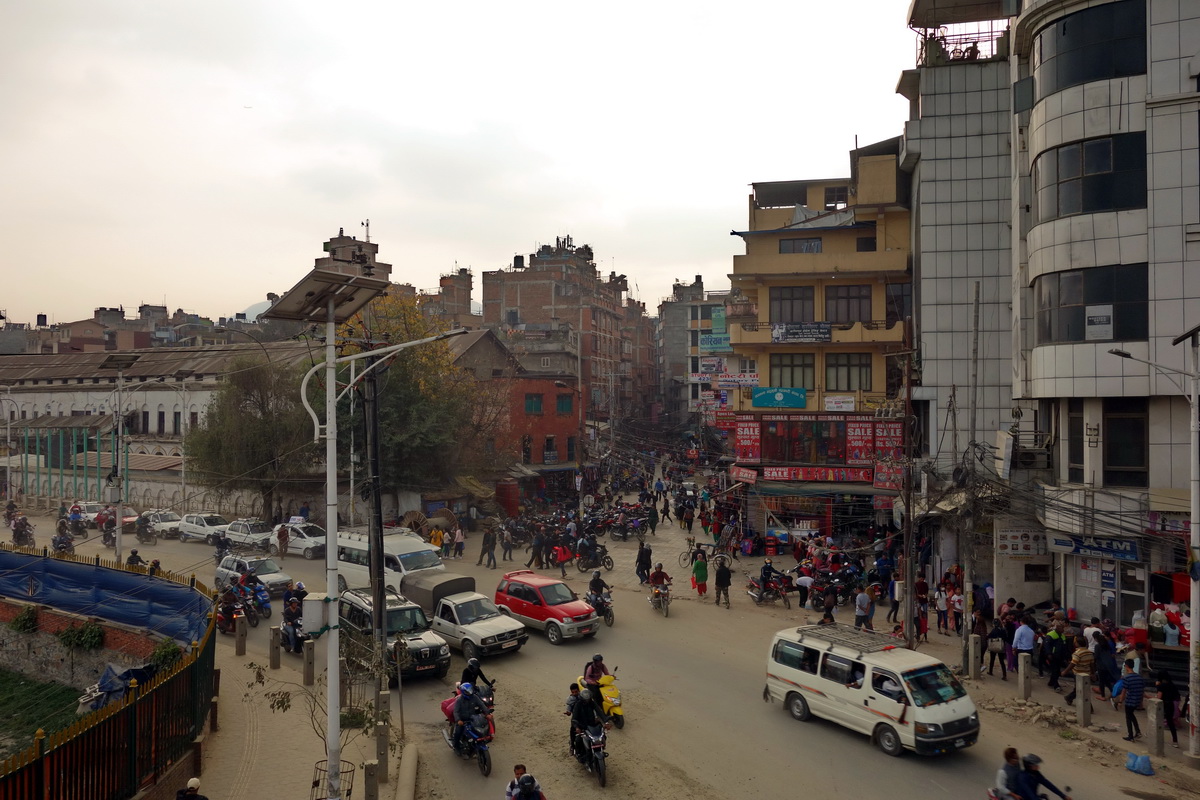
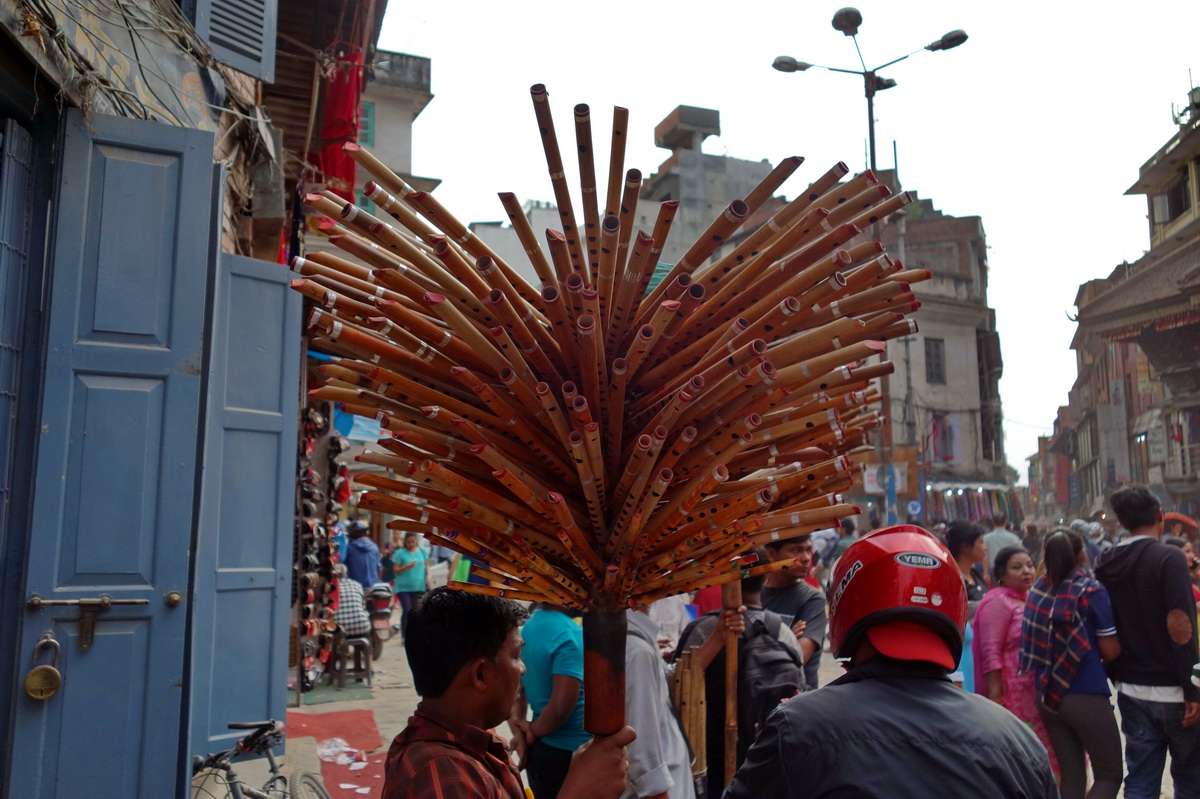
We head to the city’s main square. There’s an enormous crowd of people and motorcyclists here.
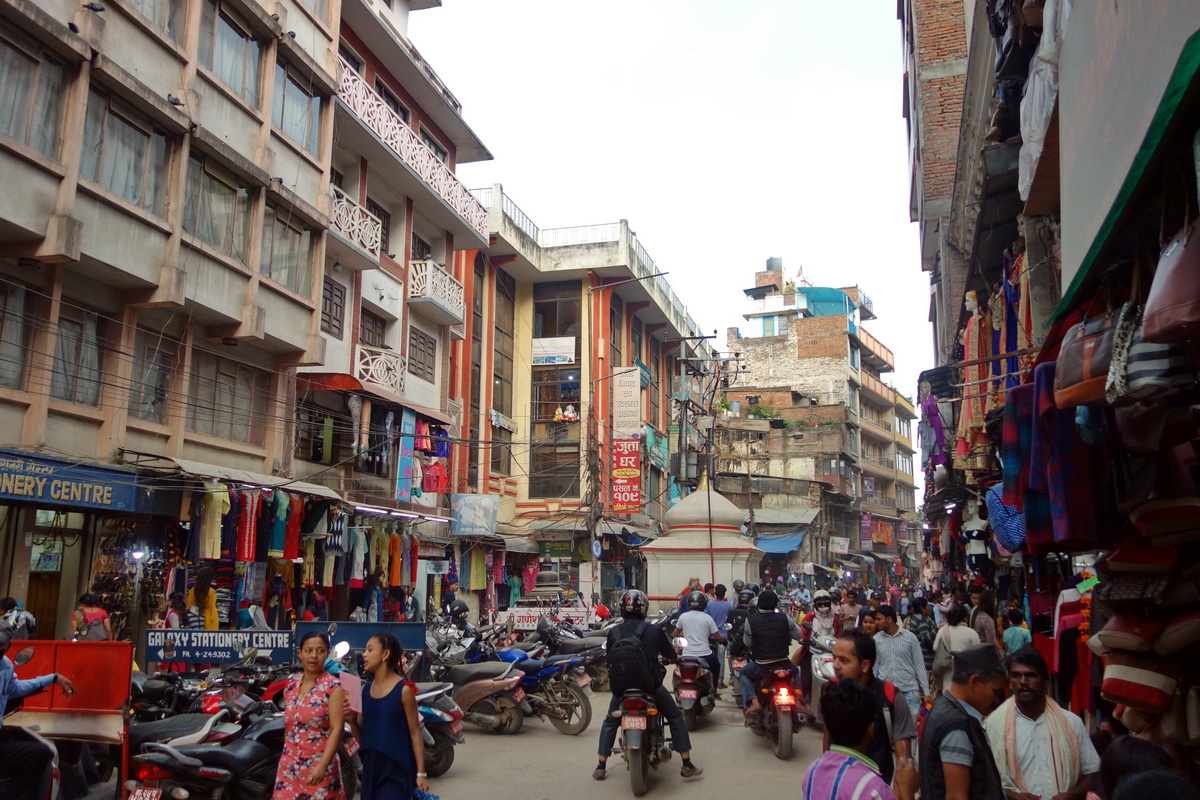
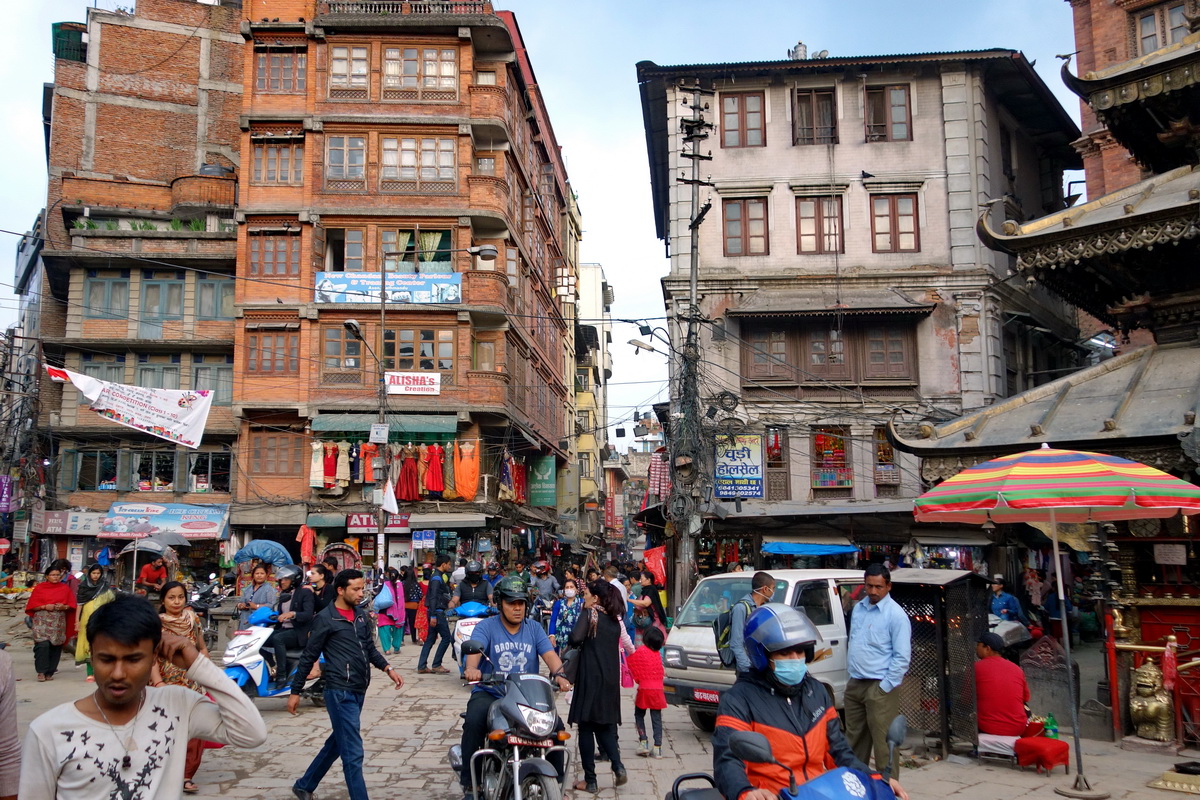
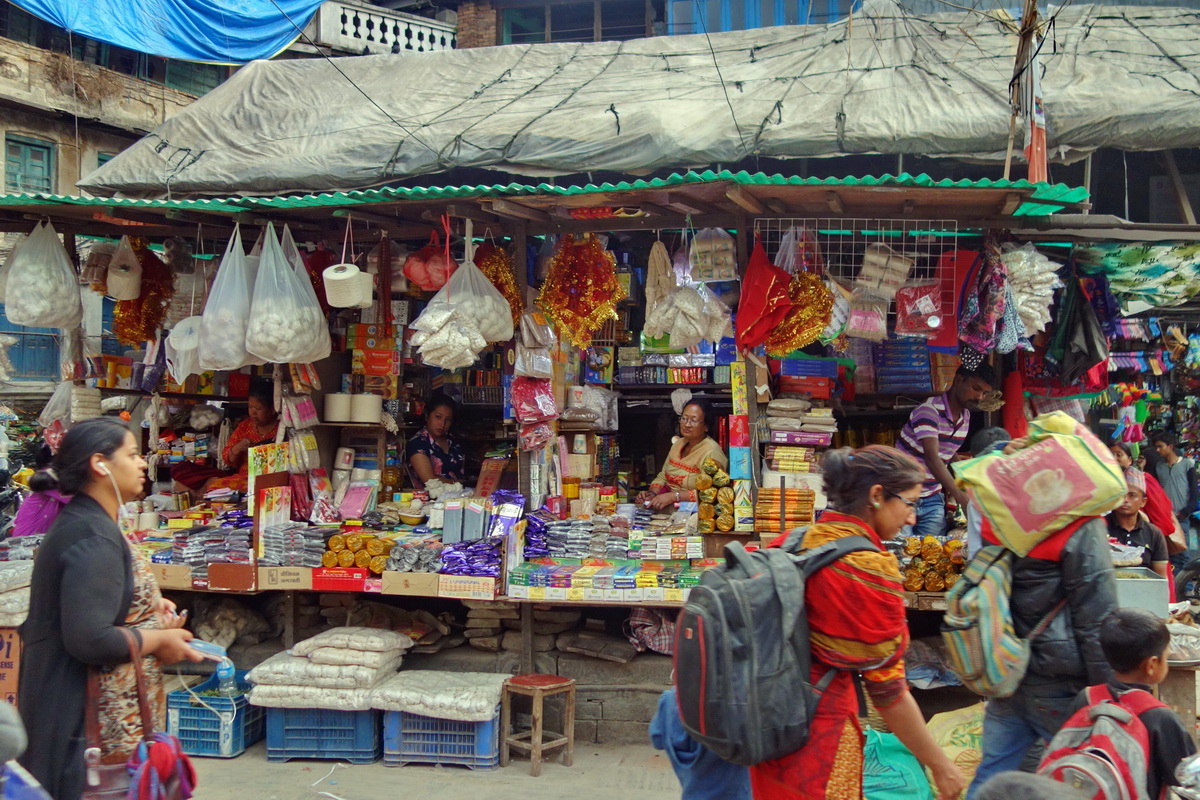
This part of the city is the most lively and noisy.
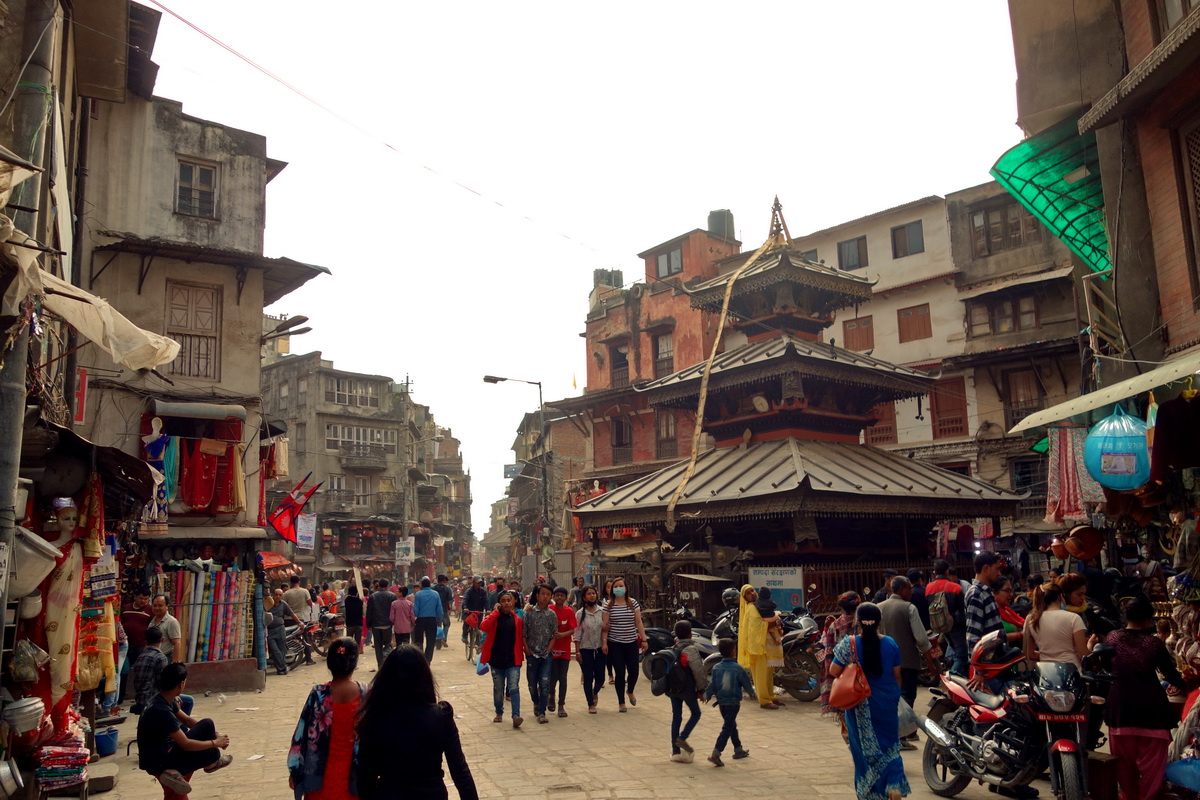
Sale of metalware and Nepalese flutes.
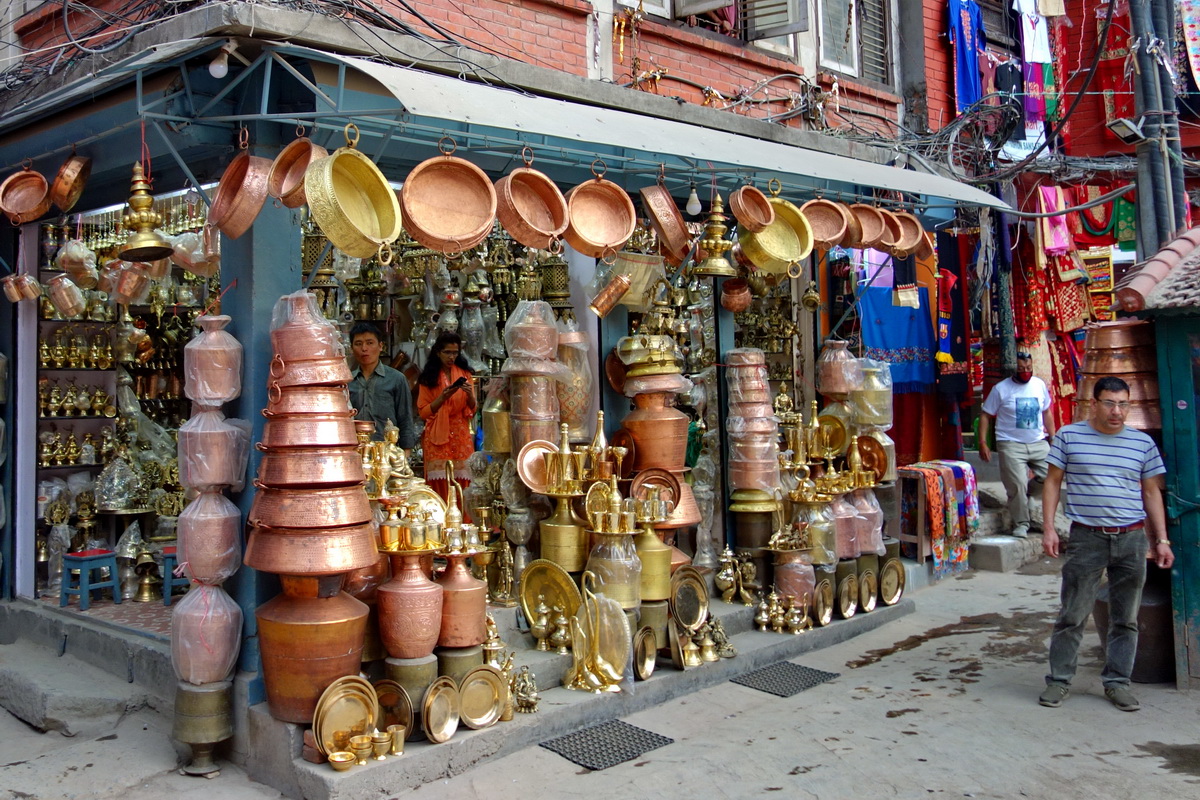
We head to the city’s main square.
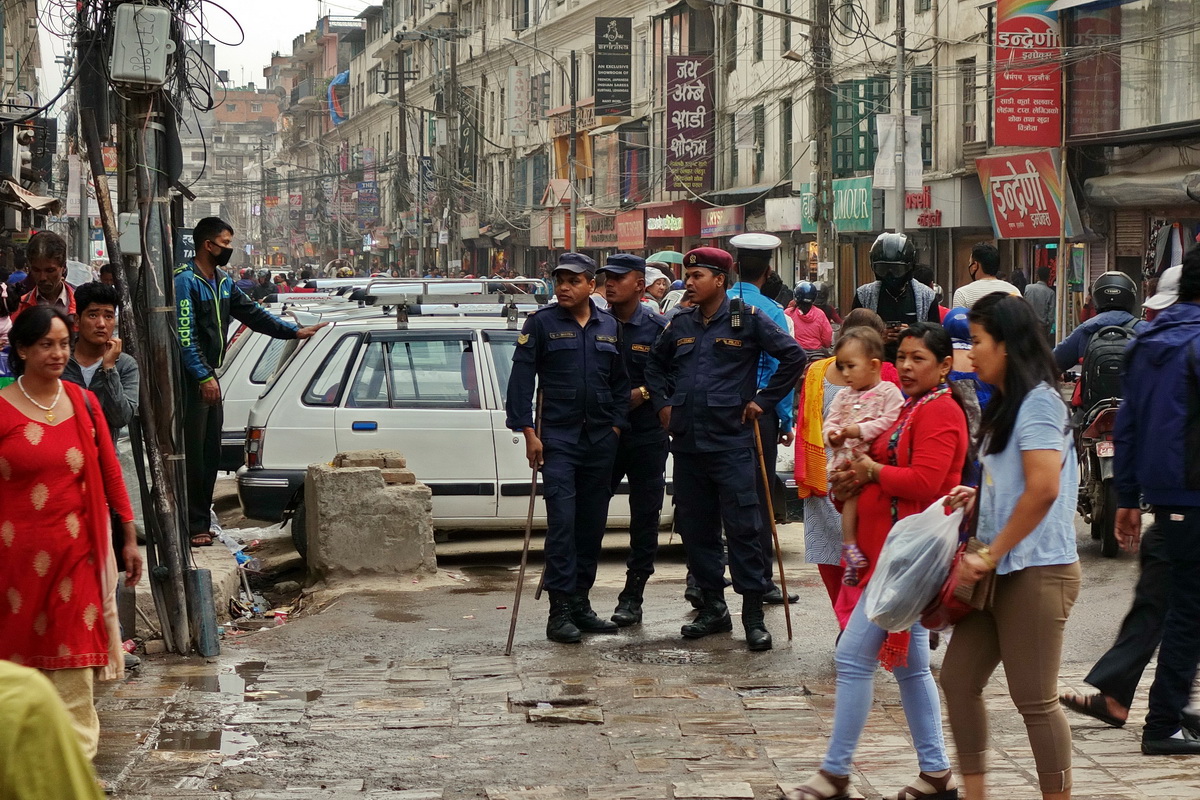
Nepalese police officers with batons. They look quite amusing.
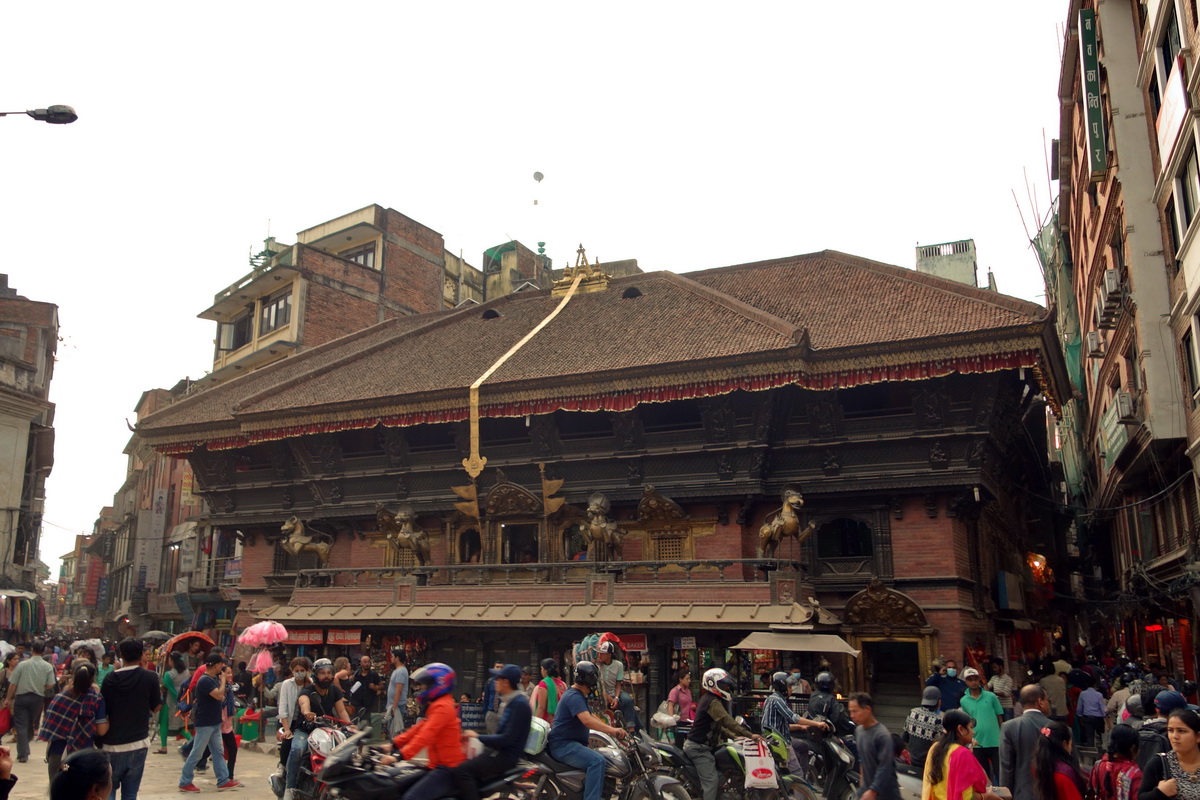
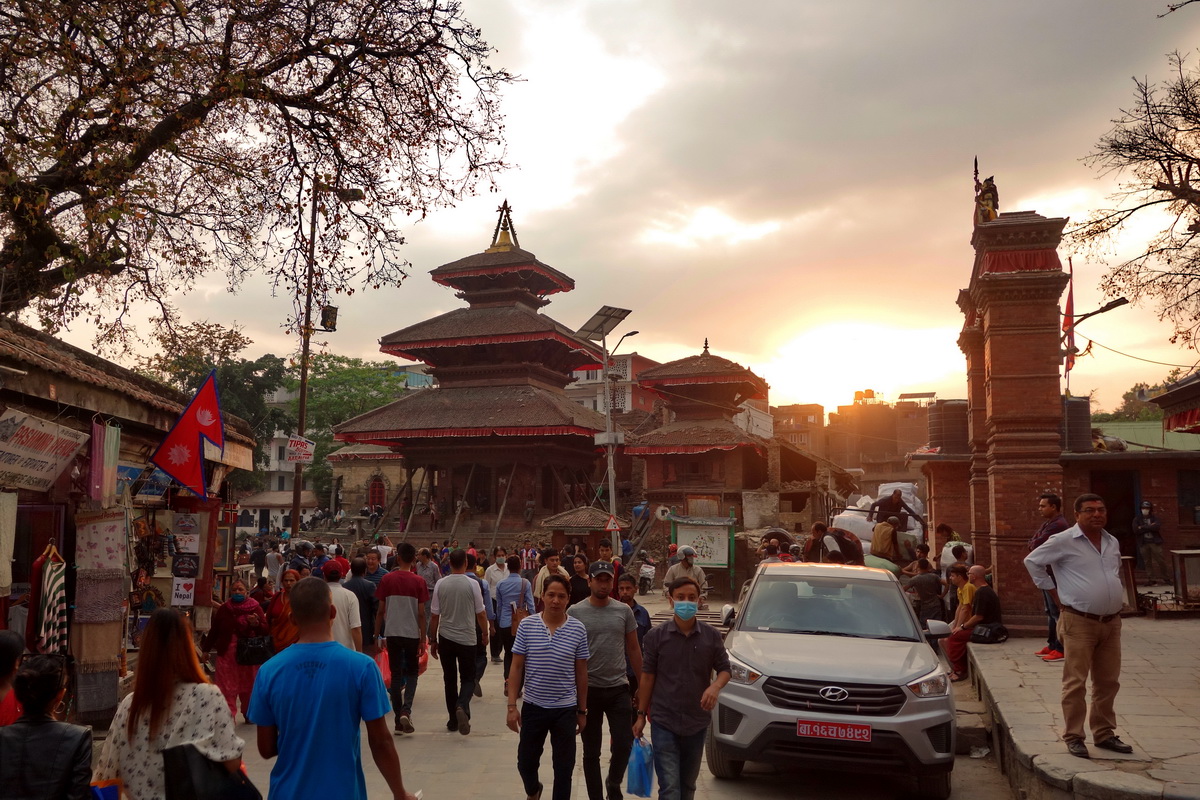
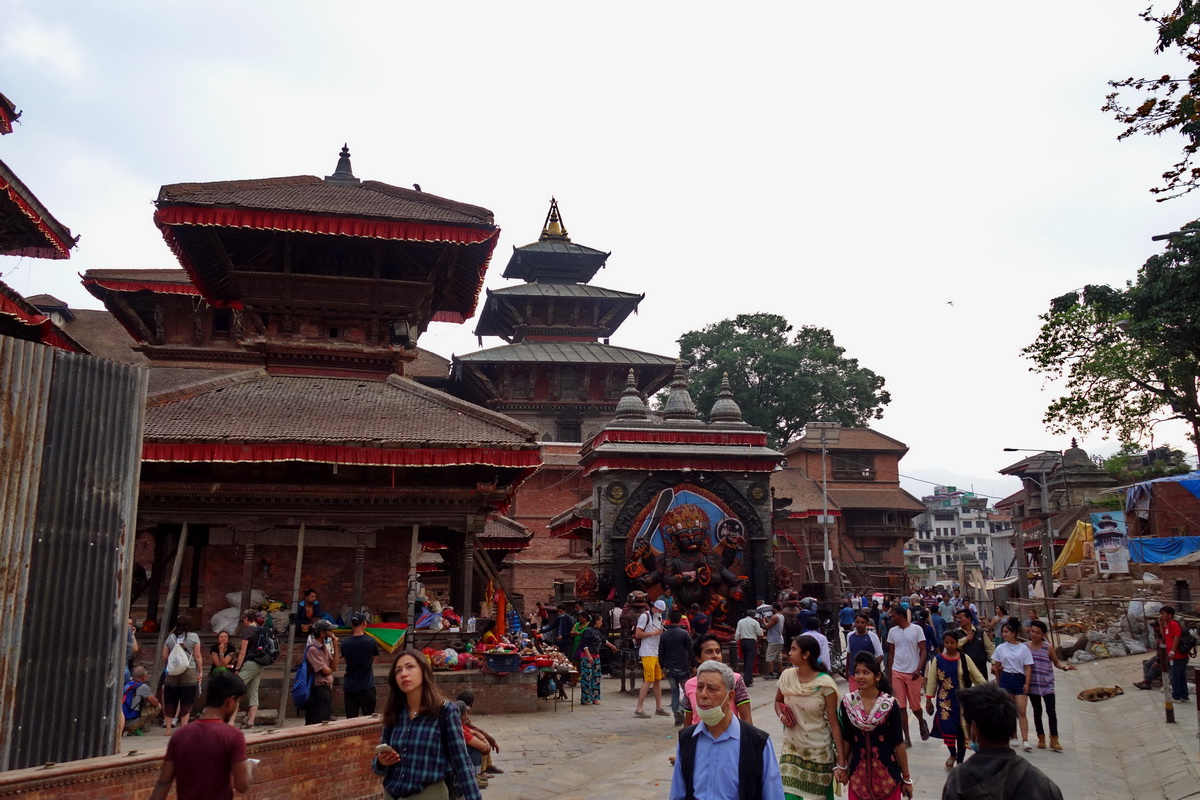
Durbar Square. This square is an entire complex of numerous historical buildings, ancient Buddhist and Hindu temples, palaces, courtyards, and streets in the heart of the old city. Entry to the square is paid for foreigners and is quite expensive—about $10 per person. This is quite costly by local standards. Moreover, it feels strange to pay such a sum to view a city square.
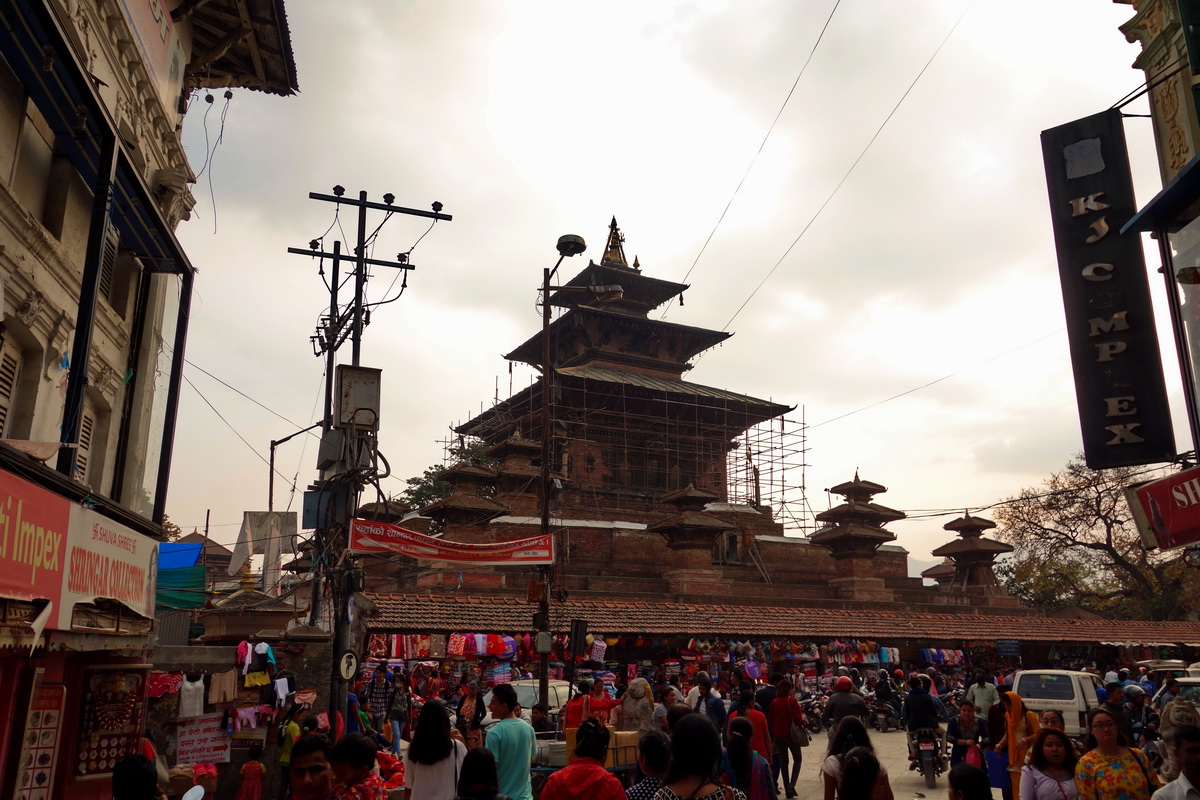
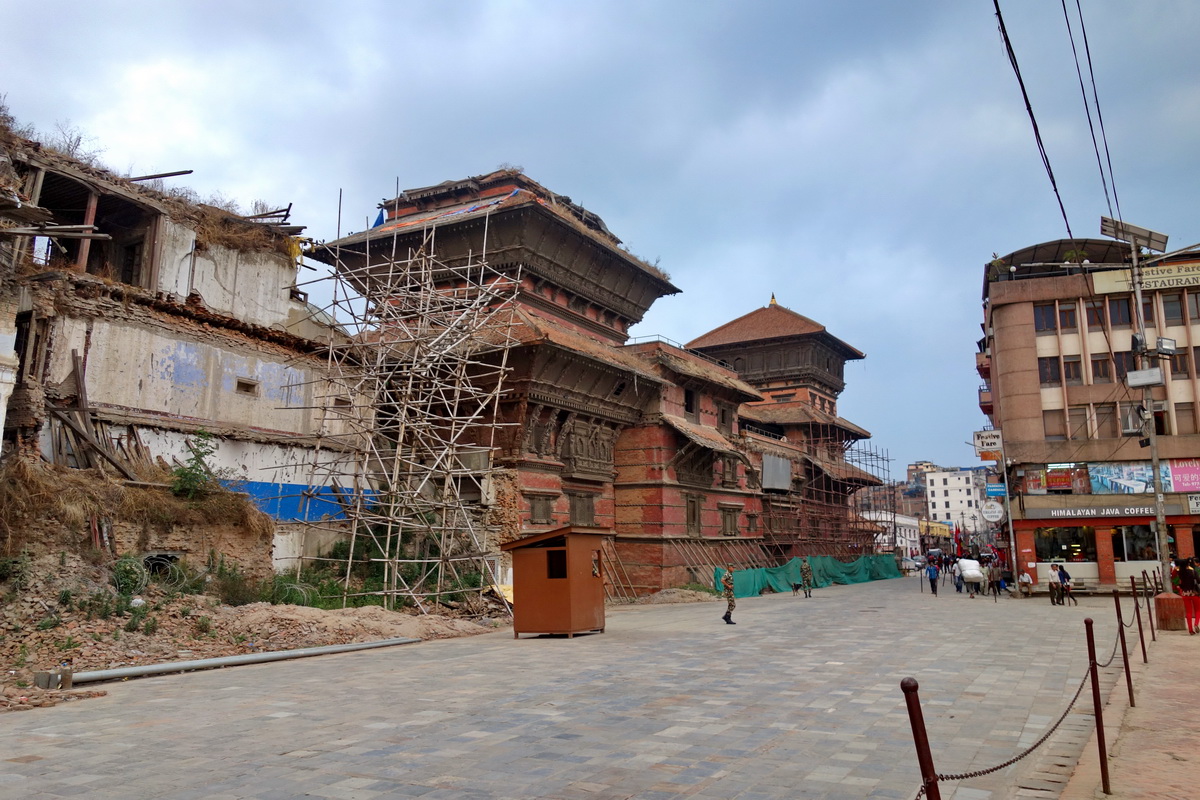
In addition, the 2015 earthquake caused significant destruction in the square, so the appearance of the square and its temples is disappointing. Nevertheless, visiting this place is a must.
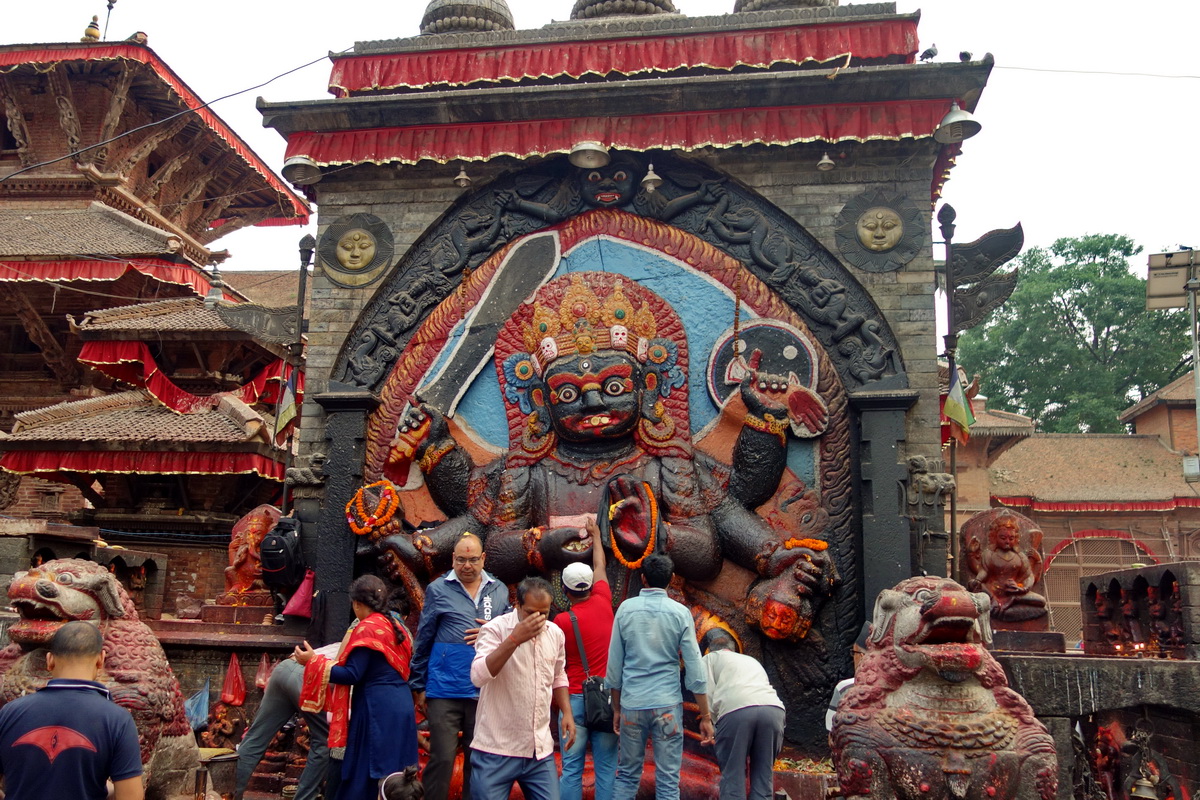
The stone statue of Kala Bhairava. Kala Bhairava is an aspect in which the god Shiva appears in his most fearsome and destructive form. Kala Bhairava has six arms, wears a garland of skulls, and tramples a corpse, symbolizing human ignorance. According to local beliefs, anyone who lies near this statue will cough up blood and die a horrible death instantly.
...
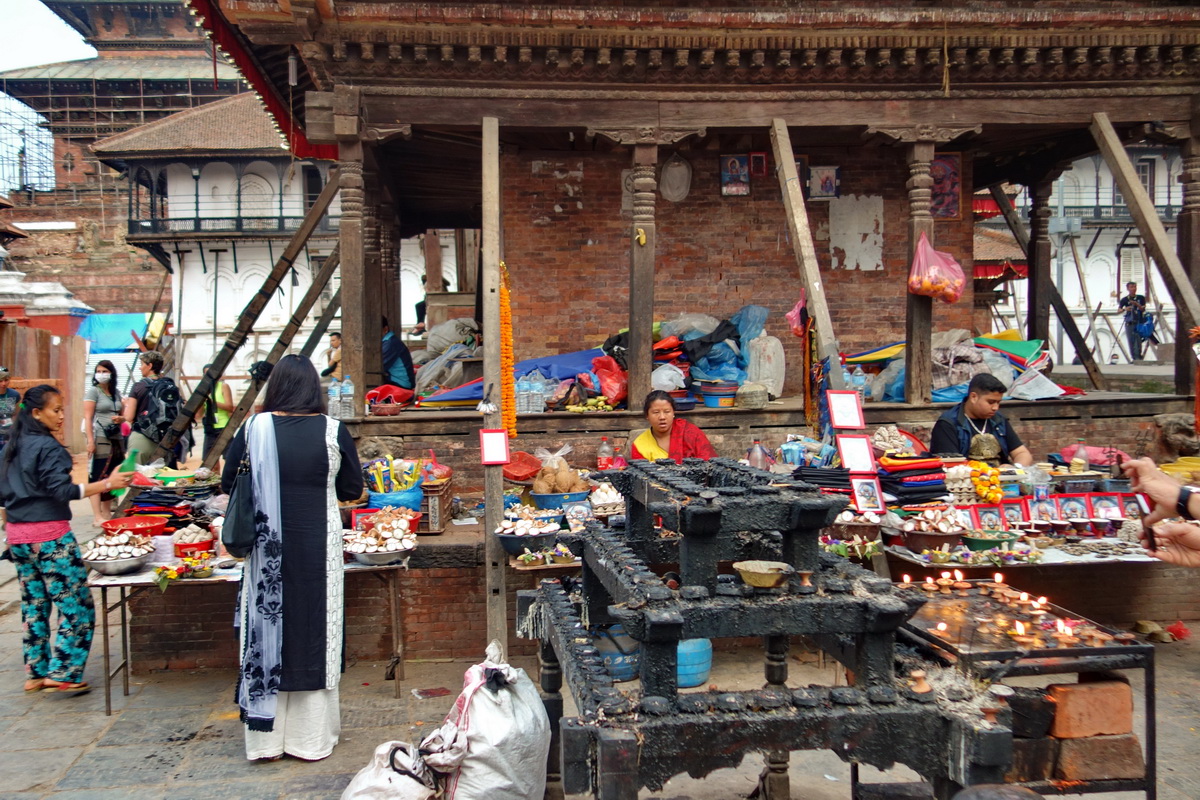
Most buildings are propped up with wooden poles. Nevertheless, people aren’t afraid to sit under them.
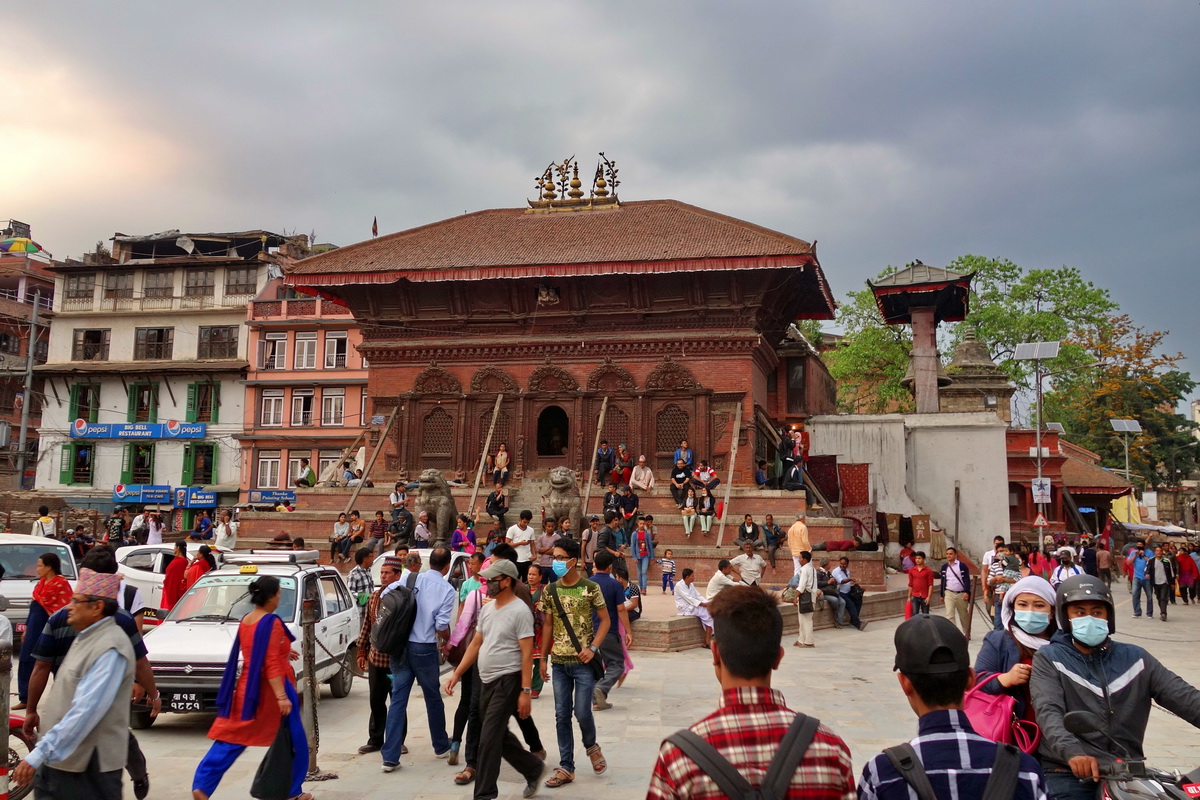
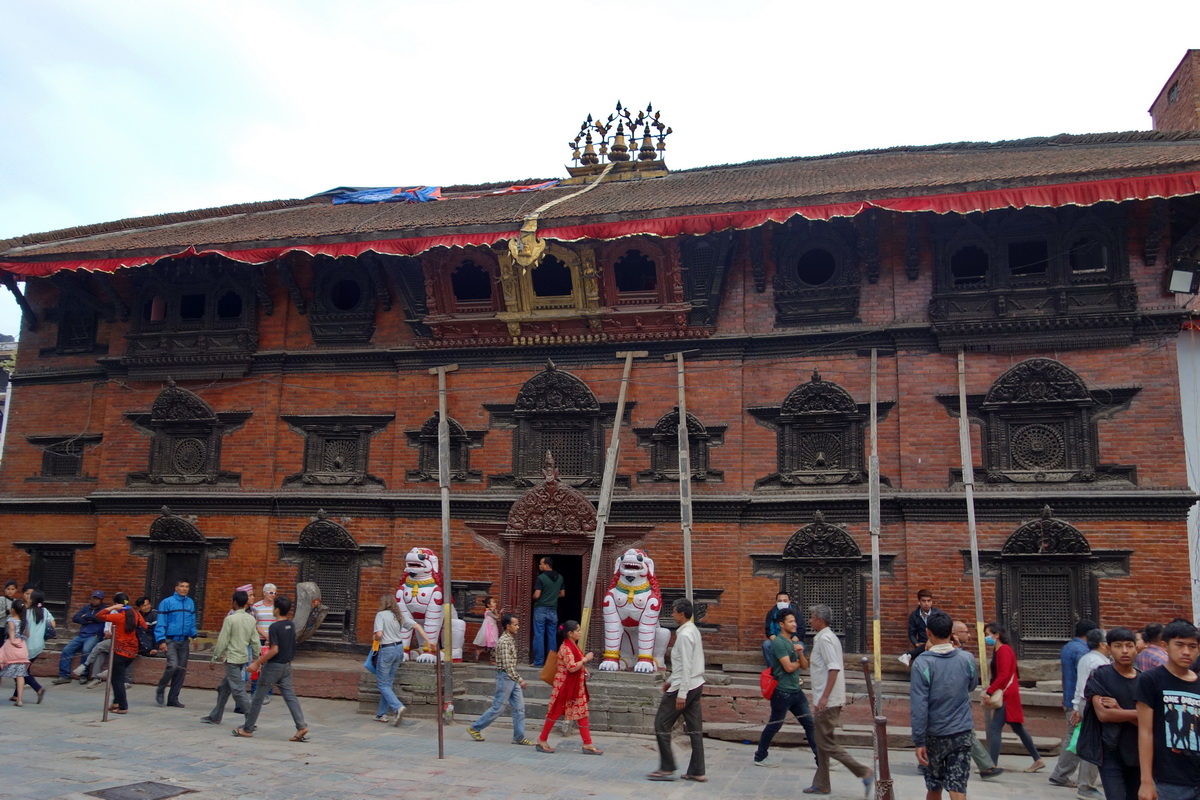
Many temples on the square are destroyed down to their foundations, leaving only stepped pyramids. A sad sight.
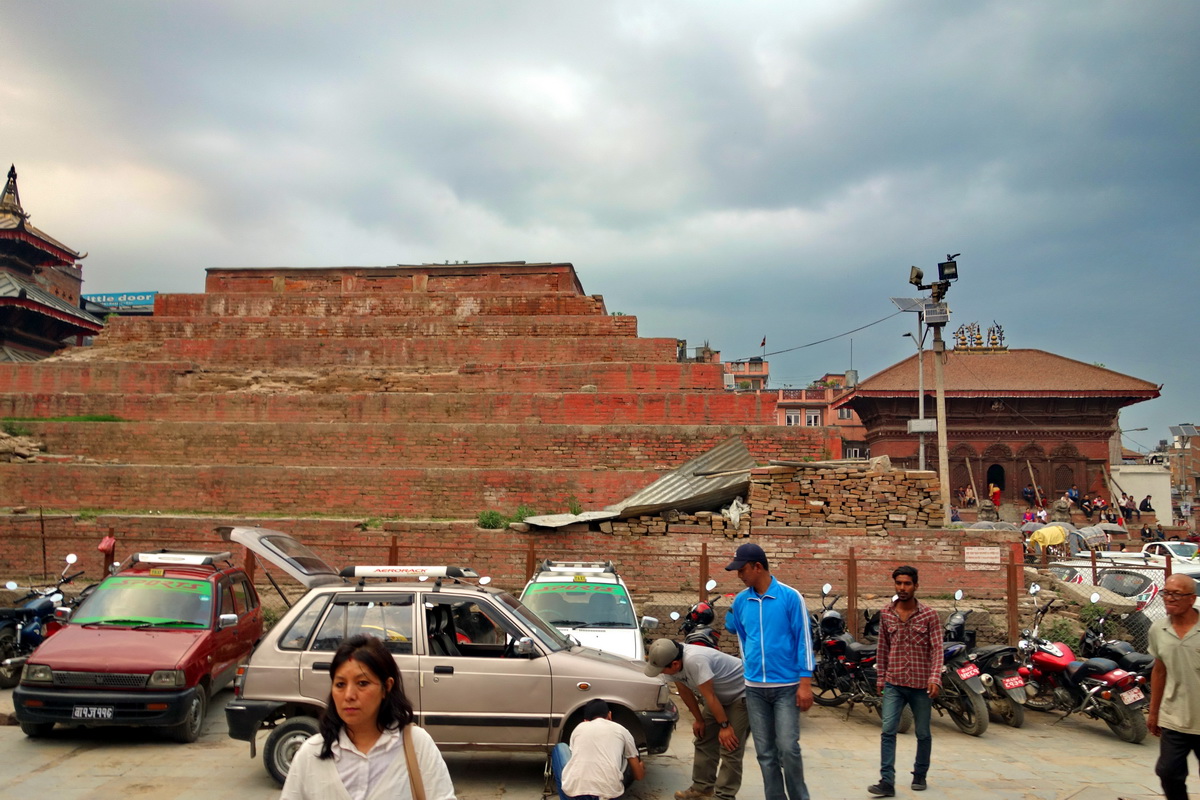
...
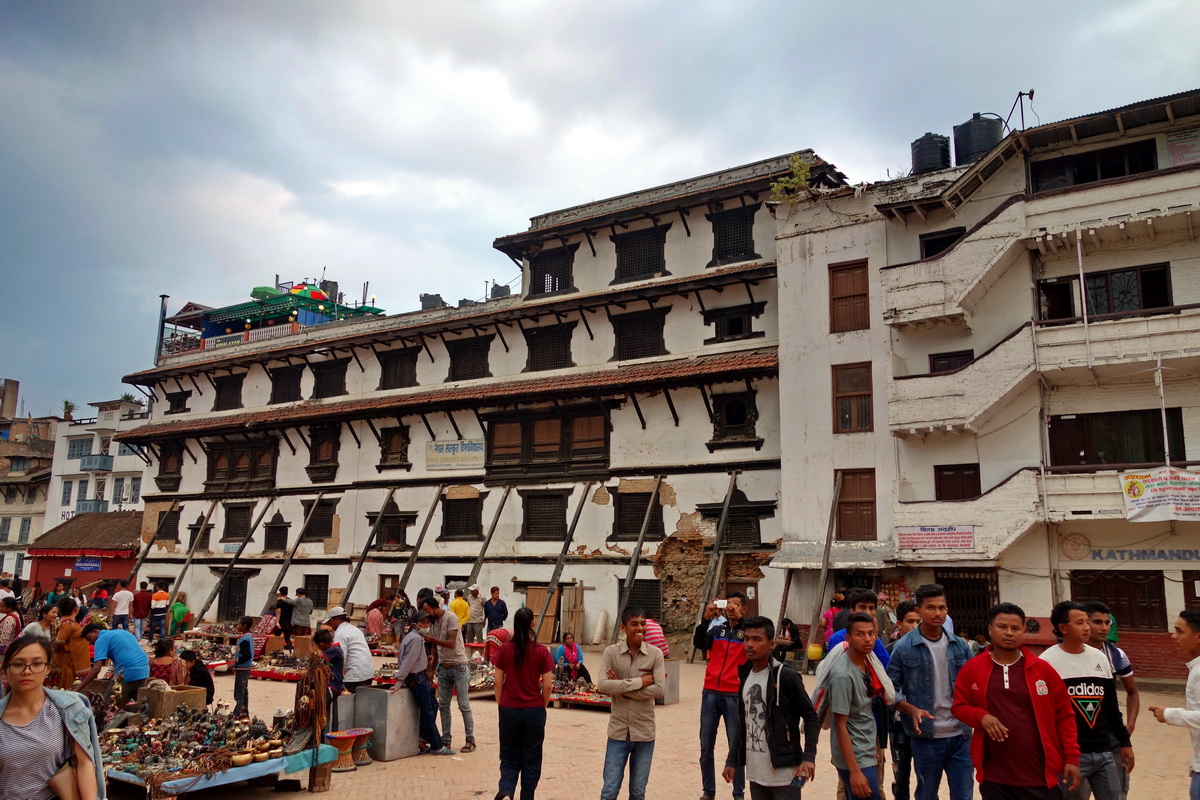
Honestly, there’s not much to see on the square. It’s interesting, of course, but there’s a lot of destruction. Unfortunately. Additionally, there are quite a few people—both tourists and locals. Perhaps it’s less crowded in the morning.
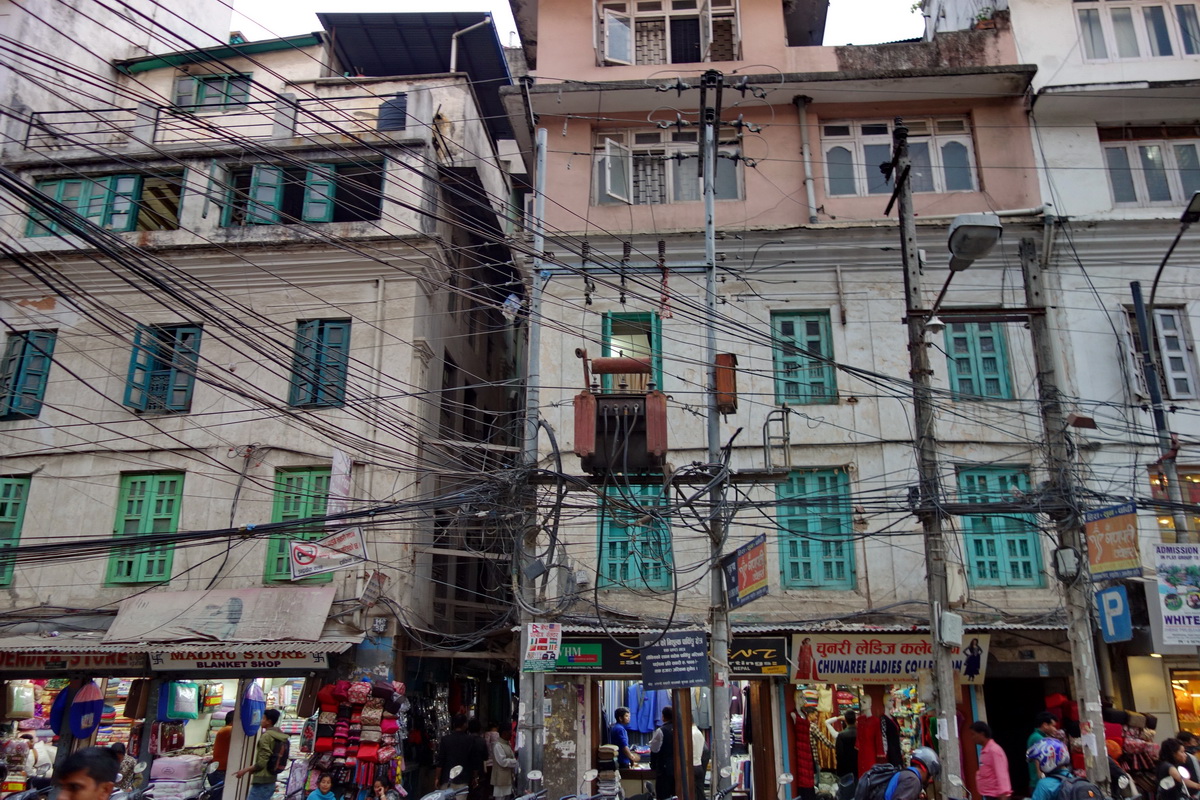
We return to the city. A distinctive feature of Kathmandu, like other typical Asian cities of this kind, is the large number of electrical wires.
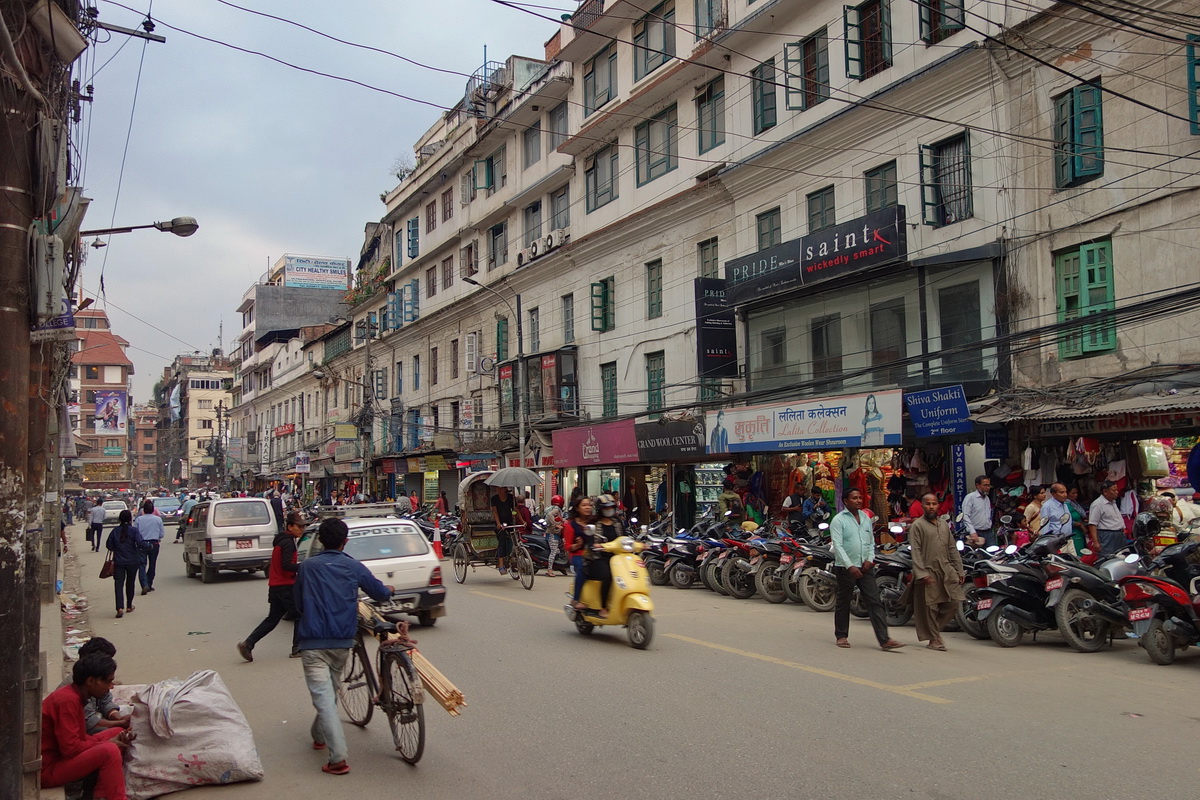
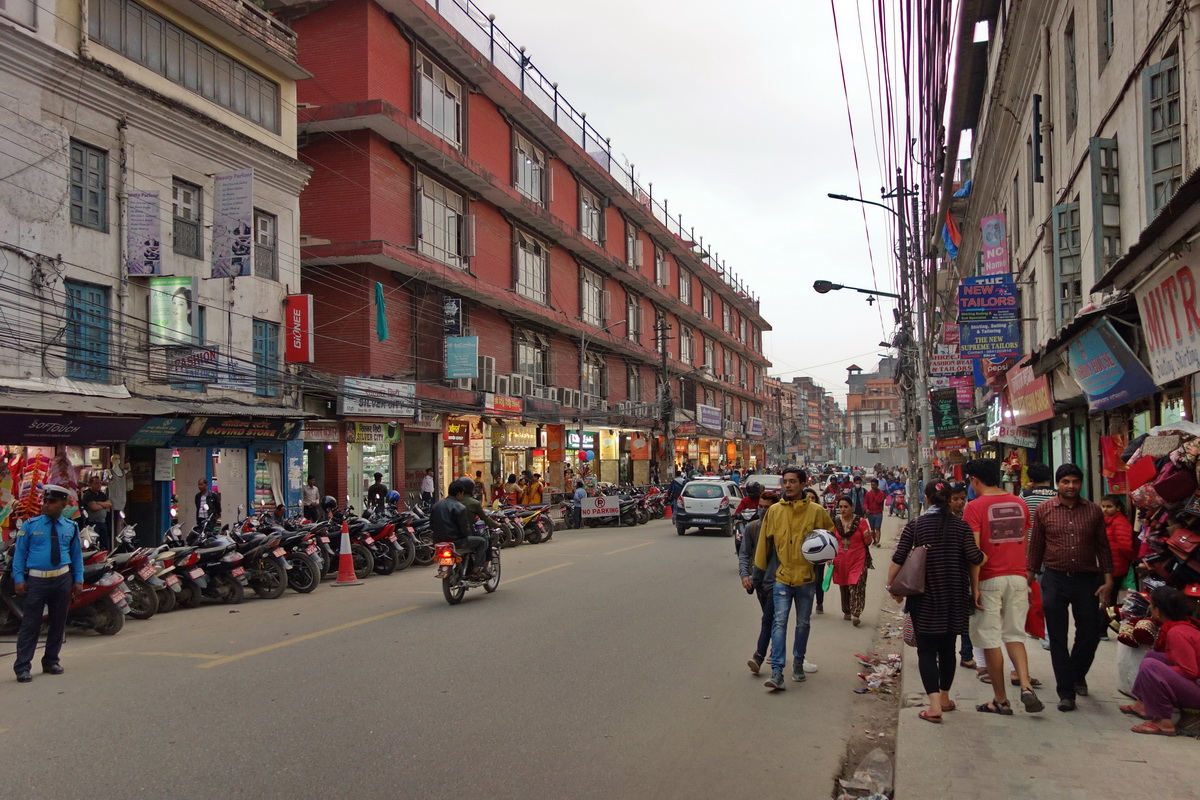
And there’s an unbelievable number of motorcycles here.
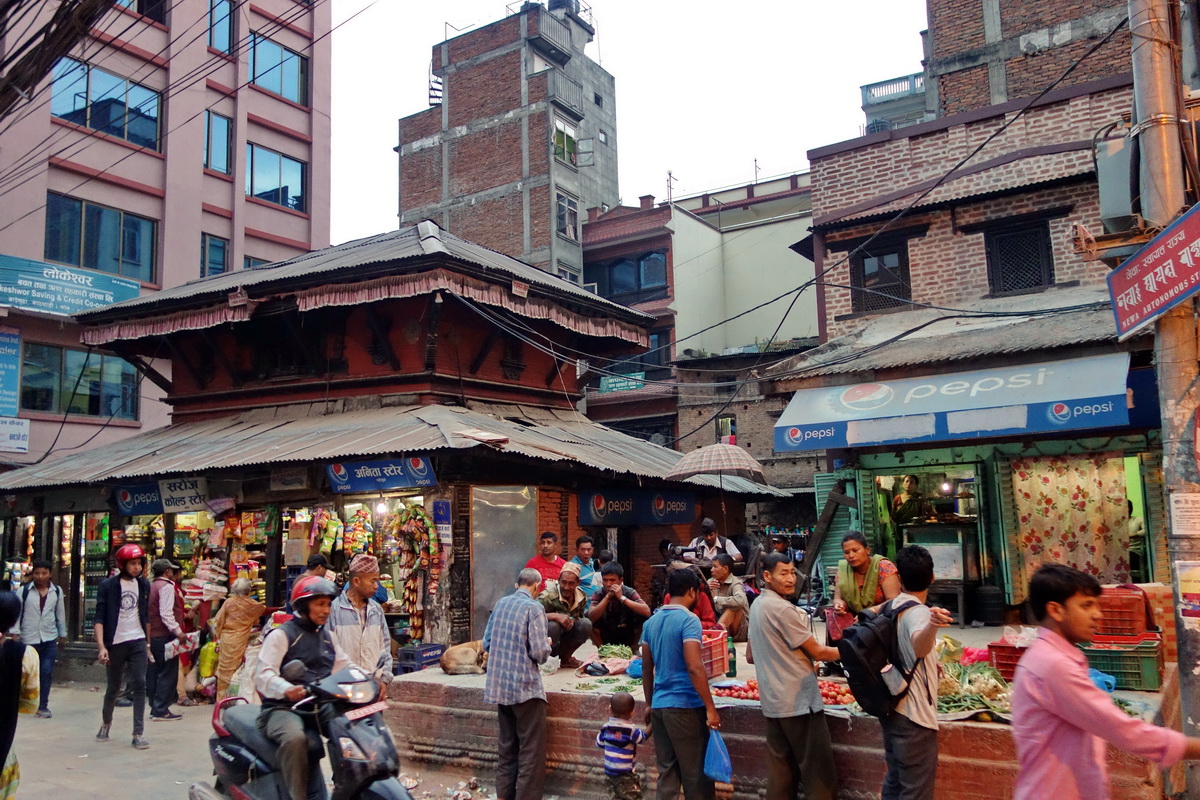
Vegetable sales in the city center.
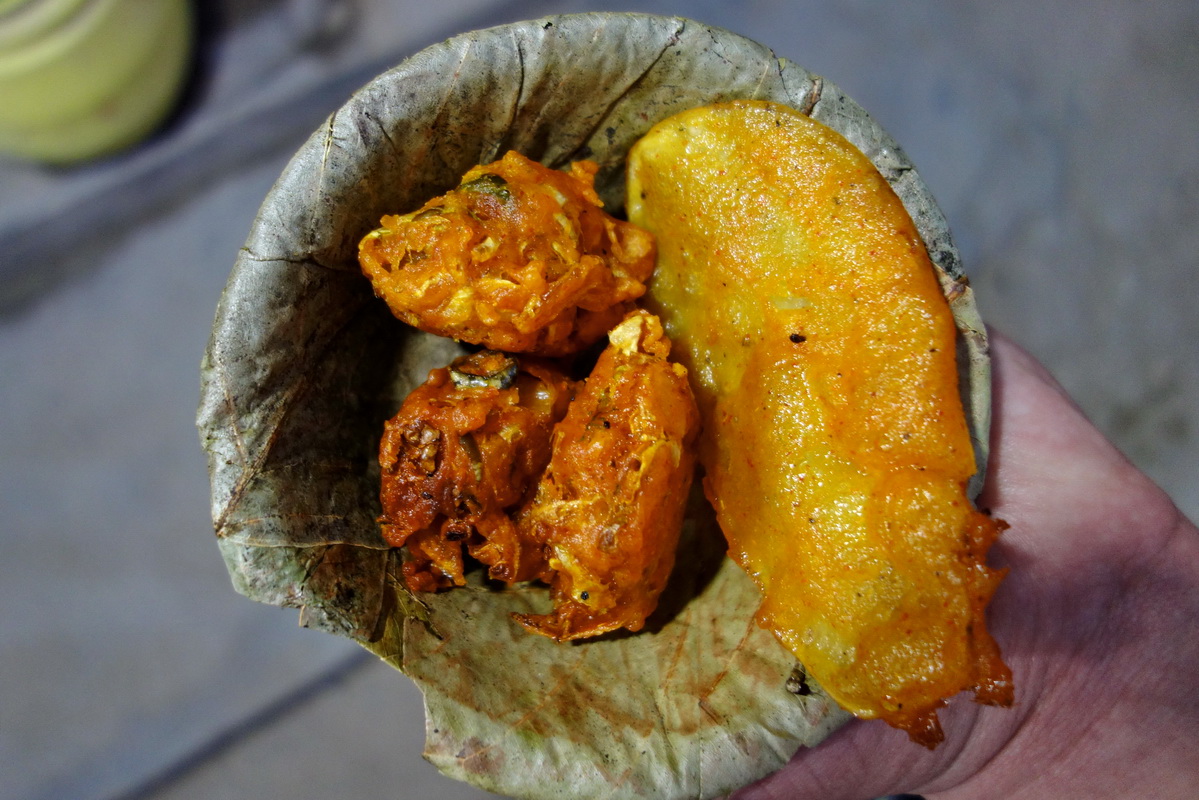
We grab a street food snack. Nepalese-style street fast food. This food consists of cauliflower and potatoes fried in batter. It doesn’t look impressive. At first, we thought it was chicken heads. But it’s actually quite tasty, despite the spiciness. I liked it and ate it often.
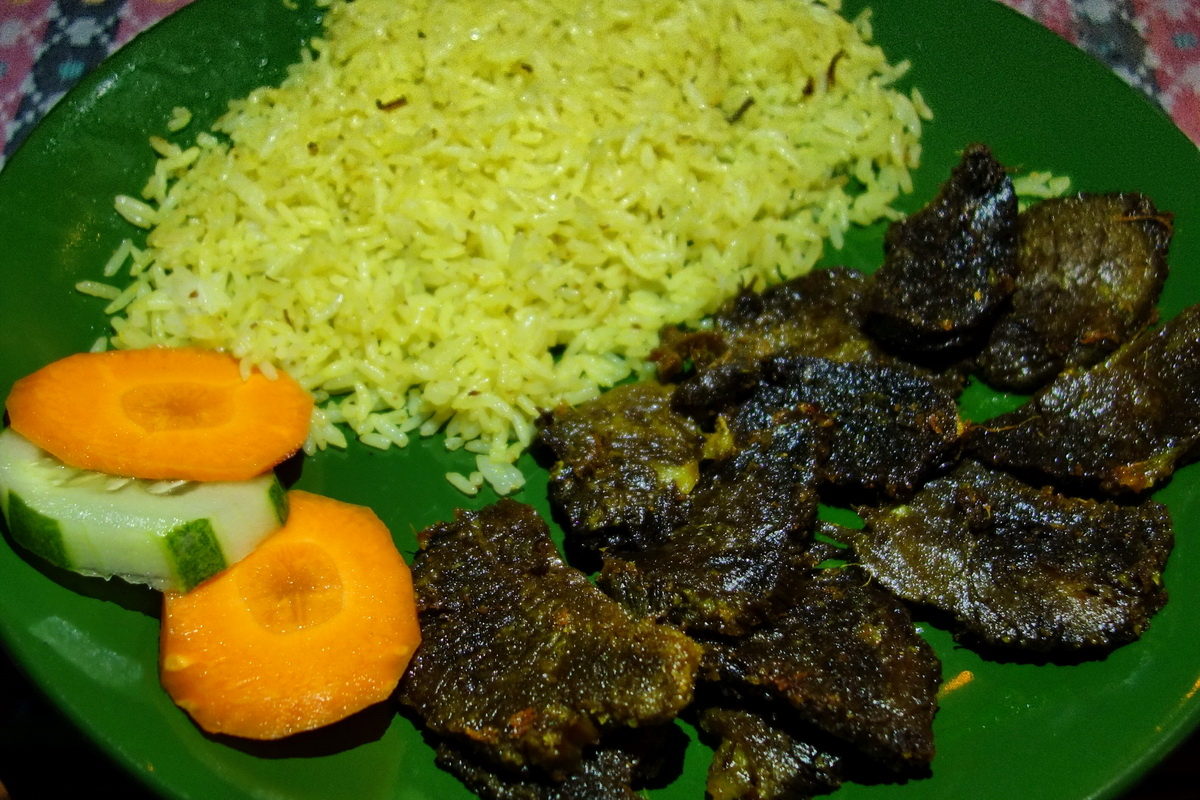
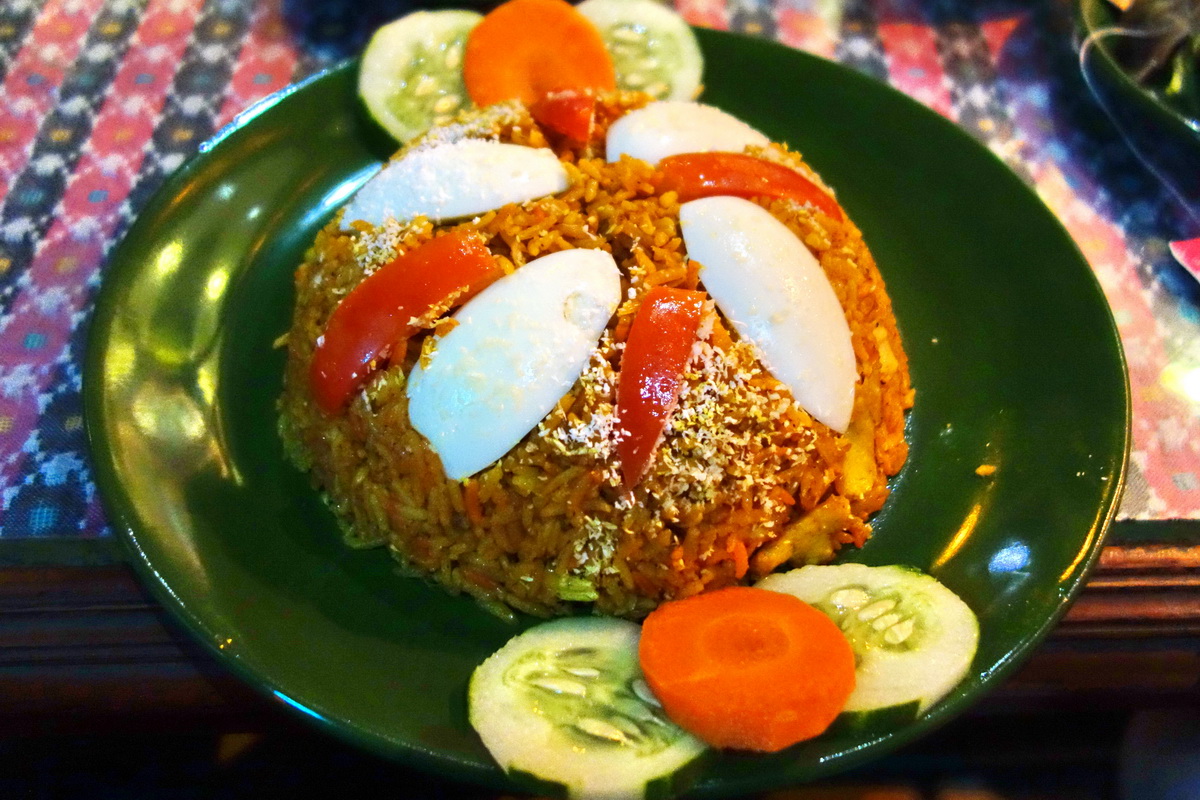
We go to dine at our favorite restaurant for white tourists. We ordered fried buffalo meat with rice and chicken biryani.
...
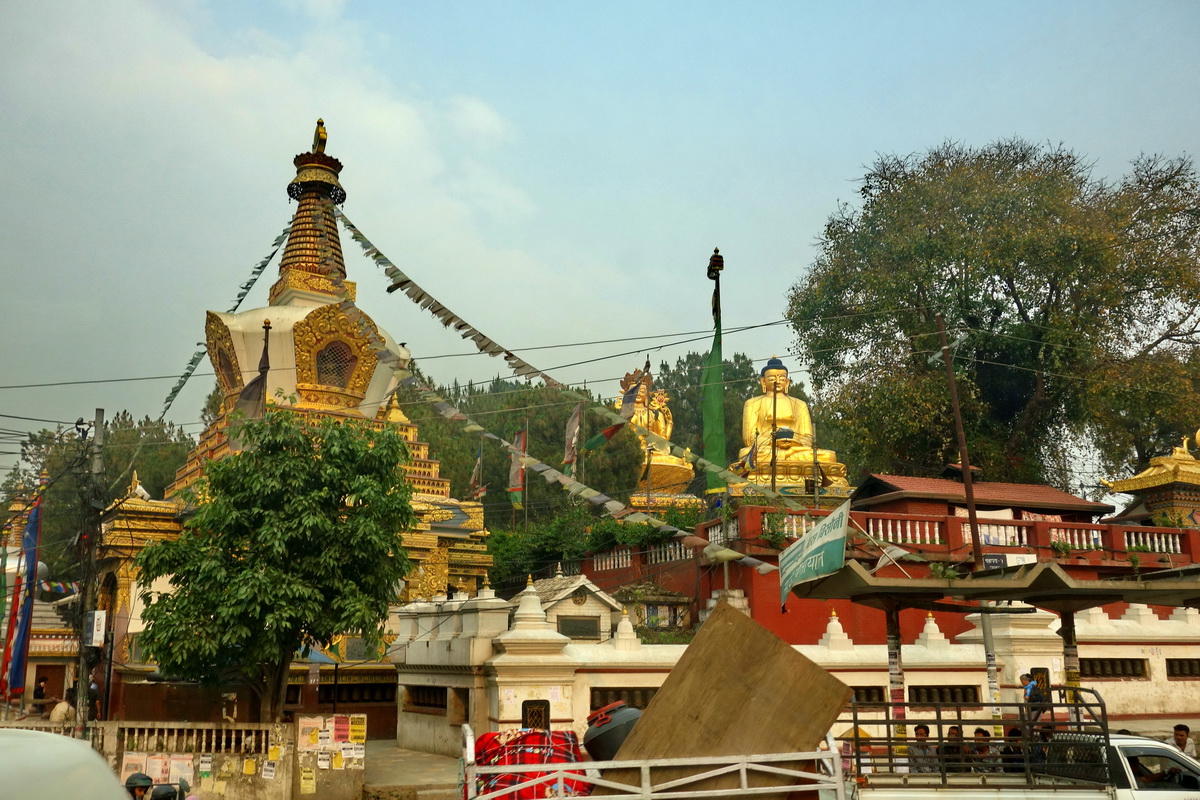
...
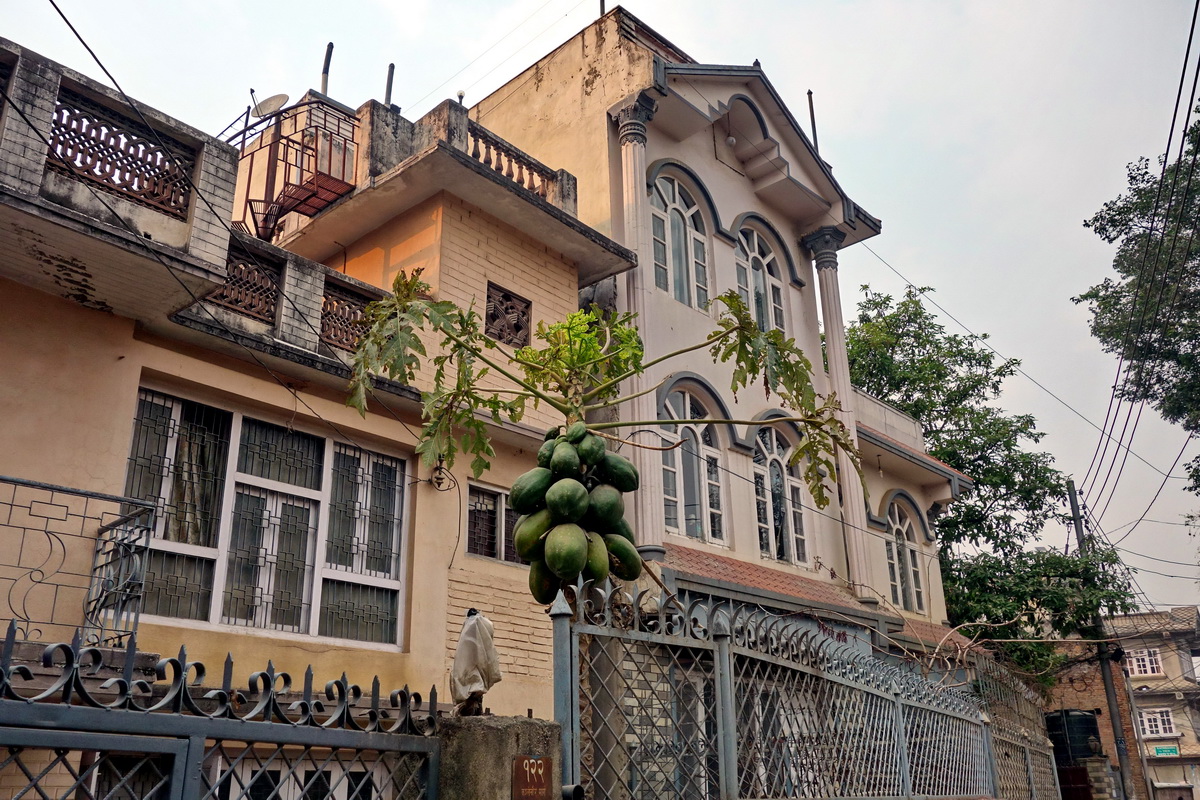
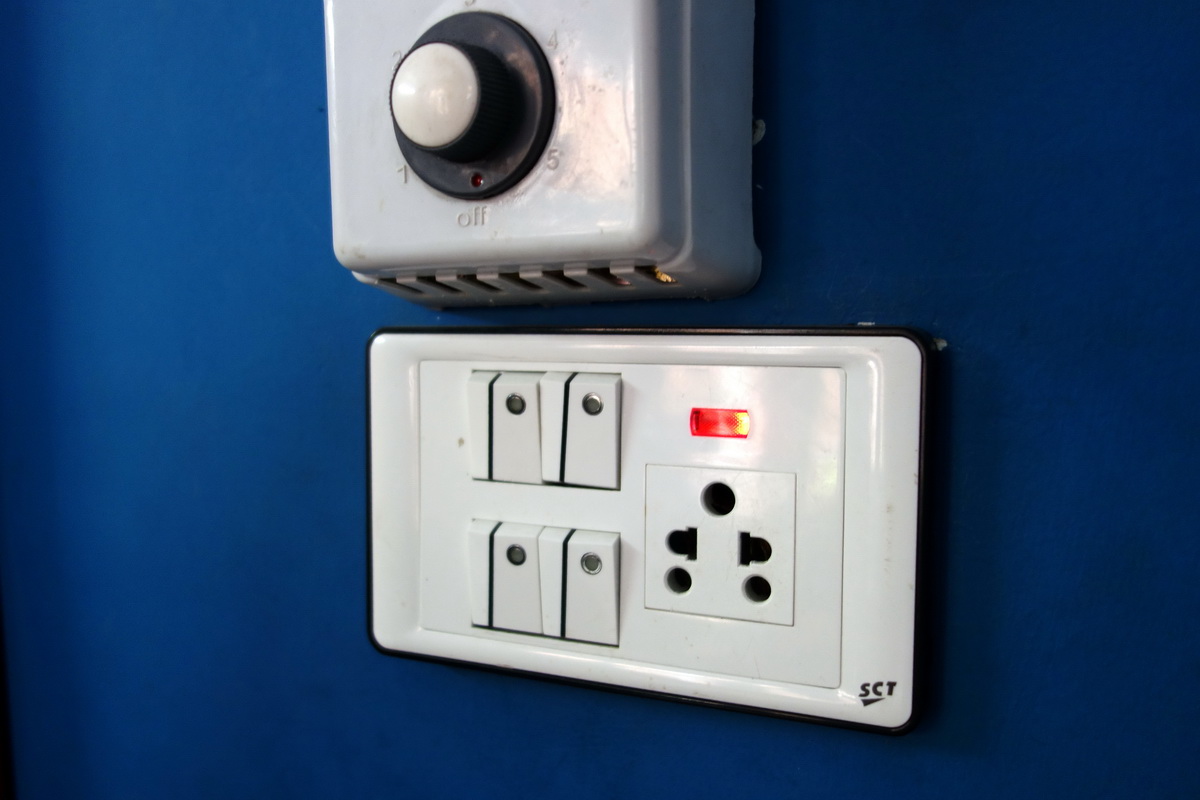
Another one of our hotels in central Kathmandu. More precisely, not a hotel but a guesthouse. There’s no air conditioning here, of course, but it wasn’t needed. However, there’s a very nice socket with a bunch of switches, just like in India. For some reason, in these countries, it’s common to install a bunch of switches for everything imaginable along with sockets, as well as a fan speed regulator. Figuring out which switch does what requires trial and error.
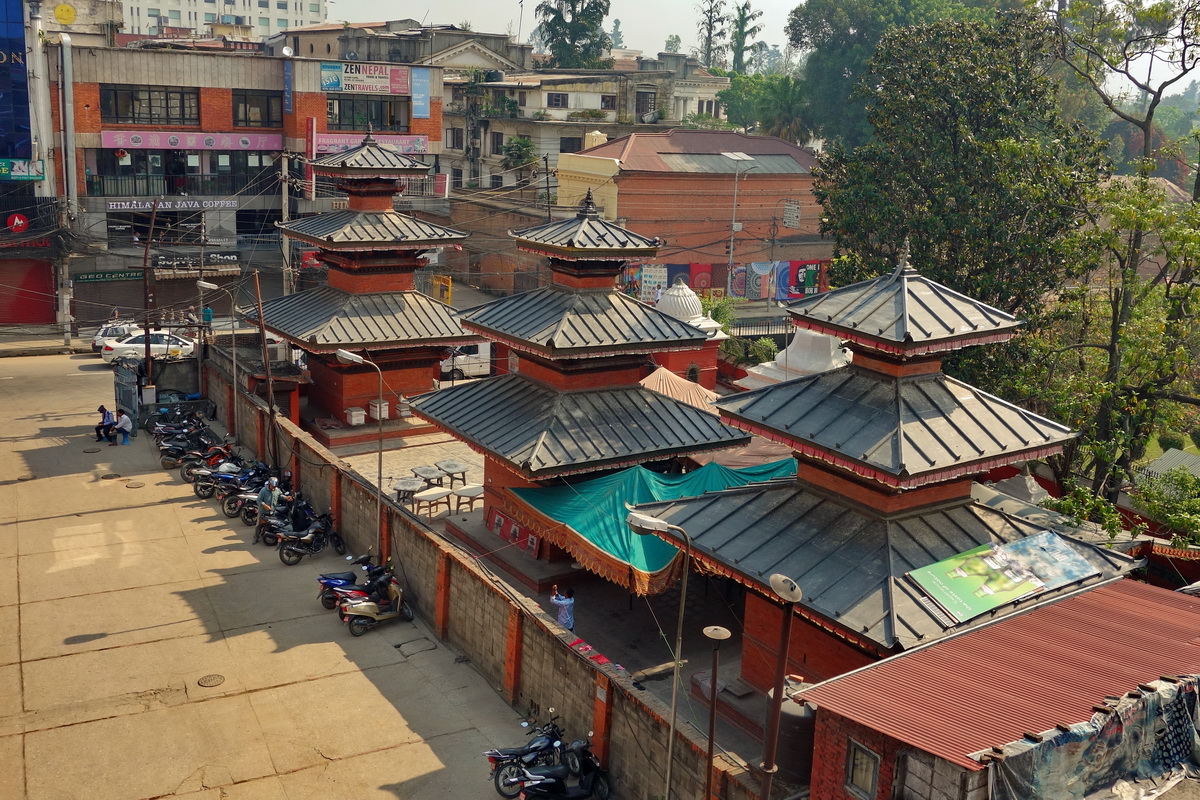
Our breakfast at the hotel. Served on the rooftop.
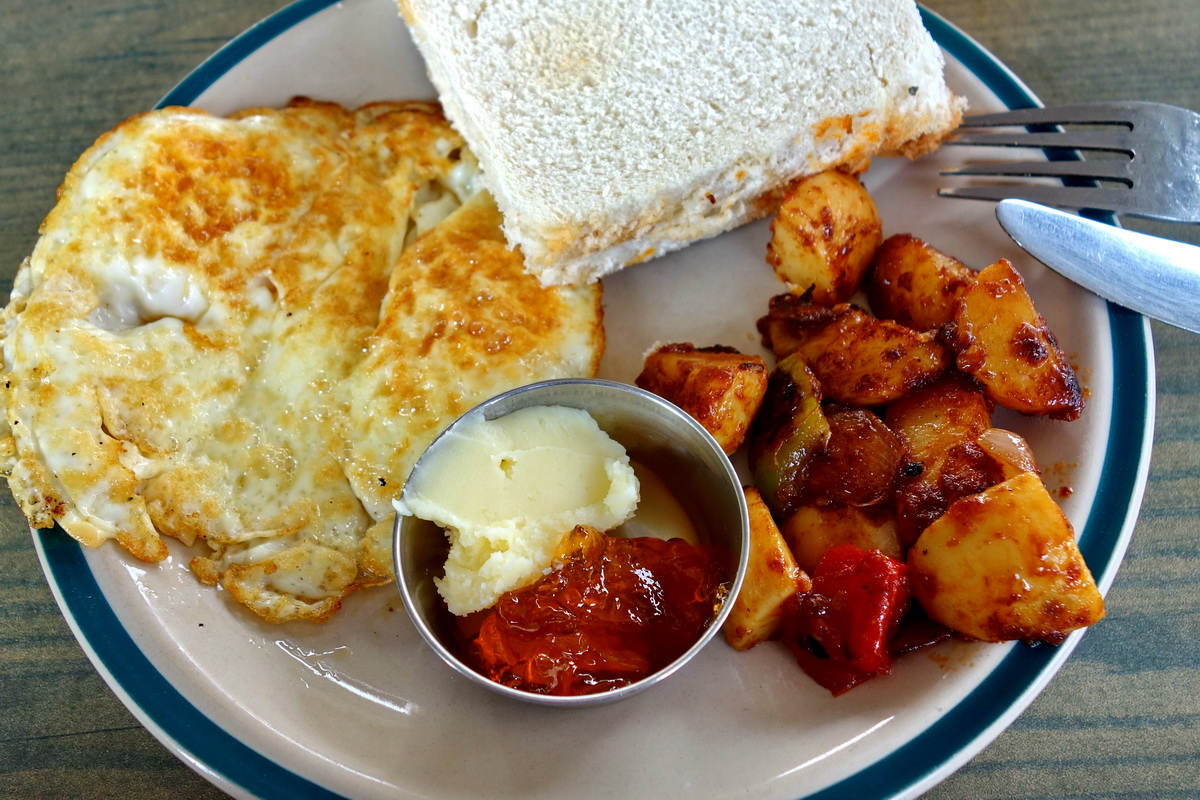
With a view of the neighboring temple.
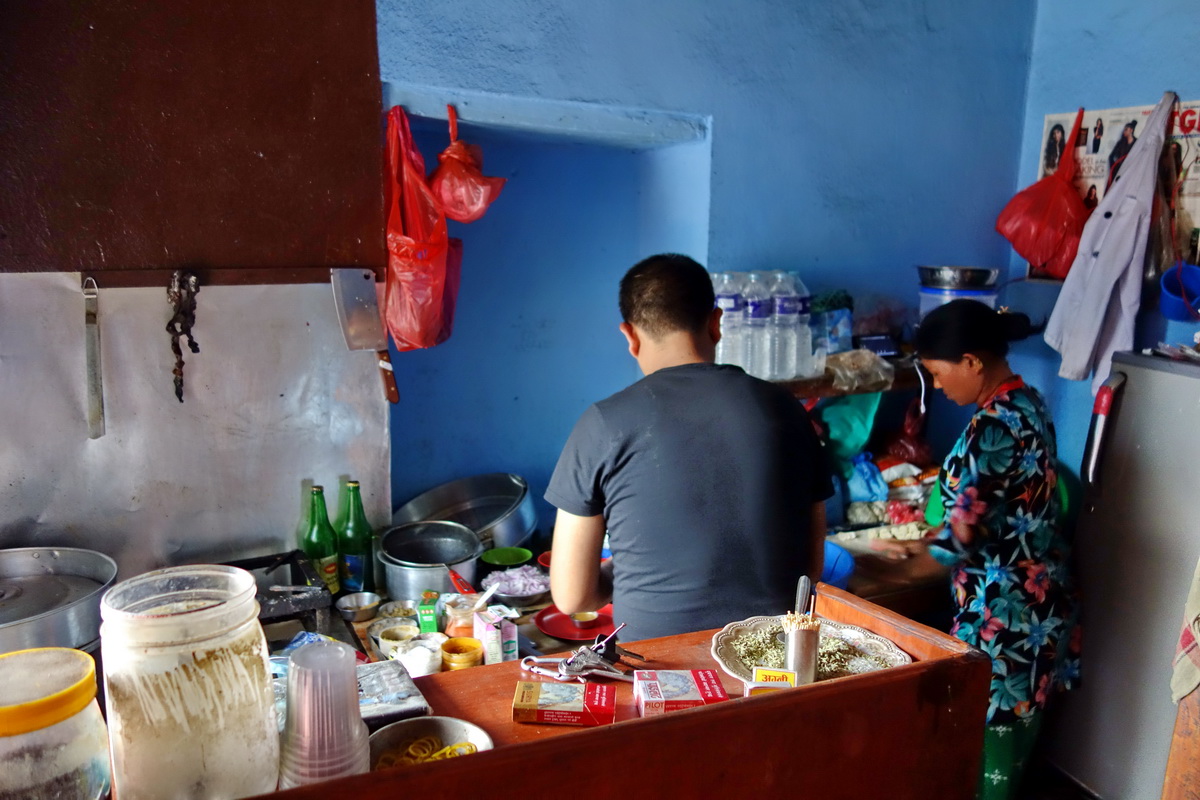
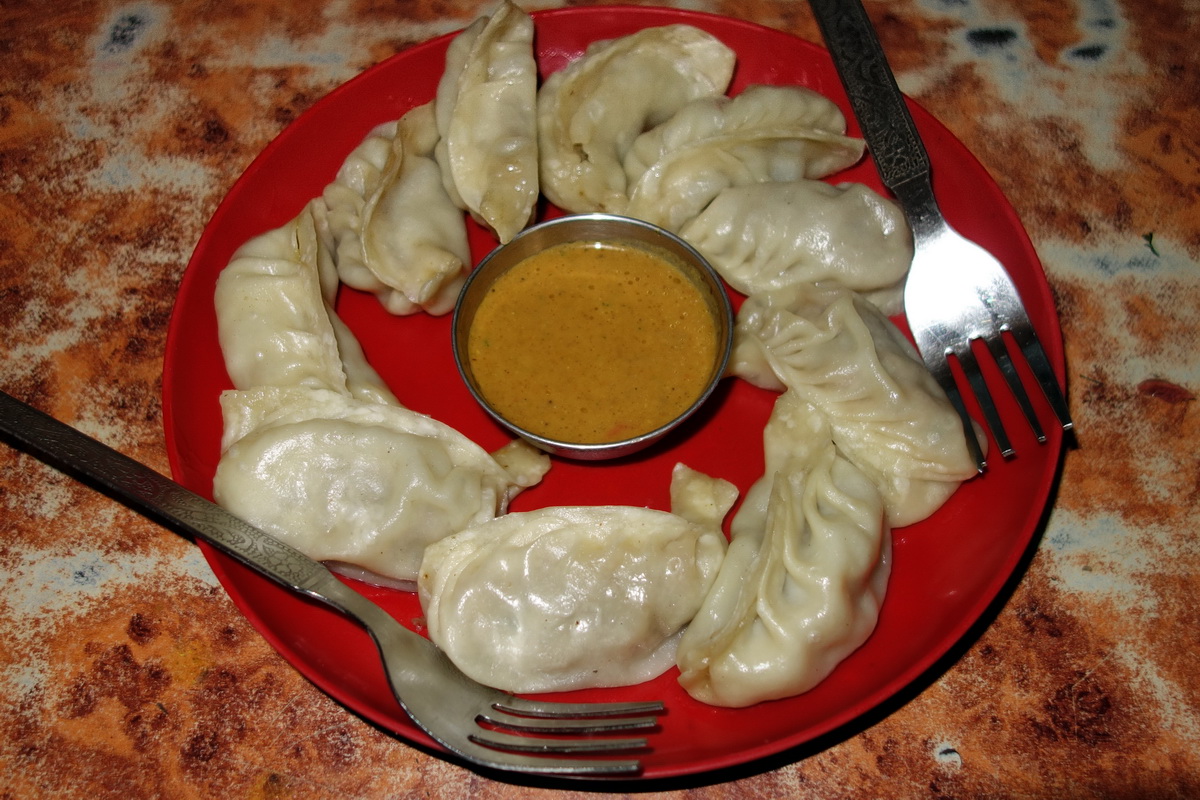
We stop to eat chicken momo at a very ordinary local eatery. As I mentioned earlier, the food at local eateries is no worse than in restaurants. There were no chicken momo available, so we had to wait about 20 minutes while they made them specially for us.
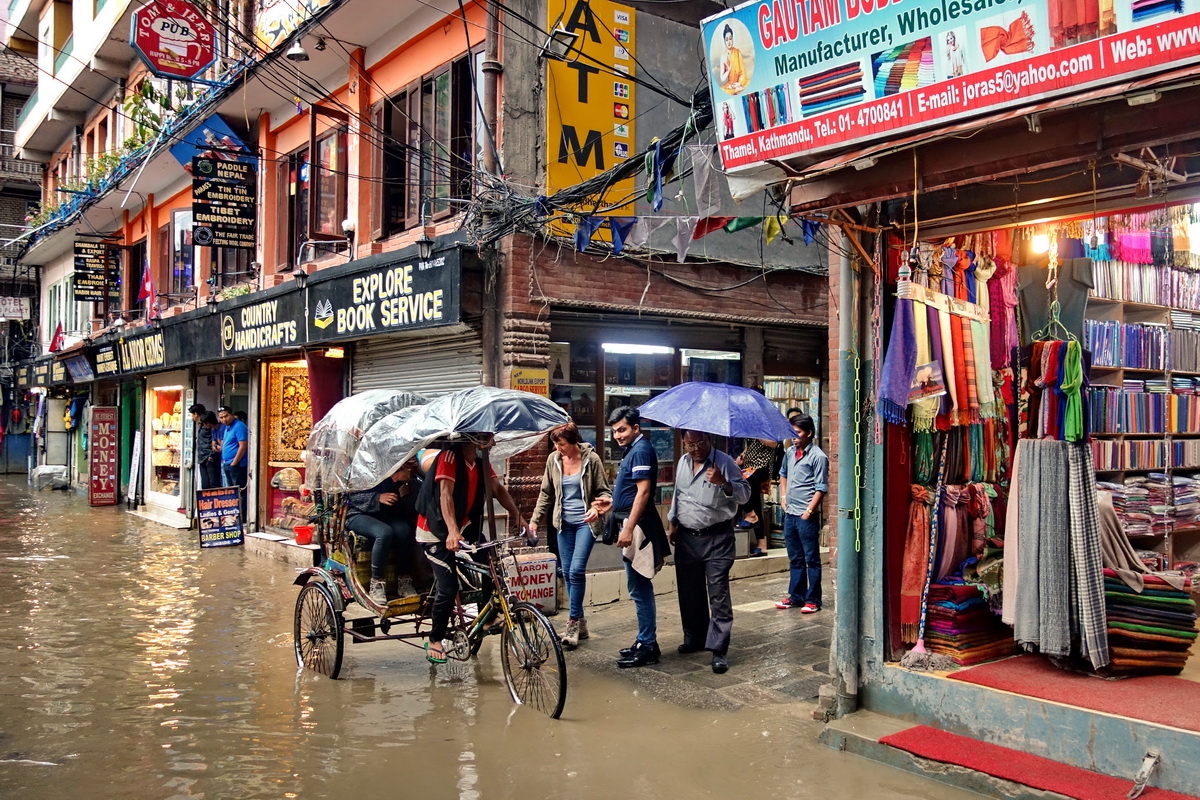
A typical view of Kathmandu’s streets after rain. In general, we were very lucky with the rain. There were very few clear, sunny days. Even when it wasn’t raining, the weather was still overcast and gloomy.
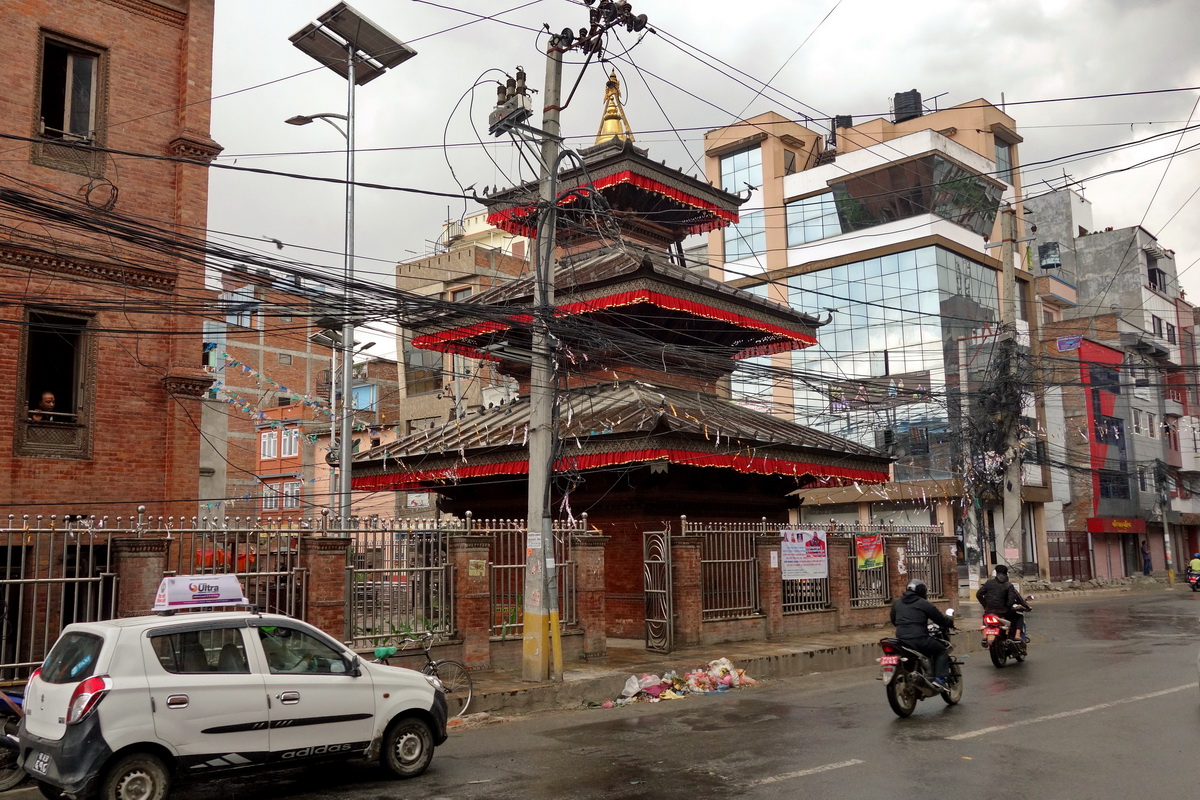
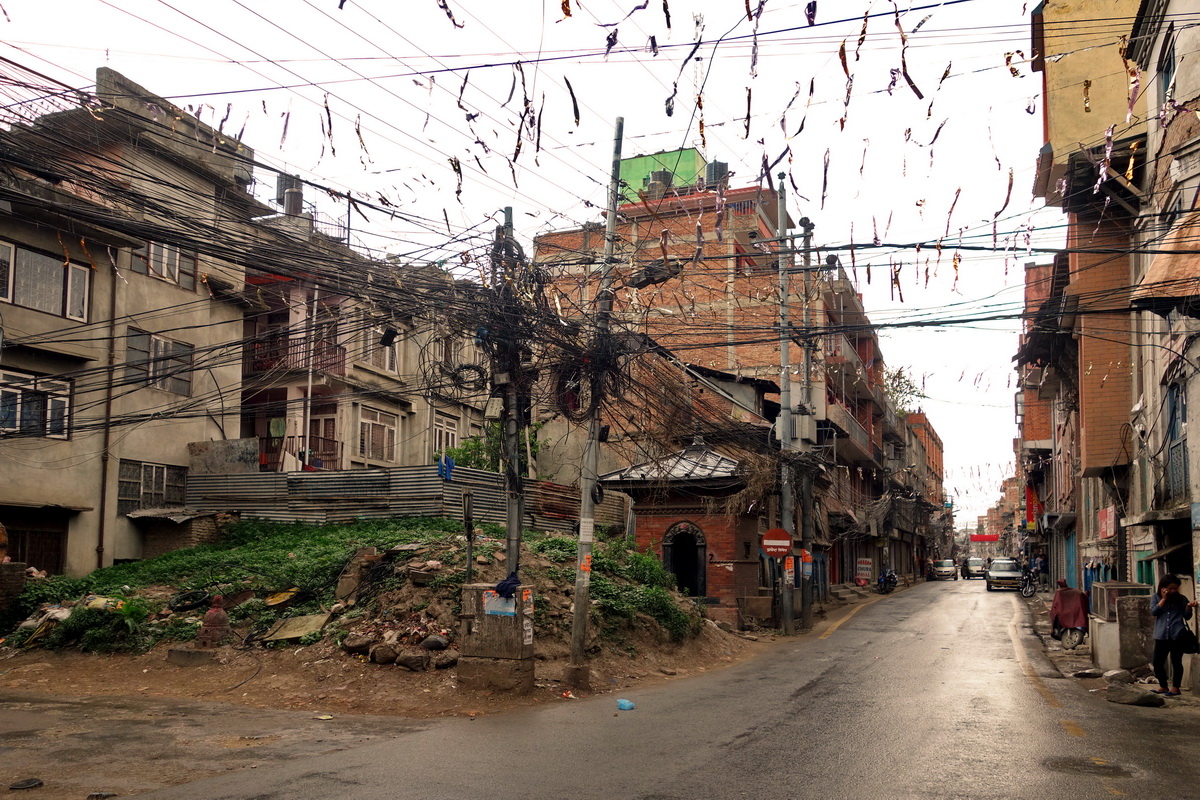
...
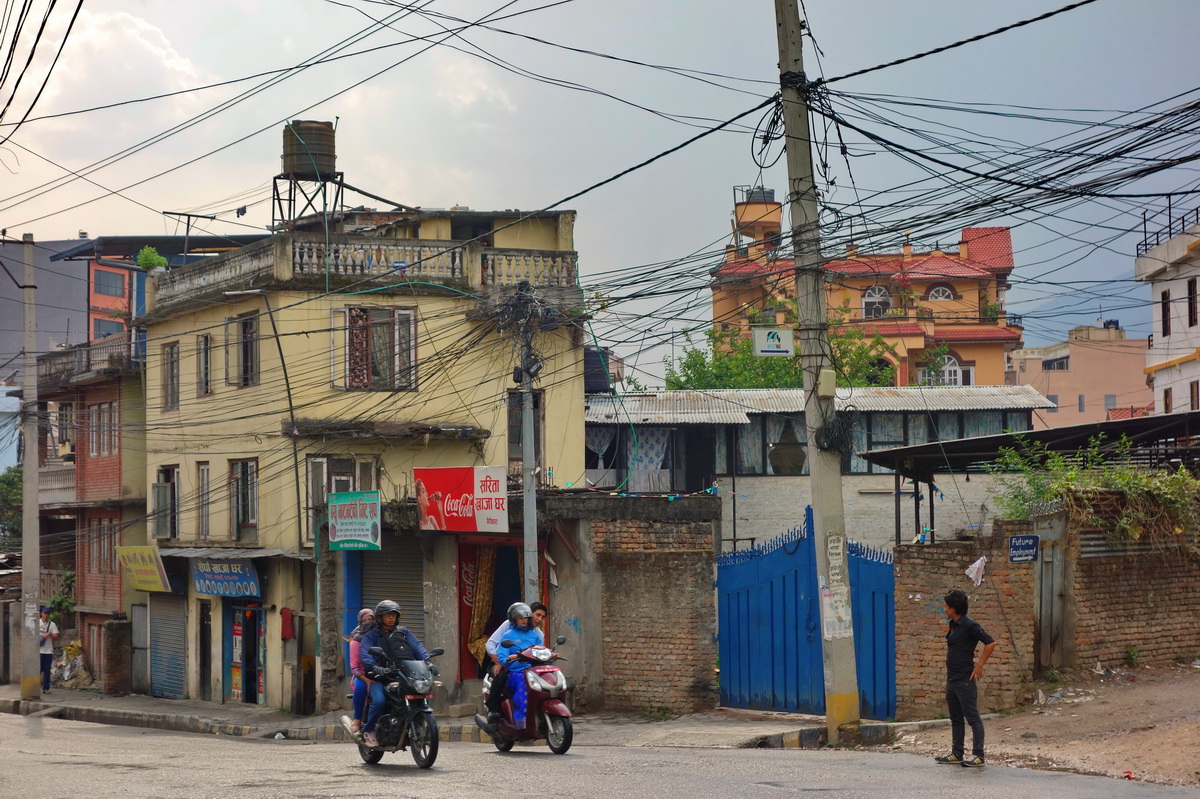
A market was set up on the grounds of one of the temples, selling vegetables.
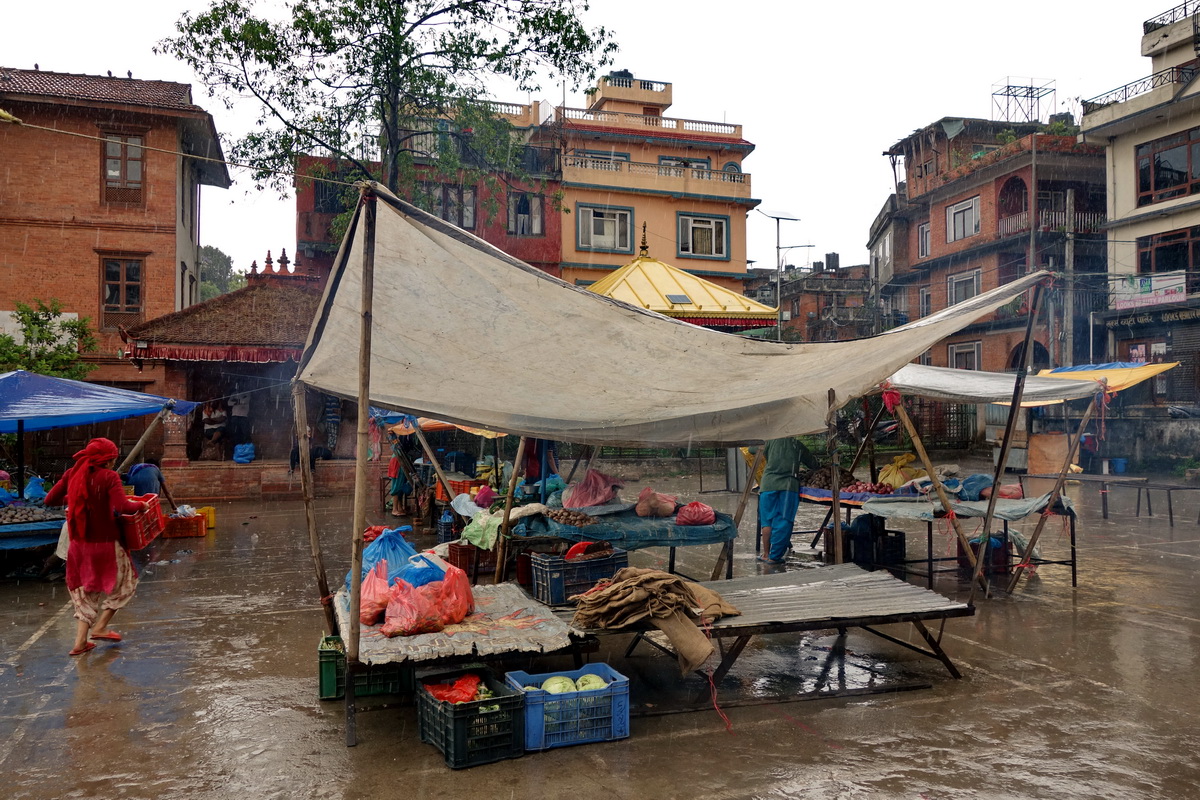
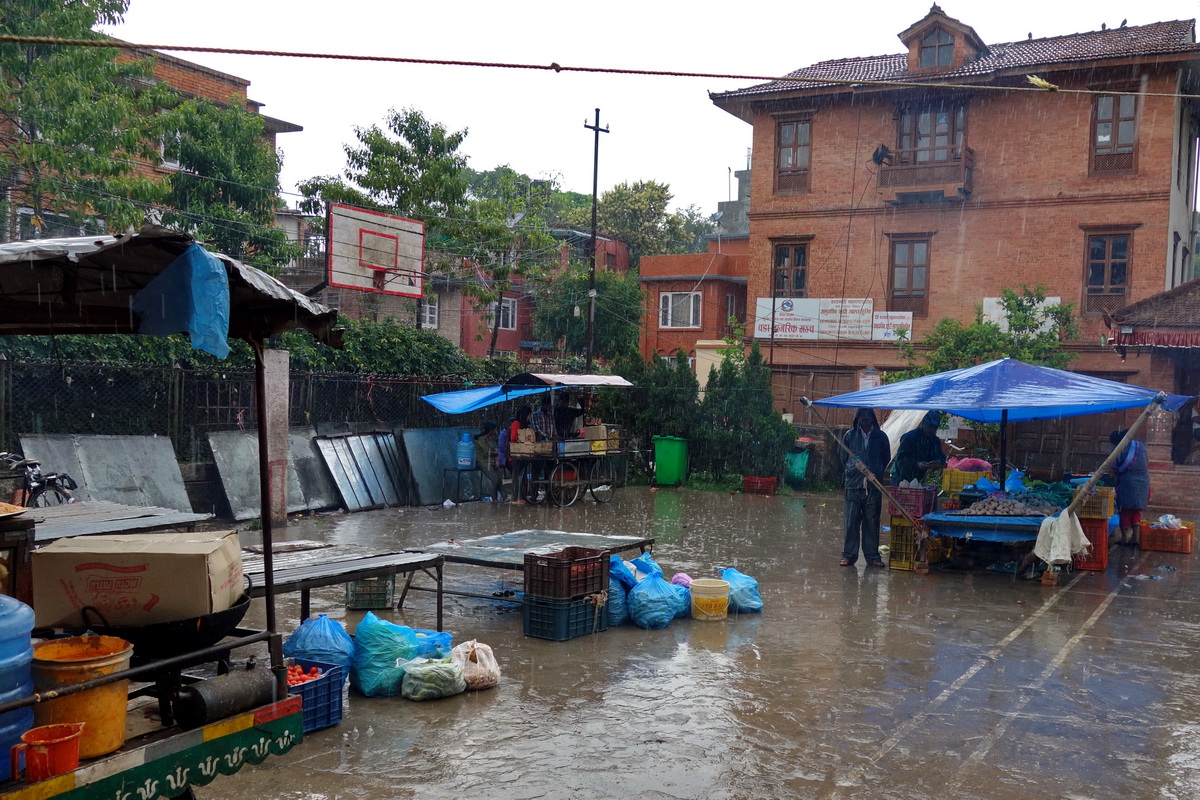
On the last day of our stay in Kathmandu, it rained almost all day, and then it even hailed. The city’s central streets were significantly flooded.
Time to move on...
Read the continuation: Part II. Bhaktapur.