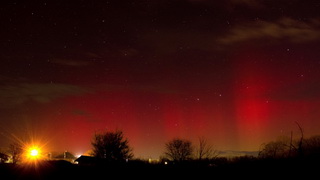
Polar Lights in Ukraine 2026
Recently — or more precisely, over the last few years — auroras in Ukraine, particularly in our city of Dnipro, have become quite a common phenomenon. If they used to be a great rarity, now they occur at least once a year. The first time I observed an aurora in Ukraine was in the fall of 2023, and that was also when I managed to photograph the phenomenon. Since then, auroras have been observed multiple times, but I haven’t always found out about them in time.
This time I got lucky: after hearing about the event from local news channels, I quickly ran out into the yard, grabbing my camera and tripod. The aurora took place on the night of January 19–20. The most active phase was visible from 23:50 to 00:10. I immediately started taking photos because the aurora could fade or lose its expressiveness at any moment. So I had to act fast. As usual, there was no time to fine-tune the shooting settings.
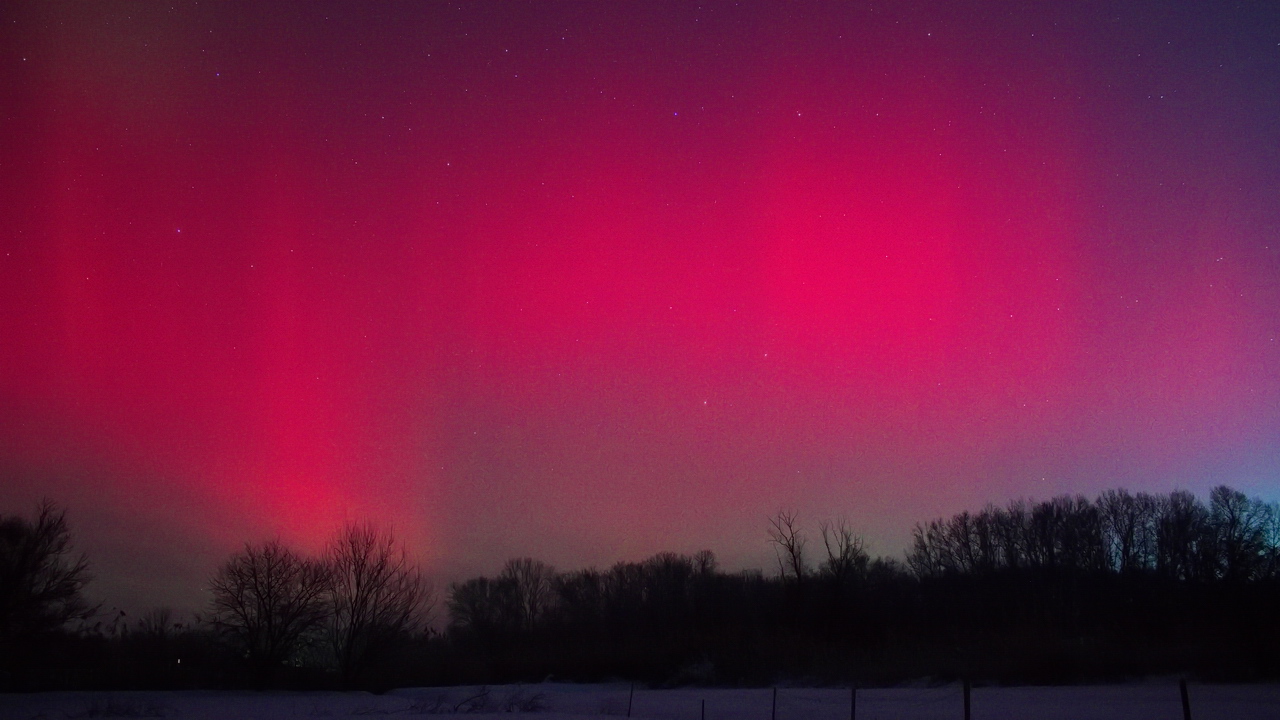
At first, the aurora appeared as a fairly noticeable red glow, but it was clearly different from ordinary sky glow. It’s impossible to confuse it with anything else. The aurora rose to a height of up to 50° above the horizon. The red color was immediately visible, and after a short adaptation of the eyes, its structure became distinguishable in the form of shimmering columns. It looked absolutely stunning.
The aurora wasn’t stationary. Initially it was in the north, but over time it shifted northwest.
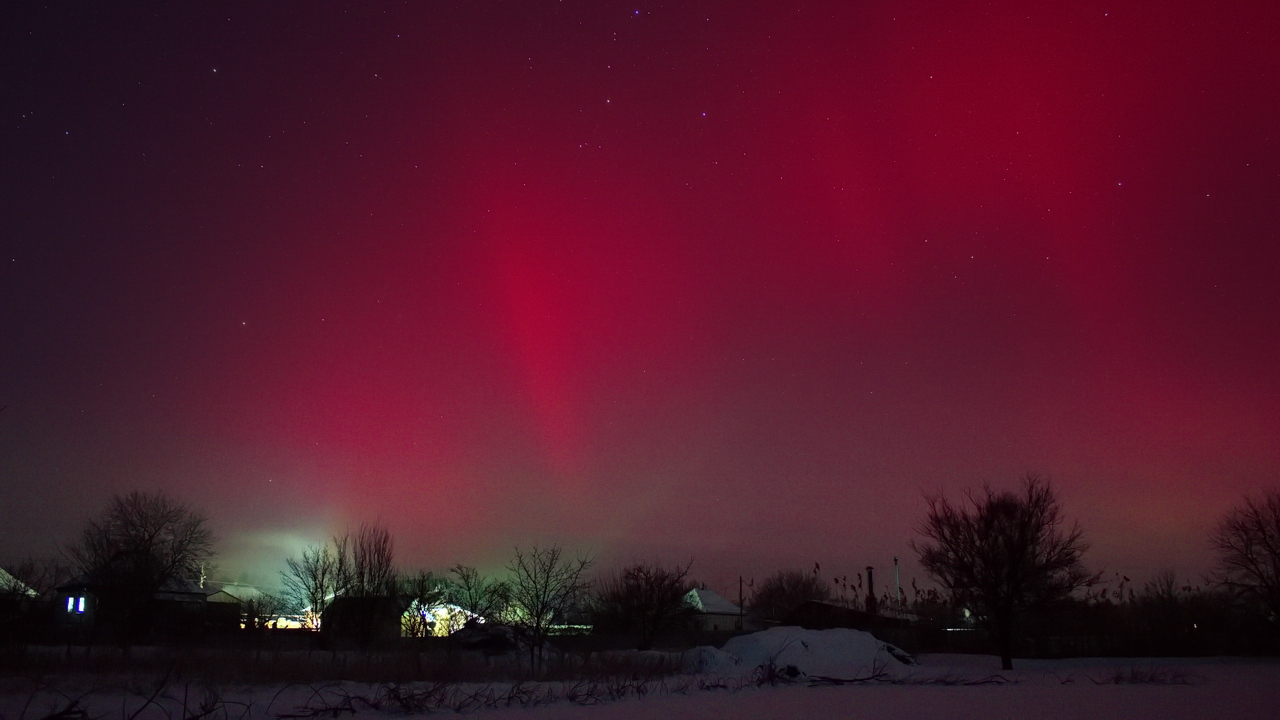
After about 20 minutes, the intensity of the aurora decreased: the patterns became less distinct and impressive. However, the red glow remained visible for quite a while longer and could still be seen in other parts of the starry sky.
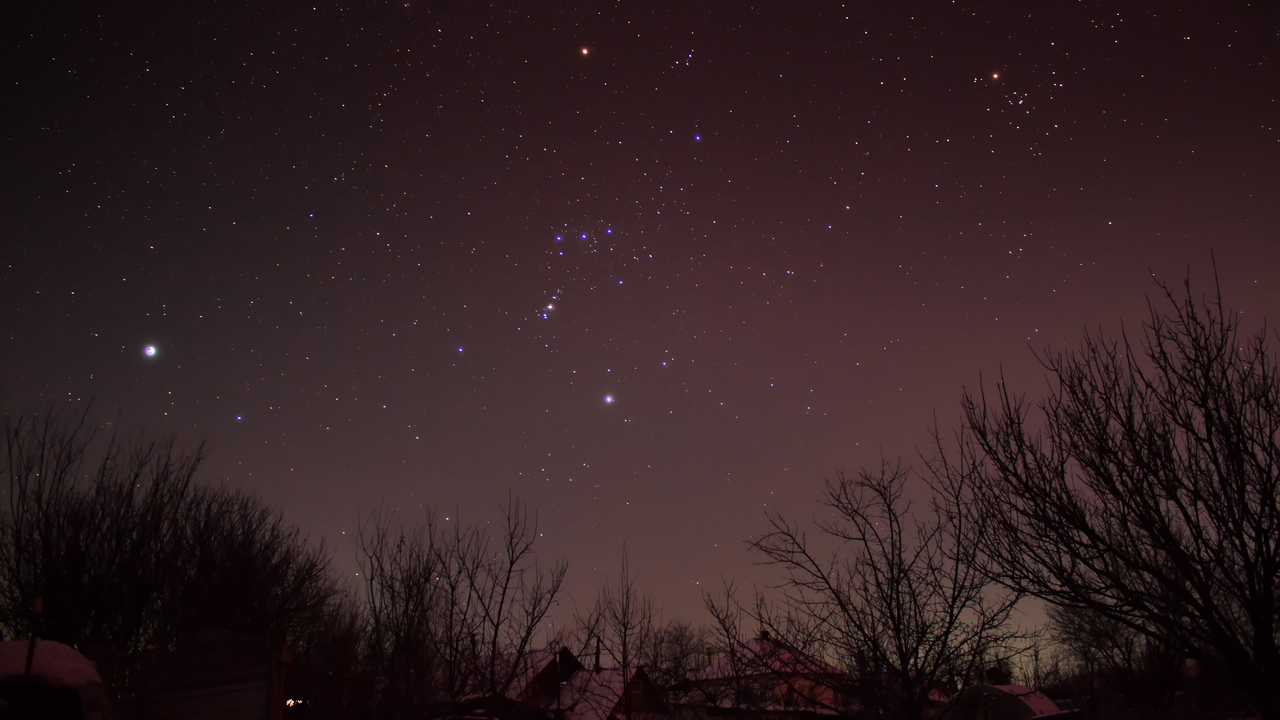
However, within city limits — especially with strong light pollution and tall buildings — observing an aurora can be difficult or even impossible. For comfortable viewing, you need a reasonably clear northern horizon, as auroras are typically visible in the north, with the brightest part rising to about 30° above the horizon.
I also wanted to capture a time-lapse of the aurora to see its movement. However, I didn’t take many photos, so the time-lapse turned out very short — only 5 seconds. It shows the dynamics of the aurora over 10 minutes, from 23:53 to 00:03. Overall, the result is pretty decent.