Part V. Hampi.
Hampi was the capital of the splendid and vast Vijayanagara Empire, with a population of over half a million people, controlling nearly all of South India. The ruins of its former grandeur now span 26 square kilometers. The foundation of the great dynasty was laid in 1336, and 1565 is considered the year of the collapse of the renowned Vijayanagara Empire.
In 1986, the ruins of Vijayanagara were inscribed on the UNESCO World Heritage List. However, only 58 of the 550 ancient monuments retain this status. Today, Hampi faces ongoing conflicts between those striving to preserve historical monuments and local residents who use these architectural landmarks as ordinary homes.
The city and its architectural monuments suffered greatly at the hands of Islamic conquerors, who viewed worship of divine images as an insult and idolatry, destroying Hindu temples and murti. Later, treasure hunters caused further damage to Hampi’s monuments. In recent times, the Archaeological Survey of India has been conducting systematic excavations in Hampi and its surroundings to uncover additional artifacts and temples.
***
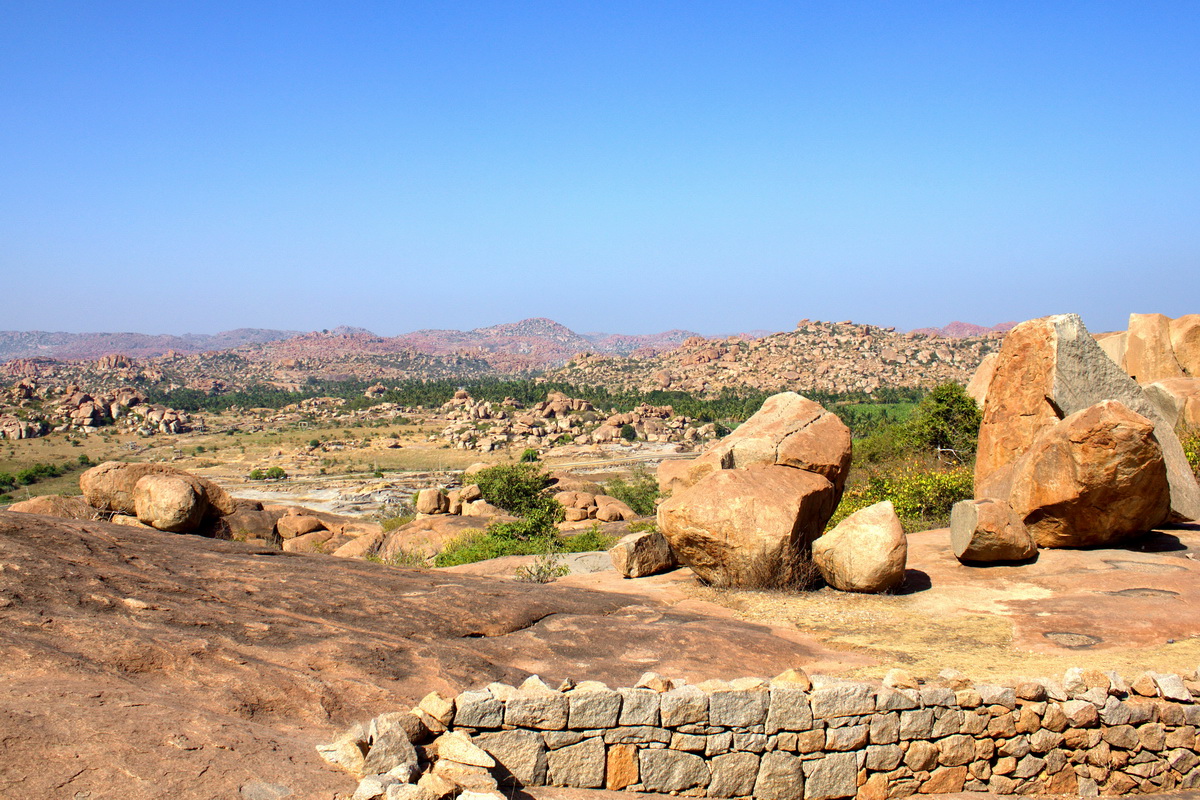
Hampi is situated among massive granite boulders, from which all its architectural structures were built.
Rama Temple
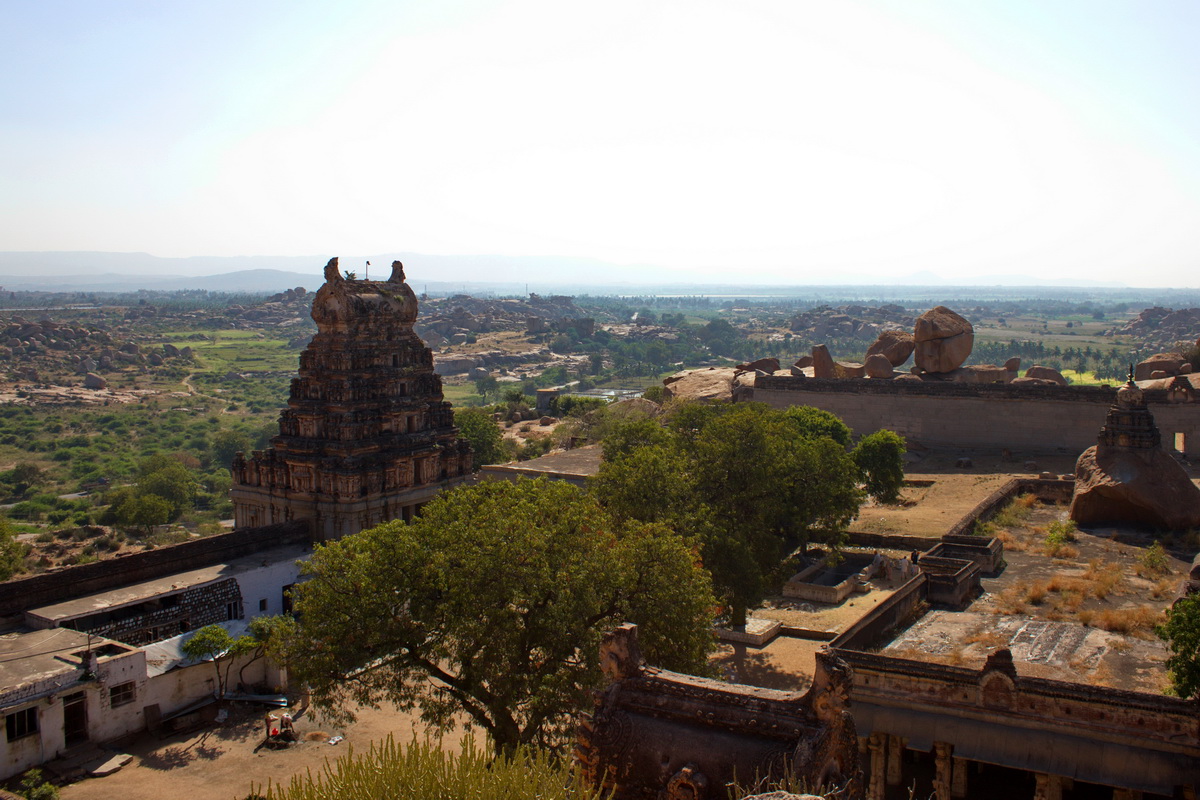
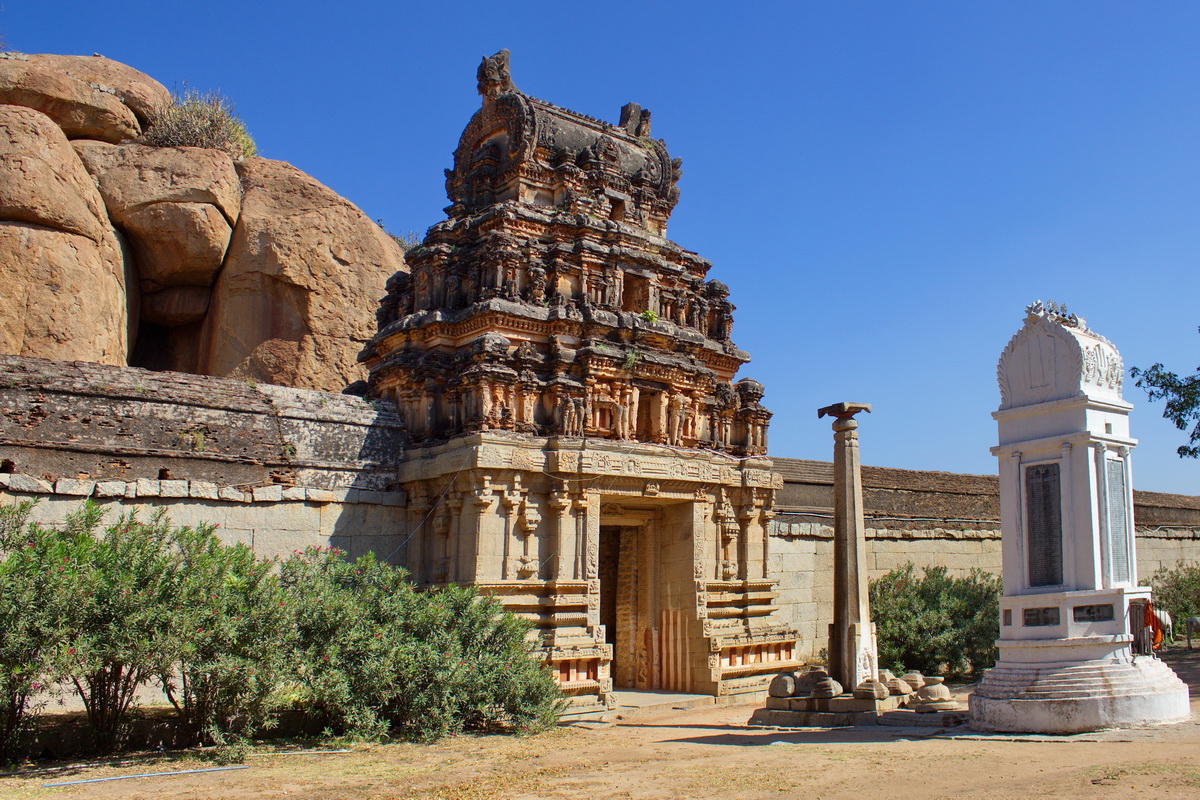
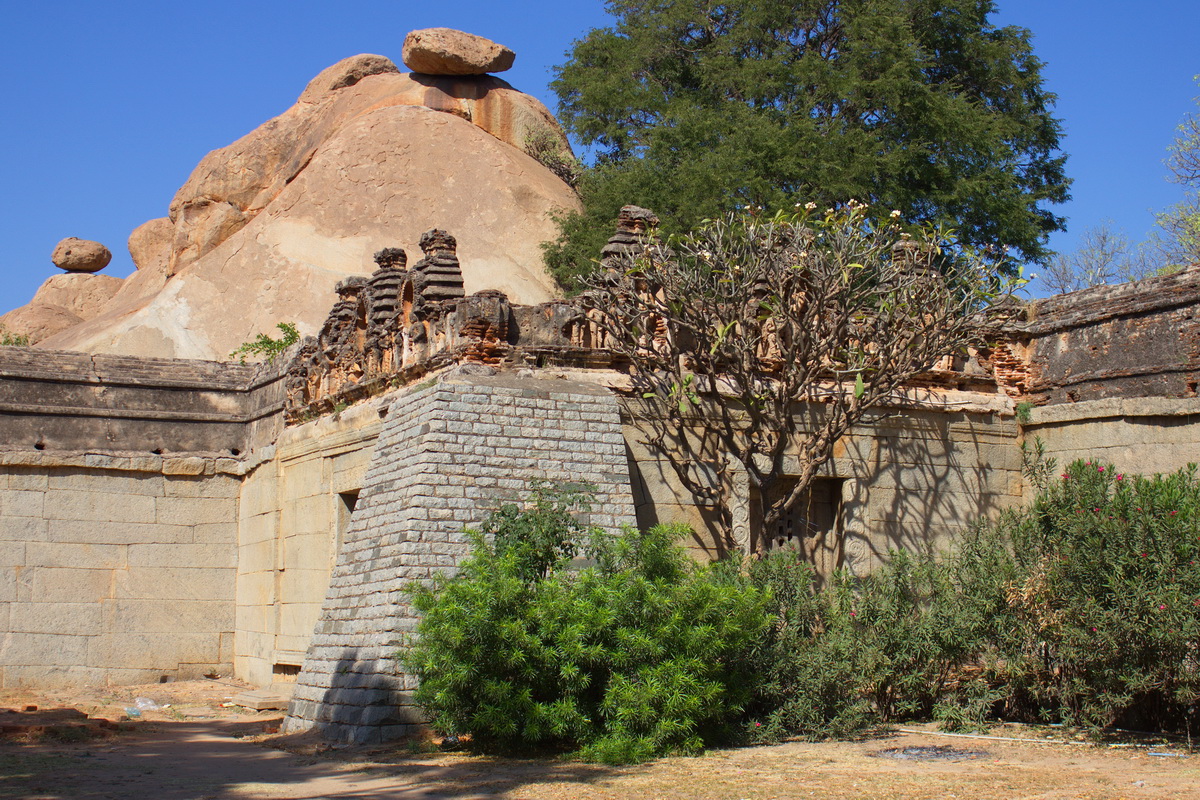
The Rama Temple is a major pilgrimage center in Hampi, renowned for its magnificent architecture and located within a large rectangular enclosure.
...
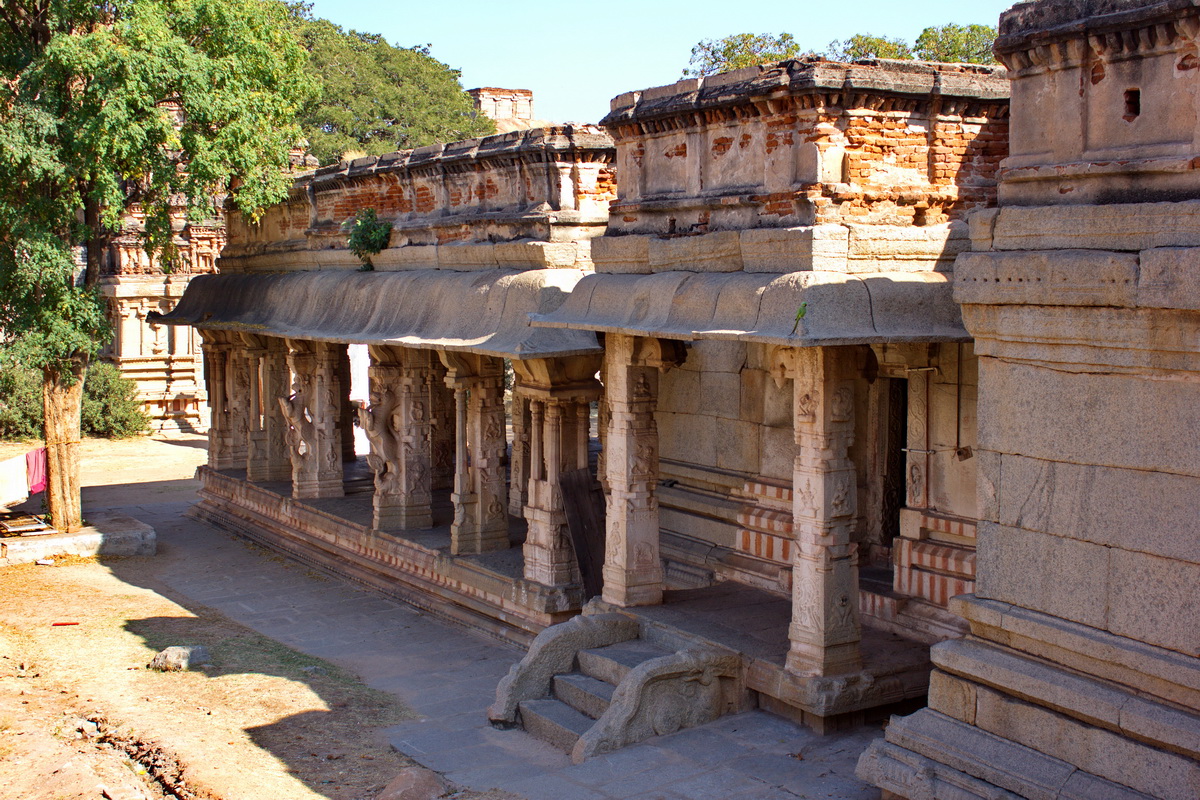
...
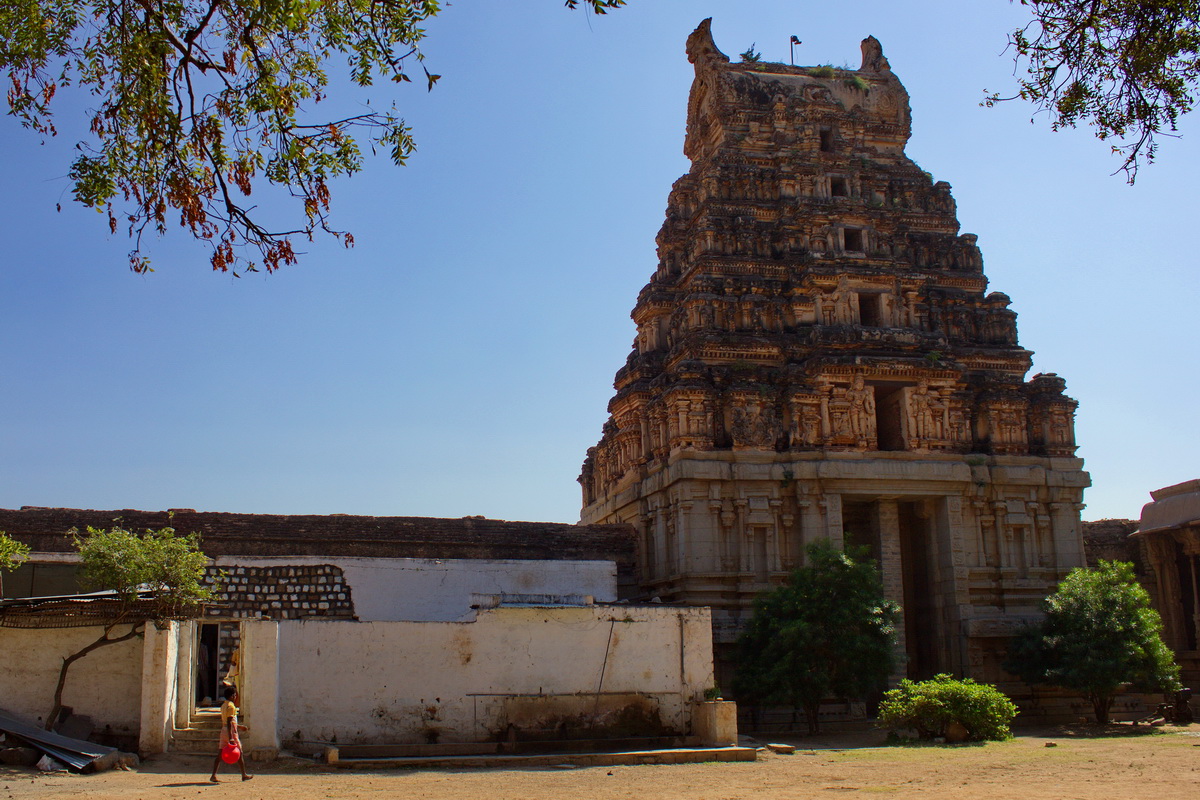
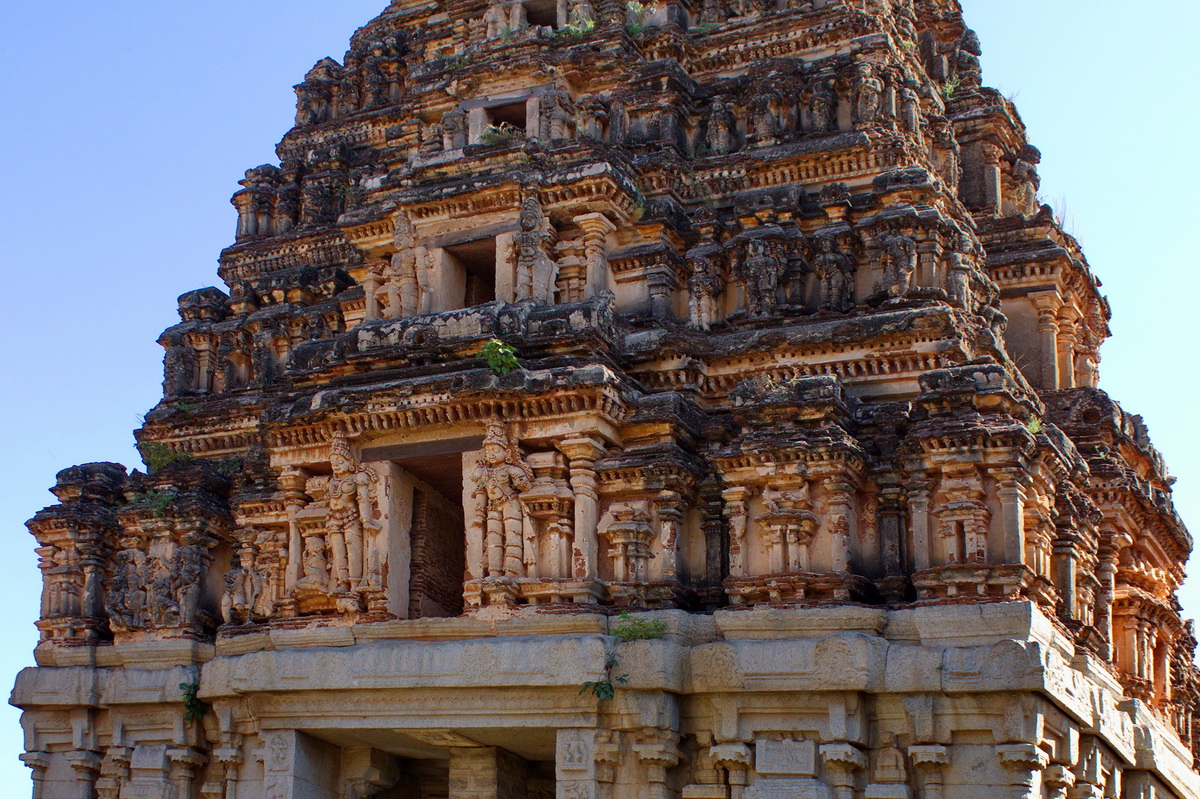
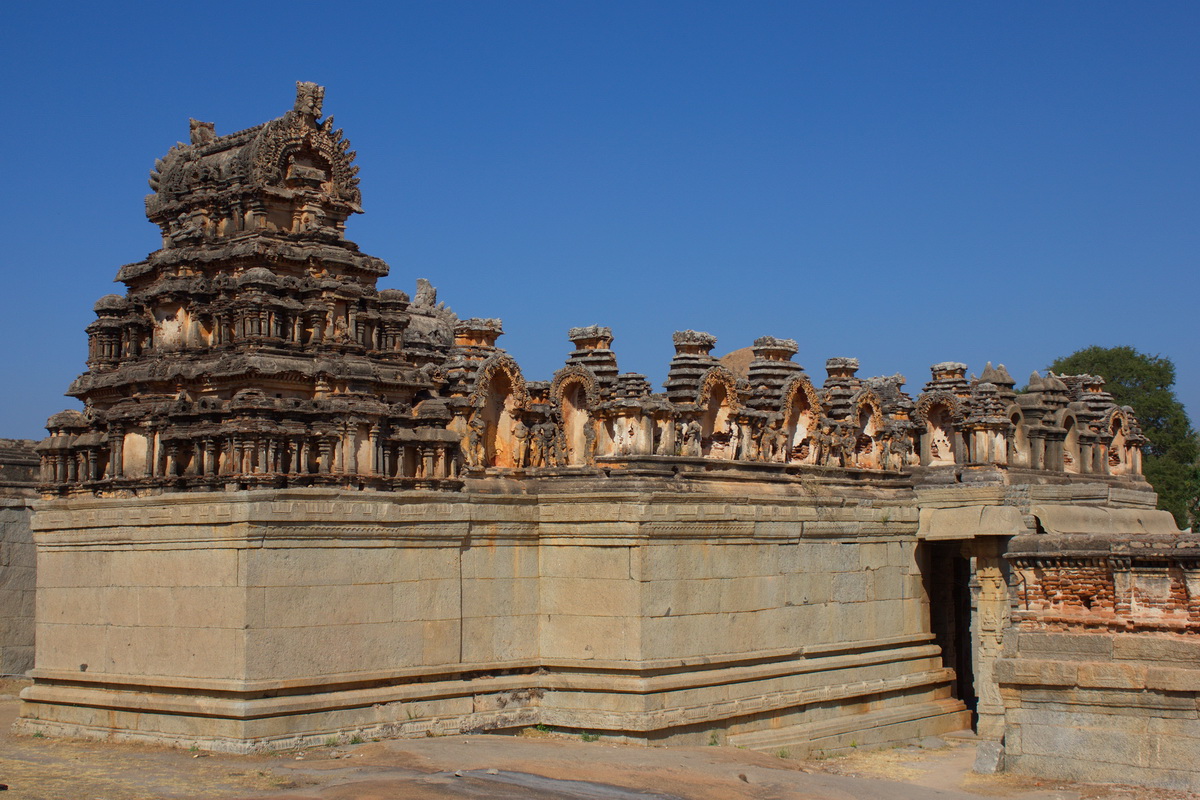
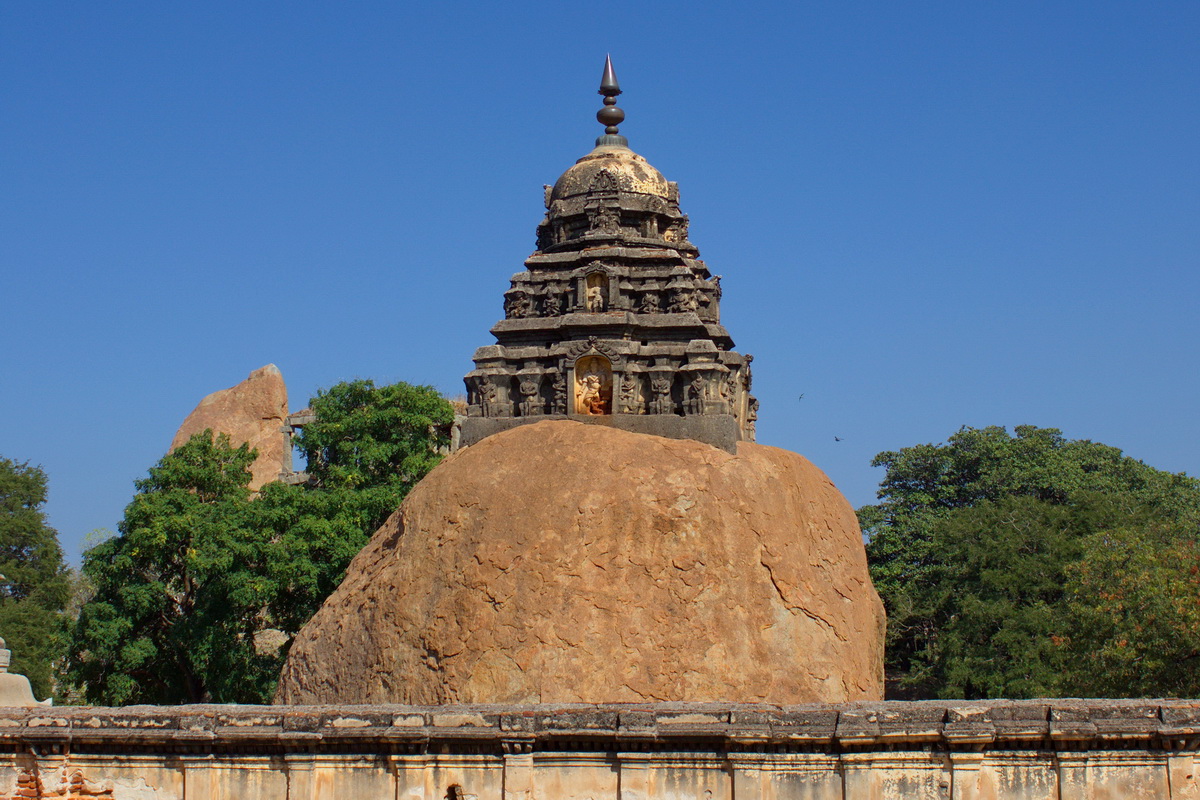
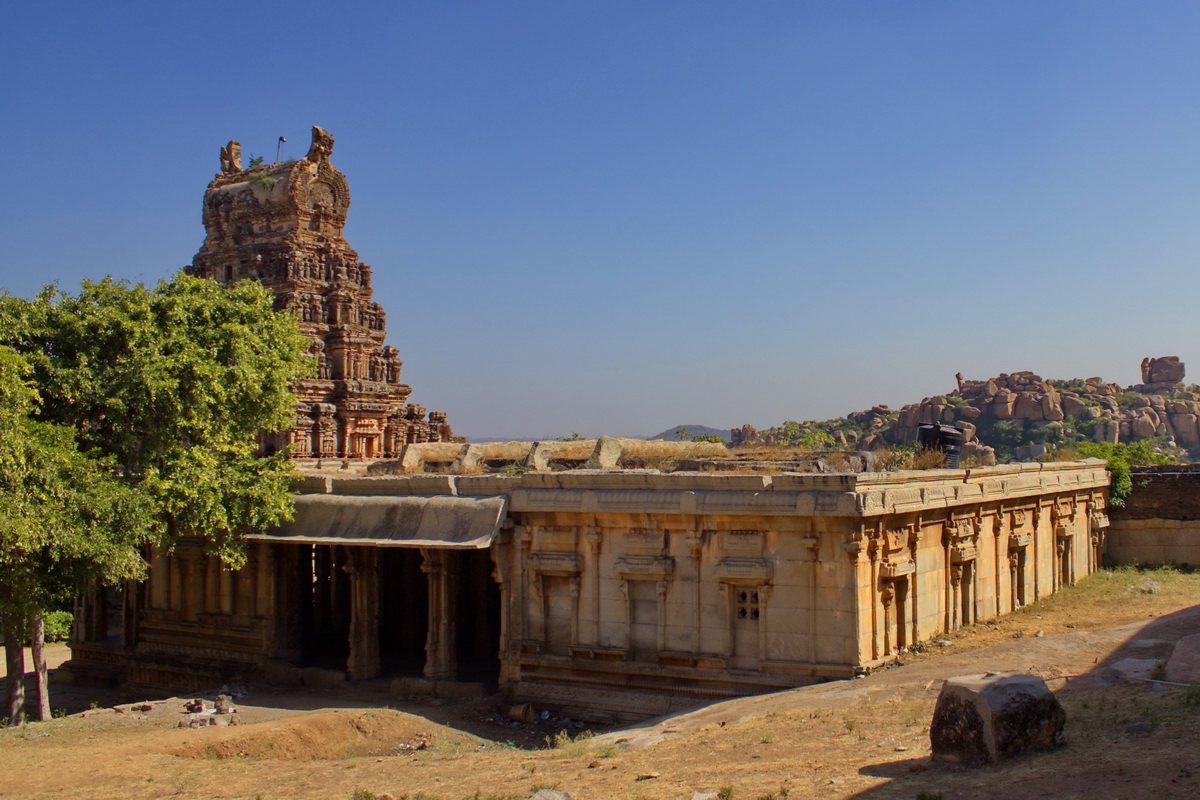
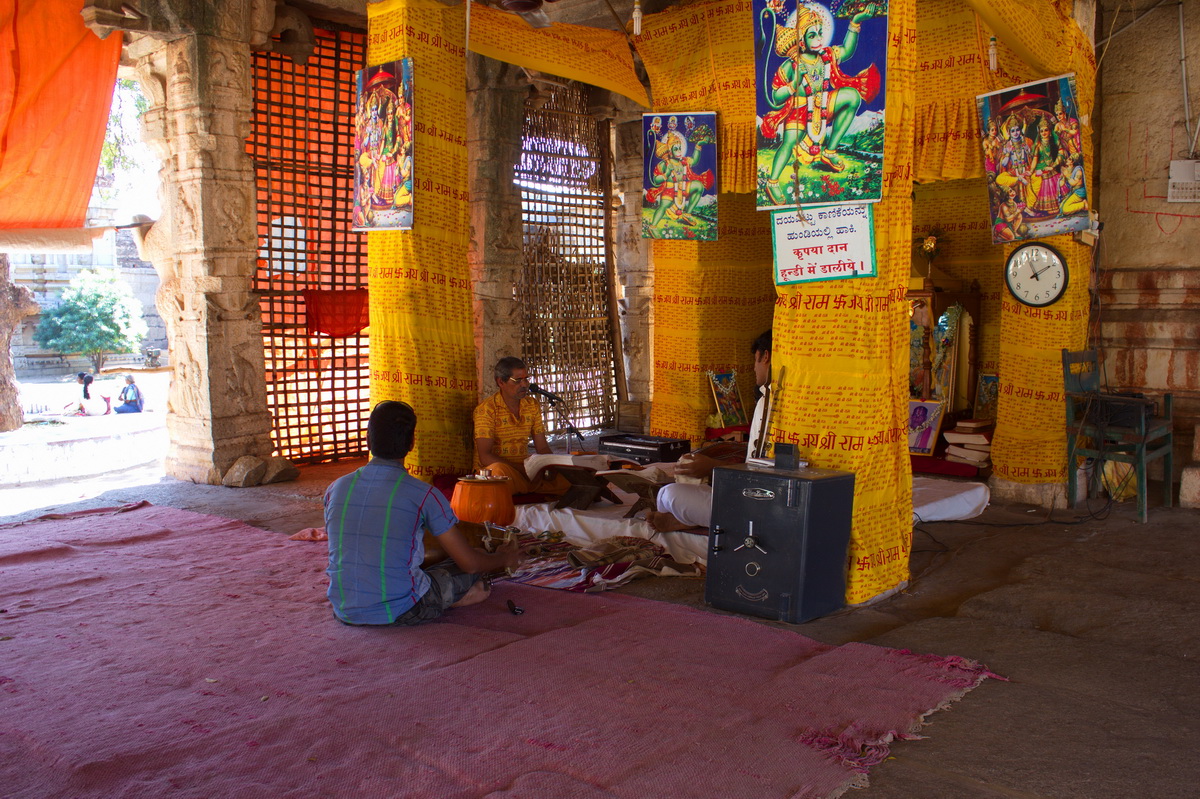
Here, mantras are chanted in Sanskrit. You can join them and play along, with bells and cymbals available.
Notice the exquisite stone carvings.
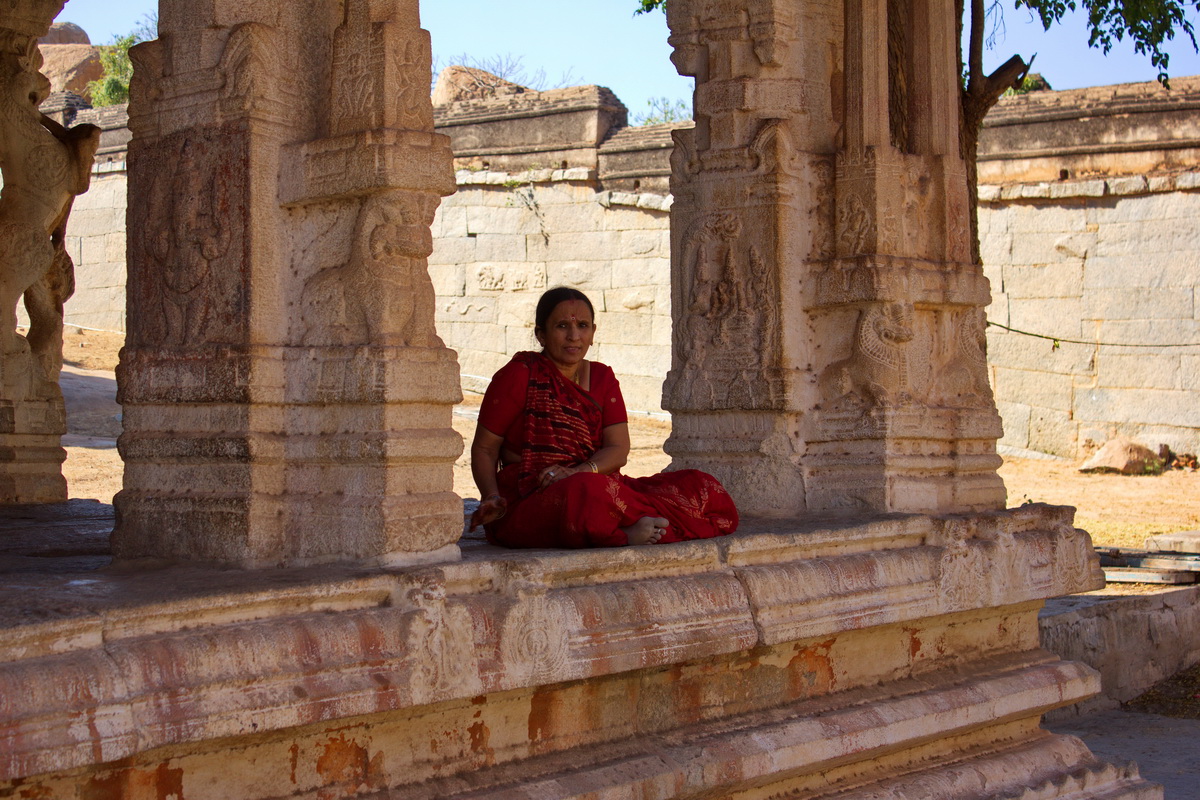
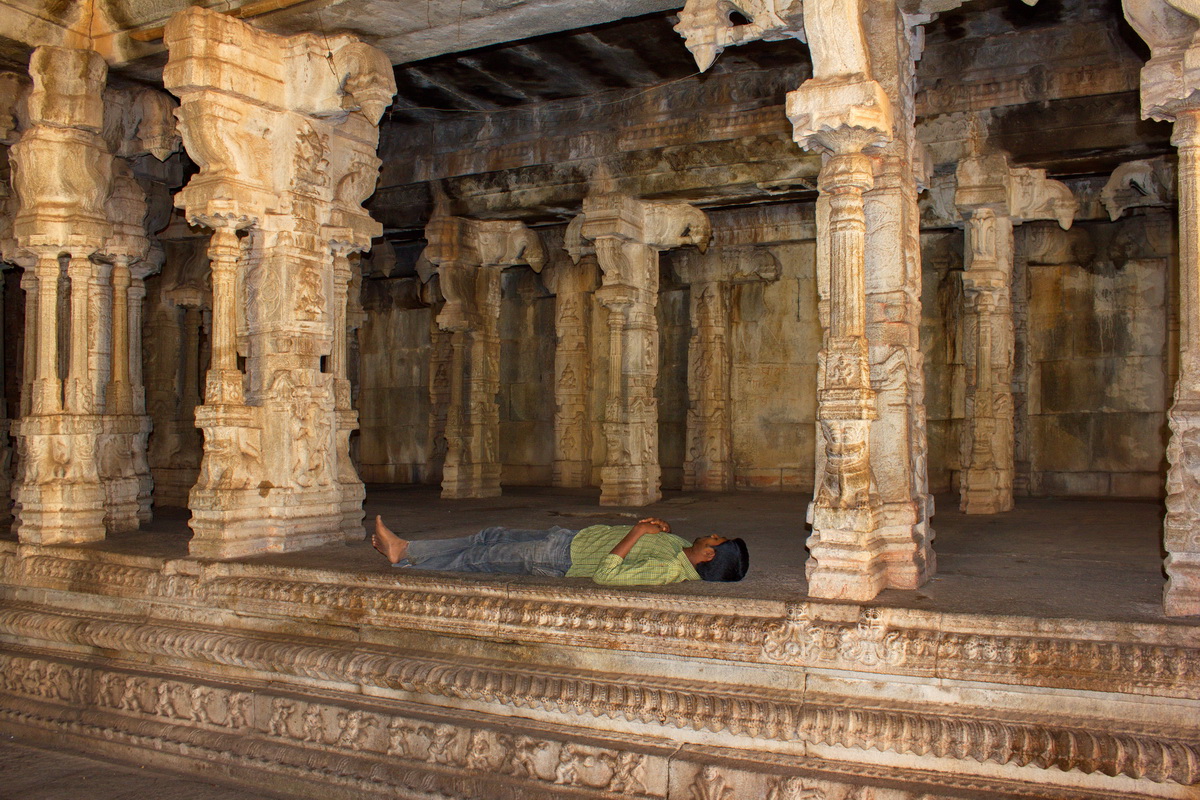
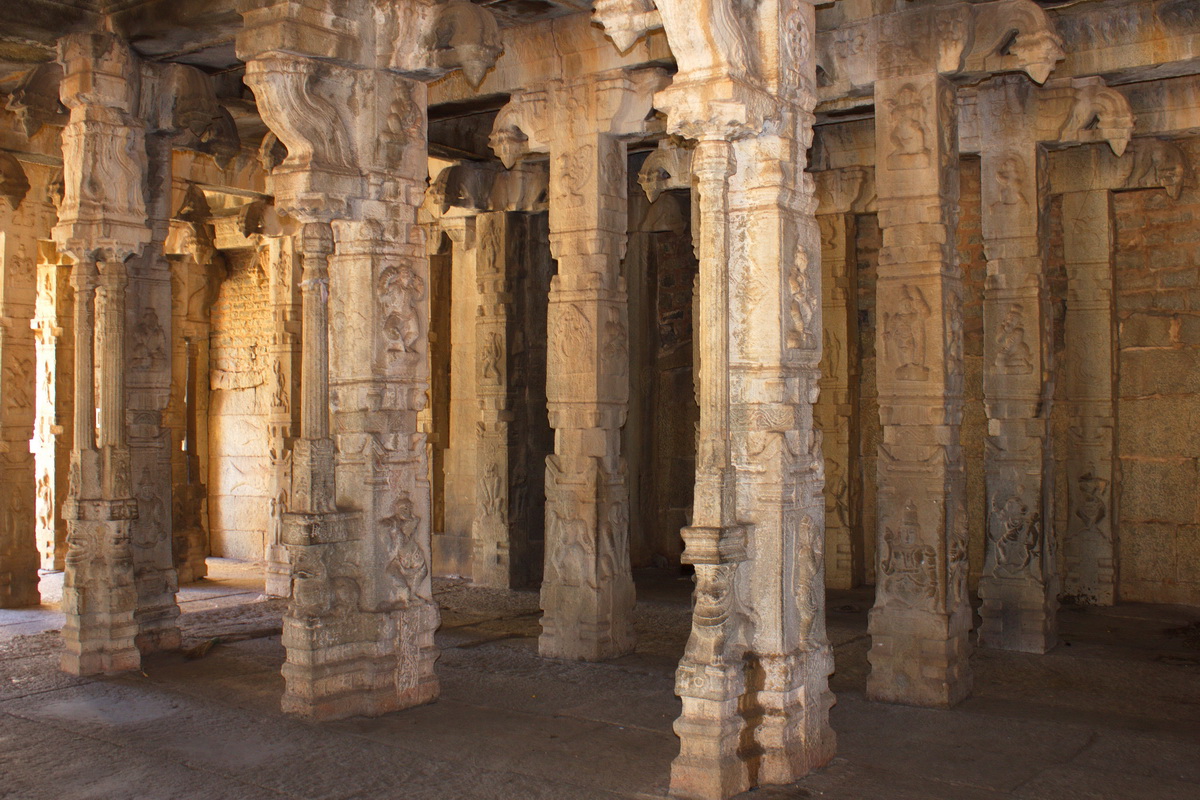
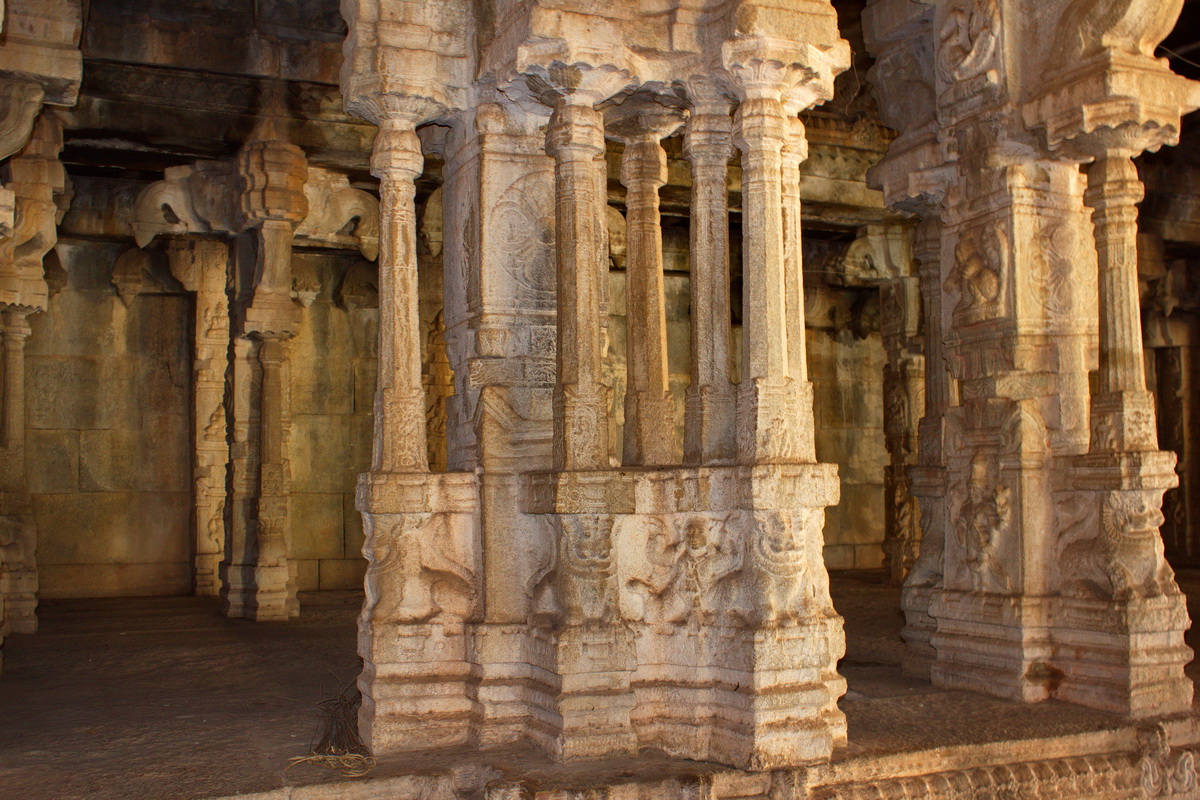
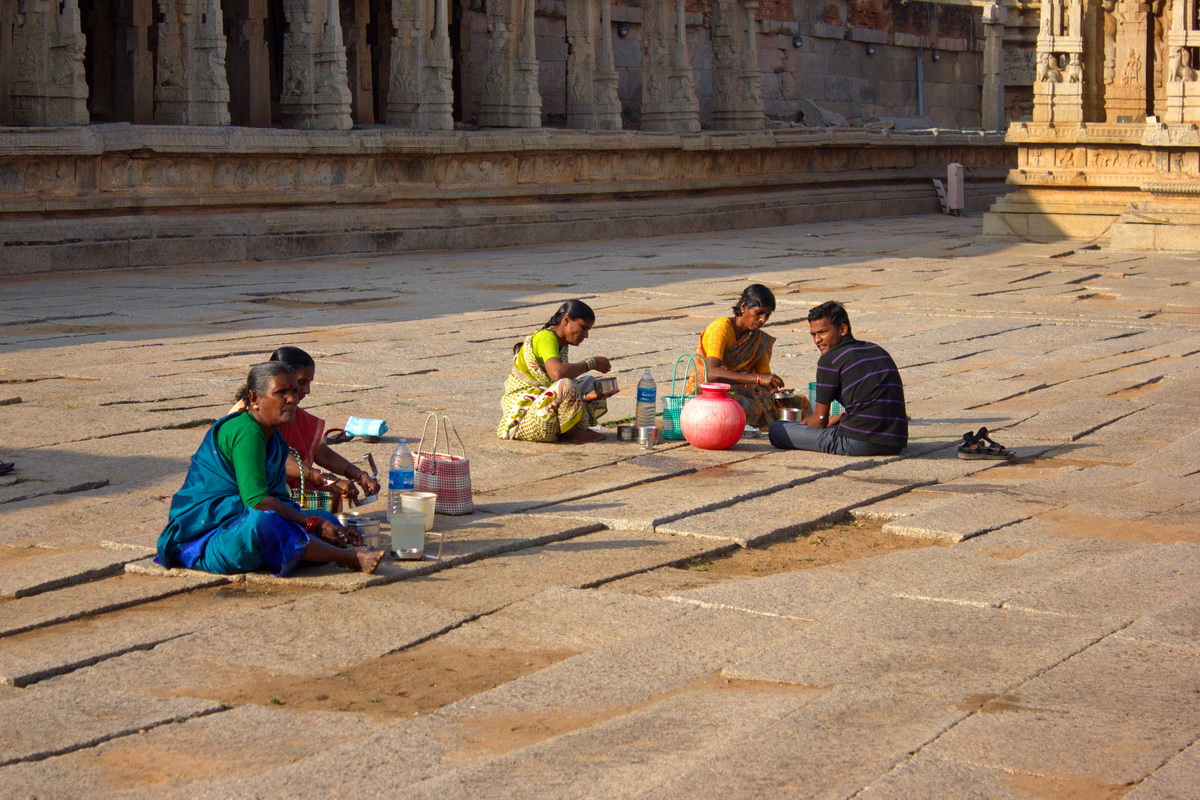
Pilgrims gather here.
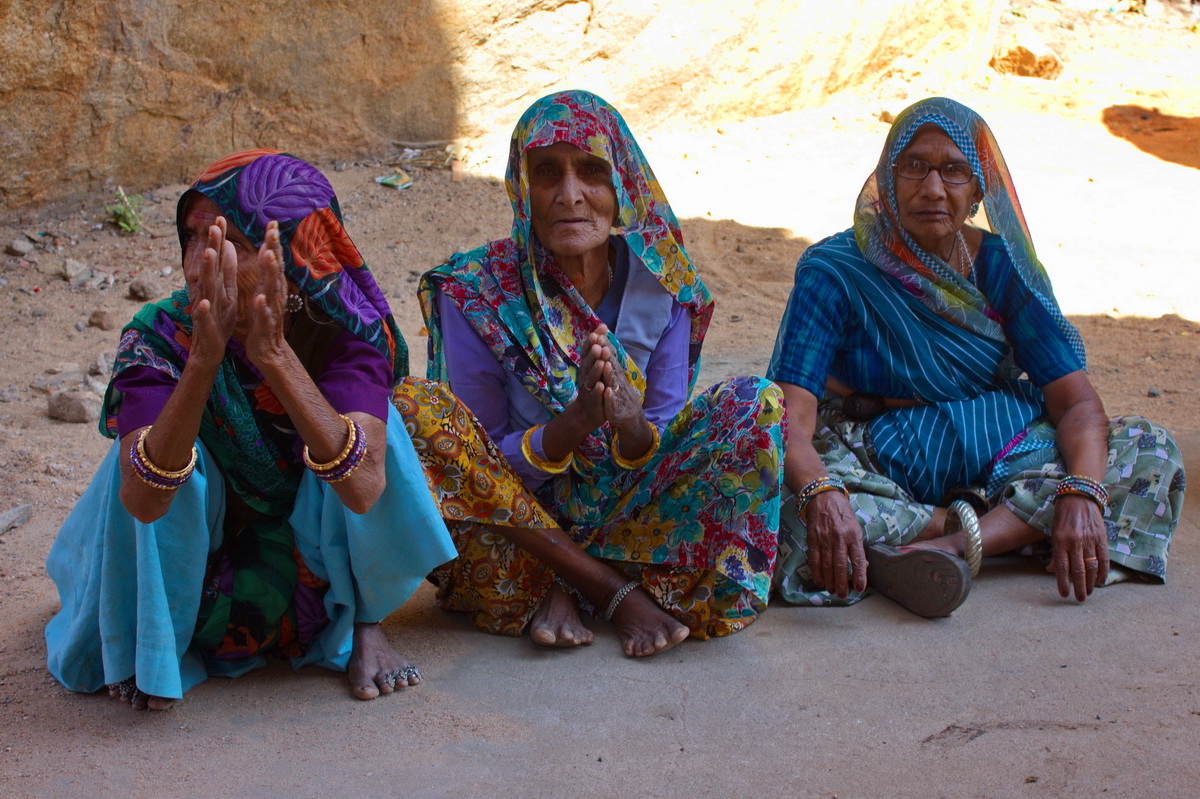
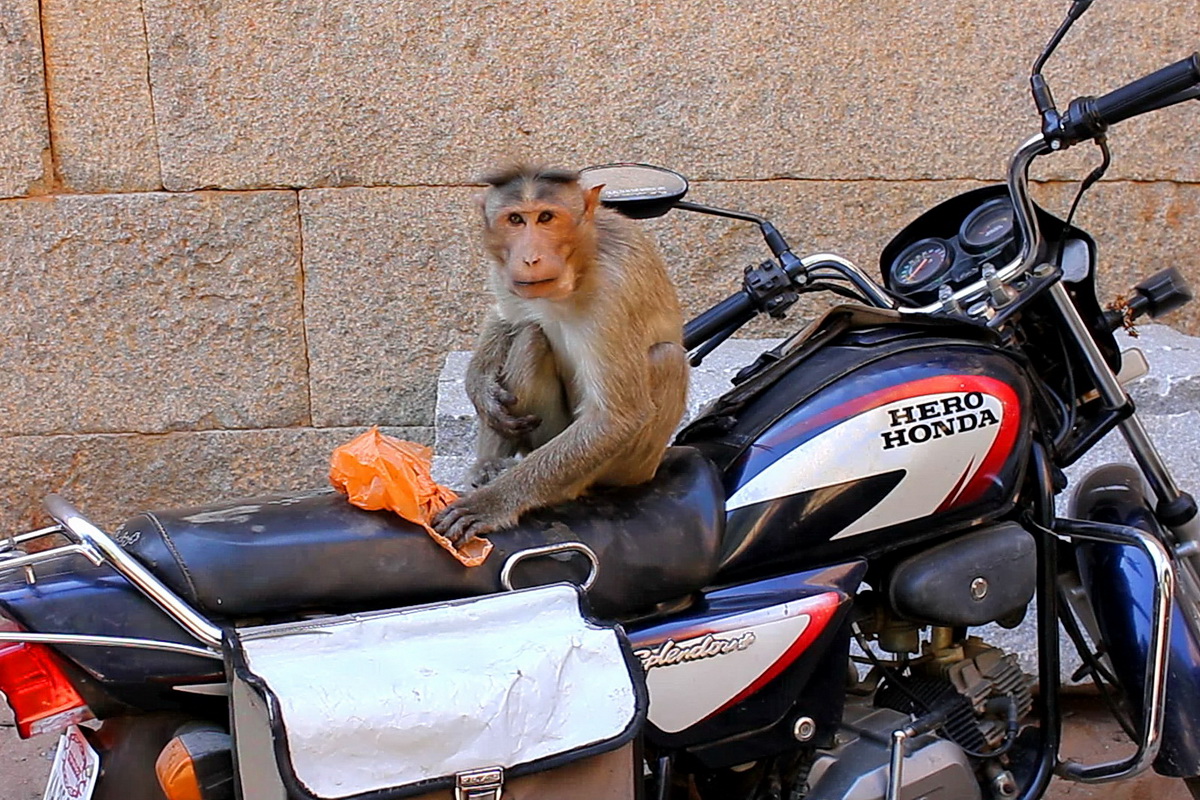
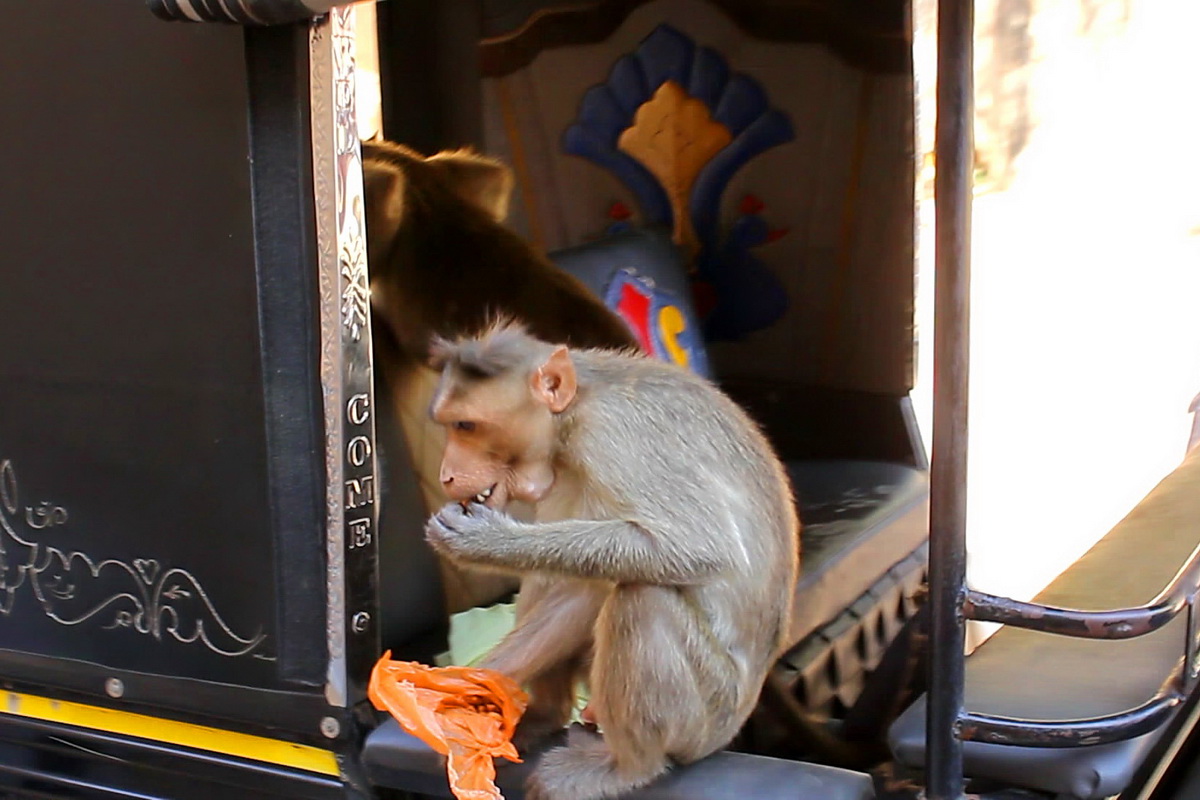
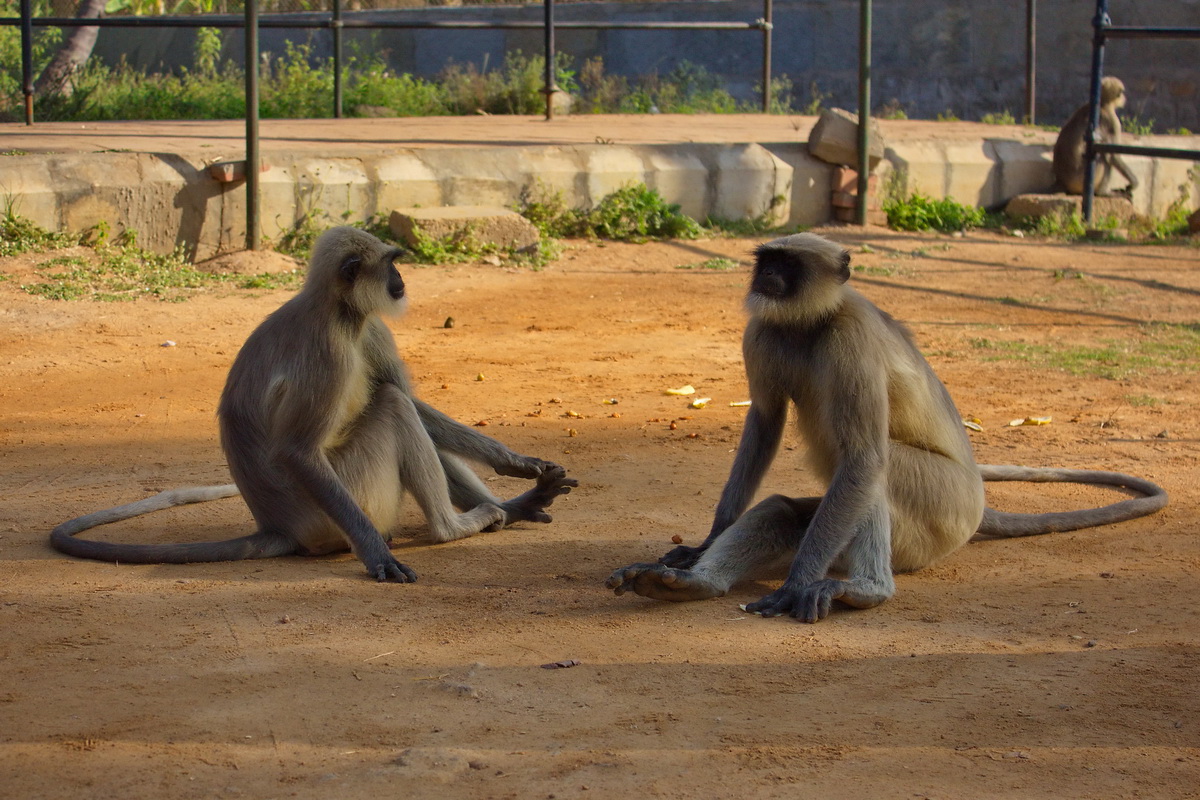
Besides pilgrims, monkeys also visit the temples.
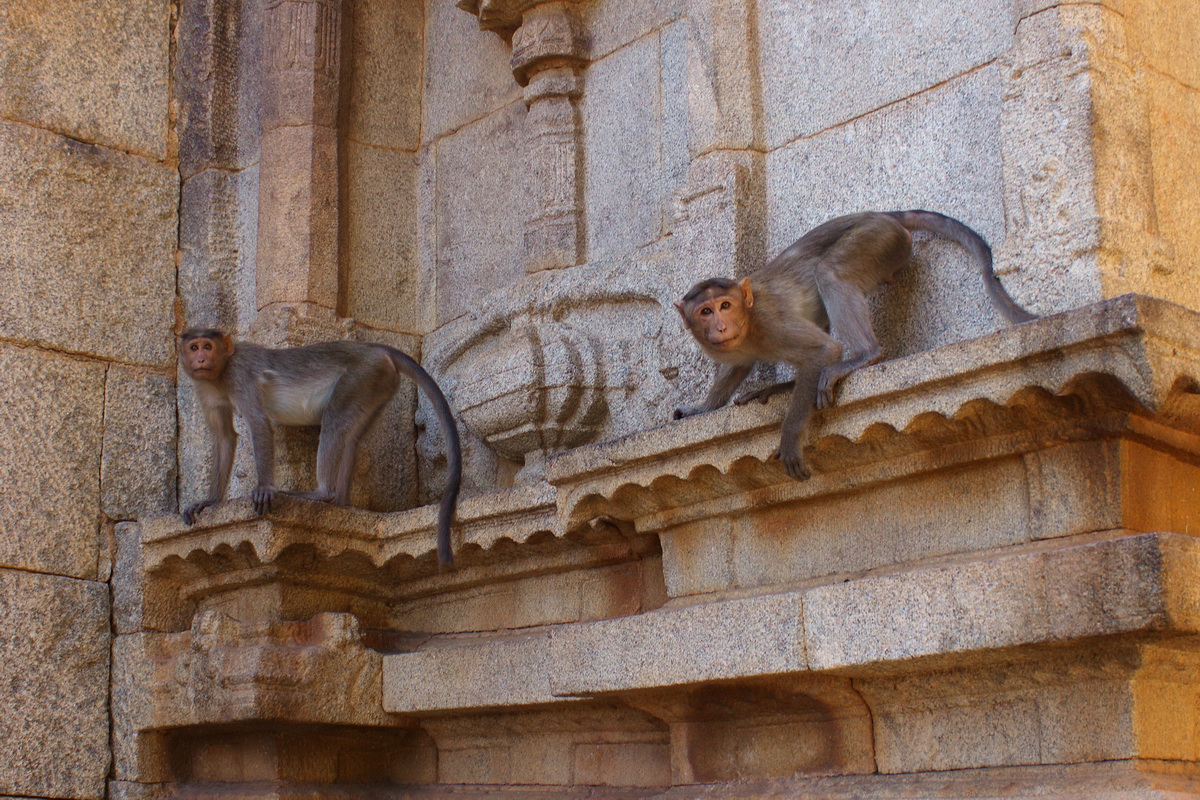
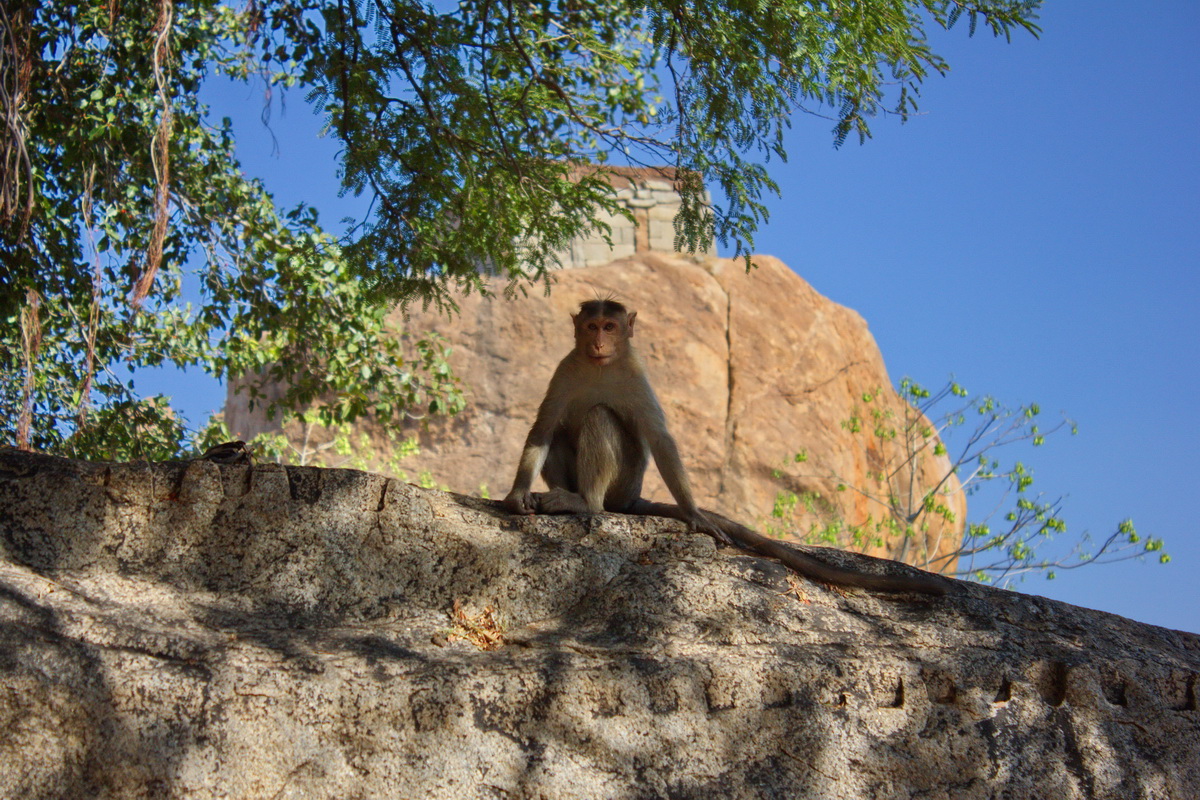
Truth be told, Hinduism interests them little. They have other priorities.
***
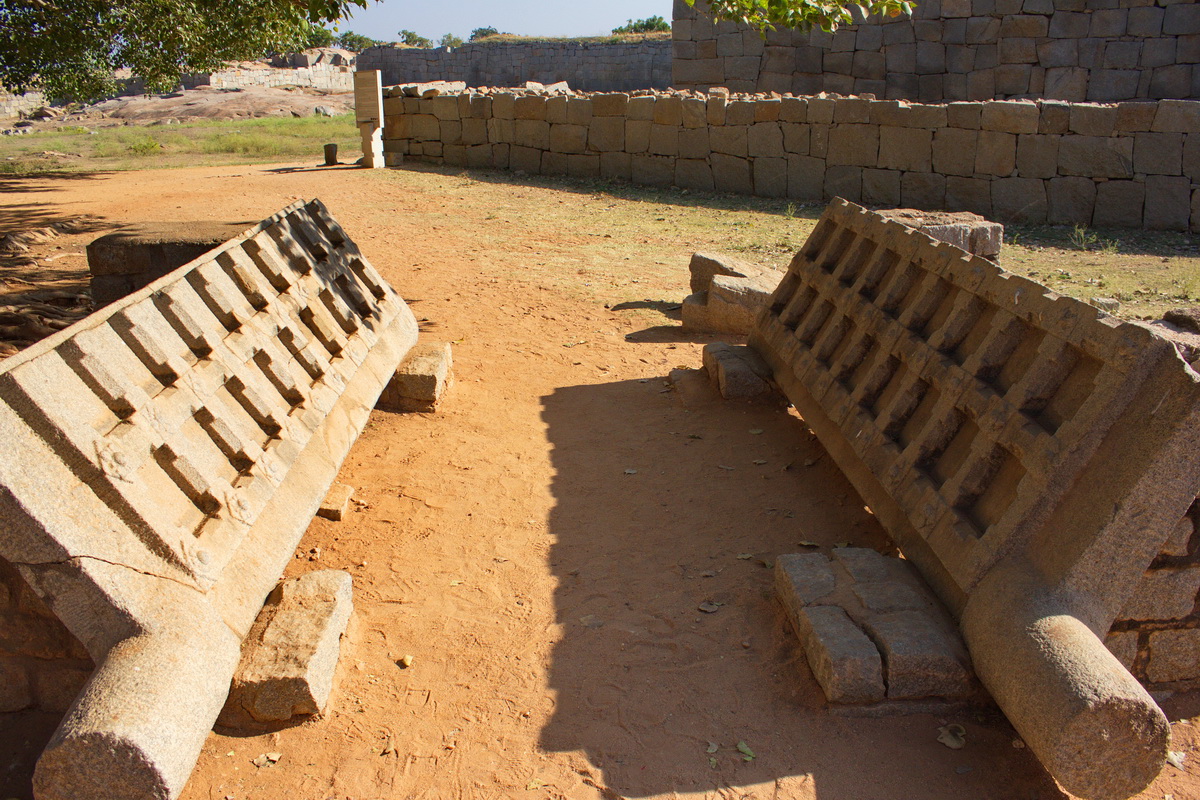
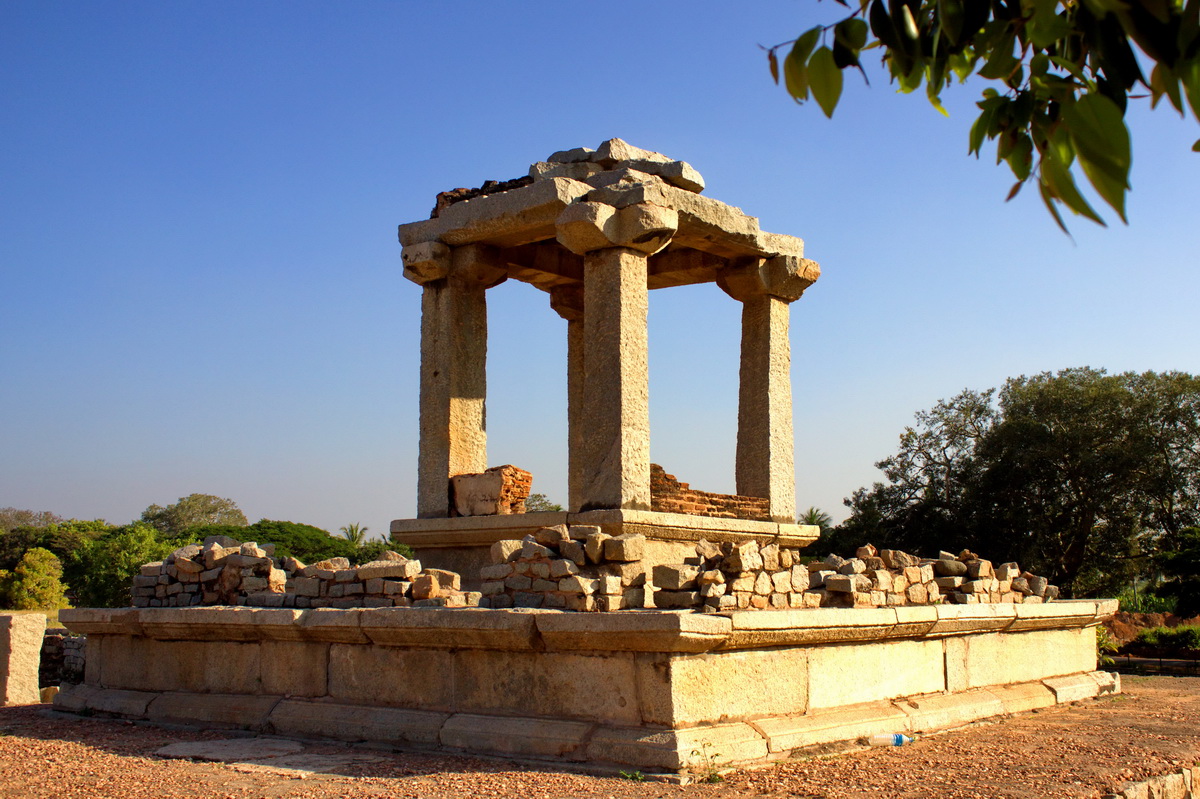
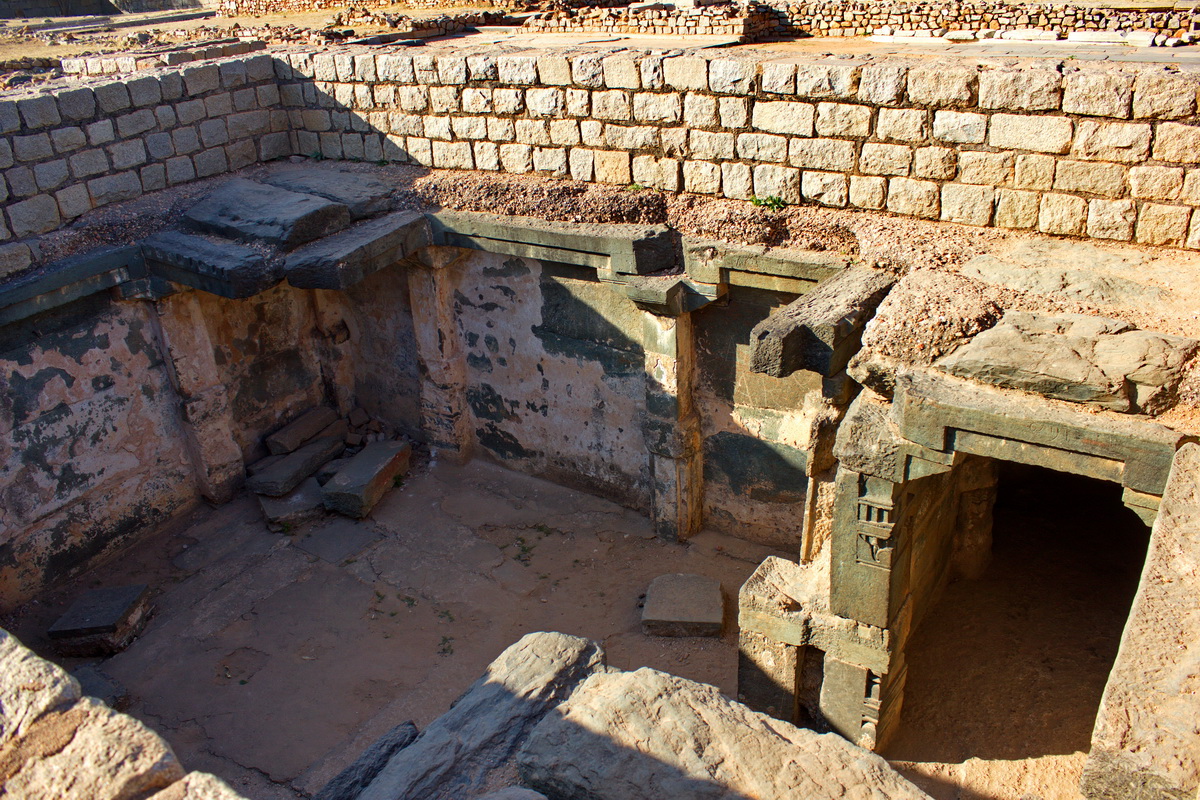
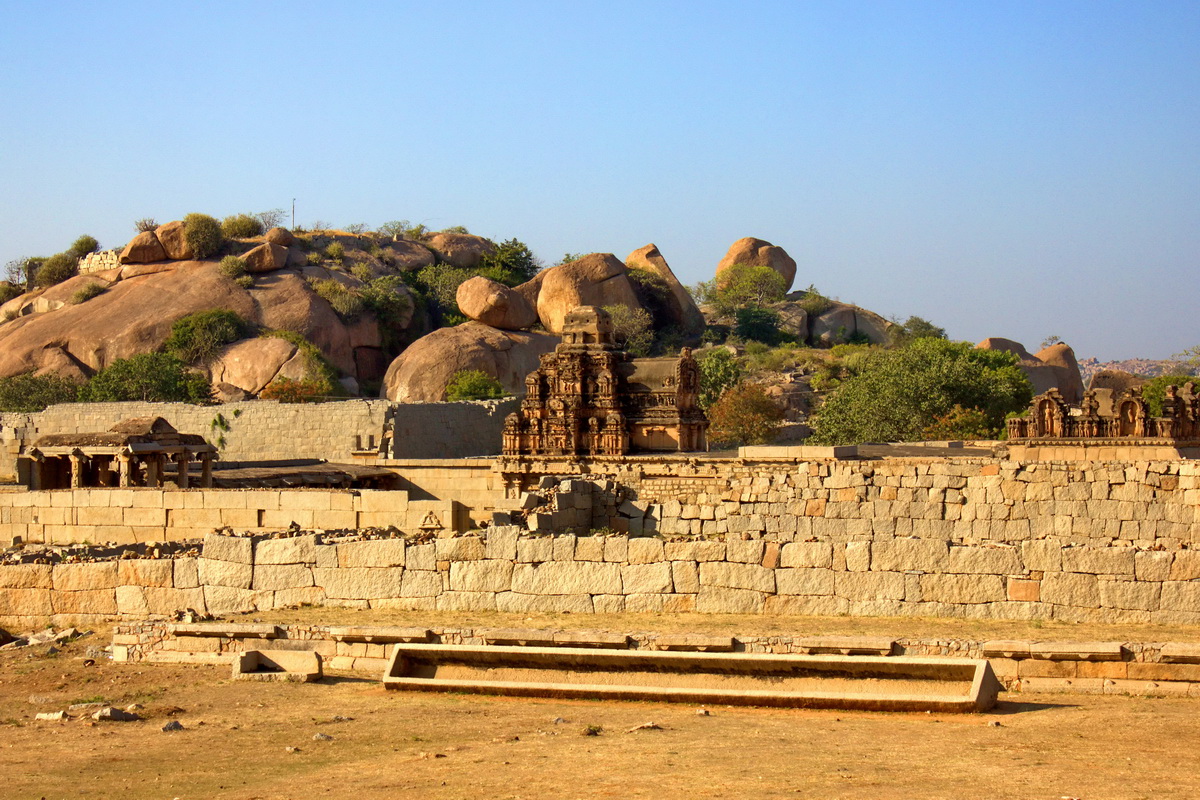
Royal baths.
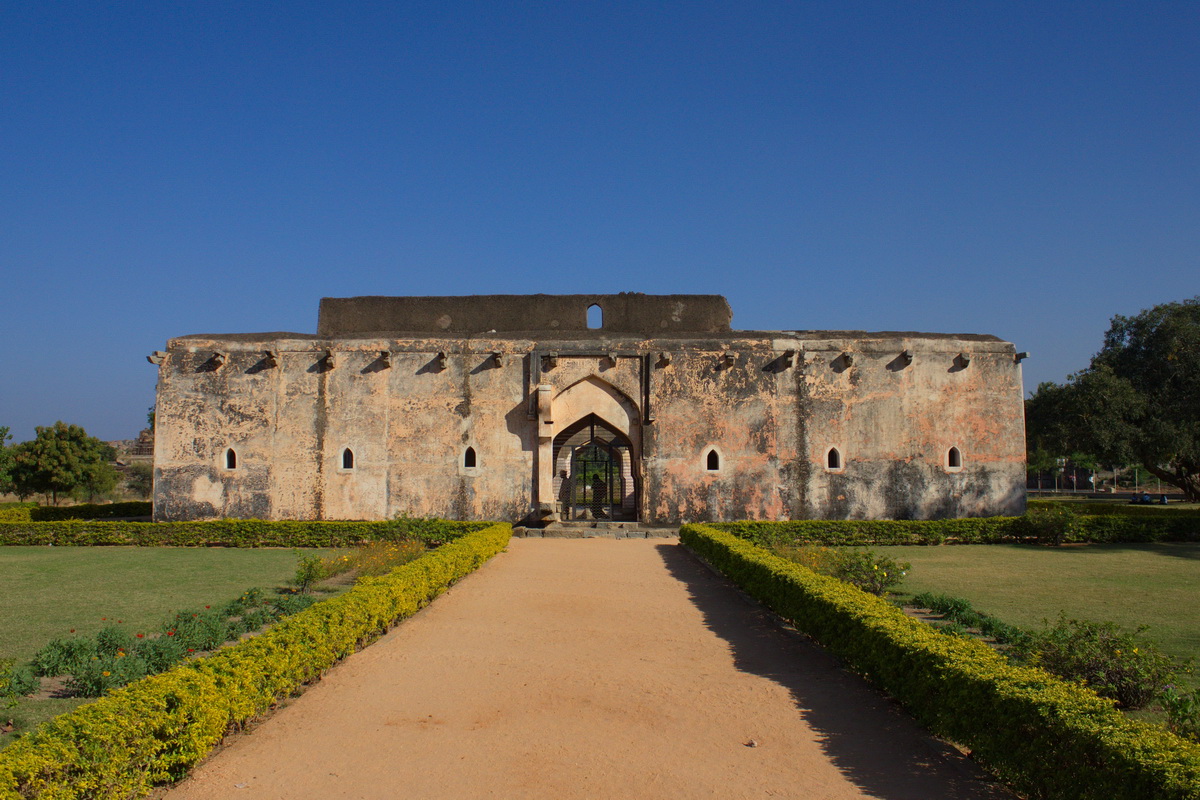
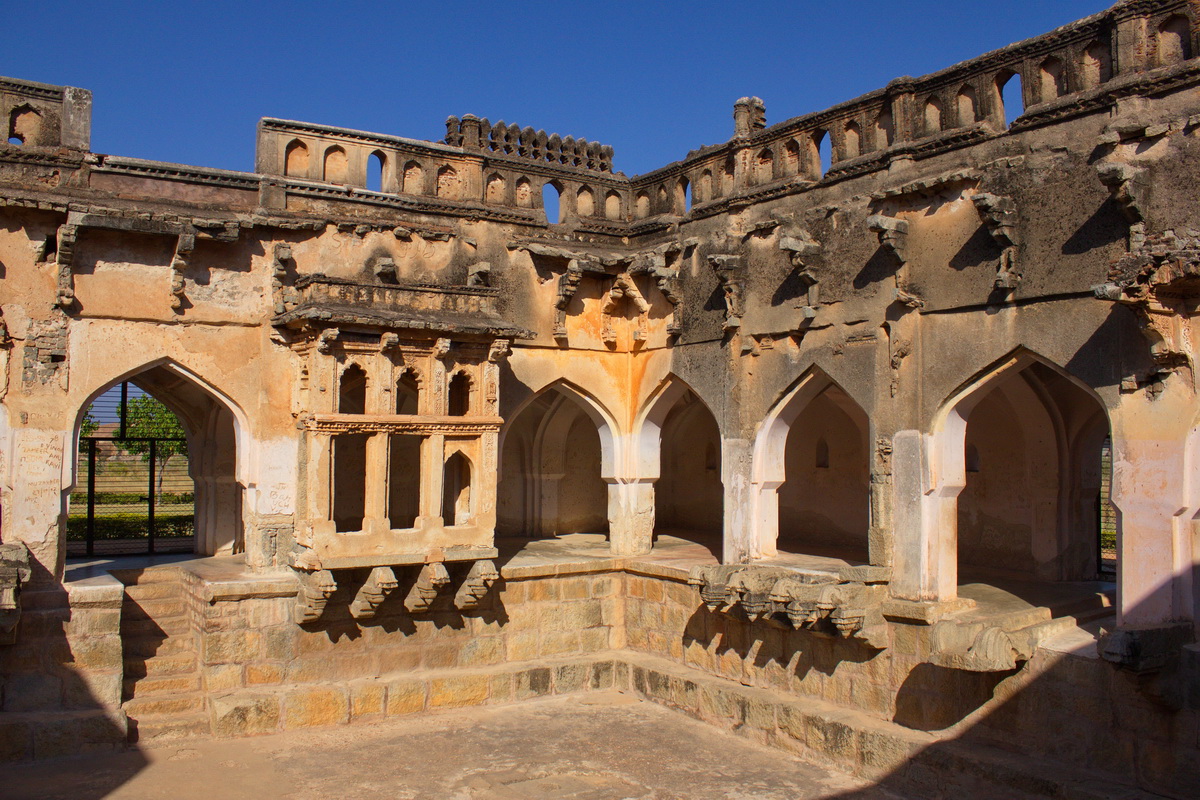
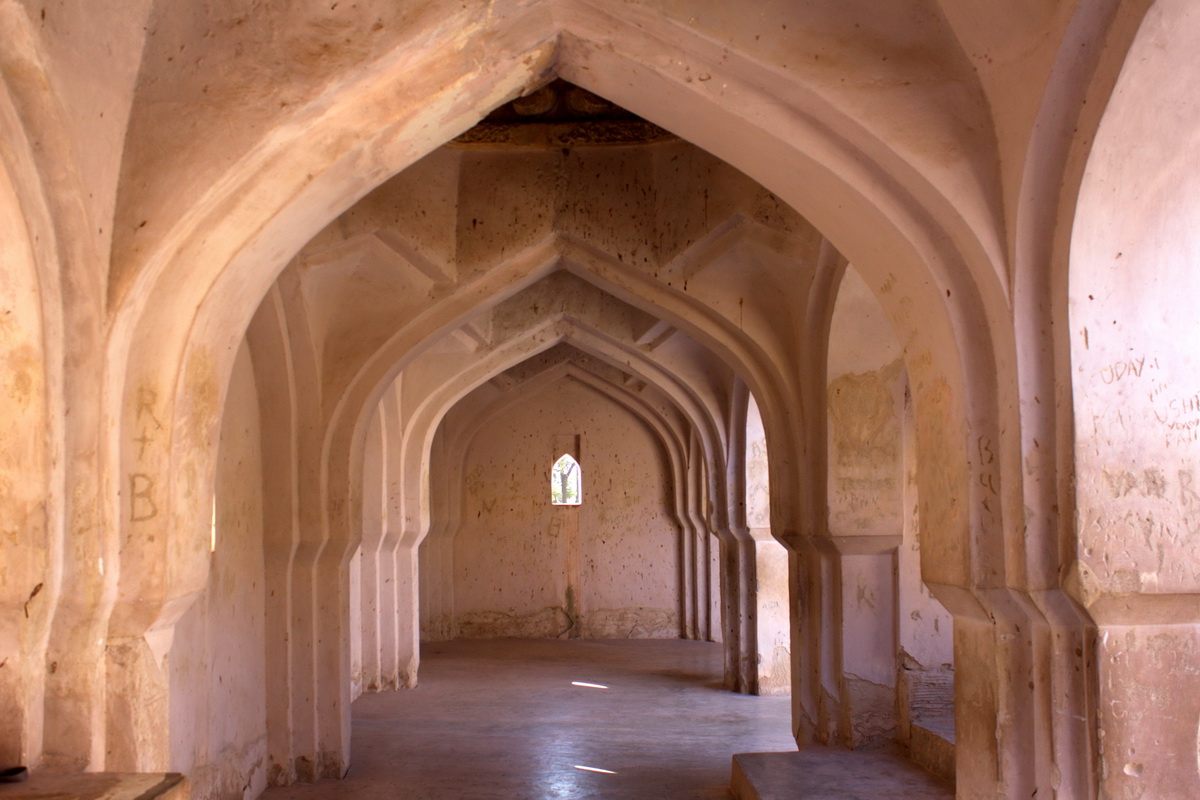
Mahanavami Dibba platform. This was a viewing platform from which royalty observed the city.
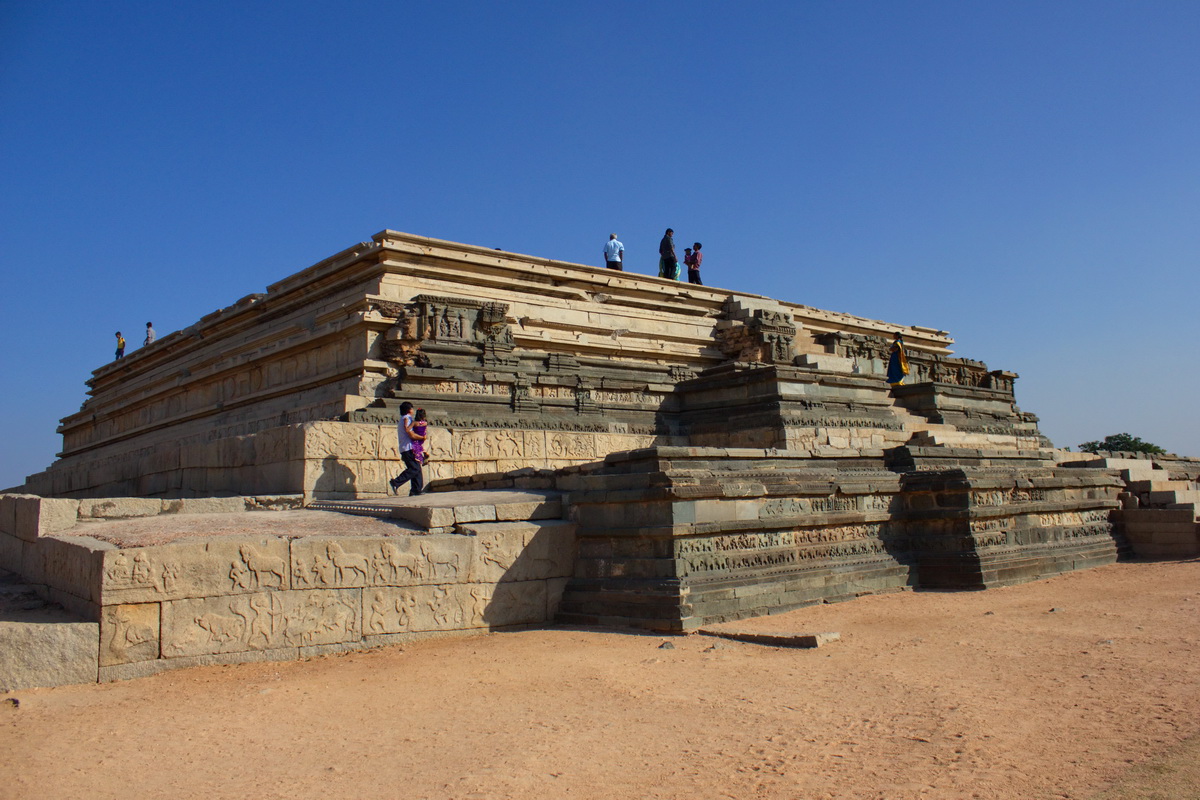
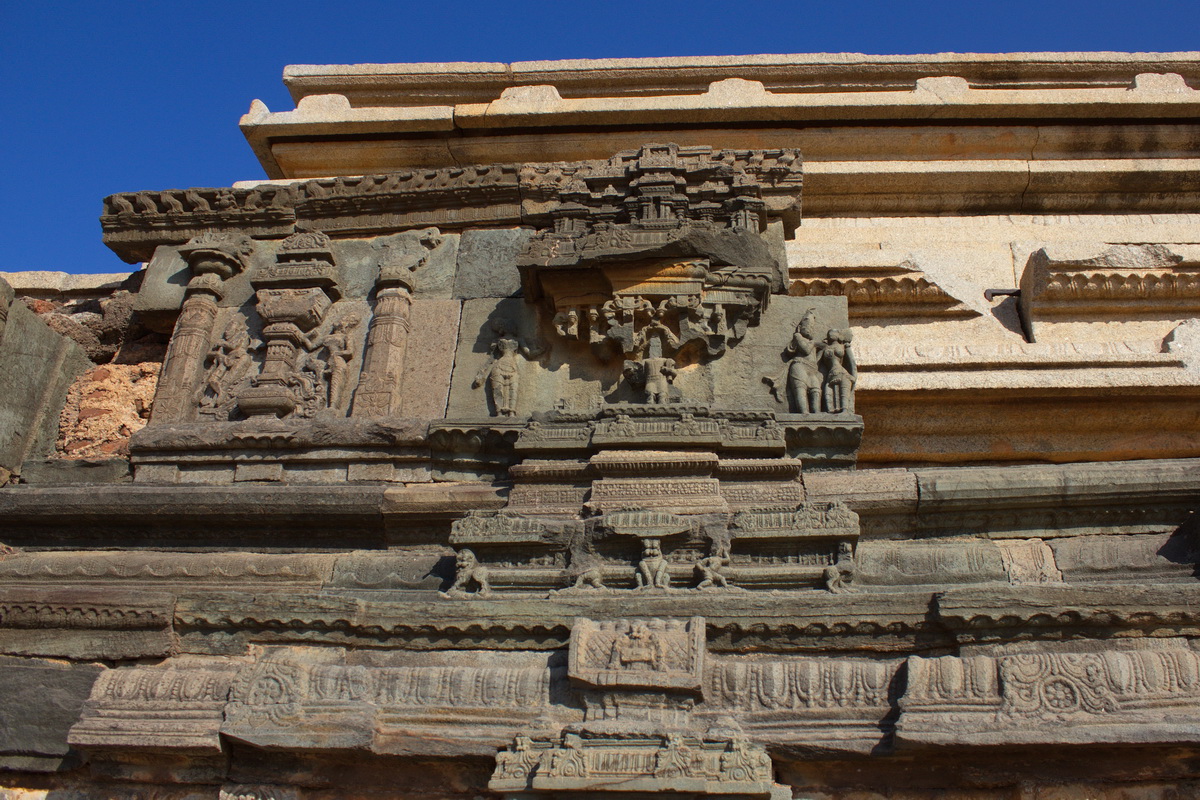
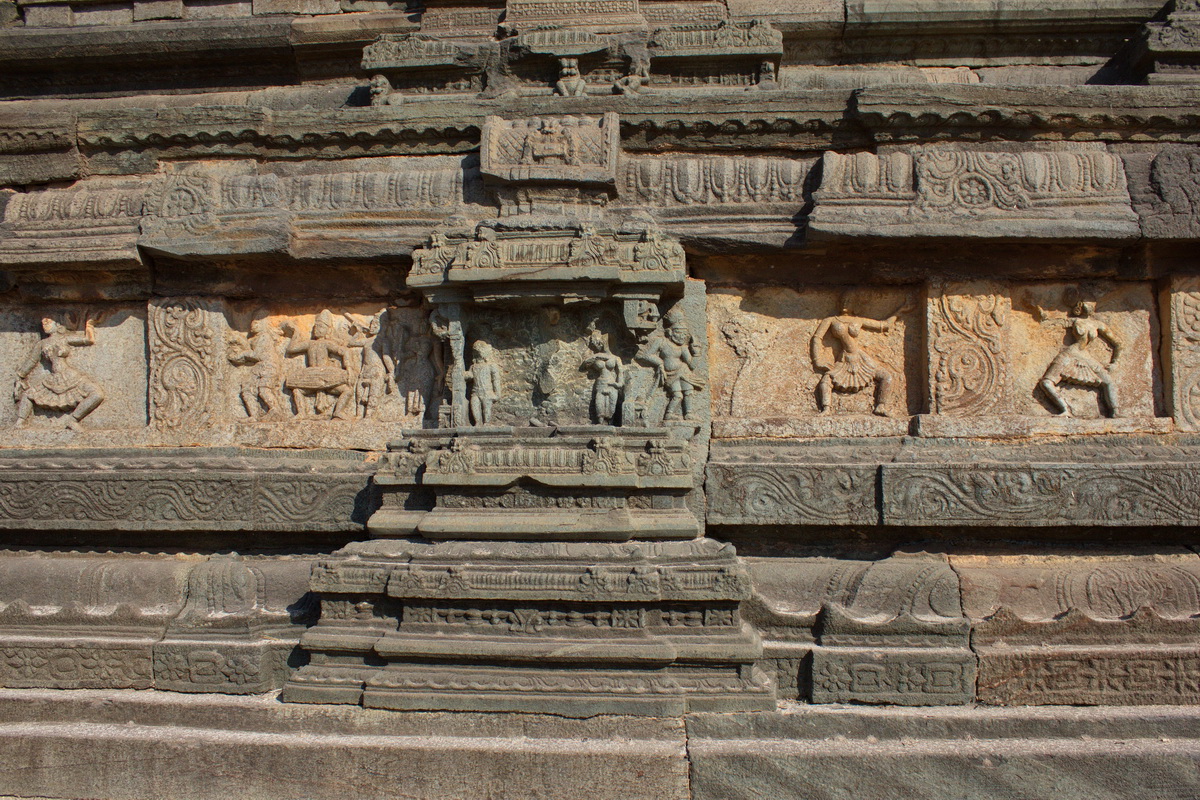
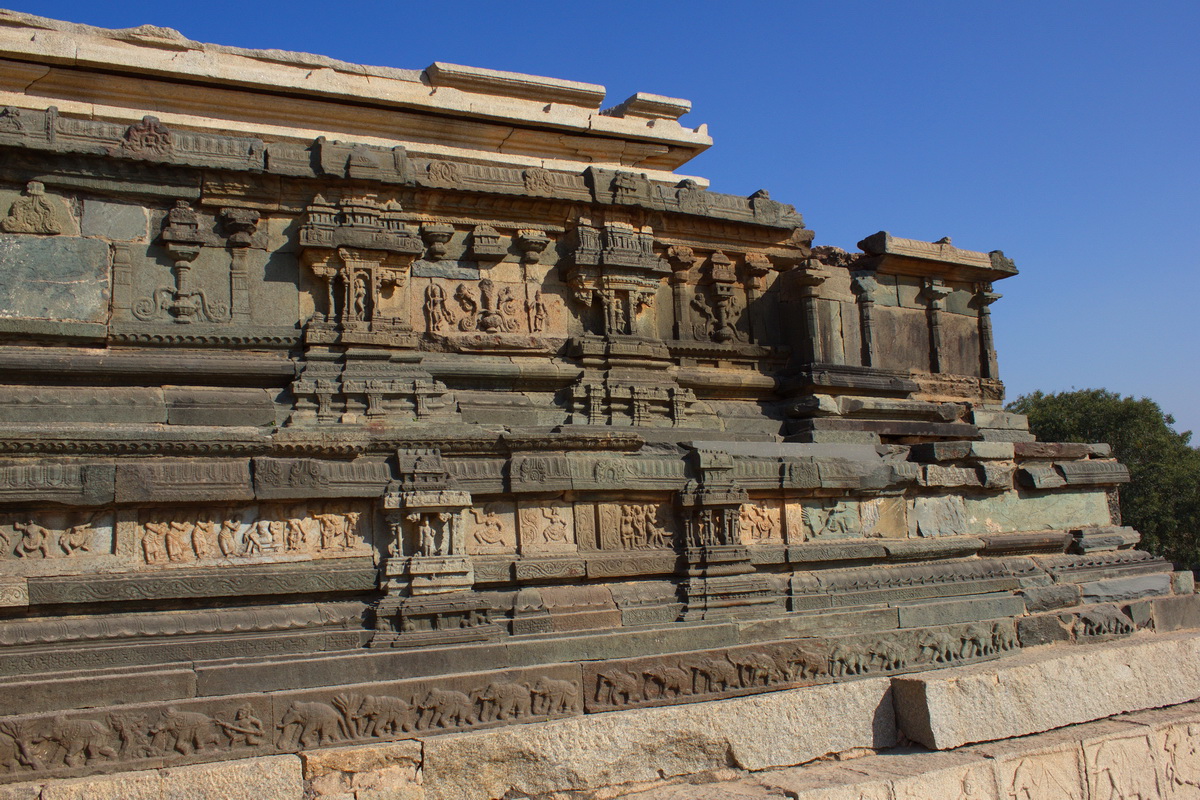
Views from the top of the platform.
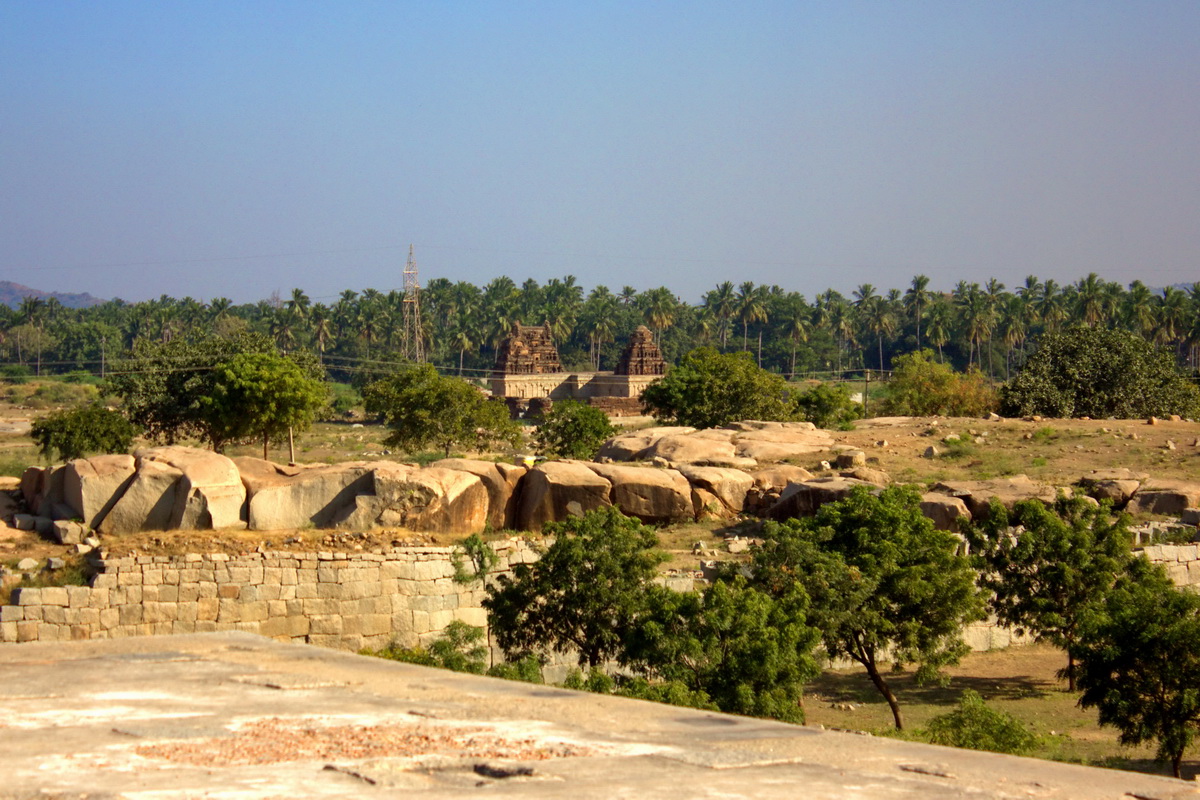
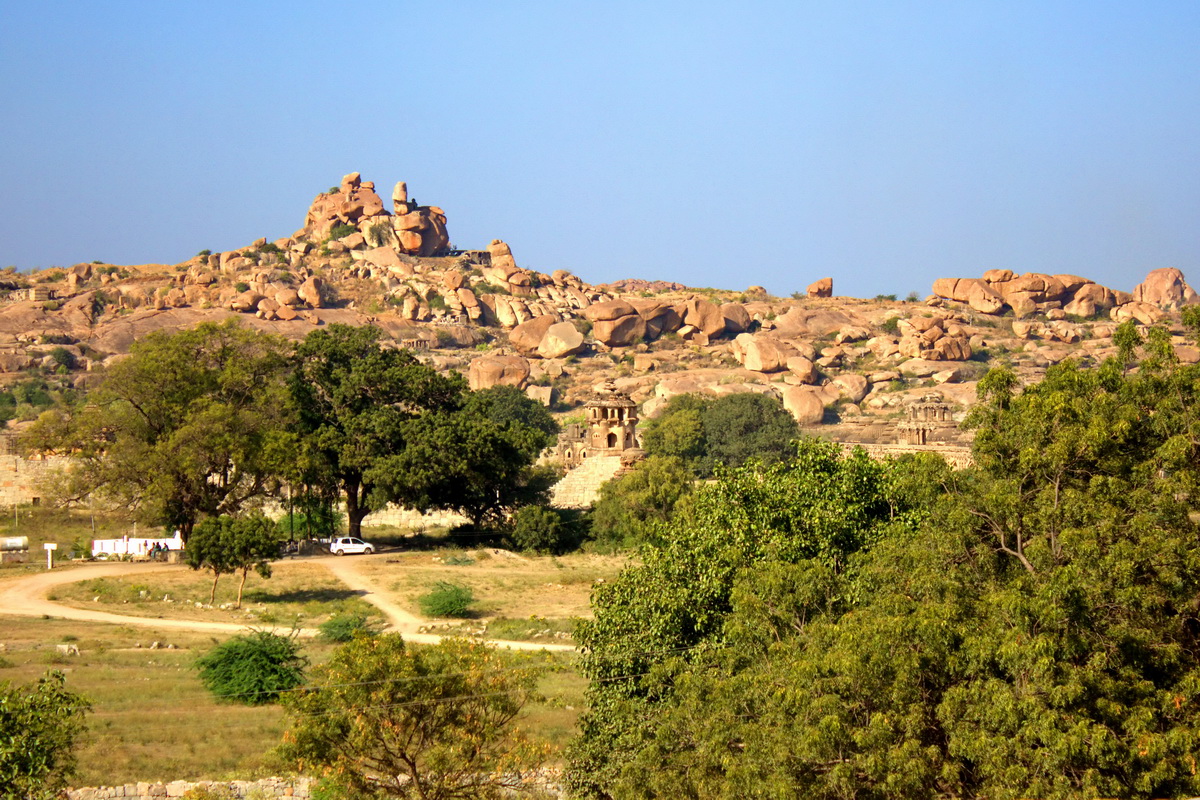
Sacred reservoirs.
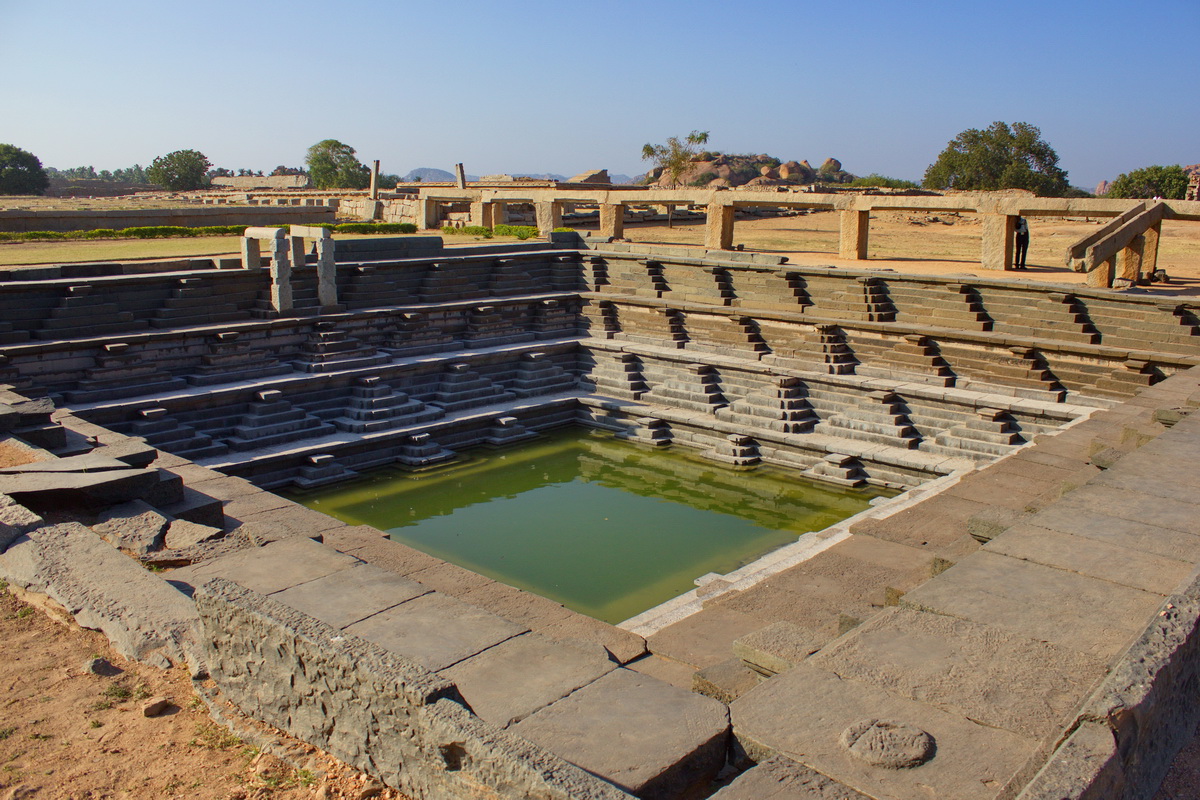
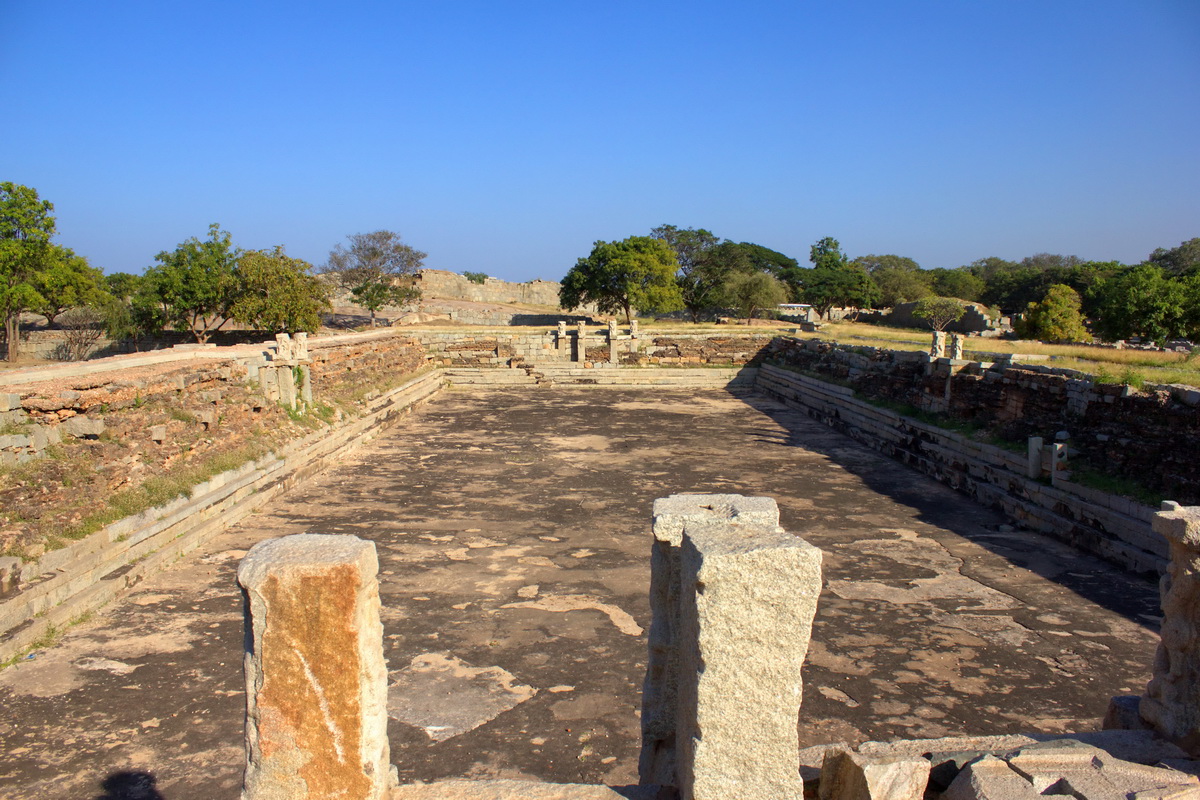
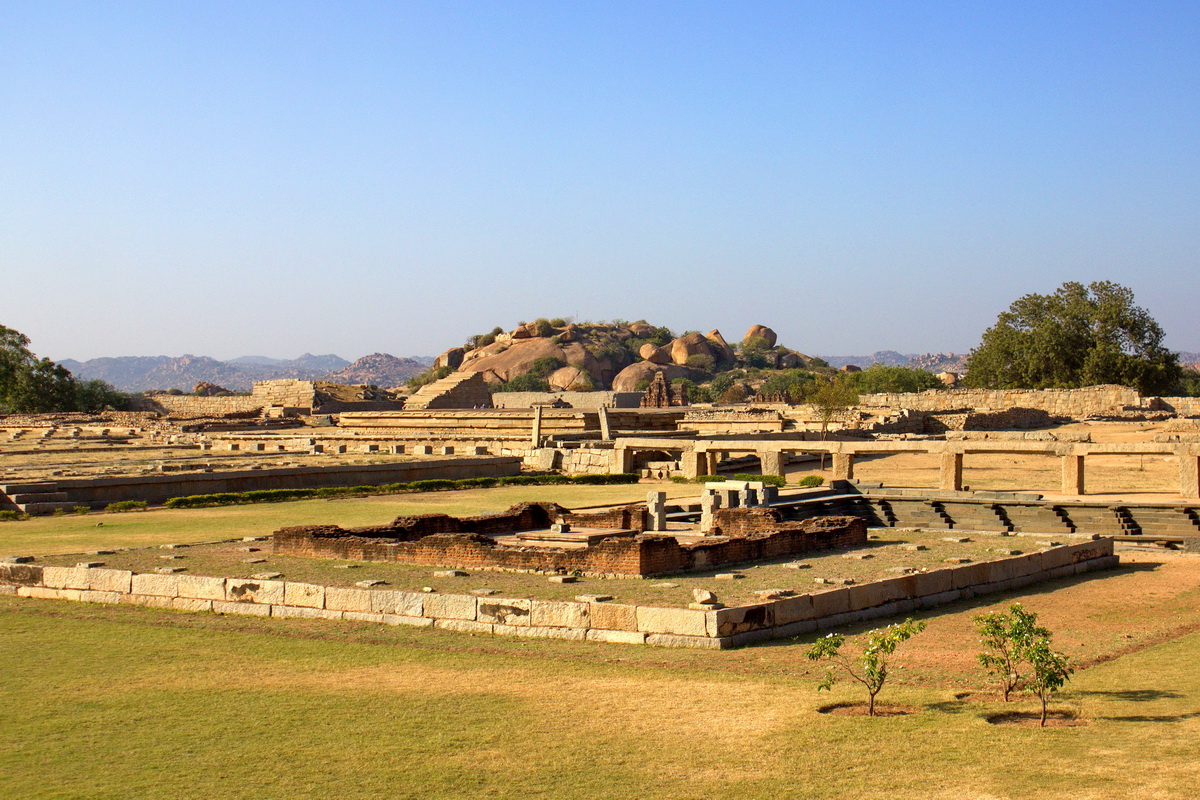
Palace complex.
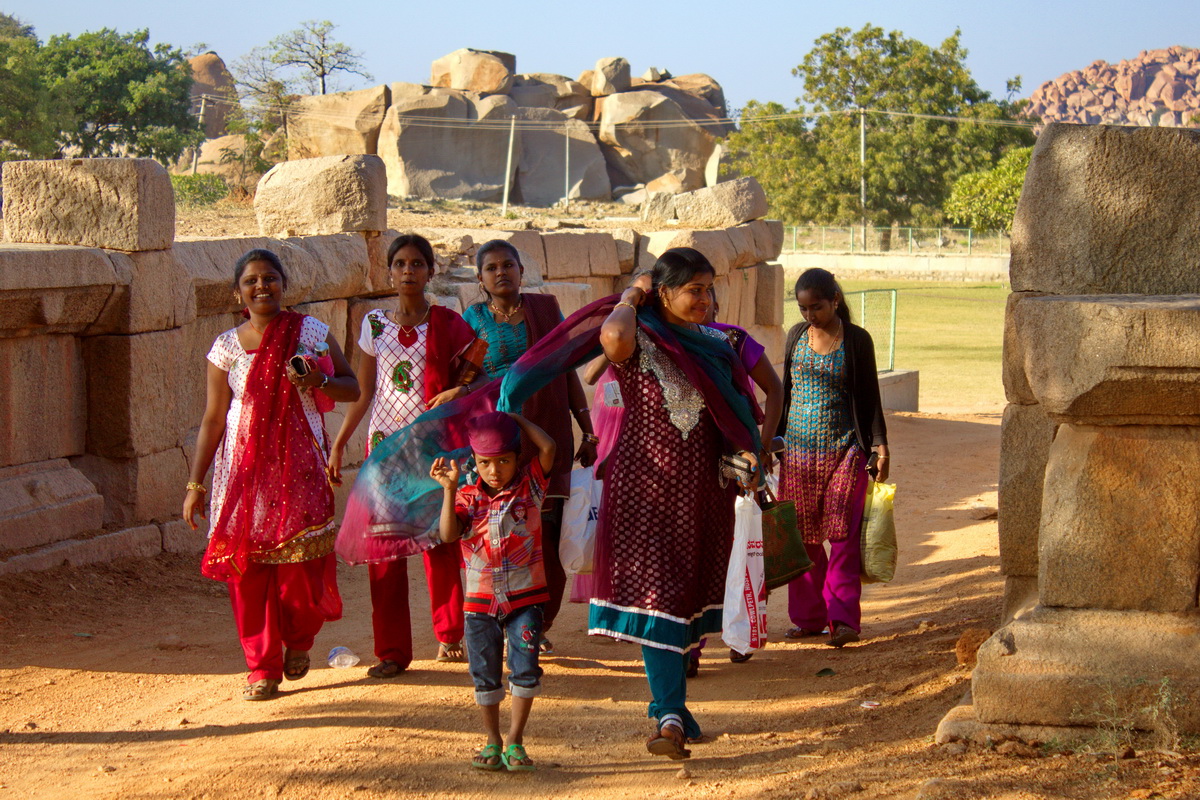
Indian girls.
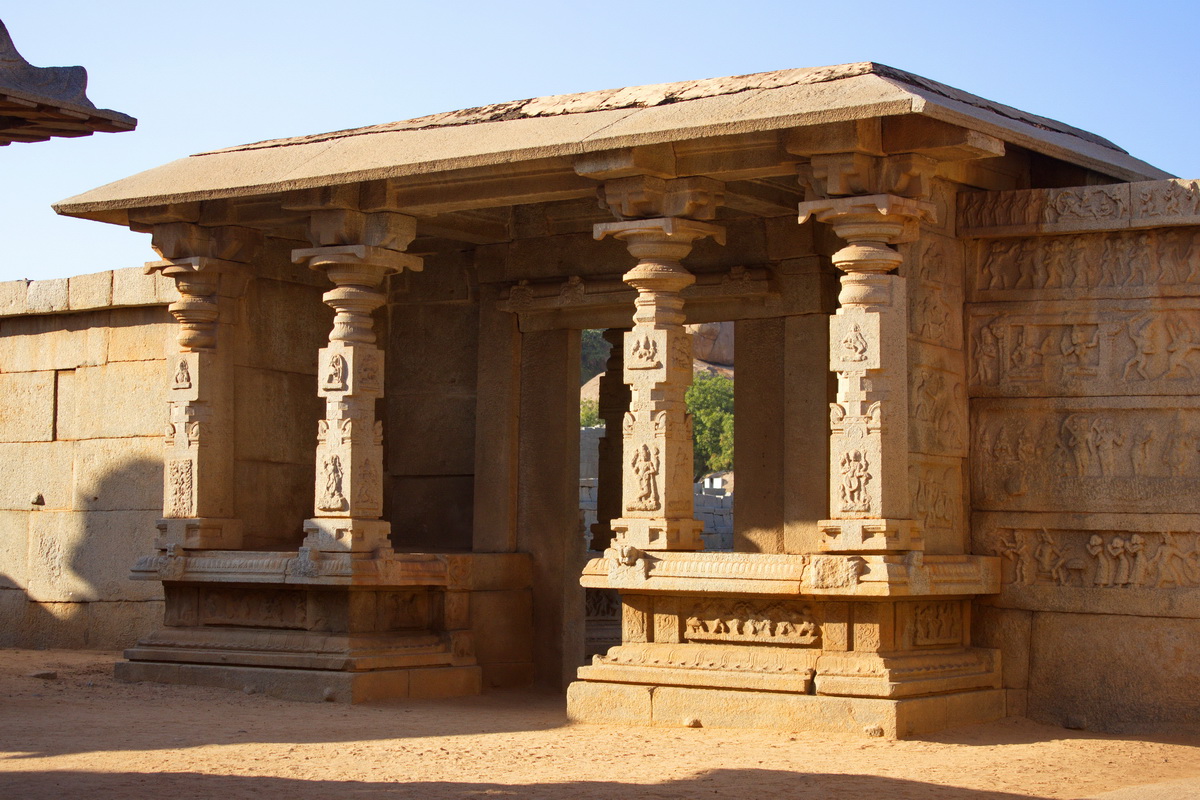
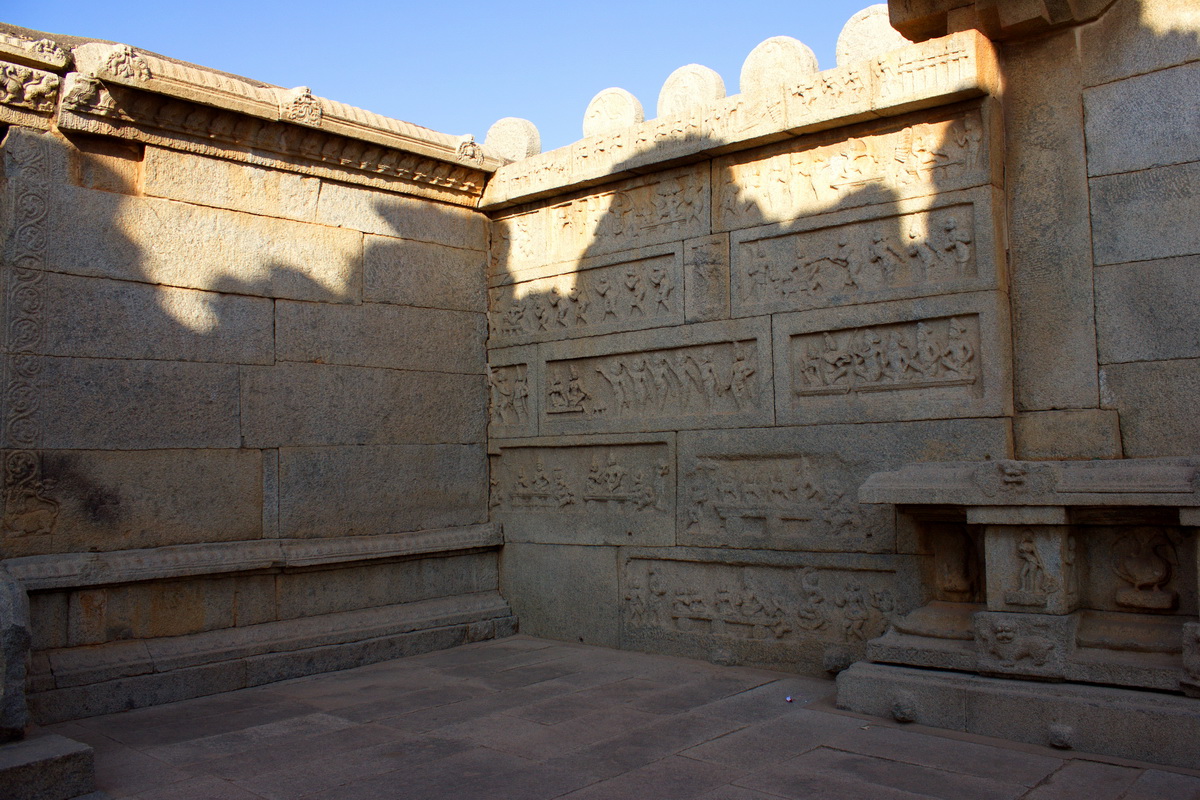
Krishna Temple
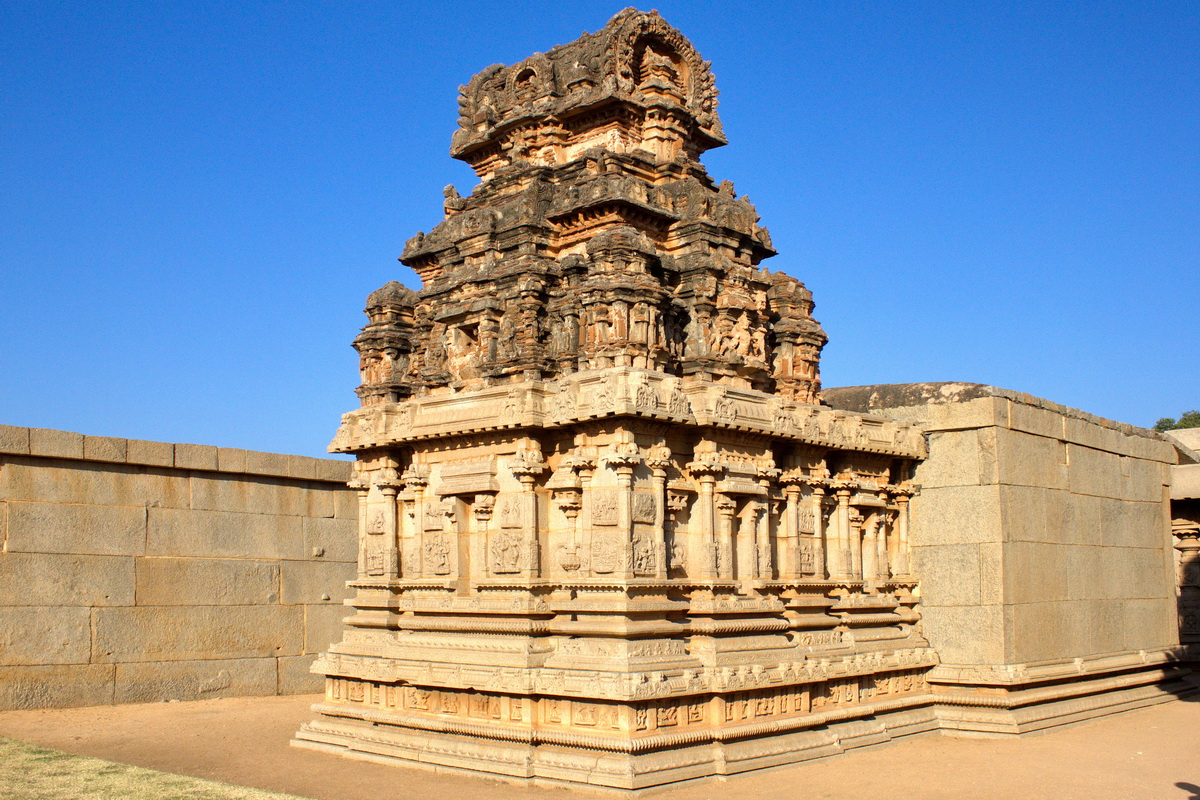
A temple complex dedicated by Krishnadevaraya in 1513, following a successful military campaign in Orissa. Though partially ruined, it contains several notable shrines and examples of stone carving.
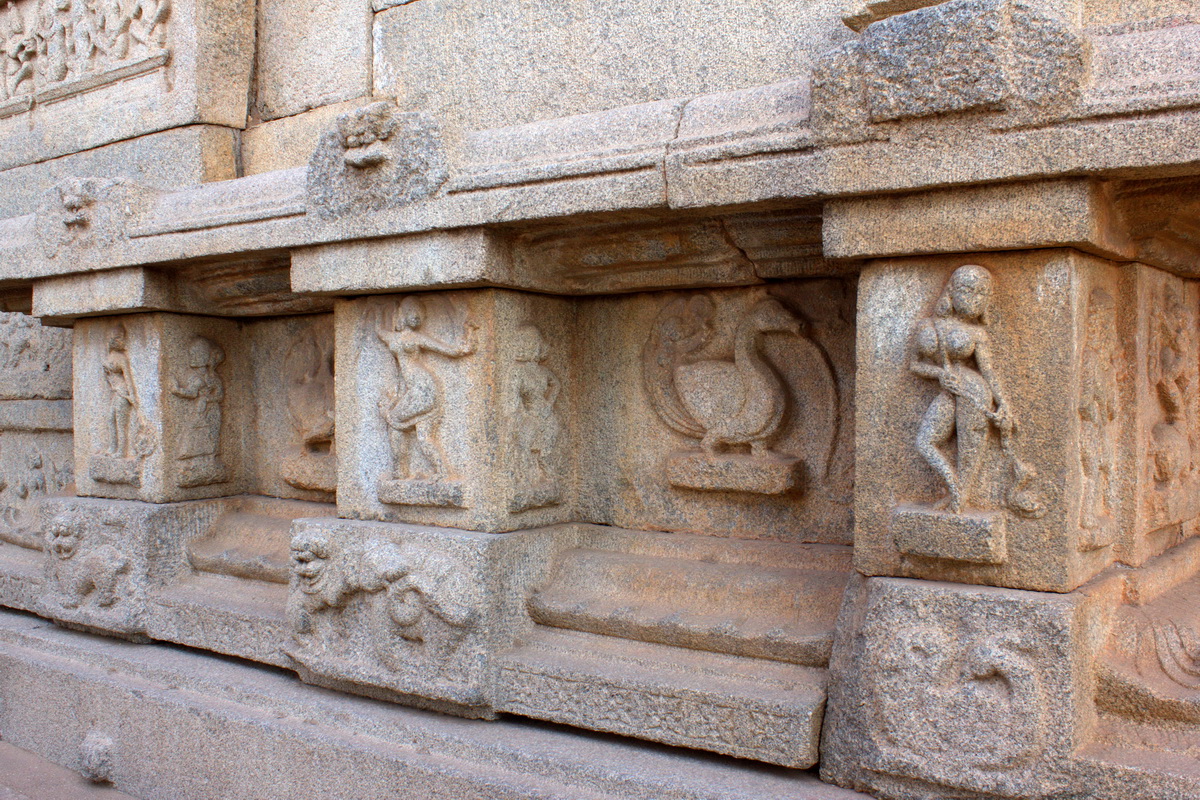
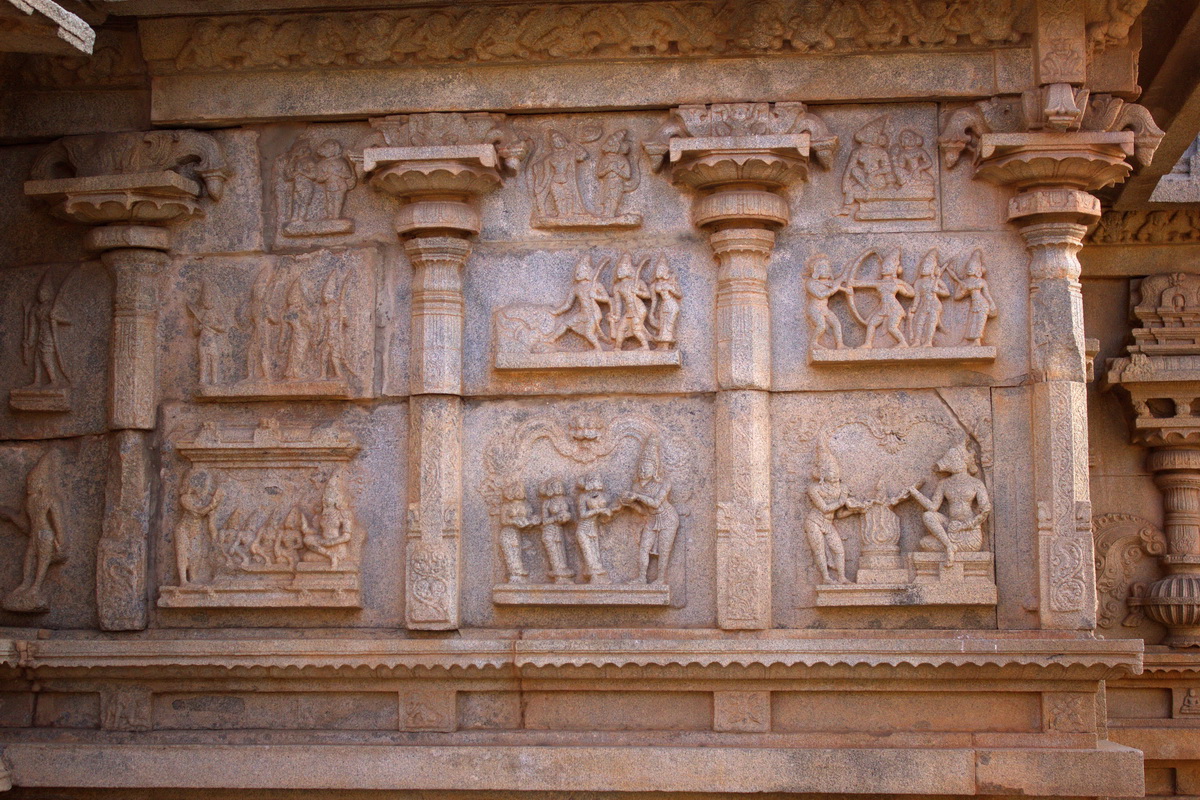
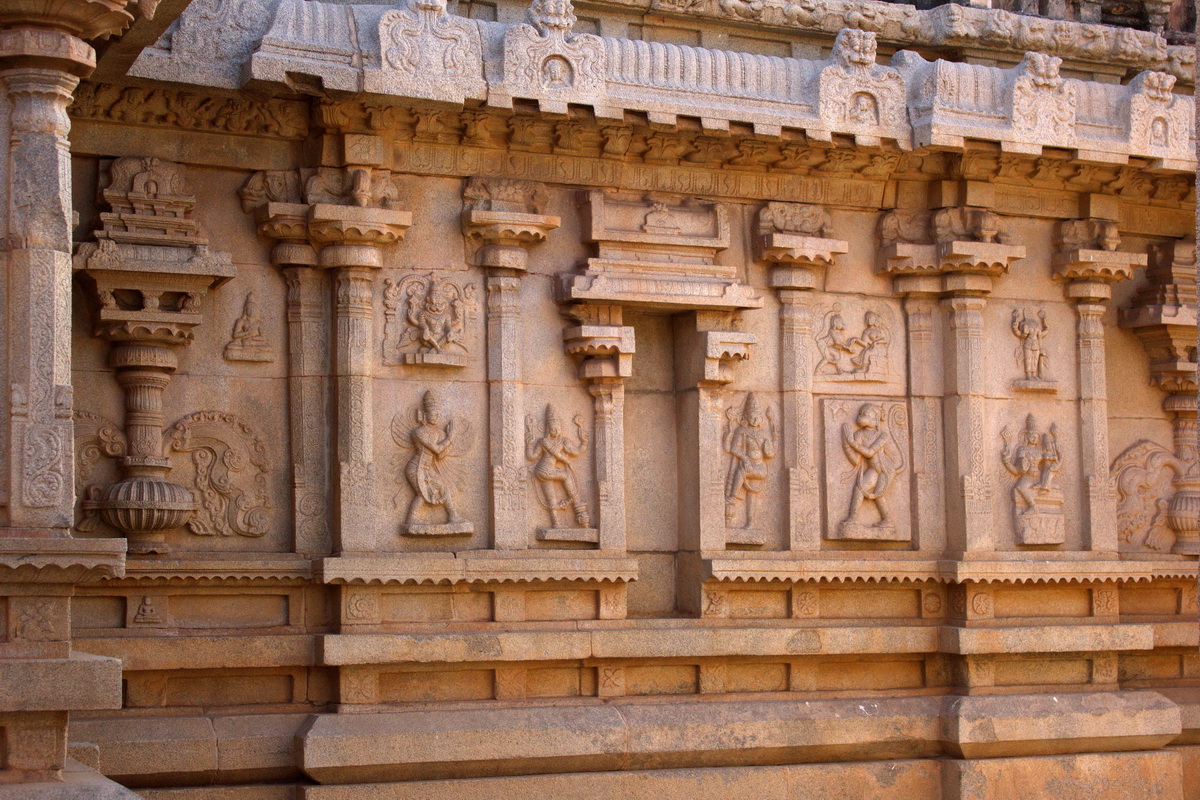
...
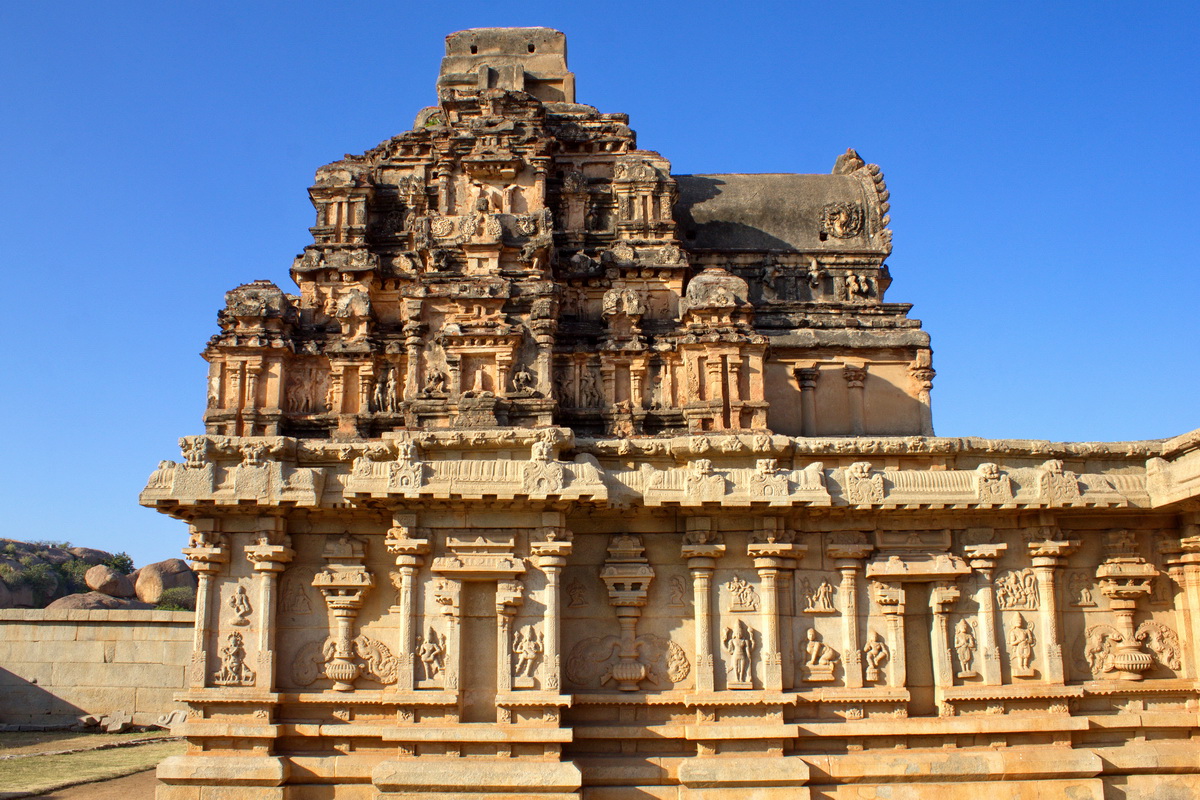
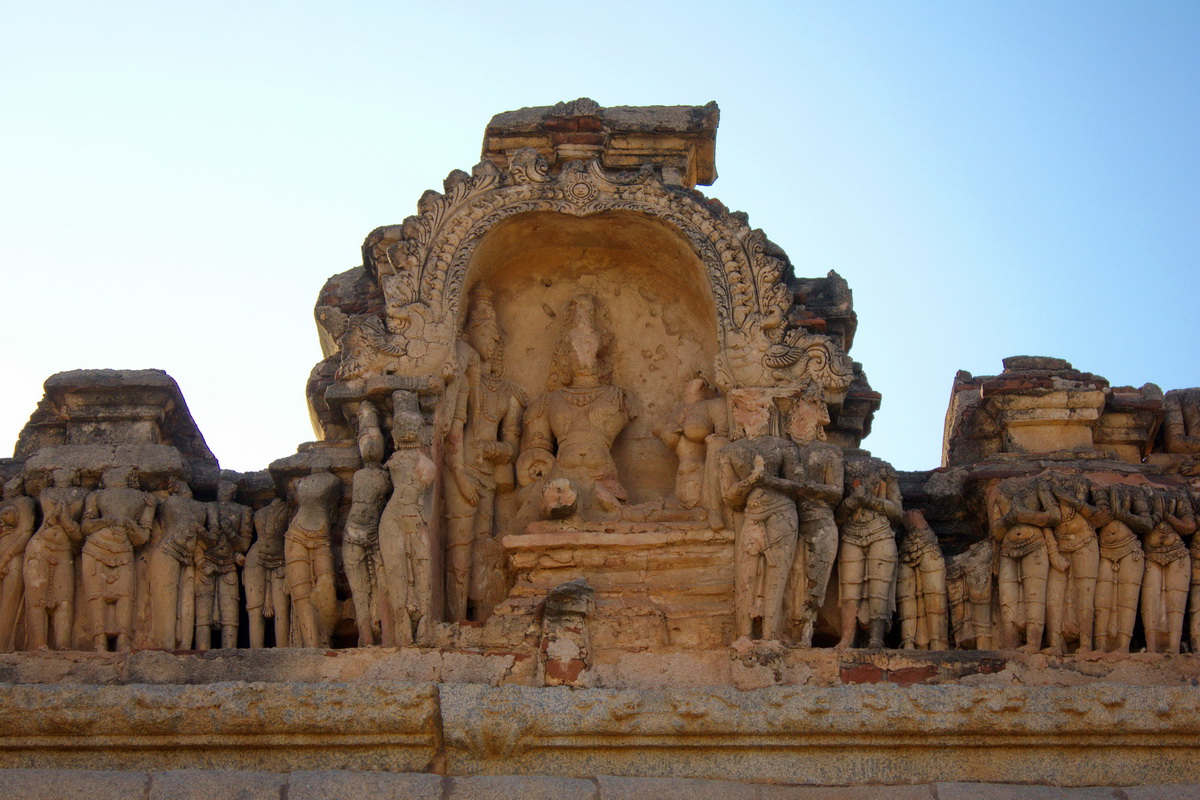
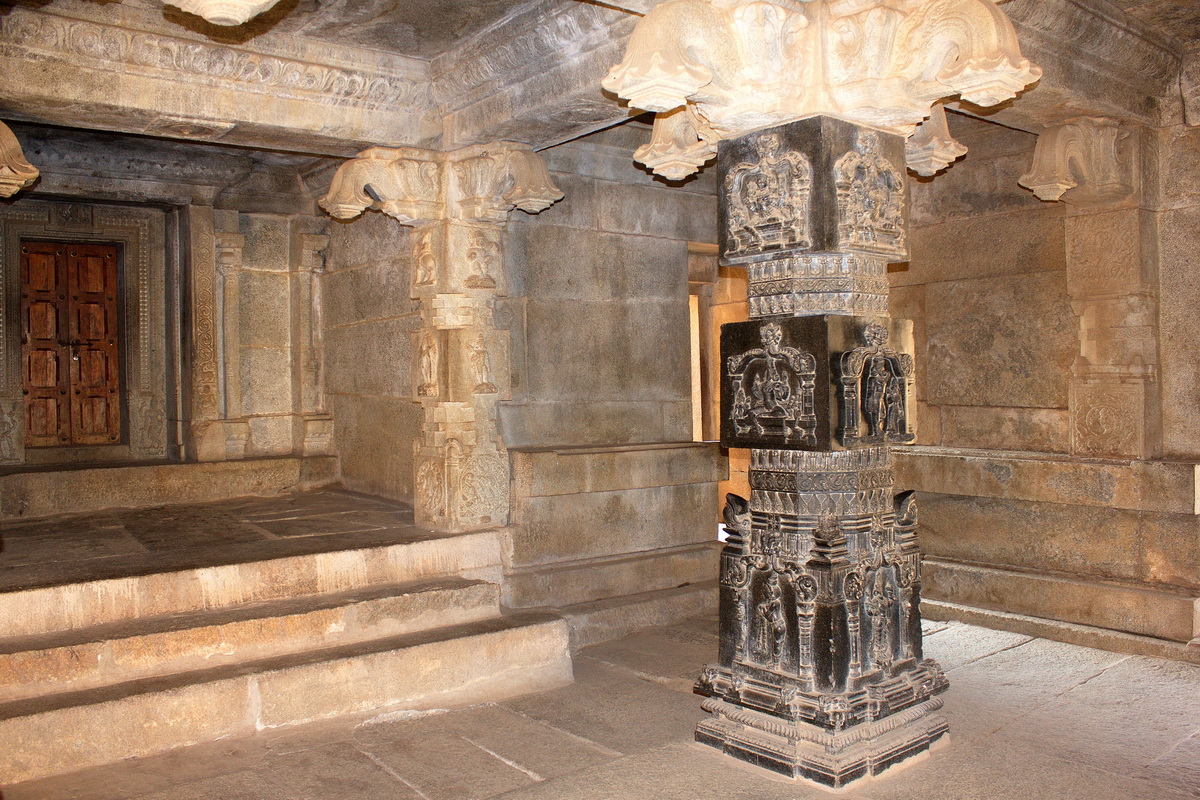
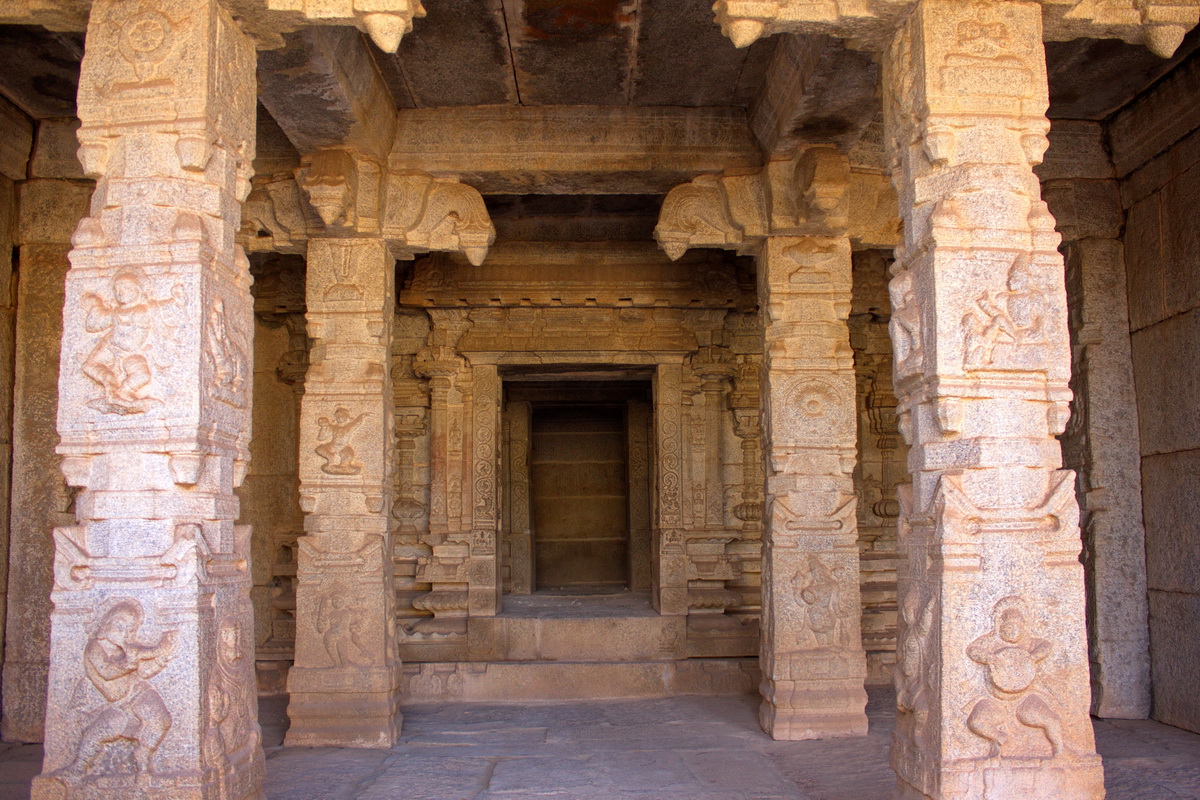
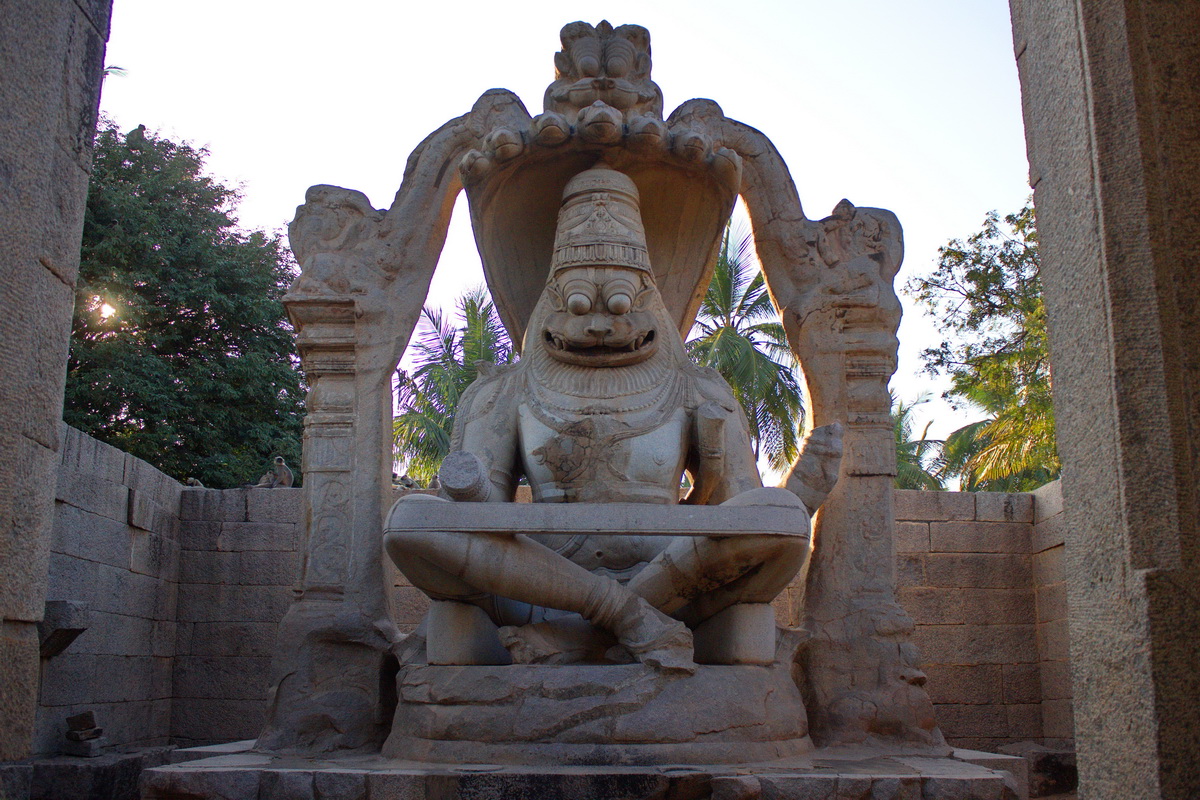
Statue of Lakshmi Narasimha. Monkeys can be seen in the background.
...
Virupaksha Temple
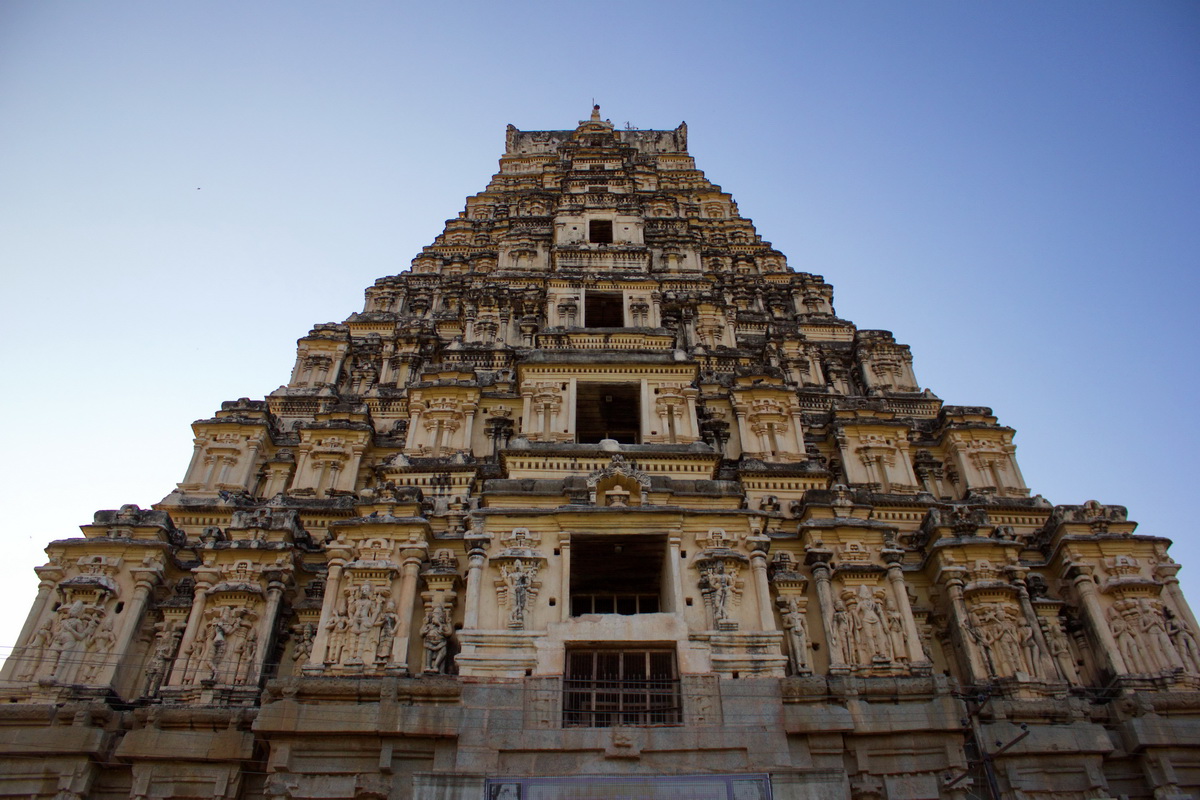
For centuries, the Virupaksha Temple has been the most significant pilgrimage site in Hampi. It stands amidst the ruins of numerous temples of the former capital of the Hindu empire, remaining one of the few local religious structures still used for worship. The temple is dedicated to Shiva, known here as Virupaksha, the consort of the local goddess Pampa, associated with the Tungabhadra River.
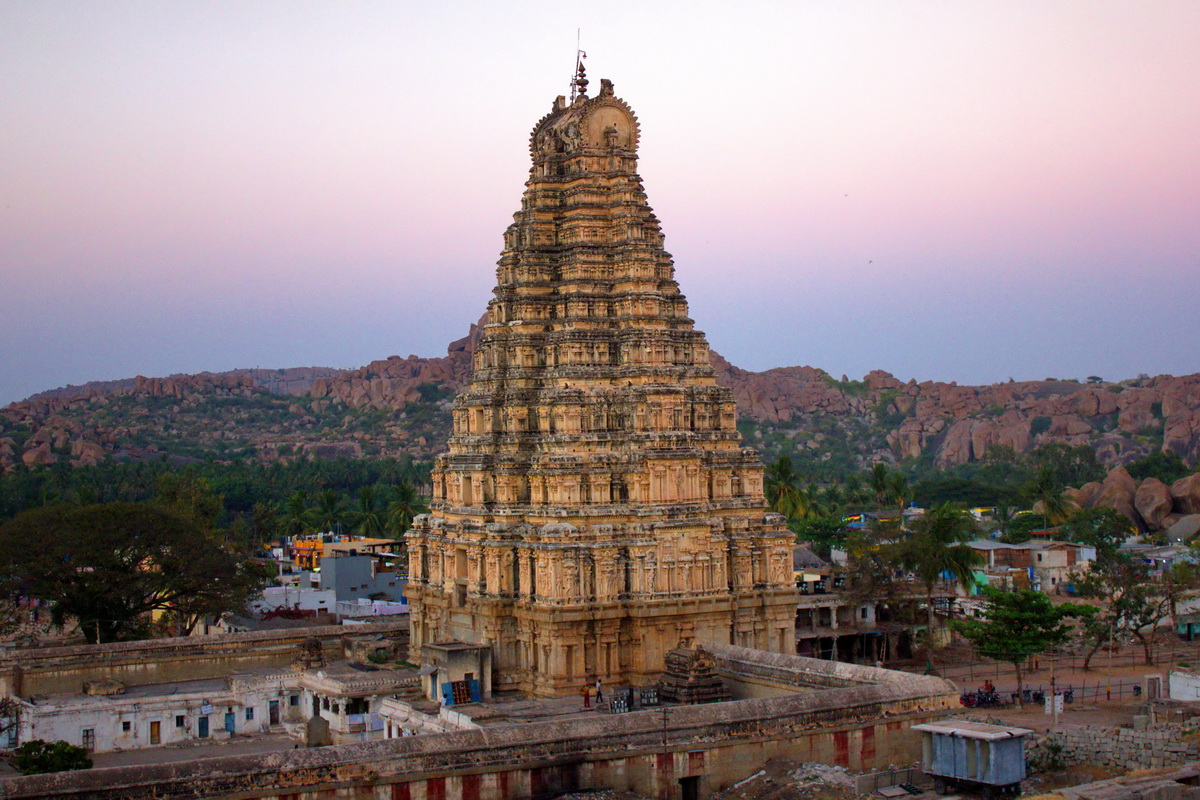
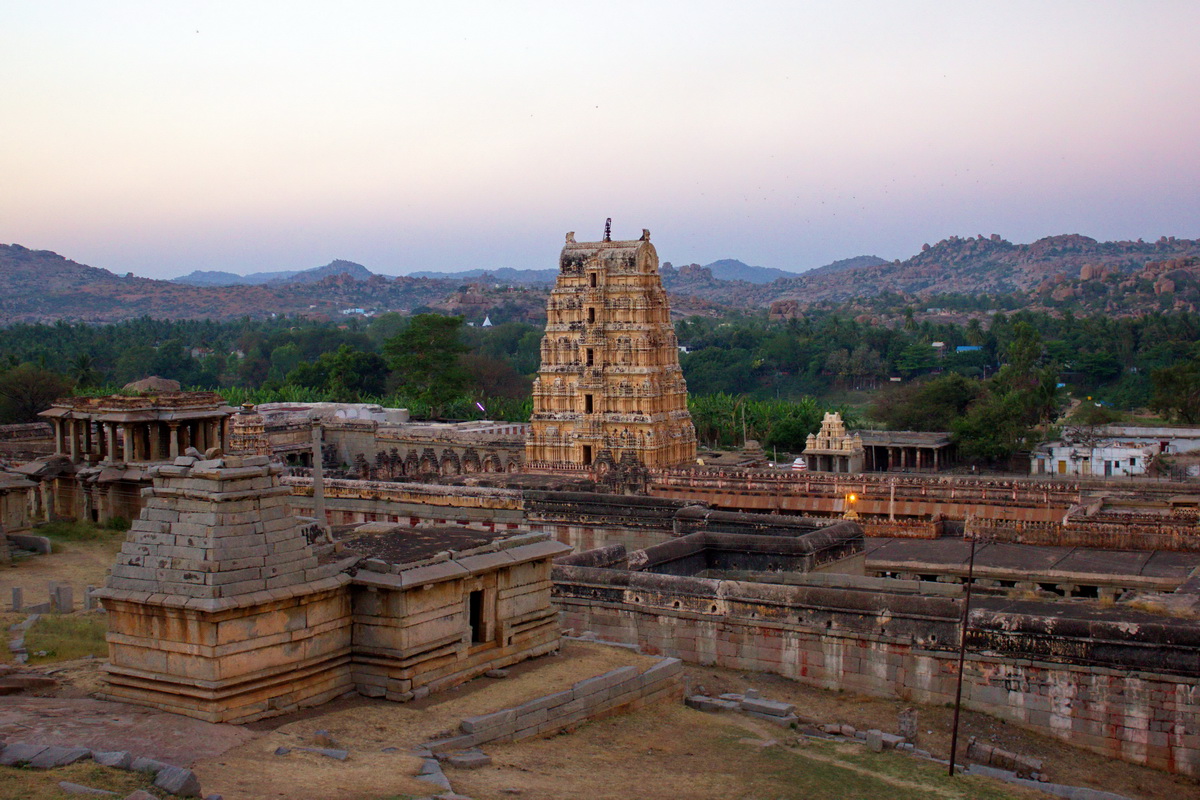
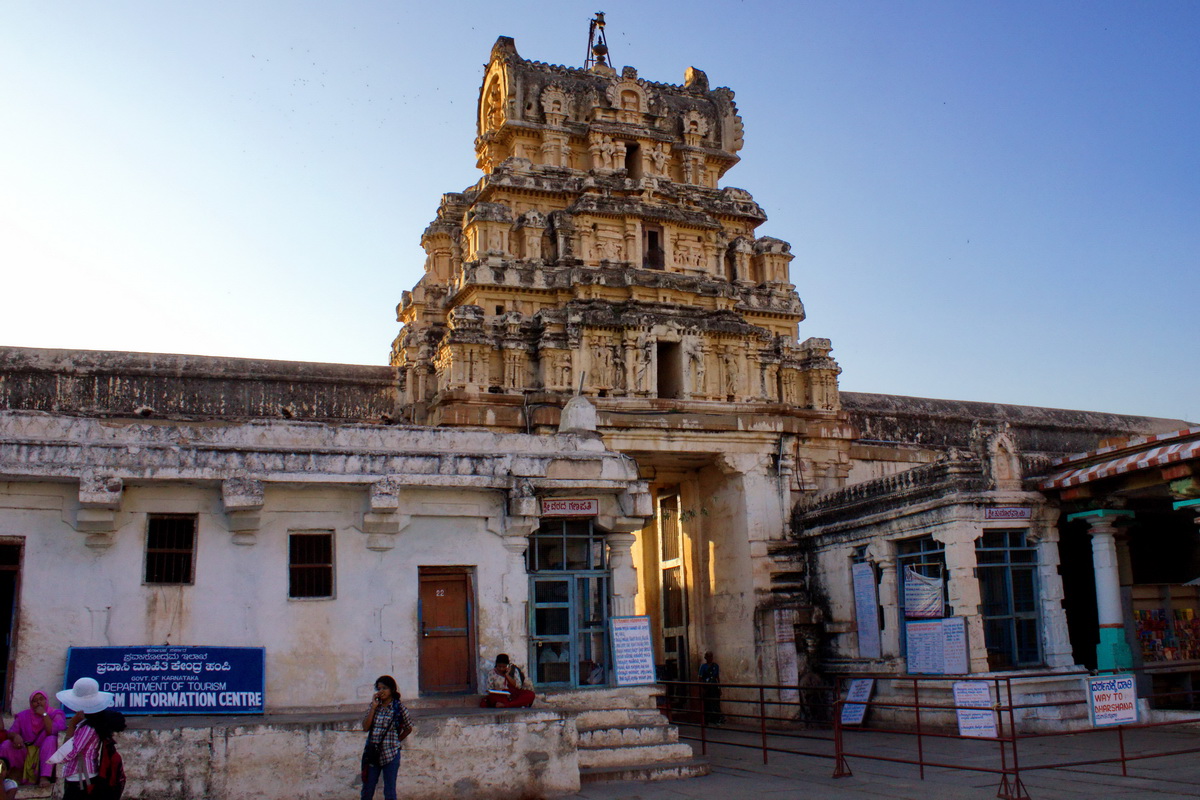
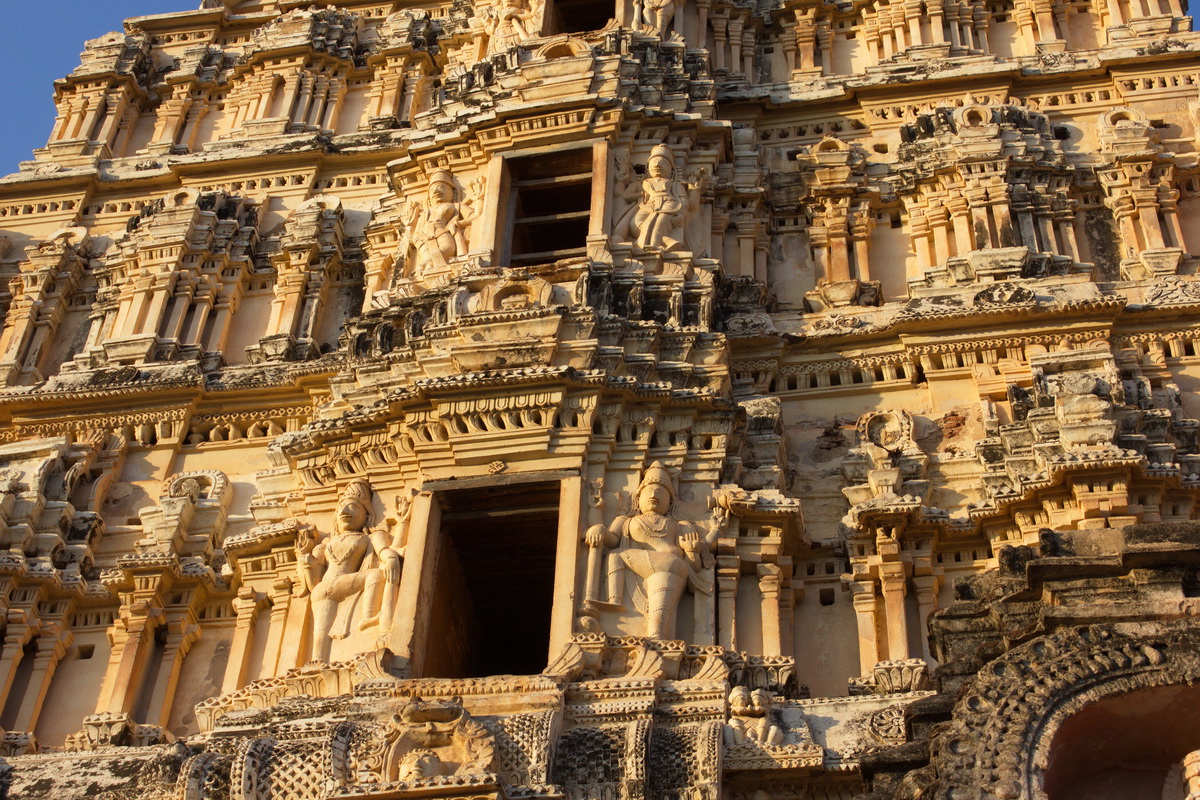
Detailed view of the gopura tower, standing 52 meters tall.
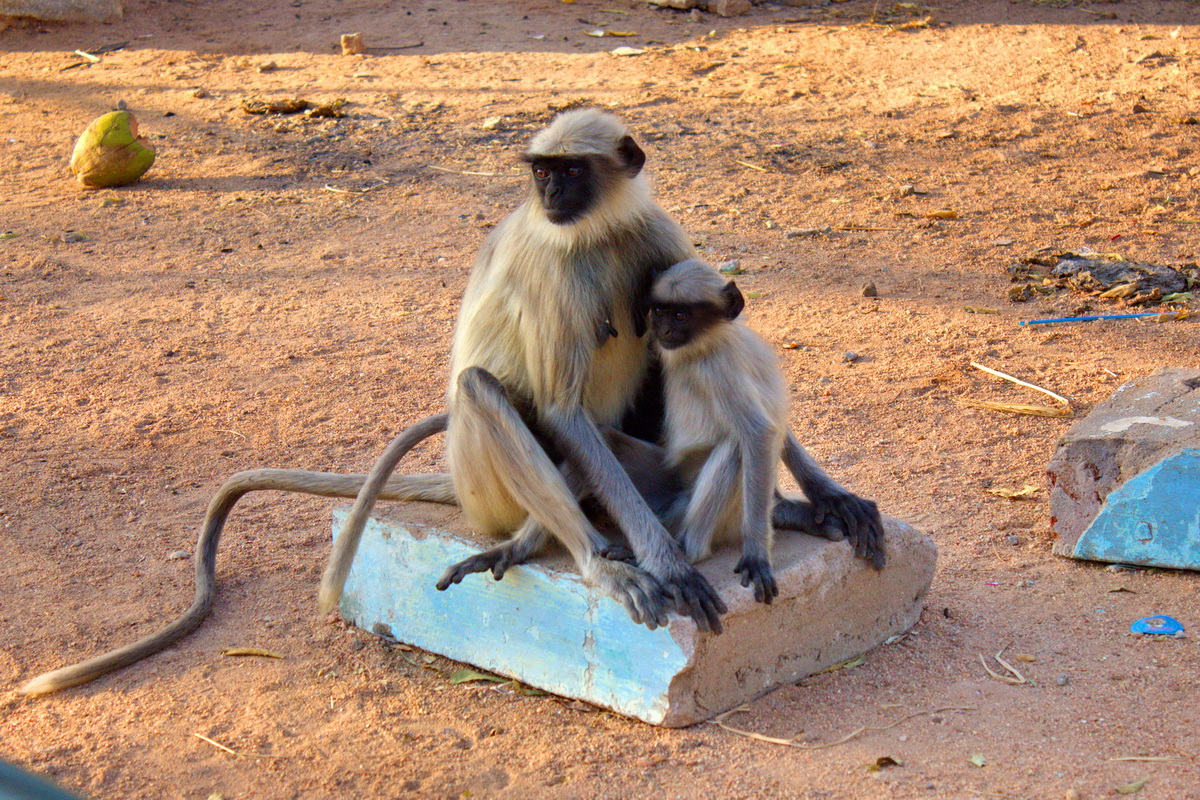
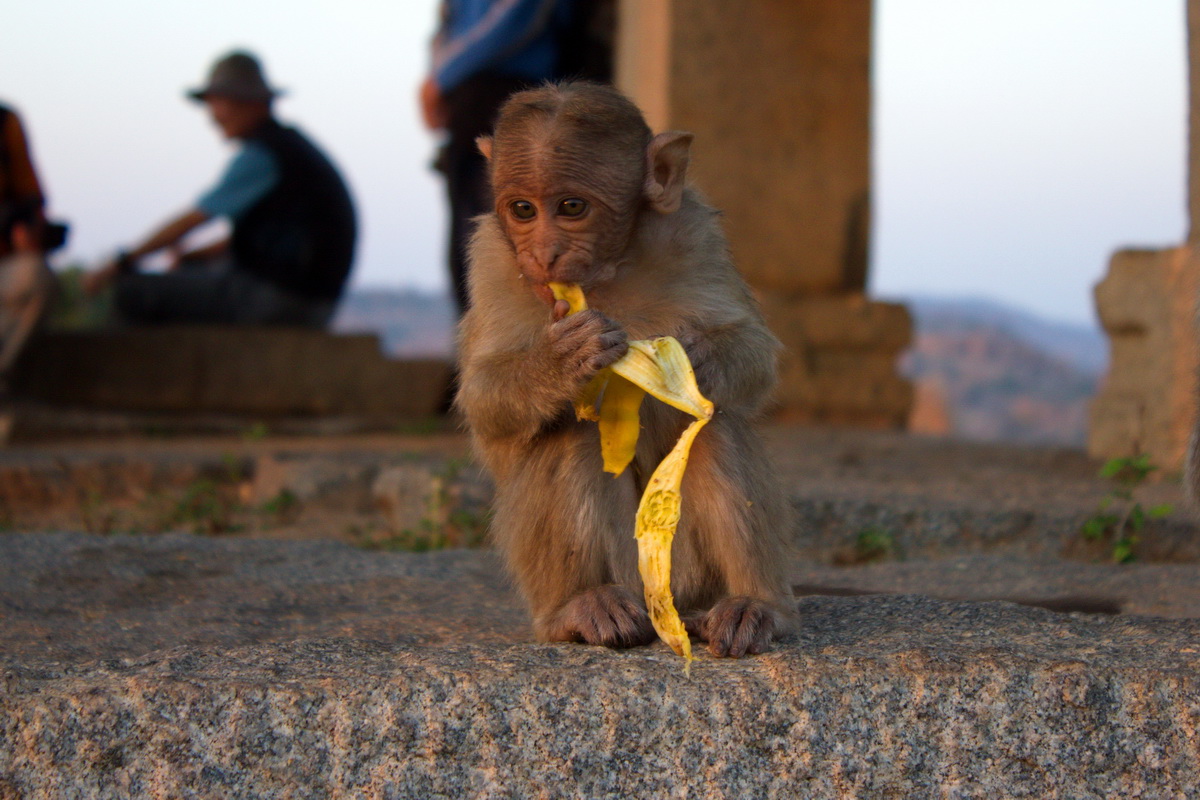
Monkeys are unavoidable here too. They can be aggressive and bold, and if you don’t offer them bananas, they might take them from you.
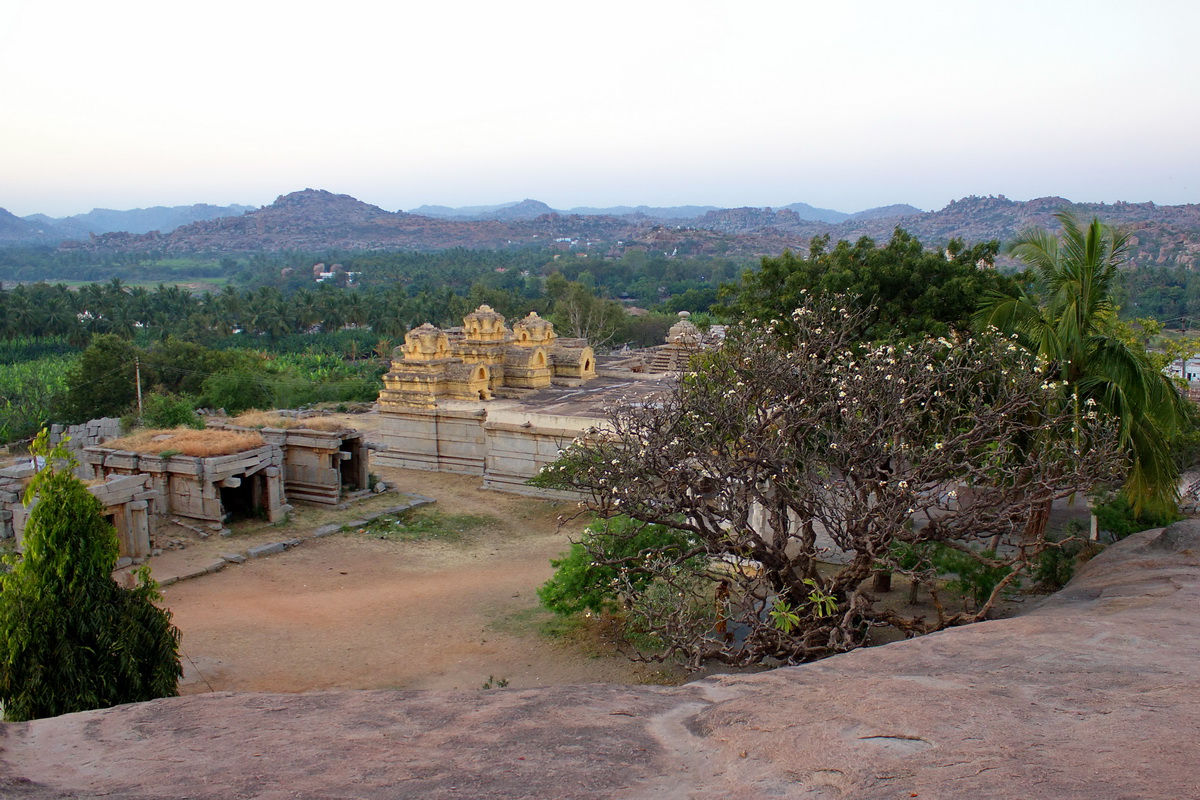
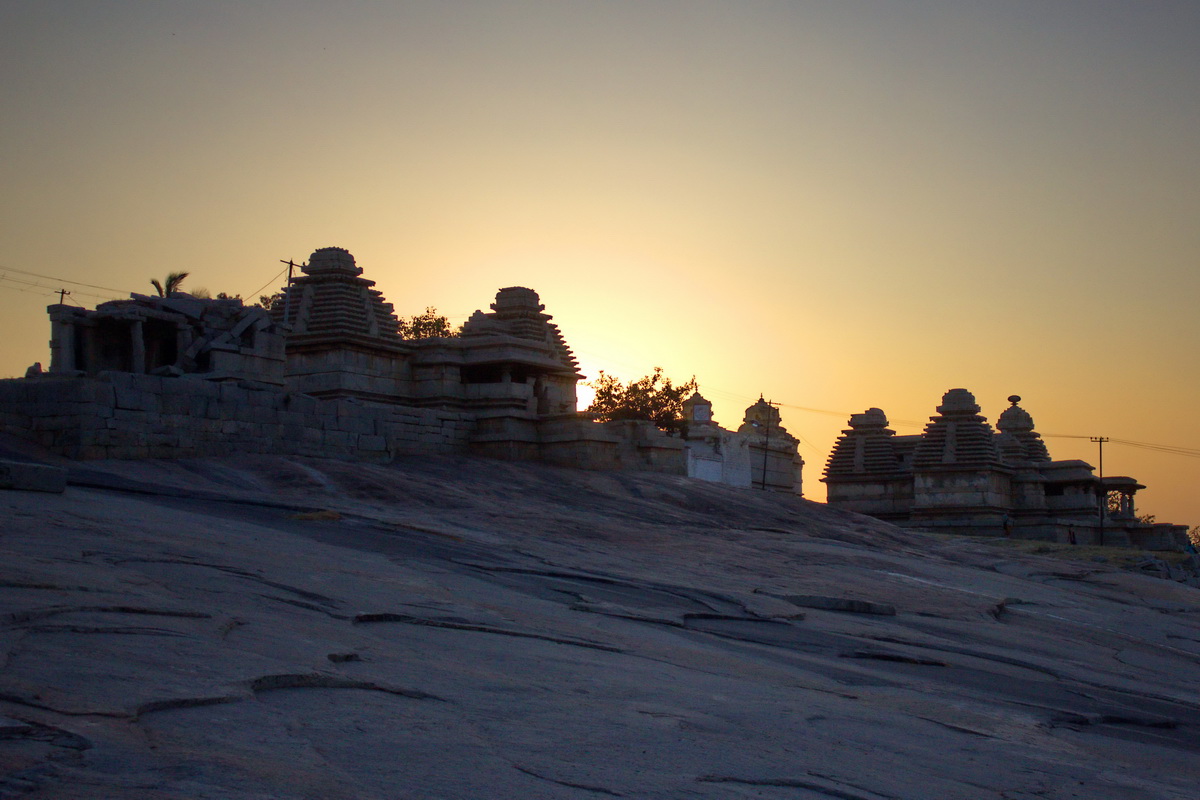
South of the Virupaksha Temple lies Hemakuta Hill, covered with Vijayanagara ruins. Ancient Jain temples can be seen here.
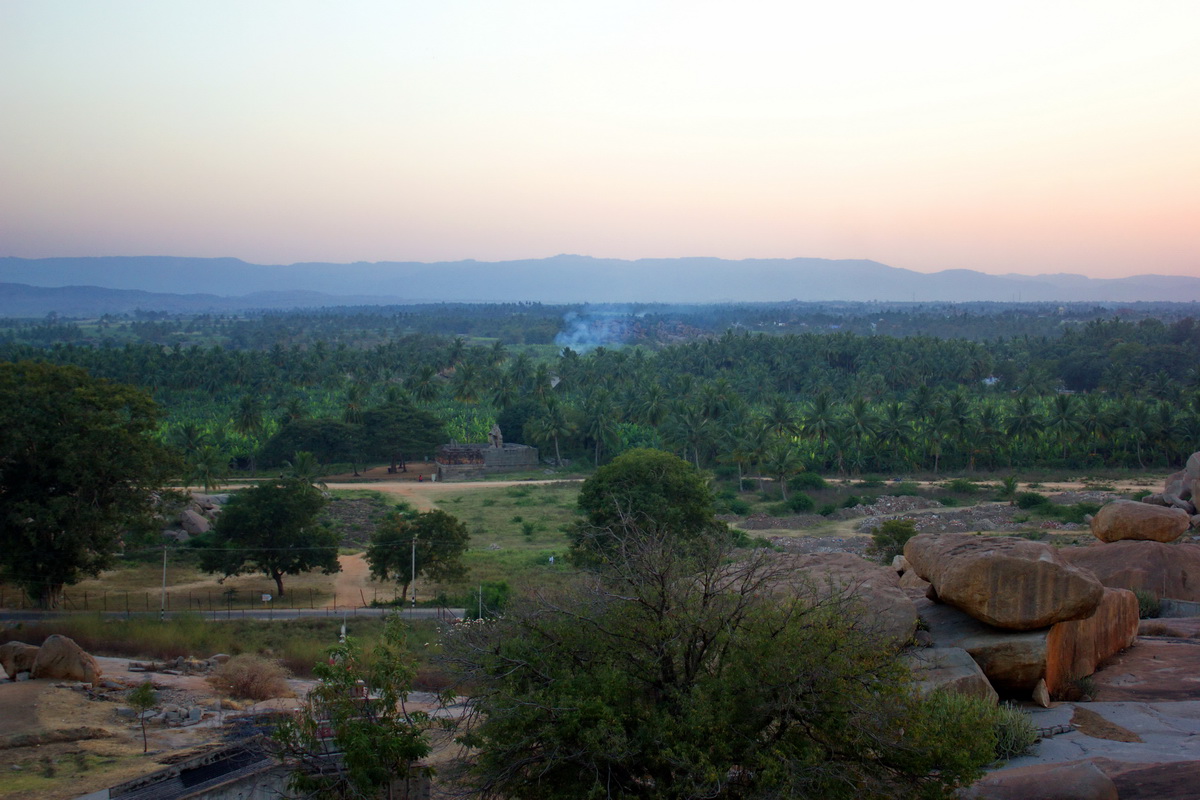
View from the hill.
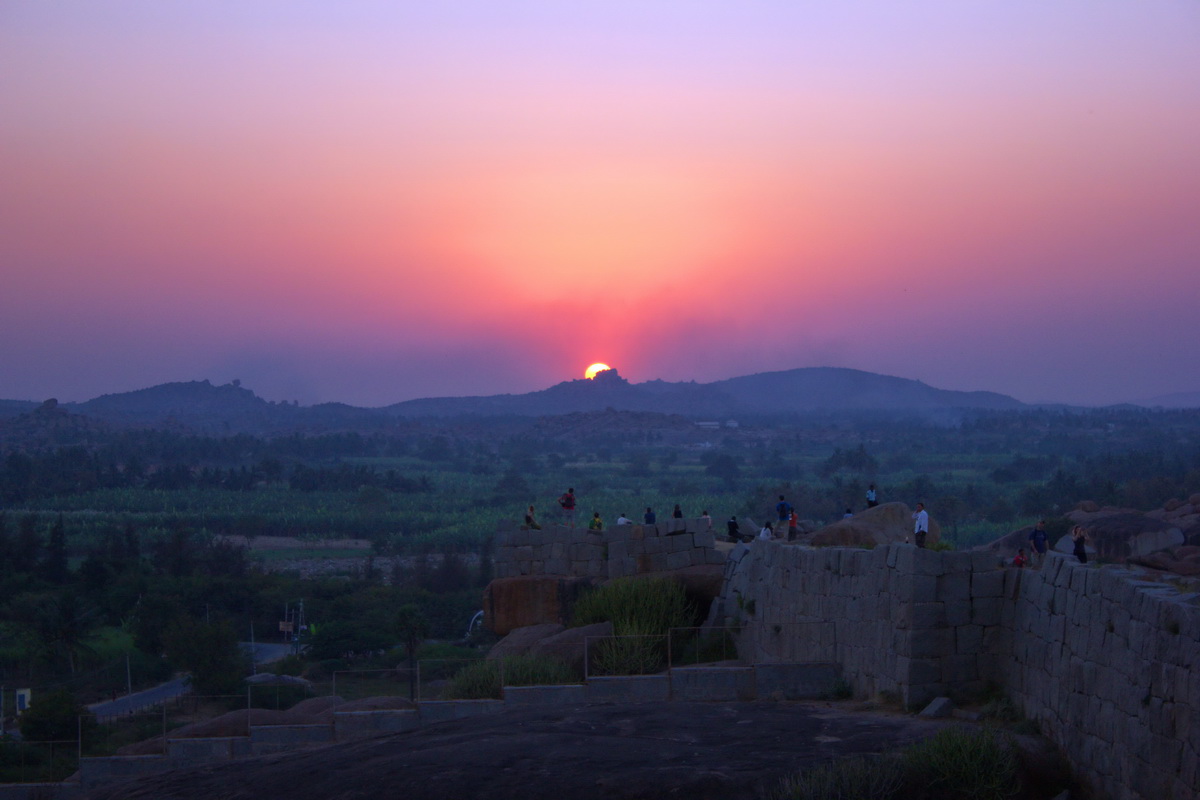
A wonderful place to watch the sunset.
***
The sunrise in Hampi is traditionally watched from Matanga Hill. Matanga Hill is one of the sacred places described in the Ramayana epic, offering an incredibly beautiful view of Hampi. It is the highest point in the Hampi area. At its summit lies the partially ruined sacred Veerabhadra Temple, dedicated to Lord Shiva.
To catch the sunrise, you need to wake up at 5 a.m., when it’s still completely dark. Climbing a hill made of massive stone boulders at such an early hour is an impressive and breathtaking experience. You must bring bananas, as the monkeys on this hill also gather to watch the sunrise.
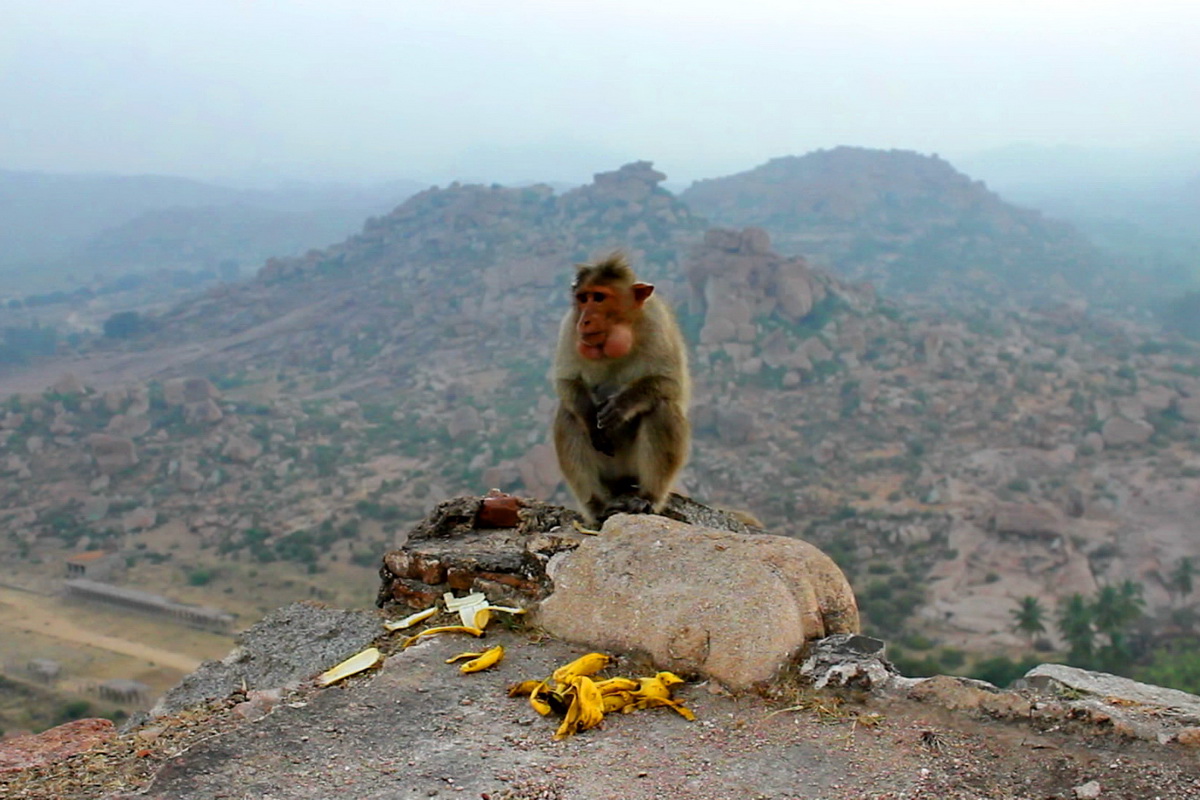
Sunrise.
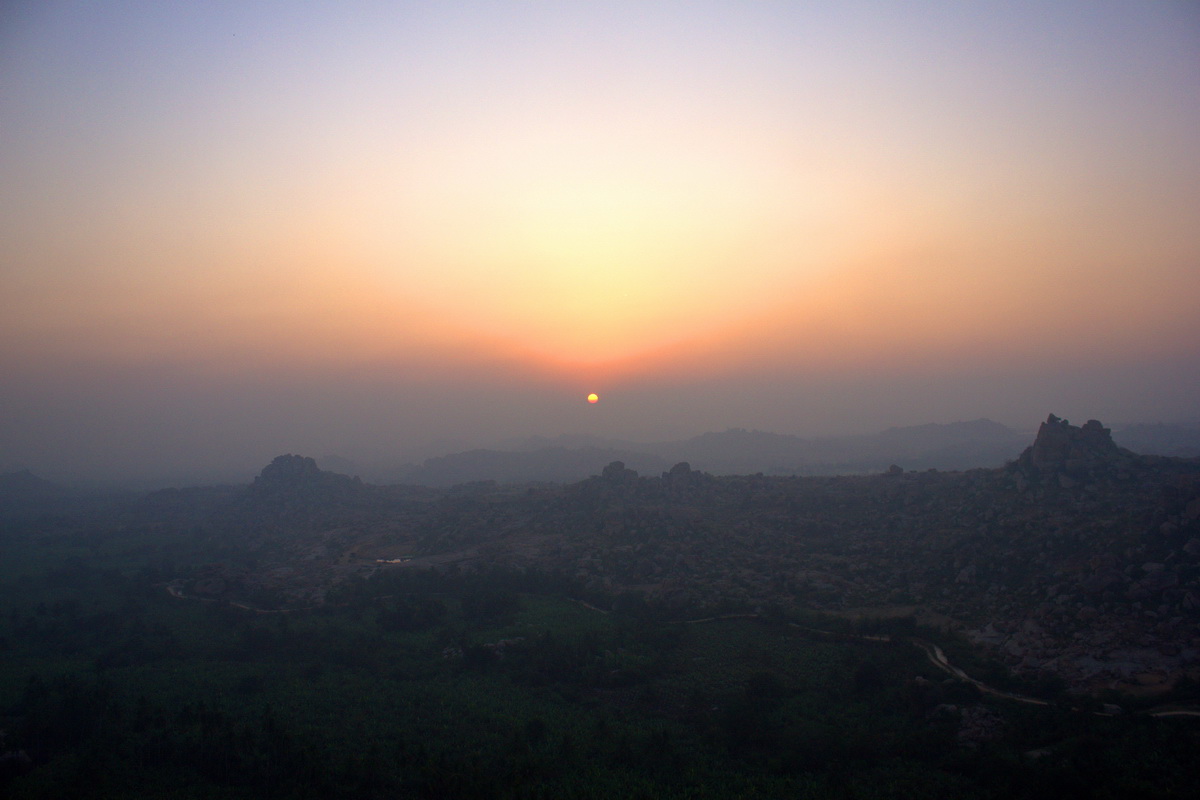
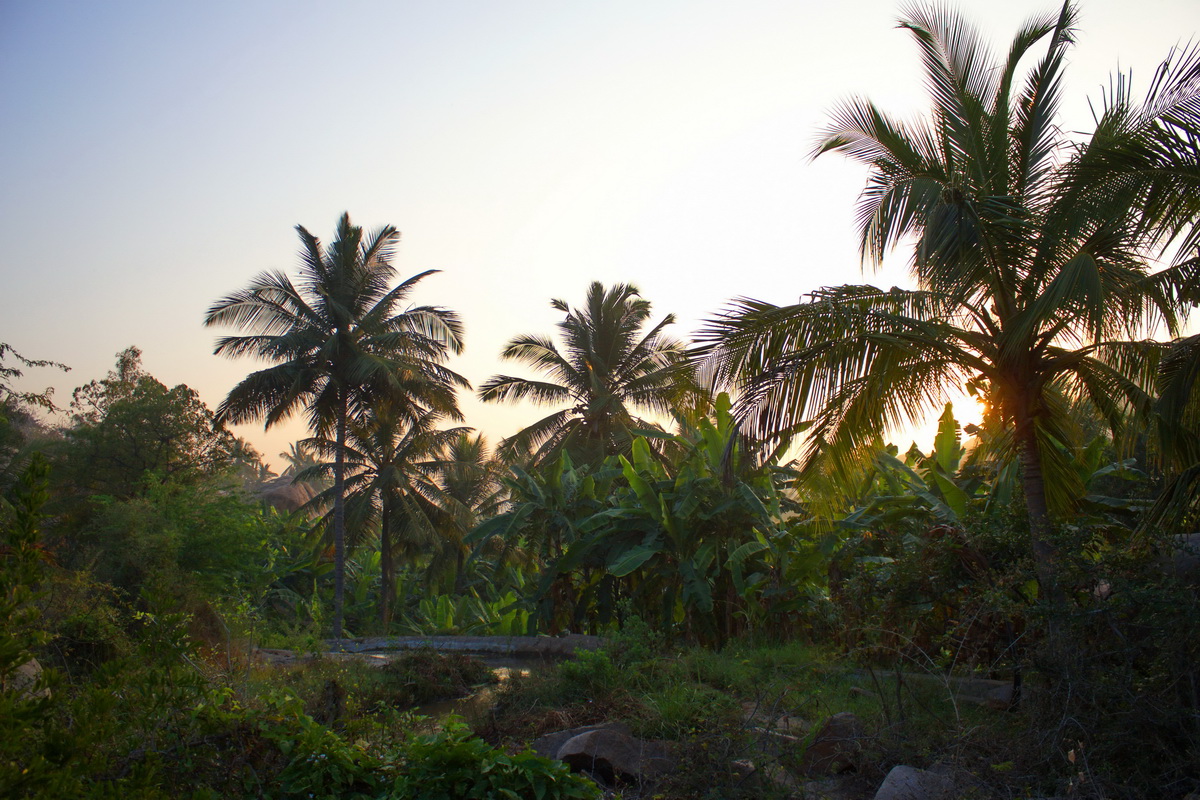
Views from the top.
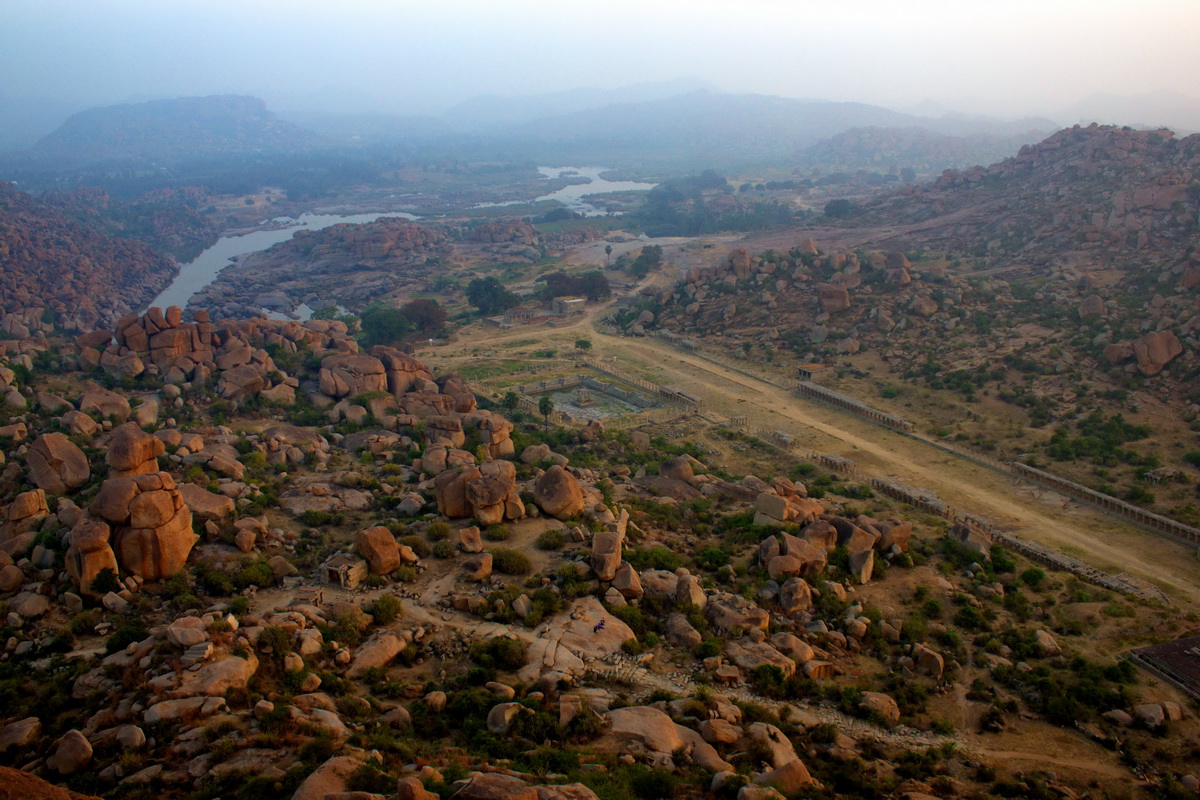
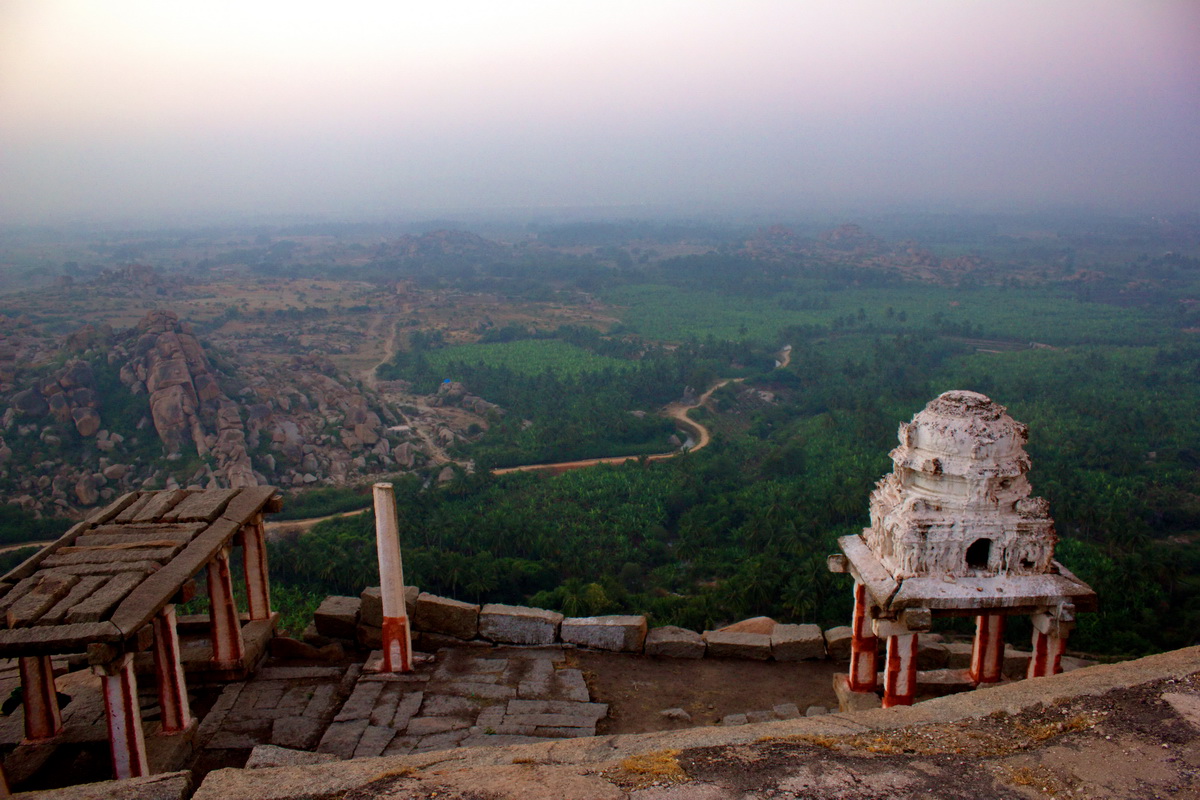
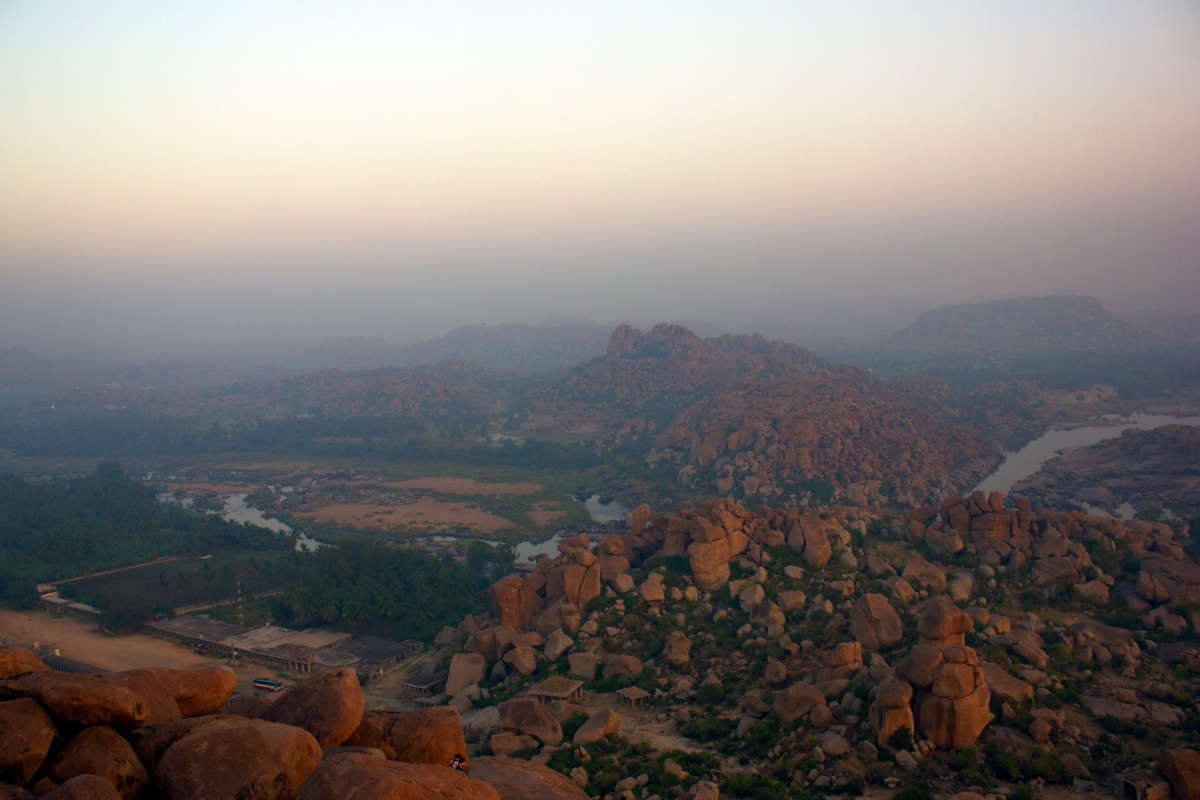
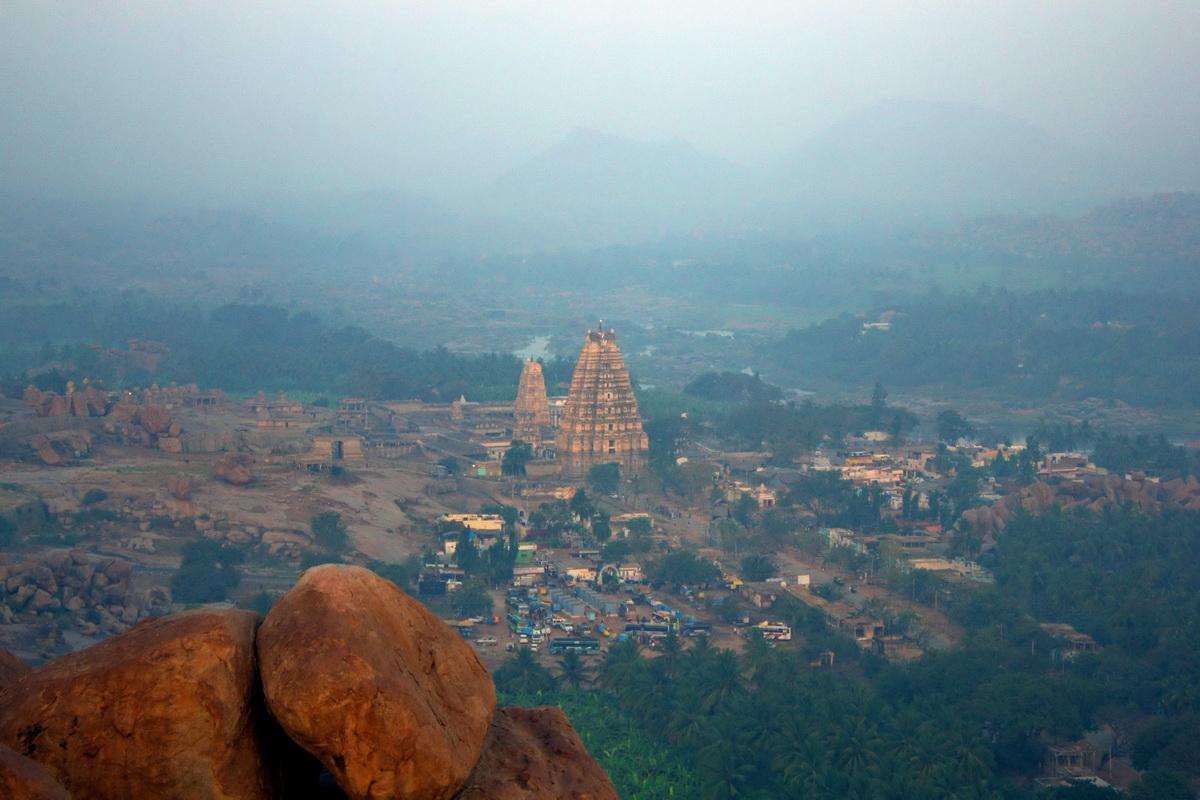
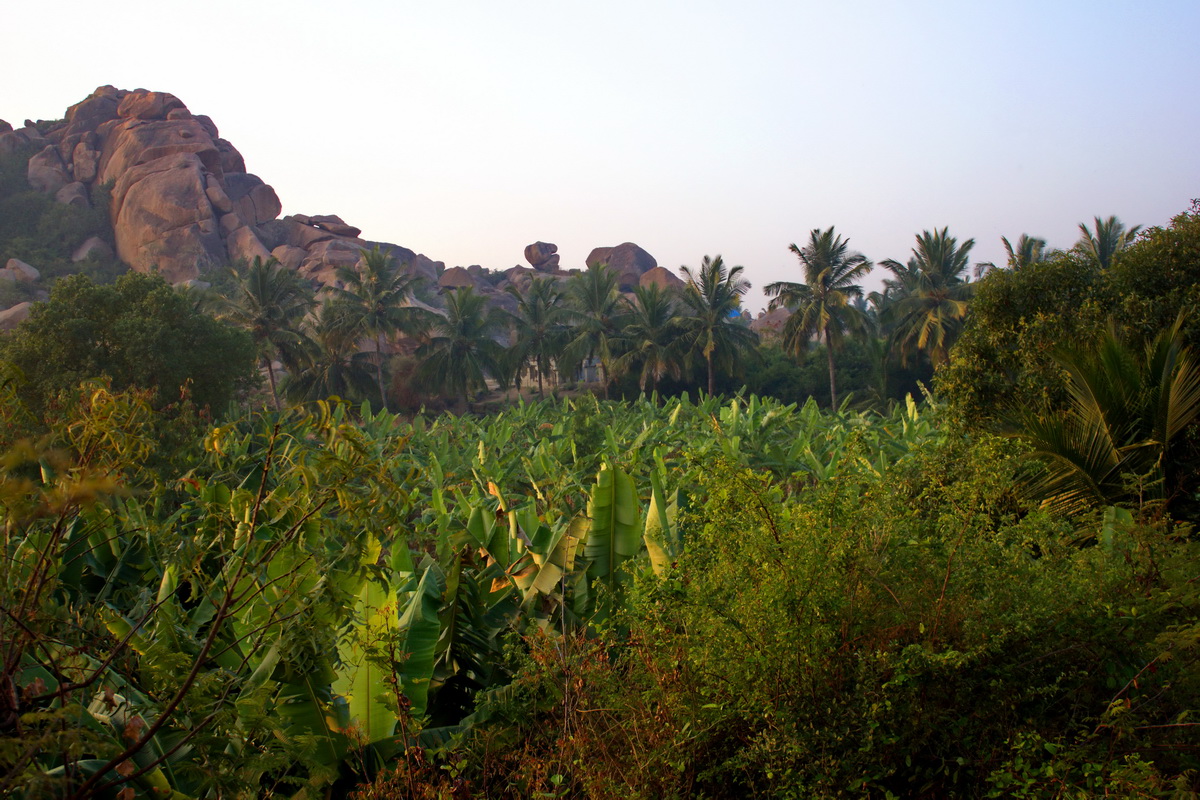
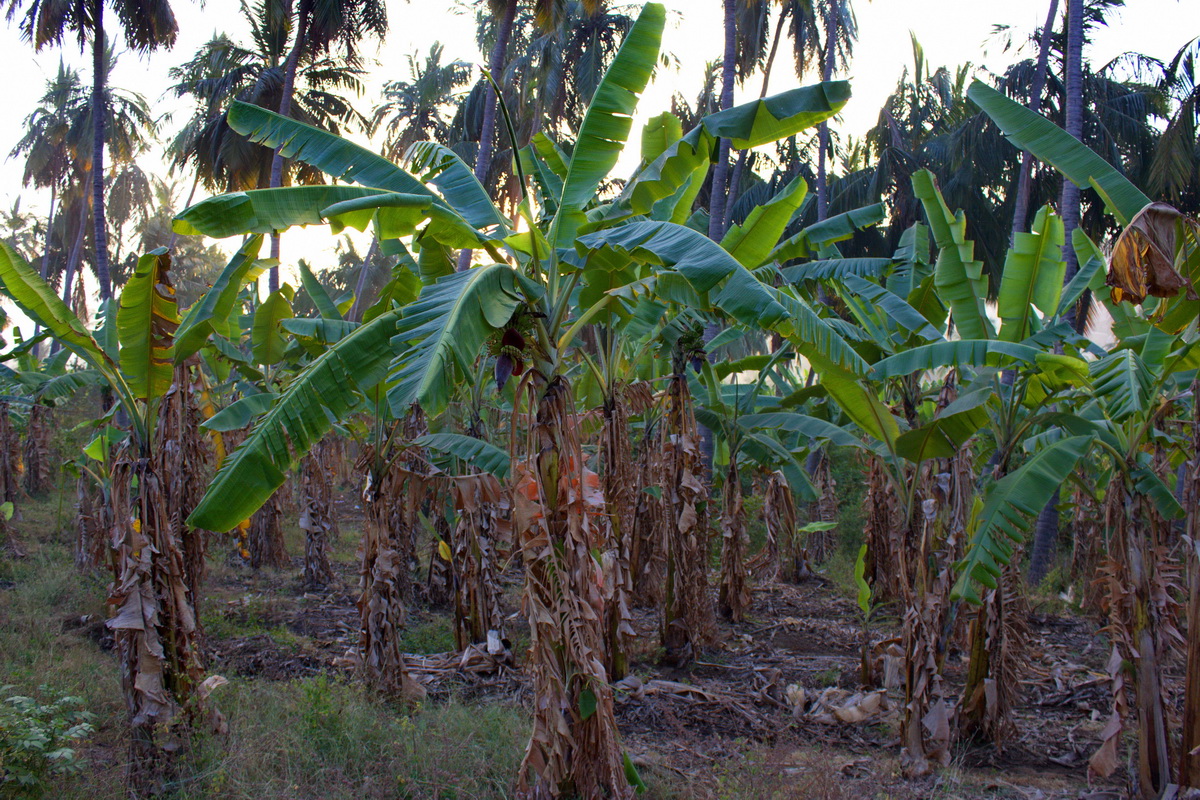
Bananas grow at the foot of the hill.
...
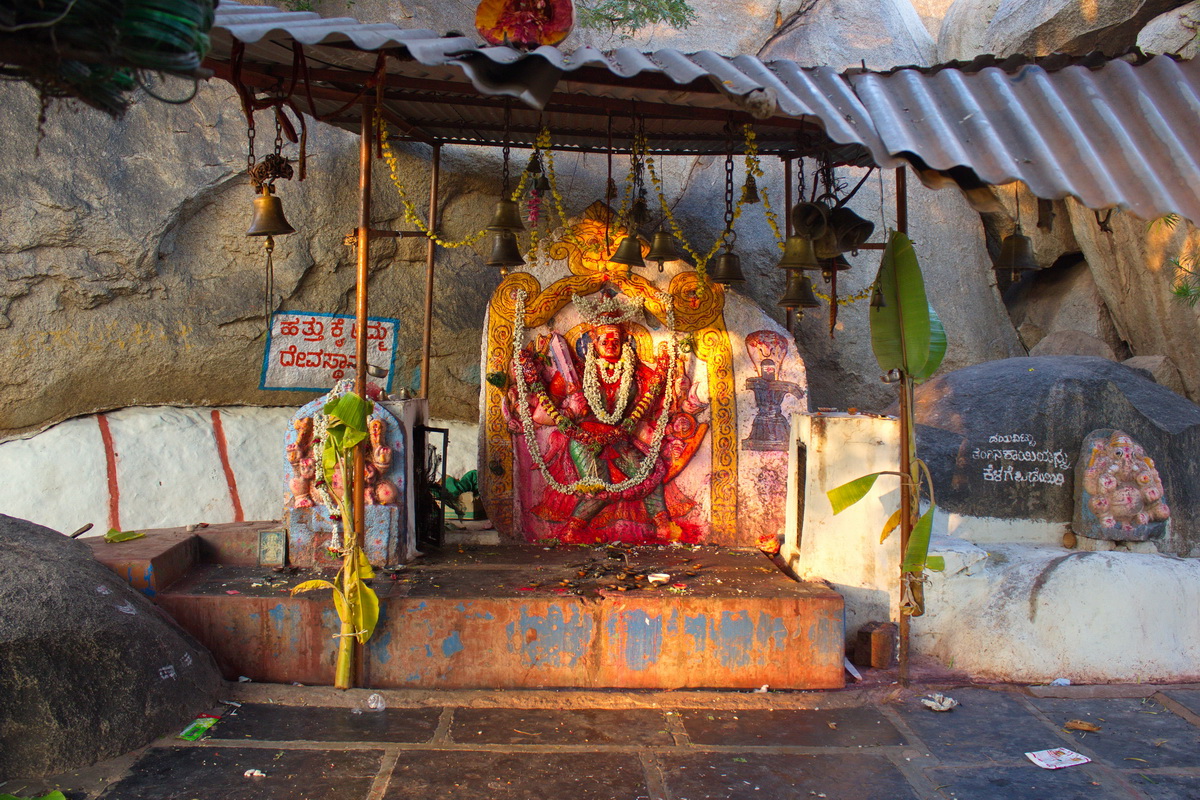
Achyutaraya Temple
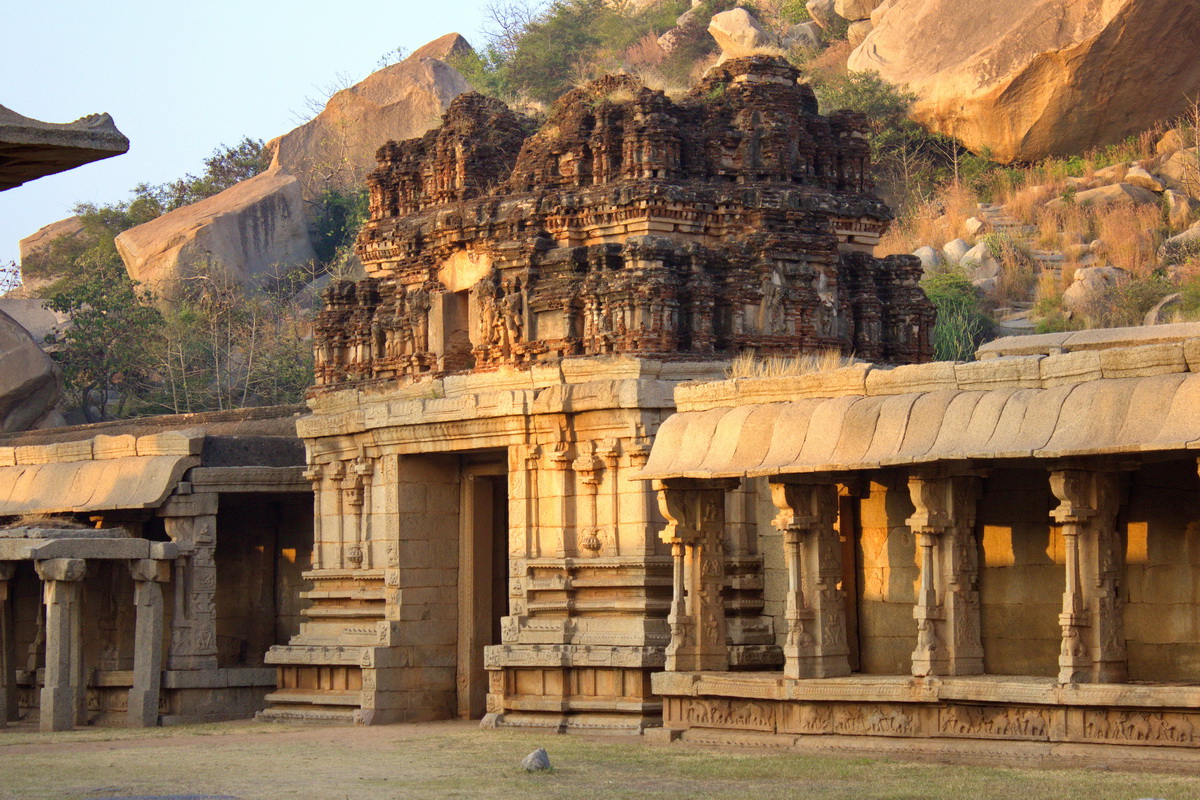
A temple complex dedicated to Tiruvengalanatha, one of the many forms of Vishnu.
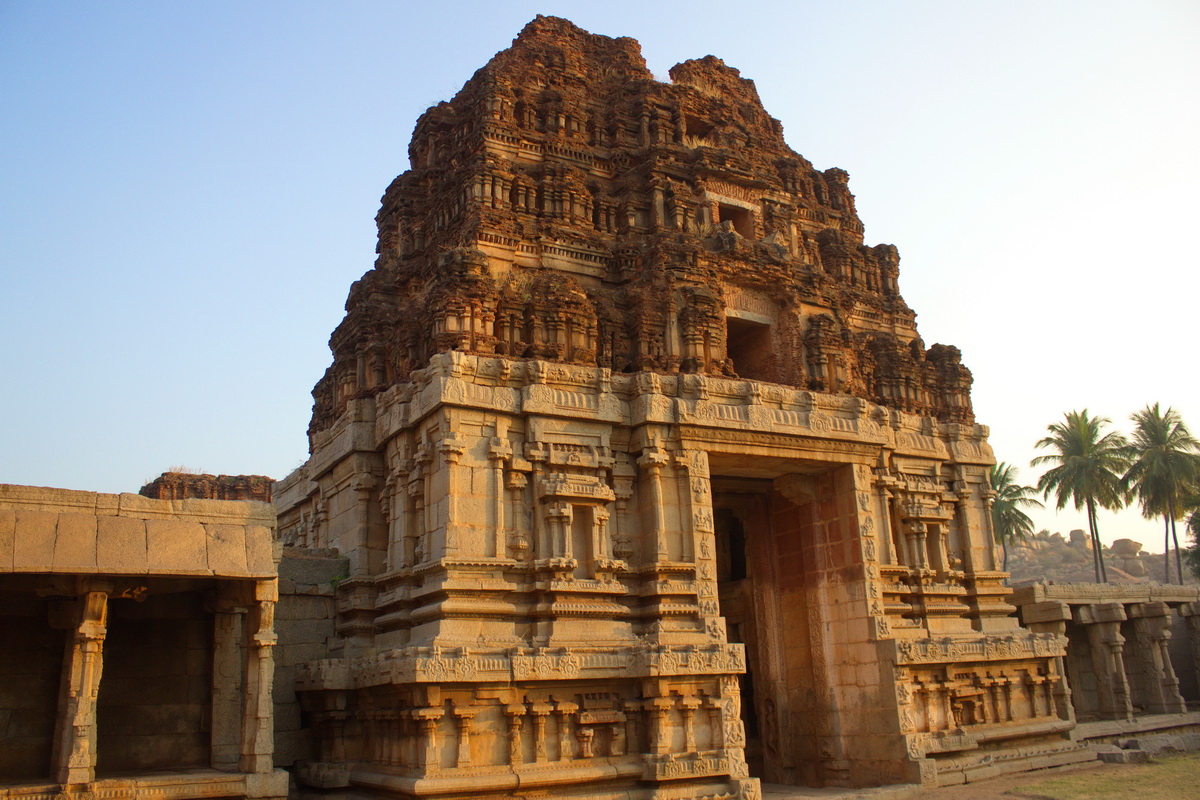
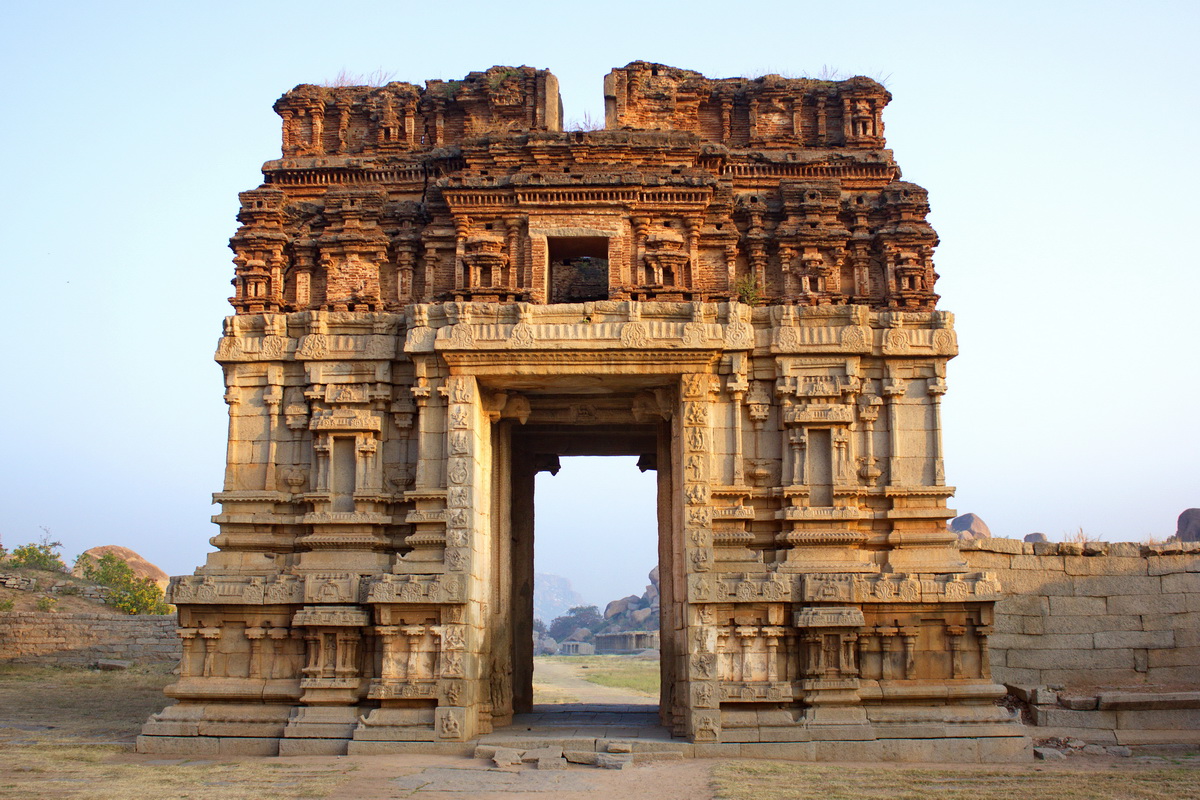
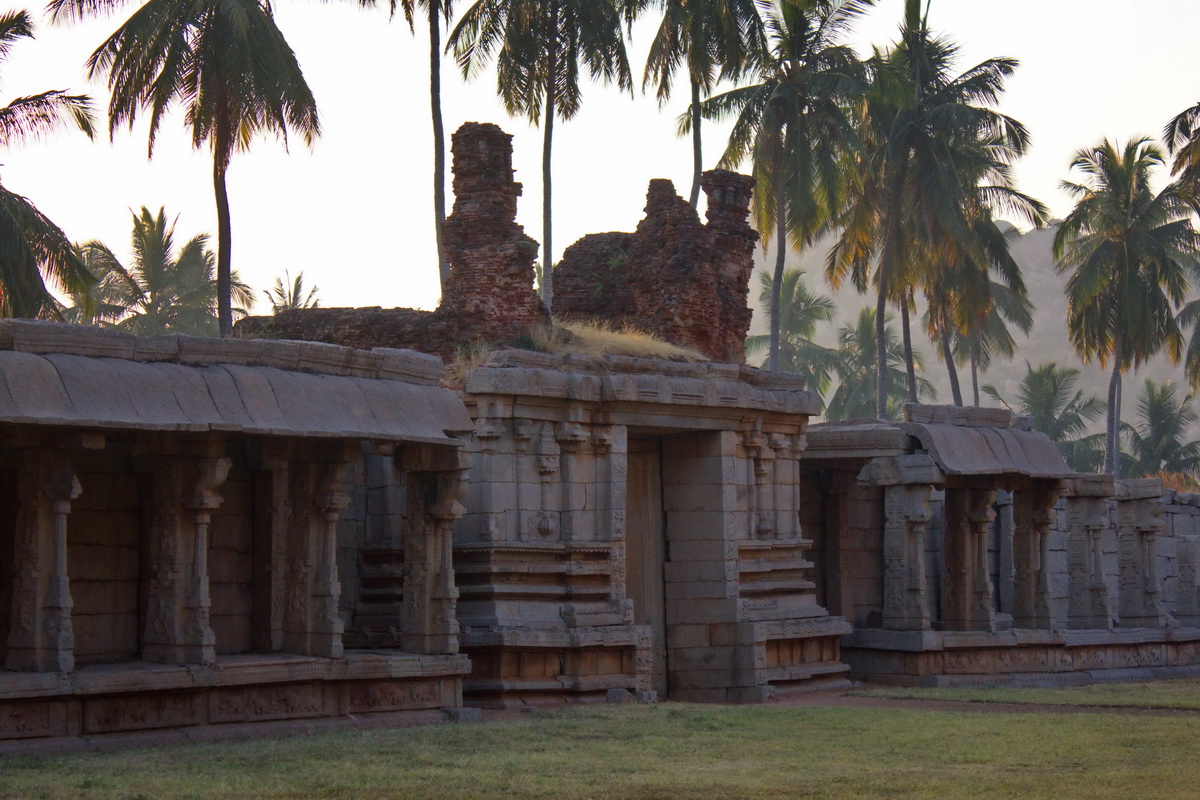
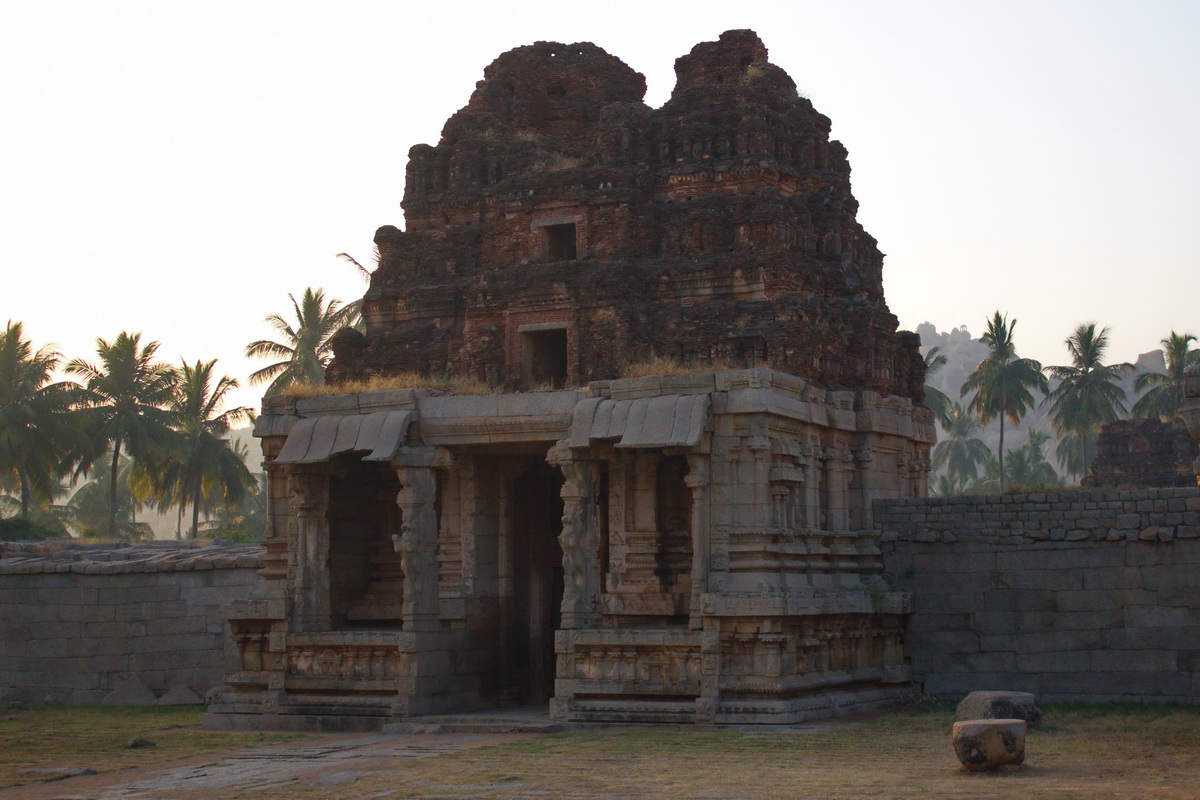
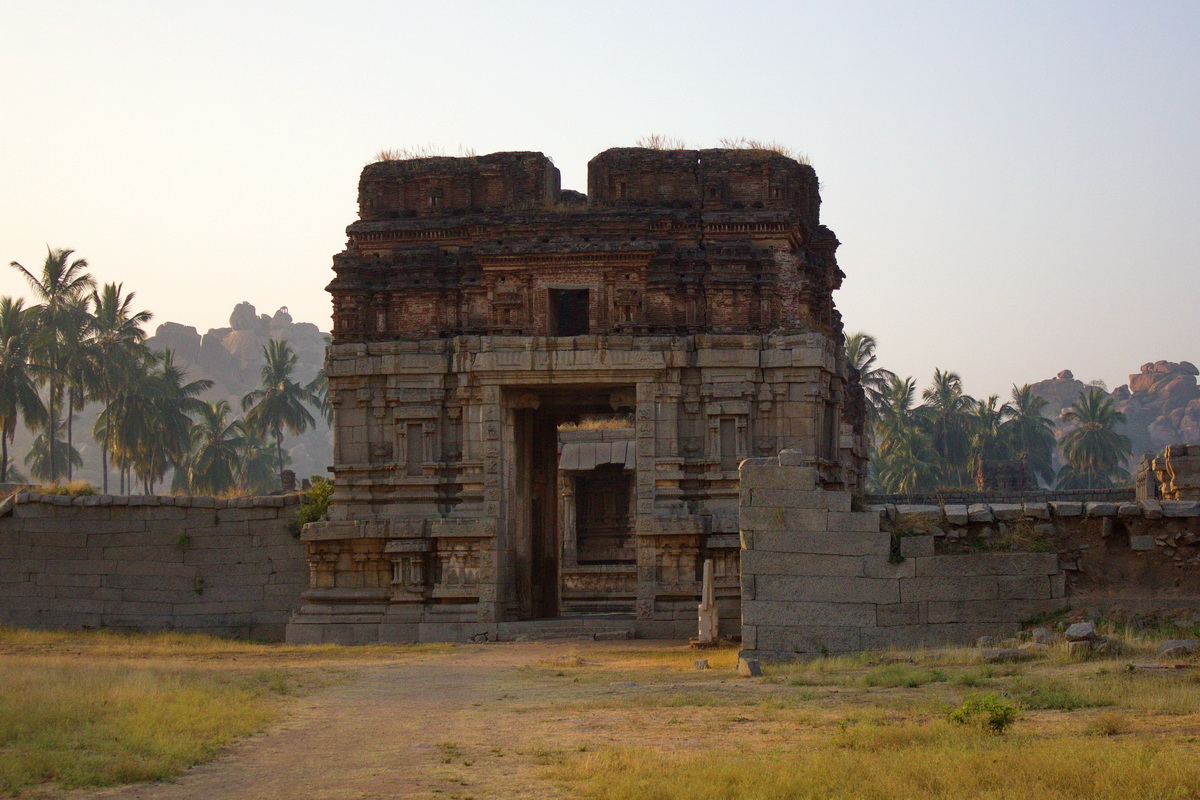
...
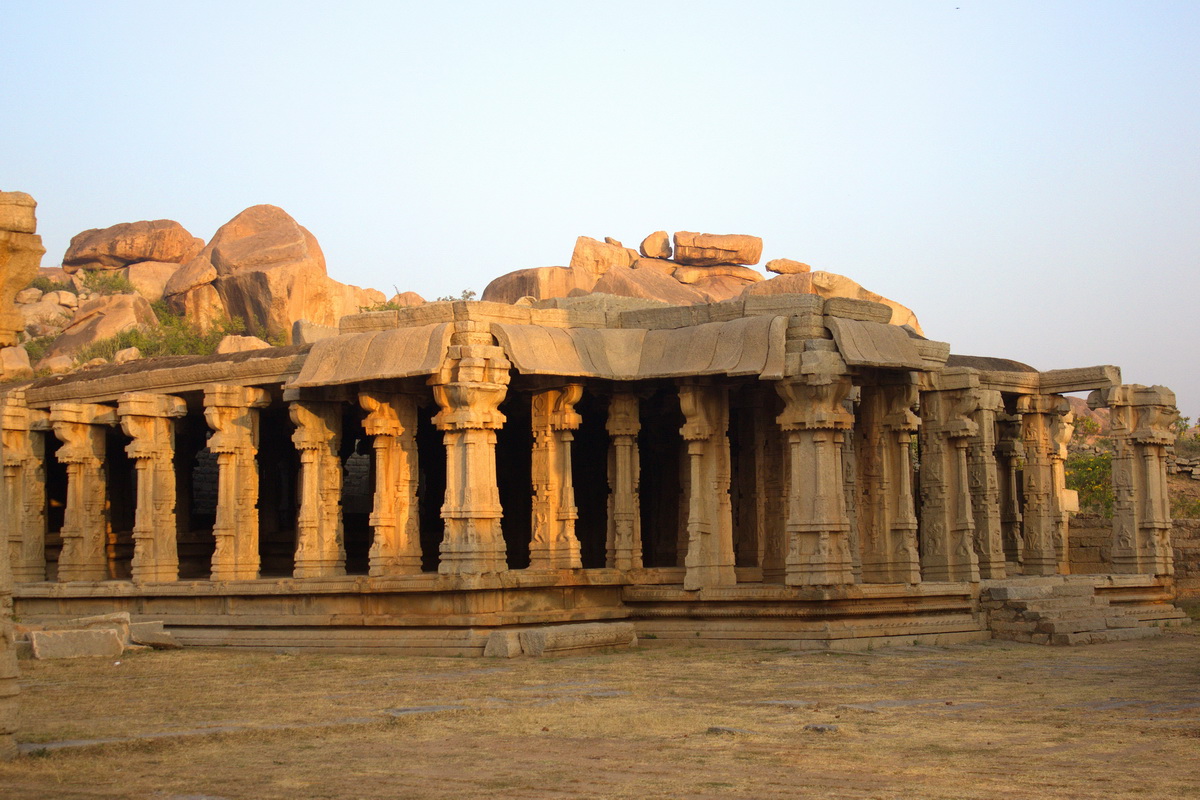
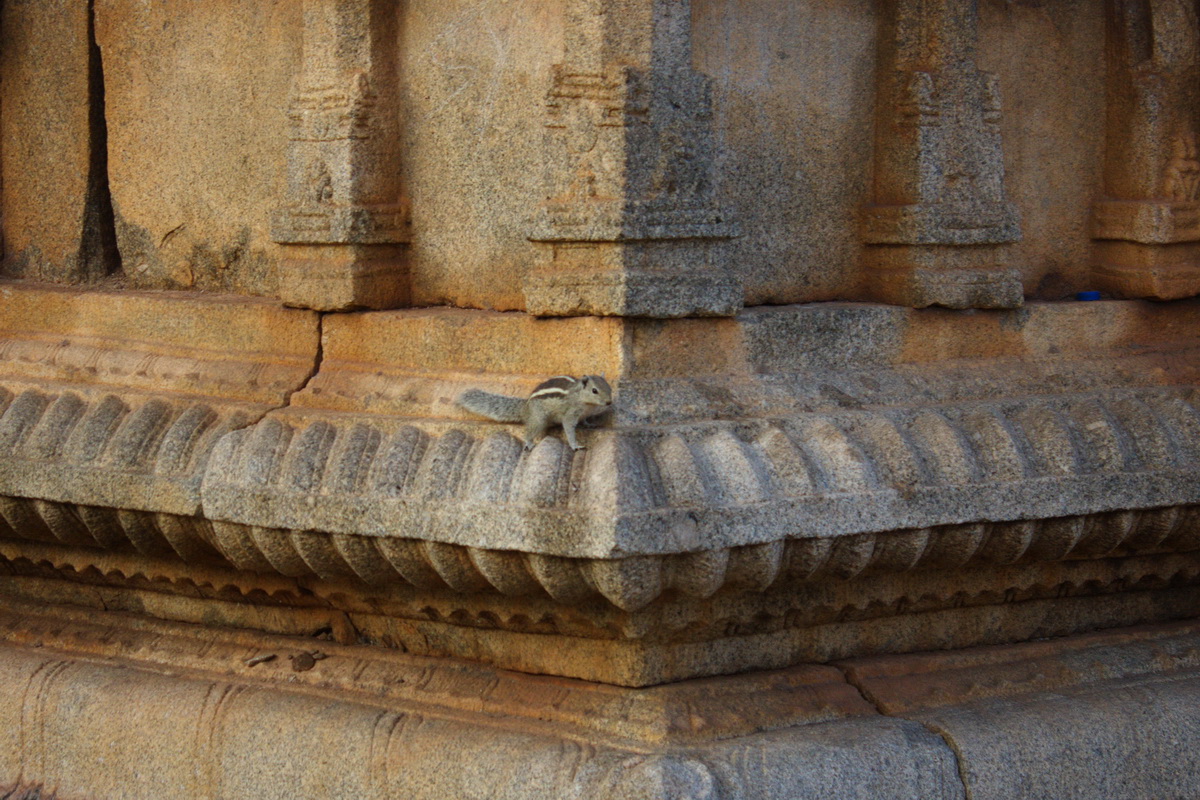
Chipmunks are often seen here.
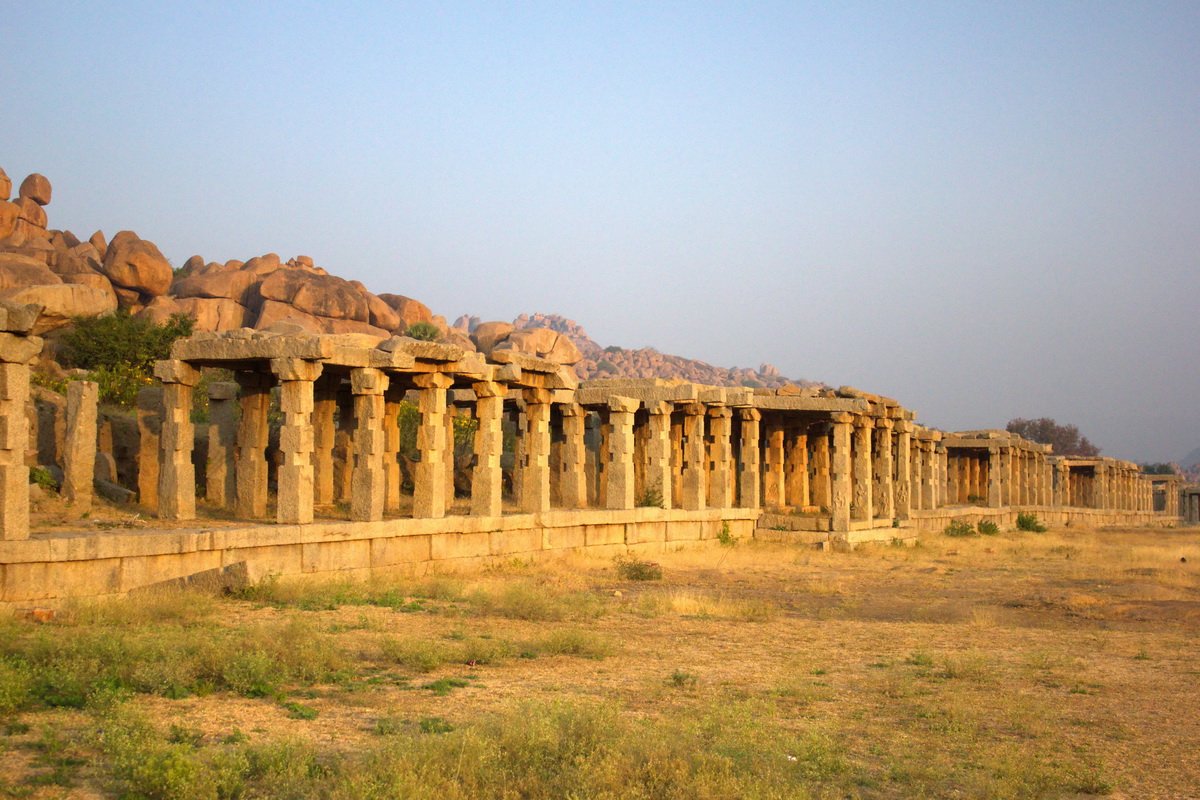
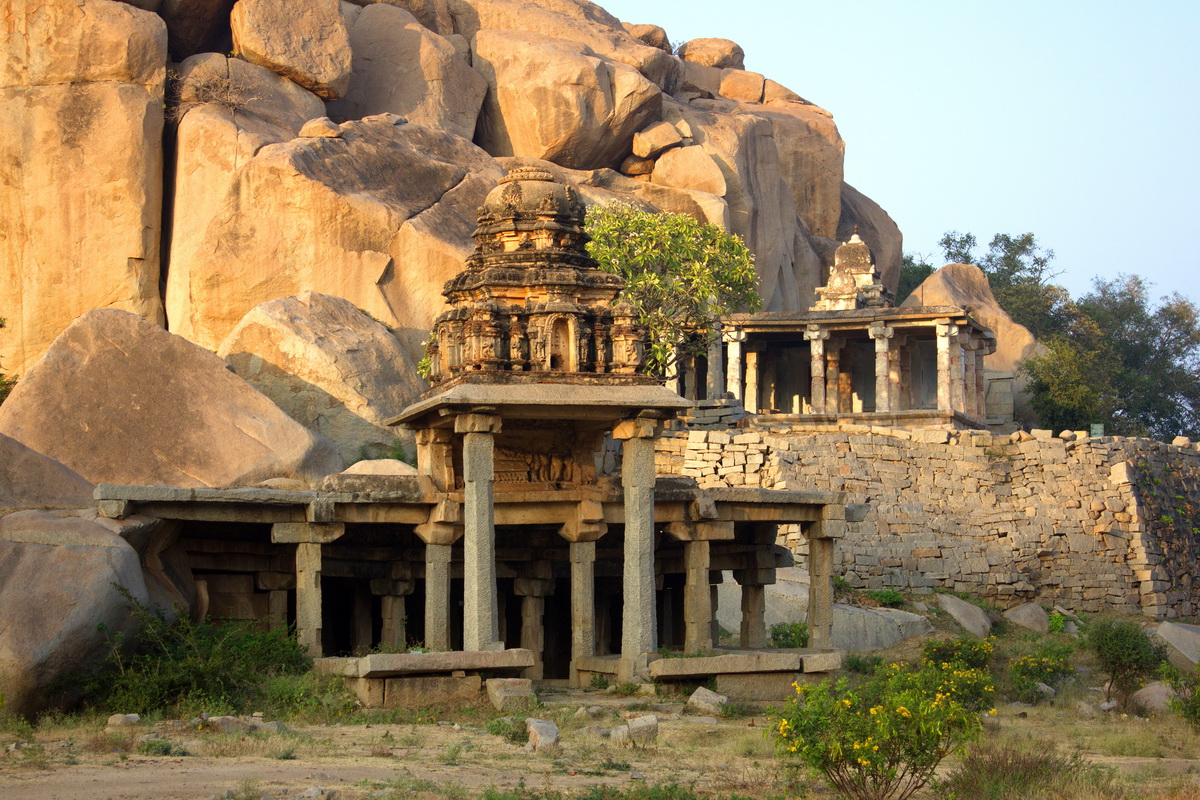
Sule Bazaar. In ancient times, Sule Bazaar was a wide avenue in the sacred quarter leading to the Achyutaraya Temple at the foot of the hill. Along the avenue, there are several columned structures. According to foreign travelers, these housed jewelry shops where traders sold diamonds by the kilogram.
...
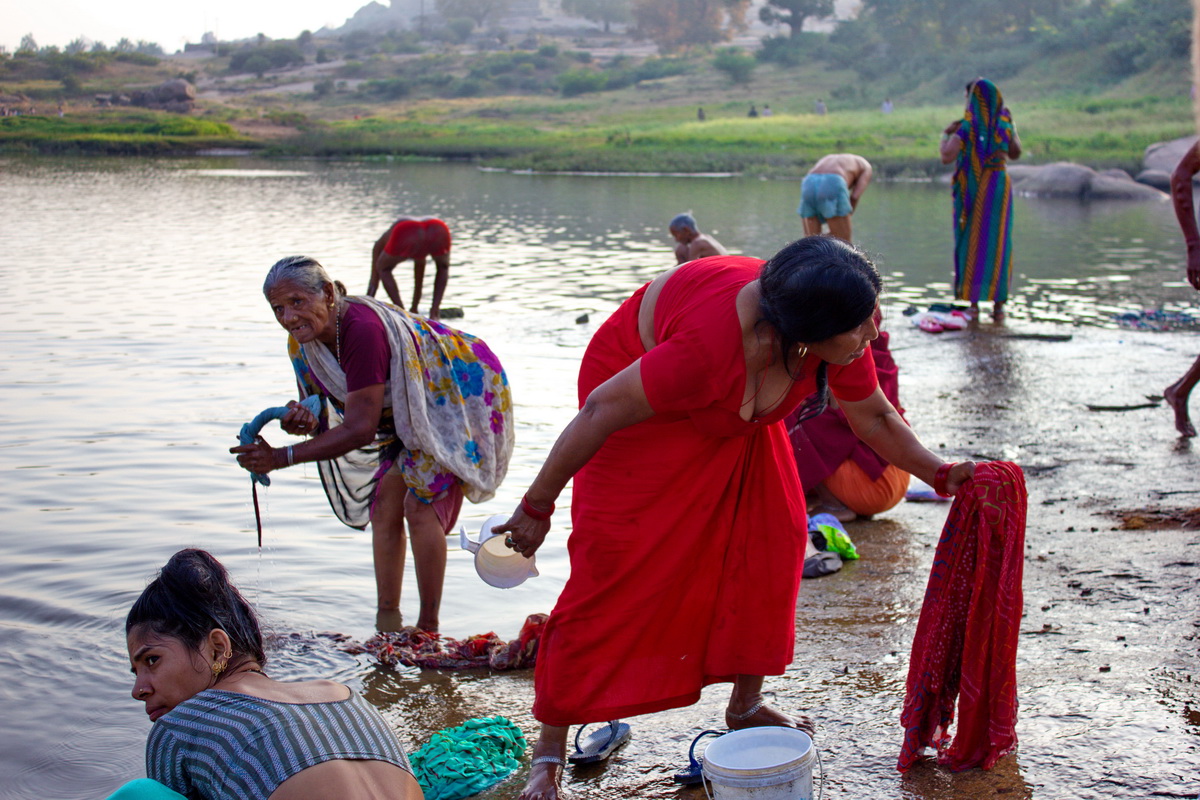
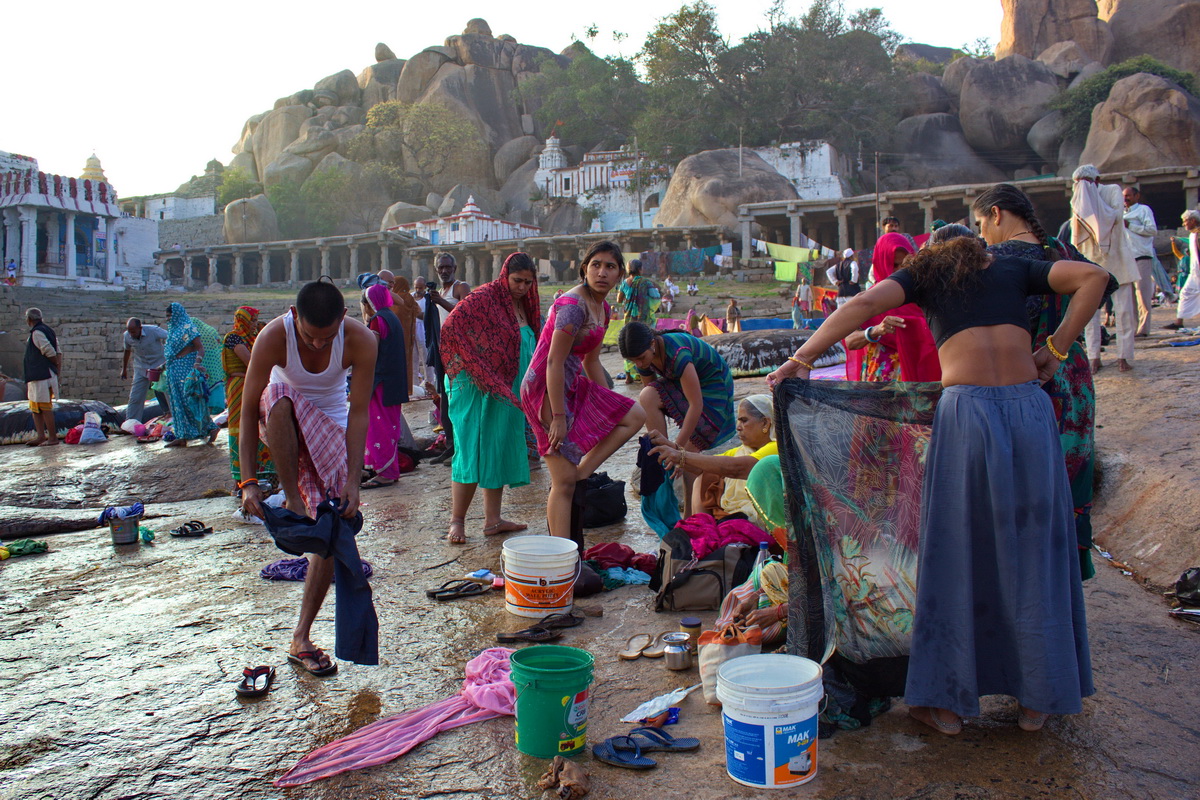
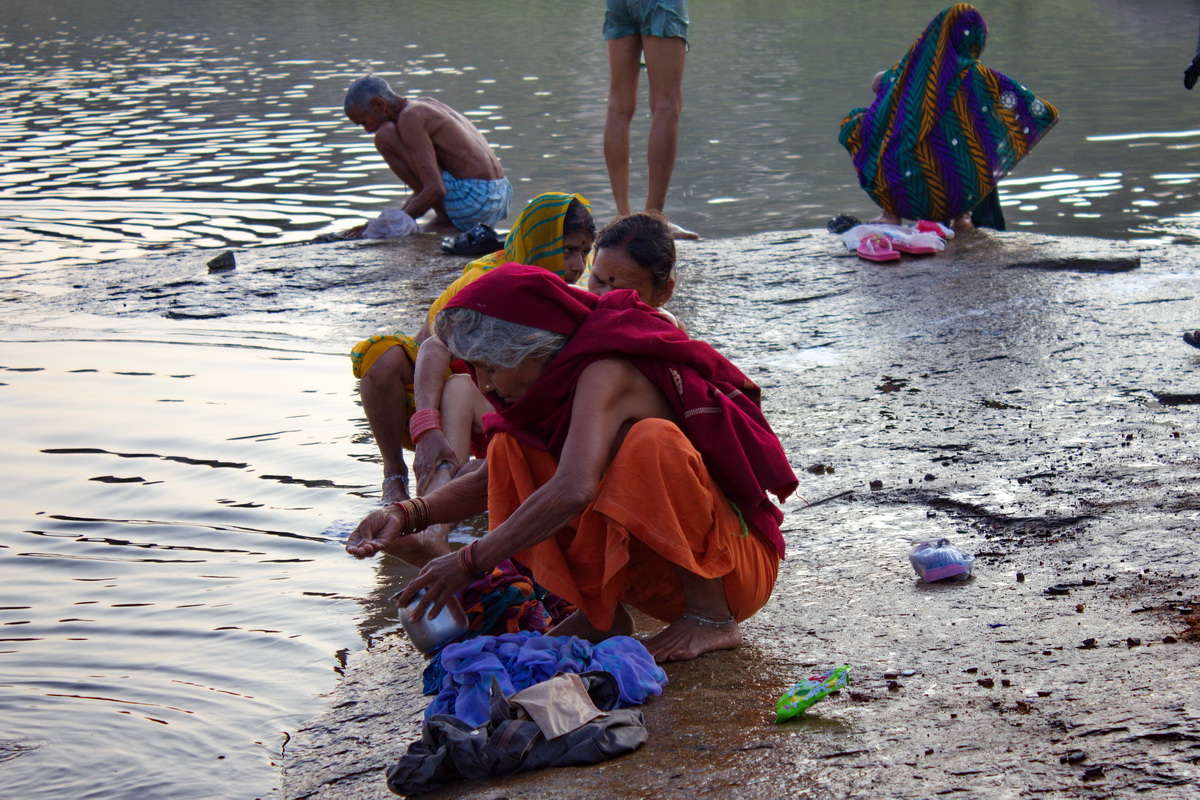
Tungabhadra River
The mythical Tungabhadra River is a sacred river on whose banks Hampi is located. It is formed by the confluence of the Tunga and Bhadra rivers, later flowing into the Krishna River. Its two tributaries, Tunga and Bhadra, are said to be the two tusks of a demon slain by Vishnu, from which water flows.
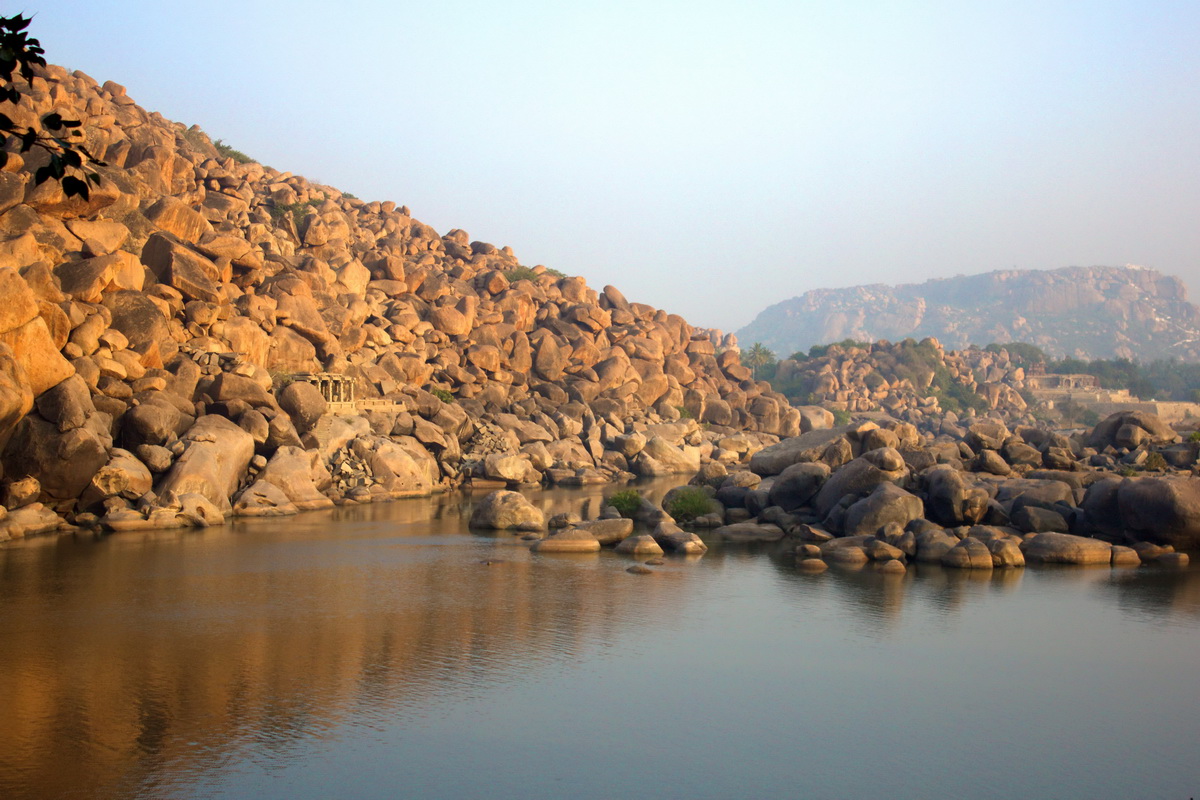
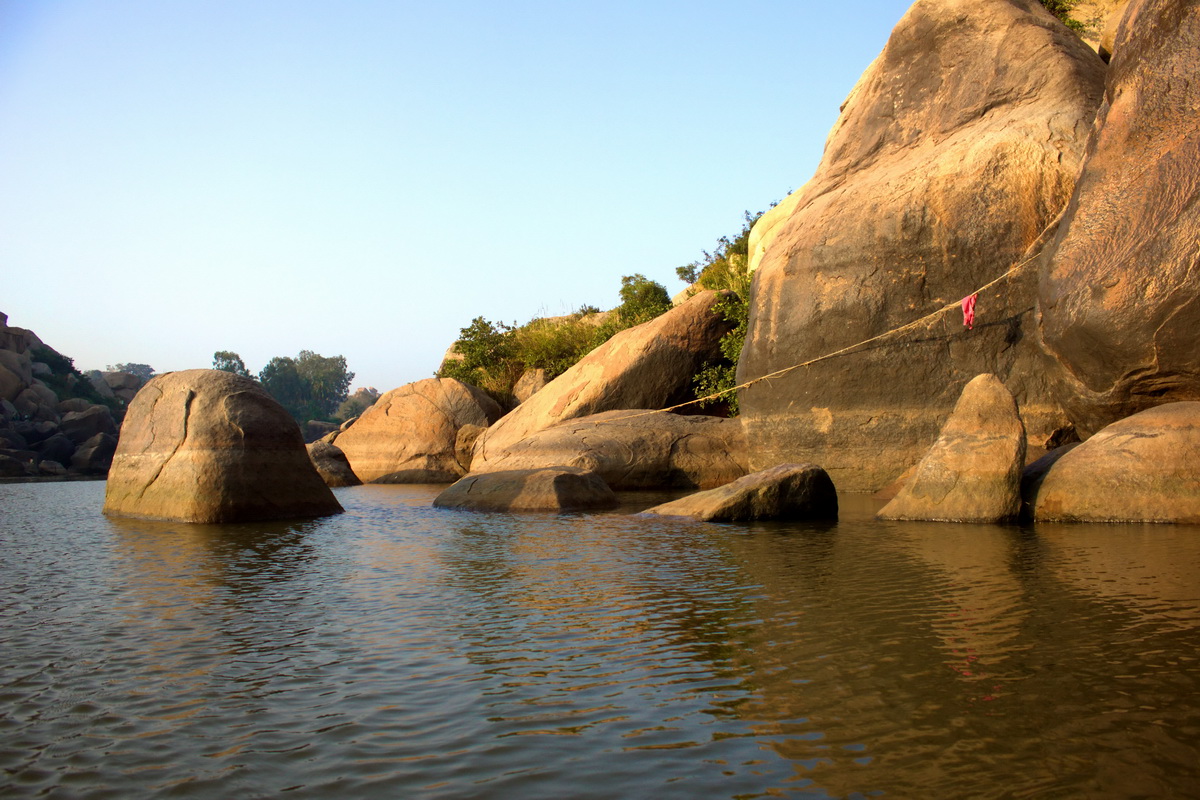
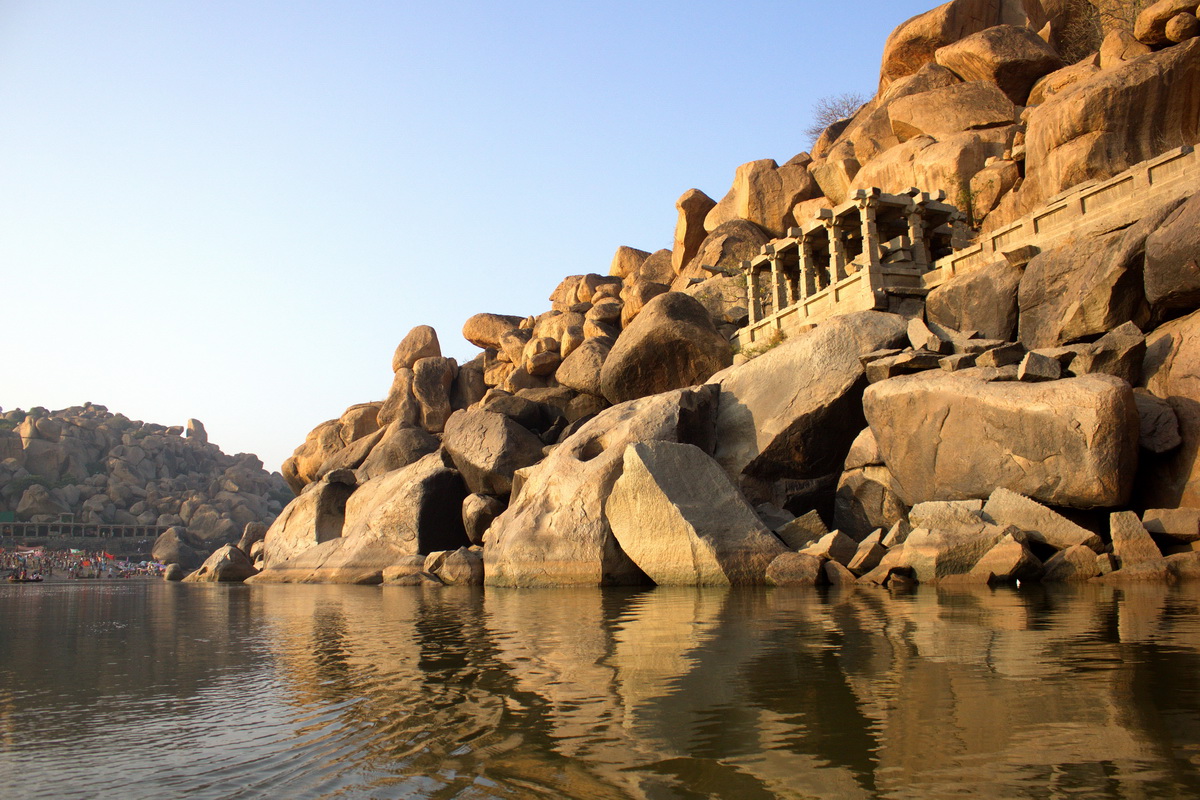
Many pilgrims gather here for ritual ablutions.
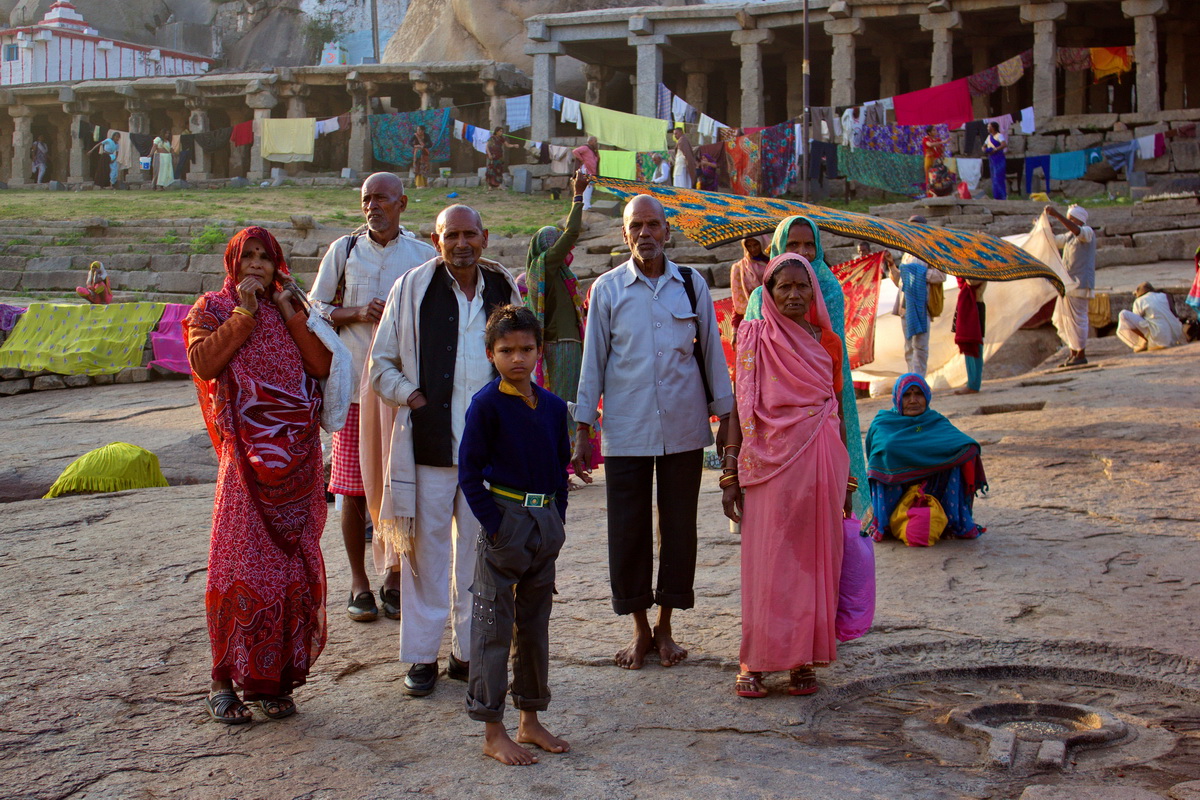
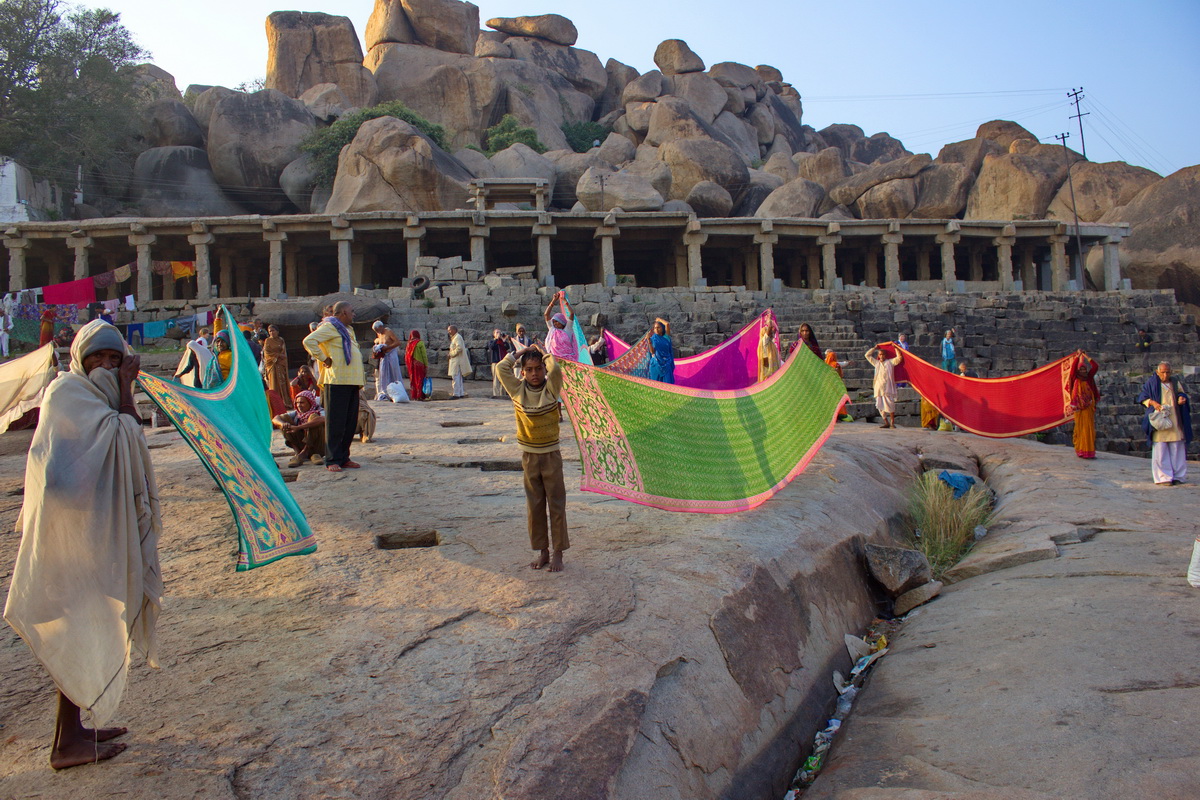
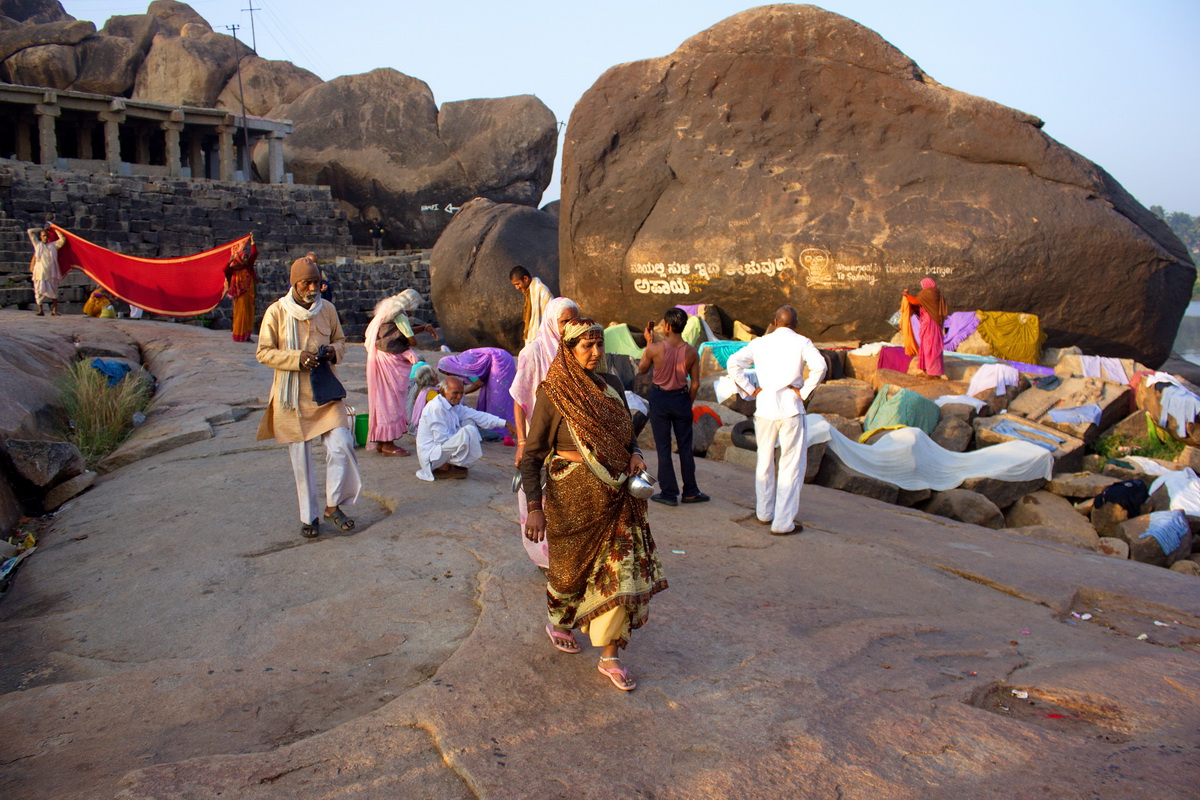
...
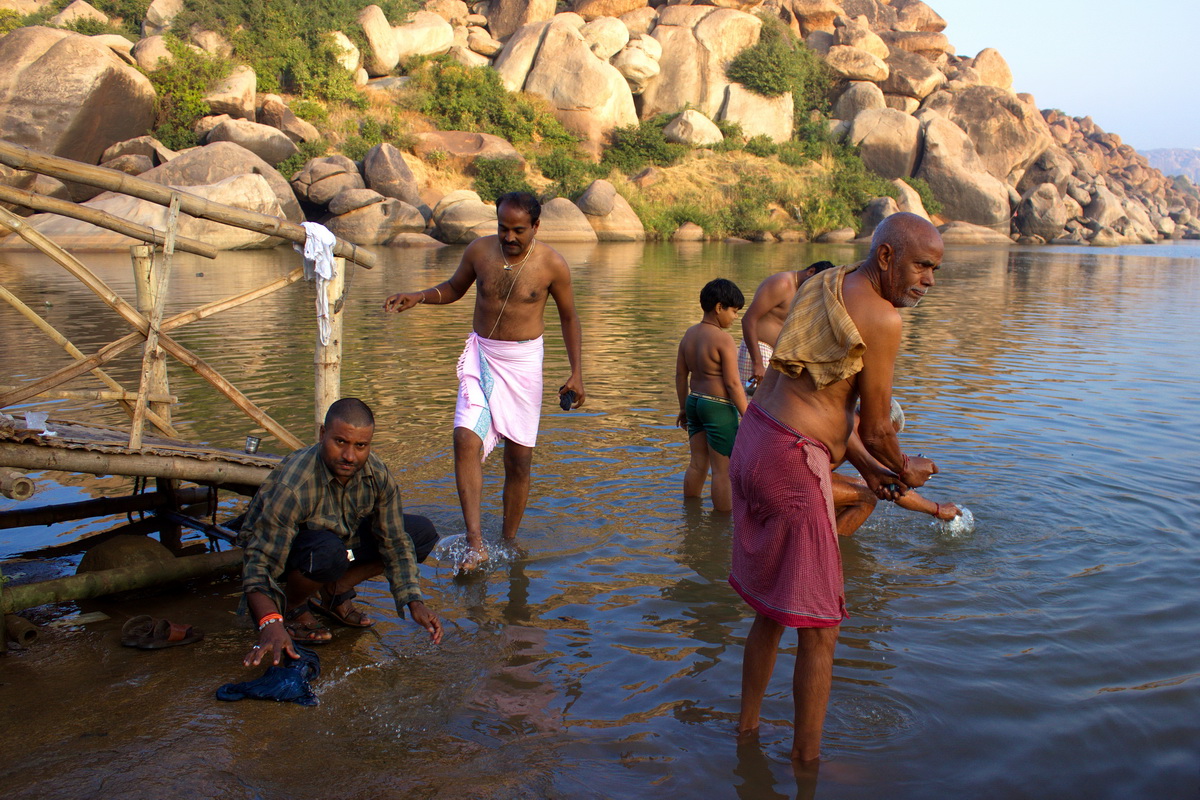
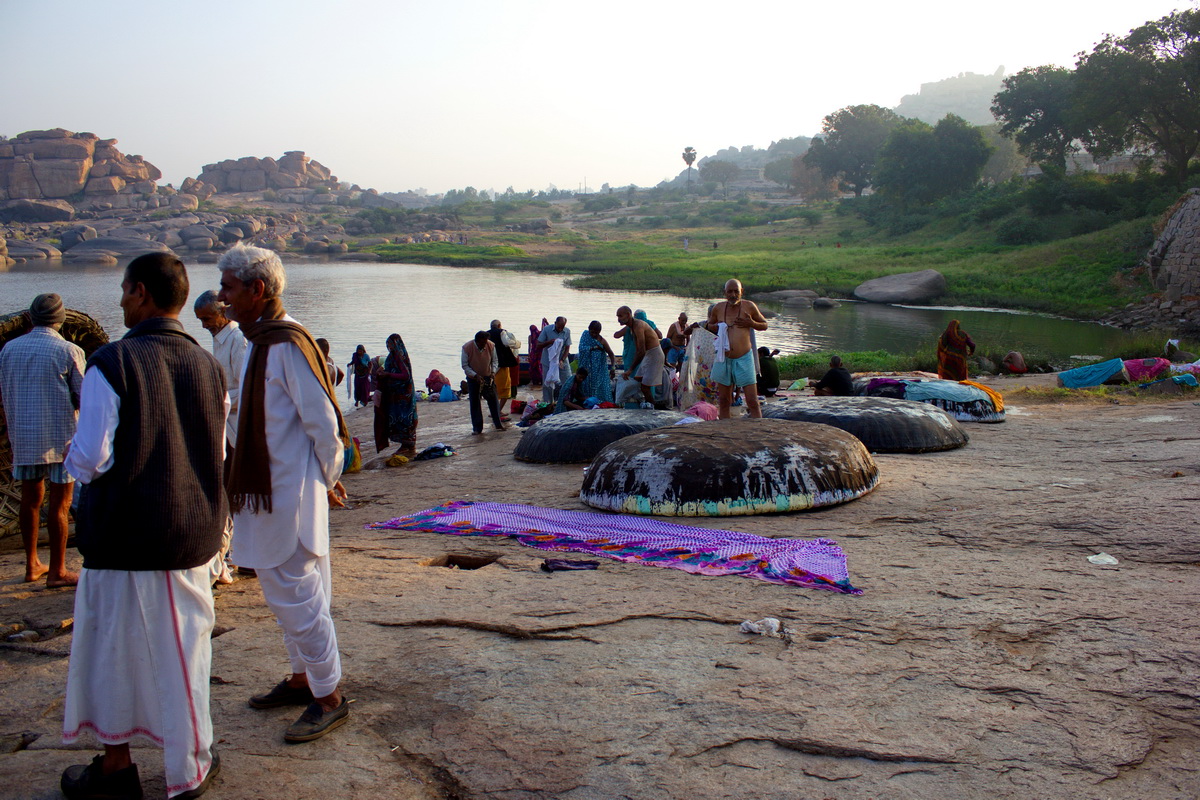
You can also float along the river on small, round straw boats.
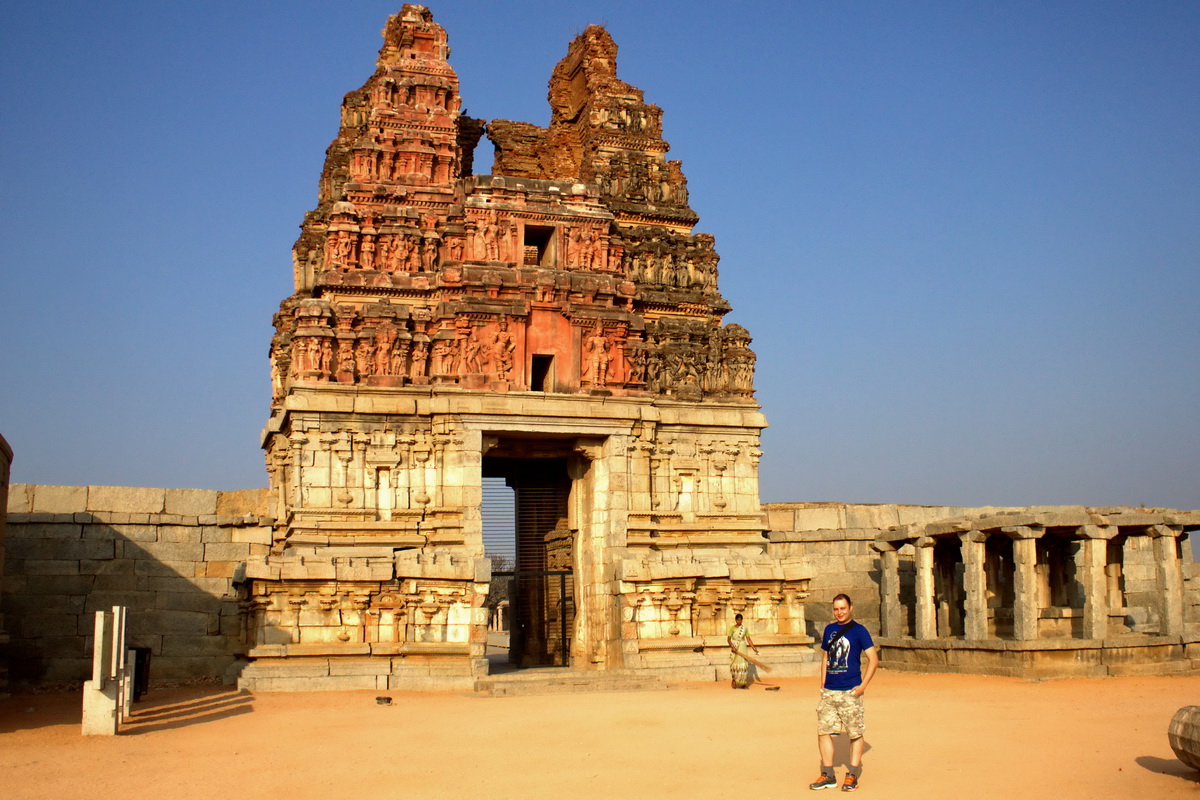
Vittala Temple
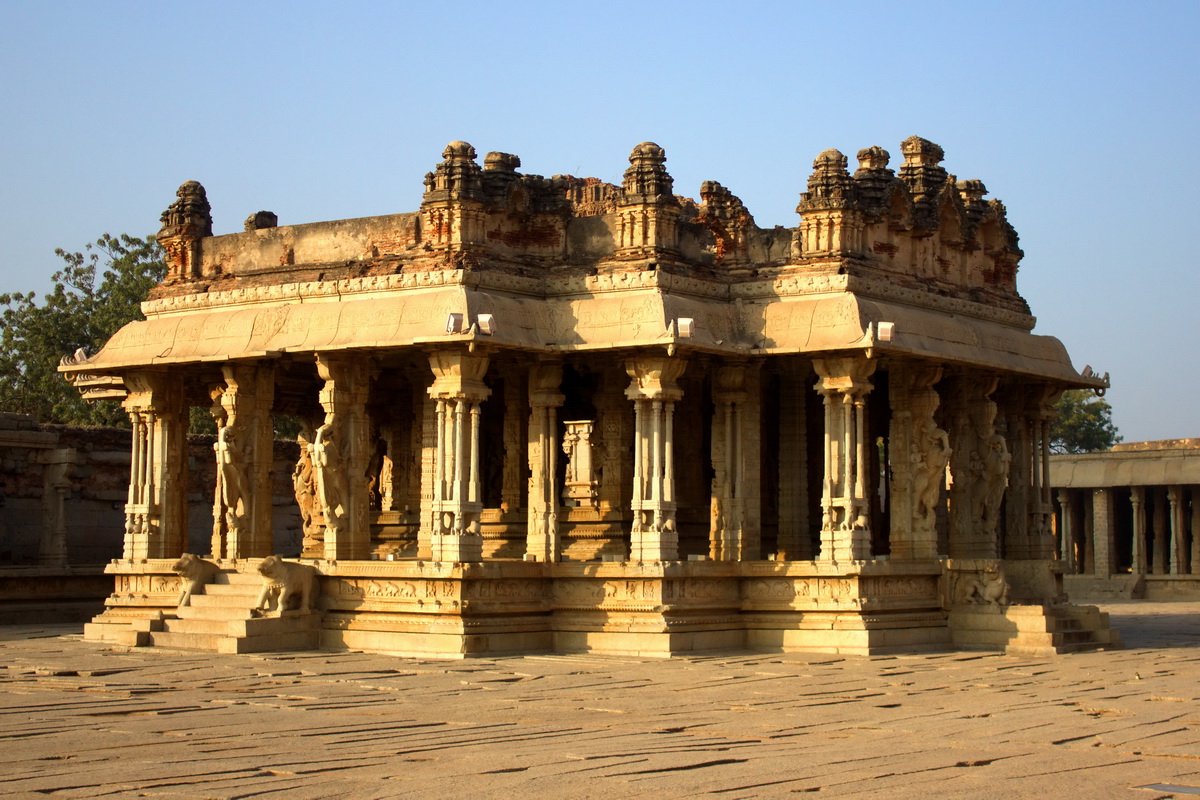
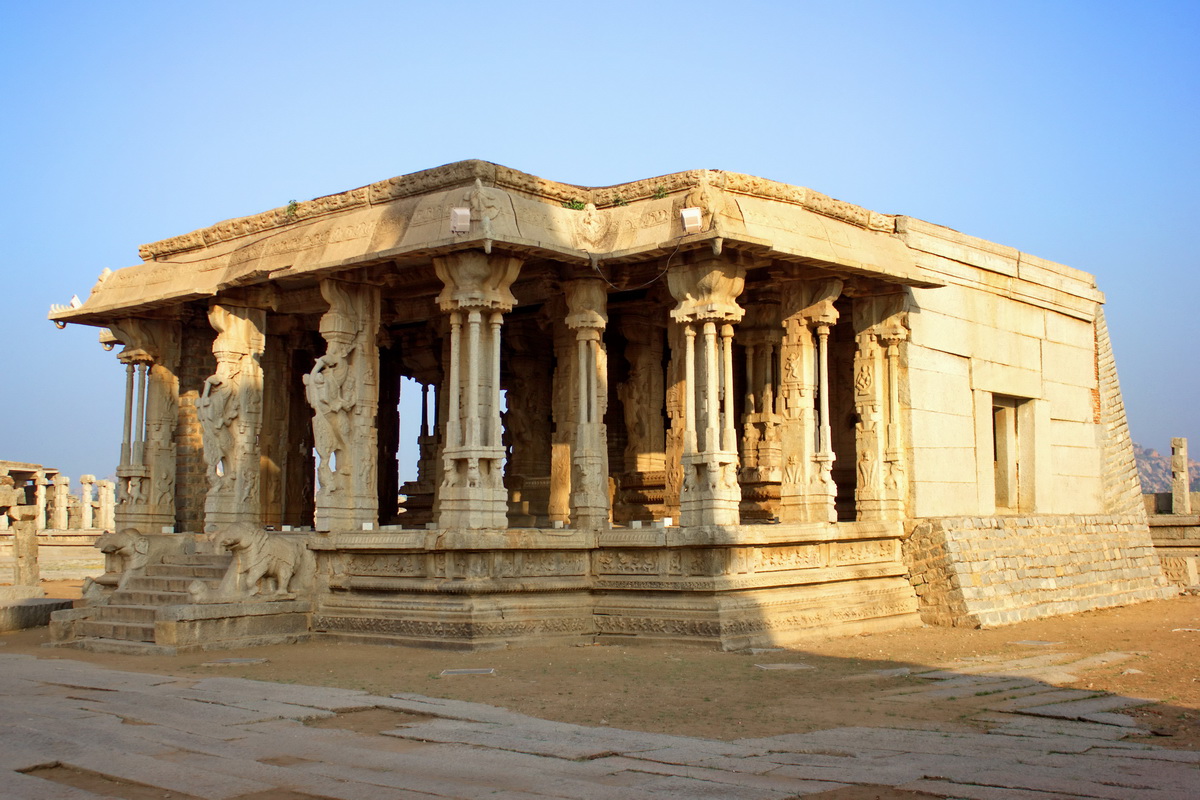
Located near the Hampi Bazaar, this temple is one of the grandest creations of the Vijayanagara Empire. Built in the 16th century, despite historians’ assumptions that it was never fully completed, it remains a stunning example of architectural art.
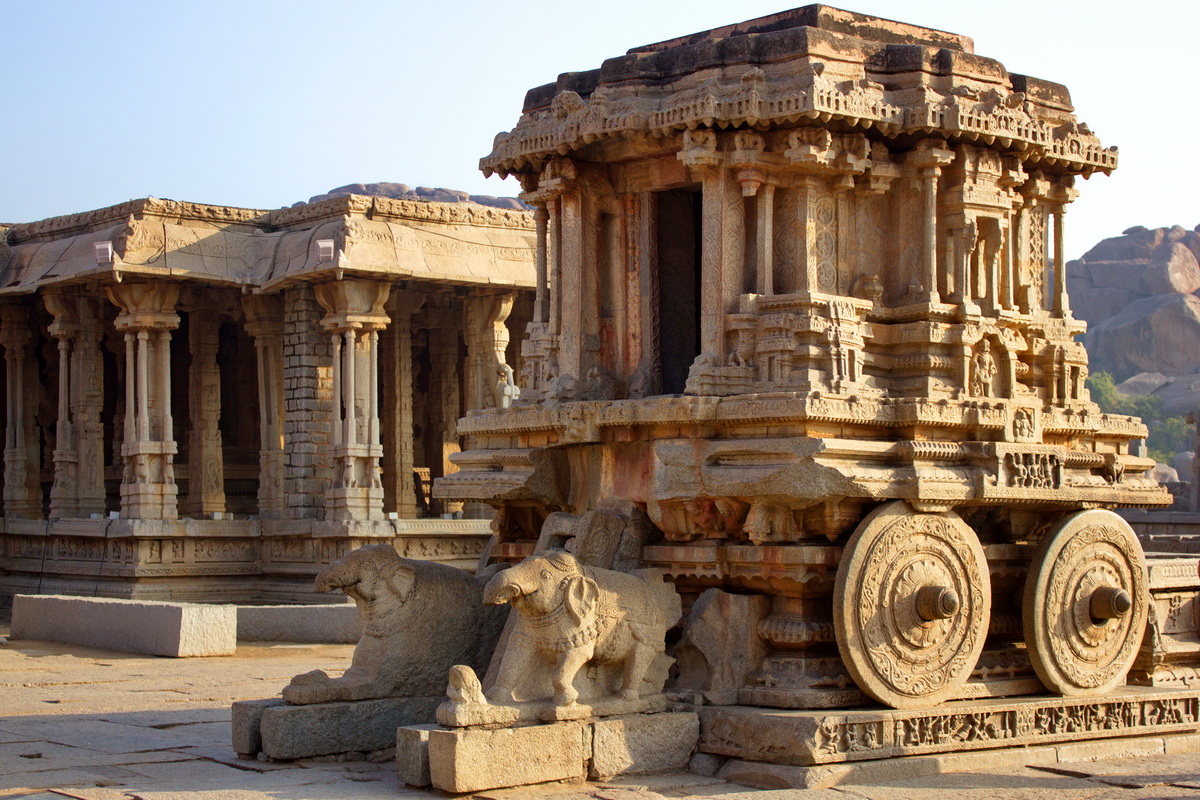
Stone chariot. Considered Hampi’s hallmark, it is dedicated to Garuda, the eagle of Vishnu, from the 15th century. Its stone wheels can rotate, but nowadays, for better preservation, they have been fixed in place.
...
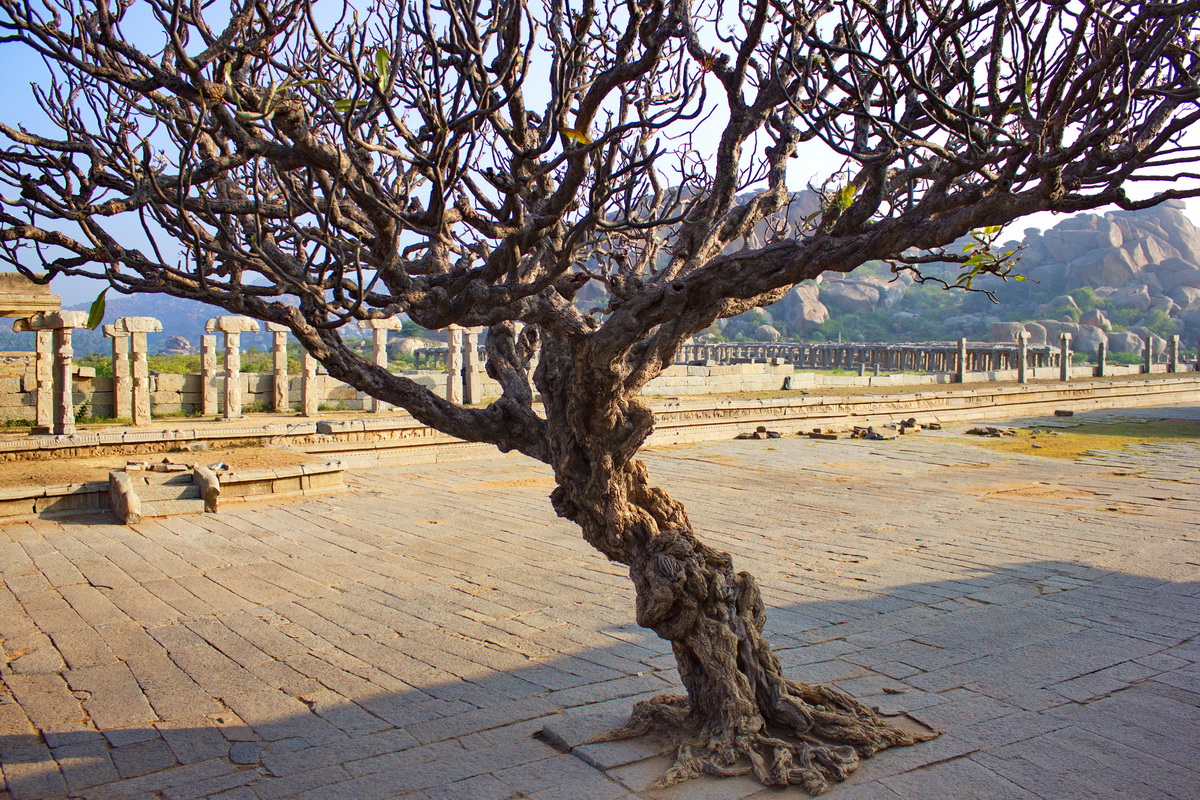
Plumeria tree. During the dry season, it loses all its leaves, leaving only flowers, which is why it’s also called the flower tree.
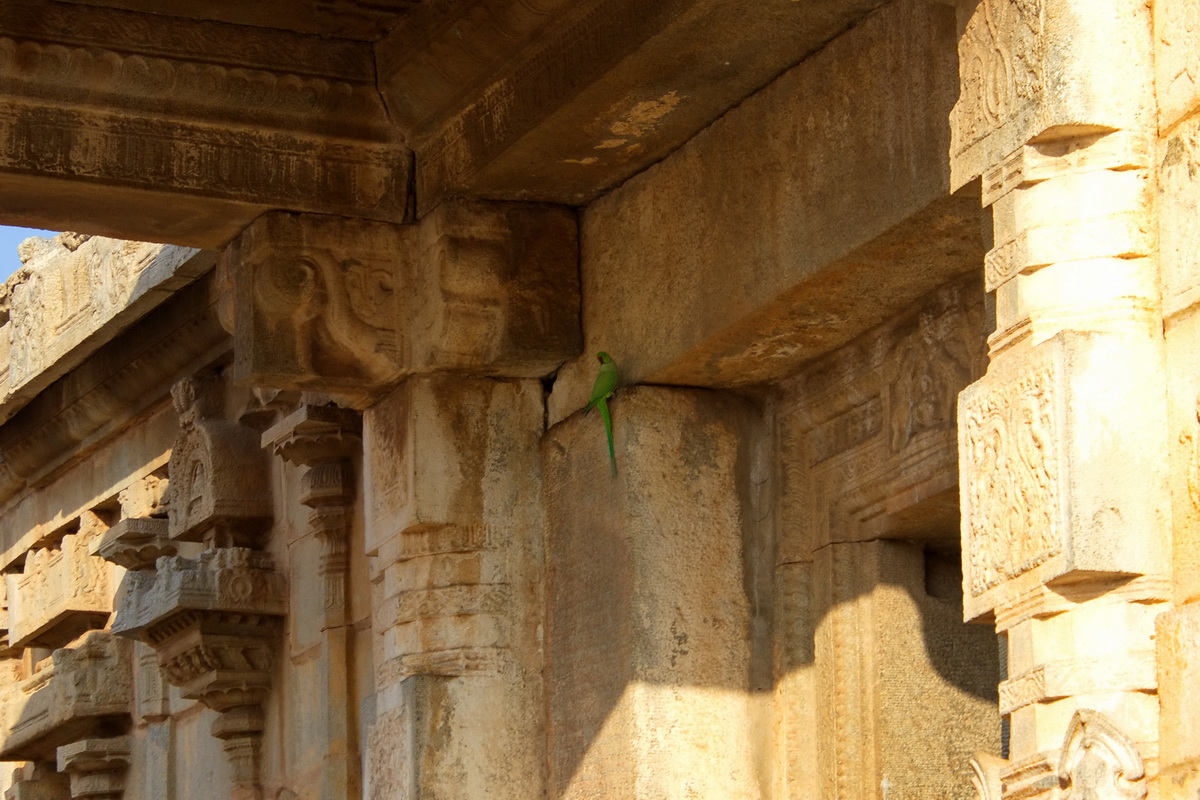
Parrot.
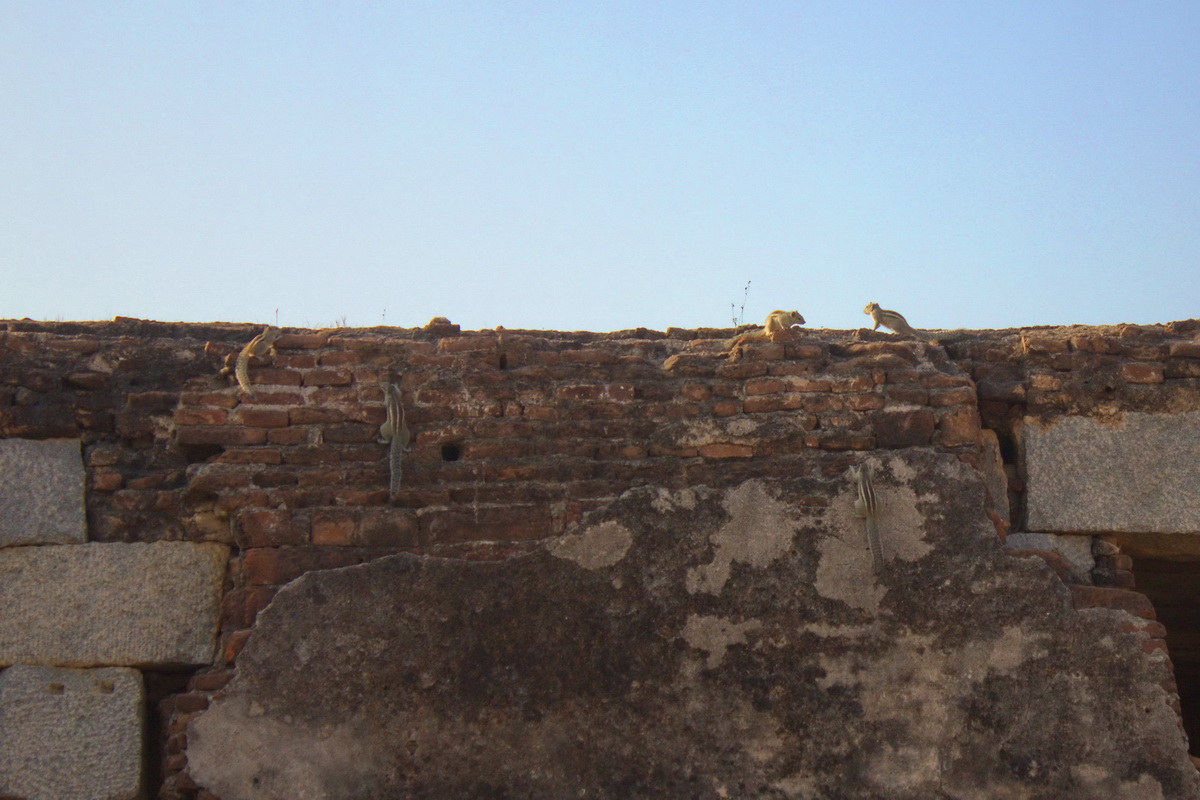
There seem to be as many chipmunks here as monkeys. However, they don’t engage in begging.
***
Here come the beggars. These are usually calmer and friendlier than macaques.
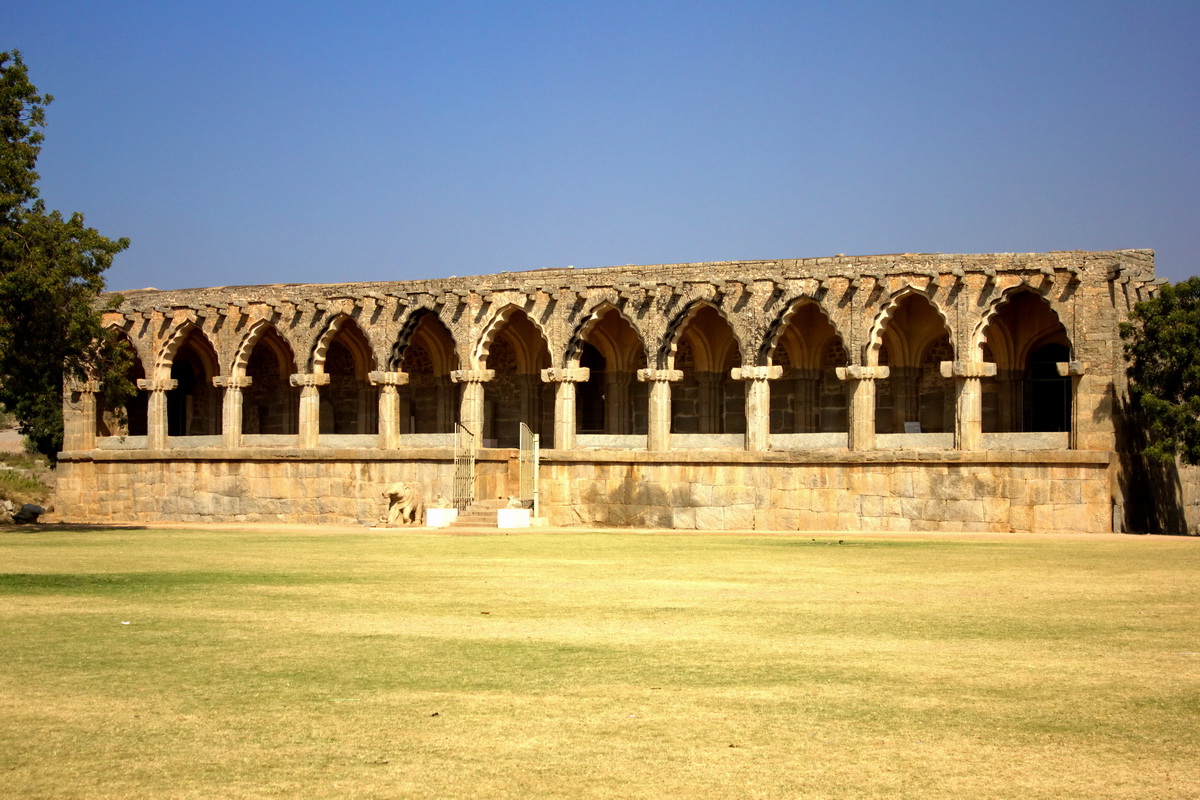
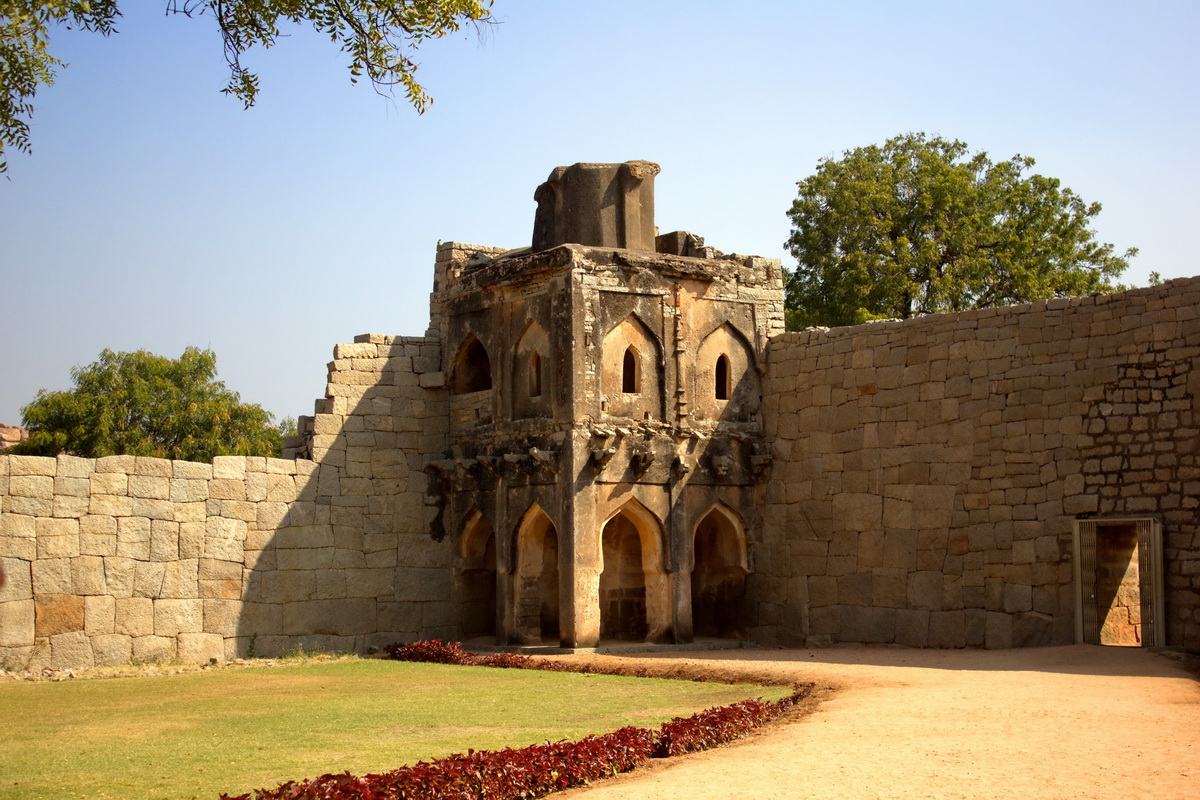
Maharaja’s harem.
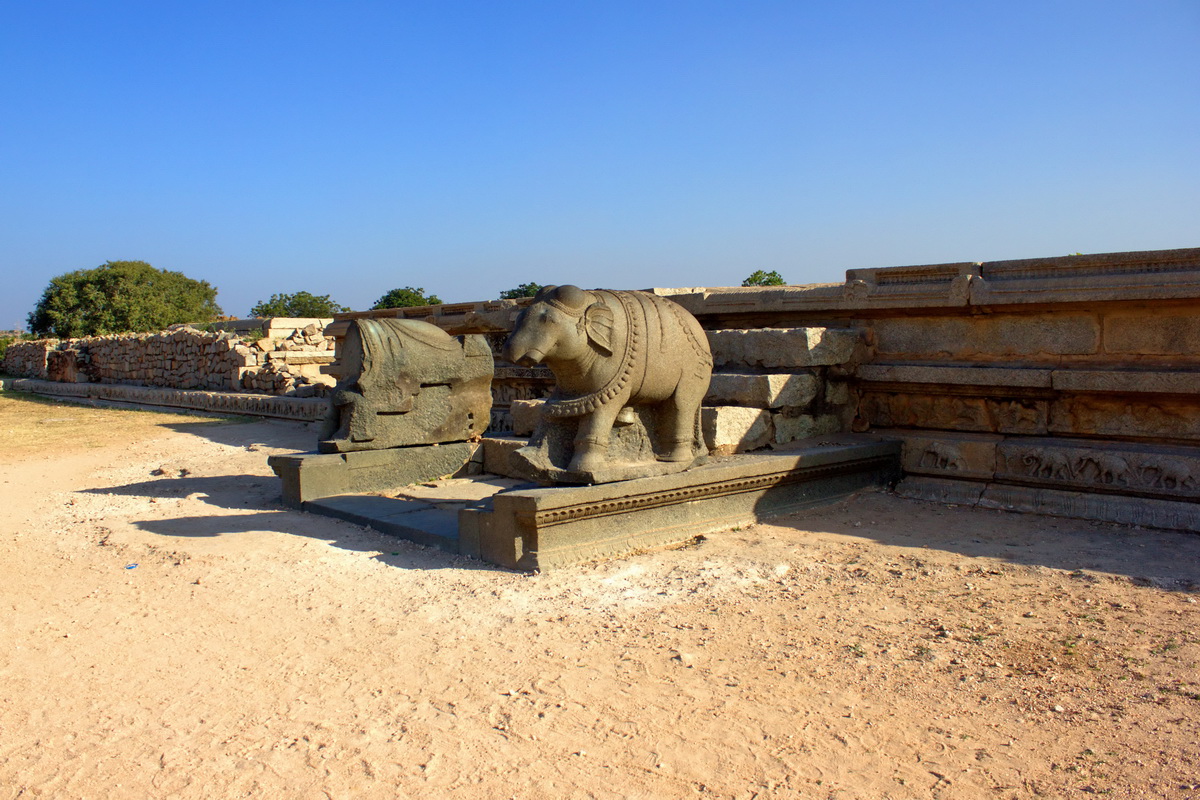
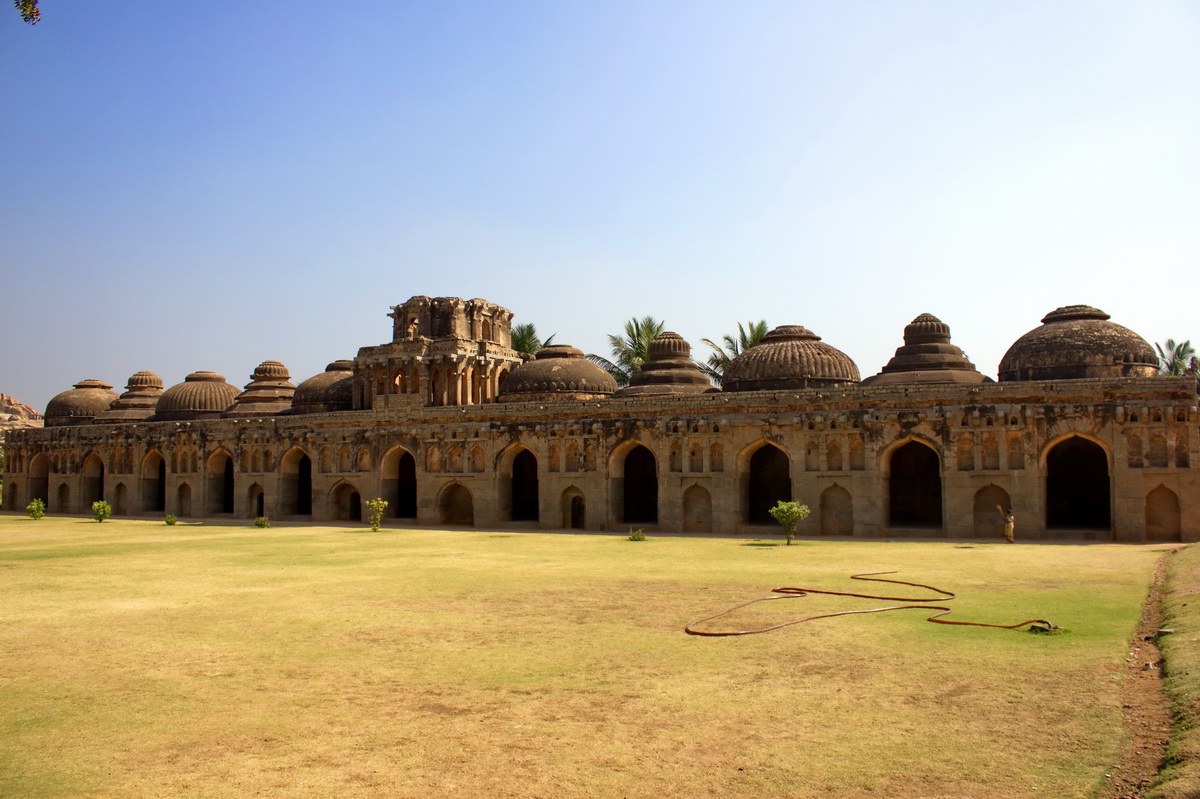
Royal elephant stables, once housing magnificent royal elephants.
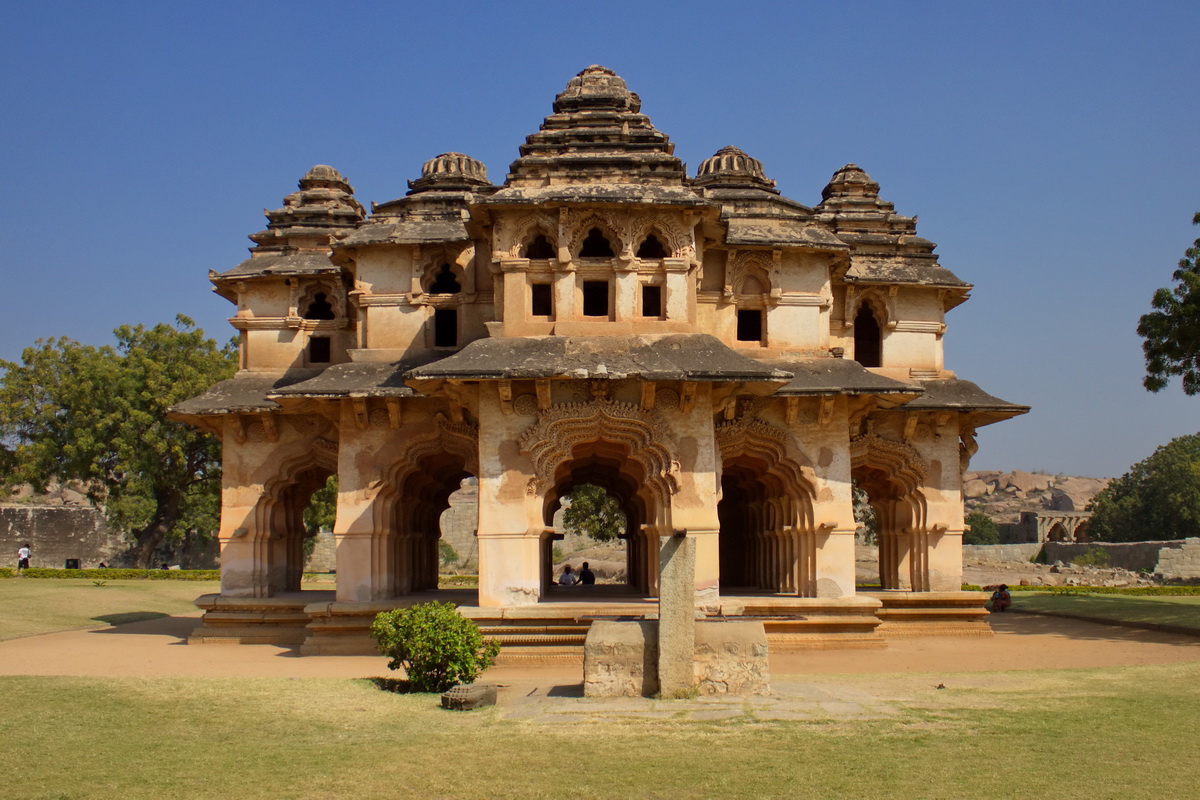
Lotus Palace. Named for the resemblance of its carved domes and vaulted ceilings to a lotus bud. It has a complex architectural design, skillfully blending Hindu and Islamic styles. Built for the maharaja’s wives, it was designed to keep them cool during the hot season.
India is a truly remarkable country. It makes you want to return. There’s so much new and interesting to see here.
Go to contents.